How Do I Start Meal Planning For Muscle Gain?
To start meal planning for muscle gain, you need a daily calorie surplus of 200–300 calories above your maintenance level. Aim for a protein intake of 1.6–2.2 grams per kilogram of body weight, spread across 3-6 meals. The rest of your calories should come from carbohydrates for fuel and healthy fats for hormone regulation.
Building a solid meal plan for muscle gain isn't about blindly stuffing yourself with food; it's a calculated strategy. This structured approach is miles ahead of the old "just eat more" advice, a tactic that usually just leads to unwanted fat gain. By planning your nutrition with intention, you're turning food into targeted fuel for building lean mass, not just packing on pounds indiscriminately.
Real progress in the kitchen, just like in the gym, comes from precision, not just sheer volume. The idea is to give your body exactly what it needs for muscle protein synthesis without overwhelming it with excess energy that it will simply store as fat. It’s a balancing act.
What Are the Nutritional Foundations for Muscle Gain?
Why is Protein the Top Priority?
When you lift weights, you create tiny micro-tears in your muscle fibers. Protein provides the amino acids required to repair that damage, making the fibers come back bigger and stronger. If your protein intake is too low, your body simply can't rebuild effectively.
Aiming for 1.6–2.2 grams of protein per kilogram of body weight each day is the sweet spot for maximizing muscle gains. You can dive into the science behind these protein recommendations in this comprehensive study if you're curious.
This should be spread across 3–6 meals, with each meal containing around 0.40–0.55 grams of protein per kg of your body weight.
For an 80kg (176lb) person, this translates to 128–176 grams of protein daily. Split that into four meals, and you're looking at about 32–44 grams of protein each time you eat. This consistency is what keeps your muscles in a prime state for growth.
What Role Do Carbs and Fats Play?
While protein is busy building the muscle, calories and carbohydrates are providing the raw energy to fuel your workouts and power the entire recovery process. A small, controlled surplus is the key here.
- Controlled Caloric Surplus: A surplus of 200–300 calories gives your body just enough extra energy to construct new muscle tissue without spilling over into significant fat storage.
- Carbohydrates for Fuel: Think of complex carbs like oats, brown rice, and sweet potatoes as the high-octane fuel for your training. They allow you to push harder and train longer.
- Healthy Fats for Hormones: Don't shy away from healthy fats from sources like avocados, nuts, and olive oil. They are absolutely crucial for regulating hormones, including testosterone, which plays a big role in muscle growth.
This guide will walk you through calculating your own numbers, but if you want to skip the math, tools like an AI meal planner can automate the entire process for you.
How Do You Calculate Your Calorie and Macro Needs?
To build muscle, you can't just guess what to eat. Your nutrition needs a blueprint, and that blueprint starts with numbers. Without knowing your specific calorie and macronutrient targets, you're essentially flying blind, hoping for the best. This is the foundational step that turns an ordinary diet into a precision tool for gaining lean mass.
The process isn't complicated, but it is crucial. We'll start by figuring out your baseline energy needs and then add a strategic surplus designed to build muscle, not just pack on unwanted body fat.
How Do You Find Your Maintenance Calories?
Before you can add calories to build muscle, you have to know your starting point. This is the number of calories your body burns just to maintain its current weight, a figure we call your Total Daily Energy Expenditure (TDEE).
Think of your TDEE as the sum of two key parts:
- Basal Metabolic Rate (BMR): This is the energy your body needs just to keep the lights on—functions like breathing, circulating blood, and producing cells while you're at rest.
- Activity Level: This accounts for everything else, from your daily commute to your most intense lifting sessions. The more active you are, the higher this number will be.
Your TDEE is your BMR multiplied by an activity factor (which usually ranges from 1.2 for a sedentary lifestyle to 1.9 for extremely active individuals). This gives you your daily maintenance calories—eat this much, and your weight stays the same.
Want to get this number quickly and accurately? Our simple calorie and macro calculator can give you personalized targets in seconds.
How Do You Add the Right Caloric Surplus?
Once you know your TDEE, it’s time to add calories to fuel new muscle growth. But hold on—more isn't always better. A classic mistake is piling on too many calories too fast, which leads to a lot more fat gain than muscle.
The secret is a controlled, conservative surplus. For anyone who's been training for a while, a small surplus of just 200–300 kcal above your daily maintenance is the sweet spot. Research has shown that bigger surpluses (think 500+ kcal) lead to barely any extra muscle gain but cause a lot more fat gain over an 8–12 week period.
This small, targeted surplus gives your body just enough extra energy to prioritize building new muscle without spilling over into fat storage.
For example, if your maintenance (TDEE) is 2,500 calories, your muscle-gain target should be around 2,700–2,800 calories per day. This is the smart way to build quality, lean tissue.
How Do You Set Your Macronutrient Targets?
With your total calorie goal locked in, the next step is to divide those calories among the three macronutrients: protein, fats, and carbohydrates. Each one has a critical job to do.
1. Protein: The Builder This is non-negotiable. Protein provides the amino acids your body needs to repair the muscle fibers you break down in the gym and rebuild them stronger. The science-backed sweet spot is 1.6–2.2 grams of protein per kilogram of body weight (that's about 0.7–1.0 grams per pound).
2. Fats: The Regulator Dietary fats are essential for producing key hormones like testosterone, which is vital for muscle growth. They also support overall health and help your body absorb certain nutrients. Aim to get 20–30% of your total daily calories from healthy fats.
3. Carbohydrates: The Fuel Once your protein and fat targets are set, the rest of your calories will come from carbs. Carbohydrates are your body's number one energy source, fueling your toughest workouts and replenishing the glycogen stores you burn through, which is absolutely crucial for recovery.
This visual breaks down the core principles for structuring your muscle-building diet, starting with a controlled calorie surplus and locking in your protein intake.
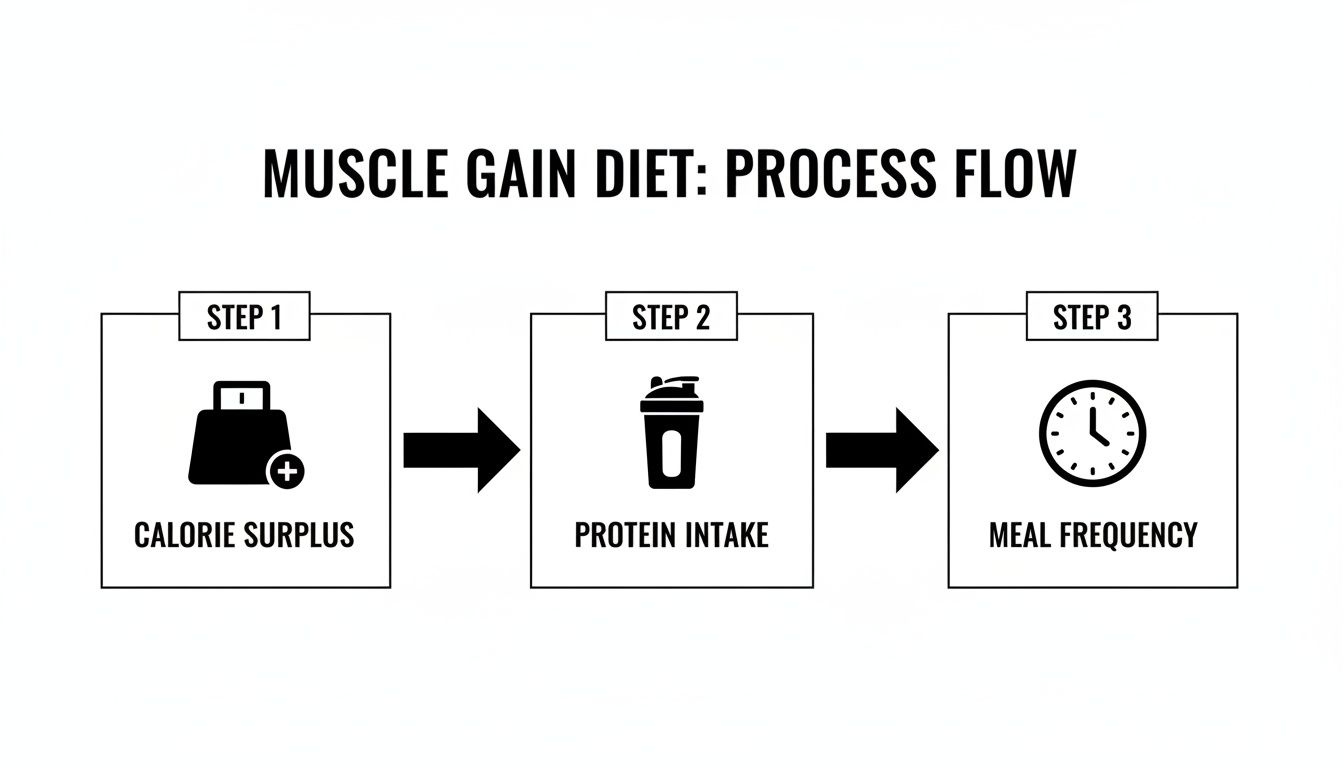
It’s a simple but powerful hierarchy: establish the energy surplus first, then make sure you have enough raw materials (protein) to build and repair muscle tissue.
How Do You Put It All Together?
Let's walk through the numbers for an 80 kg (176 lb) person whose TDEE is 2,600 calories.
Set Total Calories: We'll add a modest 250-calorie surplus.
- 2,600 (TDEE) + 250 (Surplus) = 2,850 calories per day.
Calculate Protein: Let's aim for the middle of the recommended range, at 1.8 g of protein per kg.
- 80 kg x 1.8 g/kg = 144 g of protein.
- (144 g x 4 kcal/g = 576 calories from protein)
Calculate Fats: We’ll set fat intake at 25% of total calories.
- 2,850 kcal x 0.25 = 712.5 calories from fat.
- (712.5 kcal / 9 kcal/g = ~79 g of fat)
Calculate Carbohydrates: The rest of the calories come from carbs.
- 2,850 (Total) - 576 (Protein) - 712.5 (Fat) = 1,561.5 calories from carbs.
- (1,561.5 kcal / 4 kcal/g = ~390 g of carbs)
This is how the daily macro targets might look, with slight adjustments for training versus rest days to optimize energy and recovery.
Sample Daily Macro Targets for an 80kg (176lb) Individual
| Day Type | Total Calories | Protein (g) | Carbohydrates (g) | Fats (g) |
|---|---|---|---|---|
| Training Day | 2,850 | 144 | 390 | 79 |
| Rest Day | 2,700 | 144 | 300 | 96 |
On a training day, carbs are higher to fuel the workout and replenish glycogen. On a rest day, we can pull carbs back slightly and increase fats for hormonal support, while keeping calories in a slight surplus.
Doing the math yourself provides a solid starting point, but let’s be honest—it can be a bit tedious. This is exactly where technology comes in. The onboarding process in our AI Meal Planner automates all of this for you, delivering precise, personalized targets without ever touching a spreadsheet.
How Can You Build a Sustainable Weekly Meal Plan?
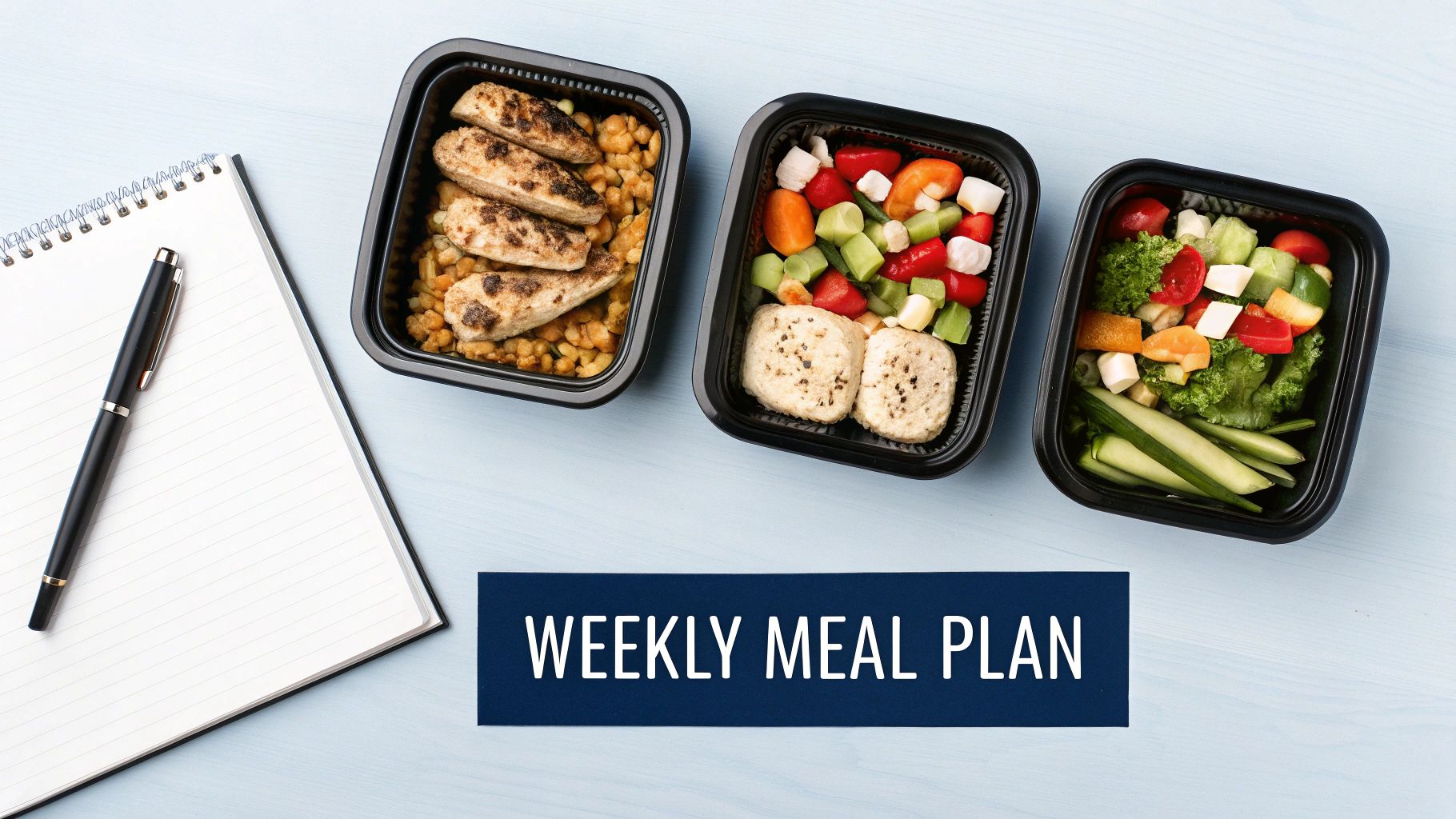
Alright, you’ve got your numbers. Now comes the real work: turning those calorie and macro targets into actual food you’ll eat week in and week out. A sustainable plan isn't about forcing down bland, repetitive meals. It’s about building a smart, flexible framework that makes hitting your goals feel almost automatic.
The secret is consistency without the monotony. You need a reliable system for your core meals, but with enough wiggle room for variety and, well, real life.
Why Should You Use Flexible Meal Templates?
Forget trying to dream up a week’s worth of unique, gourmet meals from scratch. That’s a fast track to burnout. A much better approach is using a simple template to guide your choices for lunch and dinner. This ensures you’re hitting your macros without having to weigh and track every single leaf of spinach.
Here's a proven formula for muscle gain: Lean Protein Source + Complex Carbohydrate + Fibrous Vegetables + Healthy Fat
This template is your new best friend. It’s endlessly customizable. Just swap out the components to create dozens of different meals that all serve the same purpose.
- Lean Protein: Chicken breast, ground turkey, salmon, tofu, eggs, Greek yogurt
- Complex Carbs: Quinoa, brown rice, sweet potatoes, whole-wheat pasta, oats
- Vegetables: Broccoli, spinach, bell peppers, asparagus, mixed greens
- Healthy Fats: Avocado, olive oil, nuts, seeds, almond butter
This simple method removes all the guesswork. As long as you build your plate with these components in the right portions, you’re on track.
What Does a Full Day of Eating Look Like?
Let’s translate this into a real-world example. We'll use the targets we figured out earlier for an 80kg person on a training day: 2,850 calories and 144g of protein.
Sample Training Day Meal Plan:
| Meal | Food Items | Protein (g) |
|---|---|---|
| Breakfast (7 AM) | 1 cup Oatmeal, 1 scoop Whey Protein, 1/2 cup Berries, 1 tbsp Almond Butter | ~35g |
| Lunch (12 PM) | 6 oz Grilled Chicken Breast, 1.5 cups Cooked Quinoa, 2 cups Steamed Broccoli | ~50g |
| Pre-Workout (4 PM) | 1 Banana, 1 serving Greek Yogurt | ~18g |
| Post-Workout (6 PM) | 1 scoop Whey Protein Shake | ~25g |
| Dinner (7:30 PM) | 6 oz Salmon, 1 medium Sweet Potato, 1 cup Roasted Asparagus | ~42g |
This isn't just about hitting the numbers. Notice how the carbs are strategically placed around the workout to fuel performance and kickstart recovery. The protein is spread evenly across the day to keep muscle protein synthesis firing on all cylinders.
Key Insight: See how every single meal and snack contains protein? This constant trickle of amino acids is what keeps your body in an anabolic (muscle-building) state all day long.
While some elite lifters might eat six times a day, a more practical goal for most people is 3–6 meals and snacks daily. This ensures that even protein distribution we’re after.
How Can You Scale Up to a Full 7-Day Plan?
Planning a full week might seem like a huge task, but a few simple strategies make it manageable. The goal is to create variety without cooking seven completely different dinners.
- Cook Once, Eat Twice: Leftovers are your friend. The grilled chicken and quinoa from Monday’s lunch can easily be Tuesday’s lunch. You just cut your cooking time in half.
- Theme Your Days: This adds structure and simplifies decisions. Think "Tofu Stir-fry Tuesdays" or "Salmon Saturdays." You have a framework but can still switch up the specific recipes.
- Plan a 'Flex' Meal: Life happens. Build one or two flexible meals into your week. This is a planned meal where you eat out or have something off-plan, which is critical for long-term sustainability.
If doing this manually sounds like a chore, this is where technology can step in. The AI Meal Planner, for instance, lets you select your goals and dietary needs during a quick setup process. It then generates a complete seven-day plan with recipes and an organized shopping list, taking all the manual work off your plate. Don’t like a meal? One click and the AI swaps it for another that still fits your macros. A good tool can also automate your shopping list; check out our guide on using a grocery list generator to make things even more efficient.
What Are the Smartest Meal Prep Strategies?
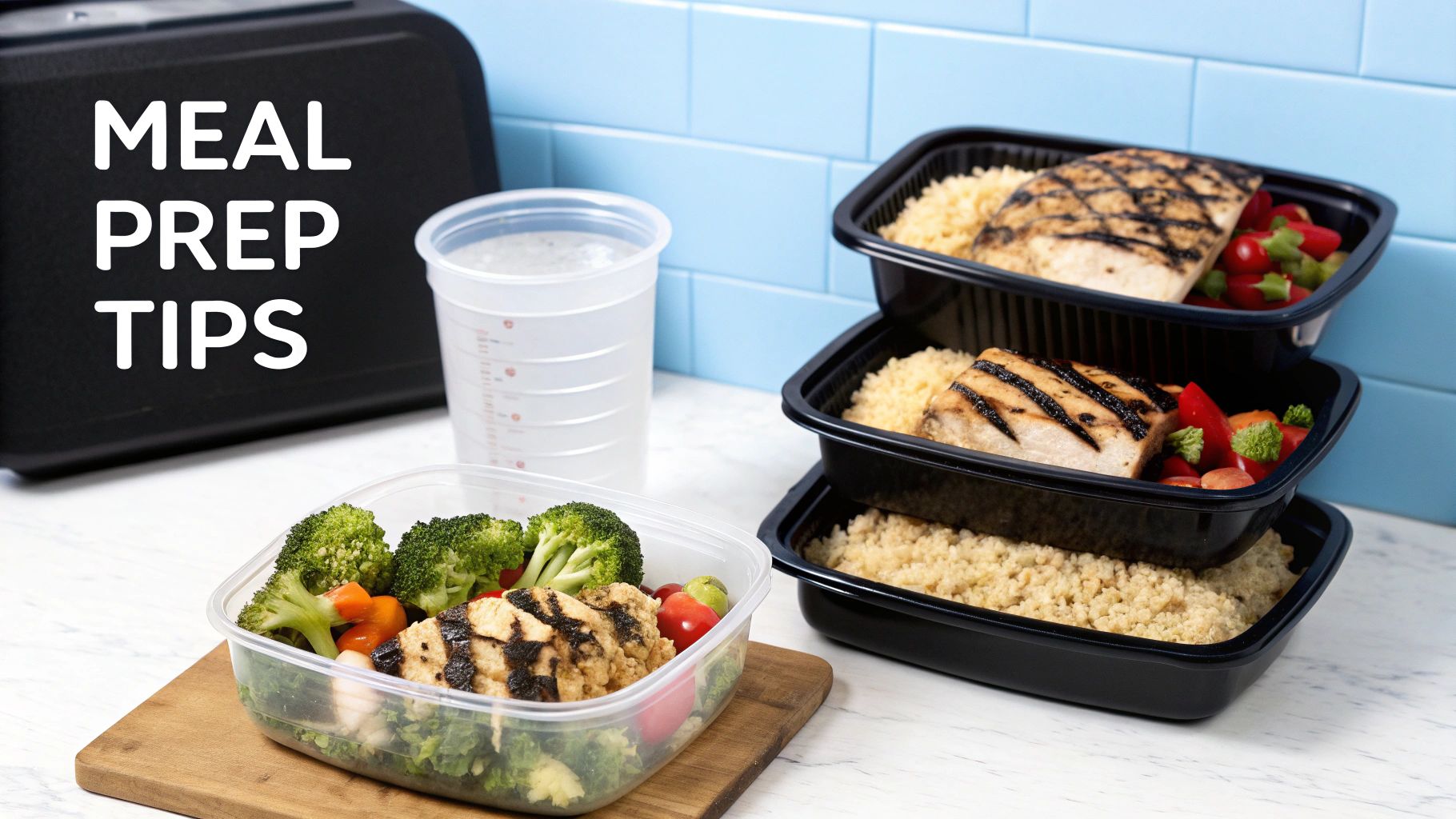
Let’s be honest. A perfect meal plan is just a piece of paper until you actually execute it. The biggest hurdle standing between your goals and reality is almost always time. This is where smart meal prep comes in—it’s the bridge that turns your plan into a daily habit.
The point isn't to chain yourself to the kitchen all day Sunday. It's about a strategic investment of a few hours that buys you back countless hours during the week and saves you from making bad food choices when you're tired and hungry.
How Can Batch Cooking Streamline Your Week?
Batch cooking is the absolute cornerstone of effective meal prep. You’re simply cooking large quantities of staple foods all at once, which you can then mix and match for different meals throughout the week. This single strategy will slash your daily cooking time.
Instead of starting from scratch every single night, you just assemble your pre-cooked components. A meal that might have taken 30-40 minutes to cook is now ready in under five.
Here are the best things to batch cook for a muscle-gain diet:
- Lean Proteins: Grill up a big pack of chicken breasts, brown a few pounds of lean ground turkey, or hard-boil a dozen eggs.
- Complex Carbohydrates: Make a huge pot of quinoa, brown rice, or whole-wheat pasta. You can also bake a tray of sweet potatoes at the same time.
- Fibrous Vegetables: Roast large trays of broccoli, asparagus, and bell peppers. They hold up great in the fridge and give you the essential micronutrients you need in every meal.
With this approach, you'll always have macro-friendly ingredients locked and loaded, making it nearly effortless to hit your targets even on your busiest days.
Why Is Pre-Portioning a Game Changer?
Once your staples are cooked, the next move is to portion them out into grab-and-go containers. This completely removes the need to weigh and measure your food at every meal—a major hassle that can derail even the most motivated person.
Pre-portioning delivers two huge wins: it locks in your macro accuracy and offers unbeatable convenience. When you’re rushing to work or heading to the gym, you can just grab a perfectly balanced meal straight from the fridge.
Pro Tip: Invest in a decent food scale and a good set of meal prep containers. Spend an hour portioning out 3-4 days' worth of lunches and dinners. Trust me, this simple habit is one of the single most effective things you can do to guarantee you stay consistent.
You can also create "meal kits" with pre-chopped raw ingredients. For example, chop all the veggies for a stir-fry and store them in one container. When it's time to cook, you just dump them in the pan.
How Can You Master Your Grocery Shopping?
An efficient prep day starts long before you turn on the stove—it starts with an efficient trip to the grocery store. Wandering into a store without a plan is a surefire way to waste time and fill your cart with impulse buys that don’t fit your goals. An organized grocery list is non-negotiable.
Structure your list to match your store's layout: produce, then proteins, dairy, dry goods, and finally frozen items. This prevents backtracking and gets you out the door in record time.
To make things even smoother, tools can help. For instance, learning how to use a recipe nutrition calculator lets you confirm your meals hit your targets before you even write your list. The AI Meal Planner goes a step further by automatically creating an aisle-organized shopping list from your weekly plan, making your grocery runs incredibly fast.
What Is the Best Way to Use Leftovers?
Let's face it: eating the exact same meal every day is a fast track to burnout. Fighting off this monotony is key to sticking with your plan long-term, and the creative use of leftovers is your secret weapon.
This isn’t just about reheating—it's about repurposing. This strategy adds variety to your week and cuts down on food waste, saving you money.
- Roast Chicken: Shred leftover chicken and mix it with Greek yogurt and spices for a high-protein chicken salad sandwich the next day.
- Ground Turkey: Use leftover taco meat as a topping for a loaded sweet potato or to bulk up a massive salad.
- Quinoa: Toss leftover quinoa with black beans, corn, and a lime vinaigrette for a quick side dish or a light lunch.
When you start thinking of your cooked components as versatile ingredients, you can whip up new and exciting meals with zero extra cooking time. This keeps your meal plan both effective and enjoyable.
How Do You Track Progress and Adjust Your Plan?
Your meal plan isn't a static document you print out and follow forever. It’s a living blueprint. Your body is constantly adapting to your training and nutrition, and your plan needs to evolve right along with it.
Mastering the feedback loop of eating, training, measuring, and tweaking is what separates those who hit frustrating plateaus from those who see consistent, long-term success.
This process isn't about stressing over every little fluctuation on the scale. It's about collecting the right data over time and making smart, calculated adjustments. A successful muscle-building phase is dynamic; the plan should serve your body, not the other way around.
What Metrics Actually Matter for Muscle Gain?
One of the biggest mistakes people make is obsessing over the number on the scale every single morning. Your weight can jump up or down for dozens of reasons, from how much water you drank to the salt content of your last meal. For a real picture of your progress, you need to look at more reliable indicators.
Here’s what you should actually be tracking:
- Weekly Average Body Weight: Weigh yourself each morning after using the restroom but before you eat or drink anything. Log the number, but don't sweat the daily changes. The real insight comes from the weekly average. A steady increase of about 0.25-0.5% of your body weight per week is the sweet spot for lean gains.
- Strength Progression in the Gym: This is arguably your most important metric. Are you adding weight to the bar? Squeezing out more reps with the same weight? If your strength is consistently climbing, you are almost certainly building muscle—even if the scale is being stubborn.
- Key Body Measurements: Once or twice a month, grab a tape measure. Track key areas like your waist, chest, arms, and thighs. If your arms and chest are growing while your waist stays relatively stable, you know you’re packing on quality size.
- Progress Photos: The mirror doesn't lie. Every 4-6 weeks, take photos from the front, side, and back. Use the same lighting and pose each time. Visual evidence often reveals changes in your physique that numbers alone can't capture.
How Often Should You Assess and Adjust Your Plan?
Reacting too quickly is just as bad as never making a change at all. Your body needs time to respond to a new calorie and macro setup. A knee-jerk reaction after one "off" week can completely derail your progress.
Give your plan a solid 2-4 weeks to work before you even think about making a change. This gives you enough data to spot a real trend, not just a random blip. Patience is a critical part of the process.
After that period, take a good look at your data. Review your weekly weight averages, your training log, and your measurements. This is when you can make an informed decision about what, if anything, needs to be adjusted.
This cycle of implementing, tracking, and adjusting is the engine that drives continuous gains. If you're just starting out, you can figure out your initial needs with our TDEE calculator, which gives you a great baseline to work from.
What Do You Do When Progress Stalls?
Sooner or later, everyone hits a plateau. This is where all that tracking data you've collected becomes invaluable. Instead of guessing, you can make a small, calculated change based on what you see.
Here are a couple of common scenarios and how to handle them:
- If Your Weight Isn't Increasing: Your weekly average weight has been stuck for two weeks straight and your lifts are starting to feel heavy. It's time for a small bump in fuel. Add 150-200 calories to your daily intake, mostly from carbs, to give your body the extra energy it needs to grow.
- If Your Weight Is Climbing Too Fast: You're gaining well over the recommended 0.5% per week and your waist measurement is creeping up. You're likely gaining too much body fat. Pull back slightly by cutting 150-200 calories, again mainly from carbs or fats, to get back on a more sustainable track.
Of course, this whole feedback loop can feel like a lot of work. This is where tools can make a huge difference. For example, with the AI Meal Planner, you just input your new weight. It automatically recalibrates the calories and macros in your next plan, taking all the manual guesswork off your plate so you can focus on training.
Questions About Meal Planning for Muscle Gain
How long does it take to see muscle gain from a meal plan?
You will likely feel stronger in the gym within 2-4 weeks. Visible muscle growth typically becomes noticeable after 8-12 weeks of consistent training and adherence to your diet.
What are the best foods for building muscle?
Focus on lean protein sources like chicken, fish, eggs, and tofu, complex carbohydrates like oats and brown rice, and healthy fats from avocados and nuts. These foods provide the energy and building blocks for muscle growth.
How many meals should I eat per day to gain muscle?
Aim for 3-6 meals and snacks per day to ensure a consistent supply of protein and nutrients. This keeps your body in an anabolic (muscle-building) state throughout the day.
Can I build muscle without supplements?
Yes, absolutely. Supplements are not essential; your diet and training are responsible for over 95% of your results. A well-structured meal plan is far more important than any supplement.
Is it necessary to track calories and macros?
Tracking is the most reliable way to ensure you are in a calorie surplus and meeting your protein needs. While not strictly necessary forever, it is highly recommended when starting out to guarantee progress.
Should I eat more on training days?
Yes, consuming slightly more calories, primarily from carbohydrates, on training days can improve performance and recovery. On rest days, you can reduce carbs slightly to minimize fat gain.
Do I have to eat "clean" all the time to build muscle?
No, a sustainable approach like the 80/20 rule is more effective. Aim for 80% of your calories from nutrient-dense whole foods and allow 20% for foods you enjoy to prevent burnout.
Ready to stop guessing and start building a plan that actually works for you? The AI Meal Planner uses your goals, preferences, and dietary needs to generate a completely personalized meal plan in seconds. It’s time to let smart technology do the hard work for you.
AI-powered nutrition
Get Your Personalized Meal Plan
AI creates the perfect meals for your goals, lifestyle, and taste.
Start Your Journej