What are the best low sodium meal prep ideas?
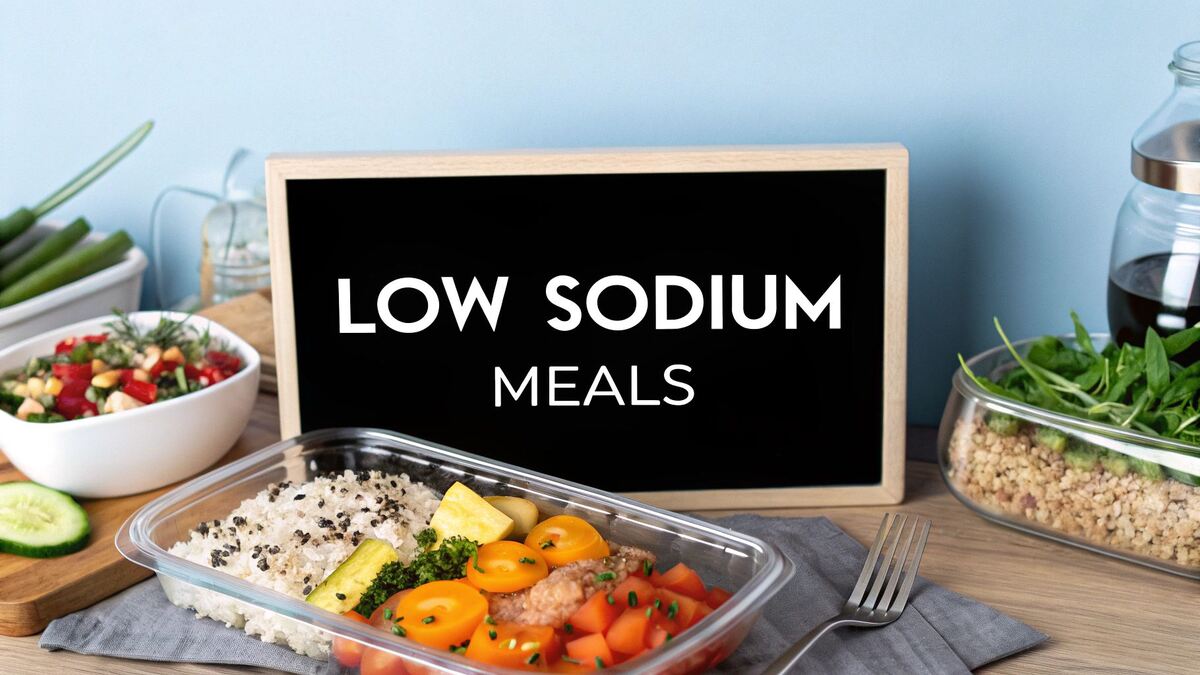
The best low sodium meal prep ideas involve batch-cooking versatile base ingredients and using salt-free flavor boosters. Three effective strategies are: 1) creating sheet pan dinners with roasted vegetables and protein seasoned with herbs, 2) slow-cooking large batches of stews or shredded meats, and 3) assembling no-cook boxes with pre-chopped veggies, grains, and homemade dressings. These methods allow for complete control over sodium while maximizing flavor and convenience.
Sticking to a low-sodium diet can feel challenging, especially when relying on store-bought sauces, processed ingredients, and takeout meals that are often loaded with hidden sodium. The key to long-term success isn't just finding a few good recipes; it's about developing an efficient system that makes flavorful, healthy eating the default, even on your busiest weeks. This guide moves beyond generic advice and provides a complete blueprint for flavorful, low-sodium meal prep ideas that are both practical and delicious.
We will explore seven core strategies designed to streamline your efforts and maximize flavor without relying on salt. You'll get specific, actionable recipes for everything from herb-seasoned protein bowls and sheet pan dinners to no-cook assembly boxes and freezer-friendly soups. We'll also cover essential techniques like creating your own seasoning blends and prepping low-sodium sauces in bulk. By mastering these methods, you will build a sustainable routine that supports your health goals, saves time, and keeps your meals exciting. Say goodbye to bland, repetitive dishes and hello to a kitchen stocked with vibrant, ready-to-eat options.
1. How can I use protein bowls for low sodium meal prep?
One of the most effective low sodium meal prep ideas involves swapping salt for flavorful herbs and spices in versatile protein bowls. This approach focuses on building a balanced meal with a lean protein, a whole grain, and plenty of vegetables, using natural aromatics like garlic, lemon, rosemary, and cumin to create rich flavor without excess sodium. By seasoning components individually and storing them separately, you ensure maximum freshness and taste for up to four days.
This method is ideal for anyone seeking heart-healthy meals that don't sacrifice taste. The key is to build a flavor base using fresh or dried herbs, citrus zest, and sodium-free spice blends, allowing you to easily keep each bowl under 500mg of sodium while enjoying a satisfying and nutritious meal.
What are some examples of low sodium protein bowls?
Creating these bowls is a straightforward process of preparing each component with a specific herb-and-spice profile.
- Mediterranean Chicken Bowl: Combine chicken breast with lemon juice, oregano, and garlic. Serve with quinoa, roasted bell peppers, zucchini, and a small amount of low-sodium feta cheese.
- Asian-Inspired Tofu Bowl: Marinate firm tofu in a mix of grated ginger, garlic, sesame oil, and a splash of low-sodium soy sauce. Pair with brown rice and steamed broccoli.
- Indian-Spiced Lentil Bowl: Cook lentils with turmeric, cumin, coriander, and a pinch of cayenne. Serve over basmati rice with a side of steamed spinach and a dollop of plain yogurt.
Pro Tip: Make large batches of your favorite sodium-free herb blends in a food processor. Store them in airtight containers for quick seasoning throughout the week, saving valuable prep time.
How should I store the components for protein bowls?
To maintain the best texture and flavor, store the protein, grains, and vegetables in separate airtight containers in the refrigerator. Combine them just before reheating or eating. You can also freeze fresh herbs in ice cube trays with a little olive oil or water to preserve their potency for future meal preps. For precise sodium tracking across different herb and ingredient combinations, you can use a recipe nutrition calculator to ensure your meals align with your health goals. Labeling each container with the contents and prep date helps keep your meal prep organized and safe.
2. Is a slow cooker good for low sodium meals?
Slow-cooker batch cooking is an excellent low sodium meal prep idea that leverages low-and-slow heat to build deep, rich flavors without relying on salt. This method involves preparing large portions of proteins, broths, and stews over several hours, creating versatile base ingredients for multiple meals. The extended cooking time naturally tenderizes meats and melds the flavors of herbs, spices, and aromatics, making it perfect for busy professionals who want delicious, heart-healthy meals with minimal hands-on effort.
This approach is particularly effective for sodium control because it eliminates the need for high-sodium processed ingredients like canned broths or seasoning packets. By cooking from scratch, you have complete authority over every ingredient, ensuring your meals are both flavorful and aligned with your health goals. A single batch can yield enough protein or stew for an entire week of lunches and dinners.
What are some low sodium slow cooker recipes?
Creating these sodium-controlled meals is as simple as layering ingredients and letting the slow cooker do the work. The key is to start with a strong aromatic base.
- Herb-Braised Beef Chuck: Place sliced onions, garlic, and carrots at the bottom of the slow cooker. Add a beef chuck roast seasoned with black pepper, rosemary, and thyme. Cook on low for 6-8 hours for tender, shreddable beef perfect for bowls, tacos, or salads.
- Sodium-Free Vegetable Lentil Stew: Combine lentils, diced sweet potatoes, carrots, celery, and onions with a bay leaf, smoked paprika, and cumin. Cover with water or homemade low-sodium vegetable broth and cook on low for 6 hours.
- Poached Chicken and Broth: Place a whole chicken in the slow cooker with onion, celery, carrots, garlic, and a bundle of fresh herbs like parsley and thyme. Cover with water and cook on low for 8 hours. The result is tender, shredded chicken and a nutrient-dense, sodium-free broth for soups or cooking grains.
Pro Tip: For the richest flavor, sear your meat in a hot pan for a few minutes on each side before adding it to the slow cooker. This caramelization process, known as the Maillard reaction, creates a deeper, more complex taste profile that salt alone cannot replicate.
How do I prep and store slow cooker meals?
To maximize this method, portion the cooked protein, stew, or broth into individual airtight containers immediately after cooking. Allow them to cool before refrigerating for up to four days or freezing for up to three months. Strategically layering your ingredients is also crucial: place hard vegetables and aromatics on the bottom, the protein in the middle, and more delicate vegetables on top. To simplify your shopping for these large-batch recipes, you can use a grocery list generator to create an organized list based on your chosen meal plan. Proper labeling with the date and contents will help you keep your freezer and fridge neatly organized for easy grab-and-go meals.
3. How do I make low sodium sheet pan dinners?
Sheet pan dinners are a cornerstone of efficient low sodium meal prep, allowing you to cook a complete meal with protein, vegetables, and starches on a single tray. This method relies on roasting everything together, seasoned with garlic, citrus, and sodium-free spices, which melds flavors beautifully without needing salt. The entire meal cooks simultaneously in about 20-30 minutes, simplifying both the cooking and cleanup process.
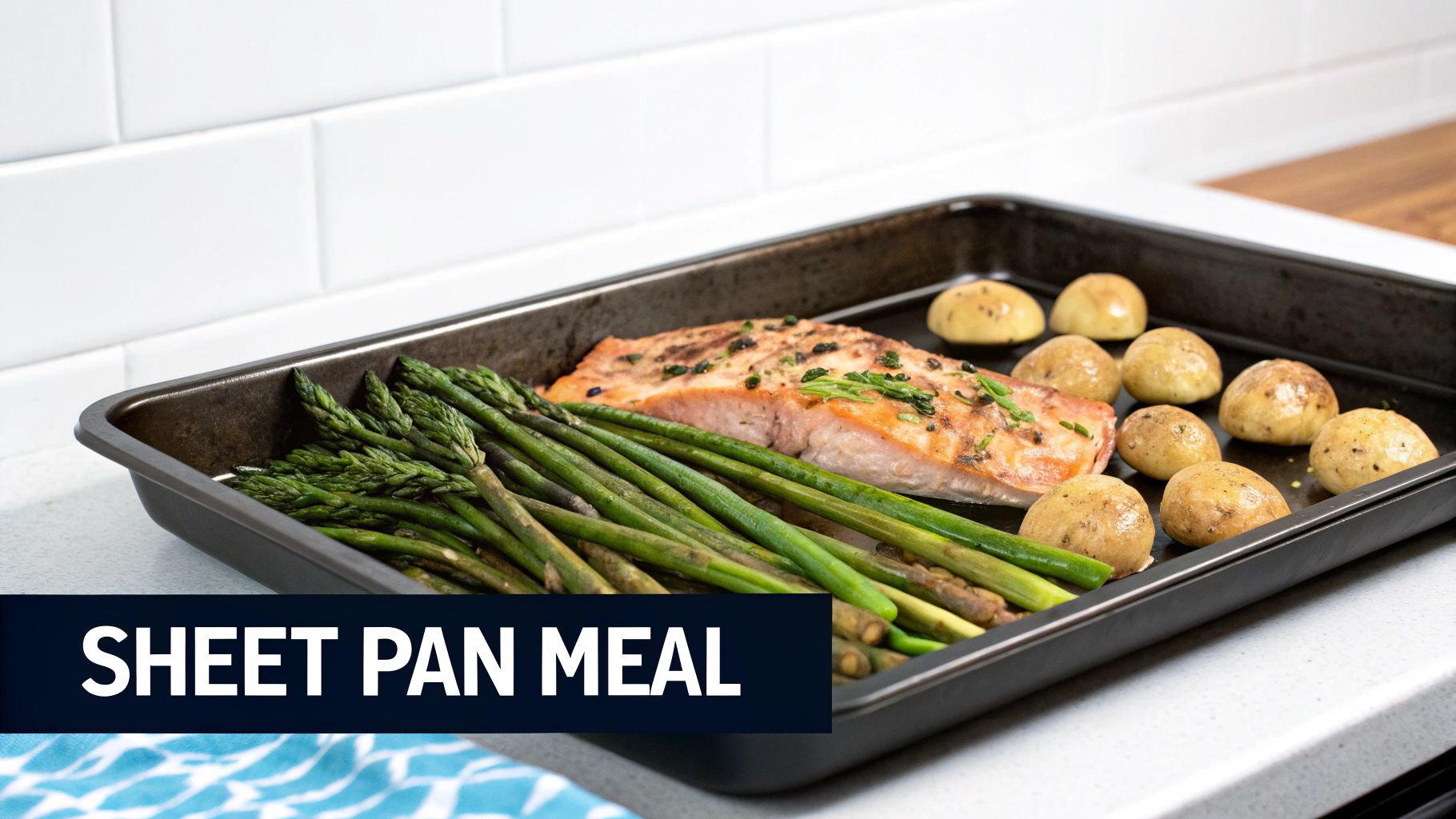
This approach is perfect for busy weeknights when you need a nutritious, heart-healthy meal without a lot of active cooking time. By controlling every ingredient, you can easily create delicious dinners with minimal sodium while maximizing flavor through roasting, which naturally caramelizes vegetables and brings out their sweetness.
What are some easy sheet pan dinner ideas?
The key to a successful sheet pan meal is combining ingredients that cook at similar rates or adding them in stages.
- Lemon Herb Salmon: Toss baby potatoes and asparagus spears with olive oil, black pepper, and dried herbs. Roast for 10-15 minutes, then add salmon fillets seasoned with lemon juice, dill, and garlic for the final 12-15 minutes.
- Garlic Rosemary Chicken: Combine chicken thighs, Brussels sprouts, and sweet potato chunks on a pan. Drizzle with olive oil and season generously with fresh rosemary, minced garlic, and paprika before roasting until the chicken is cooked through.
- Turmeric-Spiced Chickpea Medley: For a plant-based option, roast chickpeas, bell peppers, red onion, and cauliflower with turmeric, cumin, and a little olive oil until tender and slightly crisped.
Pro Tip: For crispier results, pat your protein and vegetables completely dry before adding oil and seasonings. This helps them roast and brown rather than steam in the oven.
How can I prep sheet pan meals ahead of time?
To make weeknight cooking even faster, you can chop your vegetables and mix your sodium-free spice blends ahead of time. Once cooked, allow the meal to cool completely before portioning it into individual airtight glass containers. This keeps the components fresh and prevents them from becoming soggy. For those tracking macronutrients, you can use the AI Meal Planner to adjust the ratio of protein, starches, and vegetables to meet your specific fitness goals. Meals can be stored in the refrigerator for up to four days and reheated in the microwave or oven.
4. What are no-cook meal prep ideas?
One of the most flexible low sodium meal prep ideas is the no-cook assembly box. This strategy involves batch-prepping individual components like proteins, fresh vegetables, whole grains, and homemade low-sodium dressings, then storing them separately. Each day, you simply assemble a fresh, delicious meal in minutes without any cooking, giving you complete control over sodium levels while maximizing texture and flavor.
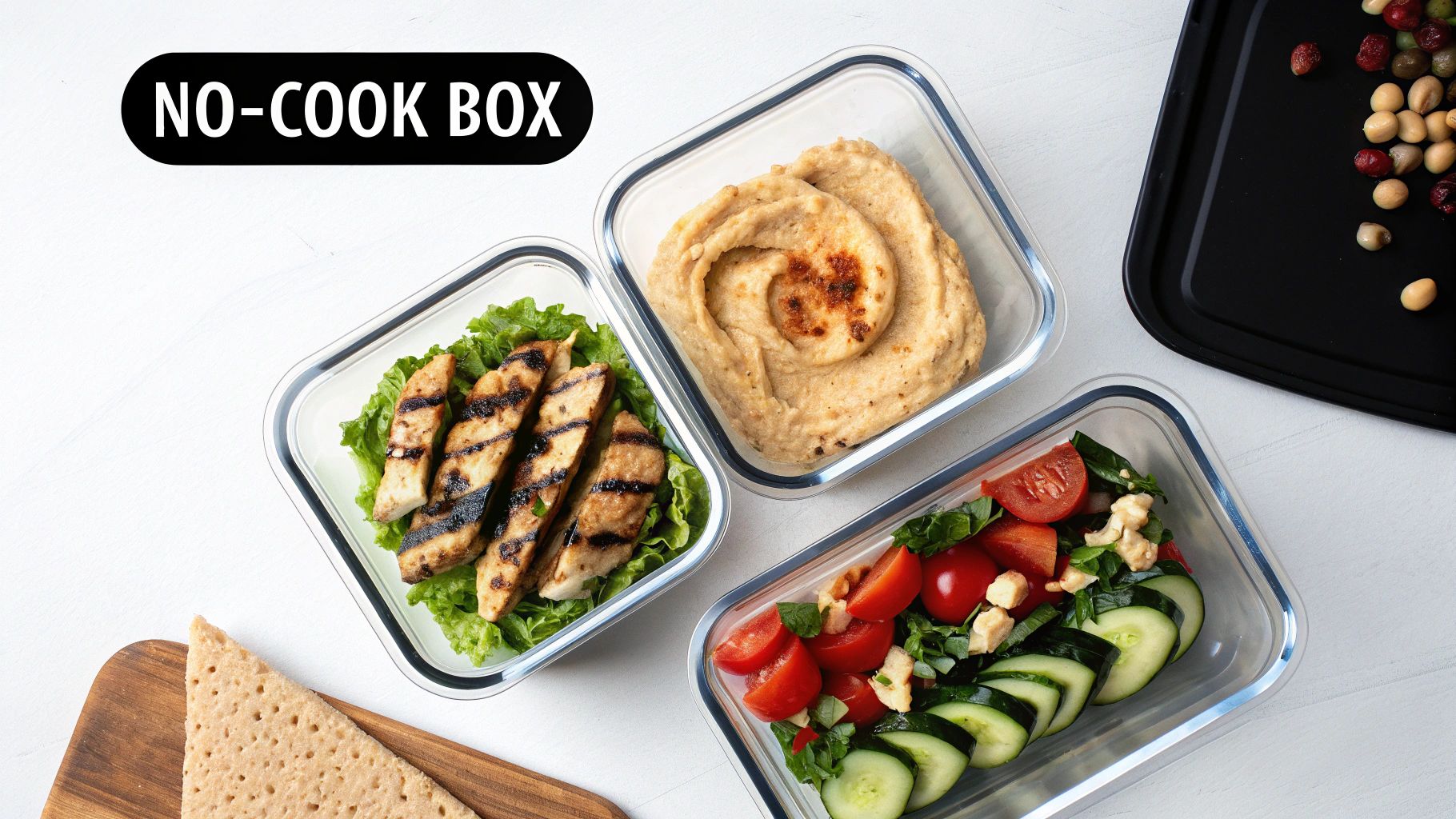
This method is perfect for busy individuals who crave variety and freshness without the time commitment of daily cooking. By preparing homemade dressings with vinegar, lemon juice, and herbs, you easily avoid the high sodium content (often 250-400mg per serving) found in store-bought options. Components stay fresh and crisp for 4-5 days, making it a sustainable and satisfying approach to healthy eating.
How do I assemble no-cook boxes?
Building these boxes is all about having a variety of pre-prepped, sodium-conscious ingredients ready for quick assembly.
- Mediterranean Chicken Box: Combine pre-cooked grilled chicken strips, cucumber, cherry tomatoes, low-sodium hummus, and a whole-grain pita. Drizzle with a homemade lemon-dill vinaigrette just before serving.
- Asian-Inspired Edamame Box: Assemble shelled edamame, pre-cooked quinoa or brown rice, shredded carrots, and sliced bell peppers. Top with a homemade ginger-sesame dressing.
- Veggie-Forward Chickpea Box: Mix roasted chickpeas (seasoned with paprika and garlic powder), mixed greens, chopped celery, and sunflower seeds. Use a simple lemon-tahini dressing to tie it all together.
Pro Tip: Make your homemade dressings in small mason jars. You can shake them up easily and pour just what you need (1-2 tablespoons) for a perfectly portioned, low-sodium meal.
How do I keep no-cook ingredients fresh?
The success of assembly boxes lies in proper storage to maintain freshness. Wash, completely dry, and chop vegetables, storing them in breathable containers or airtight glass containers lined with a paper towel. Keep wet ingredients like tomatoes and dressings separate from dry components like greens and grains until you are ready to eat. Dedicate one shelf in your refrigerator to your meal components for easy access. To get more ideas on combining ingredients you already have, you can find inspiration for creating a meal from what's in your fridge with this helpful guide about making meals from your fridge.
5. Can I meal prep low sodium breakfasts and snacks?
One of the most powerful low sodium meal prep ideas involves creating pre-portioned, homemade breakfast and snack packs that can be frozen in large batches. This strategy targets high-sodium commercial breakfast items like frozen burritos and pastries, which often contain 300-600mg of sodium per serving. By preparing items like egg muffins, energy balls, and overnight oats at home, you gain complete control over the ingredients, keeping sodium levels minimal while maximizing convenience.
This approach is perfect for busy mornings and afternoon slumps, providing a quick, heart-healthy option that can be ready in under two minutes. The focus is on batch-prepping nutrient-dense foods, freezing them individually, and having them on hand for grab-and-go meals. This not only saves time but also prevents impulsive choices that can derail a low-sodium diet.
What are some low sodium make-ahead breakfast recipes?
Creating these freezer-friendly packs is simple with the right recipes. Use muffin tins and parchment paper to create perfectly portioned, easy-to-store items.
- Herb and Vegetable Egg Muffins: Whisk eggs with chopped spinach, bell peppers, onions, and a sodium-free herb blend. Pour into a muffin tin and bake. Once cooled, freeze in a reusable bag for up to two months.
- No-Bake Peanut Butter Energy Balls: Combine rolled oats, natural peanut butter (no salt added), flax seeds, and a few dark chocolate chips. Roll into balls and freeze on a baking sheet before transferring to a container.
- Freezer-Ready Smoothie Packs: Portion fruits like bananas and berries with a handful of spinach into individual bags. When ready to eat, just add a low-sodium liquid like unsweetened almond milk and blend.
Pro Tip: Double or triple your recipes to create a diverse freezer stash. Preparing 3-4 flavor variations of egg muffins or energy balls at once helps prevent meal fatigue and ensures you always have an appealing low-sodium option available.
How do I store frozen breakfast packs?
Proper storage is crucial for maintaining the quality and taste of your frozen packs. Use muffin tins for portioning egg-based preparations; once frozen solid, pop them out and store them in a large freezer-safe bag. For items like energy balls or breakfast cakes, line your freezer containers with parchment paper to prevent them from sticking together, allowing for easy removal and stacking. Clearly label each bag or container with the contents and prep date using a waterproof marker. Most items can be thawed overnight in the refrigerator or microwaved for 60-90 seconds for an instant meal. To seamlessly integrate these pre-made meals into your diet, you can use the AI Meal Planner to automatically track macros and sodium content within your weekly plan.
6. Is a pressure cooker useful for low sodium prep?
Leveraging a pressure cooker, like an Instant Pot, is one of the most efficient low sodium meal prep ideas for creating tender, flavorful proteins and legumes. This method uses high-pressure steam in a sealed environment to cook food up to 60% faster than conventional methods. The sealed pot concentrates the natural flavors of ingredients, deeply infusing them without relying on salt-based marinades. This makes it perfect for busy professionals who need high-quality, heart-healthy meal components ready in minutes.
This approach is ideal for anyone looking to batch-cook foundational ingredients like chicken, pork, or beans quickly. By using aromatic vegetables, herbs, and low-sodium broth, the pressure cooker intensifies savory notes, allowing you to prepare delicious, versatile proteins for the week ahead while maintaining strict control over your sodium intake.
How can I cook low sodium proteins in a pressure cooker?
Creating these low-sodium staples is simple, as the pressure cooker does most of the work. Focus on layering aromatic, sodium-free ingredients at the start.
- Tender Shredded Chicken: Cook chicken breasts with a whole onion, garlic cloves, and a bay leaf in low-sodium chicken broth for 12-15 minutes. Shred for tacos, salads, or bowls.
- Fall-Apart Pork Shoulder: Season a pork shoulder with smoked paprika, cumin, and black pepper. Cook for 30-40 minutes with a little water or broth for tender, versatile pulled pork.
- Perfectly Cooked Legumes: Prepare dried chickpeas or black beans from scratch in just 20-25 minutes. Add garlic, onion, and herbs like oregano to the pot for a flavorful base.
- Homemade Bone Broth: Make a nutrient-dense, no-salt-added bone broth in about 60 minutes using leftover bones, vegetable scraps, and herbs.
Pro Tip: Use the "Sauté" function on your pressure cooker to toast whole spices like cumin seeds or brown aromatics like garlic and onions before adding your protein and liquid. This simple step adds a deep, roasted flavor dimension without any sodium.
How should I store pressure-cooked ingredients?
To get the most out of your pressure-cooked ingredients, proper storage is key. Always allow proteins to cool completely in their cooking liquid before transferring them to airtight glass containers. This technique keeps the meat or legumes moist and flavorful. Store the liquid separately to use as a base for soups or sauces later. For even greater efficiency, consider making a double batch; it only adds a few extra minutes to the total cooking time. Label containers with the contents and date to keep your fridge organized.
7. How can I make low sodium freezer soups?
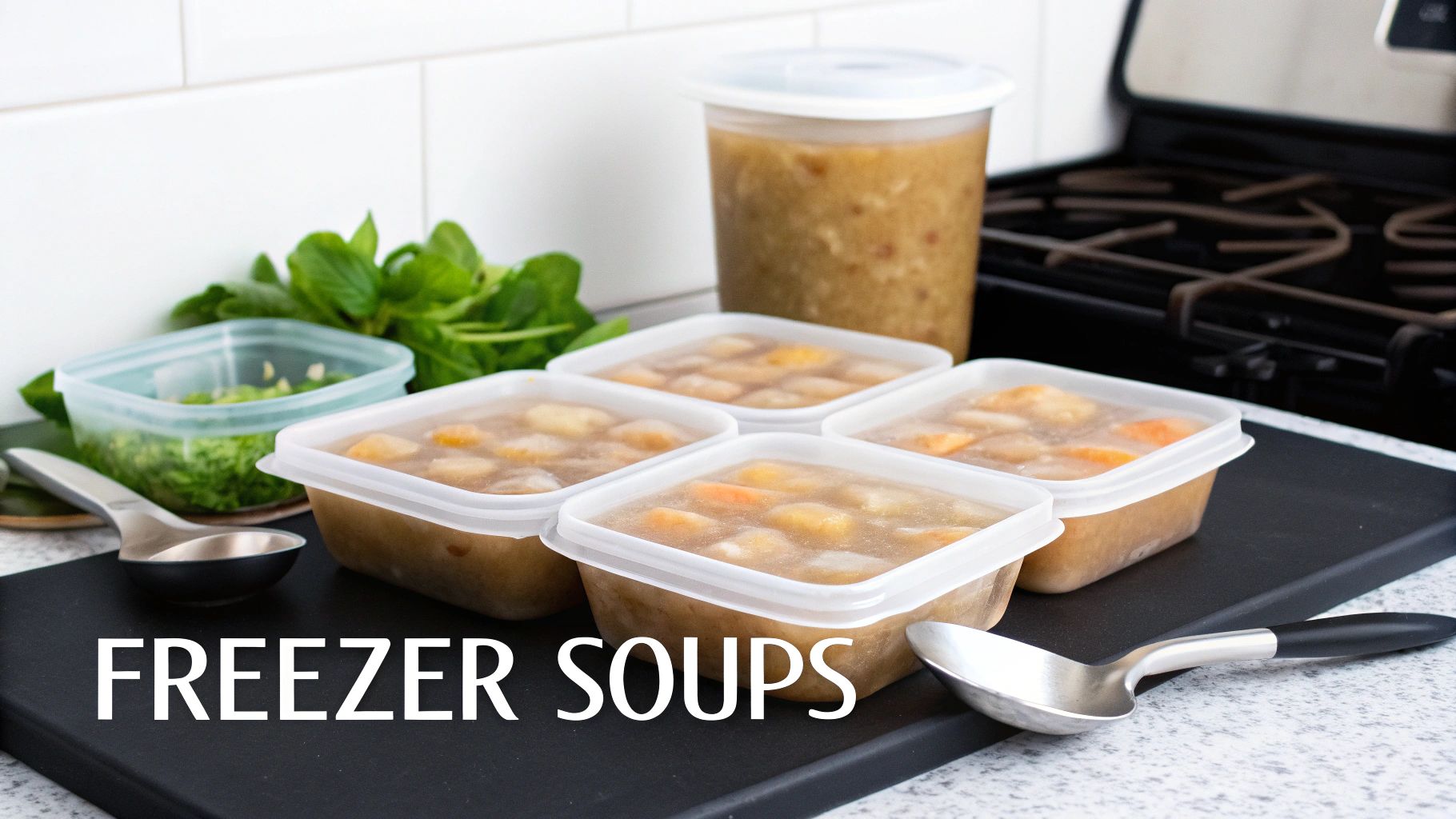
Creating a freezer-friendly soup and broth system is one of the most effective low sodium meal prep ideas for long-term planning. This strategy involves batch-cooking homemade soups and stocks without added salt, then portioning and freezing them for future use. By controlling the ingredients, you can completely eliminate the high sodium found in commercial canned soups and broths, which often contain 600-900mg of sodium per cup, and replace it with rich flavor from herbs, spices, and slow-simmered vegetables.
This method is perfect for anyone managing their sodium intake for heart health or seeking convenient, nutrient-dense meals. A well-stocked freezer of homemade soups provides quick, warming meals that reheat in minutes, offering a reliable alternative to high-sodium convenience foods. By learning about which foods can help manage specific health concerns, you can tailor your soup recipes for maximum benefit.
What are some good freezer-friendly soup recipes?
Building this system is about making large, flavorful batches of foundational soups and broths that can be used in various ways throughout the month.
- Tuscan White Bean and Kale Soup: Simmer white beans, kale, carrots, and celery in a homemade vegetable broth seasoned with rosemary, garlic, and thyme. Freeze in individual portions.
- Thai-Inspired Coconut Vegetable Soup: Combine light coconut milk with a homemade vegetable stock, then add ginger, lemongrass, and vegetables like bell peppers and mushrooms.
- Lentil and Spinach Soup: Cook red lentils with cumin, coriander, and turmeric in a low-sodium broth. Stir in fresh spinach just before portioning and freezing.
Pro Tip: Make a concentrated "broth base" by simmering your stock until it reduces by half. Freeze this concentrate in ice cube trays. You can later reconstitute it with water, saving significant freezer space.
What is the best way to freeze and store soups?
Proper storage is crucial for maintaining the quality of your freezer soups and broths for up to three months. Always cool soups and broths completely in the refrigerator before transferring them to the freezer to prevent ice crystals from forming and ensure food safety. Use freezer-safe airtight containers or heavy-duty freezer bags, leaving a small amount of space at the top for expansion. Label each container with the name of the soup, the date it was made, and any reheating instructions. This organization makes it easy to grab a healthy, low-sodium meal on a busy day.
How do different low sodium meal prep methods compare?
| Method | 🔄 Implementation Complexity | ⚡ Resource & Time Requirements | ⭐ Expected Outcomes | 📊 Ideal Use Cases | 💡 Key Advantages / Tips |
|---|---|---|---|---|---|
| Herb-Seasoned Protein Bowls | 🔄 Medium — chopping, herb-blending, planning | ⚡ Moderate prep (1–2 hrs); fresh herbs, containers; 3–4 day freshness | ⭐ High flavor with low sodium; balanced macros | 📊 Meal-prep for hypertension management, busy professionals, customization | 💡 Store components separately; freeze herbs in oil; use AI for macro/sodium tracking |
| Slow-Cooker Batch Cooking | 🔄 Low (set-and-forget) but requires advance scheduling | ⚡ Low active time; long cook window (6–8+ hrs); single appliance | ⭐ Deep, developed flavors; tender proteins; versatile bases | 📊 Bulk base creation, freezing/portioning, time-constrained schedules | 💡 Layer ingredients, cook on low, portion immediately; use homemade stock |
| Sheet Pan One‑Tray Dinners | 🔄 Low — simple prep, timing/arrangement sensitivity | ⚡ Very fast cook (20–30 min); oven and pans; minimal cleanup | ⭐ High convenience and roast flavor; moderate complexity of taste | 📊 30‑minute meals, family dinners, quick batch prep | 💡 Cut uniform sizes, avoid overcrowding, use parchment; divide pan for portions |
| No‑Cook Assembly Boxes | 🔄 Low cooking complexity, medium organizational prep | ⚡ No cooking at mealtime; front-loaded prep; many containers; 4–5 day shelf life | ⭐ Optimal texture/freshness and precise sodium control | 📊 People avoiding kitchen time, limited facilities, fitness-focused users | 💡 Store wet/dry separately, use glass containers, small dressing jars |
| Frozen Homemade Breakfast & Snack Packs | 🔄 Medium — batch portioning and freezing workflow | ⚡ Front-loaded prep (2–3 hrs); freezer space for 2–8 weeks | ⭐ Reliable, grab‑and‑go breakfasts with controlled macros | 📊 Busy weekdays, consistent breakfast macros, cost-saving vs commercial | 💡 Label date/macros, create 3–4 flavor variations, thaw reminders |
| Pressure Cooker (Instant Pot) Low‑Sodium Proteins | 🔄 Medium — equipment learning curve and safety steps | ⚡ Very fast per batch (15–20 min); requires pressure cooker investment | ⭐ Tender proteins and concentrated flavors with nutrient retention | 📊 Rapid protein/legume prep for meal plans, limited time cooks | 💡 Use natural release, add aromatics pre-cook, store with cooking liquid |
| Freezer‑Friendly Soup & Broth Systems | 🔄 Medium–High — long simmering and portioning workflow | ⚡ High initial time (3–8+ hrs); freezer space; large pots; long shelf life | ⭐ Significant sodium reduction vs canned; nutrient-dense, comforting meals | 📊 Cold-weather planning, replace canned soups, immune-support meals | 💡 Freeze in portions/ice-cube trays, label sodium per serving, make concentrate |
What are the key takeaways for low sodium meal prep?
Embracing a low-sodium lifestyle doesn't mean sacrificing flavor or convenience. Throughout this guide, we've explored a variety of practical and delicious low sodium meal prep ideas designed to fit seamlessly into your busy schedule. By adopting these strategies, you are taking a proactive step toward better heart health, reduced bloating, and a greater sense of control over your nutritional intake.
Let's recap the powerful systems we've covered. From the versatility of Herb-Seasoned Protein Bowls and the set-it-and-forget-it ease of a slow cooker to the efficiency of Sheet Pan Dinners, you now have a toolkit for creating satisfying meals without relying on salt. We also looked at how No-Cook Assembly Boxes can save you on hectic days and how an Instant Pot can deliver tender, flavorful proteins in a fraction of the time. These aren't just individual recipes; they are frameworks for a sustainable, healthy eating routine.
How can I make low sodium food taste good?
Mastering low-sodium meal prep is about building consistent habits, not achieving perfection overnight. The true value lies in creating a system that works for you, freeing up mental energy and ensuring you always have a healthy option on hand.
- Focus on Flavor: The most important takeaway is that reducing sodium opens the door to a world of other flavors. Get comfortable with your spice rack. Smoked paprika, cumin, garlic powder, onion powder, and a wide array of fresh and dried herbs are your new best friends.
- Prioritize Systems Over Recipes: While the recipes provided are a great starting point, focus on mastering the methods. Learning how to build a balanced sheet pan meal or a versatile grain bowl gives you infinite possibilities, preventing a flavor rut.
- Use Batching to Save Time: Dedicate a few hours one day a week to prepare core components. Cook a large batch of quinoa, roast several chicken breasts, chop all your vegetables, and mix a jar of salt-free dressing. This upfront investment pays dividends all week long.
By integrating these low sodium meal prep ideas, you transform your kitchen from a source of daily stress into a hub of health and efficiency. You're no longer reacting to hunger with last-minute, often unhealthy choices. Instead, you're proactively fueling your body with wholesome, delicious meals that align perfectly with your wellness goals. This structured approach not only supports physical health but also reduces decision fatigue, giving you more time and energy for the things you love.
Tired of manually planning, shopping, and tracking your low-sodium meals? Let technology handle the heavy lifting. The AI Meal Planner creates fully personalized low-sodium meal plans based on your tastes, dietary needs, and health goals, complete with automated grocery lists to make your life even easier. Take the guesswork out of healthy eating and start your personalized plan today.
Frequently Asked Questions
1. How can I add flavor to food without salt?
You can add flavor without salt by using herbs (like rosemary, dill), spices (like cumin, paprika), garlic, onion, citrus juice (lemon, lime), and vinegars. Roasting vegetables also enhances their natural sweetness.
2. How long do low sodium meal preps last?
Most prepped meals with cooked ingredients last for 3-4 days in an airtight container in the refrigerator. No-cook assembly boxes can last up to 5 days if wet and dry ingredients are stored separately.
3. Is meal prepping better than buying low sodium frozen meals?
Yes, home meal prepping is better because it gives you complete control over ingredients, portion sizes, and sodium levels, and it is usually more cost-effective than buying pre-packaged specialty meals.
4. What are some good low sodium sauces I can prep?
You can prep low sodium sauces like a vinaigrette made with olive oil, vinegar, and herbs; a tahini dressing with lemon and garlic; or a tomato sauce using no-salt-added canned tomatoes and spices.
5. Can I freeze my meal prepped food?
Many low sodium meals, especially soups, stews, and cooked grains, freeze very well for up to 3 months. However, salads and fresh vegetables with high water content do not freeze well.
AI-powered nutrition
Get Your Personalized Meal Plan
AI creates the perfect meals for your goals, lifestyle, and taste.
Start Your Journej