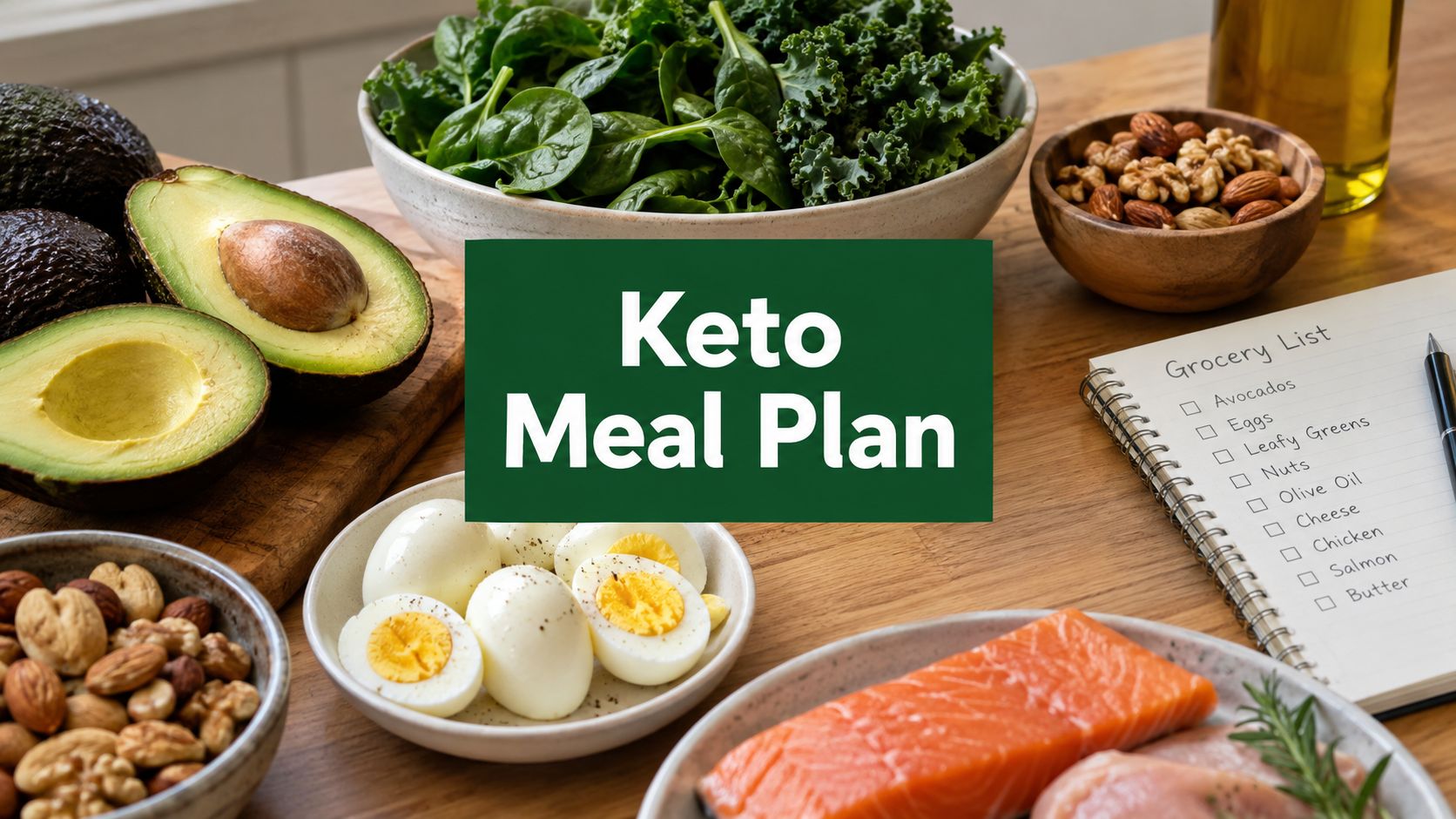
You've bought the eggs, chicken, avocado, and leafy greens, but by Wednesday the spinach is wilting, dinner choices are repetitive, and hidden carbs are creeping into sauces and snacks. A workable keto meal plan with grocery list solves more than “what can I eat?” It turns your daily carb ceiling into a repeatable shopping and cooking system.
How to Build a Keto Grocery List Around Your Macros
A practical keto framework starts with carbohydrate control, adequate protein, and fat used to complete the meal, rather than with a collection of complicated recipes. Strict keto plans often begin below 20 grams of net carbs per day, while broader keto guidance commonly uses under 50 grams of total carbs daily. Harvard's summary describes the familiar pattern as about 70–80% fat, 5–10% carbohydrate, and 10–20% protein (Harvard T.H. Chan School of Public Health).
For a 2,000-calorie day, the 70–80% fat, 10–20% protein, and 5–10% carbohydrate pattern works out to roughly 167 grams of fat, 100 grams of protein, and 25 grams of carbs (NCBI Bookshelf). Those figures are a reference point, not a universal prescription. Your body size, activity, health status, and purpose for using keto should shape the final targets.

Start with ceilings and floors
Set a daily carb ceiling first. If you're using the broader operational target of 50 grams or less per day, divide that allowance across vegetables, dairy, nuts, and any sauces rather than spending it casually on packaged foods. A stricter plan may reserve most of the day for leafy greens and other low-starch vegetables.
Then set a protein floor. Eggs, chicken, beef, fish, and other proteins should appear in planned portions across meals. Fat comes after those two decisions. Olive oil, avocado, butter, cheese, nuts, seeds, and fatty fish can raise energy and improve satisfaction, but adding unlimited fat can push calories beyond your needs.
Use a calorie and macro calculator before shopping if you need individualized targets. Once you know your daily numbers, multiply the proteins and vegetables by the number of meals you'll cook, then add a modest buffer for leftovers.
Build the basket from reusable ingredients
A recipe-first list often creates waste because every dish demands a different herb, sauce, vegetable, or protein. A macro-first list is narrower and more useful:
- Proteins: eggs, ground beef, chicken thighs, salmon, and canned fish.
- Low-starch vegetables: spinach, cauliflower, broccoli, zucchini, cabbage, and salad greens.
- Fats and flavor: olive oil, butter, cheese, avocado, vinegar, herbs, and spices.
- Emergency foods: frozen vegetables, boiled eggs, canned tuna, and simple salad ingredients.
Research has identified 68 unique randomized controlled trials in an umbrella review, with a median sample size of 42 participants per trial and a median follow-up of 13 weeks (umbrella review in PMC). The practical lesson for shopping is simple: keto requires consistent ingredient selection because bread, rice, pasta, and sugary foods can consume a large share of a day's carbohydrate budget.
Practical rule: Shop for the meals you can repeat on a busy day, not the recipes you admire when you have unlimited time.
A Realistic 7-Day Keto Meal Plan With Calories and Macros
The most reliable week I use with clients has a small number of proteins prepared in different ways. Ground beef becomes a salad topping, a skillet dinner, and lettuce-wrap filling. A roasted chicken supports lunch bowls and dinner plates. The plan below keeps estimated daily intake within the requested 1,800–2,200 calorie range, with net carbs below 20–25 grams per day.
These are planning estimates, not medical prescriptions. Portion sizes should be adjusted to your personal calorie and protein targets, and packaged foods should be checked against their own nutrition labels.
7-Day Keto Meal Plan Overview
| Day | Breakfast | Lunch | Dinner | Snack | Calories | Net Carbs |
|---|---|---|---|---|---|---|
| 1 | Spinach and cheese eggs | Chicken salad lettuce bowls | Ground beef cauliflower skillet | Olives and cheese | 1,900 | 19g |
| 2 | Egg muffins with spinach | Leftover beef cauliflower skillet | Roasted chicken thighs with broccoli | Boiled egg | 2,000 | 21g |
| 3 | Scrambled eggs with avocado | Chicken lettuce bowls | Beef zucchini skillet | Cucumber with cream cheese | 1,850 | 18g |
| 4 | Egg muffins | Leftover chicken and broccoli | Salmon with sautéed spinach | Macadamias | 2,100 | 22g |
| 5 | Eggs with leftover vegetables | Salmon spinach salad | Ground beef cabbage skillet | Cheese slices | 1,900 | 20g |
| 6 | Scrambled eggs with cheese | Beef cabbage lettuce wraps | Chicken cauliflower bake | Olives | 2,050 | 23g |
| 7 | Egg and spinach scramble | Leftover chicken cauliflower bowl | Ground beef zucchini plate | Avocado with salt and lime | 2,000 | 21g |
Prepare the egg muffins, roasted chicken, and ground beef early in the week. Keep cooked components separate so you can change texture and seasoning without cooking another full meal. For example, use taco-style seasoning in a lettuce wrap one day, then add olive oil, vinegar, and herbs to the same beef for a salad later.
The snack is optional. A meal plan that supplies adequate protein and energy may leave you satisfied without grazing, but a planned snack is more useful than an improvised trip to the pantry. If you're changing a recipe or checking a packaged ingredient, use a recipe nutrition calculator to estimate how the substitution affects the day.
A published example shows how a full day can remain around 18 grams of net carbs, divided into 4 grams at breakfast, 6 grams at lunch, 5 grams at dinner, and 3 grams for a snack (20-gram keto day example). That distribution works because no single meal has to carry the entire carbohydrate allowance.
Your Aisle-Sorted Keto Grocery List for the Week
A grocery list works best when it follows the store. Start with produce, continue through proteins and chilled foods, then finish with pantry and frozen items. This order limits impulse purchases and keeps the week's ingredients visible before you add anything extra. Buy quantities based on the meals already planned, especially for foods that spoil quickly.
Produce
- Spinach: Buy fresh for salads and frozen for cooked meals.
- Cauliflower: Use for skillet meals, mash, and the chicken bake.
- Broccoli: Roast a batch for lunches and dinners.
- Zucchini: Slice for beef skillets and quick sides.
- Cabbage: Choose a whole head for wraps and skillet meals.
- Leafy salad greens: Use as a base for chicken, beef, and salmon.
- Avocados: Add to eggs, salads, or a planned snack.
- Cucumber and lime: Add fresh crunch and dressing.
- Garlic and herbs: Purchase only what the recipes require.

Meat and seafood
- Eggs: Use for breakfasts, muffins, and quick meals.
- Chicken thighs or a whole chicken: Roast once and portion for several meals.
- Ground beef: Brown in one batch, then season portions differently.
- Salmon fillets: Serve for dinner and in the following day's salad.
- Canned tuna or salmon: Keep one option for no-cook lunches.
Dairy and chilled foods
- Butter: Use for cooking and finishing vegetables.
- Cheese: Choose one versatile block or shredded variety.
- Cream cheese: Pair with cucumber or add to a sauce.
- Plain full-fat yogurt: Check the label and measure a small portion if it fits your carb target.
- Heavy cream: Buy it only when coffee or a recipe gives it a clear role.
Pantry staples
- Olive oil: Use as the default cooking and dressing fat.
- Vinegar: Add to salads and cabbage slaw.
- Olives: Bring flavor to bowls and snacks.
- Salt, pepper, paprika, and dried herbs: Keep seasoning simple.
- Mustard and unsweetened hot sauce: Check labels for added sugar.
- Nuts and seeds: Portion them before eating rather than serving from the bag.
Frozen foods
- Frozen spinach: Reduce waste when fresh greens may sit unused.
- Frozen cauliflower and broccoli: Keep them for backup meals.
- Frozen salmon: Use when fresh fish costs more or is unavailable.
A product's carb density matters more than its health-focused packaging. Diet Doctor classifies foods below 3 grams of net carbs per 100 grams as “best” and foods from 3 to 6 grams per 100 grams as “good” (Diet Doctor food list). Check the serving size, ingredients, and label together. Larger packages can make sense for meat, butter, oil, and frozen vegetables you will use fully. Delicate greens, herbs, and avocados should match the week's meals, or food waste and budget creep follow quickly.
For an unfamiliar product, assess net-carb density first, then use an aisle-sorted grocery list generator to reduce repeated decisions and keep purchases aligned with the plan.
Smart Swaps for Allergies and Dietary Preferences
A substitution only works if it preserves the meal's purpose. Replacing cheese with a low-protein ingredient, for example, may reduce fat and change texture without providing the same satiety. Treat swaps as a macro adjustment, not a one-for-one promise.

| Standard ingredient | Practical substitute | Macro consideration |
|---|---|---|
| Cheese | Nutritional yeast or dairy-free cheese | Often changes protein, fat, and sodium, so check the label |
| Heavy cream | Unsweetened coconut cream | Similar cooking role, but carbohydrate content varies by product |
| Almonds | Sunflower seeds or pumpkin seeds | Keep the serving measured because calories remain concentrated |
| Shrimp | Canned salmon or extra chicken | Replaces shellfish protein without relying on dairy |
| Butter | Olive oil or avocado oil | Usually shifts the fat profile toward unsaturated fat |
| Greek yogurt | Unsweetened coconut yogurt | Verify added sugars and carbohydrate content |
For dairy-free keto, use olive oil, avocado, canned fish, coconut cream, and seeds to provide richness. The cauliflower bake can use olive oil and a dairy-free sauce, while the egg muffins can rely on vegetables and herbs instead of cheese. A gluten-free meal plan resource can help if gluten avoidance is part of a broader dietary requirement, but gluten-free products aren't automatically low-carb.
Pescatarians can replace chicken and beef with salmon, tuna, eggs, tofu, and other suitable proteins, while watching how plant proteins affect carbohydrate totals. For egg-free keto, use leftover salmon, chicken salad, or beef and vegetable bowls for breakfast, then add olive oil, avocado, or seeds where the removed eggs had supplied fat.
The safest workflow is to make one swap at a time, record the package macros, and adjust the next meal rather than trying to repair the entire day at night.
What a Week of Keto Actually Costs and How to Save
A budget-conscious keto week can be built around eggs, chicken thighs, ground beef, cabbage, frozen spinach, and pantry basics. Independent budget coverage places a realistic one-adult weekly range at about $55–$85 in 2026 for 1,800–2,200 calories, although local prices and store choice can change the result substantially (budget keto grocery guidance).
Three useful budget tiers
| Tier | Typical basket | Cost guidance |
|---|---|---|
| Economy | Eggs, chicken thighs, ground beef, cabbage, frozen vegetables | About $55–$60 |
| Standard | The plan above, with salmon, avocados, and fresh produce | About $85 |
| Premium | More salmon, specialty products, premium cuts, and extra convenience foods | About $130 |
The economy tier depends on repetition, not deprivation. Use cabbage instead of a larger amount of avocado, frozen spinach instead of delicate greens, and chicken thighs instead of premium poultry cuts. Ground beef can replace some salmon meals, while olive oil supplies a flexible fat source without requiring a separate specialty product.
The standard tier offers more variety but still avoids buying ingredients for one isolated recipe. Premium spending usually comes from frequent seafood purchases, branded convenience foods, specialty keto products, and items that spoil before a second use.

Budget test: Before an item enters your basket, identify its second meal. If it has no second use, buy a smaller amount or choose a substitute.
Use frozen vegetables when freshness isn't essential, portion meat before freezing, and plan leftovers before you cook. Store-brand butter, eggs, oil, and canned fish can reduce the bill without changing the meal structure. Seasonal produce can also lower cost, but don't buy a large quantity just because it appears inexpensive.
For wider household planning, a guide to the monthly food budget for one provides useful context beyond a single keto week. Compare your actual receipts across several shopping trips rather than treating one store visit as a permanent price.
Meal Prep Scheduling and Personalizing Your Plan
A sustainable week needs one main preparation session and one refresh, not an entire day in the kitchen. On Sunday, roast the chicken, brown the ground beef, bake the egg muffins, and cook the first batch of vegetables. Portion meals immediately so leftovers become planned lunches instead of forgotten containers.
Mid-week, refresh the vegetables and cook the salmon. Keep sauces and dressings separate until serving, because wet greens and reheated vegetables lose appeal quickly. Use the cabbage, spinach, cauliflower, and broccoli in different textures so the same ingredients don't feel like the same meal.
A container system also matters. Leak-resistant, dishwasher-safe options made from durable meal prep container materials can make it easier to separate proteins, vegetables, and dressings without relying on disposable packaging.
Adherence often fails when meals become monotonous or every decision happens at dinnertime. Research summaries report keto adherence ranging from 9.5% at 16 weeks to 98% at 1 year, depending on the definition and support, while one personalized 9-month program declined to 23% at 6 months and 8.4% at 9 months amid monotony, psychological fatigue, social pressure, and restriction (adherence review). Pre-committed swaps, repeatable shopping, and leftover planning reduce those daily decisions.
One option is AI Meal Planner, which can generate customized weekly menus based on goals, allergies, and preferences, then produce an aisle-sorted grocery list with macro and calorie details. Use it alongside your own label checks and clinical guidance, especially if you manage a health condition or take medication.
Before starting a strict plan, speak with a qualified healthcare professional if you have a medical condition, use glucose-lowering medication, or have another reason to require dietary supervision. Long-term food quality matters too. Major guidance favors minimally processed foods, limits saturated fat, and prioritizes unsaturated sources such as olive oil, nuts, seeds, fish, and non-starchy vegetables, so keto doesn't have to mean a dairy-heavy bacon-and-cheese basket.
AI Meal Planner can turn your goals, allergies, preferences, and calorie or macro needs into a weekly menu with recipes and an organized grocery list. Visit AI Meal Planner to create a keto plan that reuses ingredients, supports substitutions, and removes the guesswork from your next shop.
AI-powered nutrition
Get Your Personalized Meal Plan
AI creates the perfect meals for your goals, lifestyle, and taste.
Start Your Journej