How do I track macros for weight loss?
To track macros for weight loss, first calculate your daily calorie target for a 15-20% deficit. Next, allocate those calories into a macro split, such as 40% carbohydrates, 30% protein, and 30% fat. Finally, use a food scale and a tracking app like MyFitnessPal to log everything you eat and ensure you consistently meet these daily targets.
Tracking macros isn't just about eating less—it's about eating smarter. While jumping straight into calorie counting is a common starting point for weight loss, it only gives you part of the picture. The problem is, it treats a calorie from a candy bar the same as a calorie from a chicken breast, completely ignoring how different foods affect your body, your hunger levels, and your ability to hold onto muscle.
Why should I track macros instead of just calories?
Tracking macros—short for macronutrients—takes you a layer deeper. It shifts the focus from just the quantity of calories to their quality and composition. This approach helps you lose fat while preserving muscle, manage hunger, and maintain stable energy levels.
The big three macronutrients are protein, carbohydrates, and fats. Each one has a specific job:
- Protein: Absolutely essential for building and, more importantly, preserving muscle mass while you're losing weight. It also has the highest "thermic effect," meaning your body actually burns more calories just digesting it.
- Carbohydrates: This is your body's number one energy source, fueling everything from your brain to your toughest workouts. Sticking to complex carbs helps keep your energy levels steady all day.
- Fats: Far from being the enemy, healthy fats are crucial for producing hormones and absorbing certain vitamins. They're also key for feeling full and satisfied after a meal.
Does a balanced macro approach have scientific backing?
Yes, getting the macro balance right does more than just help the scale go down; it completely changes your body composition. You’re far more likely to lose actual body fat while keeping the muscle you've worked for, leading to a stronger, more toned look. A well-planned macro strategy can also make a huge difference in managing hunger and avoiding energy crashes, which makes the whole process feel a lot less like a struggle.
The research backs this up time and time again. With obesity now affecting 42.4% of U.S. adults, finding strategies that truly work is more critical than ever.
A major 2021 analysis found that combining a calorie deficit with specific macro targets reduced metabolic syndrome markers like blood pressure and triglycerides by up to 15-20% more than just cutting calories alone.
The study made a key point: ensuring protein intake stayed around 20-25% was vital for preserving muscle during the weight loss phase. You can explore more about these nutritional findings and see the data for yourself.
Ultimately, learning how to track macros is about giving your body the right fuel, in the right amounts, to achieve lasting results. If you’re ready to move past simple calorie counting and take real control of your nutrition, tools like an AI Meal Planner can even automate the entire setup for you.
How do I calculate my personal calorie and macro needs?
Before you can track a single thing, you need to know what you’re tracking toward. Calculating your personal calorie and macro targets is the essential first step, turning vague weight loss goals into a concrete, actionable plan. This isn't about guesswork; it's about using a few simple formulas to build a nutritional blueprint tailored to your body.
It all starts with figuring out your baseline—the energy your body uses just to stay alive.
Step 1: Calculate your Basal Metabolic Rate (BMR)
Your Basal Metabolic Rate (BMR) is the number of calories your body burns at complete rest. Think of it as the energy required to power your most basic, life-sustaining functions—breathing, circulating blood, growing cells. It’s your body’s “idle speed,” even if you were to stay in bed all day.
To get this number, we'll use the Mifflin-St Jeor equation, which is widely considered one of the most accurate methods available.
- For Men: (10 x weight in kg) + (6.25 x height in cm) - (5 x age in years) + 5
- For Women: (10 x weight in kg) + (6.25 x height in cm) - (5 x age in years) - 161
This calculation gives you a solid baseline. But of course, nobody lies in bed all day. The next step is to account for all your daily movement.
Step 2: Determine your Total Daily Energy Expenditure (TDEE)
This is where your BMR becomes truly useful. Your Total Daily Energy Expenditure (TDEE) is a much more realistic estimate of the calories you burn each day. It takes your BMR and multiplies it by an activity factor, which accounts for everything from your job and daily errands to your workouts.
Here are the standard multipliers to choose from:
- Sedentary: BMR x 1.2 (little to no exercise)
- Lightly Active: BMR x 1.375 (light exercise 1-3 days/week)
- Moderately Active: BMR x 1.55 (moderate exercise 3-5 days/week)
- Very Active: BMR x 1.725 (intense exercise 6-7 days/week)
The resulting number is your TDEE—the amount of calories you need to eat to maintain your current weight. If you'd rather skip the manual math, our handy TDEE calculator can figure it out for you in seconds.
Step 3: Set a sustainable calorie deficit
To lose weight, you need to eat fewer calories than your TDEE. Simple enough, right? The key is to create a deficit that’s effective but also sustainable. A good rule of thumb is a 15-20% reduction from your TDEE.
For most people, this works out to be a deficit of around 500 calories per day. This pace is generally considered safe and effective, promoting a steady loss of 1-2 pounds per week without feeling overly restrictive.
This simple infographic breaks down the entire process from start to finish.
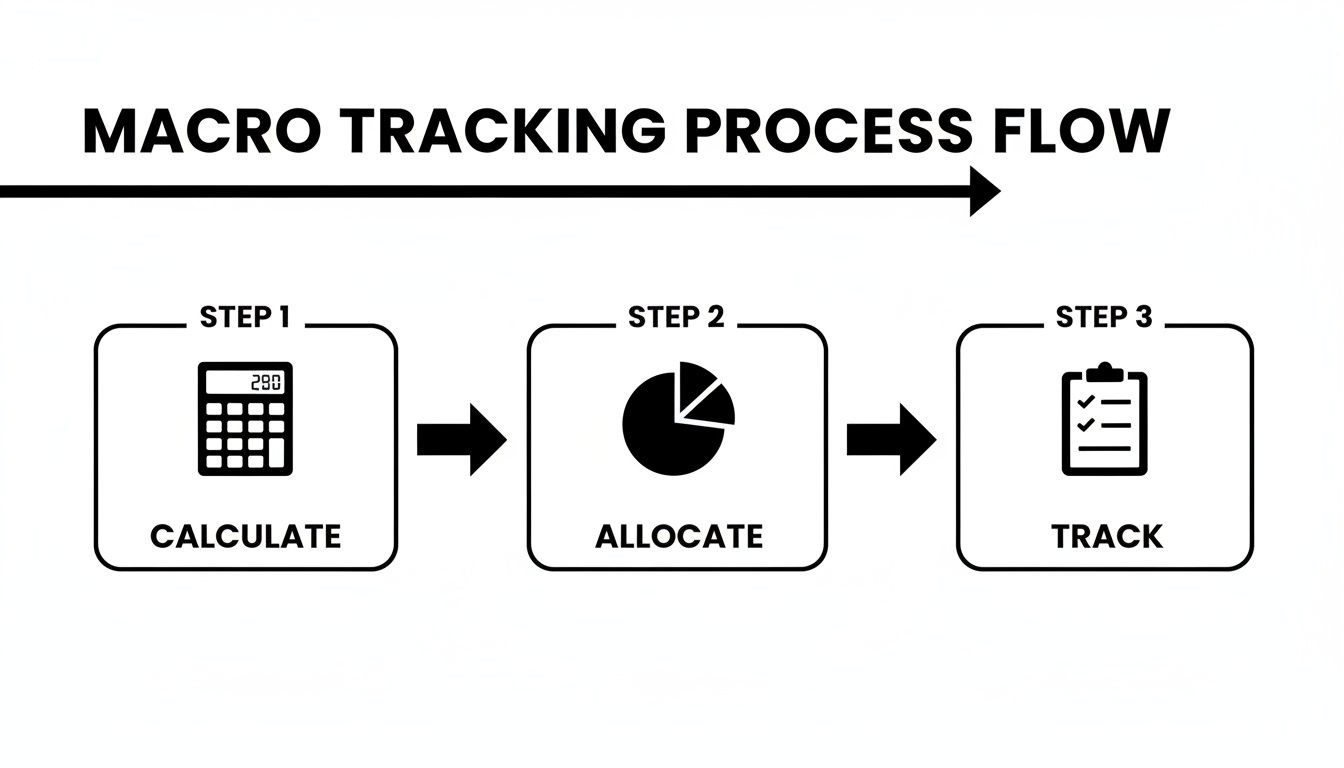 As you can see, it’s a straightforward loop: calculate your numbers, create a plan to hit them, and then track your intake consistently.
Step 4: Convert your calories into macro grams
The final step is translating that daily calorie goal into specific targets for protein, carbohydrates, and fats. A balanced and effective starting point for most people is a 40/30/30 macro split.
- 40% of calories from Carbohydrates
- 30% of calories from Protein
- 30% of calories from Fat
To turn those percentages into actual grams you can track, you just need to know the calorie count for each macro:
- Protein: 4 calories per gram
- Carbohydrates: 4 calories per gram
- Fat: 9 calories per gram
This structure is fantastic for promoting fat loss while also preserving muscle, which is crucial for a healthy metabolism. Research supports this, too. One study on a 70kg person with a 2,000-calorie goal found that targeting 150g protein (30%), 200g carbs (40%), and 67g fat (30%) aligns perfectly with established models for achieving a sustainable 0.5-1kg weekly weight loss.
By following these steps, you’re no longer just "eating healthy"—you’re following a clear, data-driven plan built specifically for you.
What are the best tools for tracking my macros accurately?
So, you've got your macro targets. Great! Now comes the practical part: actually tracking what you eat. To do this right, you really only need a couple of key items to track everything accurately and efficiently.
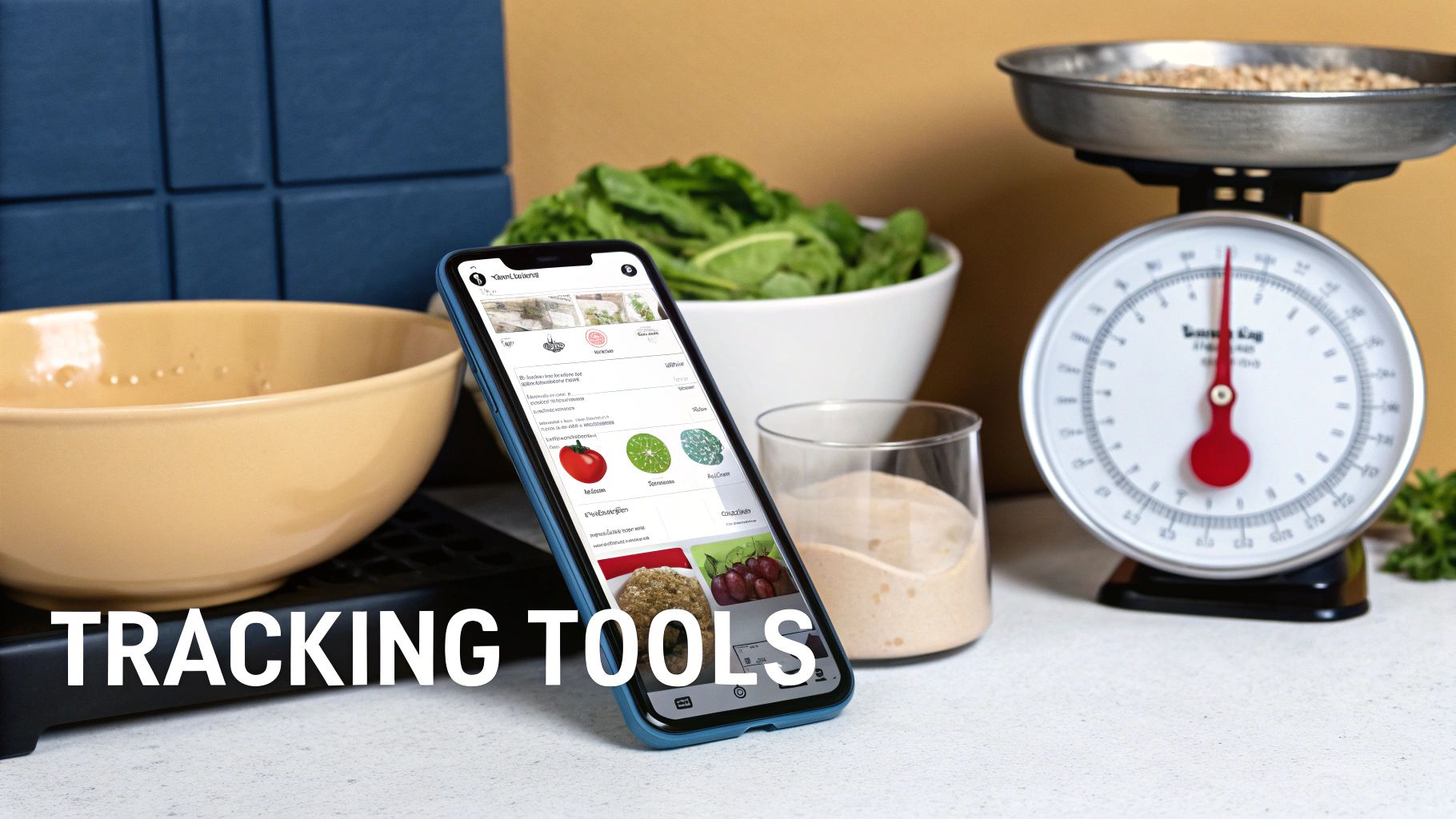
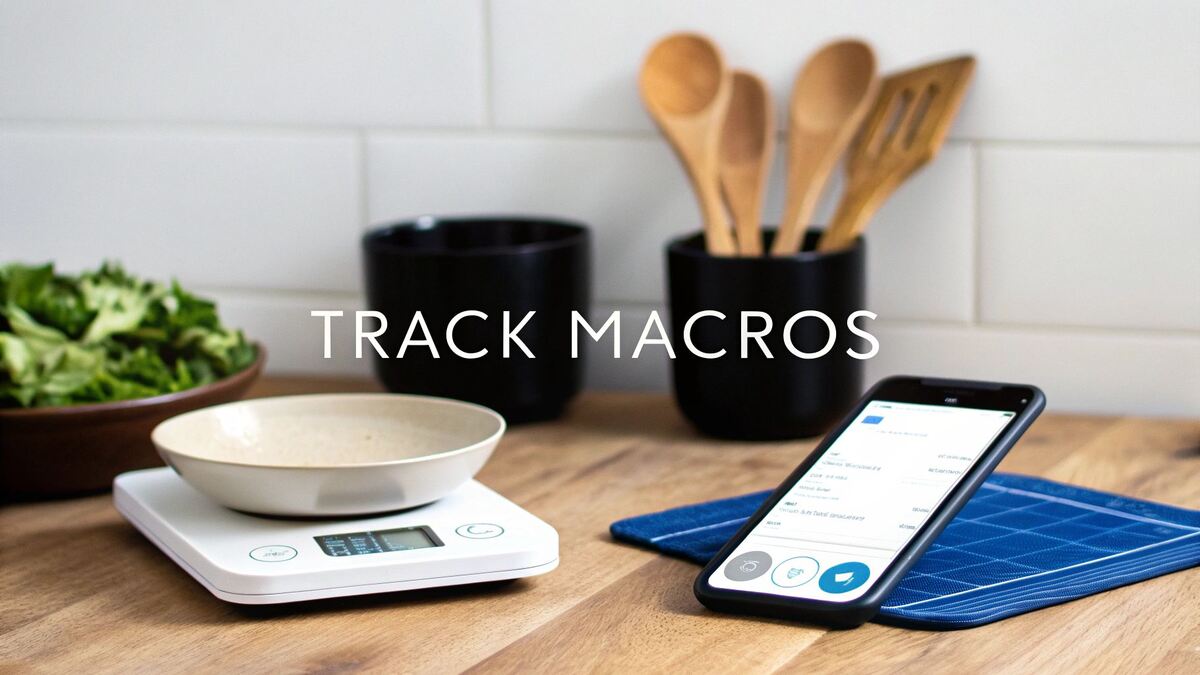
The single most important tool in your arsenal is a digital food scale. It might seem like a small detail, but the difference between weighing your food in grams and "guesstimating" with measuring cups is enormous. Volume-based measurements are notoriously inconsistent. A cup of oats can vary wildly in weight depending on how you pack it. Weighing in grams removes all that guesswork and makes sure your logs are precise.
Which macro tracking app should I choose?
Once you're weighing your food, you need a place to log it. This is where a good tracking app comes in, acting as your digital food diary and doing all the heavy lifting on the calculations. The two most popular and reliable options are MyFitnessPal and Cronometer.
- MyFitnessPal: This one is known for its massive, user-generated food database. If you eat a packaged food, chances are someone has already logged it, which makes tracking incredibly fast. The catch? User-generated entries can sometimes be inaccurate, so it’s always a good idea to double-check the numbers.
- Cronometer: This app is praised for its accuracy. The database is more curated and verified, and it provides detailed micronutrient information that goes way beyond just the basic macros. This makes it a favorite for anyone who really wants to dive deep into their overall nutrition.
The best app is the one you'll actually use consistently. My advice? Try both for a few days. See which interface you like better and which workflow feels more natural to you. A smooth user experience is what turns tracking from a chore into a habit.
How can I make my daily tracking workflow more efficient?
Having the right tools is only half the battle; fitting them into your daily life is what really drives results. The most effective workflow is proactive, not reactive. Instead of logging meals after you've eaten them, try planning and logging your entire day's food in the morning.
This approach lets you see exactly how your meals fit into your macro budget ahead of time. You can make smart adjustments—like adding a protein shake to hit your protein goal or swapping rice for quinoa for more fiber—before the day even begins.
If you're making your own recipes and need to figure out the nutrition, our recipe nutrition calculator can break it all down for you.
For those who want to completely skip the daily puzzle of planning and logging, platforms like AI Meal Planner offer a more automated approach. The system doesn't just track what you've eaten; it generates a complete meal plan where every single meal is already designed to hit your specific macro and calorie targets. This completely removes the mental load of daily tracking and decision-making.
How can I build a meal plan that actually hits my macro goals?
Okay, so you’ve calculated your numbers. That’s the easy part. The real challenge—where most people get stuck—is turning those numbers into actual food on your plate, day after day. This is where the theory of macro tracking becomes a practical skill.
Building a meal plan that lines up with your macro targets can feel like a game of nutritional Tetris. You’re constantly trying to slot in the right foods to complete your daily picture without going over on carbs or coming up short on protein.
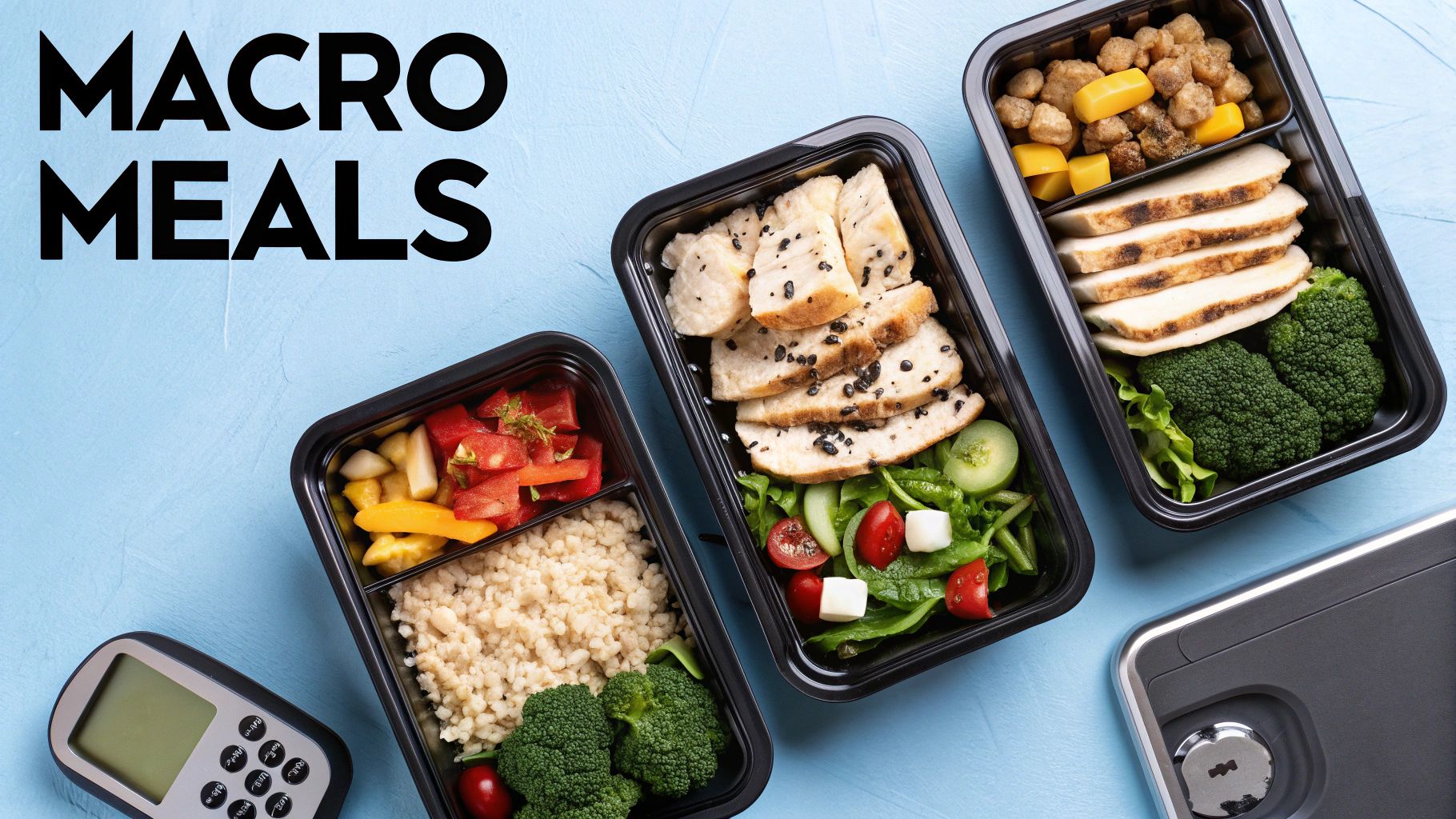
The secret is to stop eating randomly and hoping for the best. Instead, you need to proactively build your day around your targets. This is exactly why meal planning is a total game-changer for anyone serious about using macros for weight loss.
What does a sample day of macro-friendly eating look like?
Let's make this tangible. Say your goal is 1,800 calories with a 40/30/30 split (Carbs/Protein/Fat). That breaks down to roughly 180g of carbs, 135g of protein, and 60g of fat each day. Here’s a simple, delicious way you could structure a day to nail those targets using common, easy-to-find ingredients.
Sample 1-Day Meal Plan (1800 Calories, 40/30/30 Split)
| Meal | Food Item & Portion | Protein (g) | Carbs (g) | Fat (g) | Calories |
|---|---|---|---|---|---|
| Breakfast | 3 large eggs, scrambled w/ spinach + ½ cup oatmeal w/ berries | 25 | 35 | 18 | 402 |
| Lunch | 6 oz grilled chicken breast + 1 cup quinoa + roasted broccoli | 45 | 45 | 10 | 450 |
| Dinner | 6 oz baked salmon fillet + 1 medium sweet potato + asparagus | 40 | 40 | 20 | 500 |
| Snack | 1 cup Greek yogurt + 1 tbsp almond butter | 25 | 15 | 12 | 268 |
| Daily Total | 135g | 135g | 60g | 1620 |
This structure gives you a clear road map. The science backs this up, too. A huge 2021 meta-analysis found that diets with precise macro targets led to 6-10kg (about 13-22 lbs) of weight loss over a year and slashed metabolic syndrome markers by 10-25%. It just works.
How can I make meal planning easier?
The example above is just a starting point. The real power comes from creating a plan with foods you genuinely enjoy. The goal is not to force-feed yourself chicken and broccoli if you can't stand it. It's about learning how to combine the foods you love in a way that fits your numbers.
Start by making a go-to list of your favorite macro-friendly foods in each category:
- Protein Sources: Chicken Breast, Turkey, Salmon, Tuna, Lean Beef, Eggs, Greek Yogurt, Cottage Cheese
- Carbohydrate Sources: Oats, Quinoa, Brown Rice, Sweet Potatoes, Lentils, Fruits, Vegetables
- Fat Sources: Avocado, Olive Oil, Nuts, Seeds, Almond Butter, Cheese (in moderation)
Pro Tip: Cook your staples—like chicken, rice, and roasted veggies—in big batches. This "meal prep" approach makes throwing together macro-friendly meals during a hectic week incredibly fast. It’s your best defense against the temptation of takeout.
Is there an automated way to plan my meals?
Yes, if manually planning every meal to hit precise numbers feels like a part-time job, technology offers a massive shortcut. Tools like AI Meal Planner completely solve the "food Tetris" puzzle for you.
You just plug in your macro targets, food preferences, and any allergies. The system instantly generates a full week of meals—breakfast, lunch, dinner, and snacks—where every day is perfectly dialed into your goals. It even spits out an organized shopping list, which you can make even more efficient with a grocery list generator.
This approach removes all the daily guesswork and mental drain, making it almost effortless to stay consistent.
What common mistakes should I avoid when tracking macros?
Jumping into macro tracking is a huge step toward eating with intention, but it’s really easy to get tripped up by a few common hurdles. Knowing what these pitfalls look like from the start is the key to building habits that lead to real, sustainable weight loss.
One of the biggest culprits is simply "guesstimating" your portion sizes. What you think is a "tablespoon" of peanut butter or a "cup" of rice can be wildly different from reality, and those little miscalculations can easily add hundreds of extra calories to your day. This is exactly why a digital food scale is your best friend for accuracy.
Forgetting to log hidden calories and liquids
It’s easy to remember to log your main course—the chicken breast and quinoa are obvious. But what about the olive oil you cooked them in? The splash of creamer in your coffee? These "hidden" calories from sauces, dressings, and cooking oils can completely derail your deficit without you even realizing it.
The fix is simple: if it goes in your mouth, it goes in the app.
- Cooking Oils: A single tablespoon of olive oil rings in at around 120 calories, almost all from fat. Measure it before it even hits the pan.
- Salad Dressings: That creamy ranch can easily dump 150+ calories onto an otherwise "healthy" salad. You’re better off with a light vinaigrette, or at the very least, measuring your portion carefully.
- Coffee Add-ins: A little bit of cream and sugar might seem trivial, but it can quickly tack on an extra 50-100 calories to your daily total.
The single best habit you can build is to log everything before you eat it. This simple shift turns tracking from a chore into a planning tool and makes it almost impossible to forget those small but crucial additions.
Sticking to outdated targets for too long
Your body isn't a static machine. As you lose weight, your metabolism naturally adapts. Your Basal Metabolic Rate (BMR) and Total Daily Energy Expenditure (TDEE) both decrease because a smaller body simply requires less energy to function.
If you keep eating for the body you had 10 pounds ago, your calorie deficit will shrink and eventually disappear. This is the infamous plateau.
To keep the progress coming, you have to update your numbers. A good rule of thumb is to recalculate your calorie and macro targets after every 10-15 pounds of weight loss or if your progress stalls for more than two or three weeks.
How can I stay consistent and when should I adjust my macros?
Long-term success with macro tracking has nothing to do with being perfect—it’s all about consistency. Real life is going to happen. There will be birthday parties and weekends out with friends where hitting your numbers perfectly isn't in the cards, and that's okay.
If you know you're dining out, pull up the menu online beforehand. Make the best choice you can without stressing, and remember that one meal won't undo a whole week of solid effort. Your goal is simply to get right back on track with your next meal.
When should I recalculate my macro targets?
Think of your macro targets as a moving target, not something set in stone. As you successfully lose weight, your body's energy needs change. A smaller body simply burns fewer calories, both at rest and during activity. Sticking with outdated targets is one of the most common reasons people hit frustrating weight loss plateaus.
To keep the momentum going, you need to check in and adjust your numbers periodically. Here’s a simple rule of thumb that works for most people:
- Recalculate your macros after every 10-15 pounds of weight loss.
- Re-evaluate your targets if your progress has completely stalled for more than two weeks straight.
This proactive approach ensures your plan stays aligned with your body’s current needs, keeping you in the driver's seat and moving toward your goal. You can quickly find your updated numbers using a reliable calorie deficit calculator.
FAQ: Quick questions about tracking macros
Here are direct answers to the most common questions people have when starting their macro tracking journey.
Do I need to hit my macros perfectly every single day?
No, aim for consistency over perfection. As long as your weekly averages are close to your targets, you are on the right track for sustainable progress.
What is the best macro ratio for losing weight?
A balanced split of 40% carbohydrates, 30% protein, and 30% fat is an effective starting point for most people aiming for fat loss while preserving muscle.
How often should I recalculate my macros?
Recalculate your macros after every 10-15 pounds of weight loss or if your progress has completely stalled for more than two consecutive weeks.
Can I just estimate my food portions instead of weighing them?
No, estimating portion sizes is highly inaccurate and often leads to stalled progress. Using a digital food scale is essential for precise tracking.
What does "IIFYM" mean?
IIFYM stands for "If It Fits Your Macros." It's a flexible dieting approach where you can eat any food you like, provided it fits within your daily macro targets.
What are the best protein sources for hitting my goals?
Lean protein sources like chicken breast, turkey, salmon, eggs, Greek yogurt, and cottage cheese are excellent choices for hitting your daily protein target effectively.
Is it necessary to track vegetable macros?
For most non-starchy vegetables like broccoli, spinach, and lettuce, precise tracking isn't critical due to their low calorie and carb content, but logging them is still good practice.
Ready to stop the guesswork and build a meal plan that hits your goals perfectly every time? Let AI Meal Planner do the heavy lifting by generating personalized weekly plans tailored to your exact macro targets. Get started with your custom plan today.
AI-powered nutrition
Get Your Personalized Meal Plan
AI creates the perfect meals for your goals, lifestyle, and taste.
Start Your Journej