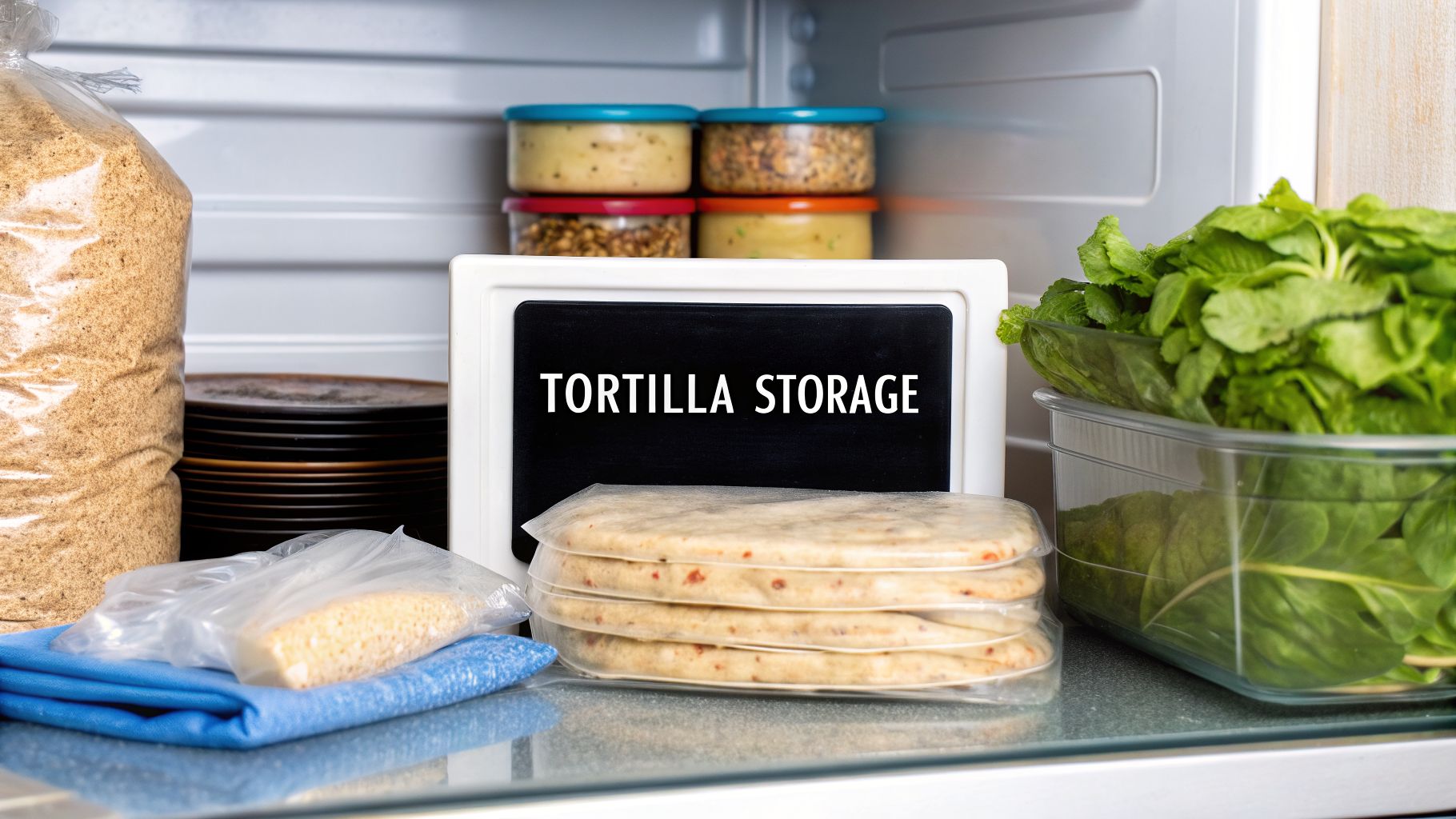
To store tortillas, place them in the pantry in a sealed bag for 1–2 days. For longer storage, keep them in a resealable bag in the refrigerator for up to 3 weeks. To keep tortillas for 6–12 months, wrap them tightly in plastic wrap, place them in a freezer bag, and store them in the freezer.
Nobody likes reaching for a tortilla only to find it's either rock-hard or spotted with mold. Knowing how to store tortillas the right way is about more than just avoiding waste; it’s about keeping their flavor and soft, pliable texture intact for your next meal. Get it wrong, and you’re looking at stale, brittle discs that crack the second you try to fold them.
This isn't just about saving a few bucks—it's about making sure your tacos, burritos, and quesadillas are as good as they can be.
Mastering a few simple storage tricks ensures you always have perfect tortillas on hand. And these principles extend beyond just this one item; understanding safe food storage practices is a cornerstone of any well-run kitchen. We'll break down the best methods for both flour and corn tortillas, from the pantry to the freezer, so you're always prepared.
Tortilla Storage Cheat Sheet
To make things even easier, here’s a quick-glance table to help you decide the best way to store your tortillas based on when you plan to use them.
| Storage Method | Best For | Flour Tortilla Shelf Life | Corn Tortilla Shelf Life |
|---|---|---|---|
| Pantry | Using within 1-2 days | 1-7 days (check package) | Up to 10 days (check package) |
| Refrigerator | Using within a few weeks | 2-3 weeks | 6-8 weeks |
| Freezer | Long-term storage | Up to 12 months | Up to 8 months |
This little cheat sheet is your go-to for keeping tortillas at their peak, whether you're making a quick lunch tomorrow or stocking up for the future.
Which storage method is right for you?
Deciding how to store your tortillas really comes down to one simple question: when are you going to eat them? Your timeline is everything.
Are you making tacos tonight? The pantry is probably fine. Prepping lunches for the week? The fridge is your best bet. Stocking up on a great sale? It's time to make room in the freezer. Matching your storage to your meal plan is the secret to keeping every tortilla fresh and ready to go.

As you can see, it all boils down to your schedule. Let’s break down when and why you’d choose each spot.
When should I use pantry storage?
Keeping tortillas on the counter or in the pantry is the go-to for short-term use, usually within 1-2 days. This is perfect if you just grabbed a pack for tonight's dinner or tomorrow's wrap.
The key is to keep them sealed up tight in their original bag or a Ziploc. Air is the enemy here; it’ll dry them out and make them crack in no time.
One word of caution: if your kitchen gets warm or humid, mold can pop up surprisingly fast. In that case, you're better off just putting them straight into the fridge, even for a day or two.
Is the refrigerator a good choice for tortillas?
The fridge is the perfect middle ground. It’s your best friend for weekly meal prep, easily extending the life of your tortillas far beyond the pantry. Storing them in the cold slows down both staling and mold growth, giving you up to three weeks of freshness.
Key Takeaway: While the fridge keeps tortillas fresh, the cold air can also make them stiff. The trick is to make sure they're in a completely airtight bag to lock in that moisture.
When you're looking at storage bags, understanding the properties of different food film packaging materials can actually make a difference in keeping things fresh.
Why should I consider freezing tortillas?
For anyone who buys in bulk or makes a big homemade batch, the freezer is a game-changer. It’s the ultimate long-term solution, locking in that fresh-made texture and flavor for a solid 6-12 months.
This is a meal prepper's dream. You'll always have tortillas ready for a quick meal, which not only saves money but also cuts down on food waste.
I love to freeze them in smaller, meal-sized portions. That way, I can just grab what I need for the week without thawing the whole stack. It’s a simple strategy that makes your grocery budget stretch further—a core benefit we built into our AI Meal Planner.
How do I stop tortillas from going moldy in the fridge?

Tossing an open package of tortillas into the fridge is a fast track to disappointment. We've all done it, only to find a sticky, moldy mess a few days later. The biggest mistake you can make is leaving them in the original store packaging after you've broken the seal. That flimsy plastic is designed for the grocery shelf, not your fridge—it traps condensation and creates a humid breeding ground for mold.
The good news is, with a couple of quick adjustments, you can keep your tortillas fresh, pliable, and ready to go all week long. The entire game is about controlling moisture while shielding the tortillas from the fridge's cold, dry air.
Why you should ditch the original bag
Let's be clear: the bag your tortillas come in is meant for shipping and retail, not for proper storage. Once you tear it open, it's practically useless. It can't be resealed tightly, which lets air in to dry out the edges while trapping every bit of moisture the tortillas release as they cool down.
That trapped moisture is mold's best friend. Storing tortillas the wrong way can lead to 50% faster mold growth, but when you do it right, they can easily last two or three weeks. Just by avoiding that original plastic bag, you can cut your mold risk by as much as 60%. A simple change in your storage routine makes a world of difference. To learn more about tortilla market trends, you can check out this comprehensive report.
How the parchment paper trick helps
Ever pull a stack of tortillas from the fridge, only to find they’ve fused into one inseparable brick? It’s a common problem caused by moisture between the layers sticking them together in the cold.
Luckily, the solution is incredibly simple: parchment paper.
Before stashing them, take a minute to separate the tortillas into smaller, more manageable stacks—say, five or six at a time. Then, just place a small square of parchment paper (or wax paper) between each one, or between every few.
This simple step accomplishes two critical things:
- It absorbs excess condensation. The paper wicks away just enough moisture to stop things from getting soggy and moldy.
- It creates a non-stick barrier. You can easily pull out a single tortilla without ripping the whole stack apart.
Pro Tip: If you're planning meals for the week, stack your tortillas based on your recipes. Need three for Tuesday's tacos and two for Wednesday's quesadilla? Stack them that way. It turns them into convenient, grab-and-go portions. This is a great habit to adopt, much like using a tool like the AI Meal Planner to organize your food prep.
Why an airtight seal is non-negotiable
Once you’ve got your tortillas separated with parchment paper, the final step is moving them to a proper home. Your best bet is a high-quality, resealable zip-top bag. Squeeze out as much air as you possibly can before you seal it shut.
This airtight seal is absolutely crucial. It keeps the tortillas from absorbing stray odors from other foods in the fridge—nobody wants their burrito to taste like last night’s leftover onions. More importantly, it locks in the tortillas' natural moisture, keeping them soft and flexible instead of turning them into brittle, cracked discs.
What is the best way to freeze tortillas?

When you need to keep tortillas fresh for months, the freezer is your best friend. It’s the perfect solution if you buy in bulk or love to make big batches of homemade tortillas but can’t possibly use them all at once.
Just be warned: simply tossing the package into the freezer is a recipe for disaster. You'll end up with a brittle, freezer-burnt mess.
The secret to success is all in the preparation. By creating a truly airtight barrier, you can lock in all that moisture and flavor, guaranteeing your tortillas come out of the freezer just as soft and pliable as the day you bought them. This method keeps them in prime condition for up to a year.
How to prepare tortillas for the freezer
Before your tortillas even see the inside of a freezer, a little prep work goes a long way. The goal here is twofold: stop them from freezing into a single, inseparable brick and shield them from the harsh, dry freezer air.
First, make sure your tortillas are completely cool. If you're freezing a fresh homemade batch, let them hit room temperature first. Freezing them while they're still warm creates steam, which immediately turns into ice crystals and is a fast track to freezer burn.
Next, think about your future self and decide on portion sizes. It’s so much more practical to freeze tortillas in smaller, meal-sized stacks. Think about how many you usually grab for taco night—maybe five or ten—and group them that way.
Pro Tip: Here’s a little trick I swear by: place a small square of parchment or wax paper between each tortilla, or at least between every few. This simple step is a total game-changer, ensuring you can grab exactly what you need without a fight.
How to use the double-wrap technique
Once your tortillas are stacked and separated, it’s time to wrap them up tight. The absolute best approach is the double-wrap technique. It creates two bulletproof layers of protection against moisture loss and freezer burn.
- First Layer (Plastic Wrap): Get a roll of plastic wrap and tightly bundle your stack of tortillas. As you wrap, press out any air pockets to create a snug seal all the way around. This is your first line of defense.
- Second Layer (Freezer Bag): Now, slide that plastic-wrapped stack inside a heavy-duty, resealable freezer bag. Squeeze out as much excess air as you possibly can before sealing it completely. This second barrier is what makes all the difference for long-term storage.
This double-wrap method creates an airtight seal that is proven to be 40% more effective at preventing moisture loss. Proper freezing can extend a tortilla’s freshness by up to five times, preserving their texture for 6-12 months.
With the growing demand for convenient, long-lasting foods, this storage technique also helps you eat more sustainably by cutting down on household waste. You can dive deeper into the growing tortilla market and its trends with this informative analysis.
Why you shouldn't skip labeling
The final, and most-often-forgotten, step is labeling. Before you tuck your double-wrapped tortillas into the freezer, grab a permanent marker. Write two things on the bag: the date you froze them and how many are inside.
It might seem like a tiny detail, but it’s the key to smart kitchen management. Knowing the date helps you use the oldest packages first—the classic "first in, first out" rule—so nothing gets lost in the freezer abyss for years.
This simple habit turns bulk buying from a potential source of waste into a savvy, cost-saving strategy. It's the same organized approach to food inventory that powers efficient meal planning, much like how the AI Meal Planner helps you track and use your ingredients before they go bad.
How do I reheat tortillas so they taste fresh?
Bringing a cold or frozen tortilla back to its soft, pliable glory is the final, crucial step. A poorly reheated tortilla can turn tough, dry, or even soggy—completely wrecking a good meal.
Fortunately, restoring that fresh-made taste and texture is easy once you know the right technique. The goal is simple: reintroduce gentle heat and a little moisture without accidentally cooking it again. Whether you have five minutes for a quick lunch wrap or a full day to plan for dinner, there's a method that works.
What is the best way to thaw frozen tortillas?
When it comes to thawing, patience really pays off. The absolute best way to revive frozen tortillas is to transfer them from the freezer to the refrigerator overnight.
This slow, gentle thaw lets them defrost evenly without getting gummy or developing wet spots, which is a common problem with faster methods. It perfectly preserves the tortilla’s original texture.
Just pull the portion you need for the next day, leave it in its freezer bag, and let the fridge do the work. By the time you’re ready to cook, they'll be fully thawed, easy to separate, and ready for heating as if they were never frozen.
How can I reheat tortillas quickly?
When you’re short on time, you have several great options for getting tortillas warm and soft in just minutes. The key is to find the right balance of heat and moisture so they don't dry out.
Here are a few of my go-to methods for a quick revival:
Dry Skillet or Comal: Heat a dry, non-stick skillet or a traditional comal over medium heat. Place a single tortilla on the hot surface for about 30-60 seconds on each side. You’ll know it’s ready to flip when it starts to puff up slightly and develop light golden-brown spots. This method adds a lovely, lightly toasted flavor that's hard to beat.
Microwave with a Damp Paper Towel: For the fastest results, stack a few tortillas on a plate and cover them with a lightly damp paper towel. Microwave them in 15-second bursts until they’re warm and steamy. The moisture from the towel gently steams the tortillas, making them incredibly soft and flexible—perfect for burritos.
Expert Tip: Don't go overboard with the microwave. Too much time will suck all the moisture out, leaving you with tough, chewy discs once they start to cool. Always start with a short burst and add more time only if you absolutely need it.
Knowing how to handle ingredients from the fridge is essential, whether you're making a quick quesadilla or planning a feast. If you want more tips, you might be interested in our guide on creating delicious meals from what you already have.
How can I tell if my tortillas have gone bad?
We’ve all been there. You reach for a package of tortillas, ready to make tacos or a wrap, and hesitate. Are these still good? Knowing when to toss a package is key, and thankfully, your senses are the best tools for the job. You can usually spot the signs of spoilage long before any obvious mold shows up.
Trust your nose first. A fresh tortilla has a neutral, pleasant smell of corn or flour. If you open the bag and get hit with a sour, tangy, or weirdly chemical-like odor, that’s a major red flag. That off-smell is a clear sign that bacteria have started to take over, and you should discard them immediately, even if they look perfectly fine.
Next, pay attention to the texture. Tortillas are meant to be soft and pliable. If they feel hard, dry, and crack the second you try to fold them, they’re stale. While not necessarily dangerous, they certainly won’t be enjoyable. On the flip side, if they feel slimy or tacky to the touch, that’s a sure sign of moisture buildup and bacterial growth. Those are definitely not safe to eat.
What are the visual clues of spoilage?
While smell and feel are your first lines of defense, a quick visual check is the final confirmation. The most unmistakable sign of spoilage is, of course, mold.
Keep an eye out for any fuzzy spots. These can show up as green, white, black, or even pinkish specks on the surface. It can be tempting to just tear off the moldy section and use the rest, but don't do it. Mold has microscopic roots that can spread invisibly throughout the entire package, especially in a moist environment like a bag of tortillas.
Crucial Safety Note: If you see any mold at all, no matter how small the spot, the entire package has to go. It is not safe to pick out the "good" ones from the same bag.
Beyond mold, check for any weird discoloration. If your corn or flour tortillas have developed a strange yellowish hue or have dark, damp-looking spots, they’re on their way out.
Tortilla Spoilage Checklist
Sometimes you just need a quick reference. Use this checklist to quickly decide if your tortillas are still good to go. If you spot any of these signs, it's always best to err on the side of caution and throw them out.
Recognizing these symptoms early can also be a great tool for smart meal planning. For example, if you notice your tortillas are starting to get a little stiff but aren't spoiled yet, you can adjust your weekly menu to use them up in something like chilaquiles or homemade tortilla chips before they go bad. For more ideas on how to adjust your meals based on what you have on hand, check out our guide on how to use food symptoms in your meal planning.
| Sign of Spoilage | What to Look For (Flour Tortillas) | What to Look For (Corn Tortillas) |
|---|---|---|
| Smell | A sour, tangy, or chemical-like odor. | A distinctly sour or "off" smell. |
| Texture | Slimy, tacky, or unusually stiff and hard. | Brittle, cracked, or has a slimy feel. |
| Appearance | Any visible mold (green, black, white), dark spots. | Mold spots, strange discoloration, or a wet appearance. |
When in doubt, always follow the golden rule of food safety: throw it out. It's never worth the risk.
Frequently Asked Questions About Storing Tortillas
How long do tortillas last in the fridge? Flour tortillas last for 2-3 weeks in the refrigerator, while corn tortillas can last up to 6-8 weeks when stored in an airtight bag.
Can you freeze tortillas to make them last longer? Yes, freezing is the best way to store tortillas long-term. Properly wrapped flour tortillas last up to 12 months, and corn tortillas last up to 8 months.
Why do my corn tortillas get hard in the fridge? Corn tortillas get hard in the fridge due to moisture loss from the cold, dry air. Always store them in a tightly sealed bag to prevent them from drying out.
Should I store homemade tortillas differently than store-bought? Yes, homemade tortillas lack preservatives and should be refrigerated immediately after cooling. Use them within 5-7 days or freeze them for long-term storage.
Is it okay to eat tortillas that are a little stale? Stale tortillas that are hard but show no signs of mold or off-smells are safe to eat. They are best used for making tortilla chips, chilaquiles, or as a crunchy topping.
How do you keep tortillas from sticking together when frozen? Place a small square of parchment or wax paper between each tortilla, or between every few, before freezing them in stacks.
What is the best way to reheat frozen tortillas? The best way is to thaw them in the refrigerator overnight. For quicker results, you can microwave them with a damp paper towel or heat them in a dry skillet.
At AI Meal Planner, we believe that smart storage is the foundation of efficient and healthy eating. By reducing food waste and making meal prep easier, you can build sustainable habits that last. Discover how our personalized plans can help you organize your kitchen and reach your health goals. Start your journey today.
AI-powered nutrition
Get Your Personalized Meal Plan
AI creates the perfect meals for your goals, lifestyle, and taste.
Start Your Journej