How to stop eating out so much and save money today
The real secret to stopping the cycle of eating out isn't about some iron-willed discipline. It's about figuring out your personal triggers—are you grabbing takeout because of stress, a need for convenience, or social plans? Once you know why, you can build a simple, sustainable plan. This doesn't mean you have to go all-in on day one. Start small by prepping just a few meals a week and set a realistic budget you can actually stick with. It’s less about restriction and more about making intentional choices that put you back in the driver's seat.
Why It Is So Hard to Stop Eating Out

If you've ever felt that familiar pang of guilt after tapping your card for another takeout order, you’re definitely not alone. The truth is, our lives are wired for convenience, and restaurants offer the ultimate shortcut.
After a draining day, the thought of deciding what to cook, rummaging for ingredients, and then actually preparing a meal can feel like climbing a mountain. This is a classic case of decision fatigue, and it’s one of the biggest reasons the siren song of the drive-thru is so hard to ignore.
But it’s not just about being tired. There are some powerful psychological and social forces at play that keep us coming back for more.
- The Social Connection: Let's face it, sharing a meal is a cornerstone of human connection. Restaurants offer a perfect, neutral ground to catch up with friends, family, or colleagues without anyone having to deal with the stress of hosting.
- The Dopamine Hit: Trying a new dish or revisiting an old favorite gives our brains a little burst of pleasure. We're wired to seek out these small rewards, which turns eating out into a surprisingly powerful habit.
- The "I Deserve It" Mindset: Many of us treat food as a reward for surviving a tough day or as a mini-celebration. This emotional connection makes it incredibly difficult to opt for cooking when you feel you’ve earned a break.
The Financial Reality of Dining Out
Sometimes, seeing the numbers in black and white is the wake-up call we need. Eating out isn't just a habit; it's a massive global industry. In fact, global spending on restaurants is on track to hit a staggering $4.03 trillion in 2025.
On a more personal level, the average U.S. household spends close to $3,500 a year on food away from home. Think about that for a second. Simply cutting that back by a third could put over $1,000 back into your pocket annually.
The goal isn’t to eliminate eating out entirely. It’s about transforming it from a default habit into a deliberate choice—something you do for pure enjoyment, not just out of necessity.
This shift begins the moment you understand your personal "why." Are you ordering in because you're tired, bored, or just plain unprepared? Pinpointing these triggers is the first step toward building a new system that works for you.
A huge part of that system is planning ahead. Using modern tools like an AI meal planner can take all the guesswork out of the equation, helping you map out simple, delicious meals to make at home.
Your First Steps to Eating Out Less
Getting started can feel overwhelming, but it boils down to a few foundational strategies. This table provides a quick-reference guide to help you take those crucial first steps.
| Strategy | First Action Step | Potential Impact |
|---|---|---|
| Track Your Spending | For one week, log every dollar you spend on dining out. | Creates immediate awareness of where your money is going. |
| Start Small with Prep | Plan and prepare just two lunches for the upcoming week. | Reduces decision fatigue and makes a healthy, cheap option easily accessible. |
| Set a Simple Rule | Choose one day of the week to be a "no-spend" day. | Builds discipline and proves you can break the daily habit. |
| Stock Your "Pantry" | Buy three versatile, non-perishable meal bases. | Ensures you always have a backup plan for busy nights. |
By focusing on these small, manageable actions, you build momentum. This guide will walk you through more actionable strategies to help you reclaim your kitchen, your budget, and your peace of mind.
Track Your Spending and Set a Realistic Food Budget
You can't change what you don't measure. Before you can figure out how to stop eating out so much, you need a clear, honest picture of where your money is actually going. This first step isn't about judging yourself; it's about gathering cold, hard data so you can make smarter decisions later.
For one month, your mission is to become a financial detective. Track every single food-related purchase, from that morning latte to the late-night pizza delivery. You don’t need fancy software—a simple notebook, a spreadsheet, or a free budgeting app on your phone will do the trick.
The goal here is to categorize your spending to reveal your unique patterns. This helps you move beyond that vague feeling of "I spend too much" to pinpointing exactly where the money is disappearing.
How to Categorize Your Food Spending
To get the full story, you need to break down your expenses into specific buckets. Vague categories hide the truth, so get granular with your tracking.
- Groceries: All food and drink you buy at a supermarket to make at home.
- Restaurants & Cafes: Any sit-down meals, coffee shop runs, or happy hour snacks.
- Takeout & Delivery: Food you order through an app or from a restaurant to eat somewhere else.
- Workday Lunches: Specifically track what you spend on meals during your work hours. This one is often a silent budget-killer.
After a few weeks, your habits will jump right off the page. You might discover that $80 a month is going to morning coffee or that Friday-night delivery is costing you over $200 monthly. This clarity is the bedrock for creating a budget that actually works. To really nail this, you'll benefit from mastering budgeting techniques to gain full control over your finances.
Analyzing Your Habits and Setting a New Budget
Once you have a month of data, it’s time to play analyst. Look for your biggest spending categories and identify the low-hanging fruit—the easiest areas to cut back without feeling like you're missing out. Maybe it's swapping two coffee shop visits a week for a homemade brew or packing your lunch just one extra day.
Key Insight: A budget isn't a financial straitjacket. It’s a strategic plan that aligns your spending with your goals, giving you permission to spend guilt-free on the things that matter while cutting back on autopilot purchases.
This kind of awareness is more important than ever. Consumer research shows that 95% of restaurant operators report their customers are more focused on price than before. As restaurants and fast-food chains keep raising prices, people are actively looking for more affordable ways to eat.
With this knowledge in hand, you can set a new, realistic food budget. Assign a specific dollar amount to each of your categories (Groceries, Restaurants, etc.). If you want to take the guesswork out of your grocery spending, you can explore different meal planning subscriptions that fit your new financial goals. This structured approach helps you make conscious choices, turning mindless spending into mindful saving.
Master the Art of Strategic Meal Planning
Alright, you've tracked your spending and you know where the money's going. Now for the fun part. Meal planning is, hands down, the single most powerful tool you have for cutting back on eating out. But let's get one thing straight—this isn't about creating a rigid, 21-meal-a-week spreadsheet. That's a surefire way to burn out before you even start.
Think of it more like a flexible roadmap for your week. It’s about making a few smart decisions ahead of time, when you’re relaxed, not when you’re ravenous and staring into the fridge after a brutal day. A little planning completely eliminates that "what's for dinner?" panic that almost always ends with a delivery app.
The secret is to start small. Overwhelm is the enemy here.
The Low-Effort Approach to Planning
Forget about mapping out every single meal. Your first goal is refreshingly simple: plan just three dinners for the upcoming week. That's it. This one small step gives you a lifeline on your busiest nights without feeling like a massive chore.
Pick three meals you genuinely like to eat and write them down. Now, build your grocery list from that plan. This is a game-changer. You’ll walk into the store on a mission, grabbing only what you need instead of aimlessly wandering the aisles and filling your cart with impulse buys.
A meal plan isn't about boxing yourself in; it's about building a safety net. You're simply making a decision for your future, tired self, making sure a home-cooked meal is the easiest option available.
Once you’ve got the hang of three meals, maybe you add a fourth. Or perhaps you start planning a couple of easy lunches. You set the pace.
Systems That Simplify Everything
The best habits are the ones that run on autopilot. By building a few simple systems into your routine, you turn meal planning from a temporary project into a sustainable part of your life. This is all about reducing the brainpower it takes to cook at home.
Here are a couple of my favorites:
- Theme Nights: This is classic for a reason. Assigning themes like Taco Tuesday, Pasta Wednesday, or Soup Saturday instantly narrows your focus. Instead of infinite possibilities, you have a simple framework, which makes planning way faster and, honestly, more fun.
- Batch Cooking: This is your weekend superpower. Spend an hour or two on Sunday cooking up core ingredients for the week. Make a big pot of quinoa, grill a pack of chicken breasts, or chop a mountain of veggies. This prep work means you can throw together a healthy meal on a Tuesday night in about 10 minutes.
When you have cooked rice and chopped peppers ready to go, a stir-fry comes together faster than a delivery driver can even get to the restaurant. You’re making convenience work for you.
For those who want a bit more structure to get started, using a weekly meal planner can be a huge help. It provides a simple framework to keep you organized and ready for the week ahead, making cooking at home not just possible, but genuinely easy.
Set Up a Kitchen That Makes You Want to Cook
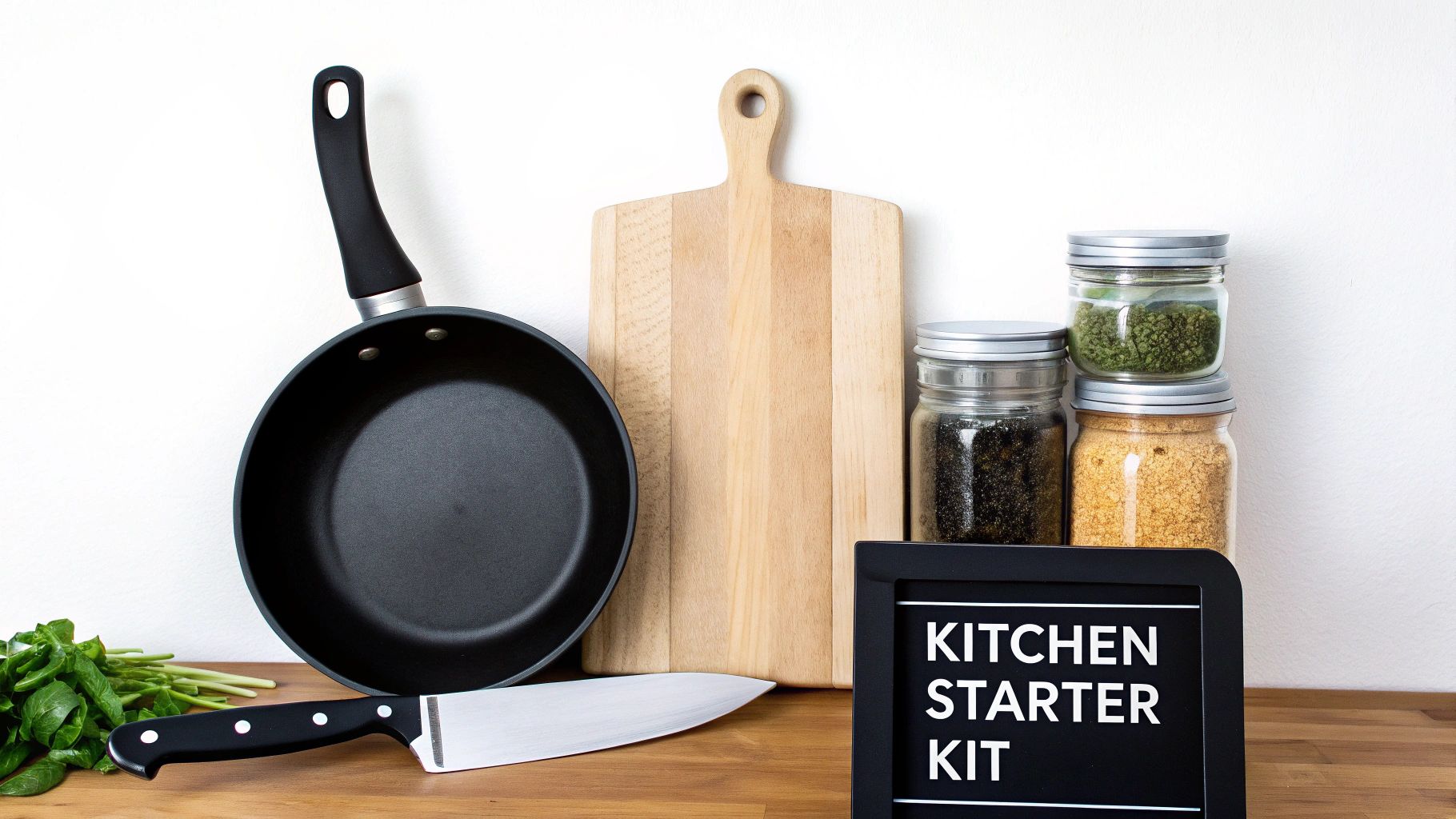
Let's be honest: a big reason we grab takeout is that our own kitchen feels like an obstacle course. If just finding a clean pan feels like a huge project, you’re not going to be inspired to cook. The fix isn't about buying a bunch of expensive gadgets. It’s about creating a simple, functional space that makes cooking the path of least resistance.
It all starts with getting rid of the clutter. That specialty avocado slicer or the banana-shaped keeper might have seemed like a good idea, but they often just take up precious space. For you to really start cooking more, your kitchen needs to feel like an efficient workspace, not a museum of single-use tools.
The goal is to build a small arsenal of high-quality, versatile equipment that can handle almost anything you want to make.
Your Essential Kitchen Starter Kit
You can cook 90% of your go-to weeknight meals with just a few core items. Spending a little more on these pieces really does pay off, because they make the entire process of cooking faster and far more enjoyable.
- A Good Chef's Knife: I can't stress this enough. One sharp, reliable 8-inch chef's knife is infinitely better than a whole block of cheap, dull ones. It turns chopping vegetables from a chore into something almost meditative.
- A Versatile Skillet: A 10 or 12-inch non-stick or cast-iron skillet will become your best friend. It's the workhorse for everything from scrambled eggs to pan-seared salmon.
- A Sturdy Cutting Board: Give yourself some room to work! A large, stable cutting board makes prep safer and much more efficient.
- A Medium Saucepan: This is your go-to for cooking grains, simmering sauces, or boiling a quick batch of pasta.
With just these four items, you've unlocked thousands of simple, delicious recipes. The idea is to make your tools work for you, not the other way around.
Build a "Power Pantry"
Next up is your pantry. Think of it as your secret weapon for cooking on a whim. A well-stocked pantry means you always have the foundation for a meal, which completely eliminates those desperate, "there's nothing to eat!" moments that lead straight to a delivery app.
Your pantry is your first line of defense against takeout. When you have the building blocks for a simple meal ready to go, you remove the biggest excuse—that cooking is just too much effort.
Start by stocking up on these long-lasting staples:
- Oils & Vinegars: Olive oil for finishing, a neutral oil for cooking (like canola or avocado), and a basic vinegar (balsamic or apple cider).
- Spices & Aromatics: Salt, whole peppercorns (get a grinder!), garlic powder, onion powder, and a few of your favorite dried herbs like oregano or thyme.
- Canned Goods: Diced tomatoes, beans (chickpeas and black beans are great starters), and some canned tuna or chicken.
- Grains & Pastas: Rice, quinoa, oats, and your favorite pasta shape.
And don't forget your morning coffee ritual! That daily coffee shop run adds up fast. Learning the best ways to brew coffee at home not only saves you a surprising amount of money but also lets you make a cup that's exactly how you like it.
By creating a kitchen that's both simple and ready for action, you make cooking at home the easiest, most appealing choice.
Getting Through the Tough Spots and Cravings
Let's be realistic. Even with the best meal plan in the world, life gets in the way. A brutal day at the office, a last-minute text from friends to grab dinner, or just a powerful, undeniable craving for takeout pizza can throw your whole plan out the window. Learning how to stop eating out so much isn't about being perfect—it's about having a game plan for when things inevitably go sideways.
The real trick is to expect these moments and have simple solutions locked and loaded. Instead of chalking up a tough day as a failure, you can see it as a chance to flex a new muscle. This mindset shift is what builds real, lasting habits and makes sure one slip-up doesn’t derail all your hard work.
When You're Just Too Tired to Cook
This is the big one. It's the most common reason we all find ourselves scrolling through a delivery app at the end of a long day. The thought of chopping, cooking, and then cleaning up can feel absolutely impossible. This is exactly when your "emergency meal" list saves the day.
Put together a list—stick it on the fridge or keep it in your phone's notes app—of five meals you can whip up in 15 minutes or less. The key is using ingredients you pretty much always have. These meals aren't supposed to be fancy; they just need to be faster than waiting for a delivery driver.
- Scrambled Eggs & Toast: A protein-packed classic you can have on the table in under five minutes.
- Upgraded Instant Ramen: Toss a soft-boiled egg, some frozen veggies, and a little soy sauce into a basic ramen packet. Instant transformation.
- Quick Quesadillas: All you need is pre-shredded cheese and canned black beans. Fast, filling, and satisfying.
- Classic Tuna Melts: Canned tuna, a dollop of mayo, and a slice of cheese on bread, toasted in a pan until it's golden and melty.
Having this list ready means you don't have to make a decision when your willpower is at zero. You just pick one and get it done.
The Goal on Tired Nights: Your mission isn't to create a culinary masterpiece. It's simply to feed yourself a decent meal that's cheaper and almost always healthier than what you were about to order. You can absolutely win the battle against convenience with a little bit of planning.
Dealing with Social Plans and Killer Cravings
Another huge hurdle is social pressure. Friends and family often default to "let's go out to eat" as the primary way to get together. The good news is you don't have to become a hermit to stick to your goals. You just need to get good at gently redirecting the plan.
Instead of a hard "no," try suggesting a fun alternative that still prioritizes quality time. You could say something like, "I'm really trying to save money right now, but I'd love to see you! How about we grab a coffee and go for a walk, or I could host a simple game night at my place?" More often than not, people are just looking to connect and are totally open to other ideas.
When it comes to cravings, the strategy is to make a "good enough" version at home. If you're dying for a big, greasy burger, make a simple one yourself. It’ll hit the spot and satisfy that craving, all while being way cheaper and a little bit healthier. Learning to "hack" your favorite restaurant meals puts you back in the driver's seat.
It's also worth remembering how much technology influences our habits. In the U.S., about one-third of all restaurant visits now happen through digital ordering or delivery. The average delivery app user shells out $80–$100 per month, and many people blow past $200 without even realizing it. You can see more insights on restaurant trends and how our habits are changing. Knowing those numbers makes it a lot easier to resist the convenience trap and stick to your plan.
Got Questions About Eating Out Less? Let's Dig In.
Deciding to cook more and cut back on restaurant meals is a great first step. But as soon as you commit, the practical questions start popping up. Let's tackle some of the most common hurdles people face. Getting ahead of these challenges makes it way easier to stick with your new routine.
How Can I Stop Eating Out When I’m Just Too Tired to Cook?
This is the big one, isn't it? The 6 PM slump hits, and the thought of chopping, cooking, and cleaning feels impossible. The secret isn't magically finding more energy—it's having a solid plan for when you have none.
Your best friend here is preparation.
Spend an hour or two over the weekend doing some light “component prep.” You’re not making full meals, just getting the building blocks ready.
- Cook a big batch of a versatile grain like rice or quinoa.
- Grill a few chicken breasts or bake a block of tofu.
- Chop up a bunch of veggies—onions, bell peppers, broccoli, you name it.
Toss all that into containers in the fridge. Now, when you walk in the door, you're not starting from scratch. You’re just assembling. You can throw together a healthy grain bowl or a quick stir-fry in literally minutes.
Another game-changer is having a list of five “emergency meals” you can make in under 15 minutes. Think scrambled eggs on toast, a quick pasta with a good jarred sauce, or even a loaded baked potato. This completely removes the "what's for dinner?" decision-making when you're already running on empty.
What’s a Realistic Goal for Cutting Back?
Jumping from eating out five nights a week to zero is a classic way to burn out and give up. Slow and steady wins this race. If you’re currently grabbing takeout five times a week, try aiming for three or four for the first month.
Success is built on small, consistent wins, not on perfect, all-or-nothing attempts. Celebrate your progress. Each time you cook at home instead of ordering out, you’re building a new, powerful habit.
Want a killer motivator? Make your savings visible. Every time you skip that $20 pizza delivery, transfer that exact amount into a separate savings account. Watching that fund grow for something you actually want—a vacation, a new gadget—makes the reward for your effort feel real and immediate.
How Do I Handle Social Situations?
"Let's grab dinner!" is the default social plan for most of us. You don’t have to become a hermit to save money, but you do need to get comfortable suggesting alternatives.
Honesty works best. Just tell your friends you're trying to save money or eat a bit healthier. The key is to follow that up with an appealing alternative.
Instead of just saying no, try something like: "I'm on a pretty tight budget right now, but I'd love to see you! How about we do a potluck at my place this weekend? Or we could go for a hike or check out that free concert in the park."
Hosting a simple game night or a backyard hangout can be way more memorable than another night at a loud restaurant. Most people just want to spend time with you, and they'll be happy to switch things up.
Ready to make meal planning effortless? AI Meal Planner creates personalized weekly menus based on your dietary needs and goals, complete with simple recipes and grocery lists. Take the stress out of cooking and start reaching your health goals today by visiting https://ai-mealplan.com.
AI-powered nutrition
Get Your Personalized Meal Plan
AI creates the perfect meals for your goals, lifestyle, and taste.
Start Your Journej