How Do I Start Healthy Meal Prep For Work?
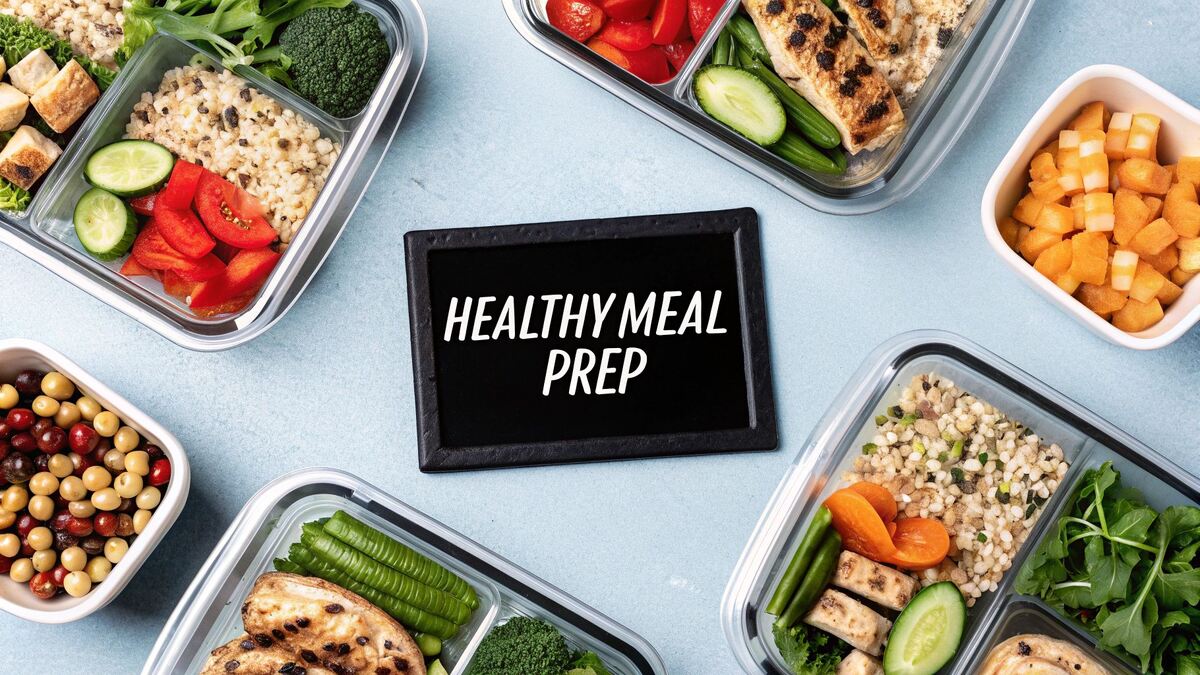
To start healthy meal prep for work, select 2–3 simple recipes for the week, create a grocery list, and dedicate a 2-hour block of time to cook. Focus on batch cooking one protein, one carbohydrate, and several vegetables to mix and match. This approach simplifies the process and prevents overwhelm.
Diving into meal prep can feel like a huge commitment, but the secret to making it stick is to start small. Forget those complex, seven-day Instagram-perfect layouts for now. The best way to actually get started is to keep it incredibly simple by focusing on a few core components and a dedicated time slot.
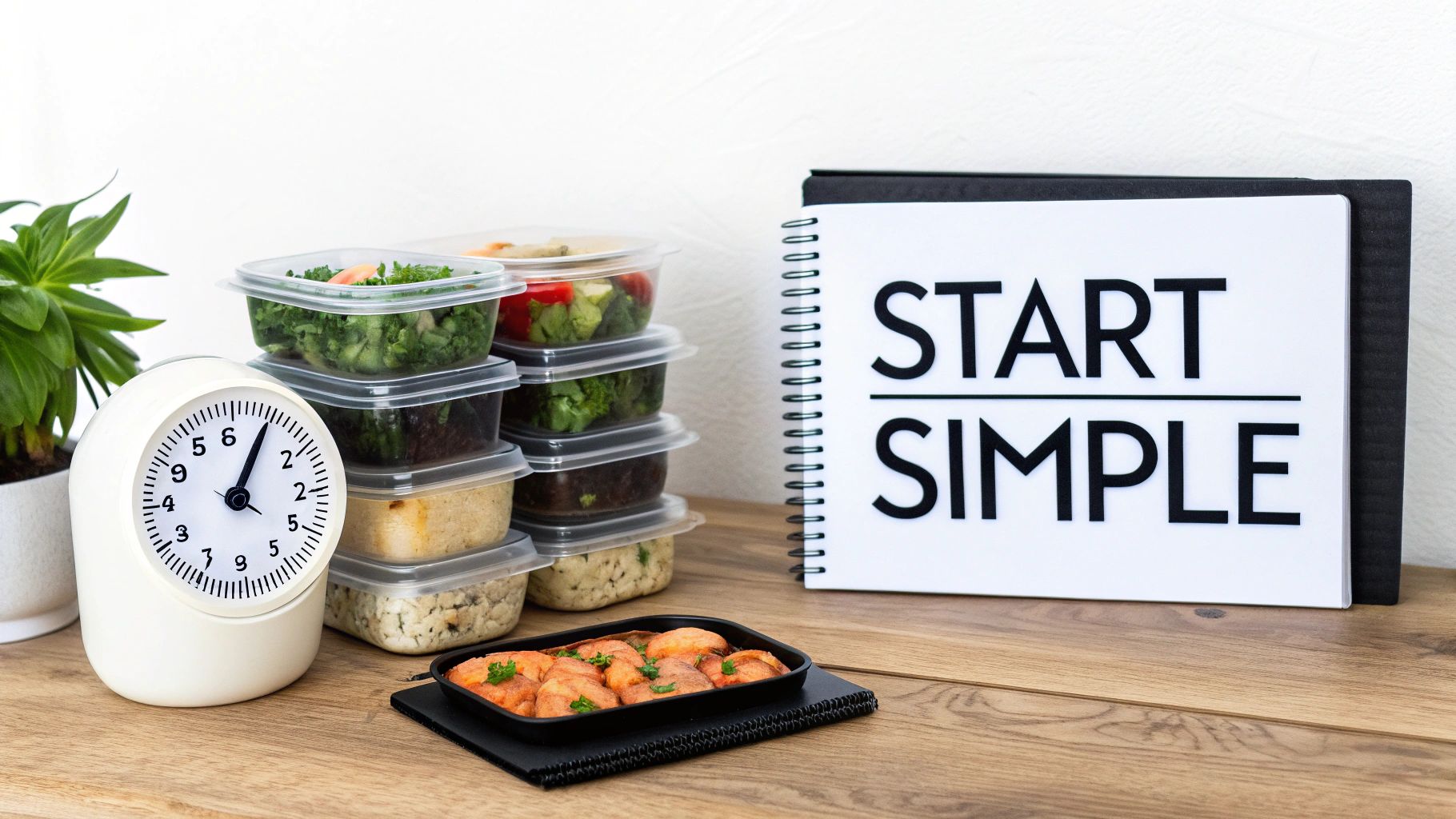
Getting into a meal prep routine is more than a kitchen habit; it’s a strategic advantage for your work life. It’s the ultimate escape from the cycle of overpriced takeout, sad desk lunches, and the inevitable 3 p.m. vending machine run that tanks your energy. By carving out a little time over the weekend, you gain a massive return on your investment in health, finances, and focus.
Before planning recipes, it's helpful to know what your body needs. You can get a solid baseline by using a calorie and macro calculator. This insight turns meal prep from a chore into a powerful tool for your well-being.
Why Does Meal Prep Matter for Busy Professionals?
We’ve all been there: it’s the middle of a hectic workday, your stomach is rumbling, and you’re faced with grabbing expensive takeout or settling for a snack from the vending machine. This daily "lunch-hour dilemma" quietly sabotages your productivity, energy, and well-being. What you eat has a direct impact on how you perform, and a string of poor nutritional choices can tank your focus and mood.
How Does It Reclaim Your Time and Energy?
Meal prep is a strategic tool for taking back control of your time and energy. When you prepare healthy meals in advance, you sidestep the daily scramble for food and free up mental bandwidth. Instead of rushing, you have a nourishing meal ready to go, turning your lunch break into a genuine opportunity to recharge.
Unfortunately, most professionals aren't getting that chance. While 88% of employees say they feel refreshed after a real break, a staggering 70% of workers admit to eating at their desks at least once a week. According to American work culture statistics, only 10% of Gen Z workers say they never eat at their desks, a stark contrast to the 48% of baby boomers who make it a point to step away.
What Is the True Cost of Convenience?
The financial hit from daily takeout is obvious, but the hidden costs are what really get you. Relying on convenience foods usually means loading up on excess sodium, unhealthy fats, and refined sugars—the perfect recipe for an afternoon slump.
By preparing your own meals, you gain complete control over your ingredients and portion sizes. This isn't just about saving money—it's about investing in your cognitive function and long-term health, ensuring you operate at your peak potential every single day.
A well-balanced, prepped lunch provides the sustained energy you need to power through demanding afternoons, helping you crush brain fog and stay locked in on complex tasks.
Why Is a System Necessary for Success?
Healthy meal prep for work isn't about jamming another task into your schedule; it’s about implementing a system that simplifies your life. A proactive approach helps you:
- Avoid Decision Fatigue: Make one decision about lunches for the week, not five separate ones under pressure.
- Maintain Consistent Nutrition: Align meals with your health goals for stable energy levels.
- Boost Your Bottom Line: The savings from skipping daily food purchases add up quickly.
This is where a dedicated system becomes essential. Tools like the AI Meal Planner can automate the entire planning process, taking out the guesswork and making healthy eating a seamless part of your professional life.
How Do You Plan Your First Week Of Work Meals?
Jumping into meal prep for the first time can feel like a massive undertaking, but it doesn't have to be. The secret isn't about becoming a gourmet chef overnight. It's about building a simple, sustainable routine you can actually stick with. Let's break the process down into four straightforward parts.
How Do You Set A Clear Goal?
Before you glance at a recipe, you need to know why you're doing this. Your "why" anchors every choice. Are you trying to save money? Avoid the 3 p.m. energy crash? Or dial in your nutrition for a fitness goal? If your goal is to beat afternoon fatigue, build meals around lean protein and complex carbs. A clear goal turns meal prep from a chore into a focused strategy.
Which Prep Style Should You Choose?
There are two main ways to tackle meal prep, and the best one depends on your schedule and how much variety you crave.
- Batch Cooking: The classic approach. You cook complete meals in big batches—like a large pot of chili or a sheet pan of roasted chicken and veggies—then portion them out. It’s perfect for a true grab-and-go lunch.
- Ingredient Prep: This method offers more flexibility. Instead of full meals, you prepare components: a container of cooked quinoa, chopped raw veggies, a batch of grilled chicken. Each day, you assemble them into different combinations.
For your first week, batch cooking is the simplest way to start because it eliminates decision-making during the workweek, which is a huge win when forming a new habit.
Which Recipes Are Best for Beginners?
This is where many beginners go wrong. They try to cook five brand-new, complicated recipes. Instead, stick with meals you already know and love, and focus on recipes with fewer than 10 ingredients. A great strategy is to pick one core protein and build your week around it. A big batch of shredded chicken can become a grain bowl on Monday, a salad on Tuesday, and a wrap on Wednesday.
Remember, the goal for your first week is consistency, not culinary perfection. Success is simply having a healthy, pre-made lunch ready to go each day.
To simplify this step, use a tool like the AI Meal Planner to generate a full week's plan tailored to your goals. It takes the entire planning burden off your plate.
Here’s a peek at how the AI Meal Planner can instantly map out your week after you answer a few quick questions.
As you can see, it tailors everything to your specific dietary needs and health targets, making that first week of planning completely foolproof.
How Do You Build a Smart Grocery List?
With recipes chosen, create a smart grocery list. First, "shop" your own kitchen to see what you already have. Next, organize your list by store aisle (produce, protein, dairy, pantry staples) to stop you from wandering aimlessly. To make this even easier, a digital grocery list generator can automatically create an organized list from your meal plan.
Here’s a simple meal plan to get you through your first week.
Sample 5-Day Healthy Work Meal Plan
This beginner-friendly plan is designed for balanced macros, easy preparation, and meals that travel well.
| Day | Breakfast (Prep-Ahead) | Lunch (Prep-Ahead) | Snack (Easy Grab) |
|---|---|---|---|
| Monday | Overnight Oats with Berries & Chia | Greek Chicken & Quinoa Bowl | Apple with Almond Butter |
| Tuesday | Overnight Oats with Berries & Chia | Greek Chicken & Quinoa Bowl | Greek Yogurt |
| Wednesday | Egg Muffins with Spinach & Feta | Lentil Soup with Whole-Grain Bread | Handful of Almonds |
| Thursday | Egg Muffins with Spinach & Feta | Leftover Lentil Soup | Baby Carrots & Hummus |
| Friday | Smoothie Pack (pre-portioned fruit/veg) | Large Salad with Chickpeas & Vinaigrette | Hard-Boiled Egg |
What Are The Best Foods For Meal Prepping?
The secret to a great meal prep isn't a complex recipe; it's choosing ingredients that can stand up to a few days in the fridge, holding their texture and flavor. By focusing on durable, versatile ingredients from each food group, you're setting yourself up for a week of delicious, no-fuss meals.
Which Lean Proteins Work Best?
Protein is key for staying full and focused. The goal is to pick proteins that reheat well.
- Chicken Breast or Thighs: A meal prep MVP. Poach, slow-cook, or roast it to keep moisture locked in.
- Lean Ground Meats (Turkey, Beef): Incredibly versatile. Cook a big batch with simple seasonings for bowls, wraps, or stuffed peppers.
- Plant-Based Proteins: Chickpeas and lentils are fantastic as they don't require reheating. Bake or pan-fry tofu and tempeh until firm to prevent them from getting soggy.
- Hard-Boiled Eggs: Simple and effective. Boil a dozen at the start of the week for a fast addition to salads or a quick snack.
If you're tracking your macros, a recipe nutrition calculator can give you the exact numbers to ensure your meals align with your goals.
Which Complex Carbohydrates Hold Up Best?
Complex carbs provide steady, slow-burning energy. You want grains and starches that won’t turn to mush.
- Quinoa: This gluten-free seed holds its texture perfectly.
- Brown Rice and Farro: Hearty, filling, and practically bulletproof.
- Sweet Potatoes: Roasted cubes or whole-baked sweet potatoes reheat perfectly.
- Rolled Oats: The ultimate prep-ahead breakfast for overnight oats or baked oatmeal cups.
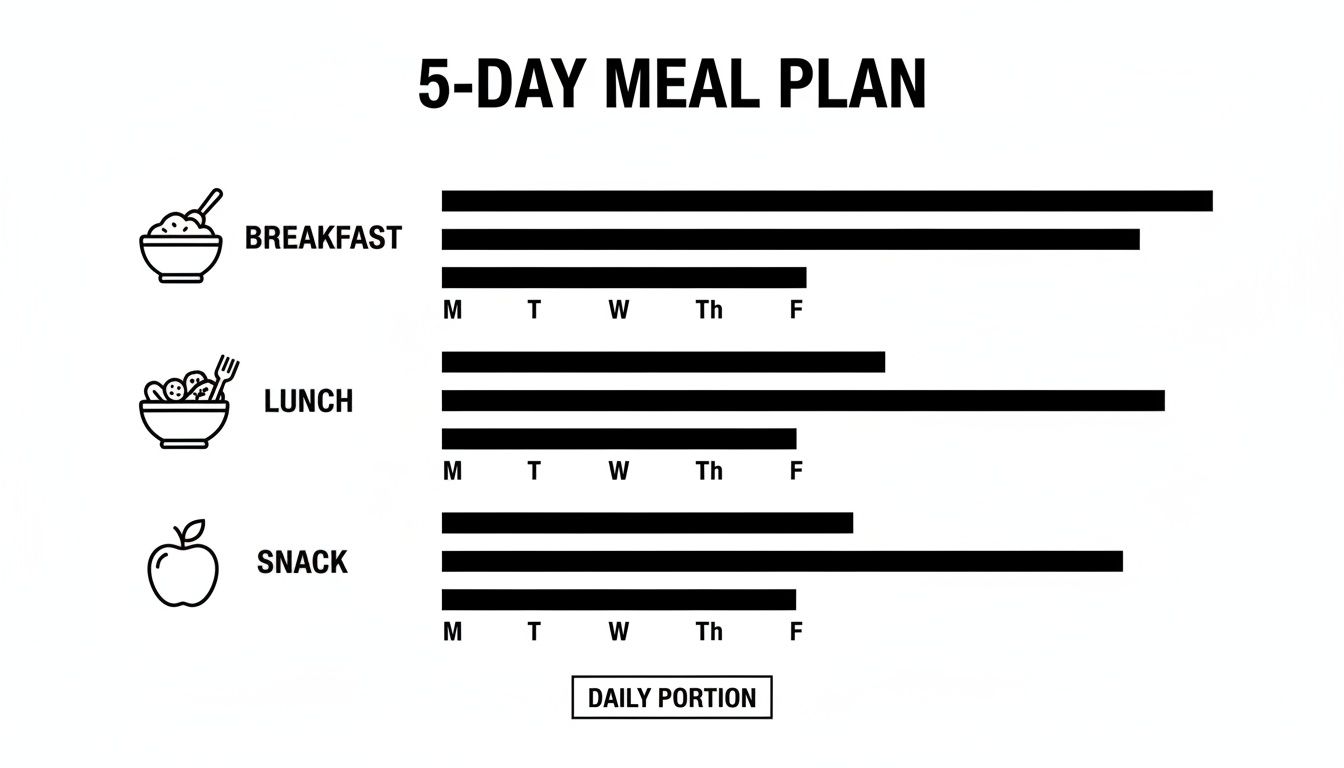
Here’s a quick look at how these staples can come together in a typical week.
How Should You Incorporate Healthy Fats?
Healthy fats are non-negotiable for brain function and satiety. The trick is to add them right before you eat to keep everything fresh.
Fats are often the finishing touch. Instead of mixing them in on Sunday, pack them separately to add right before you eat. This preserves their texture and flavor.
- Avocado: Bring a whole one to work and slice it at lunchtime to avoid browning.
- Nuts and Seeds: Almonds, walnuts, and chia seeds are shelf-stable and perfect for sprinkling on meals.
- Dressings and Oils: Whip up a simple vinaigrette and store it in a small, leak-proof container.
Which Vegetables Are Best for Prepping?
Veggies add essential vitamins and fiber, but not all are created equal for meal prep. Stick with the sturdy stuff.
- Cruciferous Vegetables: Broccoli, cauliflower, and Brussels sprouts roast well and maintain a great texture.
- Root Vegetables: Carrots, beets, and parsnips are firm and versatile, whether raw or roasted.
- Sturdy Greens: Use a base of kale or shredded cabbage for salads that won't get slimy.
- Peppers and Onions: Sliced bell peppers and red onions stay crisp and add color and crunch.
Meal Prep Food Durability Guide
| Ingredient | Best For (Days) | Reheating Quality | Pro Tip |
|---|---|---|---|
| Roasted Root Veggies | 5+ | Excellent | Reheat in a toaster oven or air fryer to restore crispiness. |
| Quinoa/Farro | 5 | Very Good | Fluff with a fork before reheating. Stores well. |
| Shredded Chicken | 4-5 | Excellent | Store with a little broth or sauce to keep it moist. |
| Lentils/Chickpeas | 5 | Good (can be eaten cold) | Absorb dressing over time, getting more flavorful. |
| Hard-Boiled Eggs | 5 | N/A (eaten cold) | Store them unpeeled to maintain maximum freshness. |
| Kale/Cabbage Salads | 4 | N/A (eaten cold) | Keep dressing separate until just before serving. |
| Sautéed Spinach | 1-2 | Fair | Tends to release water. Best eaten early in the week. |
| Sliced Avocado | <1 | Poor | Pack a whole avocado and slice it fresh before you eat. |
How Can You Master Batch Cooking and Storage?
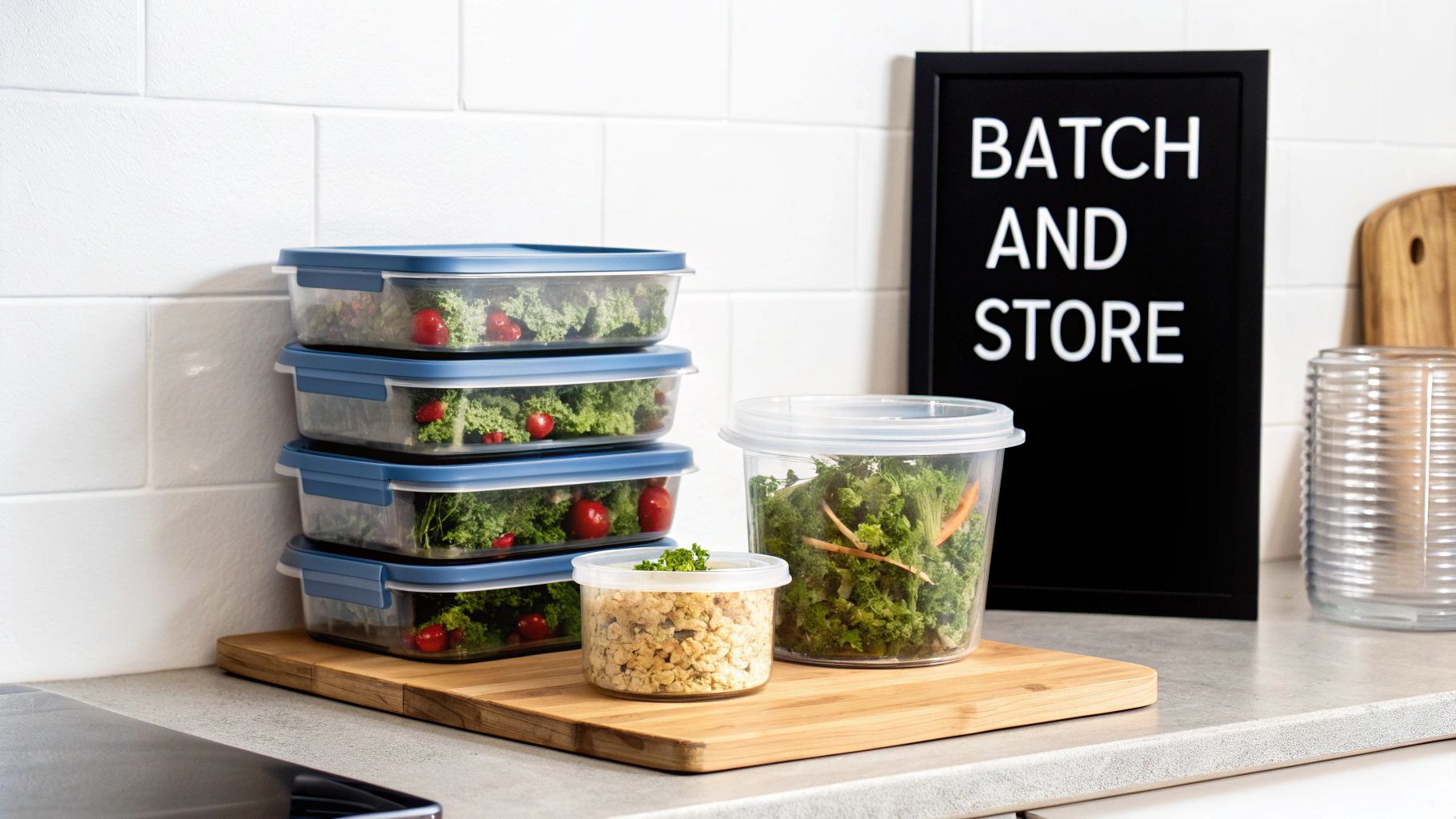
A great plan is one thing, but turning it into a fridge full of meals is where the magic happens. Mastering your weekend batch cooking and storage system makes meal prep a sustainable habit. The demand for convenient, healthy meals is exploding, with the prepared meals market ballooning to USD 178.83 billion. You can discover more about the prepared meals market to see just how big this shift is.
What Is a Smart Weekend Workflow?
The goal is maximum output with minimum chaos. A streamlined workflow keeps you from feeling chained to the stove.
Here’s a productive two-hour session:
- First 30 Minutes: Get grains simmering and sheet-pan items (like chicken and sweet potatoes) in a preheated oven.
- Next 60 Minutes: While things cook, wash and chop all raw veggies, boil eggs, or blend a dressing.
- Final 30 Minutes: Let cooked items cool, then portion everything into your containers for the week.
How Can You Beat Flavor Fatigue?
One of the biggest reasons people quit meal prepping is boredom. The trick is to use ingredient theming. Instead of making five identical meals, cook versatile base components and assemble them differently each day.
For example, a big batch of shredded chicken can become:
- A Greek Bowl: with quinoa, cucumbers, tomatoes, and a lemon-herb vinaigrette.
- A Tex-Mex Salad: over greens with black beans, corn, and a cilantro-lime dressing.
- A Simple Wrap: with a whole-wheat tortilla, hummus, and spinach.
The key is to prep the components, not always the entire finished meal. This gives you the flexibility to build a lunch based on what you’re craving.
What Are the Golden Rules of Food Storage?
Proper food storage is non-negotiable. Invest in quality, airtight containers (glass is great because it doesn't stain or hold smells). Always let hot food cool to room temperature before sealing it and putting it in the fridge to prevent spoilage. Most cooked meals last 3-5 days in the refrigerator.
For salads, layer ingredients strategically: dressing on the bottom, followed by hard veggies, grains, protein, and finally, leafy greens on top. If you have extra ingredients, find creative ways to use them by exploring what meal you can make from your fridge.
How Can AI Simplify Your Meal Prep?
Even with the best intentions, the manual labor of planning healthy meals can feel like a second job. The administrative grind, not the cooking itself, often leads to burnout. This is where smart tech can change the game. AI-powered platforms automate the entire planning phase, taking your goals and preferences and instantly spinning them into a complete weekly plan.
How Does AI Replace Guesswork with Precision?
The magic of using AI for meal prep is how it handles complex math in seconds. Trying to manually ensure every day's meals hit a specific calorie and macro target is a massive headache. An AI system does it automatically, creating a plan that’s scientifically dialed in to your goals. The AI also learns what you like over time, suggesting meals you're more likely to enjoy.
How Does an AI Meal Planner Actually Work?
These tools are designed to slash your planning time.
- Quick Personal Profile: Answer a few questions about your health goals, dietary restrictions, and food preferences.
- Instant Plan, Ready to Go: The AI immediately generates a full weekly meal plan.
- The Grocery List, Solved: The system automatically pulls every ingredient into a categorized grocery list.
- Easy Swaps: Swap a meal with a single click, and the AI will sub in another option that still fits your nutritional targets.
This approach is designed to eliminate the two biggest roadblocks: decision fatigue and lack of time. By handling the mental heavy lifting, AI makes sticking to a healthy plan feel effortless.
The global meal delivery market is on track to hit US$455.55 billion, showing how desperate people are for convenient ways to eat well. As you can see from global meal delivery trends, technology is changing our relationship with food. Using a tool like the AI Meal Planner isn't about giving up control; it's about taking it back by making your efforts focused and effective.
FAQs About Healthy Meal Prep for Work
How long does prepped food last in the fridge?
Most cooked meals last for 3 to 5 days when stored in airtight containers in the refrigerator. Heartier ingredients like roasted vegetables, grains, and beans last longer than delicate items like fish or soft greens.
Is it possible to meal prep on a tight budget?
Yes, meal prepping is one of the best ways to control grocery spending. Build your weekly menu around inexpensive staples like oats, rice, lentils, and beans, and buy seasonal produce to save money.
How do I keep my prepped meals from getting boring?
Prevent flavor fatigue by prepping versatile ingredients instead of identical meals. Cook a base protein like chicken and use different sauces, spices, and fresh toppings to create varied dishes like a Greek bowl or a Tex-Mex salad.
What are the best containers for meal prep?
Airtight glass containers are ideal because they are microwave-safe, don't stain or retain odors, and are durable. For salads, use containers that allow you to layer ingredients to prevent sogginess.
How much time should I set aside for meal prepping?
A dedicated 2-hour block on the weekend is typically enough for a beginner to prep lunches for the entire work week. As you get more efficient, you may be able to complete your prep in even less time.
Can I freeze my prepped meals?
Yes, many meals like soups, stews, chilis, and grain bowls freeze very well. This is a great strategy to extend the life of your meals beyond 5 days and build a stash of ready-to-go options.
Ready to stop guessing and start prepping with a plan that’s perfectly designed for you? AI Meal Planner removes all the frustrating guesswork by creating personalized meal plans and smart grocery lists in seconds. Take the first step towards effortless, healthy work lunches by getting your custom plan today.
AI-powered nutrition
Get Your Personalized Meal Plan
AI creates the perfect meals for your goals, lifestyle, and taste.
Start Your Journej