How Do I Create a Vegan Meal Plan with Grocery List?
Creating a vegan meal plan with a grocery list involves three key steps. First, define your weekly nutritional goals, such as calorie and protein targets. Second, schedule 7 days of meals (breakfast, lunch, dinner), prioritizing versatile recipes. Finally, perform a pantry inventory and convert your meal plan into an aisle-sorted grocery list to streamline shopping.
This isn't just about following a few steps; it's about building a sustainable system that actually works. We're talking about a clear strategy to save money, slash food waste, and get rid of that daily "what should I cook?" stress. The goal here is to help you build a lasting lifestyle that fits into your real, busy life.
How Do You Start a Sustainable Vegan Meal Plan?
To create a plan that lasts, you need a solid foundation built on your personal health objectives. This first stage is about setting clear goals that will guide every recipe choice and ensure your plan is both delicious and nutritionally sound from day one.
How Do I Define My Nutritional Foundation?
Before you even think about recipes, you have to get clear on your personal health objectives. What are you trying to achieve? Are you aiming for weight management, building muscle, or just maintaining a balanced, energetic lifestyle?
Your goals will dictate the kinds of meals you prioritize. For example, an athlete will naturally gravitate toward protein-dense foods like tofu and lentils. Someone focused on all-day energy, on the other hand, might lean more heavily on complex carbs like quinoa and sweet potatoes.
A great starting point is to figure out your rough daily calorie and macronutrient needs. You can use an online recipe nutrition calculator to get a baseline idea of what your body requires. This isn't about getting obsessed with numbers, but about creating a smart framework for balanced eating.
A common mistake is focusing solely on eliminating animal products without considering what to add. A successful vegan plan is built on nutrient-dense additions, not just subtractions.
Getting this foundation right ensures your meal plan is not only delicious but also properly fuels your body and supports your wellness goals from day one.
What Is a Simple Way to Build a Weekly Meal Framework?
Once you know your nutritional targets, you can start mapping out your week. Remember, the goal is sustainability, not perfection.
I always recommend starting with dinners, since they're usually the most involved meal of the day. From there, you can easily slot in breakfasts and lunches, which often end up being simpler recipes or, even better, leftovers from the night before.
Here are a few practical tips that make a huge difference:
- Theme Your Nights. This is a classic for a reason. Assigning themes like "Taco Tuesday" or "Pasta Thursday" takes the guesswork out of planning and keeps things interesting.
- Plan for Leftovers. This is my favorite time-saving hack. Cook a larger batch for dinner, and you've got a ready-made lunch for the next day. It saves time, effort, and money.
- Schedule a Flex Day. Life happens. Designate one day a week for eating out, trying a spontaneous new recipe, or just clearing out the leftovers. This bit of flexibility is key to avoiding burnout and feeling restricted.
This simple planning process removes the daily decision fatigue and makes sticking to a vegan lifestyle feel natural rather than like a chore.
How Do You Structure Your Week for Plant-Based Success?
A great week of vegan eating isn't about following a super-strict set of rules. It’s about creating a flexible, reliable structure that works for you. This is where the magic of planning happens, turning your good intentions into delicious, daily meals. Instead of staring blankly into the fridge, you can use simple meal templates to guide your choices, which keeps things interesting and nutritionally balanced without all the mental heavy lifting.
The shift toward plant-based eating is more than just a trend; it's a movement. The vegan food market, valued at a massive USD 14.4 billion in 2023, is on a rocket ship trajectory toward USD 31.1 billion by 2032. That’s an 8.2% compound annual growth rate (CAGR), a clear signal that this way of eating has gone mainstream.
Just look at the US: the number of vegans exploded from around 290,000 in 2004 to nearly 10 million by 2019, with about 2% of Americans now identifying as vegan. This massive growth is changing how everyone, from busy professionals to serious athletes, plans their meals and shops for groceries.
Why Are Meal Templates Good for Effortless Variety?
If you're building a vegan meal plan with grocery list, meal templates are an absolute game-changer. Think of them as blueprints for your meals, not rigid recipes. They give you a framework that makes decisions a breeze while still letting you get creative.
For example, instead of stressing over a specific recipe for Monday, you just decide it's "Grain Bowl Night." That simple shift frees you up to use whatever veggies and grains you have on hand. It's that easy.
Here are a few of my go-to templates:
- Grain Bowl Night: Start with a base of quinoa, brown rice, or farro. Pile on some roasted veggies, a protein like chickpeas or baked tofu, and finish it with a creamy tahini dressing.
- Taco Tuesday: Grab some corn or whole-wheat tortillas and load them up with seasoned black beans, lentils, or a crumbled plant-based meat alternative. Top with fresh salsa, avocado, and shredded lettuce.
- Stir-Fry Friday: This is a lifesaver on busy nights. Quickly toss your favorite vegetables with tempeh or edamame in a savory soy-ginger sauce. Serve it over noodles or rice for a fast, satisfying meal.
Using templates like these cuts down on planning time and helps you use up leftover ingredients, which is a huge win for minimizing food waste and saving money.
How Can You Build a Perfectly Balanced Plate?
To make sure your meals are both filling and nutritionally complete, aim for a balanced plate every time you sit down to eat. There's a simple, effective formula you can use to guide your portions without having to pull out the measuring cups for every single thing.
The Balanced Plate Formula: A great rule of thumb is to fill your plate with roughly 40% complex carbs, 30% plant-based protein, and 30% vegetables and healthy fats.
This structure ensures you're getting a steady supply of energy, muscle-building protein, and all the essential vitamins and minerals you need to thrive.
- Complex Carbs (40%): These are your energy source. Think sweet potatoes, quinoa, brown rice, whole-wheat pasta, and oats.
- Plant-Based Protein (30%): This is what keeps you full and helps repair muscle. Load up on lentils, chickpeas, tofu, tempeh, and edamame.
- Veggies & Healthy Fats (30%): This portion delivers the micronutrient punch. Pack in leafy greens, broccoli, and bell peppers, and add healthy fats from avocado, nuts, and seeds.
This approach makes it incredibly easy to build nourishing meals that keep you full and energized all day long.
How Do I Customize a Meal Plan for Specific Goals?
A truly great vegan meal plan is never one-size-fits-all. Your personal health and fitness goals should shape its structure. While the balanced plate formula is a fantastic starting point, you can easily tweak the ratios to better fit what you're trying to achieve.
For instance, if your main goal is to build muscle, you might want to prioritize protein. This could mean slightly increasing the protein portion on your plate while dialing back the carbs or fats a bit. For a more precise breakdown tailored to you, our calorie and macro calculator can help you dial in your targets.
On the other hand, if weight management is your focus, you might increase the volume of non-starchy vegetables. Foods like spinach, zucchini, and bell peppers are low in calories but high in fiber and water, which helps you feel full without overeating. The key is to make small, sustainable adjustments that align with your goals, turning a generic plan into one that is truly your own.
How Do I Build an Optimized Vegan Grocery List?
Turning your meal plan into a grocery list is where the whole system clicks into place. This is the step that saves you real time, money, and that familiar feeling of stress in the middle of a crowded supermarket. A solid list is your best defense against impulse buys, forgotten ingredients, and the food waste that comes from buying things you don't actually need.
Think of it less as a simple chore and more as a powerful tool for consistency.
The trick is to stop seeing it as a random collection of items. Instead, picture it as a map of the grocery store, already sorted by aisle. This one mental shift can honestly cut your shopping time in half and keep you laser-focused on your plan and budget.
How Do I Turn My Meal Plan into a Master List?
Before you write down a single thing, do a quick inventory check. Seriously, take five minutes to scan your pantry, fridge, and freezer. What’s already hiding in there? You might be surprised to find half a bag of quinoa, a stray can of black beans, or a nearly full bottle of soy sauce.
This simple habit stops you from buying duplicates—a major source of wasted food and money. It's a small action with a huge impact.
Once you know what you've got, it's time to translate your 7-day meal plan into a categorized list. Grouping items by store section is, without a doubt, the most efficient way to shop. It creates a natural flow, preventing you from zig-zagging back and forth for that one forgotten item.
A well-organized list should have these core categories:
- Fresh Produce: All your fruits and vegetables.
- Pantry Staples: Grains, canned goods, spices, and oils.
- Plant-Based Proteins: Tofu, tempeh, lentils, and beans.
- Non-Dairy & Refrigerated: Plant milks, yogurts, and vegan butter.
- Frozen Goods: Frozen fruits, veggies, and other essentials.
This structure helps you navigate the store like a pro, usually starting with produce on the perimeter and working your way inward for the pantry and frozen aisles.
Can You Show Me a Sample Aisle-Sorted Grocery List?
Here’s what a practical, aisle-sorted grocery list looks like for a week of balanced vegan meals. This isn't just a random assortment; every single item is chosen for its versatility and role in multiple recipes, which is the key to making sure nothing goes to waste.
If you want to automate this process, a good vegan grocery list generator can be a lifesaver, creating these lists from your meal plan in seconds.
Fresh Produce
- Vegetables: Onions (1 large yellow), Garlic (1 head), Sweet Potatoes (2 large), Spinach (1 large bag), Bell Peppers (1 red, 1 green), Broccoli (1 head), Avocado (2), Roma Tomatoes (3), Cucumber (1), Carrots (1 bunch), Fresh Cilantro (1 bunch), Lemon (1), Lime (1).
- Fruits: Bananas (for smoothies/snacks), Apples (for snacks), Berries (for oatmeal).
Pantry Staples
- Grains & Carbs: Rolled Oats, Quinoa (1 bag), Brown Rice, Whole Wheat Pasta, Whole Wheat Bread or Tortillas.
- Canned & Jarred Goods: Canned Chickpeas (2 cans), Canned Black Beans (2 cans), Canned Diced Tomatoes (1 large can), Full-Fat Coconut Milk (1 can), Vegetable Broth (1 carton).
- Oils, Sauces & Spices: Olive Oil, Soy Sauce or Tamari, Maple Syrup, Tahini, Nutritional Yeast, Cumin, Chili Powder, Smoked Paprika.
- Nuts & Seeds: Chia Seeds, Walnuts or Almonds.
Pro Tip: Buying versatile staples like oats, rice, and dried beans in bulk is one of the most effective ways to lower your grocery bill. While the upfront cost is higher, the price per serving is significantly lower.
Plant-Based Proteins
- Extra-Firm Tofu (1 block)
- Dried Lentils (Red or Brown, 1 bag)
Non-Dairy & Refrigerated
- Unsweetened Almond Milk or Soy Milk (1 carton)
Frozen Goods
- Frozen Edamame
- Frozen Corn
- Frozen Mixed Berries (for smoothies)
This detailed approach ensures every ingredient has a job to do. The onions, garlic, and peppers form the flavor base for chili, stir-fries, and pasta sauce. The tofu can be scrambled for breakfast or baked for dinner, while the chickpeas are perfect for salads and curries. This multi-purpose strategy is the cornerstone of an efficient and waste-free vegan meal plan with grocery list.
What Are Smart Vegan Meal Prep Strategies?
Let’s be honest: consistent meal prep is the secret weapon that makes a vegan lifestyle stick, especially when life gets chaotic. A couple of dedicated hours on a Sunday can completely transform your week, saving you from the daily "what's for dinner?" scramble and the siren song of expensive takeout.
This isn't about boxing up five identical, sad-looking meals. It's about building a flexible arsenal of ready-to-go components that you can mix and match all week long.
More and more people are catching on. The plant-based movement is massive, and you're in good company. In January 2025, the Veganuary challenge saw a staggering 25.8 million participants across 228 countries—that's a huge 35% jump from the previous year. This isn't just a fleeting trend; it’s a catalyst for real change. Studies show that up to 50% of participants stick with a fully vegan diet or drastically cut back on animal products afterward, citing health benefits and a lighter carbon footprint as major motivators. You can read the full research about these plant-based trends and their impact.
Why Should I Try Component Prepping?
One of the biggest meal prep mistakes I see is cooking five identical containers of the exact same meal. By Wednesday, you're bored out of your mind and dreading lunch. The solution is component prepping, a game-changing strategy that focuses on preparing individual ingredients instead of full meals.
Instead of one finished dish, you're creating the building blocks. This approach gives you the freedom to assemble different combinations on the fly, keeping your meals fresh, interesting, and far from repetitive.
Here’s what a typical component prep session looks like for me:
- Batch-Cook Grains: I'll make a big pot of a versatile grain like quinoa or brown rice. Stored in an airtight container, it becomes the base for grain bowls, a side for curries, or filler for wraps all week.
- Roast a Medley of Vegetables: Fill a large baking sheet with chopped sweet potatoes, broccoli, bell peppers, and onions. A good toss with olive oil and spices, and into the oven they go. These are perfect for adding to salads, pasta, or bowls.
- Prepare Your Proteins: Cook up a batch of lentils, press and bake a block of tofu, or simply rinse and drain a few cans of chickpeas and black beans. Having protein ready to grab is a total game-changer for quick meals.
- Chop Fresh Produce: I wash and chop raw veggies like cucumbers, carrots, and celery for easy snacking or to toss into salads at a moment's notice.
- Whip Up a Versatile Dressing: Make a jar of lemon-tahini dressing or a simple vinaigrette. A killer sauce can tie an entire meal together and make simple components feel gourmet.
This process also makes building your grocery list way easier because you're focusing on versatile staples. The infographic below breaks down how a solid meal plan translates into a smarter shopping trip.
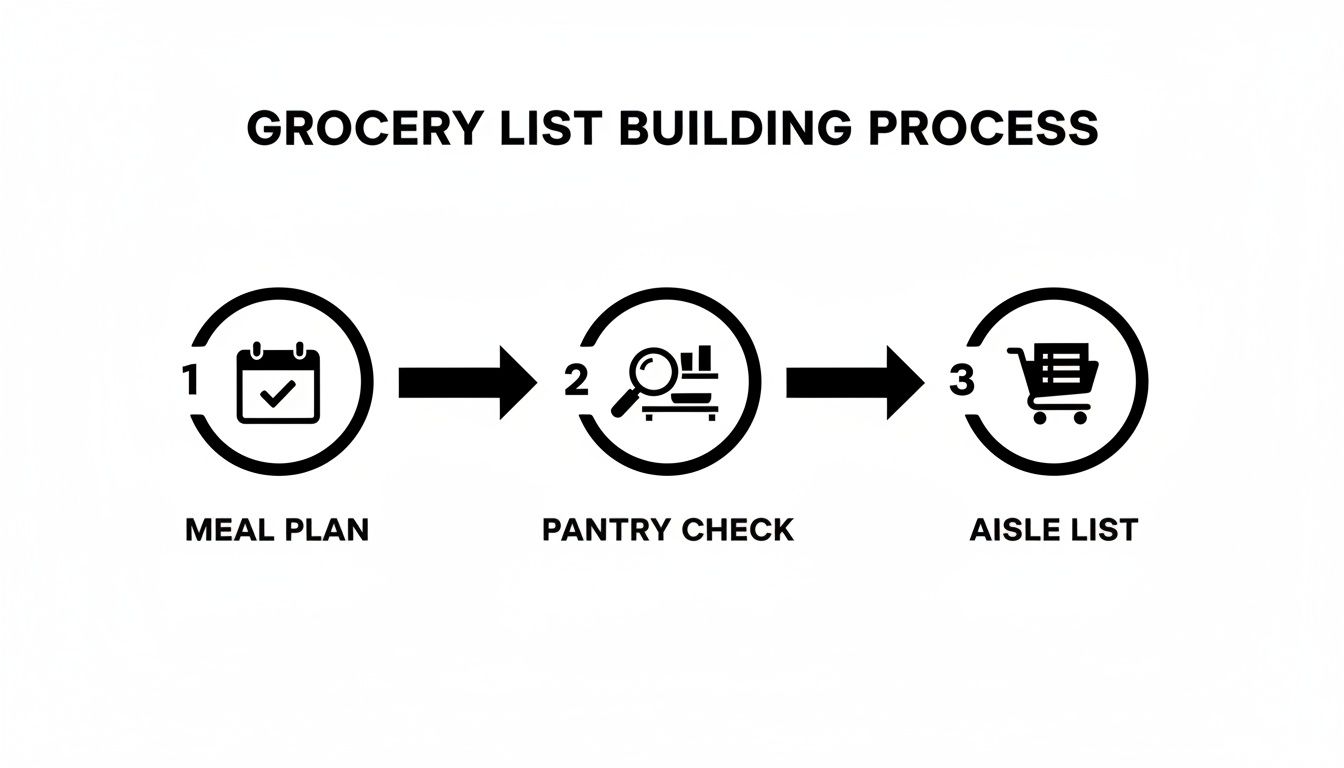
This visual shows exactly how starting with a clear plan and taking a quick pantry inventory makes creating an organized list practically effortless.
How Can a Sunday Reset Routine Help?
I like to think of my meal prep session as a "Sunday Reset"—it's a calming routine that sets a positive, organized tone for the week ahead. It’s an act of self-care that pays off big time in saved time, money, and stress. Put on some good music or a podcast and block off about two hours to set your future self up for success.
By investing a small amount of time on the weekend, you're essentially giving your future self the gift of easy, healthy meals on busy weeknights. It's the ultimate life hack for staying on track with your vegan goals.
The key is to create an efficient workflow. I always start with the items that take the longest to cook, like roasting vegetables or simmering a pot of grains. While those are in the oven or on the stove, I move on to quicker tasks like chopping fresh produce or blending a dressing. This multi-tasking approach ensures you get the most out of your time, making your vegan lifestyle feel seamless and manageable, no matter how hectic your schedule gets.
How Can You Make Vegan Cooking Faster and More Affordable?
Let's get one thing straight right away. The two biggest myths about going vegan are that it’s automatically expensive and a huge time suck. I’m here to tell you that with the right approach, a plant-based kitchen can be faster, cheaper, and way simpler than you ever imagined. It all comes down to smart staples and efficient recipes that work for a real, busy life—not just a picture-perfect Instagram feed.
And this isn’t just a niche idea anymore. Globally, an estimated 79 million people are vegan, and that number is climbing fast. This movement, driven by younger generations including 36% of millennials, is completely changing what grocery stores stock and how we think about food. As more people join in, knowing how to plan smart is more important than ever. You can dig into the worldwide vegan statistics to see just how big this shift has become.
What Are Some 30-Minute Vegan Meal Ideas?
When life gets hectic, a handful of quick, reliable recipes is your best friend. Forget about those complicated dishes with a dozen steps. We're talking about delicious, satisfying meals that come together in 30 minutes or less, using ingredients you probably already have.
The secret formula is simple: a quick-cooking grain, a ready-to-go protein, and a handful of fresh or frozen veggies.
- 15-Minute Lentil Pasta: While your whole wheat pasta boils, sauté some garlic and onion. Toss in a can of diced tomatoes and a can of brown lentils, season with oregano and basil, and you've got an instant, protein-packed marinara.
- Speedy Black Bean Tacos: Warm up some corn tortillas while you heat a can of black beans with cumin and chili powder. Top with pre-shredded lettuce, your favorite salsa, and a slice of avocado for a killer meal in minutes.
- 10-Minute Chickpea Salad Sandwich: Mash a can of chickpeas with a fork, then stir in some vegan mayo, chopped celery, and a pinch of salt. It’s the perfect no-cook lunch that’s ready as fast as you can make toast.
Having five or six of these go-to recipes in your back pocket means no more decision fatigue on a busy Tuesday night. It's the key to staying on track.
How Can a Capsule Pantry Help Save Money?
A "capsule pantry" is my secret weapon for creating a flexible vegan meal plan with a grocery list that doesn't drain my bank account. It’s a core collection of affordable, long-lasting staples that can be the foundation for dozens of different meals.
Think of your capsule pantry as your culinary safety net. With these staples on hand, you're never more than 20 minutes away from a wholesome, home-cooked meal, which dramatically reduces the temptation for expensive takeout.
Here’s what you need to get started:
- Legumes: Dried lentils (red and brown), dried chickpeas, and black beans are incredibly cheap and packed with nutrients.
- Grains: Rolled oats, brown rice, and quinoa are versatile bases for any meal of the day.
- Canned Goods: Diced tomatoes, tomato paste, and full-fat coconut milk are essential for building flavorful sauces, soups, and curries in a flash.
This is where the real savings kick in. A bag of dried lentils costs a fraction of its canned counterpart and gives you enough protein for several meals.
What Are the Best Ways to Shop Smart and Reduce Costs?
Beyond stocking a smart pantry, a few savvy shopping habits can make a huge difference in your food budget. This isn't about extreme couponing; it's about making smarter choices every time you hit the store.
First, buy produce that's in season. When fruits and veggies are in season, they're everywhere—which means they're fresher, taste way better, and are so much cheaper. Second, always compare unit prices. Don't just grab the biggest package; look at the price per ounce or pound to see where the true value is.
And here’s the big one: plant proteins are almost always more affordable than their animal-based counterparts. A quick cost comparison makes the financial benefits crystal clear.
How Does the Cost of Plant vs. Animal Protein Compare?
This table breaks down the average cost per serving for common protein sources, showing just how budget-friendly a vegan diet can be.
| Protein Source | Type | Average Cost per Serving (USD) |
|---|---|---|
| Lentils | Plant-Based | $0.25 |
| Chickpeas | Plant-Based | $0.35 |
| Tofu | Plant-Based | $0.70 |
| Ground Beef | Animal-Based | $1.50 |
| Chicken Breast | Animal-Based | $1.75 |
As you can see, building your meals around plant-based proteins offers some serious savings, making your vegan diet both healthy and easy on your wallet.
How Do Smart Swaps Reduce Food Waste?
Food waste is just wasted money. A flexible, creative approach to your recipes is the best way to use what you already have and save yourself extra trips to the grocery store.
If a recipe calls for kale but you have a bag of spinach that needs to be used, swap it! No quinoa? Brown rice works great. This mindset not only prevents waste but also builds your confidence in the kitchen. You can even use handy tools that help you discover how to create a meal from your fridge by suggesting recipes based on the ingredients you have on hand.
Vegan Meal Plan FAQs
How do I get enough protein on a vegan diet?
Ensure every meal includes a protein-rich food like lentils, chickpeas, tofu, tempeh, or quinoa. For example, a single cup of cooked lentils provides about 18 grams of protein, making it easy to meet daily needs.
What are essential vegan pantry staples?
Always keep legumes (chickpeas, lentils), grains (oats, rice, quinoa), canned goods (diced tomatoes, coconut milk), and flavor builders (nutritional yeast, spices, tahini) on hand. These items form the base for countless quick and easy meals.
Is it hard to create a vegan meal plan with food allergies?
No, a vegan plan is highly adaptable. Since it already excludes dairy and eggs, you can easily substitute soy with beans and lentils or use gluten-free grains like quinoa and rice to meet specific dietary needs.
How can I keep my vegan meals from getting boring?
Prevent meal fatigue by trying one new recipe each week and exploring different international cuisines. Using a "component prep" strategy also allows you to mix and match ingredients into new combinations throughout the week.
Isn't a vegan diet expensive?
A vegan diet centered on whole foods is often cheaper than one including meat and dairy. Staples like dried beans, lentils, seasonal produce, and grains are among the most affordable and nutrient-dense foods available.
How much time does vegan meal prep take?
A dedicated meal prep session typically takes about 2 hours on a weekend. This investment saves significant time and reduces stress during busy weekdays by ensuring you have healthy components ready to go.
Can I build muscle on a vegan meal plan?
Yes, you can effectively build muscle by prioritizing high-protein plant foods like tofu, tempeh, seitan, lentils, and protein powders. Simply adjust your meal plan's macronutrient ratios to support your fitness goals.
Ready to stop guessing and start planning? AI Meal Planner creates your personalized vegan meal plan and smart grocery list in seconds.
AI-powered nutrition
Get Your Personalized Meal Plan
AI creates the perfect meals for your goals, lifestyle, and taste.
Start Your Journej