How can I save money on groceries?
To save money on groceries, create a weekly meal plan based on ingredients you already have, build a shopping list from that plan, and stick to it strictly. This method can cut your grocery bill by 15-25% by eliminating impulse buys and reducing food waste. Pair this with shopping at discount stores and choosing store-brand products over name brands for maximum savings.
Watching your grocery receipt climb higher and higher each week is incredibly frustrating. It often feels like you’re paying more for less, and that's a tough pill to swallow. This guide isn't about clipping a few coupons; it's about building a practical, repeatable system that actually works.
We’re going to dig into how strategic meal planning, smarter shopping habits, and a ruthless approach to cutting down food waste combine to create a powerful savings engine.
The truth is, economic shifts have forced nearly everyone to rethink how they shop. In fact, a staggering 82% of U.S. consumers have changed their grocery habits because of rising food prices. The most common moves? Hunting for sales, switching to store brands, and cutting out those non-essential impulse buys. You can see more on these 2025 consumer food insights from Purdue University to understand the bigger picture.
How can I build a foundation for real savings?
This is about creating a sustainable routine, not just a one-off savings blitz. So many people fail to save money on groceries because they don’t have a coherent plan. This leads to last-minute "what's for dinner?" trips to the store, which almost always end in overspending. A solid strategy has a few core parts that all work together.
The key elements of a successful grocery savings plan are pretty straightforward:
- Intentional Meal Planning: Deciding what you'll eat for the entire week before you even think about heading to the store.
- Strategic List Making: Building a shopping list based purely on the ingredients your meal plan requires, and nothing more.
- Waste Reduction: Getting creative and using every last bit of the ingredients you buy. Think using veggie scraps for stock or turning leftover chicken into tacos.
- Smart Shopping Habits: Making disciplined, logical choices once you're walking the aisles.
By mastering these areas, you shift from being a reactive shopper at the mercy of store layouts and marketing tricks to a proactive one who is firmly in control.
The goal here isn't to sacrifice the healthy, delicious food you love. It’s about taking back control of your spending through small, consistent changes that add up to significant savings over time.
We'll also touch on how modern tools can streamline this whole process. For instance, using a smart planner to track your spending and nutritional goals makes staying on budget much easier, especially when life gets hectic. To see how tech can help, check out our guide on recipe nutrition calculation and discover how simple it can be.
Consider this your action plan for taking charge of your grocery bill for good.
How can meal planning actually reduce my spending?
A solid meal plan is your single best weapon against an inflated grocery bill. It’s what turns a weekly shopping trip from a reactive, wallet-draining guessing game into a precise, strategic mission. By figuring out what you’ll eat ahead of time, you stop buying things on impulse and drastically cut down on food waste—easily the two biggest black holes in any household food budget.
Instead of wandering the aisles grabbing whatever looks good, you walk in with a battle plan. Every single item on your list has a purpose, a meal it belongs to. This simple shift in approach means every dollar you spend is an investment in meals you'll actually cook and eat.
How do I start planning my meals?
Before you even glance at a recipe, you need to "shop" your own kitchen. Seriously. Take a good, hard look through your pantry, fridge, and freezer.
What’s hiding in there? That half-used bag of quinoa, the forgotten can of black beans, those chicken breasts buried under a bag of frozen peas? These aren't clutter; they're the building blocks of this week's menu. Building meals around what you already have is the smartest, simplest way to stop buying duplicates and make sure nothing goes to waste.
How can I make my ingredients go further?
Here’s a pro move that will save you a ton of cash: ingredient stacking. This is just a fancy term for planning meals that share key components, especially fresh produce or herbs that spoil quickly. It’s the technique that stops you from buying an entire bunch of cilantro for one taco night, only to watch it turn to green slime in your crisper drawer.
Let me show you what this looks like in the real world:
- Roast Chicken: A big roasted chicken on Sunday becomes chicken salad sandwiches for Monday's lunch and the base for a hearty chicken noodle soup on Wednesday. One bird, three meals.
- Ground Beef: That value pack of ground beef can be split. Half for Tuesday's tacos, the other half for Friday's spaghetti bolognese.
- Fresh Herbs: A single bunch of parsley can be used to garnish the Sunday roast, get mixed into a quinoa salad on Tuesday, and brighten up Thursday's pasta dish.
This strategy stretches every dollar and makes your weeknight cooking so much simpler. You buy less, waste less, and spend less. Period.
It’s a simple, three-part flow: plan the meals, build the list, and stick to it. That's where the savings happen.
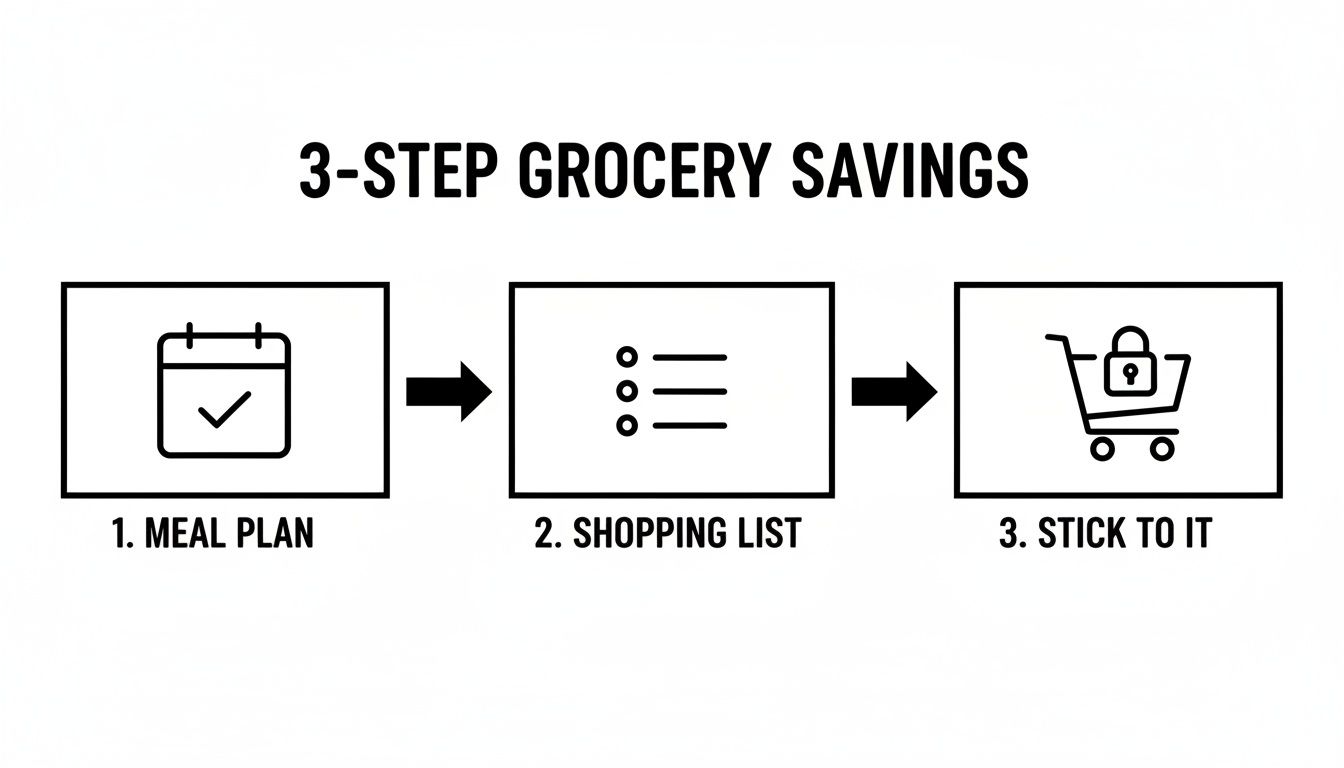
This visual really drives it home—the entire system hinges on creating that plan before you ever set foot in a store.
Can I automate meal planning to save time?
Let's be honest: while planning meals with pen and paper works, it can feel like a part-time job. This is where modern tools can step in and do the heavy lifting for you, saving you hours every single week. An AI-powered planner, for example, can generate an entire weekly menu based on your budget, dietary needs, and even the ingredients you just found in your pantry audit.
These tools act as a personal nutritionist and financial planner rolled into one. They instantly create optimized shopping lists designed to reduce waste by planning for leftovers and stacking ingredients for you.
This takes away the mental burden of trying to figure out what to cook every single night. For a busy parent or professional, that kind of automation is a total game-changer, turning consistent savings from a chore into an effortless habit.
You can see how this works by exploring a grocery list generator that builds your shopping list automatically from your weekly plan.
Trying to decide if this tech-driven approach is right for you? This table breaks down the differences pretty clearly.
Manual vs. AI Meal Planning: A Quick Comparison
| Feature | Manual Meal Planning | AI Meal Planning (e.g., AI Meal Planner) |
|---|---|---|
| Time Investment | 1-3 hours per week searching recipes and making lists. | 5-15 minutes per week to review and approve an auto-generated plan. |
| Ingredient Optimization | Relies on user's memory to stack ingredients. | Automatically stacks ingredients across recipes to minimize waste and cost. |
| Personalization | Limited by the recipes you know or can find. | Highly personalized based on goals, allergies, and food preferences. |
| Grocery List Creation | A tedious, manual task prone to errors. | Instant and automated, categorized by aisle for efficient shopping. |
| Nutritional Tracking | Requires separate apps and manual data entry. | Built-in and automatic, tracking calories and macros for every meal. |
| Food Waste | Higher risk of overbuying and spoilage. | Significantly lower, as every ingredient has a planned purpose. |
As you can see, the right tool doesn't just save you a little time—it optimizes the entire process from start to finish, ensuring you save more money with far less effort.
What are the smartest in-store shopping habits?

You’ve got your meal plan and a killer shopping list. Now for the final boss battle: navigating the grocery store itself. Supermarkets are masterfully designed to lure you into impulse buys, but a few key habits will keep you on budget and in control the second you walk through those automatic doors.
The first rule is one you've probably heard a million times, but it’s non-negotiable for a reason: never shop hungry. A rumbling stomach makes terrible financial decisions. That end-cap display of chips or the siren song of the bakery is ten times more powerful when you're running on empty.
How do I know if I'm getting a good deal?
Just looking at the big sticker price is one of the fastest ways to overspend. The real secret to finding the best value is mastering the art of unit pricing. This tiny number on the shelf tag—the cost per ounce, pound, or count—is your key to a true apples-to-apples comparison.
For example, a big 32-ounce tub of yogurt might be priced at $4.00, while a smaller 8-ounce cup is on sale for $1.25. The smaller one seems cheaper, but the unit price tells the real story:
- Large Container: $0.125 per ounce ($4.00 / 32 oz)
- Small Container: $0.156 per ounce ($1.25 / 8 oz)
In this case, the larger container is the better deal by a wide margin. Making a habit of checking the unit price ensures you’re always getting the most for your money, no matter what the packaging or “sale” sign says.
Are store brands as good as name brands?
Here’s another powerful in-store tactic: swapping out name-brand products for their store-brand or generic cousins. A lot of people are shocked to learn that private-label products are often made in the exact same facilities as the big national brands, offering identical quality for a much lower price.
This isn't a fringe strategy; it’s a full-blown movement. Recent research shows that U.S. households have been aggressively trading down on groceries. A staggering 51% of low-income families have swapped pricey meats and dairy for generics, and even high earners are jumping on the private-label train. You can explore the full McKinsey 2025 ConsumerWise research to see just how much economic pressures are changing shopping habits.
Start small. Try swapping one or two items per trip, like canned tomatoes, pasta, or cleaning supplies. You'll likely find you can’t tell the difference in quality, but your receipt will absolutely show the difference in savings.
How can I avoid impulse buys in the store?
Supermarkets are laid out to make you spend more. The essentials like milk and eggs are almost always at the very back, forcing you to walk past countless temptations just to get to them.
Your shopping list is your best defense against these psychological traps.
- Stick to the perimeter: The outer ring of the store is where you'll find the fresh stuff—produce, meat, and dairy. These are the whole foods that should make up the bulk of a healthy diet anyway.
- Avoid the "danger zones": Be extra cautious around endcaps (the displays at the end of aisles) and the checkout lanes. This is prime real estate for high-margin impulse buys like candy, magazines, and soda.
- Look high and low: The most expensive, name-brand items are usually placed right at eye level. Take an extra second to scan the top and bottom shelves. That’s where you'll often find the better deals and store-brand options hiding.
When you combine these in-store habits with your meal plan, the savings cycle is complete. This disciplined approach is how you consistently shrink your grocery bill without ever sacrificing the quality of the food you and your family eat.
How do I stop wasting food and throwing away money?
Every piece of food you toss is like throwing cash straight into the trash. It’s a painful truth. In fact, studies show a staggering 71 percent of the food households throw away could have been eaten. Shifting your mindset to see food as a valuable asset is the first step toward plugging one of the biggest leaks in your grocery budget.
It starts with treating your kitchen not just as a place to cook, but as your own personal inventory management system. The goal is simple: make sure every single item you buy gets used to its fullest potential, from the freshest bunch of herbs to the last slice of bread. This approach requires a mix of smart storage, strategic organization, and a little bit of creativity.
How should I store food to make it last longer?
You can dramatically extend the life of your groceries just by storing them correctly. So many people unknowingly shorten the lifespan of their produce and perishables with improper storage, leading straight to premature spoilage and waste.
A few simple changes can make a world of difference:
- Treat fresh herbs like flowers. Trim the stems, pop them upright in a jar with an inch of water, and loosely cover them with a plastic bag in the fridge. They'll stay vibrant for over a week.
- Wrap celery tightly in aluminum foil. It’s a game-changer. This method prevents moisture loss far better than a plastic bag, keeping stalks crisp for weeks.
- Store onions and potatoes separately. When they're neighbors, the gases they release cause both to spoil faster. Keep them in a cool, dark, and dry place, but apart.
- Keep bread in the freezer, not the fridge. This is a big one. The refrigerator actually makes bread go stale faster. Freeze what you won't use in a day or two and toast slices as you need them.
These small habits are what keep your hard-earned money from ending up in the compost bin.
How can I organize my fridge to reduce waste?
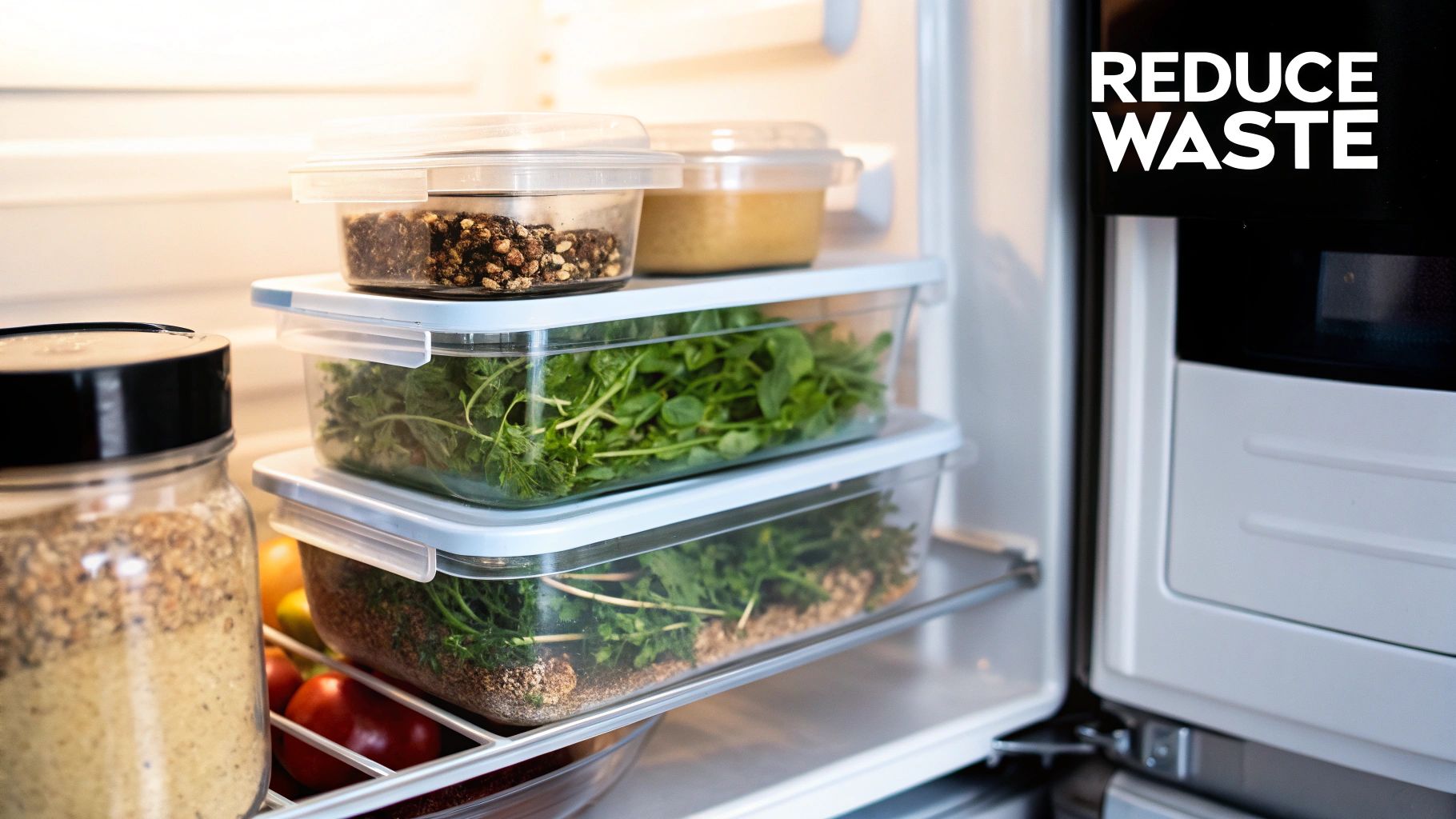
Organizing your pantry and fridge is another non-negotiable tactic. The First In, First Out (FIFO) system is a simple but powerful method used by every restaurant to make sure older ingredients are used up before they expire.
To make this work at home, just put new groceries at the back of the shelf or behind older items. This simple move pushes the food that needs to be used sooner to the front, where you'll actually see it and remember to use it. This tiny organizational habit prevents those frustrating moments of finding expired yogurt or a block of cheese hiding in the back of the fridge.
Create a "Use Me First" Basket: Designate a specific container or area in your fridge for items that are getting close to their expiration date. This visual cue is a powerful prompt to incorporate those ingredients into your next meal, turning potential waste into a delicious dinner.
What can I do with leftovers and food scraps?
Transforming leftovers and food scraps into new meals is where you can unlock some serious value. Instead of seeing them as trash, think of them as free ingredients for your next creation. For more ideas on using what you have, check out our guide on how to make a meal from fridge leftovers.
- Vegetable Scraps: Keep a bag in the freezer for onion peels, carrot ends, and celery tops. Once it’s full, simmer them in water to create a flavorful homemade vegetable broth for free.
- Stale Bread: Never toss it. Cube it up, toss with olive oil and herbs, and bake into crunchy croutons. You can also blitz it in a food processor for perfect breadcrumbs.
- Leftover Rice: Day-old rice is the secret to great fried rice. The slightly dried-out grains fry up way better than fresh, fluffy rice.
Batch cooking on the weekend also plays a huge role here. Making a large pot of chili or soup not only gives you planned leftovers for lunches but also ensures you use up all the fresh ingredients you bought for that specific recipe.
Where can I find cheaper groceries besides the supermarket?
Let's be honest, sticking to the same old supermarket week after week is a surefire way to overspend. It’s comfortable, it’s familiar… and it’s a trap. If you’re serious about slashing your grocery bill, you have to break that habit and start thinking strategically about where your food comes from.
The real secret savvy shoppers use isn't about finding one magic store; it's about diversifying. By cherry-picking the best deals from different types of retailers, you can get everything on your list for a fraction of the cost without ever compromising on quality. It just takes a little willingness to venture beyond the usual aisles.
Are discount grocers a good option?
Stores like Aldi and Lidl are a complete game-changer, and if you haven't been, you're missing out on some serious savings. They operate on a totally different business model than your typical grocery chain. They focus heavily on their own high-quality private-label products and cut out the frills—you bring your own bags and need a quarter for the cart—to keep their overhead incredibly low.
Those savings get passed directly to you. This no-nonsense approach is why they're exploding in popularity. In fact, discount grocers saw a 1.4% surge in spending in mid-2025 as shoppers hunted for better value. People, especially in southern U.S. cities, are making these stores their first stop for pantry staples and everyday basics. You can learn more about these recent grocery spending trends to see just how much consumer habits are shifting.
Are farmers markets really cheaper?
When it comes to fresh, seasonal produce, it's almost impossible to beat your local farmers' market. You're buying directly from the people who grew the food, which often means better prices, incredible flavor, and much higher quality than what's been sitting in a truck for days.
Pro tip: Head to the market near closing time. Vendors are often willing to cut you a deal on remaining produce so they don't have to haul it all back to the farm.
Ethnic markets are another absolute goldmine for savings, particularly for certain categories.
- Spices: Stop paying a fortune for those tiny jars at the supermarket. You can find huge bags of high-quality spices for a fraction of the cost.
- Grains and Legumes: Rice, lentils, beans, and other pantry staples are typically available in bulk at prices that big-box stores just can't match.
- Specialty Produce: These markets are fantastic for finding unique and affordable fruits and vegetables that can bring exciting new flavors to your meals.
Building a truly cost-effective strategy means splitting your shopping trips. You might stock up on non-perishables at a warehouse club like Costco, grab your weekly basics at Aldi, and then swing by the farmers' market on Saturday for your fresh produce. This multi-stop approach is how you consistently win the grocery game.
FAQs on Saving Money on Groceries
What is the fastest way to lower my grocery bill?
The fastest way is to shop your pantry first and build a meal plan around what you already own. This single step immediately cuts down your shopping list and prevents buying duplicate items.
How much should I budget for groceries?
A general guideline is 10-15% of your take-home pay, but a better approach is to track your spending for one month. Then, set a realistic goal to reduce that baseline number by 15-20%.
Is it cheaper to buy groceries online or in-store?
Online shopping is great for avoiding impulse buys, but watch out for delivery fees. In-store shopping allows you to find clearance deals, but only if you stick strictly to your list.
Are coupons still worth it?
Clipping coupons can save a little, but you'll see much bigger and more consistent savings by switching to store brands. Focusing on digital loyalty programs is also more effective than paper coupons.
How does bulk buying save money?
Buying in bulk saves money by lowering the unit price of non-perishable items like rice, pasta, and canned goods. However, it only works if you have adequate storage and will actually use everything before it expires.
Which day of the week is best for grocery shopping?
Shopping in the middle of the week, like on a Wednesday, is often best. Stores are typically less crowded, and many release their new weekly sales circulars on this day.
Can I save money without sacrificing healthy food?
Absolutely. Focus your savings on pantry staples by buying store brands and in bulk, which frees up more of your budget for fresh produce, lean proteins, and other whole foods.
Ready to stop guessing and start saving? AI Meal Planner creates personalized weekly meal plans and automated grocery lists tailored to your budget and health goals. Take control of your food spending and discover how easy healthy eating can be. Get your personalized plan at https://ai-mealplan.com/onboarding
AI-powered nutrition
Get Your Personalized Meal Plan
AI creates the perfect meals for your goals, lifestyle, and taste.
Start Your Journej