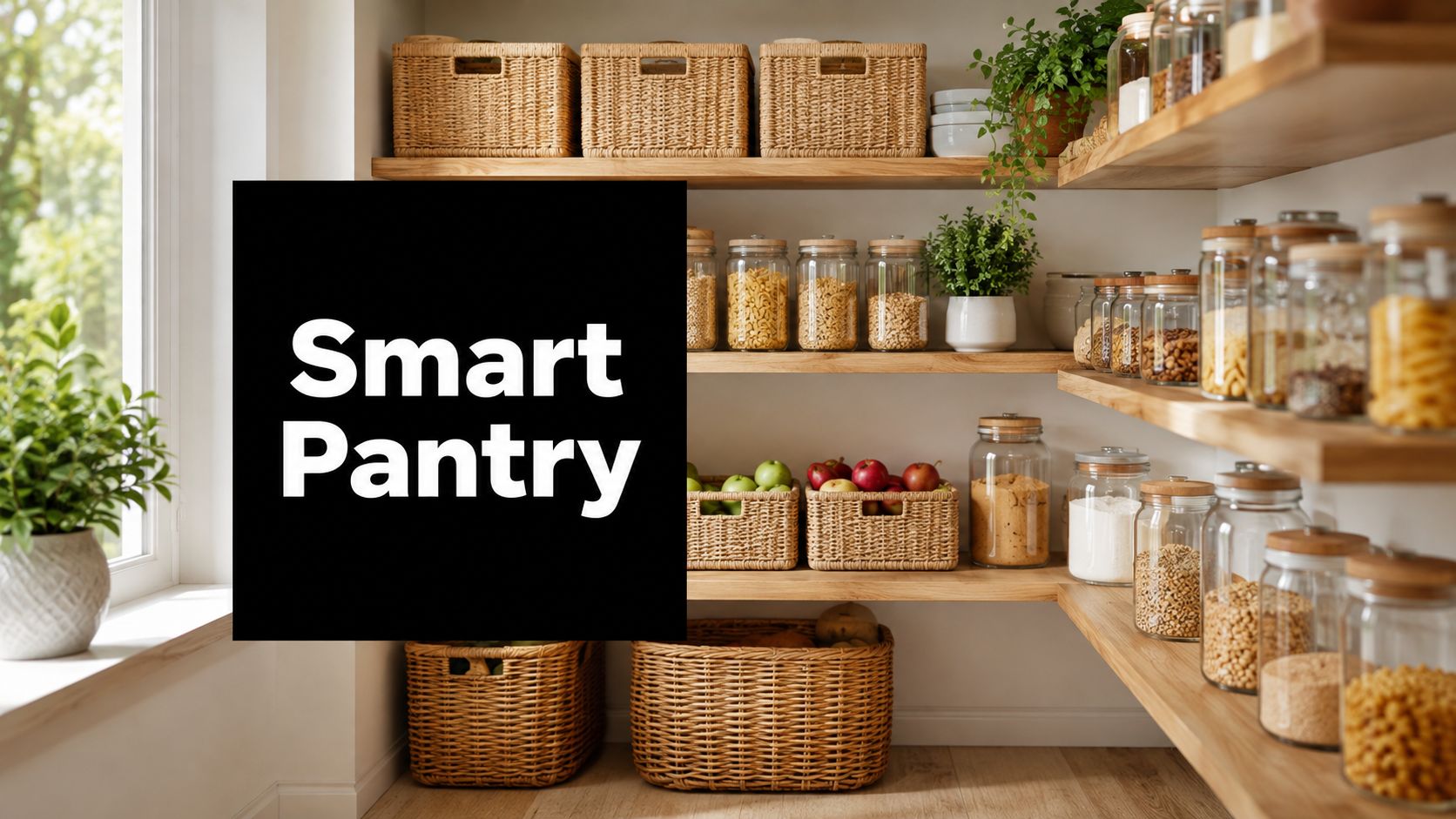
You open the pantry to grab pasta and find three half-used bags, an expired sauce, and a snack box hiding behind a cereal container. The fix isn't prettier containers. The best way to organize your pantry is to create a working inventory system built around visibility, zones, first-in, first-out rotation, and meal planning.
A useful pantry tells you what you have, where it belongs, what needs to be used soon, and what shouldn't appear on your next grocery list. That makes organization a practical food-waste control, not a decorative project. The U.S. Environmental Protection Agency says one-third of food in the United States goes uneaten, while the FDA estimates that 30% to 40% of the U.S. food supply is wasted (EPA and FDA food-waste figures).
The Smart Pantry System at a Glance
A pantry earns its space by supporting the next meal, not by looking uniform. Use one repeatable system: empty, purge, sort, zone, store, label, and maintain. Begin with a full view of your inventory, then make storage decisions based on what your household cooks and buys.
Remove food, appliances, cleaning products, and loose objects from the pantry. Group similar items where you can see them clearly. Keep flour with baking ingredients, canned tomatoes with sauces, and breakfast foods together. This exposes duplicate purchases, forgotten items, and categories that have outgrown their shelves.

The workflow that survives busy weeks
Use this order during every reset:
- Inventory: Check what you own before planning meals or shopping.
- Purge: Remove spoiled, damaged, unwanted, or unusable food.
- Sort: Create categories that reflect your cooking habits.
- Zone: Assign each category a fixed shelf, bin, drawer, or turntable.
- Contain: Choose storage that improves access without hiding contents.
- Label: Mark zones and dates where they are easy to read.
- Maintain: Review the pantry briefly each week and refresh it regularly.
Give frequently used ingredients the easiest access. Keep backup stock, bulk packages, and occasional baking supplies lower or farther back. Store heavy products low, where lifting and retrieval are safer. This arrangement also improves grocery-list decisions because you can see whether an item is needed before adding it to the list.
The pantry should feed your meal plan. Scan the relevant zones before shopping, then use ingredients that need attention when choosing meals. An AI Meal Planner can close that loop by turning available ingredients into meal ideas and a grocery list, but the list is only reliable when the pantry inventory is visible and current.
Food-distribution settings use similar shelf-life controls. A 2024 study of 84 food pantries found that 87% had an extension-dates policy, and 52.1% of pantries with that policy discarded less than 5% of their food monthly (study of food pantry shelf-life practices). A household does not need warehouse procedures. It needs visible stock, readable dates, and deliberate rotation so the next purchase supports actual meals instead of creating another hidden duplicate.
Empty, Purge, and Reset With Shelf Life in Mind
A pantry that looks full can still fail at dinner. Empty every shelf in one session, including nearby cabinets that serve the same storage purpose. Set up a clean table, counter, or section of floor as a temporary sorting area, then keep each item visible while you decide whether it supports the meals your household cooks.
Inspect every package before it goes back. Check for damaged seals, leaking jars, torn bags, pest activity, mold, unusual odors, and passed dates. Sort food into keep, donate, and discard. Unopened items your household will not use can go to donation when local rules and the food's condition permit it. Spoiled food and compromised packaging belong in the discard pile.
The goal is a usable inventory, not aggressive clearing. A reset should show what your household eats, what repeatedly expires, and which purchases sit untouched instead of becoming meals. Record those patterns before making the next grocery list.
Let shelf life determine the layout
Fresh produce demands closer attention than dry staples. Research on food pantries found that fresh produce was the most frequently discarded category, reported by 78.8% of pantries, while 56.0% said spoilage was the main reason items were discarded. Use those findings to set practical household rules:
- Rotate by date: Move older packages to the front so they enter meal plans first.
- Separate perishables: Keep short-life foods away from shelf-stable backup stock.
- Inspect vulnerable foods: Check produce and other high-risk items more often than sealed dry goods.
Use “best by,” “use by,” and “sell by” wording according to the product guidance and applicable local food-safety rules. Keep the original package information, or transfer the relevant instructions and date clearly when using another container. During meal planning, flag food nearing its limit and build meals around it before adding replacements to the shopping list.
Prepare a clean baseline
Wipe shelves with an appropriate food-safe cleaning solution and let them dry fully before restocking. Remove crumbs from corners, inspect seams where pests can hide, and keep food away from cleaning chemicals. Store food above the floor, never directly on it.
The U.S. Department of Agriculture is cited as recommending a pantry temperature of 50°F to 70°F, with food stored 6 inches above the floor and separated from cleaning chemicals (pantry food-safety guidance). Treat temperature, dryness, and darkness as operating requirements. Once the baseline is clean, restock by use order and update the inventory that informs your next plan.
Building Zones That Match How You Actually Cook
Your sorted piles now need a physical map. Use one category, one zone whenever the space allows. A zone can be a shelf, half shelf, drawer, bin, or turntable. The size doesn't matter as much as the rule that everyone knows where the category begins and ends.
Reserve the easiest positions for foods that drive everyday cooking. Keep breakfast and baking together if mornings and home cooking share the same access pattern. Place grains and pasta near canned goods or sauces if those ingredients frequently become one meal.
Give each zone a job
- Daily use and baking: Keep oats, flour, sugar, baking powder, breakfast ingredients, and frequently used spices within easy reach.
- Canned goods and sauces: Group tomatoes, beans, broths, pasta sauces, and jars together. Use risers if the shelf is tall enough to hide the second row.
- Grains and pasta: Store rice, pasta, couscous, quinoa, and similar staples in a visible row or appropriately sized containers.
- Snacks and quick meals: Put lunchbox foods, crackers, pouches, and grab-and-go items where family members can reach them without disrupting dinner supplies.
- Spices and extracts: Keep high-use seasonings closest to the cooking area. Alphabetizing is optional. Access frequency is more useful.
- Beverages: Group coffee, tea, drink mixes, and shelf-stable beverages together, while keeping heavy multipacks low.
- Bulk and backstock: Put unopened duplicates and large packages in a lower or less accessible area, but keep them visible.
Place the most-used items at eye level, as professional organizer guidance recommends, and move backup items, baking supplies, and bulk goods to lower or less accessible shelves (professional pantry zoning guidance). Keep about 20% empty capacity in each category or bin. That space gives new groceries somewhere to go and preserves the visual scan that prevents duplicate buying.

A beautiful pantry with mixed categories is still a bad pantry. Tall packages in front of short ones, deep shelves without dividers, and excessive containers can obscure inventory. If you're designing storage rather than rearranging it, this guide to building a pantry from scratch offers useful context for thinking about shelf dimensions and purpose.
Use your cooking history to settle disputes. If you make pasta several times a week, it belongs in prime space. If you use specialty cake decorations once a year, they don't. Your recipe collection can also help define the zones. Keep frequently used ingredients close to the meals you prepare, and browse recipes for pantry-friendly meal ideas before creating a category that only serves an imaginary cooking style.
Choosing Storage Solutions That Fit Your Space
Storage should solve a specific access problem. Don't decant every item because matching jars look good in photographs. A container earns its place when it makes stock easier to see, keeps a category together, protects the food appropriately, or makes a deep shelf usable.
| Container Type | Visibility | Best For | Main Tradeoff |
|---|---|---|---|
| Glass containers | High | Flour, rice, pasta, grains, and other dry goods | Heavy and breakable |
| Clear acrylic bins | High | Snacks, packets, small packages, and open shelving | Can waste space if the size doesn't match the shelf |
| Wire baskets | Medium to high | Bags, produce with suitable storage needs, and open categories | Small items may fall through |
| Opaque stackable bins | Low | Backstock and visually distracting packaging | Hide inventory unless labeled carefully |
| Lazy Susans | High for rotating access | Sauces, spices, oils, and small bottles | Useable capacity drops if items are too tall or unstable |
Match the tool to the shelf
Clear containers work best for dry goods you buy repeatedly. Choose shapes that fit the shelf depth, and transfer package instructions when needed. Clear bins suit loose snack packets and small bags because you can remove one module rather than excavating a shelf.
Wire shelving improves visibility and airflow compared with opaque storage, while handled bins turn open shelves into drawer-like modules for faster retrieval (advanced pantry organization guidance). Use a handled bin for a category you need to pull forward, not for items you reach for constantly if lifting the bin would become annoying.
Risers help canned goods and jars remain visible in rows. Pull-out drawers pay off in deep cabinets where the rear third would otherwise become dead space. Door racks are useful for narrow, lightweight items, but don't overload a door with heavy jars. A lazy Susan is excellent for bottles that otherwise form a blocked second row, especially oils, vinegars, and condiments.
Design rule: Measure the shelf before buying the container. The container should fit the footprint, preserve access, and leave room for stock movement.
For larger kitchen projects, pantry cabinet ideas from Jennifer Gilmer can help you compare built-in layouts, cabinet configurations, and storage features before committing to hardware.
The biggest mistake is over-containerizing. Original packaging often carries cooking instructions, allergens, and date information that your new container won't preserve automatically. Use containers selectively, label them clearly, and keep a practical balance between uniform appearance and usable information.
Labeling and a Lightweight Inventory System
Labels should answer a question in a glance: What is this, where does it belong, and when should I use it? A simple format works better than a complicated tracking scheme that nobody updates.
For bins and shelves, use the zone name first, followed by an optional subcategory. “Snacks, school” is more useful than a decorative label that only says “Treats.” For transferred dry goods, record the food name and relevant date. For opened foods or perishables, add the opening date or use-by date when that information matters.

Keep inventory light enough to maintain
You don't need a barcode scanner or a spreadsheet. Use one page divided into your pantry zones, and record only items that affect shopping decisions:
| Zone | Item | Amount | Use soon or replace |
|---|---|---|---|
| Grains and pasta | Rice | Opened bag plus backup | Use opened bag |
| Canned goods | Diced tomatoes | Several cans | Keep |
| Baking | Flour | Opened container | Check date |
| Snacks | Crackers | One box | Add to list when empty |
A notepad on the pantry door, a fridge whiteboard, or a shared phone note can all work. The best system is the one your household can update while cooking, not the one that looks most refined during setup.
Use the first-in, first-out method. Place older items at the front and newer stock at the back, then check stored foods about once a month so the oldest dates stay easiest to use (LSU AgCenter food-pantry storage guidance). When unloading groceries, don't shove new packages in front just because that spot is convenient.
Keep the grocery list connected to the inventory. If you finish the last can of tomatoes, add it immediately. If you notice three unopened cans, don't add tomatoes just because a recipe mentions them. A searchable food reference can also help you keep ingredient details together, including foods for pantry inventory planning.
Connecting Your Pantry to Smart Grocery Lists and Meal Plans
An organized pantry becomes valuable when it changes what you cook and buy. Before making a grocery list, scan the pantry zones, note ingredients that need using, and choose meals that consume those items. This pantry-first method prevents the common loop of buying duplicates, forgetting older stock, and throwing away food that never reached a recipe.
Meal planning also gives surplus items a destination. A half-used can of beans can become lunch, dinner, or a planned leftover rather than remaining an orphaned ingredient. The same principle applies to herbs, grains, sauces, and vegetables. Choose recipes that share ingredients across the week instead of creating a separate shopping list for every meal.
AI Meal Planner uses onboarding information about goals, dietary preferences, and allergies to generate weekly meal plans with calculated macros and calories. It also creates grocery lists organized by aisle, supports meal swaps, and uses leftover planning to reuse ingredients across recipes. After your pantry scan, an automated grocery list generator can be useful because the list becomes more accurate when your current stock is visible and your meal choices are deliberate.
The tool won't replace judgment. You still need to check package sizes, household preferences, and what your pantry can realistically hold. But the connection is powerful: organized storage supplies accurate inventory, inventory improves meal planning, and meal planning makes the grocery list more selective.
That loop matters for waste reduction. WRAP reported that self-reported household waste of four staple foods fell from 21% in 2024 to 18.8% in 2025, while U.S. data cited 3.98 million tons of unsold food and a 2.90% unsold-food rate in 2025 (WRAP household food-waste survey). Pantry organization isn't the whole solution, but it gives a household direct control over visibility, rotation, and ingredient use.
Weekly Maintenance and Quarterly Resets That Actually Stick
The pantry fails through small acts of neglect. Someone places a new cereal box in front of the old one. A family member opens a backup bag instead of checking the zone. A grocery trip adds ingredients without creating meals that use them. Your maintenance routine needs to catch those patterns before shelves become opaque again.
Set aside 15 minutes each week for a fast operational check:
- Scan surfaces: Return stray items to their assigned zones and remove anything that migrated from another category.
- Check dates: Pull products that need to be used soon and add them to upcoming meals.
- Nudge FIFO: Move older items forward and place newer purchases behind them.
- Update inventory: Mark finished items and add genuine replacements to the shared grocery note.
- Wipe one area: Clean a shelf, bin, or handle rather than waiting for a full pantry crisis.
A short routine works because it follows the way the pantry deteriorates. You aren't redesigning the kitchen every week. You're restoring the boundaries that make the inventory visible.
Use a quarterly reset to question the system
Every quarter, repeat the essential parts of the original reset. Empty enough of the pantry to inspect the shelves, review the discard and donation patterns, and check whether your zones still match your cooking. A family that now cooks more breakfasts may need to expand that zone. A household that stopped baking may be wasting prime space on supplies nobody touches.
Use the reset to correct operational mistakes:
- Single-use ingredients: Before buying an unusual ingredient, identify another meal that will use the remainder.
- Pantry-blind shopping: Check the pantry before every grocery trip, especially for staples and bulk products.
- Heavy items on high shelves: Move large jars, appliances, and multipacks down to safer storage.
- Deep unsegmented shelves: Add risers, handled bins, or pull-out drawers where the rear stock disappears.
- Overfilled categories: Remove excess purchases, combine compatible stock safely, and restore empty capacity.
- Aesthetic overreach: Remove containers that hide dates, waste space, or make access slower.
Keep dry storage cool, dry, and dark. Food-safety guidance commonly places dry goods at 50°F to 70°F, refrigerated food at 41°F or below, and frozen food at 0°F or below, with dry goods stored on shelving rather than directly on the floor (food-bank food-safety training).
Make hybrid pantries earn their footprint
Many modern kitchens use the pantry as more than food storage. It may also house a coffee maker, blender, air fryer, mixer, or a small preparation area. Create an appliance zone with clear counter access, keep cords controlled, and store the ingredients used with each appliance nearby. Pull-out drawers and appliance garages can protect the main pantry from becoming a pile of machines and food.
For shallow cabinets, use narrow bins with handles, front-facing labels, and single-depth rows. For awkward corners, use a turntable or reserve the space for backstock that you can remove as one group. Don't put frequently used food in a location that requires moving three other objects first.
A budget check can reinforce the system by showing whether organized stock is reducing impulse purchases and duplicates. Use a grocery budget calculator alongside your pantry inventory, then review the result during the quarterly reset.
FAQ
How often should I check my pantry?
Do a brief surface and date check weekly, then complete a more thorough inventory review about once a month. A larger zone and stock reset belongs in your quarterly routine.
Should I alphabetize pantry items?
Only if alphabetizing makes retrieval faster for your household. Grouping by meal use and placing frequently used ingredients within easy reach usually matters more than a perfect alphabetical sequence.
Are clear containers necessary?
No. Use clear containers where visibility improves access, especially for dry goods and loose snack packages. Keep original packaging when it carries important instructions, allergy information, or date details that would be easy to lose.
Where should I store cleaning products?
Keep cleaning chemicals completely separate from food, preferably outside the pantry or behind a dedicated closed section. Food should also remain raised from the floor and protected from leaks or spills.
How should I organize a pantry with appliances?
Create a dedicated appliance zone with clear counter space and store commonly paired ingredients nearby. Keep heavy machines low, and use pull-outs or an appliance garage if the layout allows.
What belongs on the highest shelves?
Reserve high shelves for lightweight, infrequently used items that you can safely reach. Don't store heavy jars, bulk packages, or appliances overhead.
What should I do with a pantry that has very shallow shelves?
Use single-depth rows, narrow handled bins, and front-facing labels. Avoid stacking items behind one another, because hidden inventory defeats the purpose of the organization system.
AI Meal Planner creates personalized weekly meal plans, calculates macros and calories, adapts to dietary preferences and allergies, and generates aisle-sorted grocery lists with leftover planning. Visit AI Meal Planner to connect your pantry inventory with practical meals and more deliberate grocery shopping.
AI-powered nutrition
Get Your Personalized Meal Plan
AI creates the perfect meals for your goals, lifestyle, and taste.
Start Your Journej