
How can I manage my diabetes with diet?
To manage diabetes with diet, focus on three key numbers: consume 45–60 grams of complex carbohydrates per meal, get 25–30 grams of fiber daily, and limit added sugars to less than 25 grams per day. Prioritize non-starchy vegetables, lean proteins, and healthy fats while maintaining consistent meal times.
Living with diabetes means your diet is one of the most powerful tools you have for managing your health. The goal is to keep your blood sugar stable, and that starts with a smart, proactive approach to how you eat. This strategy isn't about cutting things out completely; it's about building your meals around foods that work for you. Consistency is your best friend here; sticking to regular meal times and controlling your portions will give you a much more predictable and stable glucose response.
Why is diet the cornerstone of diabetes management?
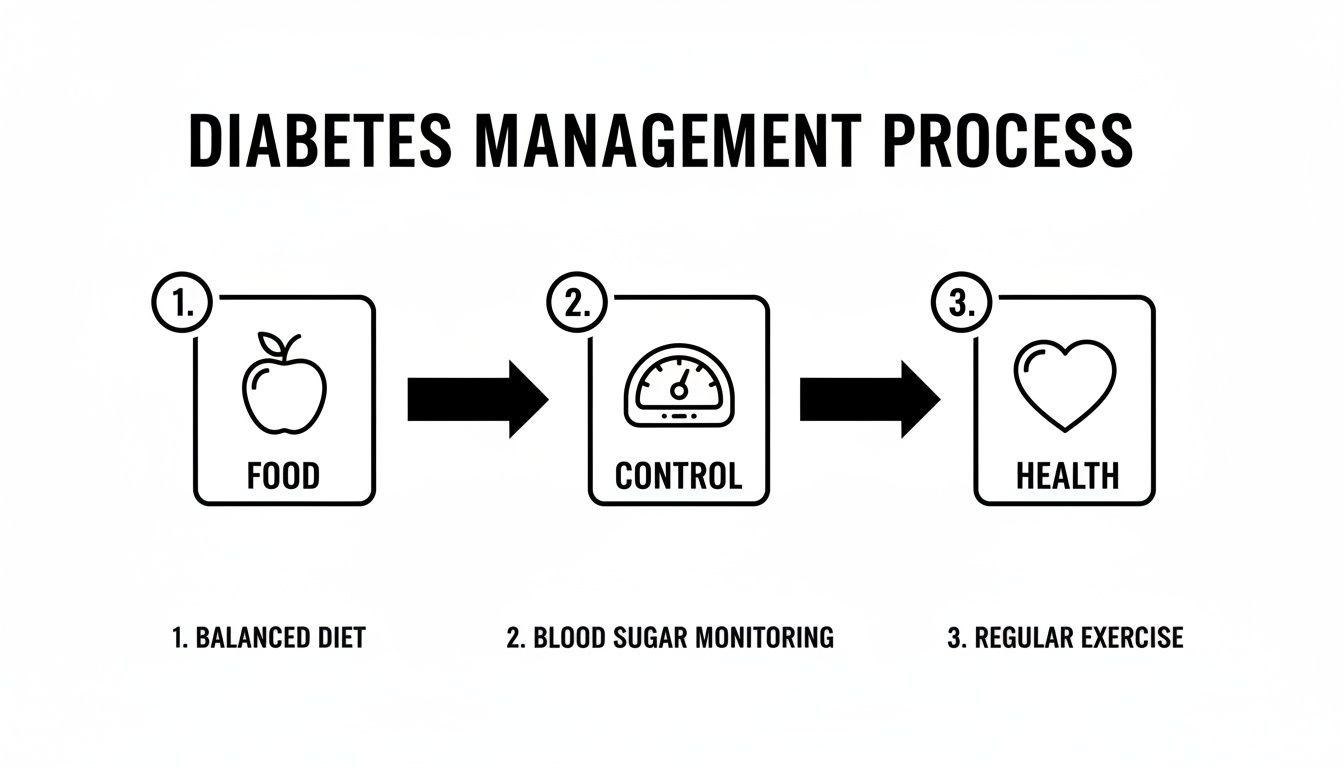
Your daily food choices have the most direct and immediate impact on your blood glucose levels, making diet the foundation of effective diabetes management. While medication has its place, strategic eating allows you to proactively create stability and take control of your health. By making conscious choices at every meal, you shift from simply reacting to blood sugar readings to actively managing them.
What is the link between food and blood glucose?
The carbohydrates, fats, and proteins you eat are broken down into glucose, which enters your bloodstream to fuel your body. In people with diabetes, this system is less efficient, often causing blood sugar to climb too high. Strategic eating helps manage the speed and amount of glucose entering your system.
Protein builds muscle and keeps you full, preventing overeating that leads to glucose spikes. Healthy fats can improve your body's response to insulin, and fiber-rich carbs slow down how quickly sugar is absorbed.
Viewing your diet as a strategy of empowerment is key. Every meal is an opportunity to make an informed decision that directly supports your well-being and puts you in control of your health.
How does a proactive diet impact long-term health?
Making mindful dietary choices is one of the most effective strategies for long-term diabetes management. The World Health Organization emphasizes that a healthy diet built around whole foods can prevent or delay type 2 diabetes, which accounts for 90-95% of all cases. This isn't just about cutting out "bad" foods; it's about building a sustainable lifestyle that nourishes your body and keeps glucose levels in a healthy, stable range. You can learn more about these global health statistics.
Of course, smart eating goes hand-in-hand with proper hydration. Pairing your meals with enough water is crucial for overall health and blood sugar management. You can use this guide to calculate your daily hydration needs. Thankfully, modern tools like AI-driven meal planners can take a lot of the guesswork out of this journey.
How do you structure meals for optimal blood sugar control?
The most practical skill you can master is how to build a meal that keeps your blood sugar stable. The secret lies in balancing your macronutrients: carbohydrates, proteins, and fats. Each one plays a unique role in how your body uses energy and manages glucose, and getting the mix right is what prevents sharp, frustrating spikes and crashes.
What is the role of carbs, proteins, and fats?
Think of these three macronutrients as a team working to keep your blood sugar in a healthy range.
Carbohydrates are your body's primary energy source, giving them the most direct impact on glucose levels. Choosing high-fiber, complex carbs is critical because they release sugar into your bloodstream more slowly.
Protein and healthy fats act as stabilizers. Protein helps you feel full and slows down how quickly your body absorbs carbohydrates. Healthy fats, found in avocados, nuts, and olive oil, can improve insulin sensitivity and support heart health—a crucial consideration in diabetes management.
The goal isn't to cut out entire food groups. It's about building a balanced plate where every component supports the others. A meal with a healthy mix of carbs, protein, and fat will always lead to a more gradual and manageable blood sugar response.
How do I use the Plate Method?
The Plate Method is a simple visual guide that removes the need for complicated weighing or measuring, making it perfect for everyday life.
Here’s how to build your plate:
- Fill Half Your Plate with Non-Starchy Vegetables: This is your foundation. Think leafy greens, broccoli, bell peppers, and mushrooms. They are packed with fiber and nutrients but low in carbs.
- Fill One-Quarter of Your Plate with Lean Protein: This section includes foods like grilled chicken, fish, tofu, or beans. Protein is key for muscle health and acts as a brake on your blood sugar response.
- Fill the Final Quarter with Complex Carbohydrates: This is where you put high-fiber, energy-providing carbs like quinoa, brown rice, whole-wheat pasta, or a sweet potato.
This visual trick ensures you get a balanced mix of nutrients while naturally keeping your portions and carb intake in check.
How does carbohydrate counting work?
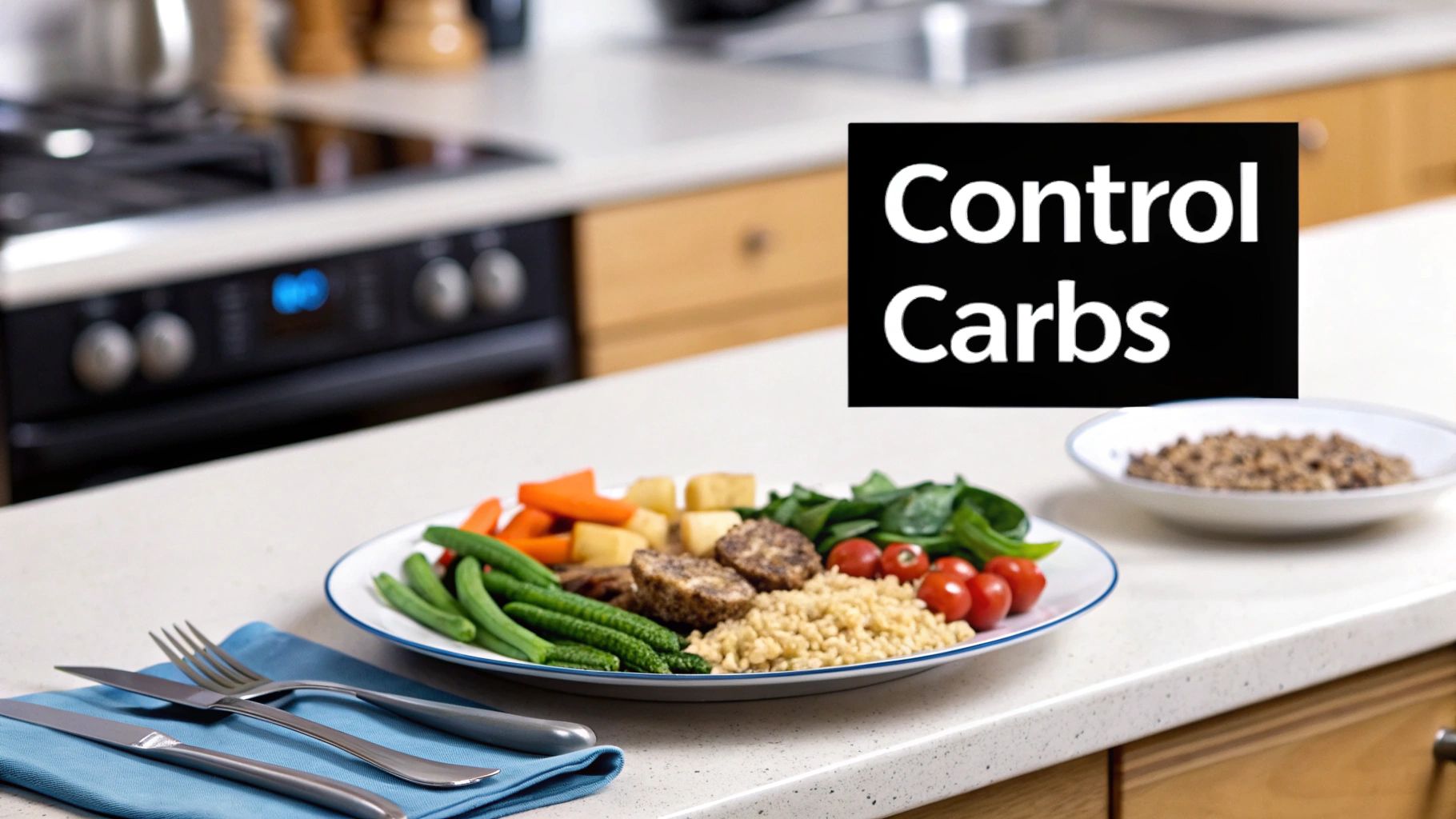
For a more precise approach, Carbohydrate Counting involves tracking the grams of carbohydrates you eat to stay within a personalized target range. This gives you flexibility in your food choices while maintaining control. For instance, if your goal is 45 grams of carbs for lunch, you can decide how to "spend" that allowance.
A good starting point for most people is 45-60g of carbs per meal, 25-30g of fiber daily, and keeping added sugars under 25g per day. To start, get comfortable reading nutrition labels and using apps to estimate carb content. For a detailed breakdown of your own recipes, our recipe nutrition calculator can be a huge help.
What are some smart food swaps for better blood sugar?
Small, consistent changes are often more effective than a complete diet overhaul. Here are some simple swaps to lower the glycemic impact of your meals.
| Instead Of This (High Glycemic Impact) | Choose This (Lower Glycemic Impact) | Why It Helps |
|---|---|---|
| White Rice | Quinoa or Brown Rice | These options are packed with fiber, which slows down digestion and prevents rapid blood sugar spikes. |
| White Bread | 100% Whole-Grain Bread | Whole grains contain the entire grain kernel, offering more fiber, vitamins, and minerals. |
| Sugary Breakfast Cereal | Oatmeal or a High-Fiber Cereal | Oats provide soluble fiber, which helps stabilize blood sugar and keeps you feeling full longer. |
| Potato Chips | A Handful of Nuts or Seeds | Nuts provide healthy fats and protein, which help moderate blood sugar and increase satiety. |
| Sweetened Soda or Juice | Water, Unsweetened Iced Tea, or Seltzer | Liquid sugars are absorbed very quickly, causing an immediate spike. Water has zero impact. |
| French Fries | Roasted Sweet Potatoes | Sweet potatoes have a lower glycemic index and more fiber and nutrients than white potatoes. |
These simple substitutions can make a massive difference in your day-to-day blood sugar readings.
What does a sample day of diabetes-friendly meals look like?
Putting these principles into practice is easier than you might think. A well-structured day focuses on whole foods, balanced macronutrients, and consistent meal timing.
Here’s a sample day:
- Breakfast (approx. 40g carbs): A spinach and mushroom omelet (2 eggs) with one slice of whole-grain toast and half an avocado.
- Lunch (approx. 45g carbs): A large salad with mixed greens, grilled chicken breast, cherry tomatoes, and cucumber with a light vinaigrette, paired with a small apple.
- Dinner (approx. 50g carbs): A piece of grilled salmon served with roasted sweet potatoes and steamed green beans.
- Snack (approx. 15g carbs): A small bowl of plain Greek yogurt topped with a handful of fresh berries.
This plan shows you can eat delicious, satisfying meals that work with your body to meet your diabetes management goals.
What foods should you prioritize on a diabetic diet?
Managing blood sugar with diet starts at the grocery store. Building your shopping list around specific, nutrient-dense foods is the most effective way to create meals that stabilize your glucose. The foundation rests on non-starchy vegetables, lean proteins, healthy fats, complex carbs, and fiber-rich fruits.
Why should I eat non-starchy vegetables?
Think of non-starchy vegetables as the foundation of your plate. Packed with vitamins, minerals, and fiber but low in carbs, they have almost no impact on your blood sugar. Fill half your plate with them to naturally manage portions.
Great options include:
- Leafy Greens: Spinach, kale, arugula
- Cruciferous Vegetables: Broccoli, cauliflower, Brussels sprouts
- Other Favorites: Bell peppers, cucumbers, mushrooms, asparagus
Which lean proteins are best?
Protein is essential for feeling full and satisfied. When paired with carbohydrates, it slows digestion and prevents sharp blood sugar spikes. Stick with lean sources low in saturated fat.
Your protein shopping list should feature:
- Poultry: Skinless chicken or turkey breast.
- Fish: Salmon, tuna, and mackerel are fantastic choices because they're loaded with heart-healthy omega-3 fatty acids. A 3-ounce serving of baked salmon provides about 17 grams of quality protein.
- Plant-Based Options: Beans, lentils, chickpeas, and tofu provide both protein and fiber.
- Eggs and Dairy: Eggs are a quick protein source, while low-fat Greek yogurt is a great choice without added sugars.
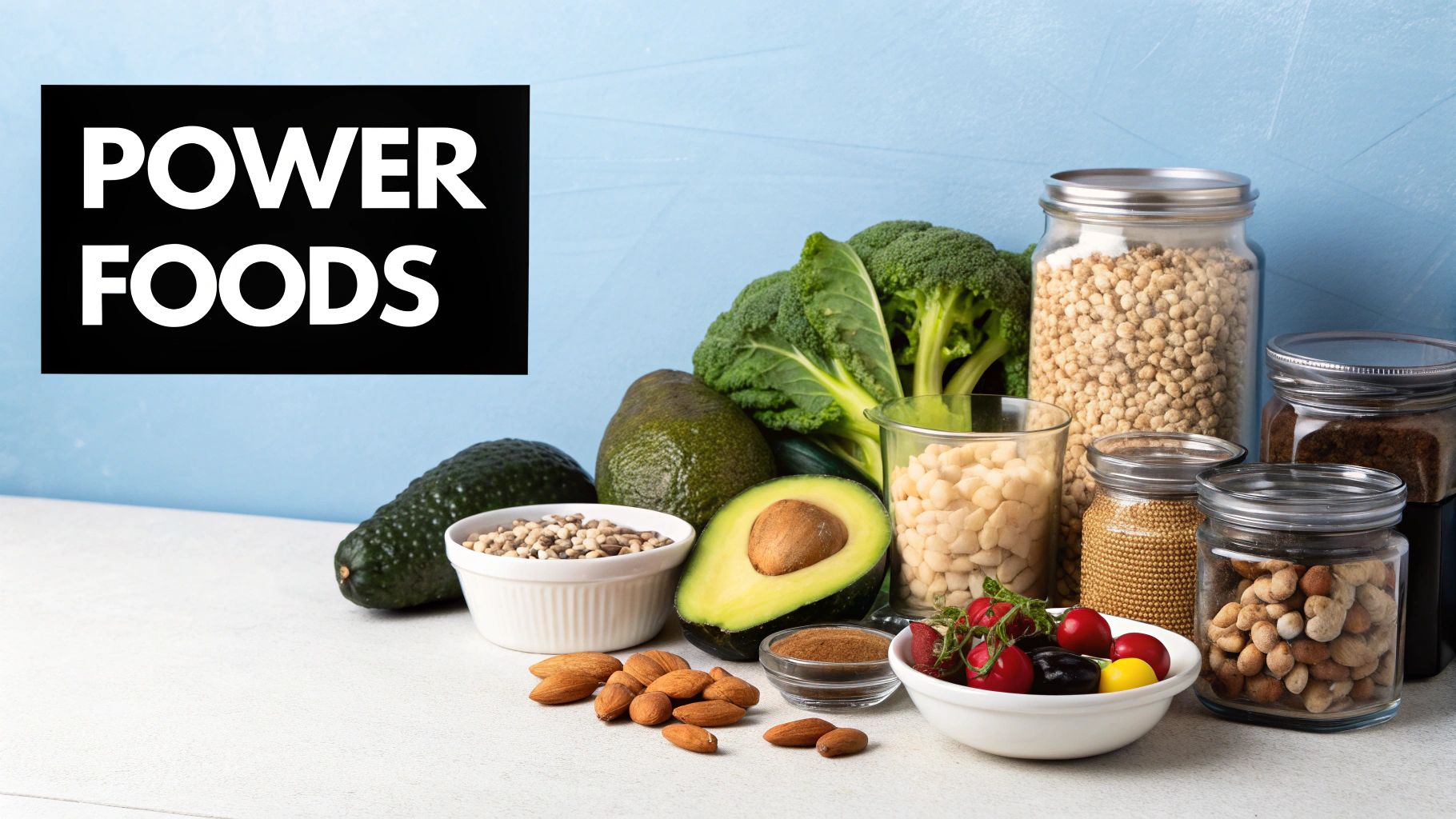
Top 10 Power Foods for Diabetes Management
- Leafy Greens (Spinach, Kale): Packed with nutrients, low in carbs.
- Fatty Fish (Salmon, Mackerel): Rich in omega-3s for heart health.
- Avocados: Healthy fats that improve insulin sensitivity.
- Nuts and Seeds (Almonds, Chia): Provide fiber, protein, and healthy fats.
- Beans and Lentils: Excellent source of fiber and plant-based protein.
- Berries (Blueberries, Strawberries): Low-glycemic fruit full of antioxidants.
- Whole Grains (Quinoa, Oats): Complex carbs for sustained energy.
- Greek Yogurt: High in protein to help with satiety.
- Broccoli: Loaded with fiber and vitamins.
- Extra Virgin Olive Oil: A healthy fat that reduces inflammation.
Why are healthy fats important?
Healthy unsaturated fats are your friends. They can improve how your body uses insulin, reduce inflammation, and support heart health.
Look for these excellent sources:
- Avocados: Full of monounsaturated fats.
- Nuts and Seeds: Almonds, walnuts, chia seeds, and flaxseeds are perfect for snacks.
- Oils: Extra virgin olive oil is ideal for salad dressings and cooking.
How do I spot hidden sugars on labels?
Processed foods often hide sugars under confusing names. Becoming a savvy label-reader will protect you from unintentional sugar bombs.
Keep an eye out for these words on the ingredients list:
- High-fructose corn syrup
- Dextrose, fructose, maltose, sucrose
- Cane juice or cane syrup
- Agave nectar or molasses
- Fruit juice concentrate
Your best tool is the "Added Sugars" line on the Nutrition Facts panel. This number tells you exactly how much sugar was put in during processing.
How can I personalize my diet and track progress?
The best diabetes diet is one built specifically for you. Your age, activity level, medications, and food preferences all play a huge role. To get lasting results, you must move beyond generic advice and create a plan that fits your life by understanding your body's unique response to what you eat.
Why is monitoring my body's response necessary?
To know if your diet is working, you must gather data. Your blood glucose meter is a personal feedback tool that tells you the real story of how food impacts your body. By checking your levels before and after meals (postprandial glucose monitoring), you can connect the dots. You might discover that one brand of whole-grain bread barely moves your numbers, while a similar one causes a major spike.
How do I keep a food and glucose journal?
To make sense of glucose readings, pair them with what you’re eating. A food and glucose journal is a powerful tool. A basic notebook or phone app works perfectly.
For each meal, jot down:
- What you ate: Be specific about food and portion size.
- Time of meal: When you started eating.
- Pre-meal glucose: Your blood sugar right before you ate.
- Post-meal glucose: Your reading about two hours after your meal.
- Notes: Did you exercise? Were you stressed?
After a week or two, you’ll start seeing clear patterns that provide the data you need to make smart, personalized tweaks.
How can technology simplify diet management?
Manual tracking can feel like a chore. Modern tools can take the guesswork and effort out of meal planning and tracking. The AI Meal Planner is a personal diet assistant that generates weekly plans designed around diabetes guidelines—think balanced macros, quick 30-minute recipes, and automatic grocery lists sorted by aisle. For more specific targets, a calorie and macro calculator can offer precise insights.
By combining personal monitoring with smart technology, you can build a diet plan that not only works for your diabetes but also fits seamlessly into your life. If you're ready to get started, you can get your own personalized diabetes-friendly meal plan at https://ai-mealplan.com/onboarding today.
When should I talk to a doctor or dietitian?
Learning to manage diabetes with diet is an empowering step, but you should never take it in isolation. Your healthcare team—especially your doctor and a registered dietitian—are essential partners. They provide personalized, expert guidance that no general article can replace, ensuring your plan is safe and effective.
What are key moments to seek professional guidance?
Certain situations absolutely call for a conversation with a healthcare professional. Trying to navigate these moments alone can be risky.
It's non-negotiable to consult your team at these times:
- When First Diagnosed: This is the most critical time to connect with a doctor and a dietitian for foundational knowledge and a baseline plan.
- Before a Major Diet Change: Thinking about starting a low-carb diet or intermittent fasting? You need professional input to adjust medications and prevent hypoglycemia (low blood sugar).
- If Your Blood Sugar Is Consistently Off Target: If your glucose readings are frequently too high or too low, it's a clear signal that your current plan needs a professional tune-up.
- When Managing Other Health Conditions: Diabetes often co-exists with kidney disease or high blood pressure. A dietitian can create a plan that addresses all your health needs at once.
Professional guidance isn’t a sign of weakness—it's the cornerstone of responsible diabetes management. Your healthcare team provides the safety net and expert knowledge you need to navigate the complexities of this condition successfully.
Why is a registered dietitian my best ally?
A registered dietitian (RD) is an expert trained in food and nutrition. They translate complex medical advice into practical, real-world eating plans.
A dietitian will help you:
- Create a personalized meal plan that fits your preferences, culture, and budget.
- Master practical skills like carb counting and reading nutrition labels.
- Set realistic, achievable goals for weight management and blood sugar control.
This expert support is vital. Globally, only 60% of people with diabetes are aware they have it, and a mere 20% achieve control. These sobering numbers highlight just how critical professional diagnosis and ongoing management are.
Frequently Asked Questions About a Diabetes Diet
How can I handle cravings for sweets?
Plan for small, intentional indulgences like a square of dark chocolate or berries with Greek yogurt. Eating meals high in protein and fiber will help reduce cravings by keeping you full and satisfied.
What’s the best way to handle dining out?
Check the menu online beforehand to identify healthy options. When ordering, ask for sauces on the side, swap fries for extra vegetables, and choose grilled or baked options over fried.
What are some good snack ideas for diabetics?
Choose snacks that combine protein, healthy fats, and fiber. Good options include an apple with peanut butter, a handful of almonds, baby carrots with hummus, or a hard-boiled egg.
How important is staying hydrated for blood sugar?
Hydration is critical because dehydration can cause the glucose in your bloodstream to become more concentrated, leading to higher blood sugar readings. Make water your primary beverage throughout the day.
Can I drink alcohol on a diabetic diet?
Alcohol can be consumed in moderation, but it's important to consult your doctor first. Drink with food to prevent low blood sugar, choose light beer or dry wine, and avoid sugary mixers.
Do I have to give up fruit?
No, you do not have to give up fruit. Focus on whole fruits like berries, apples, and pears, which are high in fiber, and be mindful of portion sizes to manage carbohydrate intake.
Are "diabetic" or "sugar-free" foods a good choice?
Not always. Many "sugar-free" products contain sugar alcohols, which can still affect blood sugar and cause digestive issues. It's often better to have a small portion of the real thing or choose whole-food alternatives.
Ready to take the guesswork out of your daily meals? The AI Meal Planner creates personalized, diabetes-friendly meal plans and smart grocery lists, all tailored to your specific goals and preferences. Start your journey to easier, healthier eating today.
AI-powered nutrition
Get Your Personalized Meal Plan
AI creates the perfect meals for your goals, lifestyle, and taste.
Start Your Journej