How can I lower my cholesterol naturally?
To lower your cholesterol naturally, focus on diet and exercise. Aim for 10–25 grams of soluble fiber and 2 grams of plant sterols daily, while limiting saturated and trans fats. Combine this with at least 150 minutes of moderate-intensity aerobic exercise per week to potentially reduce LDL ("bad") cholesterol by 15–37%.
Getting a high cholesterol reading can be a wake-up call, but it’s far from a life sentence. The power to change your numbers is literally on your plate and in your daily routine. This isn't about starting some miserable, restrictive diet you'll abandon in a week. It’s about making smart, sustainable swaps that actually work for your real life. When you understand why certain foods and activities move the needle, making those changes becomes empowering, not a chore.
Think of it this way: every small adjustment is a win. Adding a scoop of oatmeal to your breakfast or taking a brisk walk on your lunch break—these simple actions add up to powerful results over time.
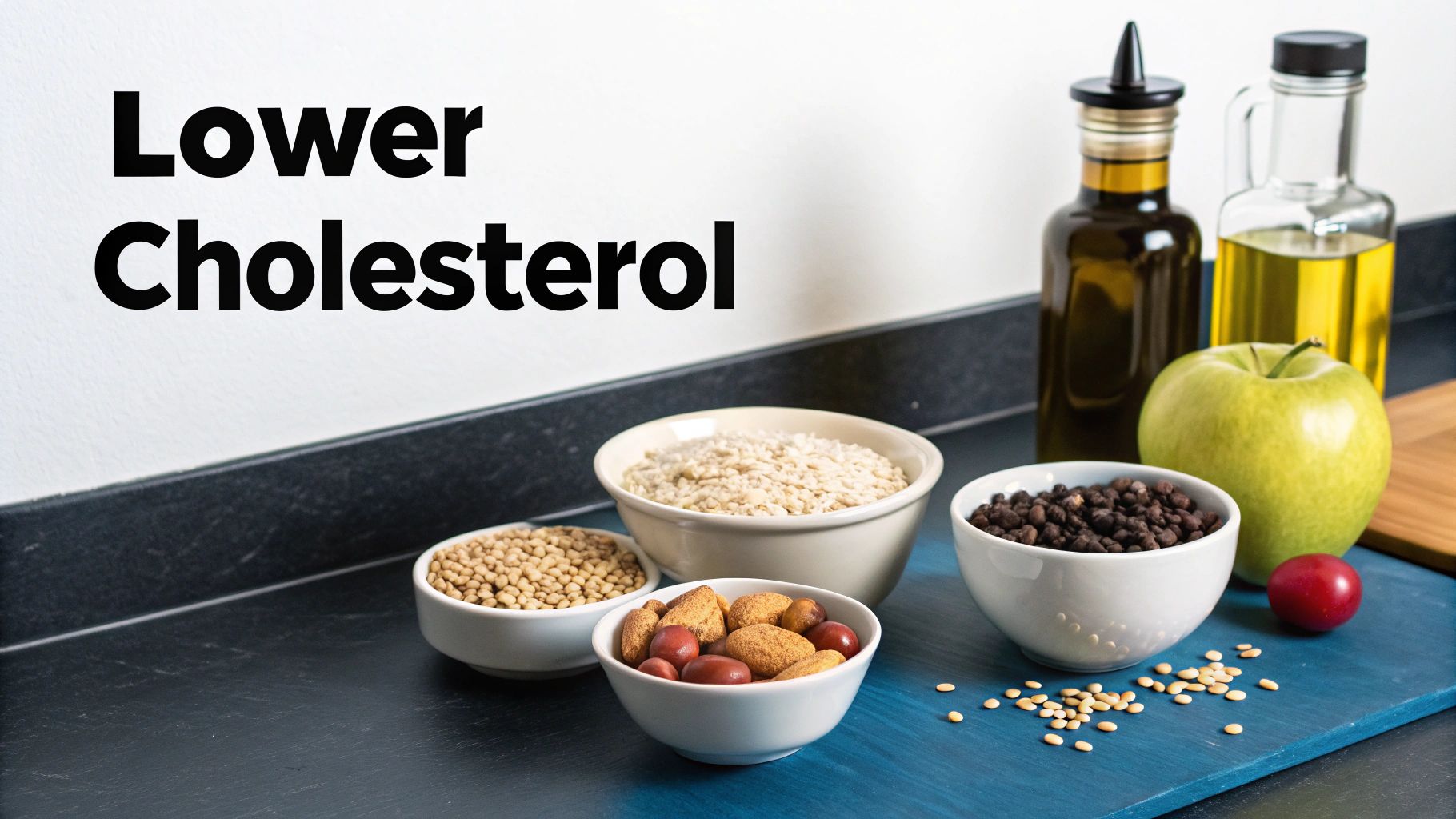
Why do my cholesterol numbers matter?
Your lab report numbers are all about a balancing act between two key players in your bloodstream: LDL and HDL cholesterol. Getting a handle on what they do is the first real step toward taking back your heart health.
Think of LDL (Low-Density Lipoprotein) as the cholesterol delivery service. Its main job is to shuttle cholesterol from your liver out to the cells that need it. But when there’s too much LDL floating around, it starts making unwanted stops, dropping off its cargo on the walls of your arteries. This buildup is what we call plaque, and it's why LDL has earned the nickname “bad” cholesterol.
On the flip side, HDL (High-Density Lipoprotein) is the cleanup crew. It patrols your arteries, scavenging for excess cholesterol and hauling it back to the liver to be flushed out of your system. Because of this protective role, we call it “good” cholesterol. The real trouble starts when your LDL is high and your HDL is low, tipping the scales toward a higher risk for heart disease.
What is causing my high cholesterol?
While your genes can certainly play a role in your cholesterol profile, for most of us, our daily habits—especially what we eat—are the main drivers. The choices you make at the grocery store and in your kitchen are some of the most powerful tools you have.
Some foods are notorious for raising LDL levels, particularly those loaded with saturated and trans fats. These fats basically give your liver the green light to produce more cholesterol than your body actually needs.
The usual suspects include:
- Saturated Fats: You'll find these in red meat, the skin on poultry, full-fat dairy like butter and cheese, and tropical oils such as coconut and palm oil.
- Trans Fats: These often lurk in fried foods, store-bought pastries and cookies, and certain types of margarine.
Eating too much of these fats throws your body's natural cholesterol regulation out of whack, letting the "bad" LDL take over.
How can my diet improve my cholesterol?
Just as certain foods can send your cholesterol soaring, others are incredibly effective at bringing it back down. Your diet can attack high cholesterol from two different angles: by blocking its absorption into your bloodstream and by actively helping to remove it from your body.
Unsaturated fats, for instance, are the heroes of this story. Found in delicious foods like avocados, nuts, seeds, and olive oil, these healthy fats do the opposite of saturated fats. They help slash your LDL and can even give your protective HDL a much-needed boost.
And then there's soluble fiber, a true champion in the fight against high cholesterol. This special type of fiber, found in abundance in oats, barley, apples, and beans, dissolves in water and forms a thick, gel-like substance as it moves through your digestive system.
This gel works like a sponge. It binds to cholesterol and bile acids (which are made from cholesterol) in your gut, preventing them from ever making it into your bloodstream. Instead of getting absorbed, they get escorted right out of your body.
The impact can be profound. In one groundbreaking study, patients with heart disease who adopted a strict low-fat, plant-based diet saw their LDL cholesterol plummet by an average of 37.2% in just one year. That's a drop that rivals what you’d see from a high-dose statin medication. For anyone with a busy schedule, tools like an AI Meal Planner can make this feel almost effortless, generating weekly plans that swap out cholesterol-spiking foods for heart-healthy options like oats, vegetables, and soy. You can explore the research on dietary intervention to learn more about these powerful findings.
What specific foods should I eat to lower cholesterol?
Knowing you can fight high cholesterol with food is a great first step, but figuring out what to actually put in your grocery cart can feel overwhelming. This isn't about vague advice; it’s about stocking your kitchen with powerhouse ingredients that actively work to improve your numbers. Different foods tackle cholesterol in different ways. Some act like a sponge, binding to cholesterol particles and removing them from your body, while others block your body from absorbing it in the first place.
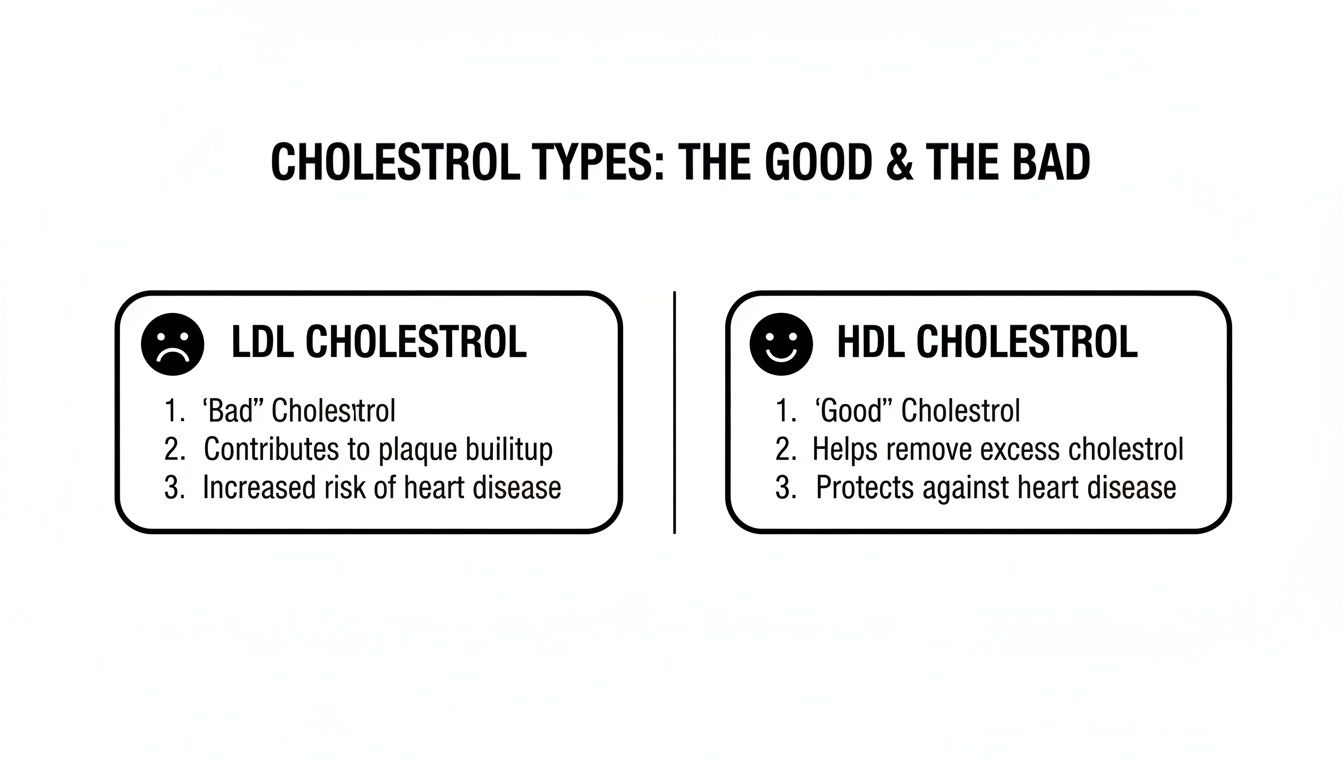
The main goal is to reduce LDL, the cholesterol that contributes to plaque buildup in your arteries. At the same time, you want to maintain or even boost HDL, which helps clear that plaque out.
Embrace soluble fiber superstars
If there’s one MVP in the fight against high cholesterol, it's soluble fiber. It’s a game-changer. When you eat it, it dissolves in water and forms a thick, gel-like substance in your gut. This gel acts like a magnet, trapping cholesterol and escorting it out of your body before it ever hits your bloodstream.
Aiming for 10-25 grams of soluble fiber every day can make a real, measurable difference.
Here are some of the best sources to focus on:
- Oats and Barley: A morning bowl of oatmeal or adding barley to a soup is an easy win. They’re loaded with beta-glucan, a uniquely potent type of soluble fiber.
- Legumes: Think lentils, chickpeas, black beans, and kidney beans. They are not only packed with fiber but are also fantastic sources of plant-based protein that keep you full.
- Fruits: Apples, pears, oranges, and berries are rich in another form of soluble fiber called pectin. An apple a day really does help.
- Vegetables: Brussels sprouts, broccoli, and carrots are all excellent, fiber-rich additions to any lunch or dinner.
Real-World Swap: Ditch the creamy, high-fat tomato soup and go for a hearty lentil or black bean soup instead. You get way more fiber and protein, which keeps you satisfied longer while actively working to lower your LDL.
Harness the power of plant sterols
This is a lesser-known but incredibly effective strategy. Plant sterols and stanols are natural compounds found in plants that have a structure almost identical to cholesterol. Because of this, they cleverly block the real cholesterol from being absorbed in your gut, lowering the amount that makes it into your bloodstream.
Here’s a stunning fact: consuming just 2 grams of plant sterols or stanols daily can slash your LDL cholesterol by 8-12% in as little as four weeks. These compounds, often added to products like certain margarines and yogurts, essentially compete with cholesterol for absorption. A major 2014 review confirmed just how effective they are.
Choose healthy fat champions
Let's get one thing straight: not all fats are bad. The type of fat you eat is what truly matters. While saturated and trans fats are known to raise LDL cholesterol, unsaturated fats—both monounsaturated and polyunsaturated—do the exact opposite.
Make a conscious effort to bring more of these into your diet:
- Avocados: This fruit is a fantastic source of both monounsaturated fats and fiber. Add slices to salads, toast, or sandwiches.
- Nuts and Seeds: A small handful of almonds, walnuts, flaxseeds, or chia seeds makes for a perfect, heart-healthy snack.
- Olive Oil: Use extra virgin olive oil for your salad dressings and for low-heat cooking. It’s a simple swap from butter or coconut oil.
- Fatty Fish: Salmon, mackerel, and sardines are swimming in omega-3 fatty acids, a type of polyunsaturated fat that lowers triglycerides and supports overall heart health.
For more ideas on how different foods can impact your health, check out our guide on finding foods by symptom.
Cholesterol-Lowering Food Swaps for Everyday Meals
| Meal | High-Cholesterol Choice | Heart-Healthy Swap |
|---|---|---|
| Breakfast | Buttery croissant or sugary cereal | Bowl of oatmeal with berries and walnuts |
| Lunch | Creamy chicken salad sandwich on white bread | Turkey and avocado on whole-grain bread with a side of apple slices |
| Snack | Potato chips and creamy dip | A handful of almonds and a pear |
| Dinner | Fatty steak with a loaded baked potato | Grilled salmon with roasted Brussels sprouts and a side of quinoa |
| Cooking Fat | Butter or coconut oil | Extra virgin olive oil or avocado oil |
These swaps are designed to be seamless and satisfying, proving that you don't have to sacrifice flavor to take care of your heart.
Prioritize powerful plant proteins
One of the most impactful changes you can make is reducing your intake of red and processed meats, which are notoriously high in saturated fat. Swapping them out for plant-based proteins can dramatically improve your cholesterol profile.
Plant proteins are a win-win: they are naturally low in saturated fat, contain zero dietary cholesterol, and are usually great sources of that all-important fiber we talked about.
Some excellent options to try:
- Soy Products: Tofu, tempeh, and edamame are incredibly versatile.
- Lentils and Beans: As we mentioned earlier, these are dual-purpose powerhouses, delivering both fiber and protein.
- Nuts and Seeds: Beyond their healthy fats, they provide a solid source of protein to keep you full and energized.
You don’t have to go all-in overnight. Start small. Try introducing one or two plant-based meals a week with "Meatless Mondays" and build from there.
How do exercise and weight management affect cholesterol?
While what you eat is a massive piece of the cholesterol puzzle, it’s only half the equation. Physical activity and maintaining a healthy weight are powerful partners to your diet. The connection goes way beyond just burning calories; it’s about fundamentally changing how your body handles and regulates cholesterol.
Exercise has a direct, positive influence on the balance between your "good" and "bad" cholesterol. In fact, it's one of the most effective natural ways to give your HDL levels a serious boost—and HDL is what you want, as it acts like your body's personal cholesterol cleanup crew.
What is the best exercise for cholesterol?
When you’re trying to lower cholesterol, the most impactful type of exercise is aerobic activity. This is basically any movement that gets your heart rate up and keeps it there for a while. Consistent aerobic exercise nudges your muscles to use more fat for energy, which helps pull triglycerides out of your bloodstream.
Here are some of the most effective options:
- Brisk Walking
- Jogging or Running
- Cycling
- Swimming
The real secret? Consistency. The key is to find something you actually enjoy doing, because that’s what will make it a sustainable part of your life, not just a temporary fix.
Key Takeaway: You don't need to become a marathon runner overnight. The biggest wins come from moving your body consistently. Make regular aerobic exercise a non-negotiable part of your weekly routine.
How much exercise do I need?
You don’t have to live in the gym to see a real impact on your cholesterol. The gold standard recommendation is at least 150 minutes of moderate-intensity aerobic exercise per week.
Let’s break that down so it feels less intimidating. That could look like:
- 30 minutes, 5 days a week.
- Three 50-minute sessions on days you have more time.
- Even smaller 10- or 15-minute bursts of activity sprinkled throughout your day.
If you’re more into higher-intensity workouts like running or HIIT, you can aim for 75 minutes per week and get similar benefits.
How does weight loss affect my cholesterol?
The link between carrying extra weight and having higher cholesterol is crystal clear. Excess body fat, especially around your midsection, can mess with your body's ability to clear LDL cholesterol from your blood and often leads to lower HDL levels.
Losing just 5-10% of your body weight can lead to a significant drop in LDL cholesterol and triglycerides. For someone who weighs 200 pounds, that’s only 10-20 pounds. The most effective approach is combining a heart-healthy diet with regular exercise. If you want to get a better handle on your activity levels, you can use a tool to estimate calories burned from daily steps.
How can I make fitness a habit?
Knowing you need to exercise is one thing. Actually doing it is another. The trick is to weave movement into the life you already have.
Here are a few real-world strategies that actually work:
- Take Walking Meetings: If you have a phone call that doesn't require a screen, take it on the go.
- Find a Weekend Hobby: Pick an activity you genuinely love that also gets you moving, like hiking or dancing.
- Use Your Lunch Break: Use the first 15-20 minutes to take a brisk walk around the block before you eat.
- Break It Up: Three 10-minute walks spread throughout the day are just as effective as one 30-minute session.
What does a cholesterol-lowering meal plan look like?
Knowing what to eat is the first step, but putting it all together into daily meals is where the real magic happens. It’s not about bland food; it’s about building satisfying meals around powerful, heart-smart ingredients. The idea is to find a rhythm that feels completely natural and easy to stick with.
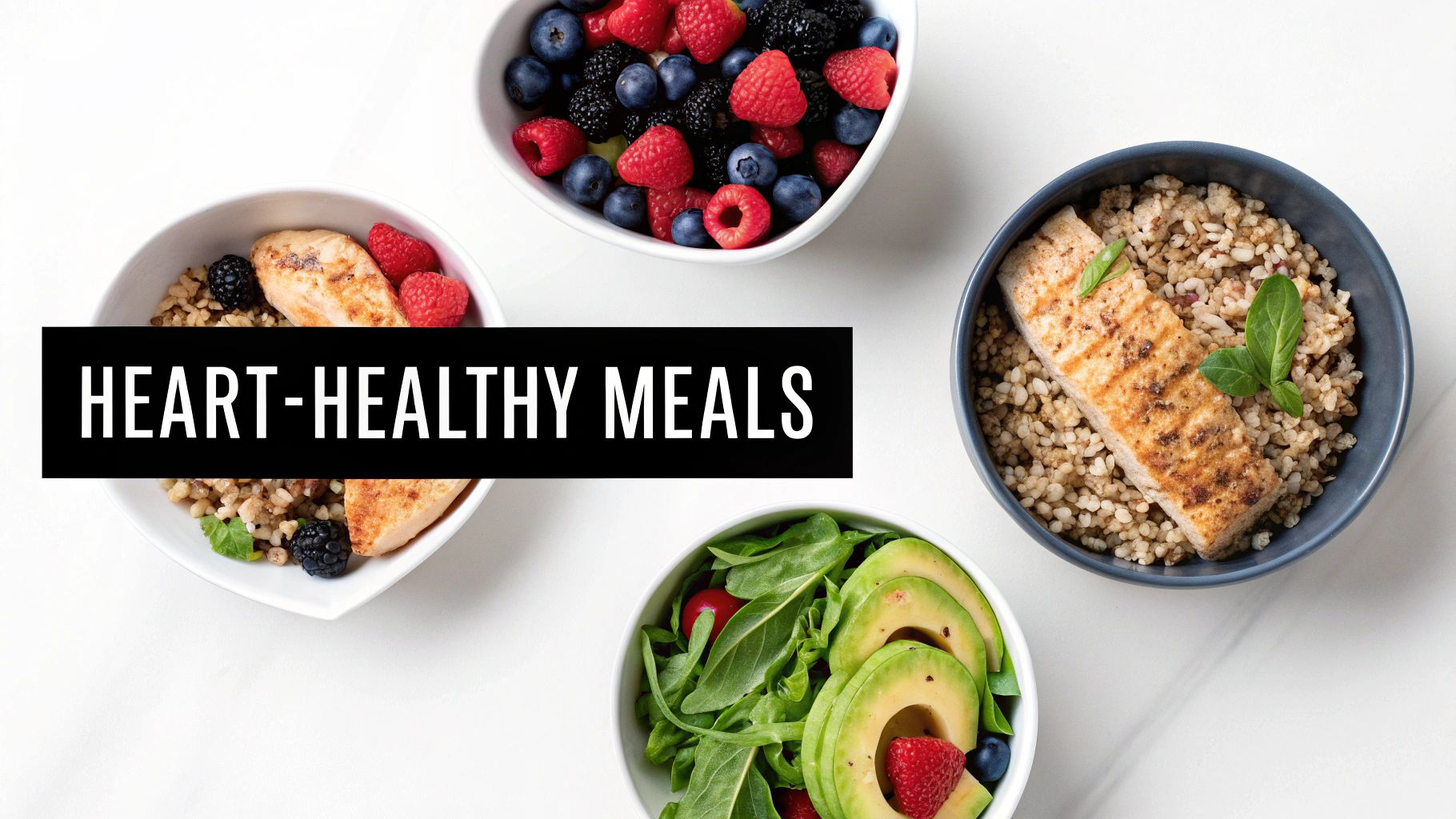
Each meal here is designed for both flavor and function, and most can be prepped in under 30 minutes. Think of this as a blueprint you can tweak based on your own tastes.
How can I structure my meals for success?
A well-designed meal plan keeps you on track without making you feel deprived. It's all built on a foundation of whole foods, strategically combining fiber, protein, and healthy fats to keep you full and your cholesterol levels moving in the right direction. For instance, if you kick off your morning with oatmeal, you’re getting a fantastic dose of soluble fiber right away. Follow that up with a lunch rich in unsaturated fats from avocado and a dinner featuring omega-3s from salmon, and you’ve created a powerful, day-long effect on your cholesterol.
Pro Tip: Meal prepping will be your best friend. Spend an hour on Sunday cooking a batch of quinoa or lentils, chopping your veggies, and grilling some chicken or salmon. It makes throwing together healthy meals during a chaotic week incredibly simple.
3-Day Cholesterol-Lowering Meal Plan Example
| Day | Breakfast | Lunch | Dinner | Snack |
|---|---|---|---|---|
| Day 1 | Oatmeal with Berries & Walnuts: 1/2 cup rolled oats cooked with water or skim milk, topped with 1/2 cup mixed berries and 1 tbsp chopped walnuts. | Quinoa Salad with Chickpeas & Avocado: 1 cup cooked quinoa, 1/2 cup chickpeas, cherry tomatoes, cucumber, and 1/4 avocado, with a lemon-olive oil dressing. | Baked Salmon with Roasted Asparagus: 4-ounce salmon fillet baked with lemon and herbs, served with a side of roasted asparagus spears tossed in olive oil. | An apple with a small handful of almonds. |
| Day 2 | Greek Yogurt with Flaxseeds: 1 cup non-fat Greek yogurt mixed with 1 tbsp ground flaxseeds and sliced peaches. | Lentil Soup & Whole-Grain Crackers: A hearty bowl of homemade or low-sodium lentil soup, served with a few whole-grain crackers. | Chicken Stir-fry with Brown Rice: 4 ounces of skinless chicken breast stir-fried with broccoli, bell peppers, and snap peas in a low-sodium soy sauce. Serve with 1/2 cup brown rice. | A pear. |
| Day 3 | Avocado Toast on Whole-Grain Bread: One slice of whole-grain toast topped with 1/4 mashed avocado, a sprinkle of red pepper flakes, and a squeeze of lime juice. | Large Spinach Salad with Grilled Chicken: A bed of spinach topped with 3 ounces of grilled chicken, strawberries, slivered almonds, and a light vinaigrette. | Black Bean Burgers on a Whole-Wheat Bun: A homemade or store-bought black bean patty on a whole-wheat bun with lettuce, tomato, and onion. | A small bowl of edamame. |
How can I automate my healthy eating?
A sample plan is a great starting point, but creating personalized plans week after week can feel like a chore. Modern tools like an AI Meal Planner can eliminate the guesswork. You simply plug in your needs—like focusing on cholesterol—and it generates tasty, easy-to-make meal ideas for you. This approach doesn't just save you time; it also helps cut down on food waste. To make shopping even easier, you can use tools like an automated grocery list generator that organizes everything you need by aisle.
When should I talk to a doctor about my cholesterol?
Making changes to your diet and getting more active are fantastic first steps, but they shouldn't be done in a vacuum. Your doctor is a crucial partner in this journey, helping you make sense of your lab reports, understand your true cardiovascular risk, and spot any underlying issues that diet and exercise simply can’t fix on their own. While many people see great results from lifestyle tweaks alone, these strategies aren't always enough.
What do my cholesterol numbers mean?
When you get a blood test back, you’ll see a lipid panel with a few key figures:
- Total Cholesterol: A broad overview.
- LDL (Low-Density Lipoprotein): This is the “bad” cholesterol. Lower is better.
- HDL (High-Density Lipoprotein): This is the “good” cholesterol. Higher is better.
- Triglycerides: Another type of fat in your blood.
Your doctor isn't just looking at one number. They’re analyzing the whole picture—the ratios between these numbers, and how they fit in with the rest of your health profile.
When should I make an appointment?
A commitment to a healthier lifestyle is always a win. But in certain situations, a doctor’s visit is non-negotiable.
The hard truth is that lifestyle changes might not cut it if your numbers are sky-high or if you have other serious risk factors. Your genetics can play a huge role, and sometimes, medication is an essential tool for protecting your heart.
You should definitely schedule an appointment if:
- Your Numbers Are Extremely High: If your LDL is way up there (think above 190 mg/dL), it might signal a genetic condition like familial hypercholesterolemia.
- You Have Other Risk Factors: Juggling high cholesterol with other conditions like high blood pressure or diabetes is a different ballgame. The same goes if you have a family history of early heart disease or if you smoke.
- Your Efforts Aren't Working: If you've been eating clean and exercising consistently for a few months but your numbers haven't budged, it’s time to regroup with your doctor.
What questions should I ask my doctor?
To get the most out of your appointment, walk in prepared. A short list of questions ensures you leave with a clear plan that’s built just for you.
Consider asking things like:
- What do my specific numbers mean for my personal risk of heart disease?
- Given my health factors, what should my target cholesterol levels be?
- How often should I get my cholesterol checked?
- At what point should we consider medication?
Working with your doctor empowers you to make smarter decisions and ensures you’re on the safest, most effective path to better heart health.
Frequently Asked Questions About Lowering Cholesterol
How long does it take to lower cholesterol naturally?
With consistent diet and exercise, you can see a noticeable drop in LDL cholesterol within 3 to 6 months. Some dietary changes, like adding plant sterols, can show results in as little as four weeks.
Can I lower my cholesterol without medication?
Yes, for many people it is entirely possible to lower cholesterol significantly through lifestyle changes alone. Success depends on your starting numbers, genetics, and overall health profile, so partner with your doctor.
Are supplements effective for lowering cholesterol?
Some supplements, like psyllium husk (soluble fiber) and fish oil (for triglycerides), can be effective supporters. However, they cannot replace a healthy diet and you must consult your doctor before starting any supplement.
What is the single worst food for high cholesterol?
Industrially produced trans fats are the worst because they raise "bad" LDL while also lowering "good" HDL cholesterol. They are often found in commercially fried foods, packaged baked goods, and some margarines.
Does quitting alcohol lower cholesterol?
Reducing alcohol intake can significantly lower your triglycerides, a type of fat in the blood linked to heart disease. While its direct effect on LDL is less clear, cutting back supports overall heart health and weight management.
Can stress cause high cholesterol?
Yes, chronic stress can lead to higher cholesterol levels, often indirectly. Stress can trigger unhealthy habits like poor diet choices and less physical activity, and may also directly impact how your body produces cholesterol.
How much water should I drink to lower cholesterol?
Staying well-hydrated is crucial for overall health but doesn't directly lower LDL cholesterol. However, drinking plenty of water supports a high-fiber diet, which is a key strategy for lowering cholesterol naturally.
Ready to stop guessing what to eat? The AI Meal Planner takes the confusion out of healthy eating by creating personalized meal plans and smart grocery lists designed to help you lower your cholesterol.
AI-powered nutrition
Get Your Personalized Meal Plan
AI creates the perfect meals for your goals, lifestyle, and taste.
Start Your Journej