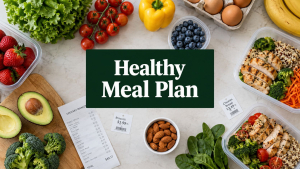
How Do I Create a Healthy Meal Plan With a Grocery List?
To create a healthy meal plan with a grocery list, follow these three steps: 1) Define your specific health goals to determine your calorie and macro needs. 2) Select recipes for the week that match your goals and tastes. 3) Compile an organized, aisle-sorted grocery list based on those recipes after checking what you already have in your pantry.
Creating a healthy meal plan that actually sticks doesn't have to be complicated. Forget overwhelming spreadsheets and endless recipe scrolling. We're going to break this down into a clear, three-phase flow: figure out your goals, find recipes that fit, and then build a smart shopping list. This straightforward approach is what turns the chore of meal planning into a powerful tool for hitting your health goals.
What is a good framework for meal planning?
A simple and effective framework for meal planning involves three distinct phases: Foundation, Curation, and Execution. This structure ensures you move logically from your high-level health goals to the specific ingredients you need for the week, preventing overwhelm and making the process repeatable. Each step builds on the last, turning a vague idea into a concrete, actionable plan.
The Core Meal Planning Framework
| Phase | Action | Key Outcome |
|---|---|---|
| Phase 1: Foundation | Define Your Goals. Get specific about what you want to achieve (e.g., lose fat, build muscle, manage an allergy). | A clear set of personal nutritional targets and dietary boundaries. |
| Phase 2: Curation | Select Your Recipes. Find meals that match your goals, taste preferences, and available cooking time. | A complete menu for the week with breakfast, lunch, dinner, and snacks. |
| Phase 3: Execution | Build Your Grocery List. Check your pantry, then compile an organized, aisle-sorted shopping list. | An efficient, waste-reducing list that gets you in and out of the store quickly. |
Following this framework consistently is the secret to turning meal planning from a stressful task into a simple, automated part of your weekly routine. It sets you up for a week of successful, healthy eating without the last-minute chaos.
Why do I need to define my health goals first?
You need to define your health goals first because they give your food choices a purpose. A meal plan is just a collection of recipes until it's anchored to a specific outcome like weight loss or muscle gain. This initial step translates a vague idea like "eat healthier" into specific calorie and macronutrient targets, which is what actually drives results and keeps you motivated.
How do goals translate into specific food choices?
Every health objective has a corresponding nutritional strategy. The key is to translate your goal into specific numbers that guide your food selection and portion sizes.
- Weight Management: This requires a calorie deficit. Your plan will focus on nutrient-dense, lower-calorie foods that promote fullness, like lean proteins, fiber-rich vegetables, and whole grains.
- Muscle Gain: This goal demands a calorie surplus and increased protein intake. Your meals will feature larger portions of chicken, fish, beans, and Greek yogurt to support muscle repair and growth.
- General Wellness: For those simply aiming to "eat cleaner," the focus shifts to micronutrients and food quality. This plan prioritizes a variety of colorful fruits and vegetables, healthy fats, and minimally processed ingredients.
Determining your Total Daily Energy Expenditure (TDEE) is a great starting point. You can calculate your personal TDEE to get a baseline for your daily calorie needs.
A well-defined goal acts as a filter for every food choice you make. It helps you say "no" to foods that don't align with your mission and "yes" to the ones that do, removing decision fatigue from your daily routine.
How does this look in practice for different people?
Consider two individuals: a 30-year-old software developer aiming to lose 15 pounds and a 25-year-old training for a half-marathon.
The developer’s meal plan might target 1,800 calories daily with a macro split of 40% protein, 30% carbs, and 30% fat. This structure promotes fat loss while preserving muscle. Their grocery list would feature eggs, spinach, salmon, and quinoa.
In contrast, the runner’s plan would aim for 2,500+ calories, emphasizing carbohydrates for sustained energy (50% carbs, 25% protein, 25% fat). Their shopping cart would be filled with oats, bananas, sweet potatoes, and whole-wheat pasta. This shows why a personalized plan, rooted in specific goals, is far more effective than a generic one.
How can I find recipes that fit my life?
A perfect meal plan is useless if you're too short on time or energy to cook the food. The solution is to build a personal recipe collection that aligns with your real-world schedule, cooking skills, and taste preferences. Be honest with yourself: if weeknights are chaotic, quick 30-minute meals are essential for your plan to be sustainable.
How should I filter recipes to find the right ones?
The internet offers an overwhelming number of recipes. To find what you need quickly, use specific search filters to turn a vague browse into a targeted mission. Start with your dietary non-negotiables like "Keto," "Vegan," or "gluten-free."
From there, get practical with your filters:
- Total Time: Search for "30-minute meals" or "under 20-minute recipes" for busy weeknights.
- Key Ingredients: If you have chicken to use, search for "healthy chicken breast recipes."
- Cooking Method: To ensure minimal cleanup, search for a "sheet pan dinner" or a "slow cooker recipe."
This strategic approach helps you build a library of reliable, go-to meals, eliminating the nightly panic of figuring out what to make for dinner.
What's an easy way to build a balanced menu?
Eating the same meals daily is a fast track to boredom and potential nutrient deficiencies. Variety is crucial for both enjoyment and health. A simple way to ensure a balanced menu is to plan for different protein sources throughout the week, such as fish on Monday, chicken on Tuesday, and a plant-based lentil soup on Wednesday. The demand for such customization is clear, with the healthy meal delivery market projected to hit $190.71 billion by 2025.
Pro Tip: Don't try to reinvent your entire menu overnight. Introduce one or two new recipes each week. It keeps things interesting without feeling like a massive chore.
Can you show me a sample balanced meal plan?
Here is a simple 3-day menu designed for balanced nutrition, variety, and quick preparation. Use it as a flexible template.
| Day | Breakfast | Lunch | Dinner |
|---|---|---|---|
| Monday | Greek yogurt with berries and a sprinkle of granola. | Quinoa salad with chickpeas, cucumber, and lemon-tahini dressing. | Sheet Pan Lemon Herb Salmon with roasted asparagus. |
| Tuesday | Two-egg scramble with spinach and a side of whole-wheat toast. | Leftover Lemon Herb Salmon and asparagus. | Turkey and Black Bean Tacos in lettuce wraps with salsa. |
| Wednesday | Oatmeal made with milk, topped with sliced banana and walnuts. | Leftover Turkey and Black Bean Taco filling over a bed of mixed greens. | Simple Lentil Soup with a side salad. |
This structure incorporates variety, prioritizes nutrient-dense foods, and strategically uses leftovers to save time. To get precise nutritional data for your meals, you can use a recipe nutrition calculator. For an automated solution, a platform like AI Meal Planner can generate personalized plans based on your goals and preferences.
What's the smartest way to build my grocery list?
A brilliant meal plan is only as good as the shopping trip that supports it. Your grocery list acts as the bridge between your planned recipes and your kitchen. The smartest approach involves turning your weekly recipes into an intelligent, waste-reducing shopping list that saves time and money by being strategic before you even enter the store.
Where should I start when making my list?
Always start with a pantry check. Before adding any item to your list, take a quick inventory of your refrigerator, freezer, and cupboards. This simple five-minute habit prevents you from buying duplicates, which directly cuts down on food waste and reduces your grocery bill. It's the easiest way to ensure you only purchase what you absolutely need.
How should I organize my grocery list?
Organize your list by store aisle to avoid aimless wandering and impulse buys. Instead of listing ingredients randomly, group them by store section (e.g., Produce, Meat & Seafood, Dairy). This creates a logical path through the store, eliminating frustrating backtracking and making your shopping trip a streamlined, efficient mission.
A well-organized list might look like this:
- Produce: Spinach, bell peppers, onions, cilantro, lemons, avocados
- Meat & Seafood: Chicken breasts, salmon fillets
- Dairy & Eggs: Greek yogurt, eggs, almond milk
- Pantry/Dry Goods: Quinoa, canned tomatoes, olive oil, garlic powder
- Frozen: Frozen berries, edamame
Technology can automate this for you; explore how an AI grocery list generator can simplify the process.
A well-organized list is your best defense against impulse purchases. When you have a clear plan, you're far less likely to be tempted by end-cap displays or junk food that isn't aligned with your health goals.
Is there a trick to reduce food waste?
Yes, practice "ingredient stacking." This strategy involves choosing recipes for the week that share key components, especially perishable ones. For example, if a recipe calls for fresh cilantro, plan to use the entire bunch in multiple dishes, such as cilantro-lime chicken on Tuesday and black bean tacos topped with cilantro on Thursday. This foresight ensures ingredients get used up instead of wilting in your fridge, stretching your budget and making your meal plan more cohesive.
How can I turn groceries into ready-to-go meals?
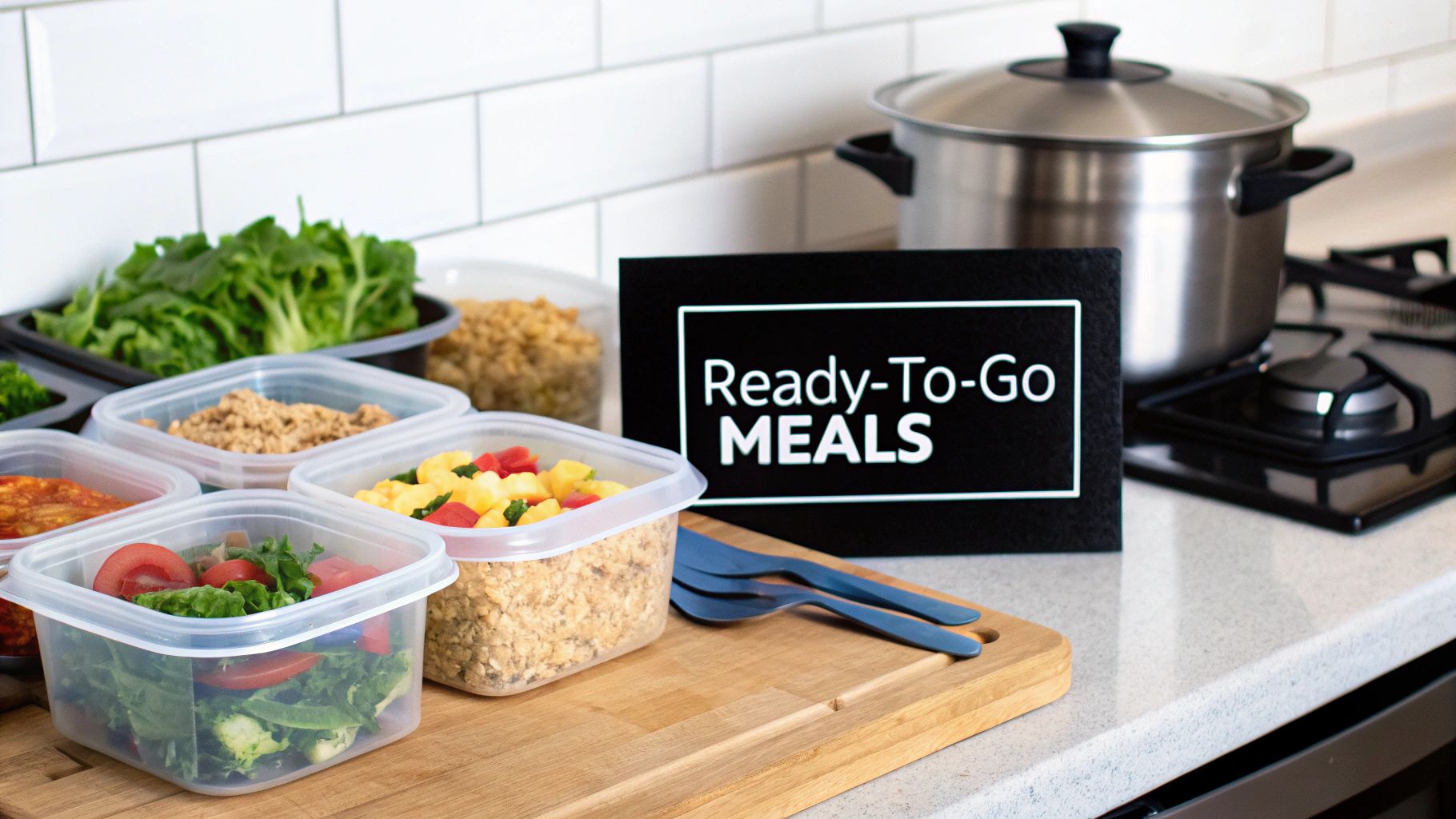
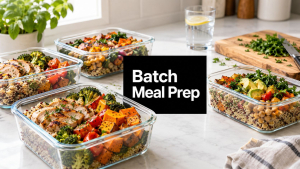
Getting groceries home is only the halfway point. The next step is turning that haul into convenient, ready-to-go meals through meal prep. This is the secret weapon that makes any healthy eating plan stick, especially on busy days when time and energy are low. Meal prep doesn't have to be an all-day affair; it’s about finding a rhythm that works for you.
What is the best meal prep style?
The best meal prep style fits your schedule and desired flexibility. You don't have to pack five identical meals to be successful.
Most people use one of two main approaches:
- Component Prep: Instead of cooking full meals, you prepare individual ingredients. This involves washing and chopping all your vegetables, cooking a large batch of quinoa, or grilling several chicken breasts. Throughout the week, you can quickly assemble salads, grain bowls, or wraps.
- Batch Cooking: This is the classic method of cooking entire recipes ahead of time, like a big pot of chili or a lasagna. It’s ideal if you want a true "grab-and-heat" meal ready and waiting.
A hybrid approach often works best, such as batch-cooking a main dish for dinners while component-prepping veggies for lunches.
Can you give me a sample prep schedule?
A focused two-hour session on a Sunday can transform your week. Here is a realistic schedule to maximize your time.
| Time Block | Task | Outcome |
|---|---|---|
| 0-30 Mins | Wash & Chop Produce: Prepare all veggies (wash lettuce, chop onions, peppers). Store in airtight containers. | Veggies are ready for salads, stir-fries, and snacks all week. |
| 30-60 Mins | Cook Grains & Protein: Start a pot of quinoa or rice. Bake or grill a batch of chicken or tofu. | The core of your bowls and lunches is now cooked and ready. |
| 60-90 Mins | Assemble a Batch Meal: While other items cook, make a large batch of soup, chili, or pasta sauce. | You’ve just prepared at least 2-3 dinners that only need reheating. |
| 90-120 Mins | Portion & Store: Divide everything into individual containers for easy access. Clean the kitchen. | Your fridge is now an organized arsenal of healthy, ready-to-eat meals. |
The goal of meal prep isn't just to cook food; it's to buy back your time and willpower during the busy week. When a healthy option is the easiest option, you're far more likely to stick to your plan.
How do I keep my prepped food fresh?
Proper storage is essential to keep your prepped food fresh. Use high-quality, airtight containers (glass is great for reheating). To prevent sogginess, always store salad dressings separately from greens. A squeeze of lemon or lime juice on cut avocado or apples will prevent browning. If you have random ingredients left over, you can create a meal from what's in your fridge to avoid waste. The popularity of convenient, prepped food is why the meal kit industry hit USD 32.8 billion globally in 2024, as noted in reports on the growth of the meal kit market.
Frequently Asked Questions About Meal Planning
How many meals should I plan for each day?
Plan for three main meals (breakfast, lunch, dinner) and one or two snacks. This structure helps maintain stable energy levels and prevents extreme hunger that can lead to poor food choices.
What’s the best day to plan and shop?
Most people find success by dedicating a few hours over the weekend, like Saturday or Sunday. This allows you to plan, shop, and prep for the week ahead without feeling rushed.
How can I meal plan with an unpredictable schedule?
Focus on "component prep" instead of cooking full meals. Prepare versatile ingredients like cooked grains, chopped vegetables, and a protein source that can be quickly assembled into different meals.
How do I include eating out in my meal plan?
Build one or two "flexible" or "unplanned" meals into your weekly schedule. This gives you the freedom to enjoy social dinners or takeout without feeling like you've derailed your plan.
Is it OK to reuse the same meal plan every week?
While you can, it's better to rotate between 2-3 different weekly plans or introduce one new recipe each week. This ensures nutritional variety and prevents boredom from setting in.
How long does prepped food last in the fridge?
Most cooked meals and prepped ingredients will stay fresh for 3-5 days when stored in airtight containers. For longer storage, consider freezing portions.
How can I make meal planning less time-consuming?
Use a meal planning app, create a rotation of your favorite weekly plans, and embrace simple recipes. A dedicated planning session once a week is far more efficient than deciding what to eat every day.
Ready to stop guessing and start planning? The AI Meal Planner creates personalized weekly meal plans and smart grocery lists based on your unique goals and preferences. Get your customized plan in minutes and make healthy eating simple and sustainable.
AI-powered nutrition
Get Your Personalized Meal Plan
AI creates the perfect meals for your goals, lifestyle, and taste.
Start Your Journej