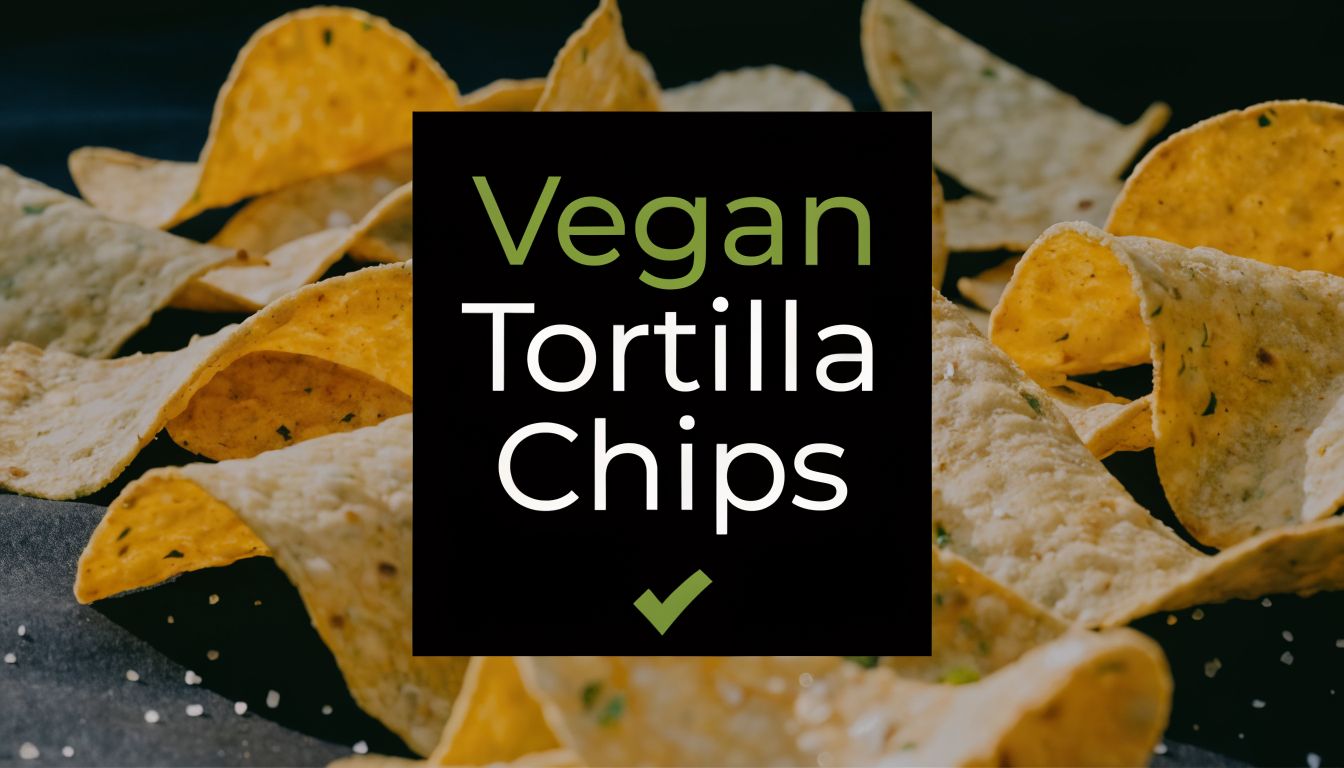
You are in the snack aisle with two bags in your hand. One says just salted. The other says zesty ranch. Both start with corn, oil, and salt, yet only one is likely to fit a vegan diet without much checking.
That is why the most accurate answer is: tortilla chips are often vegan, but not automatically vegan.
The base chip is usually straightforward. The uncertainty usually comes from what is added after the corn is cooked and fried. Seasoning blends, shared frying oil, and vague label terms can all change the answer. If you treat tortilla chips like a plain canvas with possible add-ons, the label starts to make much more sense.
A useful way to decide is to ask three quick questions. Is it plain or flavored? Does the ingredient list include obvious animal-derived ingredients such as cheese, whey, or sour cream? If the label uses broad terms like natural flavors, can you find enough context from the rest of the package to feel confident?
That approach works better than trying to memorize every safe brand or every risky flavor. It gives you a repeatable method you can use at a grocery store, a party, or a restaurant basket on the table.
This kind of practical decision-making matters across the rest of a vegan diet too. If you want meals built around the same clear logic, a structured vegan meal plan can make daily choices easier. For a broader long-term perspective, these insights from a 26-year vegan on diet and health add helpful context on consistency and food choices over time.
Your Go-To Guide for Vegan Tortilla Chips
The simplest answer to are tortilla chips vegan is yes, often. The more useful answer is this. Plain chips are usually fine, flavored chips deserve inspection, and restaurant chips need one or two direct questions.
That framework removes most of the guesswork.
People often get confused because tortilla chips sit in a category where the base food is plant-based, but the finished product may not be. Corn itself isn't the issue. The problems usually come later, when a manufacturer adds cheese powder, whey, barbecue seasoning, or “natural flavors” that don't clearly say where they come from.
Practical rule: Treat plain salted tortilla chips as your default starting point, not every flavored chip on the shelf.
Another source of confusion is that vegan safety and healthfulness aren't the same question. A chip can be vegan and still be something you eat in moderation. It can also be vegan and fit well into a balanced diet, depending on portion size and what you pair it with.
By the end of this guide, you’ll know how to:
- Judge the base ingredients so you know what a vegan-friendly tortilla chip looks like
- Spot the common non-vegan additives that show up in flavored bags
- Read labels quickly without overthinking every line
- Handle restaurant situations without feeling awkward
- Make your own chips when you want total control
Confidence comes from pattern recognition. Once you know the few ingredients and situations that change the answer, tortilla chips become one of the easier snacks to understand.
What Are Tortilla Chips Fundamentally Made Of?
Tortilla chips are one of the simpler foods in the snack aisle. The basic version starts with masa harina, water, oil, and salt, which is why plain tortilla chips are often a straightforward vegan choice.

Why masa harina matters
Masa harina is corn flour made from corn that has been soaked and cooked in limewater, then dried and ground. The process is called nixtamalization. “Lime” here means calcium hydroxide, not the green citrus fruit.
That term can look technical on a package, and technical words often make shoppers pause. In this case, it helps to know what the process does. Nixtamalization is a traditional way to prepare corn. It improves texture, helps the dough hold together, and makes some nutrients in corn easier for the body to absorb. It does not make the chips non-vegan.
The baseline ingredient list to look for
A plain vegan-friendly tortilla chip usually has a short label, often some version of:
- Corn or masa harina
- Vegetable oil
- Salt
- Sometimes water or lime
This is your reference point. If the ingredient list stays close to that template, you are usually looking at the simplest kind of tortilla chip to evaluate.
For shoppers who also avoid wheat, many plain corn chips can fit into a gluten-free meal plan, though cross-contact still depends on the brand and facility.
Plain salted chips with a short ingredient list are usually the easiest yes in the snack aisle.
What “plain” means in practice
“Plain” usually means salted, lightly salted, white corn, yellow corn, or blue corn with no added seasoning blend. The corn color changes the look and flavor a bit, but it does not determine whether the chip is vegan.
The ingredient panel is the part that matters.
A blue corn chip can be vegan. A yellow corn chip can be non-vegan if it includes dairy-based flavoring. That is why it helps to treat the front of the bag as marketing and the ingredient list as the answer key.
Which Ingredients Can Make Tortilla Chips Non-Vegan?
A tortilla chip can start with corn, oil, and salt, then stop being vegan the moment the seasoning is added. That is why flavored chips need a different kind of scrutiny than plain ones.

The easiest way to evaluate a bag is to separate it into two parts. First, the chip itself. Second, the flavor coating. The chip is often simple. The coating is where dairy, animal fat, or bee-derived ingredients tend to appear.
The ingredients that change the answer
Some non-vegan ingredients are obvious once you know their names. Others hide behind technical terms that sound harmless.
| Ingredient | What it means | Commonly Found In |
|---|---|---|
| Cheese powder | Dried dairy seasoning | Nacho cheese, queso, ranch-style chips |
| Whey | A milk byproduct | Cheese and creamy flavored chips |
| Casein or caseinates | Milk proteins | Ranch, sour cream, cheese seasonings |
| Buttermilk solids | Concentrated dairy solids | Tangy or creamy flavor blends |
| Milk powder | Dried milk | Cheddar, queso, cool ranch-style seasonings |
| Lard | Rendered pork fat | Some restaurant chips or traditional preparations |
| Tallow | Rendered animal fat, often beef | Some frying applications or flavor systems |
| Honey | Bee-derived sweetener | Sweet chili or sweet barbecue styles |
| Natural flavors | A broad category that may be plant or animal derived | Barbecue, smoky, savory, and specialty flavors |
Why these ingredients show up so often
Seasoning companies use dairy ingredients because they do practical work. Whey, casein, milk powder, and buttermilk solids help powdered flavorings stick to the chip. They also add richness, tang, and that familiar creamy finish people associate with ranch, queso, or sour cream flavors.
Animal fats show up for a different reason. Lard and tallow affect flavor and mouthfeel, and they may be used in frying or in the seasoning system itself. This is less common with packaged plain chips and more relevant with restaurant chips, house-made chips, or products labeled "traditional" or "authentic."
The ingredient that causes the most confusion
Natural flavors are the gray area that trips people up.
The term does not tell you whether the flavor came from plants or animals. It only describes how the flavor was derived under food labeling rules. On a plain salted tortilla chip, natural flavors are less common and usually less concerning. On barbecue, smoky, meaty, buttery, or creamy varieties, they deserve a closer look.
A good rule is to read the flavor name and the ingredient list together. If the front says "nacho," "queso," "ranch," or "honey barbecue," expect the back of the bag to confirm or rule out dairy, honey, or animal-derived flavoring.
Flavor names that deserve extra caution
These categories often need a slower read:
- Cheese-forward flavors such as nacho, cheddar, queso, or cool ranch
- Creamy flavors such as sour cream and onion, ranch, or creamy jalapeño
- Sweet-savory blends such as honey barbecue or sweet chili
- Smoky or meat-inspired flavors such as mesquite barbecue, taco, burger, or loaded varieties
If you want a second opinion on a confusing label, an AI nutritionist for ingredient checks can help you sort through terms quickly. It is still smart to confirm with the brand if "natural flavors" is the only unclear ingredient.
For a broader primer on ingredient panels and packaging language, Skout Organic has a useful guide on how to read food labels.
Treat the seasoning blend like the answer key. Corn tells you what the chip is. The coating tells you whether it is vegan.
How to Read Food Labels to Find Vegan Chips
If you want a quick way to answer are tortilla chips vegan in the store, use a short label-reading sequence instead of scanning randomly.

Start with the fastest clues
First, look for a vegan certification or a clear vegan statement on the package. If it’s there, your job is easy.
If there’s no vegan mark, move to the allergen statement. In the U.S., milk is one of the most helpful quick checks because flavored chips that contain dairy often state Contains: Milk.
If the allergen line is clear, read the full ingredient list and look for the red-flag words from the previous section.
Use this three-step scan
Check the front and back for “vegan”
Some brands make this explicit. Others don’t, even when the product is vegan.
Read the allergen statement
“Contains: Milk” is often the fastest disqualifier for cheese or ranch-style tortilla chips.
Scan the ingredients for problem terms
Look for whey, casein, cheese powder, buttermilk solids, milk powder, honey, lard, tallow, and natural flavors.
A practical companion to this habit is Skout Organic’s guide on how to read food labels, which gives a useful general framework for scanning packaged foods efficiently. If you want help translating labels into day-to-day choices, a digital AI nutritionist can also simplify ingredient decisions.
Label shortcut: If the bag is plain and the ingredient list is short, you're usually verifying simplicity, not hunting for a hidden animal product.
Example of a quick store decision
A label that says “corn, vegetable oil, salt” is usually a straightforward yes.
A label that says “corn, seasoning blend, whey, cheese culture, natural flavors” is a no for vegans.
For a visual walkthrough, this short video can help reinforce the process:
The goal isn’t perfect speed on day one. It’s building a reliable habit so your eyes go straight to the useful lines.
What About Tortilla Chips at Restaurants?
Restaurant chips are where people often feel least certain because there’s no package to inspect. In that setting, the important questions are about the frying fat and the fryer itself.

According to Bree’s Vegan Life’s review of tortilla chip ingredients and processing, over 95% of U.S. commercial brands use vegetable oil, but some authentic restaurants may still use lard. The same review notes that cross-contamination is a real issue, and that bone-char filtered sugar can matter in sweetened chip varieties.
The two questions that matter most
Ask these plainly and without apology:
- Are your tortilla chips fried in vegetable oil or lard?
- Are they fried in a dedicated fryer?
If the staff member doesn’t know, ask if they can check with the kitchen. That’s a normal question, especially at restaurants used to allergy and dietary requests.
How to interpret the answer
If the chips are fried in vegetable oil, that clears one major hurdle.
If they’re cooked in a shared fryer, the answer depends on your comfort level. Some vegans avoid shared fryers because the oil is used for animal-based foods. Others focus only on direct ingredients. That’s a personal line, not a universal rule.
A simple script helps in social settings:
“Could you check whether the tortilla chips are fried in vegetable oil, and whether they share a fryer with meat or cheese items?”
Clear, calm, specific questions usually get better answers than asking only, “Are these vegan?”
Which Popular Brands Offer Vegan Tortilla Chips?
If you want easy starting points, stick with brands that offer plain or clearly labeled plant-based options. The safest move is still to verify the exact bag, especially if the flavor changes.
Here are a few names commonly associated with vegan-friendly plain tortilla chips:
- Tostitos plain varieties are often treated as a baseline example because plain ingredients are typically simple.
- Garden of Eatin’ is commonly cited for straightforward corn-and-oil style chips.
- Late July Organic is often a good aisle to check when you want organic or specialty options.
- Whole Foods vegan tortilla chips are specifically described as vegan in the verified material, making them a useful example of a clearly vegan product.
- Paqui’s Carolina Reaper Madness Chip was launched as explicitly vegan, GMO-free, gluten-free, and egg-free in the verified data, although it’s a novelty product rather than an everyday pantry chip.
The smart way to use a brand list is as a shortcut, not a substitute for reading. Brands often make both vegan and non-vegan flavors. A plain sea salt bag may be fine, while a cheese or ranch version from the same company won’t be.
When in doubt, choose the product with the shortest ingredient list and the least decorative flavor language.
How to Make Your Own Foolproof Vegan Chips
Homemade tortilla chips solve the label problem completely. You control the tortillas, the oil, the salt, and any spices.
A simple method works well:
- Cut corn tortillas into triangles so they bake evenly
- Brush lightly with oil or skip it if you want an oil-free version
- Arrange in a single layer on a baking sheet
- Sprinkle with salt and optional vegan seasonings like smoked paprika or nutritional yeast
- Bake until crisp and lightly browned, turning once if needed
The best part is predictability. There’s no mystery seasoning blend and no need to decode “natural flavors.”
The verified data also notes a useful comparison. Three servings of commercial chips can contain 420 calories and 21g fat, while vegan homemade oil-free alternatives can come in at 351 calories and 11g fat, as described in the broader tortilla chips overview included in the verified material. That doesn’t mean homemade is always better for everyone, but it shows how much control you gain.
You can also change the texture. Bake them lightly for a sturdier chip with salsa, or longer for extra crunch. If you want more plant-based snack ideas built around your preferences, a personalized plant-based meal plan can help you turn small choices like this into a consistent routine.
For more easy vegan snack recipes suited to your goals, check out the AI Meal Planner onboarding page.
Frequently Asked Questions About Vegan Tortilla Chips
| Question | Answer |
|---|---|
| Are blue corn tortilla chips vegan? | Usually, yes if the ingredients are just corn, oil, and salt. The color of the corn doesn’t decide vegan status. |
| Are baked tortilla chips more likely to be vegan? | Sometimes they’re simpler, but “baked” doesn’t guarantee vegan. Seasonings still matter. |
| Is salsa vegan with tortilla chips? | Usually yes, because salsa is commonly made from vegetables, herbs, and spices. Still check specialty versions if they use creamy add-ins. |
| Is guacamole vegan? | Usually yes if it’s made from avocado, lime, salt, and vegetables. Restaurant recipes can vary. |
| Does “organic” mean vegan? | No. Organic describes farming and production standards, not whether animal-derived ingredients are present. |
| Are restaurant tortilla chips vegan by default? | Not automatically. Ask what oil they use and whether the fryer is shared. |
If you want vegan meals, snacks, and grocery lists suited to your goals, AI Meal Planner makes the process much easier. It builds personalized plans around your diet, preferences, and macros, so you can spend less time second-guessing ingredients and more time eating with confidence.
AI-powered nutrition
Get Your Personalized Meal Plan
AI creates the perfect meals for your goals, lifestyle, and taste.
Start Your Journej