You buy a bunch of kale for salads, then end up tossing some into soup or sautéing the rest for dinner. By the end of the day, a simple question gets surprisingly tricky: are you getting the same amount of fiber from each version?
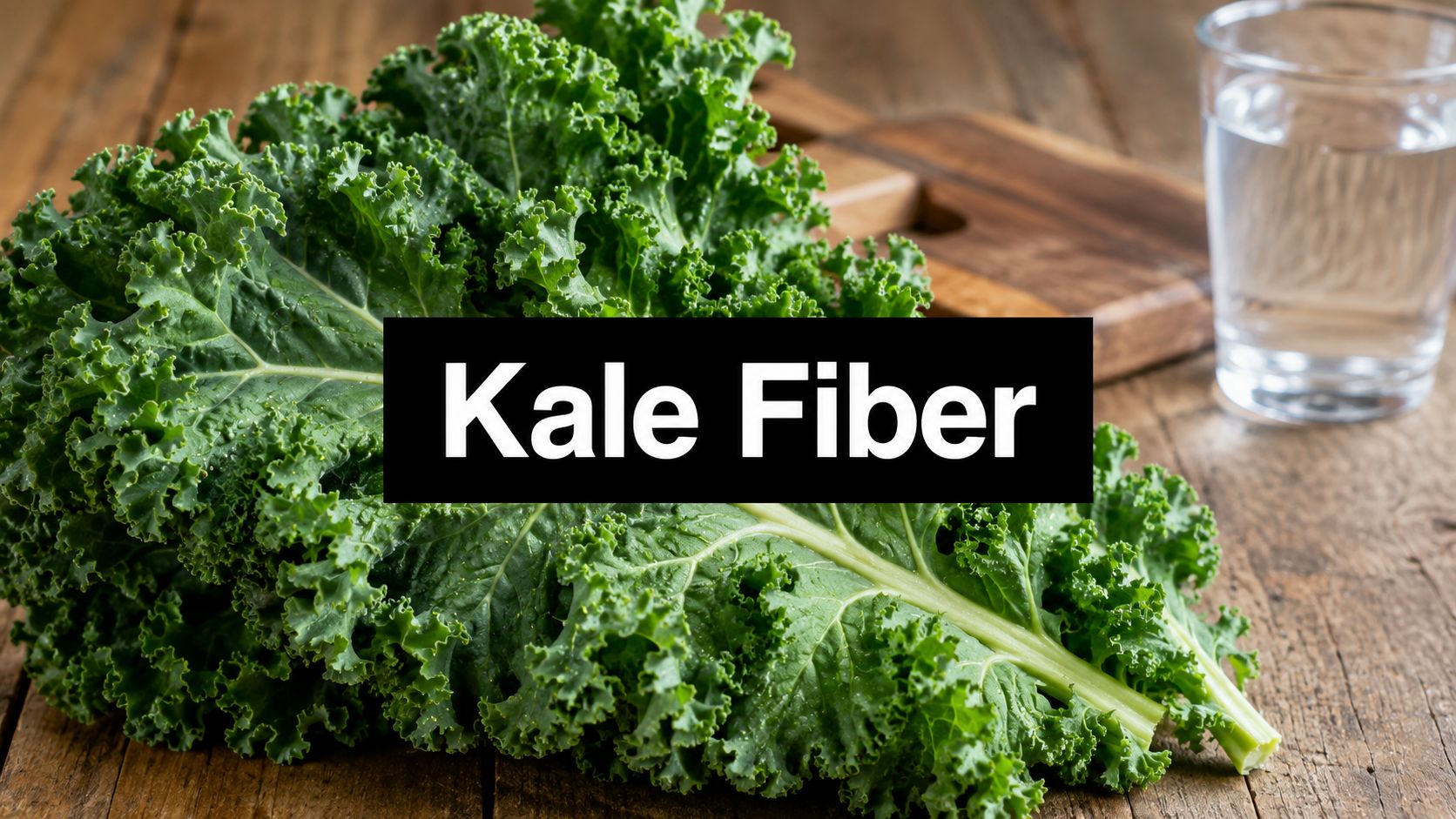
Yes, kale does contain fiber, and that is one reason it keeps showing up in meal plans built around better digestion, steadier appetite, and more nutrient-dense eating. The part many articles skip is that the amount can look different depending on whether your kale is raw or cooked, because cooked leaves shrink down and become much denser per cup.
That matters in real life. One cup of raw kale and one cup of cooked kale are not the same amount of food in your bowl, even though they sound similar on paper. Raw kale is like a loosely packed suitcase. Cooked kale is the same suitcase after everything has been pressed down. For macro tracking, fiber goals, and portion planning, volume can be misleading if you do not also think about how the kale was prepared.
If your goal is to eat more fiber without making meals complicated, kale is still a smart choice. It fits into smoothies, grain bowls, soups, egg dishes, and simple side dishes. A structured high-fiber meal plan can also make it easier to use kale consistently instead of buying it with good intentions and forgetting it in the fridge.
Why Is Everyone Talking About Kale's Fiber Content
Kale keeps coming up because it sits at the intersection of several common goals. People want better digestion, steadier appetite, simpler weight management, and more nutrient-dense foods that don't require a complicated recipe.
Fiber is a big part of that conversation. It helps food move through the digestive system and can make meals feel more satisfying. Kale also fits easily into many eating styles, which is why it shows up in salads, soups, grain bowls, omelets, smoothies, and sheet-pan dinners.
What makes kale more interesting than the average "eat your greens" advice is that its fiber story isn't just one number. The amount changes depending on whether you're looking at raw kale, cooked kale, or a weight-based serving. It also contains both soluble and insoluble fiber, which affect the body in different ways.
Practical rule: If you're trying to eat more fiber consistently, the most useful question isn't just "is kale healthy?" It's "how much kale am I actually eating in this form?"
That matters for meal planning. A salad packed with loose raw leaves looks large, but a cup of cooked kale is denser and can contribute more fiber per measured cup. If you're building a higher-fiber routine, a high-fiber meal plan helps translate that idea into real meals instead of vague intentions.
How Much Fiber Is Actually in a Serving of Kale
You build a salad bowl to get more fiber, log "1 cup kale," and expect a clear number. Then one app says about 1 gram, another says about 2.5 grams, and a cooked serving seems to count differently again. The mismatch usually comes from one simple issue: volume and weight are not the same thing with a leafy green as airy as kale.
Kale is a bit like packing a suitcase full of sweaters. A loosely filled cup can hold much less food than a tightly packed cup, and cooking shrinks the leaves down even more. So the most honest answer to "how much fiber is in kale?" is "it depends on the form and how you measured it."
As noted earlier, a loose cup of raw kale is often listed at about 2.5 grams of fiber, while a lighter USDA-style raw serving can come out closer to 1 gram. Those numbers look contradictory, but they are describing different amounts of kale in the cup.
Per measured weight, Medical News Today notes that one cup can provide up to 5.72 grams of fiber, which helps show why serving references vary so much across articles and food trackers. A packed cup, a chopped cup, and a cooked cup are all denser than a fluffy handful of raw leaves.

Why serving size causes so much confusion
For meal planning, raw versus cooked kale is the detail people often miss.
Raw kale takes up a lot of space. Cooked kale collapses, so you can eat much more leaf matter in the same measured cup. The fiber itself does not disappear just because the leaves soften, but the amount per cup usually looks higher after cooking because that cup now holds more kale.
Here is the practical way to read kale fiber numbers:
| Measurement style | What it usually means |
|---|---|
| 1 cup raw kale | A bulky, lighter serving. Fiber may look modest because the leaves take up space. |
| 1 cup chopped or packed raw kale | More leaf matter in the cup, so fiber is higher than a loose fill. |
| 1 cup cooked kale | The densest cup measure. Usually the most useful estimate if you sauté, steam, or add kale to soups. |
| Weight-based entry | Best for macro tracking because grams stay consistent even when volume changes. |
If you track food closely, weight is usually the cleaner method. It removes the guesswork of how full the cup was and makes comparisons easier across a foods database.
If you like using a daily target rather than guessing, this guide to essential daily fiber gives useful context for how fiber goals fit into an overall eating pattern.
What kind of fiber are you getting from kale
Kale contains both soluble and insoluble fiber, according to Medical News Today. That matters because each type helps in a different way.
- Soluble fiber mixes with water and can help support steadier blood sugar response and heart-friendly eating patterns.
- Insoluble fiber adds bulk and helps keep digestion moving regularly.
- Together, they make kale useful for more than volume on the plate. You get a green that can support fullness and digestive health at the same time.
The big takeaway is simple. If you want a more accurate fiber estimate, do not rely on "one cup of kale" by itself. Ask one more question: was it raw, packed, or cooked? That small distinction can change the number enough to matter for meal planning and macro tracking.
What Are the Health Benefits of Kale's Fiber
A common real-life problem looks like this. You eat a big kale salad at lunch, but by midafternoon your stomach feels very different than it does after a bowl of soup with cooked kale. Fiber is part of the reason. It changes how quickly food moves through your digestive tract, how filling the meal feels, and how steadily your body handles the carbohydrates eaten alongside it.

As noted earlier, kale provides both soluble and insoluble fiber. That mix matters. Soluble fiber works like a sponge in the gut, helping slow digestion and support steadier blood sugar after meals. Insoluble fiber acts more like structure or brush, adding bulk to stool and helping food move through the intestines more regularly.
How kale helps digestion
For digestion, kale's fiber does two useful jobs at once. It helps with regularity, and it also supports the gut environment.
A review in Cogent Food & Agriculture describes kale as containing dietary fiber plus prebiotic carbohydrate fractions. Those compounds can serve as fuel for beneficial gut microbes and support short-chain fatty acid production. In practical terms, kale is not just roughage. It can also help feed the bacteria that play a role in gut health.
That is one reason kale often fits well into eating patterns designed to ease mild constipation or improve overall digestive comfort. The effect is usually strongest when kale is eaten regularly and paired with enough fluids.
How kale's fiber supports fullness and steadier meals
Fiber helps a meal last longer. Instead of disappearing quickly, food with fiber tends to stay satisfying for a longer stretch, which can make it easier to avoid constant grazing between meals.
Kale is especially useful here because it adds fiber with relatively few calories. Add it to eggs, soups, grain bowls, bean dishes, or pasta, and the meal often feels larger and more filling without becoming heavy. If you are trying to build meals that are easier on digestion and higher in fiber overall, a gut health meal plan can help you combine kale with other foods that support the same goal.
Some readers also compare whole-food fiber with supplemental fiber. VitzAi's psyllium insights offer a useful contrast if you want to understand how fiber from kale differs from a concentrated supplement. Kale gives you fiber in a food matrix that also includes vitamins, minerals, and plant compounds.
One more detail matters for practical planning. The benefits of kale's fiber depend partly on the amount of kale you eat, and cooked kale is much denser than raw kale by volume. That means a cooked serving can deliver more fiber in a realistic portion size, which is easy to miss if you only think in terms of "a cup of kale."
Does Cooking Kale Change Its Fiber Content
You make a kale salad for lunch and sauté kale for dinner. Both meals use "a cup of kale," but they do not give you the same amount of fiber. That difference trips up a lot of meal planning and macro tracking.
Cooking changes kale's fiber concentration by volume more than it changes the fiber itself. Raw kale is bulky and full of air space. Cooked kale shrinks, softens, and packs into the measuring cup much more tightly. The result is simple. One cup of cooked kale usually contains more actual kale than one cup of raw kale, so it usually provides more fiber per cup.
As noted earlier, a cup of cooked kale is often listed at about 3.6 grams of fiber, while a cup of raw kale is commonly listed in a lower range. If you log cooked kale using a raw entry, your fiber count can come out lower than what you ate.

Why the numbers change
A measuring cup acts like a container, not a truth detector. With raw kale, that container holds curly leaves with lots of empty space between them. With cooked kale, the leaves collapse and fit together more closely.
That is why cup-based comparisons can feel confusing. The food did not stop being kale. The measurement changed because the density changed.
Here is the practical takeaway:
- Raw salad kale: more volume, less kale packed into each cup
- Cooked kale: less volume, more kale packed into each cup
- Same ingredient, different cup value: easy to mislog if you do not choose the right database entry
Raw versus cooked for tracking
If accuracy matters, match the entry to the form you ate.
| Form of kale | Fiber per cup |
|---|---|
| Raw kale | lower than cooked, often about 1g to 2.5g |
| Cooked kale | about 3.6g |
Tracking tip: Log raw kale as raw and cooked kale as cooked. A cup is not interchangeable once the leaves have been heated and reduced.
This matters most for people who use cup measures instead of weight. A food scale reduces some of the confusion because it compares actual amounts of kale, not just how much space the leaves take up.
Cooking can also change the eating experience. Cooked kale is softer, easier to chew, and often easier to fit into soups, scrambles, pasta dishes, and grain bowls. For someone trying to raise fiber without eating a giant salad, cooked kale can be the easier habit to keep.
If raw kale feels harsh on your stomach, cooked kale may also feel gentler. That does not make raw kale a poor choice. It means the best form is the one you can enjoy regularly and track accurately.
How Does Kale's Fiber Compare to Other Leafy Greens
You are standing in the produce aisle, deciding between kale, spinach, romaine, and Swiss chard, and all of them look like healthy choices. They are. The more useful question is which one helps most if fiber is one of your main goals.
Kale tends to stand out among leafy greens because it gives you a noticeable fiber contribution while still fitting easily into everyday meals. As noted earlier, raw kale provides a meaningful amount of fiber for a leafy green. That matters because many greens are chosen for freshness, volume, or tenderness, not because they add much fiber per bite.
The comparison gets tricky once cooking enters the picture. A cup of cooked greens is more concentrated than a cup of raw greens because the leaves shrink. So if you compare raw kale to raw romaine, then compare cooked spinach to cooked kale, you are no longer comparing equal forms. It is a little like comparing a handful of grapes to a handful of raisins. The food is related, but the volume tells a very different story.
A practical way to compare leafy greens
If fiber is your target, compare greens in the same form whenever possible.
| Leafy green | Fiber comparison |
|---|---|
| Kale | One of the stronger picks for fiber among common leafy greens |
| Spinach | Useful nutritionally, but often chosen more for its softer texture and mild taste |
| Swiss chard | A good option for variety, with a tender texture once cooked |
| Romaine lettuce | Crisp and refreshing, but usually not the leafy green people rely on for fiber |
This table stays qualitative on purpose. It avoids mixing raw and cooked values in a way that could confuse meal planning or macro tracking.
That is the detail many articles skip. Kale can look only moderately high in fiber if you glance at a raw serving, but cooked kale often contributes more fiber per cup because more leaves fit into that cup after wilting. If you log meals by volume, this difference can change your totals more than you expect.
What this means for your meals
Choose kale when you want a leafy green that does more heavy lifting on fiber. It works especially well in soups, sautés, grain bowls, and egg dishes because it keeps its structure better than softer greens.
Choose spinach, romaine, or chard when texture, flavor, or convenience matters more for that meal. A smart diet does not need one perfect green. It helps to rotate them.
If you want ideas for meals that make kale easier to use regularly, these high-fiber recipe ideas and meal options can help you build meals around the form you eat, raw or cooked. For a broader look at habits that pair well with higher-fiber eating, this guide on supporting your digestive system is also useful.
Practical Ways to Boost Your Kale and Fiber Intake
The easiest way to eat more kale is to stop treating it like a special project. You don't need a complicated detox salad or a huge raw bowl every day.
Start with meals you already make.

Simple ways to use more kale
- Blend it into smoothies: Kale works well in fruit smoothies because the flavor can stay fairly mild when paired with ingredients like banana or berries.
- Stir it into soup: Add chopped kale near the end so it wilts without turning mushy.
- Fold it into eggs: A quick sauté before adding eggs makes breakfast more filling.
- Use it in grain bowls: Rice, quinoa, beans, and kale make an easy lunch base.
- Massage it for salads: If raw kale feels tough, a little oil and mixing by hand can soften the leaves.
If you need more meal ideas built around whole foods and digestion, this article on supporting your digestive system offers useful habits that pair well with a higher-fiber eating style.
Don't increase too fast
This matters more than people expect. While kale's fiber is beneficial, a sudden jump in intake can lead to digestive discomfort.
The verified guidance for this topic notes that sudden high intake may cause diarrhea or constipation in people who aren't used to a high-fiber diet, and that gradual introduction is the safer approach, based on the discussion captured in this nutrition community thread.
If kale is new for you, add a small amount first, keep hydration steady, and build up over time.
A practical weekly approach
Try this simple rhythm instead of forcing a giant serving all at once:
- First step: Add a small amount of kale to one meal a day.
- Next move: Alternate raw and cooked forms to see what feels best.
- Then expand: Add kale to two or three reliable meals each week.
- Keep it convenient: Save easy options you like, such as soups, sautés, or smoothies.
If you're looking for ideas you can cook on a weekday, browsing kale-friendly recipes can make the habit easier to keep.
Frequently Asked Questions About Eating Kale for Fiber
Is raw kale or cooked kale better for fiber
Cooked kale gives you more fiber per measured cup because it shrinks during cooking. Raw kale is still a useful fiber source, but the cup measurement is less dense.
Does blending kale destroy its fiber
No. Blending changes texture, not the fact that the fiber is still there, as long as you're blending the whole kale rather than removing the pulp.
Does juicing kale keep the fiber
Not in the same way. Juicing usually removes much of the fibrous material, so it won't give you the same fiber benefit as eating or blending whole kale.
Is frozen kale still a good option
Yes. Frozen kale can still be a practical way to add fiber to soups, smoothies, and cooked meals.
Can kale cause bloating
It can if you add a lot at once and your body isn't used to higher-fiber foods. Starting with smaller portions usually works better.
Do all types of kale have fiber
Yes. Different varieties may vary somewhat in texture and density, but kale as a vegetable is a fiber-containing leafy green.
If you want an easier way to turn nutrition advice into actual meals, AI Meal Planner can help you build personalized weekly meal plans around your goals, food preferences, and dietary needs without having to calculate everything by hand.
AI-powered nutrition
Get Your Personalized Meal Plan
AI creates the perfect meals for your goals, lifestyle, and taste.
Start Your Journej