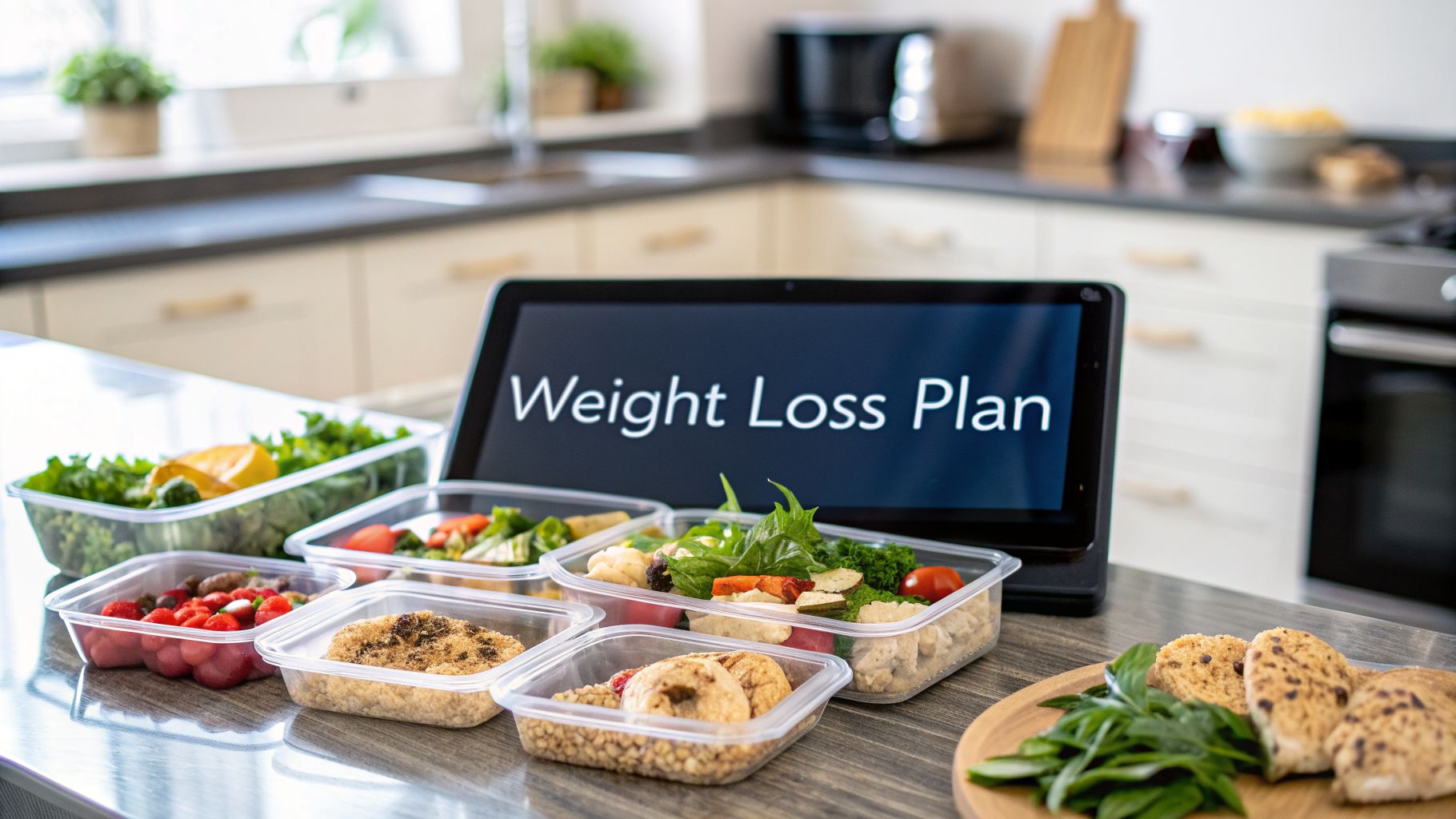
The best diet plan for weight loss involves a daily calorie deficit of 500 calories to lose about one pound per week. A successful plan focuses on balanced meals made from whole foods, with a typical macronutrient split of 40% carbohydrates, 30% protein, and 30% fat. This structured, flexible approach is more sustainable than restrictive diets.
Creating a diet plan is more like building a personal blueprint for how you want to eat, not following rigid rules. The plans that actually deliver results go way beyond just counting calories; they're designed to fit into your real life, making healthy eating feel second-nature, not like a chore.
The goal here isn't about being perfect. It's about being consistent. A solid plan is your roadmap, taking the guesswork out of daily food choices and helping you sidestep those moments of impulse eating when you're tired and hungry. It's how you build habits that last.
How Do I Create a Diet Plan That Actually Works?
To put together a plan that sticks, you need to focus on three fundamentals: creating a calorie deficit, balancing your macros, and setting up a consistent meal structure. Each one is a non-negotiable piece of the puzzle.
Create a Calorie Deficit: This is the engine of weight loss. You have to consume fewer calories than your body uses to lose weight. But going too extreme is a classic mistake that leads to exhaustion, muscle loss, and burnout. A moderate, controlled deficit is where the magic happens.
Balance Your Macros: Protein, fats, and carbs each have a critical job. Protein is your best friend for feeling full and preserving muscle mass. Carbs are your primary energy source. Healthy fats are essential for hormone function. A smart balance makes sure your body is firing on all cylinders while you drop pounds.
Structure Your Meals: Planning your meals ahead of time completely eliminates decision fatigue. When you already know what you're having for breakfast, lunch, and dinner, you’re far less likely to grab something unhealthy when you're in a rush.
This simple flowchart shows how these three principles work together to create a sustainable and effective diet plan.

It all starts with a calculated energy deficit, which is then supported by the right nutrient balance and executed through a predictable meal framework. This is the process that drives real, lasting results.
Why is a Structured Plan Better Than a Restrictive Diet?
There's a reason most trendy diets fail: they're built on unsustainable, extreme restrictions. They often demonize entire food groups, which just leads to nutrient deficiencies and powerful cravings. It's no surprise that so many dieters quit simply because the rules are too difficult to follow long-term.
A truly effective diet plan for weight loss isn't about what you cut out; it's about what you consistently include. It's a skill you build, not a punishment you endure.
A well-built plan, on the other hand, is flexible. It teaches you how to construct balanced plates using foods you actually like. For instance, instead of banning pasta forever, you learn to have a sensible portion of whole-wheat pasta and load it up with lean protein and a mountain of veggies. This approach satisfies cravings while keeping you on track.
You can see exactly how to apply this to your own meals by digging into our guide on creating a balanced meal plan.
This is a fundamental mindset shift. You're not just "on a diet"—you're learning a new way of eating that will support your goals and your health for years to come.
How Do I Calculate My Personal Calorie Goal for Weight Loss?

A successful diet plan for weight loss isn't about following a template; it's about understanding the specific numbers that drive your own body. To get results that last, you have to get personal with your metabolism. Don't worry, this isn't as complicated as it sounds. We're going to walk through exactly how to find your body's energy baseline and use it to set a safe, effective calorie target that actually works for you.
How Do I Find My Daily Calorie Needs?
Your body is burning calories around the clock, even when you're just binge-watching your favorite show. To find your daily calorie needs, you first need to calculate your Total Daily Energy Expenditure (TDEE). This number combines your baseline metabolism with all the calories you burn from daily activity.
You can find a good TDEE calculator online in seconds. You’ll just need to plug in your:
- Age
- Gender
- Height
- Weight
- Activity level (be honest here!)
The number it spits out is your daily maintenance calories. This is the amount of calories you need to eat to stay exactly the same weight. From here, we can start crafting your weight loss plan.
How Do I Set a Realistic Calorie Deficit?
Weight loss boils down to a simple principle: you need to burn more calories than you eat. This is called a calorie deficit. While you could get extreme with it, a sustainable and widely recommended target is a deficit of about 500 calories per day.
A daily 500-calorie deficit is the sweet spot. It typically leads to about one pound of weight loss per week—a steady pace that's easier to stick with and helps preserve muscle mass, unlike more aggressive cuts.
So, if your TDEE is 2,200 calories, your daily weight loss target would be 1,700 calories. This simple math creates the entire framework for your daily eating plan. We break this down even further in our complete guide to the calorie deficit.
The table below gives you a rough idea of what this looks like for different people, but remember, these are just estimates. Calculating your own TDEE will always be more accurate.
Sample Daily Calorie Targets for Weight Loss
| Starting Weight | Activity Level | Estimated Daily Calories for Weight Loss |
|---|---|---|
| 150 lbs | Sedentary | Approximately 1,400–1,500 kcal |
| 150 lbs | Moderately Active | Approximately 1,700–1,800 kcal |
| 200 lbs | Sedentary | Approximately 1,600–1,700 kcal |
| 200 lbs | Moderately Active | Approximately 2,000–2,100 kcal |
These figures illustrate how activity drastically changes your needs, reinforcing why a personal calculation is so important.
Why is Setting Smaller Milestones a Smarter Strategy?
Staring down a goal of losing 50 pounds can feel overwhelming. Instead, use a psychological trick: set smaller, more achievable milestones. Your first target? Aim to lose just 5% of your current body weight. If you weigh 200 pounds, your first goal is a 10-pound loss. That feels doable, right?
Hitting this first milestone gives you an early win and a huge dose of motivation to keep going. Celebrate it, then set your next 5% goal. This approach makes the entire journey feel more manageable and less like a monumental chore.
This smarter, more personalized strategy is part of a massive shift in how people approach health. The global weight loss market, valued at $31.07 billion in 2025, is expected to explode to $45.43 billion by 2030, driven by this exact demand for sustainable, long-term solutions over quick fixes. You can find more details in this market analysis report on diet management trends.
By combining precise numbers with smart goals, you build a foundation for success. The key is consistency, not perfection. Hitting your calorie target most days is what builds momentum and delivers the results you’re looking for. Tools like the AI Meal Planner can even automate all these calculations, making it simpler than ever to stay on track.
What Foods Should I Eat for Weight Loss?
You've set your calorie goal. But now comes the real question: what do you actually eat to hit that number without feeling hungry or miserable? The quality of your calories matters just as much as the quantity. A successful weight loss plan is about smart choices that fuel your body and keep you full. Think of it less like a strict budget and more like building a toolkit of go-to foods that make hitting your goals feel almost automatic.
How Do I Balance My Macronutrients?
A great starting point for many people is a 40% carbohydrate, 30% protein, and 30% fat split. Think of it as a baseline. Pay close attention to your energy levels and how you feel after meals, and don't be afraid to tweak these numbers. Your body will tell you what it needs.
Protein is your best friend in a calorie deficit. It’s what keeps you feeling full and satisfied, which is a game-changer when you're trying to eat less. It also helps you hold onto precious muscle mass while you lose fat.
Carbohydrates are your body's main gas tank. The key is to choose complex carbs packed with fiber. They provide a slow, steady stream of energy, preventing those dreaded blood sugar crashes that send you running for the snack cabinet.
Healthy Fats are absolutely essential. They play a huge role in hormone production and help your body absorb crucial vitamins. Plus, they contribute significantly to that feeling of satisfaction after a meal.
And when you're choosing these foods, you can get even more bang for your buck by picking items that boost your overall health. For example, focusing on certain options can work wonders for your heart, like these 8 cholesterol-lowering foods that experts often recommend.
Building a 'food toolkit' means identifying your go-to sources for each macronutrient. This removes decision fatigue and makes grocery shopping and meal planning a simple, repeatable process.
What Foods Should I Stock My Kitchen With?
To make this all practical, let’s talk about what to actually put in your grocery cart. Having high-quality, nutrient-dense options on hand is half the battle. This table is a quick cheat sheet for some of the best sources for each macronutrient.
Macronutrient Food Source Examples
To help you build your grocery list, here's a quick reference guide to some of the best food sources for each macronutrient and the role they play in a weight-loss plan.
| Macronutrient | Excellent Food Sources | Role in Weight Loss |
|---|---|---|
| Lean Protein | Chicken breast, turkey, fish (salmon, tuna), Greek yogurt, eggs, lentils, chickpeas, tofu | Maximizes fullness, preserves muscle mass, and has a higher thermic effect of food. |
| Complex Carbs | Quinoa, brown rice, oats, sweet potatoes, whole-wheat bread, fruits, vegetables | Provides sustained energy, keeps you full with fiber, and stabilizes blood sugar levels. |
| Healthy Fats | Avocado, nuts (almonds, walnuts), seeds (chia, flax), olive oil, fatty fish | Supports hormone function, aids vitamin absorption, and increases satiety. |
This focus on whole foods is the foundation of many incredibly effective eating plans. The DASH Diet, for example, is built on fruits, vegetables, whole grains, and lean proteins. Studies have shown people on this plan lost an average of 8-11 pounds over a few months while also improving their heart health. It’s solid proof that a structured, whole-foods approach works.
Can You Give Me a Sample 7-Day Meal Plan?
Okay, let's put this all together. Theory is great, but a concrete plan is what gets results. Here’s what a week of delicious, balanced meals can look like. Use this as a starting point and swap things out based on what you like.
For more inspiration, you can always explore our complete guide to a balanced diet plan.
Monday
- Breakfast: Greek yogurt with berries and a sprinkle of almonds.
- Lunch: Grilled chicken salad with mixed greens, cucumber, tomatoes, and a light vinaigrette.
- Dinner: Baked salmon with roasted asparagus and a side of quinoa.
Tuesday
- Breakfast: Oatmeal made with milk, topped with banana slices and a spoonful of chia seeds.
- Lunch: Leftover salmon and quinoa from Monday's dinner.
- Dinner: Turkey and black bean chili with a small whole-wheat roll.
Wednesday
- Breakfast: Scrambled eggs with spinach and a slice of whole-wheat toast.
- Lunch: Quinoa bowl with chickpeas, bell peppers, and a lemon-tahini dressing.
- Dinner: Lean beef stir-fry with broccoli, snap peas, and a side of brown rice.
Thursday
- Breakfast: Smoothie with protein powder, spinach, almond milk, and half a banana.
- Lunch: Leftover beef stir-fry.
- Dinner: Chicken breast with roasted sweet potato wedges and a green salad.
Friday
- Breakfast: Greek yogurt with peaches and walnuts.
- Lunch: Turkey wrap with hummus, lettuce, and tomato in a whole-wheat tortilla.
- Dinner: Homemade pizza on a whole-wheat base with tomato sauce, low-fat mozzarella, and plenty of veggies.
Saturday
- Breakfast: Whole-wheat pancakes topped with fresh fruit.
- Lunch: Lentil soup with a side salad.
- Dinner: Grilled steak with a large portion of steamed green beans and a small baked potato.
Sunday
- Breakfast: Oatmeal with apple slices and cinnamon.
- Lunch: Leftover lentil soup.
- Dinner: Roasted chicken with a medley of root vegetables (carrots, parsnips).
Simple Swaps for Dietary Needs:
- Vegan: Swap chicken/fish for tofu or tempeh, eggs for a tofu scramble, and Greek yogurt for a plant-based alternative.
- Gluten-Free: Use gluten-free bread, pasta, and oats. Ensure all sauces and dressings are certified gluten-free.
A diet plan for weight loss doesn't have to be boring or complicated. If you'd rather skip the manual effort, a tool like the AI Meal Planner can automate this whole process, building a plan perfectly suited to your goals.
How Can I Make Meal Prep Easier?
 Even the most perfect diet plan for weight loss is just a piece of paper until you put it into practice. The single biggest reason plans fail is the real-world exhaustion of busy schedules and kitchen fatigue. Making healthy food the path of least resistance is a solvable problem. It starts by ditching the idea that meal prep means locking yourself in the kitchen for hours every Sunday.
Instead, think of prep as a series of strategic head starts. It’s about using small pockets of time—even just 20 minutes—to make your future self's life easier. These small, consistent efforts are what make the difference when you're tired, hungry, and low on willpower.
What Is a Smart Meal Prepping Strategy?
Forget cooking entire, identical meals for the week ahead. The key to sustainable prep—and not getting bored—is to focus on versatile components. This "component prep" approach gives you the flexibility to build different meals throughout the week.
- Batch Cook Grains: Get a big pot of quinoa, brown rice, or farro going. Store it in the fridge and you have a ready base for grain bowls, quick salads, or a simple side for your protein.
- Prepare Your Proteins: Grill a few chicken breasts, hard-boil a dozen eggs, or cook a batch of lentils. Having your protein cooked and ready to go is a massive time-saver for lunches and dinners.
- Chop Your Veggies: Wash and chop raw veggies like bell peppers, cucumbers, and carrots for grab-and-go snacks or salad toppers. You can also roast a big tray of heartier vegetables like broccoli, cauliflower, and sweet potatoes.
This method means a healthy, balanced meal is never more than a few minutes away. To truly master this, our Ultimate Guide to Meal Prep can transform the process into a genuinely manageable part of your routine.
The goal of meal prep isn't to create a rigid, boring menu. It's to stock your kitchen with healthy, ready-to-use building blocks so that making the right choice is always the easiest choice.
How Can I Save Money and Reduce Food Waste?
One of the biggest hurdles to sticking with a new eating plan is a long, complicated, and expensive grocery list. The trick is to plan meals that share core ingredients. This strategy radically minimizes food waste and simplifies your shopping trips.
For example, that whole roasted chicken you make on Sunday becomes the star of Monday's chicken salad and Tuesday's chicken tacos. The bell peppers you bought for a stir-fry can also be sliced up for a raw snack with hummus. An advanced platform like the AI Meal Planner automatically creates shopping lists optimized for ingredient overlap, ensuring you buy exactly what you need without tossing forgotten produce.
How Do I Set Up My Kitchen for Success?
Your environment has a massive impact on your choices. The secret to consistency is setting up your kitchen as a "no-fail" zone where healthy options are front and center.
Practical Steps for Your Kitchen:
- Portion for Convenience: The moment you get home from the store, portion out snacks like nuts, seeds, or Greek yogurt into single-serving containers.
- Create a "Healthy Shelf": Dedicate one shelf in your fridge, right at eye level, for all your prepped food. Put your containers of chopped veggies, cooked grains, and lean proteins where you'll see them first.
- Freeze for the Future: Get in the habit of making a double batch of things like chili or soup. Freeze half for that future night when you have zero time or energy to cook.
By making healthy food more visible and accessible, you dramatically lower the daily "willpower tax" of sticking to your plan.
How Can an AI Diet Plan Make a Difference?

The real reason most diets fail isn't a lack of willpower. It's the sheer exhaustion from the relentless planning, tracking, and calorie counting. This is where technology can step in—not to do the work for you, but to make the work you're doing smarter and more efficient. An AI-powered tool takes over the most draining parts of dieting so you can focus on eating well and feeling good.
How Does an AI Create a Personalized Plan?
The game-changer with an AI meal planner is the level of instant, deep personalization. You’re not starting with a generic template. Instead, you kick things off with a detailed profile about your body, lifestyle, and preferences.
- Your Goals: Are you trying to lose weight, build muscle, or just eat healthier?
- Your Lifestyle: What’s your activity level? Do you practice intermittent fasting?
- Your Preferences: Do you eat Vegan, Keto, or Paleo? Are there foods you just can't stand?
- Your Restrictions: Do you have allergies to things like nuts, dairy, or gluten?
Based on your answers, the AI builds a complete, balanced weekly meal plan from the ground up, with all the macronutrients and calories already calculated to match your specific targets. This level of customization, which you can see in the simple onboarding for the AI Meal Planner, is what makes a plan stick.
What Problems Can an AI Diet Planner Solve?
A rigid meal plan rarely survives the chaos of a real week. That’s why modern AI tools are built to be flexible and solve the common headaches that throw people off track.
An AI Meal Planner essentially acts as your personal nutritionist and logistics expert, removing the administrative burden of dieting so you can focus on the results.
One of the most valuable features is the ability to easily swap meals. If you’re not in the mood for salmon tonight, you can instantly replace it with another dish that still fits your calorie and macro goals. These tools also automatically generate smart, aisle-sorted grocery lists from your weekly plan, helping you dodge impulse buys. By optimizing your meals to use overlapping ingredients, the system also helps you slash food waste and lower your grocery bill—a huge pain point for many.
Ultimately, AI makes your diet plan more resilient. It’s built to adapt to your life, not the other way around.
What Should I Do When My Weight Loss Stalls?
Sooner or later, it happens to everyone. After weeks of steady progress, the number on the scale just stops moving. It’s called a weight loss plateau, and it’s one of the most frustrating parts of the entire process. This is not a sign that you've failed. A plateau is simply a signal from your body that it has adapted to your current routine. Now, it's time for your plan to adapt, too.
How Can I Track Progress Besides the Scale?
The scale can be a terrible measure of progress. It doesn't know the difference between fat loss, muscle gain, or water retention. To get a true picture of what’s happening, you need to look at the bigger picture.
Non-Scale Victories to Track:
- Progress Photos: Snap photos from the front, side, and back every 4 weeks. You'll be amazed at the visual changes, even when your weight hasn't budged.
- Body Measurements: Use a flexible measuring tape to track your chest, waist, hips, and thighs. Losing inches is undeniable proof of fat loss.
- How Your Clothes Fit: Are those jeans feeling a bit looser? Is that old shirt fitting better across your shoulders? This is real-world evidence that your body composition is improving.
How Do I Break Through a Weight Loss Plateau?
When your progress has genuinely stalled for several weeks, it's time to take action. This doesn’t mean making drastic, panicked changes. It’s about a calm, methodical review to find small, effective tweaks.
A weight loss plateau isn't a dead end; it's a sign that your body has adapted and it's time for your plan to adapt too.
Here are the most effective strategies to get things moving again.
Recalculate Your Energy Needs This is the most common reason for a plateau. As you lose weight, your body gets smaller and simply requires fewer calories to function. Your initial TDEE is now outdated. Go back to a TDEE calculator, plug in your new weight, and find your updated maintenance calories. Adjust your daily target accordingly.
Conduct a "Calorie Audit" Over time, it's easy for small, hidden calories to sneak back into your diet. This is "calorie creep." Be brutally honest for a few days and track everything.
- Are your portion sizes getting bigger?
- Are you adding extra sauces, dressings, or oils without measuring? Just one tablespoon of olive oil is 120 calories.
- Are you accounting for that splash of creamer in your coffee or the handful of nuts you grab on the way out the door?
Often, just tightening up your tracking is enough to break a stall. A tool like the AI Meal Planner can automate this for you, keeping your plan precise without the mental fatigue. By learning how to adjust, you’re turning your diet from a temporary fix into a lifelong skill.
Frequently Asked Questions About Diet Plans
How long does it take to see results from a diet plan?
You can expect to lose a sustainable 1-2 pounds per week by maintaining a consistent calorie deficit. Many people also report feeling less bloated and more energetic within the first week of eating whole foods.
Is it okay to have a cheat meal?
Yes, a planned "flexible meal" can make a diet plan more sustainable by managing cravings without derailing your weekly progress. Avoid turning it into an entire "cheat day" which can undo your calorie deficit.
Should I just focus on eating more protein?
No, while protein is crucial for fullness and muscle preservation, a balanced diet is essential. You also need complex carbohydrates for energy and healthy fats for hormone function and satiety.
Do I have to exercise to lose weight?
No, weight loss is primarily driven by creating a calorie deficit through diet. However, exercise accelerates results by burning more calories and building metabolism-boosting muscle.
How can I deal with hunger and cravings?
Manage hunger by eating meals rich in protein and fiber, staying hydrated, and getting enough sleep. For cravings, have healthy snacks ready or wait 20 minutes, as the urge often passes on its own.
What is the fastest way to lose weight?
The fastest way to lose weight is by creating a significant calorie deficit, but this is often unsustainable and unhealthy. A moderate deficit of 500 calories per day is the safest and most effective long-term strategy.
Can a diet plan help with other health goals?
Yes, a well-structured diet plan focused on whole foods can improve cholesterol, blood pressure, and blood sugar levels. Plans like the DASH diet are proven to boost heart health while promoting weight loss.
Ready to stop guessing and start seeing results? AI Meal Planner builds your perfect, personalized diet plan in seconds. Get your custom meals, automated grocery lists, and the structure you need to succeed.
AI-powered nutrition
Get Your Personalized Meal Plan
AI creates the perfect meals for your goals, lifestyle, and taste.
Start Your Journej