What is the best diabetic meal plan for a beginner?
The best diabetic meal plan for a beginner is the Plate Method, which requires no counting. Fill half your plate with non-starchy vegetables, one-quarter with lean protein, and one-quarter with complex carbohydrates. For those who count carbs, aim for 45–60 grams of carbohydrates per meal to maintain stable blood sugar levels.
Starting a diabetic meal plan feels less about strict rules and more about finding a new rhythm. A good plan focuses on balanced meals with controlled portions of carbs, lean protein, and healthy fats, eaten at consistent times throughout the day. The goal is simple: keep your blood sugar levels as stable as possible.
Why is a structured meal plan important for diabetes?
Let’s bust a big myth right now: a diabetic diet is not a life sentence of bland, boring food. Not even close.
It's really about making smarter choices that favor whole, nutrient-dense foods over the highly processed stuff. Think of it as empowering yourself. You're learning how different foods impact your body, which puts you in the driver's seat of your own health.
The core principle here is consistency. Eating balanced meals at regular times helps you sidestep those wild blood sugar spikes and crashes that leave you feeling drained and unwell. This isn't about being perfect; it's about creating a reliable, steady pattern for your body.
How does meal structure impact blood sugar?
A structured eating plan does way more than just take the guesswork out of "what's for dinner?" It directly impacts your metabolic health in a measurable way.
Clinical research has shown that when people follow a structured, diabetes-friendly meal plan, their blood glucose management improves significantly. In one study, a group eating meals with around 30.4 grams of protein and 73 grams of carbohydrates per serving saw their glucose readings stay within target ranges far more consistently.
This consistency helps your body learn to anticipate and process nutrients more efficiently. When your meals are balanced, you're giving it a steady stream of energy without hitting it with a sugar overload.
How do I use the Plate Method?
The Plate Method is the perfect starting point for anyone new to this. It's a visual guide that takes the stress out of counting, weighing, and measuring everything. It's practical enough to use for every single meal.
Here’s how it works:
- Half Your Plate (50%): Load this up with non-starchy vegetables. We're talking leafy greens, broccoli, bell peppers, asparagus, and cauliflower. They're packed with fiber and nutrients but low on carbs.
- One Quarter of Your Plate (25%): Dedicate this space to lean protein. Great choices include chicken breast, fish like salmon or cod, tofu, lentils, and beans. Protein helps you feel full and satisfied and has a minimal effect on blood sugar.
- One Quarter of Your Plate (25%): The final section is for your complex carbohydrates and starchy foods. Go for whole grains like brown rice, quinoa, or whole-wheat bread, or starchy veggies like sweet potatoes and corn.
The Plate Method is more than a diet; it's a new way of looking at your plate. By visualizing your portions, you instinctively build a balanced meal that supports stable blood sugar—without the headache of tracking every little thing.
This simple framework is your ticket to getting a healthy mix of macronutrients in every meal, every time.
Below is a quick-glance table to help you visualize building your plate. It’s a handy reference you can mentally pull up whether you're at home or eating out.
The Plate Method at a Glance
| Plate Section | What to Fill It With | Examples |
|---|---|---|
| 50% of the Plate | Non-Starchy Vegetables | Leafy greens, broccoli, cauliflower, bell peppers, asparagus, tomatoes, cucumbers |
| 25% of the Plate | Lean Protein | Chicken breast, fish (salmon, cod), turkey, eggs, tofu, lentils, beans |
| 25% of the Plate | Complex Carbohydrates | Brown rice, quinoa, sweet potato, whole-wheat pasta, oats, corn, peas |
Using this method consistently will help you build healthy habits that stick.
Once you feel comfortable with this visual approach, you might want to get a bit more specific. If you're ready to understand your personal needs better, our calorie and macro calculator can give you personalized targets. It's a great next step after you've mastered the Plate Method.
How do I start counting carbohydrates without feeling overwhelmed?
The term "carb counting" can instantly sound like a math quiz you didn't study for. But it's one of the most powerful tools you have for managing your blood sugar. The goal isn't to get rid of carbs entirely—it's to eat a consistent, predictable amount with each meal to help sidestep those wild glucose spikes and frustrating crashes.
So, where do you begin? A great starting point for most people is aiming for 45-60 grams of carbohydrates per meal. This target gives your body the steady fuel it needs while helping to keep your blood sugar levels on a much more even keel.
This skill is more critical than ever. The global number of people with diabetes has skyrocketed from 200 million in 1990 to an estimated 830 million in 2022. Research shows that a staggering 7 out of 10 cases of type 2 diabetes are tied directly to food choices, which is why mastering your diet is your best line of defense.
This simple visual breaks down what those gram targets might look like on a balanced plate, showing how carbs fit in with protein and your target glucose levels.
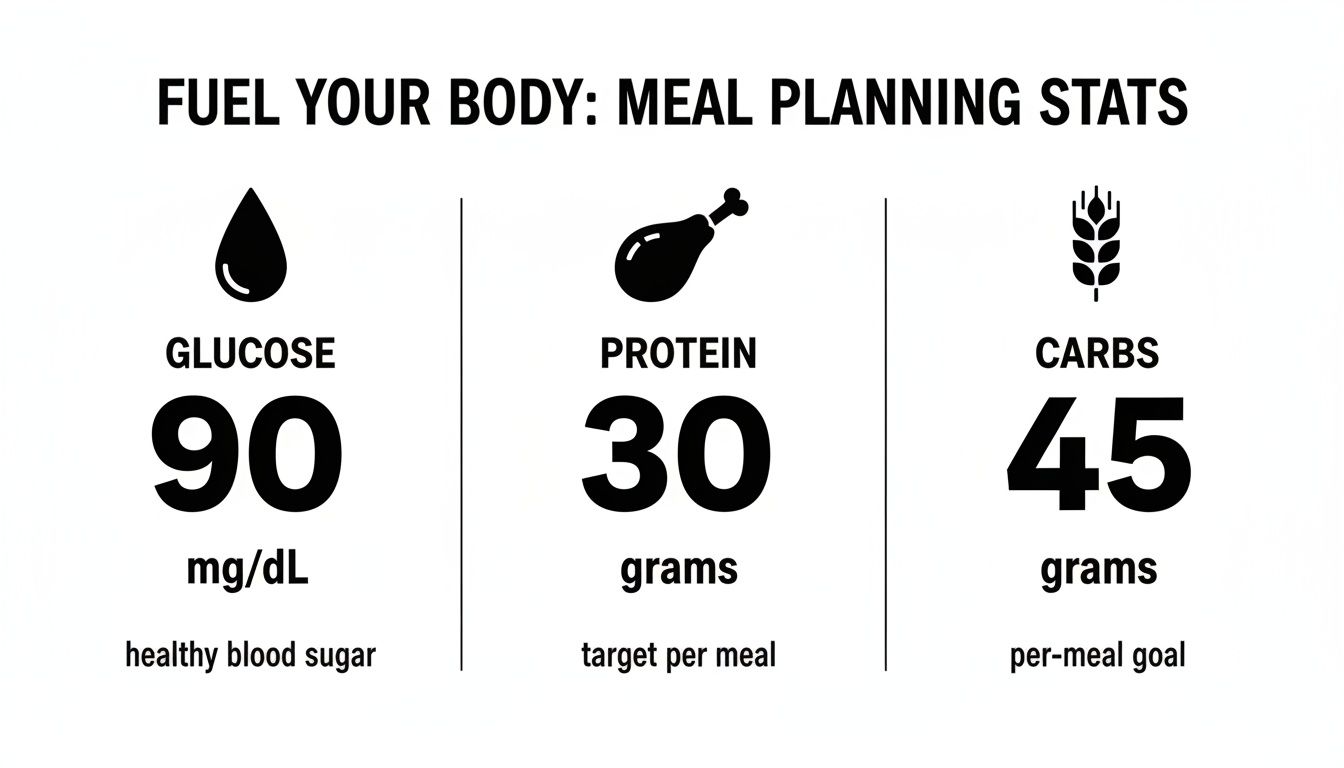
Seeing it laid out like this helps connect the abstract numbers to the real food on your plate.
How do I find carbs on nutrition labels?
When you're first starting out, the nutrition label on packaged food is your best friend. It takes all the guesswork out of the equation.
Just flip over the package, find the "Nutrition Facts" panel, and look for the line that says "Total Carbohydrate." That's your golden number. It includes everything—starch, fiber, and sugars—all rolled into one. To keep things simple at the beginning, just focus on that total.
How can I learn to visualize portions?
What about foods that don't come with a label, like fresh fruit or a scoop of rice? This is where you'll start to learn portion sizes. A fantastic way to do this is by understanding the idea of a "carb choice," which is simply a portion of food containing about 15 grams of carbohydrates.
Here are a few common examples of one carb choice:
- A small apple or orange
- A single slice of whole-wheat bread
- 1/2 cup of cooked oatmeal
- 1/3 cup of cooked pasta or brown rice
In the beginning, don't be afraid to use measuring cups and a food scale. It's the best way to build confidence. Before you know it, you'll get good at "eyeballing" these portions, making it second nature to estimate your carb intake whether you're cooking at home or eating out.
The goal of carb counting isn't about being perfect; it's about being consistent. By learning to recognize portions and read labels, you gain direct control over your blood sugar. It turns meals from a source of anxiety into a moment of empowerment.
How do I combine foods to hit my carb target?
Let's say you're aiming for that 45-gram carb target for lunch. You could easily build a satisfying meal that hits the mark.
| Food Item | Serving Size | Carbohydrate Grams |
|---|---|---|
| Whole-Wheat Bread | 2 slices | 30g |
| Small Apple | 1 medium | 15g |
| Grilled Chicken & Veggies | (Negligible carbs) | 0g |
| Total | 45g |
See? This simple, delicious combination lands you right on target.
When it comes to homemade recipes where adding everything up can feel like a chore, a good recipe nutrition calculator can do the heavy lifting for you. It breaks down the macros per serving, making it so much easier to stick to your goals without doing constant math. This keeps your diabetic meal plan for beginners feeling manageable, not overwhelming.
What does a realistic 7-day diabetic meal plan look like?
Jumping into a meal plan when you're managing diabetes can feel a little abstract at first. But a realistic plan isn’t about deprivation or bland, boring food. It’s all about consistency, finding a good balance, and discovering delicious meals that actually support your blood sugar goals.
The secret is to build a routine around foods you genuinely enjoy. This turns healthy eating into a sustainable habit instead of a temporary chore.
To show you just how simple and satisfying this can be, I’ve put together a sample 7-day plan. Every meal is designed to be ready in under 30 minutes using ingredients that are easy to find and affordable. Think of this not as a strict set of rules, but as a flexible template to spark ideas and prove that managing your diet can be a flavorful journey.
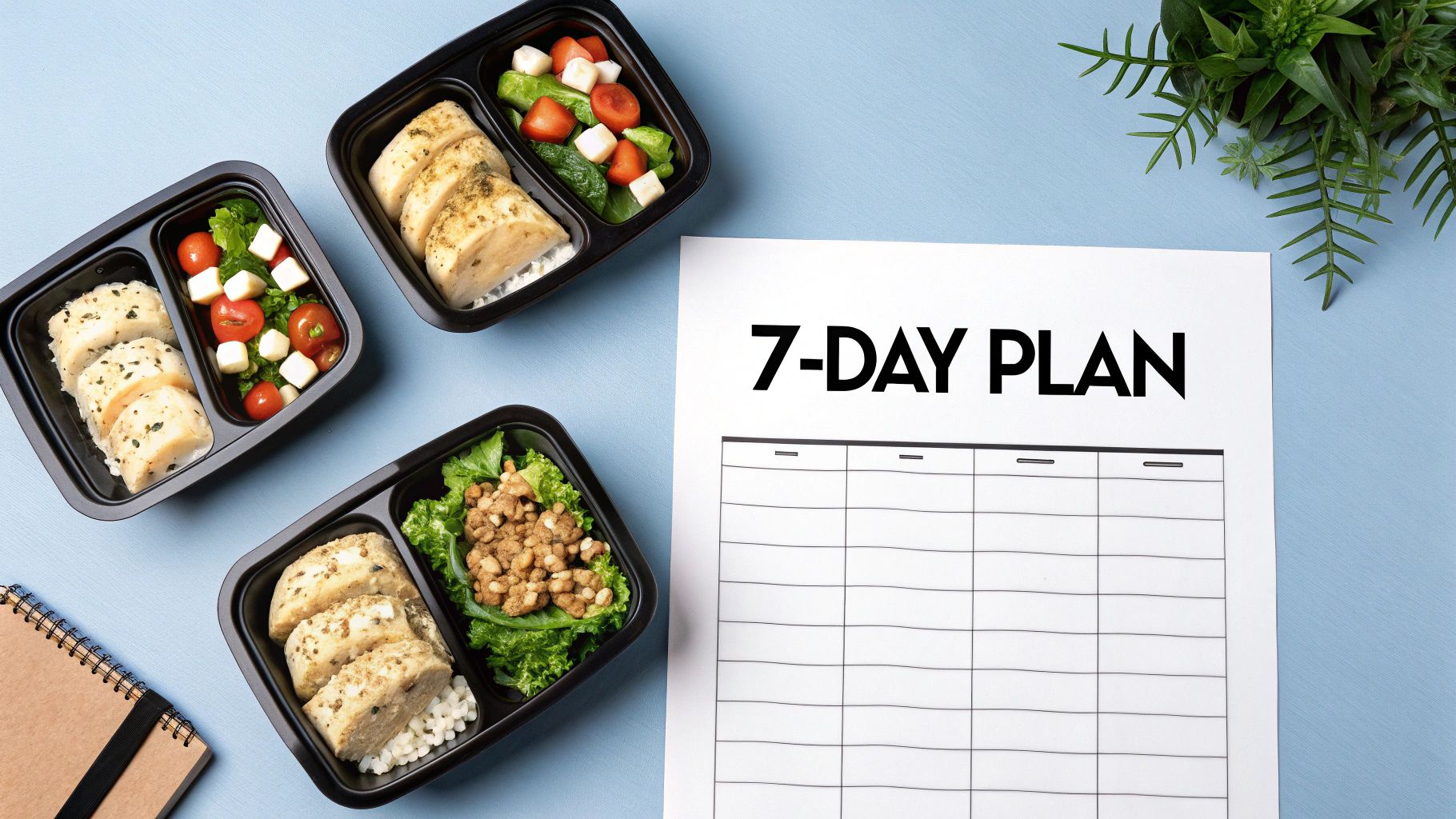
This plan maps out breakfast, lunch, dinner, and even a few snack options for each day. I've also included approximate carb counts to help you get comfortable with the carb-counting skills we talked about earlier.
How can I create a simple weekly meal plan?
Consider this your starting blueprint. Feel free to mix and match days, swap out proteins, or change up the vegetables based on what’s in season or on sale at the grocery store.
The most important part is sticking to the underlying structure: a source of lean protein, plenty of non-starchy veggies, and a controlled portion of complex carbs at each meal. This approach keeps things interesting and helps you avoid meal fatigue, which is a real struggle for many. A varied diet doesn't just give you a wider range of nutrients; it makes you far more likely to stick with your plan for the long haul.
Sample 7-Day Beginner Diabetic Meal Plan
Here’s a week of simple, balanced, and delicious meal ideas to help you get started with consistent eating habits.
| Day | Breakfast (Approx. Carbs) | Lunch (Approx. Carbs) | Dinner (Approx. Carbs) | Snack Ideas (Approx. Carbs) |
|---|---|---|---|---|
| Monday | Scrambled eggs (2) with spinach and 1 slice of whole-wheat toast (15g) | Quinoa salad with chickpeas, cucumber, tomatoes, and a lemon-tahini dressing (45g) | Baked salmon with roasted asparagus and a small sweet potato (40g) | Small apple with 1 tbsp peanut butter (20g) or a handful of almonds (6g) |
| Tuesday | Greek yogurt (plain, ½ cup) with ½ cup of mixed berries (20g) | Turkey and avocado wrap using a low-carb, whole-wheat tortilla (35g) | Chicken stir-fry with broccoli, bell peppers, and ½ cup of brown rice (45g) | Baby carrots with 2 tbsp hummus (15g) or a hard-boiled egg (1g) |
| Wednesday | Oatmeal (½ cup cooked) with a sprinkle of cinnamon and walnuts (30g) | Leftover chicken stir-fry from Tuesday night (45g) | Lentil soup with a side salad topped with vinaigrette (50g) | String cheese (1g) or ¼ cup of cottage cheese (5g) |
| Thursday | Smoothie with ½ cup unsweetened almond milk, ½ banana, spinach, and 1 scoop protein powder (25g) | Large salad with grilled chicken strips, mixed greens, and light vinaigrette dressing (15g) | Lean ground turkey chili with beans, served over cauliflower rice (40g) | A small pear (25g) or celery sticks with cream cheese (5g) |
| Friday | Cottage cheese (½ cup) with sliced peaches (15g) | Tuna salad (made with Greek yogurt) served in lettuce cups (10g) | Grilled shrimp skewers with a side of steamed green beans and lemon (10g) | Greek yogurt (plain, ½ cup) (10g) or a handful of walnuts (4g) |
| Saturday | Whole-wheat English muffin with 1 tbsp almond butter and sliced strawberries (35g) | Leftover turkey chili from Thursday night (40g) | Sirloin steak (4 oz) with a large side of sautéed mushrooms and onions (15g) | Olives (10-12) (5g) or bell pepper strips (5g) |
| Sunday | Veggie omelet with cheese and a side of avocado slices (10g) | Chicken salad (made with Greek yogurt and celery) with whole-grain crackers (30g) | Baked cod with a lemon-dill sauce, served with roasted Brussels sprouts (20g) | A small handful of pumpkin seeds (5g) or a low-sugar protein bar (<15g) |
This table gives you a clear, visual guide, but remember that the numbers are just estimates to help you practice.
How can I make this plan work for me?
Personalization is what makes any eating plan stick. You might notice that lunches often use leftovers from the previous night's dinner—this is a real-world strategy to save time, reduce food waste, and eliminate the stress of figuring out another meal from scratch.
Your meal plan should serve you, not the other way around. Use this table as an inspiration board. If you don't like salmon, swap it for chicken. If you're tired of salads, try a hearty soup. The principles of balance and portion control are what truly matter.
For anyone looking to take all the guesswork out of planning, generating a weekly menu that comes with an automated grocery list can make the whole process feel almost effortless. The AI Meal Planner can create a plan just like this one, but it's tailored specifically to your food preferences, dietary needs, and health goals.
How can I shop for groceries to support my meal plan?
A successful diabetic meal plan doesn’t get made in the kitchen—it starts the moment you walk into the grocery store. Having a smart, aisle-by-aisle strategy is your best defense against those impulse buys that can completely derail your progress. The key is to fill your cart with purpose, focusing on whole foods that will keep your blood sugar stable and predictable.
Your grocery list is your roadmap. Before you even think about leaving the house, a well-thought-out list keeps you focused and prevents you from wandering into those aisles filled with tempting, highly processed junk. This one simple act of preparation sets the tone for a week of healthy, stress-free eating.
What should I buy in each grocery aisle?
Navigating the grocery store is so much easier when you know exactly what you’re looking for. Using a simple "grab this, not that" mindset can make decisions on the fly quick and effective, ensuring your pantry is stocked only with blood-sugar-friendly options.
Here’s a practical guide for your next shopping trip:
- The Produce Section: Go wild here. Load up on non-starchy vegetables like leafy greens, broccoli, and bell peppers. When it comes to fruit, prioritize lower-glycemic options like berries and apples. Don’t sleep on the frozen aisle, either—frozen fruits and veggies are just as nutritious and are often way more affordable.
- The Grains Aisle: This is where you need focus. Walk right past the white pasta and fluffy white bread. Instead, reach for complex carbohydrates that are packed with fiber, like quinoa, brown rice, whole-wheat pasta, and old-fashioned oats. That fiber is your friend—it dramatically slows down sugar absorption.
- Protein Sources: Lean is the name of the game. Think skinless chicken breast, fish like salmon and cod, tofu, and legumes such as lentils and chickpeas. These are essential for feeling full and satisfied without sending your glucose on a rollercoaster.
How do I spot hidden sugars on labels?
One of the most critical skills you'll develop is reading nutrition labels like a detective. Sugar hides in countless packaged foods, often under sneaky names you might not recognize at first.
Look beyond just the "Sugars" line on the label and scan the ingredients list. Any word ending in "-ose" (like sucrose or fructose), along with things like corn syrup and agave nectar, are all just code for added sugar. Be especially vigilant with items like:
- Yogurts (always choose plain and add your own fruit)
- Pasta sauces
- Salad dressings
- Breakfast cereals
Stocking your kitchen with the right foods is half the battle. When healthy, easy options are within arm's reach, you're far less likely to turn to convenient but unhealthy alternatives when you're tired, stressed, or just plain hungry.
The growing demand for convenient, healthy solutions is clear. The diabetic meal delivery and food market is projected to hit USD 5.8 billion by 2032. This trend shows that more and more people are looking for structured support to make grocery shopping and meal planning easier.
For those who want to simplify this process even further, modern tools can eliminate all the guesswork. You might be interested in our guide on how a grocery list generator can automatically create a shopping list right from your weekly plan, saving you valuable time and ensuring you never forget a key ingredient again.
What are some easy food swaps for different diets?
Getting a diabetes diagnosis doesn't mean you have to toss out all your favorite recipes or abandon your dietary principles. Whether you're vegetarian, gluten-free, or dairy-free, your meal plan should absolutely work for you.
The whole game is about making smart, simple substitutions. You don't need a brand-new set of recipes; you just need the know-how to adapt the ones you already love. It’s all about flexibility and finding clever one-to-one swaps that keep your meals balanced without sending your blood sugar on a rollercoaster.
How do I substitute key ingredients?
So, how do you make a good swap? First, think about the job the original ingredient was doing in the meal. Was it the main source of protein? The primary carb? The healthy fat?
Your goal is to find a substitute that fills the same nutritional role. For example, if a recipe calls for chicken breast, you can’t just leave it out. You need to replace it with another protein-rich option like tofu or lentils to keep the meal satisfying and balanced.
Common Food Swaps for Your Diabetic Meal Plan
Here’s a quick-reference table with some straightforward swaps to get you started. These substitutions are designed to have a minimal impact on the overall carb count, making them safe and reliable choices for your beginner-friendly diabetic meal plan.
| Instead Of This... | Try This for a Vegetarian/Vegan Swap | Try This for a Gluten-Free Swap | Try This for a Dairy-Free Swap |
|---|---|---|---|
| Chicken Breast | Lentils, chickpeas, or firm tofu | N/A (Chicken is naturally gluten-free) | N/A |
| Ground Beef | Crumbled tempeh or black beans | N/A (Beef is naturally gluten-free) | N/A |
| Whole-Wheat Pasta | N/A | Quinoa, brown rice pasta, or chickpea pasta | N/A |
| Cow's Milk | Unsweetened soy milk or almond milk | N/A (Milk is naturally gluten-free) | Unsweetened soy, almond, or oat milk |
| Greek Yogurt | Unsweetened soy or coconut-based yogurt | N/A (Yogurt is naturally gluten-free) | Plain soy or coconut-based yogurt |
| Cheese | Nutritional yeast (for flavor) or cashew-based cheese | N/A (Cheese is naturally gluten-free) | Dairy-free cheese alternatives |
These simple adjustments prove that a diabetes-friendly diet can be incredibly adaptable. Sometimes the best meal is the one you can pull together with what's already on hand. If you ever find yourself staring into a half-empty fridge, you can get a meal from your fridge using tools that suggest recipes based on ingredients you have.
The most successful meal plan is one you can stick with long-term. By learning how to make these easy swaps, you empower yourself to create meals that are not only good for your blood sugar but also genuinely enjoyable and suited to your lifestyle.
Frequently Asked Questions
What are the 3 main foods to avoid with diabetes? The three main food types to limit or avoid are sugary drinks (like soda and juice), highly processed carbohydrates (like white bread and pastries), and foods high in saturated and trans fats (like fried foods).
How quickly can diet affect blood sugar? Diet can affect blood sugar very quickly, often within 15 to 30 minutes of eating a meal containing carbohydrates. You can typically see more stable blood sugar patterns within 1 to 2 weeks of consistently following a plan.
Do I have to give up carbs completely? No, you do not have to give up carbohydrates. The goal is to choose complex, high-fiber carbs (like whole grains and vegetables) and control your portion sizes to prevent blood sugar spikes.
Can I still eat fruit? Yes, you can eat fruit. Choose whole fruits like berries, apples, and pears, and be mindful of portion sizes, as fruit contains natural sugar and carbohydrates.
How important is meal timing for diabetes? Meal timing is very important for managing diabetes. Eating meals and snacks at consistent times each day helps keep your blood sugar levels stable and prevents large spikes or drops.
Can I drink alcohol on a diabetic diet? You can typically drink alcohol in moderation, but it's important to check with your doctor first. Alcohol can cause blood sugar to either rise or fall, so drink it with food and monitor your levels closely.
What is the best breakfast for a diabetic? A great breakfast combines protein, healthy fat, and fiber to promote stable blood sugar. Good options include scrambled eggs with spinach and whole-wheat toast, or plain Greek yogurt with berries and nuts.
Ready to take the guesswork out of meal planning?
AI-powered nutrition
Get Your Personalized Meal Plan
AI creates the perfect meals for your goals, lifestyle, and taste.
Start Your Journej