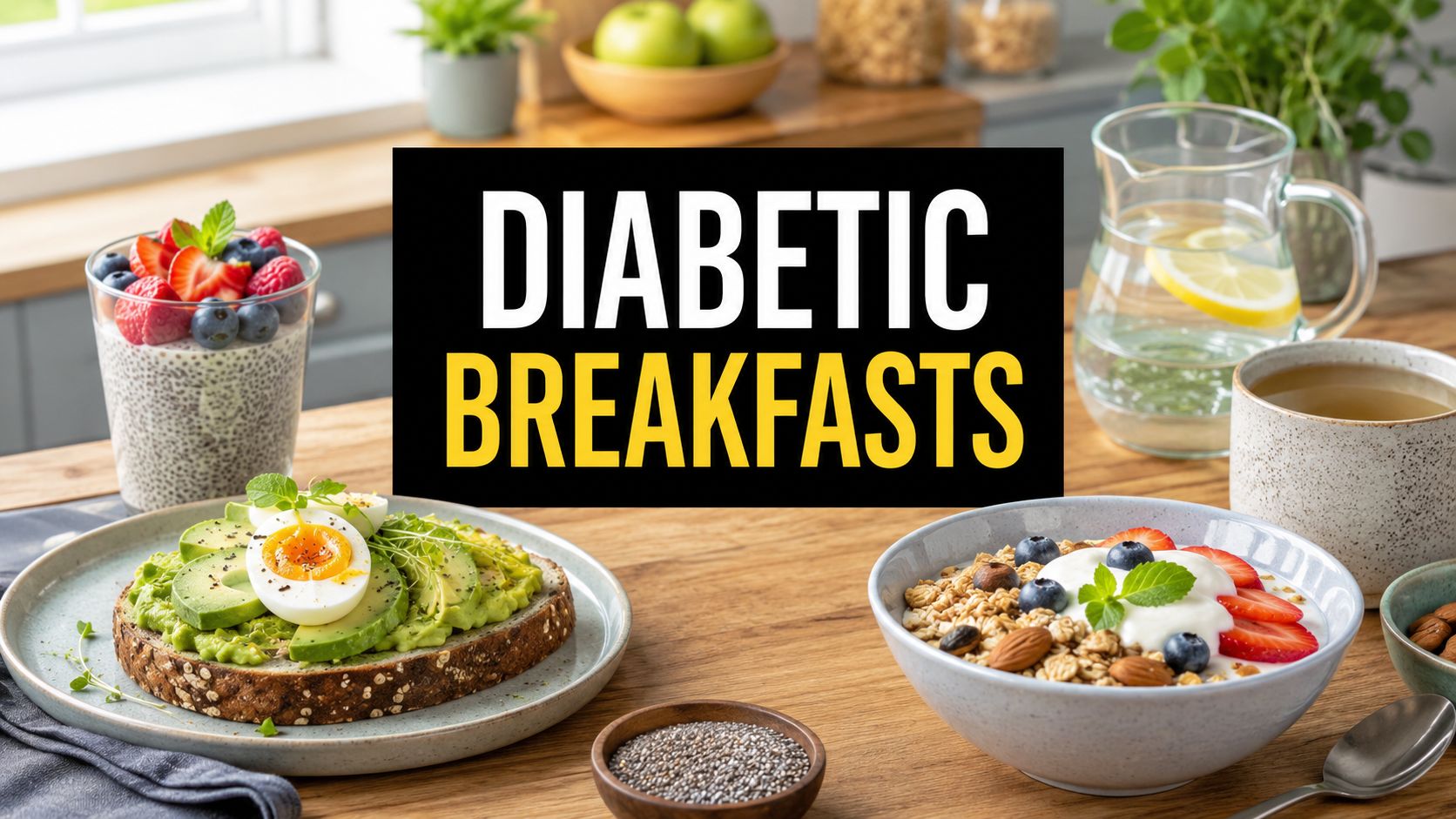
You're standing at the counter, half-awake, trying to decide whether breakfast should be fast, filling, and kind to your blood sugar. The best diabetic friendly breakfast ideas combine protein, fiber, and healthy fats so you stay fuller longer and avoid a sharp glucose spike. The smartest choices are usually built from plain Greek yogurt, eggs, oats, chia seeds, cottage cheese, avocado, or smoked salmon, with portions kept tight and carbs checked carefully using the Nutrition Facts label and the plate method from diabetes guidance like the ADA breakfast and brunch approach and WebMD's diabetes meal guidance.
If you've ever grabbed toast, cereal, or a smoothie and felt hungry again an hour later, the problem usually isn't breakfast itself. It's the balance. Diabetes-friendly morning meals work best when they slow digestion, support satiety, and fit real life, especially on rushed workdays when you need something in minutes, not a kitchen project.
1. Quick Start With Greek Yogurt Parfaits, Nuts, and Berries
Greek yogurt parfaits are one of the easiest ways to make breakfast work for blood sugar control because they're fast, cold, and easy to portion. The key is using plain, unsweetened Greek yogurt, then adding a small amount of berries and nuts or seeds so you get protein, fiber, and fat in the same bowl.
A good practical build is Greek yogurt with raspberries and sliced almonds, or blackberries with walnuts and cinnamon. That combination is simple, but it does the job well, especially if you're leaving for work in ten minutes and still want something more structured than coffee and a toast crust. The AARP diabetes breakfast guidance notes the modern emphasis on protein, fiber, and healthy fats rather than refined carbs alone, and that's exactly why this kind of bowl works so well in its diabetes breakfast overview.
Practical rule: keep the berries modest and let the yogurt do most of the work. If you overdo sweet toppings, you turn a balanced breakfast into a dessert-like bowl.
For a steadier carb load, keep berries around a small serving and add about a handful of nuts. Use 1 oz nuts or seeds for crunch, and prep several jars at once so the breakfast is ready when you are. Mason jars work well because they keep portions honest and make grab-and-go mornings almost effortless.
A few good combinations include blueberries with pecans, raspberries with almonds, and blackberries with walnuts plus cinnamon. The trade-off is that fruit-heavy parfaits can drift upward in carbs if you're not paying attention, so this is a breakfast where measuring once matters more than improvising every morning. If you want more staying power, pair it with a boiled egg on the side.
2. Protein-Forward Vegetable Omelets That Keep You Full
Egg-based breakfasts remain one of the most reliable diabetic-friendly options because they begin with protein and very little carbohydrate. Add non-starchy vegetables such as spinach, bell peppers, mushrooms, and tomatoes, and you get volume and fiber without turning breakfast into a glucose roller coaster.
A spinach and feta omelet feels different from a plain egg scramble, but the blood sugar logic stays the same. The eggs provide structure and satiety, while the vegetables add texture and micronutrients that make the meal feel complete. A Sharp Health News example uses scrambled eggs with sautéed vegetables and a whole wheat English muffin, which shows the basic formula clearly, protein, vegetables, and a controlled carb source in its diabetes breakfast guidance.
The choice between farm-fresh and store-bought eggs can also shape the final dish, and some cooks notice egg taste and cooking differences. That matters most when you want an omelet that tastes rich without leaning on extra cheese or heavy fillings.
How to make it faster on a weekday
- Prep vegetables the night before. Pre-sliced peppers, mushrooms, or onions cut the morning workload almost in half.
- Use 2 to 3 eggs. That gives you a solid protein base without making the meal feel oversized.
- Cook in olive oil or butter. A small amount adds fat and helps the meal feel satisfying longer.
- Finish with herbs. Dill and parsley add flavor without carbs.
If you want a more specific route, try broccoli and cheddar, bell pepper and mushroom, or spinach with feta. A higher-fiber breakfast plan fits meals like this well when you want more structure around the rest of the morning too.
The main trade-off is portion creep. A vegetable omelet can stay blood sugar friendly, but it can also become heavy if you pile on too much cheese, meat, and bread at once. Keep the plate balanced, and if you want a side, avocado slices or a small salad usually make more sense than hash browns.
3. High-Fiber Steel-Cut Oatmeal With Protein and Cinnamon
Steel-cut oatmeal can fit diabetes management well, but the details matter. Steel-cut oats are a better choice than instant packets because they are less processed and give you a slower carb release in the morning, especially when you build the bowl with protein and fat instead of sugar.
The mistake is usually easy to spot. The oats go into the bowl, honey gets poured on top, a few raisins are added, and the meal is still too light to last. A better approach uses oats as the base and treats toppings as support, not the main event. The ADA's breakfast examples include a steel-cut oats bowl with vegetables and Greek yogurt at 300 calories, 8 g fiber, and 14 g protein, which gives a useful model for a more balanced breakfast shape in its recipe guidance.
A higher-fiber breakfast plan can also help keep the rest of the morning more steady, and that is where a high-fiber meal plan fits naturally.
A steadier oat bowl formula
- Cook steel-cut oats in bulk. Batch-cooking cuts down the morning rush and makes it easier to stick with the meal.
- Keep the portion controlled. A 1/2 cup dry oats per serving is a practical ceiling for many people.
- Use nuts or seeds instead of sugar. Walnuts, pecans, flaxseeds, and chia improve the balance without pushing the bowl toward dessert territory.
- Use cinnamon for flavor. It adds warmth without adding carbs.
- Add protein powder if needed. A vanilla protein powder can make the bowl more filling.
A slow cooker works well if you want breakfast ready when you wake up. That matters because the main barrier to a better breakfast routine is often friction, not knowledge. If oatmeal takes too long, people reach for toast, eat less than they need, or skip breakfast altogether.
The trade-off is straightforward. Oatmeal is still a carbohydrate, so it works best when you respect the portion and pair it with protein and fat. Plain oatmeal usually beats flavored instant packets for blood sugar control, because the instant versions tend to rely too heavily on sweetness and not enough on staying power.
4. Low-Carb Chia Seed Pudding for Grab-and-Go Mornings
Chia seed pudding is one of the cleanest low-carb breakfast options because chia naturally brings a lot of fiber into a very small serving. Mixed with unsweetened almond milk and chilled overnight, it turns into a pudding-like breakfast that feels more indulgent than it really is.
This is a particularly strong option for mornings when you know you'll be in a car, on a train, or sitting through back-to-back meetings. It's portable, doesn't need reheating, and can be pre-portioned in jars for several days at a time. A simple vanilla version with almonds and cinnamon is usually the easiest place to start, but chocolate chia with a few berries or coconut also works if you want something less repetitive.
Chia pudding works best when you let texture do the work. If you rely on sweetness alone, it stops behaving like a diabetes-friendly breakfast and starts acting like a dessert.
A practical base is 2 tablespoons chia seeds per 1/2 cup unsweetened almond milk. Stir once after about 15 minutes so the seeds don't clump, then refrigerate it overnight for the best texture. If you want it sweeter without adding carbs, a few drops of stevia or monk fruit can help, and a small topping of berries, unsweetened coconut, or sliced almonds adds contrast.
The trade-off here is texture and patience. Chia pudding isn't for someone who wants hot food immediately, and it does need advance planning. But if your mornings are chaotic, that advance work is exactly what makes it valuable.
For more variety across the week, you can make several jars at once and rotate flavors. Almond butter, vanilla, cinnamon, and berries keep it interesting without pushing the carb count up, which is the whole point.
5. Make-Ahead Egg Muffin Cups for True Grab-and-Go Convenience
Egg muffin cups work well on mornings when you need breakfast ready before you even think about cooking. They give you a baked, portioned meal with eggs, vegetables, and optional cheese or meat, so the blood sugar impact is easier to predict than a pastry, muffin, or breakfast sandwich from the counter.
The strength of this format is how it fits into a routine. Bake a tray once, then keep individual portions for several mornings. Spinach and feta, broccoli and cheddar, and mushroom and Swiss all hold up well because the flavor stays familiar after refrigeration, and the texture is still easy to eat cold or warm.
A practical portion is usually two muffin cups for a light breakfast or three if the rest of the meal is very small. That gives you a protein-forward base with vegetables built in, which helps slow the rise in glucose compared with a carb-heavy breakfast. If you want a simple structure for planning, a diabetic meal plan can help you match portions to the rest of your day.
A few small choices make the batch behave better.
- Sauté vegetables first. A short cook in the pan removes extra moisture and keeps the muffins from turning watery.
- Use parchment liners. They make cleanup easier and help the cups release cleanly.
- Fill each cup about 2/3 full. Eggs expand in the oven, so this keeps the texture even.
- Bake until just set. If they go too far, the eggs turn dry and less pleasant to reheat.
- Store in airtight containers. Freeze extras one at a time so you can reheat only what you need.
The trade-off is planning. These are not a last-second breakfast, but they solve the problem of mornings when cooking feels unrealistic. One focused prep session gives you several days of food you can grab on the way out.
If you want more volume without adding many carbs, serve the muffins with avocado, cucumber slices, or a few cherry tomatoes. If your usual breakfast is a bakery item or a sandwich, egg muffin cups are a steadier choice because they keep protein high and carbs low enough to manage more easily.
6. Avocado Toast on Whole Grain Bread That Doesn't Overshoot Carbs
Avocado toast can work in a diabetes-friendly breakfast pattern if the portion stays tight. The risk is not the avocado itself, it is the bread base and how quickly the meal turns into a carb stack once extra slices, sweet toppings, or juice enter the picture.
Start with one slice of whole grain or sprouted bread for fiber and structure, then add mashed avocado for monounsaturated fat that helps slow digestion. A poached or fried egg turns the toast into a more balanced plate by adding protein, which helps blunt the blood sugar rise you would get from plain toast with jam. That makes a simple build with sprouted grain bread, avocado, an egg, and basic seasoning a practical breakfast, not just a snack in disguise.
Keep the toast to one slice. Two slices, plus fruit juice or sweet coffee, makes the meal much harder to manage.
The ADA's breakfast and brunch guidance emphasizes checking the serving size and total grams of carbohydrate and fiber on grain products, and that advice matters most with toast. Some breads marketed as healthy still behave like refined carbs, so labels matter more than branding
A good avocado toast build stays straightforward. Use one slice only, choose sprouted or Ezekiel bread if you can, add lemon juice to slow browning, and finish with salt, pepper, or red pepper flakes. If you want more protein, add one egg. If you want more volume without many extra carbs, put cherry tomatoes on the side.
The trade-off is simple. Make it too small, and it can feel unsatisfying. Stack on multiple slices and extras, and the meal starts to push carbs higher than many want at breakfast. One slice with a protein topper usually lands in a better place for blood sugar control and still feels like a real meal.
7. Cottage Cheese Bowls With Berries and Almonds
A cottage cheese bowl works well on mornings when you need breakfast to be filling without pushing carbs too high. The base is protein-forward, the berries add a controlled amount of sweetness, and the almonds bring fat plus crunch, which helps the meal feel complete instead of light and snack-like.
The best version keeps the parts simple. Use full-fat cottage cheese if you want more staying power, since it usually feels more satisfying than low-fat versions. Add blueberries, raspberries, or blackberries, then finish with sliced almonds. Cinnamon fits naturally here, and a small splash of vanilla extract can soften the tang without turning the bowl into dessert.
Portioning matters as much as ingredient choice.
A serving of 1 to 1.5 cups cottage cheese is a practical range for many people because it gives a strong protein base without turning the bowl into a huge meal. Keep the berries to a modest scoop so they add flavor rather than dominate the carb load. A small amount of almonds is enough to improve texture and slow down how quickly you finish the bowl, which can help with appetite control later in the morning. If you want a more structured option for a lower-carb morning, the low-carb breakfast guide can help you compare portion styles.
Small changes that make it work better
- Choose full-fat cottage cheese. It usually tastes richer and keeps the bowl more satisfying.
- Keep berries moderate. A small handful gives color and flavor without making the bowl overly sweet.
- Add almonds or walnuts. The fat and crunch help with fullness.
- Prep it in containers. Cottage cheese bowls are easy to assemble ahead of time and hold up well in the fridge for a few days.
The trade-off is taste preference. This breakfast has a more savory profile than a parfait or a sweet oatmeal bowl, so it will not appeal to everyone. For people who want a fast breakfast that is easy to portion, high in protein, and simple to repeat during the week, cottage cheese bowls are a practical choice.
8. Smoked Salmon With Cream Cheese and Vegetables
Smoked salmon breakfasts can feel a little more polished than the usual weekday scramble, but they still work well in real life. They bring protein and omega-3 fats with very few carbohydrates, which makes them a practical choice for anyone trying to keep morning blood sugar steadier without eating a heavy meal.
A simple plate usually starts with 2 to 3 oz smoked salmon, 2 tablespoons cream cheese, and crisp vegetables such as cucumber, avocado, or cherry tomatoes. Lemon, dill, or capers add flavor fast, so the plate feels complete without bread or cereal. If you need something easier to carry, salmon rolled in butter lettuce with avocado is a clean, portable option that holds together well on the go.
This meal also shows how a low-carb breakfast can still feel satisfying. The fat from salmon and cream cheese slows eating and helps the meal feel more filling, while the vegetables bring freshness and crunch. The trade-off is cost and sodium, so it makes sense to use it as a rotation meal rather than a daily default. For people trying to keep mornings consistent, a structured low-carb breakfast plan can help with portion decisions and make repetition easier.
A breakfast does not need to be hot to be balanced. Protein, fat, and vegetables can carry the meal on their own.
There is a practical budget note too. Smoked salmon has a stronger price tag than eggs or yogurt, and the salt content can be a concern for people watching sodium intake. Lox can be a workable alternative when available, and wild-caught salmon is often the preferred pick when you have that choice.
This breakfast fits people who want a savory option that feels intentional without relying on toast. It pairs naturally with cucumber and avocado, which keeps the plate fresh, easy to assemble, and simple to portion.
8-Item Diabetic-Friendly Breakfast Comparison
| Item | 🔄 Complexity | ⚡ Prep time | 📊 Expected outcomes | 💡 Resource requirements | ⭐ Advantages & Ideal use cases |
|---|---|---|---|---|---|
| Quick Start: Greek Yogurt Parfaits with Nuts and Berries | Low, no-cook assembly | 5 min | Low glycemic; 15–20 g protein; probiotics; moderate satiety | Plain Greek yogurt, low-glycemic berries (½–¾ cup), 1 oz nuts; low–moderate cost | Fast, portable, probiotic benefit; ideal for quick breakfasts and simple meal-prep |
| Protein-Forward: Vegetable-Loaded Omelets | Medium, stovetop cooking, basic skill | 10–15 min | Very low glycemic; 12–18 g protein; high satiety | Eggs, non-starchy vegetables, oil/butter; inexpensive, requires pan/stove | High-protein, flexible; ideal for steady energy and savory preferences |
| High-Fiber: Steel-Cut Oatmeal with Protein and Cinnamon | Medium, longer cook or slow-cook/overnight | 25–30 min (or overnight) | Moderate glycemic; high soluble fiber and beta‑glucan; sustained fullness | Steel-cut oats, nuts/seeds, optional protein powder; pot or slow cooker; very affordable | Best for blood-sugar stability and batch cooking; ideal when you want a warm, filling breakfast |
| Low-Carb: Chia Seed Pudding | Low, no-cook, overnight setting | 5 min + overnight chill | Minimal glycemic impact; very high fiber & omega‑3s; good satiety | Chia seeds, unsweetened plant milk, optional zero-calorie sweetener; moderate cost, fridge | Extremely low-carb, make-ahead; ideal for grab-and-go and ketogenic/low-carb diets |
| Make-Ahead: Egg Muffin Cups | Medium, oven baking, batch prep | 30 min (batch for 12) | Negligible glycemic; ~12–14 g protein per muffin; long satiety | Eggs, vegetables, cheese/meat; oven and muffin tin required; very cost-effective | Meal-prep friendly and portion-controlled; ideal for busy schedules and freezer storage |
| Kid-Friendly: Avocado Toast on Whole Grain Bread | Low, simple assembly, optional egg | 10 min | Moderate glycemic (fat slows digestion); moderate satiety | Whole-grain or sprouted bread, avocado, optional egg; moderate cost, toaster/pan | Visually appealing and simple; ideal for quick sit-down breakfasts or kid-friendly meals |
| Protein-Forward: Cottage Cheese Bowl with Berries and Almonds | Low, mix-and-serve | 5 min | Low-to-moderate glycemic; 14–28 g protein depending on portion; strong satiety | Full‑fat cottage cheese, low-glycemic berries, sliced almonds; low–moderate cost, fridge | High-protein, casein-rich option; ideal for prolonged fullness and muscle maintenance |
| Low-Carb: Smoked Salmon with Cream Cheese and Vegetables | Low, no-cook assembly | 5 min | Zero/negligible glycemic if no bread; 20–25 g protein; high satiety & omega‑3s | Smoked salmon, cream cheese, cucumber/avocado; higher cost, refrigerated storage | Very low-carb, anti-inflammatory fats; ideal for elegant low-carb breakfasts and long-lasting fullness |
How Do You Build a Sustainable Diabetic Breakfast Routine?
Sustainability starts with rotation, not perfection. The easiest diabetic breakfast routine is one you can repeat without getting bored, and that means mixing quick bowls, egg-based meals, and make-ahead options instead of relying on the same recipe every day.
A simple weekly rhythm helps a lot. Egg muffin cups work well after weekend prep, yogurt parfaits cover rushed mornings, and steel-cut oatmeal fills the colder, slower days. Cottage cheese bowls, avocado toast, vegetable omelets, and smoked salmon plates keep the menu varied enough that you're less likely to drift back to pastries or sugary cereal.
The win is predictability. If you know what breakfast looks like before you're hungry, you're much less likely to grab whatever's easiest. That matters because diabetes-friendly breakfast planning isn't just about ingredients, it's about reducing decision fatigue before the day gets busy.
A few habits make the routine easier to keep:
- Batch one breakfast item each week. Egg muffins or oatmeal save time later.
- Keep one no-cook option ready. Greek yogurt, chia pudding, or cottage cheese can cover emergency mornings.
- Use the plate method. Half vegetables, one quarter carbohydrate, one quarter protein is a useful guide from WebMD's diabetes meal advice.
- Read labels on bread and cereal. Fiber and serving size matter more than front-of-pack claims.
- Avoid sugary drinks at breakfast. Juice and sweet coffee drinks can undo a balanced meal quickly.
The goal isn't a perfect menu. It's a breakfast pattern that supports steady energy, manageable portions, and less morning stress. If you keep the structure simple, you can use these ideas across busy workdays, weekends, and travel mornings without starting from scratch every time.
For people who want more consistency without doing all the planning manually, AI Meal Planner can help by building breakfast into a full weekly meal plan with recipes, macros, calories, and grocery lists. That makes it easier to turn these diabetic friendly breakfast ideas into a routine instead of an occasional good intention.
If you want breakfasts that fit your blood sugar goals without adding more guesswork, start with a plan that rotates protein, fiber, and healthy fats through the week. AI Meal Planner can generate personalized weekly menus and grocery lists so you can build a diabetic-friendly breakfast routine that fits your mornings.
AI-powered nutrition
Get Your Personalized Meal Plan
AI creates the perfect meals for your goals, lifestyle, and taste.
Start Your Journej