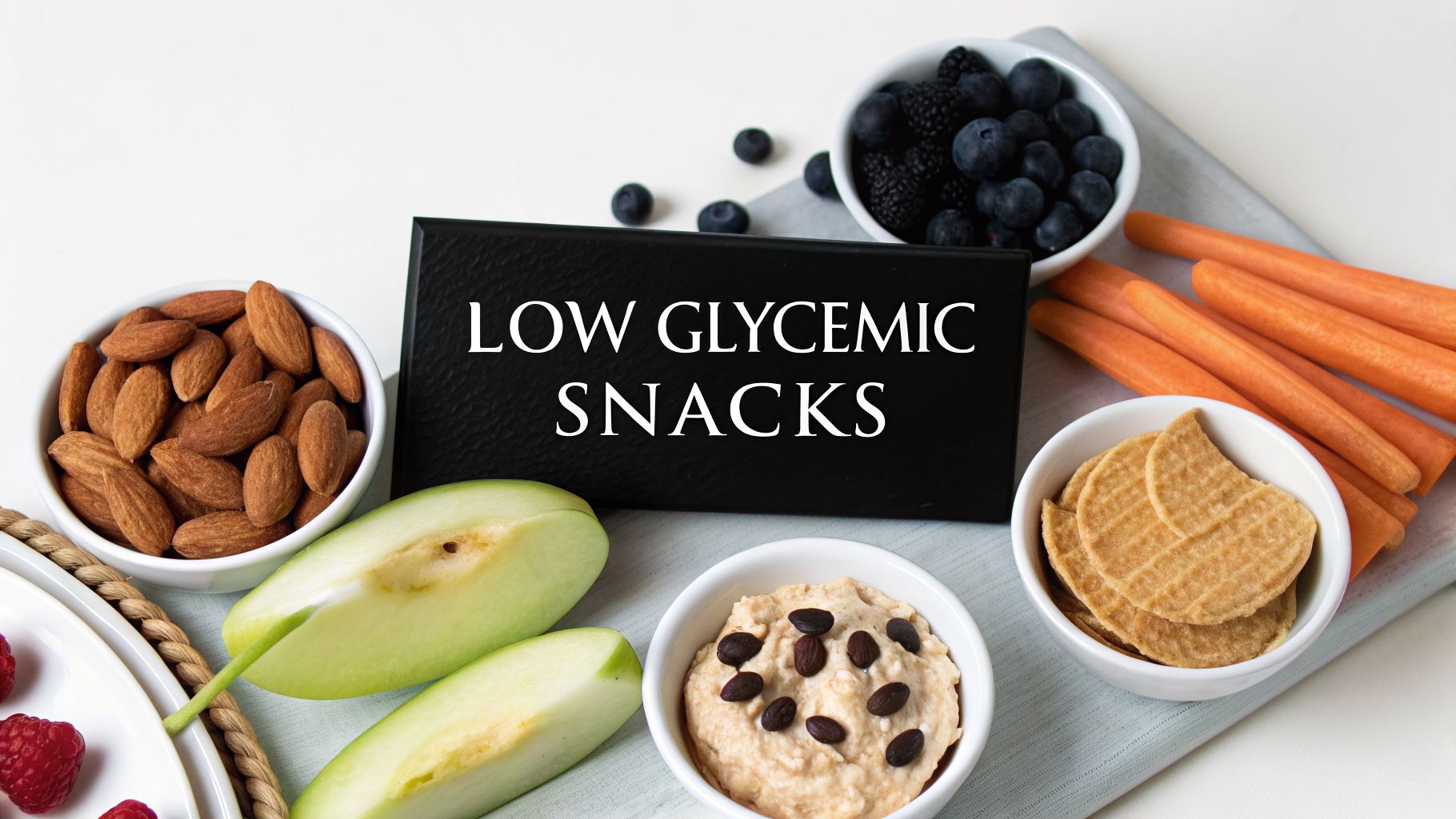
The best low glycemic snacks include nuts, Greek yogurt with berries, hard-boiled eggs, avocado, and cheese with vegetables. These snacks are ideal because they are high in fiber, protein, and healthy fats, which slow digestion and prevent blood sugar spikes. For effective glucose management, aim for snacks with a glycemic index (GI) below 55 and a glycemic load (GL) under 10.
Finding the right snack to maintain stable blood sugar can feel like a constant challenge. The key is choosing foods that prevent energy crashes and keep you feeling full and focused. This guide simplifies that process by presenting ten of the best low glycemic snacks, selected for their minimal impact on blood glucose levels.
This is more than just a list. For each snack, you will find practical, actionable details to help you integrate them into your daily routine. We provide specific serving sizes, estimated glycemic index (GI) or glycemic load (GL) where applicable, and a full macronutrient breakdown (protein, carbs, and fats). This information is crucial for anyone tracking their intake for weight loss, muscle gain, or diabetes management.
You will also discover quick homemade recipes, recommended store-bought options for convenience, and expert pairing tips designed to further blunt any potential blood sugar response. Understanding how to combine foods is a powerful skill. When adopting a low glycemic lifestyle, it's also helpful to understand broader health principles, such as how to boost your metabolism naturally through consistent eating habits and other lifestyle adjustments.
Finally, we’ll explore how these snack ideas can be incorporated into personalized meal plans, including those generated by AI tools like https://ai-mealplan.com/onboarding, to align perfectly with your unique health goals.
1. Nuts and Seeds Mix
A well-crafted mix of nuts and seeds is a cornerstone of low-glycemic snacking. This combination provides a powerful trio of healthy fats, plant-based protein, and dietary fiber. This nutrient profile is key to its minimal impact on blood sugar; the fats and protein significantly slow down the digestion and absorption of carbohydrates, preventing the sharp glucose spikes associated with high-glycemic foods. This makes it an exceptional choice for sustained energy without the subsequent crash.
Why Are Nuts and Seeds a Top Choice?
The low glycemic index (GI) of most nuts and seeds makes them ideal for blood sugar management. For example, almonds have a GI of approximately 0, while walnuts are around 15. The glycemic load (GL) for a standard 1/4 cup serving is also very low, typically under 2. This combination ensures a slow, steady release of energy, which is perfect for maintaining focus between meals or fueling a workout. The high satiety factor from the fiber and fat also helps curb cravings and prevent overeating, supporting weight management goals.
How Can I Incorporate Nuts and Seeds?
Making this one of the best low glycemic snacks is easy with a little planning. You can create your own mix or find high-quality store-bought options.
- DIY Trail Mix: Combine 1/4 cup of raw or dry-roasted nuts and seeds. A classic mix includes almonds, walnuts, and pumpkin seeds. For added micronutrients, add a tablespoon of chia seeds or sunflower seeds.
- Store-Bought Packs: Brands like Sahale Snacks or Trader Joe's offer pre-portioned packs, which are convenient for on-the-go snacking and built-in portion control. Always check the label for added sugars or unhealthy oils.
- Smart Pairing: To add volume and hydration, pair your nut mix with high-fiber, low-sugar options like celery sticks, bell pepper slices, or a small apple. The crunch and water content complement the rich nuts perfectly.
To seamlessly integrate this snack into a structured diet, you can use a personalized meal planner. A tool like AI Meal Plan can help you determine the right portion sizes and timings to align with your specific health objectives, whether it's managing diabetes or building muscle.
2. Greek Yogurt with Berries
Combining plain Greek yogurt with a handful of fresh berries creates a creamy, satisfying, and nutritionally balanced snack. This pairing delivers high-quality protein, probiotics, and fiber, a combination that works together to slow digestion and prevent rapid blood sugar fluctuations. The protein from the yogurt and the fiber from the berries promote a gradual release of energy, making it one of the best low glycemic snacks for maintaining stable glucose levels and avoiding energy slumps.

Why Are Greek Yogurt and Berries a Top Choice?
The glycemic index of plain, unsweetened Greek yogurt is low, typically around 11-19, and berries are among the lowest GI fruits available. Raspberries have a GI of about 32, while blueberries are around 53. A standard serving of 6 oz of plain Greek yogurt with 1/2 cup of mixed berries has a very low glycemic load (GL), usually under 5. This minimal impact on blood sugar is ideal for anyone managing diabetes or insulin resistance. The high protein content also provides excellent satiety, helping to manage hunger and support weight management efforts.
How Can I Incorporate Yogurt and Berries?
Enjoying this nutrient-dense snack is simple and versatile, requiring minimal preparation for a quick and healthy option.
- Classic Bowl: Combine 6 ounces of plain, full-fat Greek yogurt (like Fage Total or Siggi's) with 1/2 cup of mixed berries. For extra fiber and healthy fats, add a tablespoon of ground flaxseed or chia seeds.
- Grab-and-Go Parfait: On Sunday, layer individual portions in small jars: start with yogurt, add a layer of berries, and top with a sprinkle of chopped almonds. Seal and store in the fridge for a convenient snack throughout the week.
- Smart Pairing: To enhance the blood-sugar-blunting effect, top your yogurt bowl with a tablespoon of pumpkin seeds or walnuts. The added healthy fats and protein further slow down carbohydrate absorption. Always choose plain yogurt, as flavored varieties can contain over 20 grams of added sugar per serving.
To ensure this snack fits your specific dietary needs, a meal planning tool can be invaluable. Using a service like AI Meal Plan helps you integrate snacks like Greek yogurt with berries into a balanced plan, adjusting portion sizes to meet your health goals, from muscle gain to blood sugar control.
3. Celery with Almond Butter
The classic pairing of celery sticks with almond butter is a powerhouse low-glycemic snack. This simple combination works so effectively because it pairs a non-starchy, high-water-content vegetable with a nutrient-dense source of healthy fats and protein. The celery provides volume and a satisfying crunch with virtually no impact on blood sugar, while the almond butter delivers sustained energy. This synergistic effect makes it one of the best low glycemic snacks for managing hunger and glucose levels between meals.
Why Is Celery with Almond Butter a Top Choice?
Celery's glycemic index is near zero, and its glycemic load is negligible due to its high water (about 95%) and fiber content. Almond butter, when unsweetened, has a very low GI, typically around 25. The healthy monounsaturated fats and protein in the almond butter significantly slow down digestion, ensuring a gradual release of energy. This prevents the glucose spikes and subsequent energy crashes common with carbohydrate-heavy snacks, making it an excellent option for diabetes management, weight control, and maintaining steady focus throughout the day.
How Can I Incorporate Celery with Almond Butter?
Preparing this snack is straightforward and highly adaptable to your preferences and dietary needs. A little prep can make it an effortless go-to option.
- Classic Preparation: Simply spread two tablespoons of natural, no-sugar-added almond butter onto four medium celery stalks. For extra flavor without sugar, try adding a dash of cinnamon or vanilla extract to the almond butter.
- Nut-Free and Other Variations: For those with nut allergies, sunflower seed butter is a fantastic alternative. For a savory, Middle Eastern-inspired twist, use two tablespoons of tahini (sesame seed paste) instead of almond butter.
- Smart Meal Prep: To ensure this snack is always ready, pre-cut celery stalks and store them in an airtight container with water in the refrigerator. They will stay crisp for up to a week, making it easy to grab and go.
Integrating this snack into a structured eating plan is an effective way to stay on track with your health goals. A personalized tool can help you plan snacks like this as part of a broader low-carb meal plan, ensuring your portions and timing support your specific objectives.
4. Cheese and Vegetables Platter
A platter of hard cheese and non-starchy vegetables is a remarkably effective low-glycemic snack. This classic pairing delivers high-quality protein and healthy fats from the cheese alongside fiber, vitamins, and volume from the vegetables. This combination works to stabilize blood sugar by ensuring minimal carbohydrate intake while the fat and protein promote a slow, controlled digestion process. The result is lasting satiety and consistent energy, making it an ideal choice to bridge meals.
Why Are Cheese and Vegetables a Top Choice?
Hard cheeses like cheddar, gouda, and parmesan have a glycemic index of virtually zero, making them one of the best low glycemic snacks for blood sugar control. When paired with non-starchy vegetables like broccoli (GI ~15) or bell peppers (GI ~10), the overall glycemic load of the snack remains extremely low, typically under 1. This nutrient-dense option is excellent for supporting both weight loss, due to its high satiety factor, and muscle gain, thanks to its complete protein content.
How Can I Prepare a Cheese and Vegetable Platter?
Assembling this snack is simple and can be easily adapted for home or on-the-go needs. A little weekly prep makes it an effortless choice.
- Classic Platter: Pair 1 ounce of aged cheddar with 1 cup of broccoli florets and 1 cup of bell pepper strips for a balanced mix of crunch and creaminess.
- Grab-and-Go: Combine 1 ounce of cheese cubes with a handful of cherry tomatoes and cucumber slices for a portable, mess-free option.
- Meal Prep Strategy: On Sunday, pre-cut vegetables like carrots, celery, and peppers. Store them in airtight containers with a paper towel to absorb moisture. This keeps them crisp and ready for quick assembly.
To fit this snack into your specific dietary goals, a personalized meal planner can be a great asset. Using a tool like AI Meal Plan allows you to set precise portion sizes for the cheese and vegetables, ensuring the snack aligns perfectly with your macro targets for weight management or muscle building.
5. Hard-Boiled Eggs
Hard-boiled eggs are a powerhouse of nutrition and one of the best low glycemic snacks available, boasting a glycemic index of zero. This means they have no impact on blood sugar levels, making them a safe and effective choice for glucose management. Each egg provides a complete protein source, containing all nine essential amino acids, along with vital nutrients like choline for brain health and lutein for eye protection. Their portability and simplicity make them an ideal snack for anyone needing quick, satisfying fuel.
Why Are Hard-Boiled Eggs a Top Choice?
With a glycemic index (GI) of 0 and a glycemic load (GL) of 0, hard-boiled eggs are unmatched for blood sugar stability. The high-quality protein and healthy fats promote a feeling of fullness, which helps to control appetite and reduce the likelihood of reaching for high-carb, sugary alternatives. This high satiety factor is particularly beneficial for weight management and for maintaining steady energy levels throughout the day without the typical crash associated with processed snacks. They are a staple in fitness, paleo, and low-carb eating plans for good reason.
How Can I Incorporate Hard-Boiled Eggs?
Preparing this snack in advance makes healthy eating incredibly simple during a busy week. You can easily adapt them to fit your taste and nutritional needs.
- Batch Preparation: Boil a dozen eggs at the start of the week and store them in the refrigerator for up to 7 days. For easier peeling, place them in an ice bath immediately after boiling.
- Simple Seasoning: A pinch of salt and pepper is classic, but a sprinkle of everything bagel seasoning or paprika can add a welcome burst of flavor without adding calories or carbs.
- Balanced Snack: For a more complete mini-meal, pair two hard-boiled eggs with a handful of whole-grain crackers or a small apple. The fiber from the crackers or fruit complements the protein and fat, further supporting stable blood sugar.
Integrating this high-protein snack into a structured diet is straightforward with a personalized meal planner. For those managing specific health goals, a tool like AI Meal Plan can help track macros and ensure your snacks align with your dietary targets. You can also learn more about building a diabetic-friendly meal plan that incorporates foods like eggs to maintain steady glucose levels.
6. Avocado with Everything Bagel Seasoning
A simple yet satisfying half avocado sprinkled with everything bagel seasoning is a powerhouse of low-glycemic nutrition. This snack delivers a significant dose of healthy monounsaturated fats, fiber, and essential minerals like potassium. The combination of fat and fiber is crucial for its glycemic stability; it drastically slows digestion, ensuring there is virtually no impact on blood sugar levels. This makes it an outstanding choice for maintaining satiety and stable energy without any glucose spikes.

Why Is Avocado a Top Choice?
The glycemic index of avocado is near zero, and a typical half-avocado serving has a glycemic load of less than 1. This is because it is composed almost entirely of healthy fats and fiber with very few net carbohydrates. A single avocado can contain over 10 grams of fiber, which helps promote a feeling of fullness and supports digestive health. The monounsaturated fats also support hormone production and the absorption of fat-soluble vitamins, making this one of the best low glycemic snacks for overall wellness.
How Can I Incorporate Avocado?
Preparing this snack is quick, simple, and versatile. It can be enjoyed on its own or used as a base for more complex flavors.
- The Classic: Cut an avocado in half lengthwise, remove the pit, and sprinkle generously with everything bagel seasoning. A squeeze of fresh lemon or lime juice can prevent browning and add a zesty kick.
- Simple Slices: For a quick bite, slice up half an avocado and top it with sea salt and red pepper flakes for a touch of heat.
- Low-Carb "Toast": Spread mashed avocado on a slice of low-carb, sprouted-grain bread for a more substantial snack that still keeps blood sugar in check. This is a great option for those following a keto meal plan.
To ensure you're balancing its calorie density with your other meals, consider using a personalized tool. A platform like AI Meal Plan can help you track your macros and fit snacks like avocado into your specific dietary goals, whether for weight management or diabetes control.
7. Chia Pudding
Chia pudding is a surprisingly decadent, creamy snack that offers exceptional nutritional benefits with almost no impact on blood sugar. Created by soaking chia seeds in a liquid like unsweetened almond milk, the seeds absorb the fluid and form a gel-like, pudding consistency. This snack is packed with soluble fiber, plant-based protein, and healthy omega-3 fatty acids, a combination that drastically slows digestion and prevents glucose spikes. It's an ideal choice for satisfying a sweet tooth while providing long-lasting energy.

Why Is Chia Pudding a Top Choice?
Chia seeds have a glycemic index of virtually 1, making them a powerhouse for blood sugar control. A standard serving made with two tablespoons of chia seeds has a glycemic load (GL) of less than 1. The 10 grams of fiber in this serving size create a thick gel in the stomach, promoting a feeling of fullness that helps manage appetite and support weight loss goals. This high satiety factor makes it one of the best low glycemic snacks for curbing afternoon cravings or serving as a light, yet filling, breakfast.
How Can I Incorporate Chia Pudding?
Preparing this nutrient-dense snack is simple and perfect for meal prep, ensuring you have a healthy option ready to go.
- Classic Overnight Recipe: Whisk 2 tablespoons of chia seeds with 1/2 cup of unsweetened almond or coconut milk in a mason jar. Add a splash of vanilla extract and a dash of cinnamon for flavor, then refrigerate overnight.
- Store-Bought Convenience: Brands like Navitas Organics offer pre-made chia puddings or high-quality seeds for your own creations. Always check labels to ensure they are free from added sugars and artificial ingredients.
- Smart Pairing: Elevate your pudding by topping it with a handful of fresh berries (like raspberries or blueberries) and a sprinkle of chopped almonds just before serving. This adds antioxidants, vitamins, and an enjoyable textural contrast without raising the glycemic load.
To fit this snack perfectly into your health routine, a personalized meal planner can be a great asset. Using a tool like AI Meal Plan can help you adjust portion sizes and pair your chia pudding with other foods to meet specific targets for diabetes management or weight loss.
8. Cottage Cheese with Cinnamon and Nuts
Cottage cheese combined with cinnamon and nuts is a protein-packed snack celebrated for its minimal effect on blood sugar. The foundation of this snack is casein, a slow-digesting protein abundant in cottage cheese, which ensures a gradual release of amino acids and promotes satiety. This slow digestion, paired with the healthy fats and fiber from nuts, effectively blunts any potential glucose response, making it an excellent choice for stable energy, especially for fitness enthusiasts or as a pre-bedtime snack.
Why Is Cottage Cheese a Top Choice?
With a glycemic index of around 10-20, cottage cheese itself has a very low impact on blood sugar. When you add cinnamon, which has been studied for its potential to improve insulin sensitivity, and nuts (GI of 0-15), the glycemic load of the entire snack remains exceptionally low. A one-cup serving offers a substantial 25-30 grams of protein, which is key for muscle repair, appetite control, and metabolic health. This high protein content helps manage weight by increasing fullness and reducing overall calorie intake.
How Can I Prepare a Cottage Cheese Bowl?
Preparing this snack is simple and highly customizable, making it one of the best low glycemic snacks for any time of day.
- Classic Combo: Mix 1 cup of low-fat or full-fat cottage cheese (brands like Good Culture or Organic Valley are great) with 1/2 teaspoon of ground cinnamon and 1/4 cup of chopped almonds or walnuts.
- Fruity & Crunchy: For natural sweetness without a sugar spike, add 1/4 cup of diced green apple or berries. Top with a tablespoon of hemp seeds for extra fiber and omega-3s.
- Flavor Boost: Enhance the taste without sugar by stirring in a few drops of vanilla or almond extract. For a creamier texture, mix the cottage cheese in a 1:1 ratio with plain Greek yogurt.
To properly integrate high-protein snacks like this into your diet, a personalized meal planner can be a valuable asset. Using a tool like AI Meal Plan helps you balance your macronutrients throughout the day to meet specific goals like muscle gain or effective diabetes management.
9. Roasted Chickpeas (Homemade Crisps)
Roasted chickpeas are a crunchy, savory, and satisfying snack that serves as a fantastic alternative to high-glycemic potato chips. This simple snack leverages the humble chickpea, transforming it into a crisp that delivers plant-based protein, dietary fiber, and essential minerals. The combination of protein and fiber significantly slows the absorption of carbohydrates, promoting stable blood sugar levels and preventing the energy spikes and crashes common with processed snacks. This makes roasted chickpeas a smart choice for maintaining energy and focus throughout the day.
Why Are Roasted Chickpeas a Top Choice?
With a glycemic index of around 28 and a low glycemic load, chickpeas are an excellent food for blood sugar management. A one-cup serving of cooked chickpeas contains about 12.5 grams of fiber, which is crucial for slowing digestion and promoting a feeling of fullness. This high satiety factor helps control appetite and supports weight management. Unlike deep-fried snacks, these homemade crisps are roasted with minimal oil, making them a heart-healthy option that also provides a good source of iron and folate.
How Can I Make Roasted Chickpeas?
Making your own roasted chickpeas is simple and allows for complete control over ingredients, especially salt and spices.
- Classic Savory Crisps: Drain and thoroughly dry one can of chickpeas. Toss with 1 tablespoon of olive oil, then season with paprika, garlic powder, and sea salt. Roast at 400°F (200°C) for 25-30 minutes, shaking the pan halfway through, until golden and crunchy.
- Spiced and Zesty Mix: For a flavor kick, mix your olive oil-coated chickpeas with cumin, chili powder, and fresh lime zest before roasting. Season with salt immediately after they come out of the oven.
- Everything Bagel Crunch: A popular and easy variation is to toss the hot, freshly roasted chickpeas with a generous amount of everything bagel seasoning. The heat helps the seasoning stick.
For those looking to expand their homemade crisp options, you can also explore how to prepare other crunchy delights or discover more air fryer snack ideas for efficient and delicious treats. Batch-prepping roasted chickpeas at the start of the week ensures you always have a healthy, grab-and-go option available.
10. Dark Chocolate (85% Cacao or Higher) with Almonds
Indulging in dark chocolate with almonds is a smart way to satisfy sweet cravings while keeping blood sugar levels stable. This pairing offers a rich, satisfying flavor profile backed by a strong nutritional foundation of healthy fats, fiber, and powerful antioxidants. The cocoa solids in high-cacao chocolate provide flavonoids and minerals, while the almonds add protein and fat, which work together to slow the absorption of the minimal sugar present. This makes it an excellent dessert alternative or afternoon pick-me-up that won’t lead to an energy crash.
Why Is This Combination a Top Choice?
Dark chocolate with at least 85% cacao has a low glycemic index, often estimated around 20-25, due to its high fat and fiber content and low sugar. A one-ounce serving has a very low glycemic load, typically under 5. Almonds, with a GI near 0, further buffer any potential blood sugar response. This synergy not only prevents glucose spikes but also supports heart health through cocoa flavonoids and brain function from the healthy fats in both ingredients. The decadent taste makes it one of the best low glycemic snacks for sustainable, long-term adherence to a healthy eating plan.
How Can I Incorporate Dark Chocolate and Almonds?
Enjoying this snack is simple and can be easily prepped for convenience and portion control.
- Classic Pairing: Combine two squares (about 0.7 oz) of 85% or higher dark chocolate with a small handful of 10-12 raw almonds. This provides a balanced, pre-portioned treat.
- Desk Snack Mix: For an easy-to-graze option, mix one ounce of high-cacao dark chocolate chips with 1/4 cup of raw almonds. Keep it in a small container at your desk to curb afternoon cravings.
- Smart Selection: Choose brands with minimal ingredients and less than 2-3 grams of sugar per serving, such as Lindt Excellence 90% or Alter Eco 85% Classic Blackout. Opt for organic and fairly-traded chocolate when possible.
To strategically fit this satisfying snack into your diet, consider a personalized approach. A tool like AI Meal Plan can help schedule snacks like this to align with your energy needs and health goals, ensuring you can enjoy treats without compromising your progress.
Which Low-Glycemic Snack Is Right for You?
| Item | 🔄 Implementation complexity | ⚡ Resource requirements | 📊 Expected outcomes | 💡 Ideal use cases | ⭐ Key advantages |
|---|---|---|---|---|---|
| Nuts and Seeds Mix | Low — no prep; pre-portion recommended | Low time; shelf-stable; moderate cost | Stable energy & satiety; minimal glycemic impact — ⭐⭐⭐⭐ | Mid-morning/afternoon snack, pre-workout, busy schedules | Nutrient-dense fats & protein; portable; long shelf life |
| Greek Yogurt with Berries | Low — quick assembly; needs refrigeration | Requires fridge, fresh/frozen berries; moderate cost | High protein, probiotics, antioxidant benefit; excellent glycemic control — ⭐⭐⭐⭐ | Post-workout, breakfast alternative, diabetes management | High protein + probiotics; customizable; quick to prepare |
| Celery with Almond Butter | Low — minimal assembly | Very low cost; no cooking; almond butter storage | Low-calorie satiety; slows hunger; negligible glycemic effect — ⭐⭐⭐ | Weight loss, between-meal appetite control, pre-bedtime | Very low calorie density; high satiety; inexpensive |
| Cheese and Vegetables Platter | Low — slicing & assembly; refrigeration | Requires fridge; moderate cost; portion control needed | Complete protein and micronutrients; negligible glycemic impact — ⭐⭐⭐⭐ | Muscle gain, keto/paleo snacks, afternoon energy boost | Complete protein, calcium-rich, versatile flavors/textures |
| Hard-Boiled Eggs | Moderate — initial boiling; easy weekly prep | Low cost; fridge; portable short-term without chill | Complete protein, zero glycemic impact; supports satiety — ⭐⭐⭐⭐ | Post-workout, on-the-go protein, breakfast substitute | Affordable, high-quality complete protein; convenient meal prep |
| Avocado with Everything Bagel Seasoning | Low — simple prep; ripening management | Moderate cost; short shelf life; minimal tools | High satiety from healthy fats & fiber; nutrient absorption support — ⭐⭐⭐ | Appetite control, hormone balance, satiating snack | Monounsaturated fats, fiber, rich micronutrient profile |
| Chia Pudding | Moderate — requires overnight soaking | Low cost; jars and refrigeration; make-ahead | Exceptional fiber & ALA omega‑3s; prolonged satiety — ⭐⭐⭐⭐ | Vegan snacks, weight loss, digestive health, make-ahead meals | High fiber, plant-based omega-3s, customizable and batchable |
| Cottage Cheese with Cinnamon and Nuts | Low — quick assemble; refrigeration | Requires fridge; choose low-sodium brands; moderate cost | Very high protein (casein) for muscle recovery & satiety — ⭐⭐⭐⭐ | Muscle gain, pre-bedtime recovery, appetite suppression | High protein per calorie; versatile sweet/savory options |
| Roasted Chickpeas (Homemade Crisps) | Moderate — roasting 25–30 min; technique matters | Low cost; oven; hands-on prep time | Crunchy, fiber-rich, moderate glycemic load; filling — ⭐⭐⭐ | Plant-based diets, budget snack prep, chip alternative | Budget-friendly, customizable seasonings, high fiber |
| Dark Chocolate (85%+) with Almonds | Low — assemble and portion | Moderate–high cost; portion control recommended | Satisfies sweet cravings; antioxidants & mood support; modest glycemic effect — ⭐⭐⭐ | Dessert substitute, craving control, cognitive/mood boost | Polyphenols & magnesium; pairs with nuts for slowed absorption |
How Can You Make Low-Glycemic Snacking a Habit?
Making smart snack choices is a fundamental skill for managing blood sugar, sustaining energy levels, and achieving long-term health goals. The key is to build a system, not just memorize a list.
Here are the most critical strategies to integrate into your daily routine:
- Prepare Ahead: The difference between reaching for roasted chickpeas and a bag of potato chips often comes down to what is available. Dedicate a small amount of time each week to prep your snacks: boil a batch of eggs, portion out nuts, or mix a large container of chia pudding.
- Pair Wisely: Never eat a carbohydrate alone if your goal is stable blood sugar. Always pair fruits or whole grains with a source of protein or healthy fat, like an apple with almond butter. This single habit is one of the most effective ways to blunt the glycemic response of any food.
- Manage Portions: Even the best low glycemic snacks can disrupt your goals if consumed in excessive amounts. A handful of nuts is beneficial; a whole bag can easily derail your calorie targets. Use measuring cups or a food scale initially to calibrate your perception of a proper serving size.
- Listen to Your Body: While the Glycemic Index is an excellent tool, individual responses to food can vary. Pay attention to how you feel after eating. Do you feel energized and focused, or sluggish and hungry again in an hour? This personal feedback is invaluable for refining your choices.
By embracing these principles, you are strategically fueling your body for optimal performance. You are taking control of your metabolic health, one delicious and satisfying snack at a time. The goal is to make these choices feel automatic and effortless, transforming your snacking habits from a potential liability into a powerful asset for your well-being.
Ready to take the guesswork out of your entire eating plan? The AI Meal Planner can design a personalized meal and snack schedule that aligns perfectly with your health goals, whether it's weight loss, muscle gain, or diabetes management. It seamlessly integrates the best low glycemic snacks and principles discussed here into a plan built just for you. Get started with your custom plan today at AI Meal Planner.
Frequently Asked Questions
1. What makes a snack "low glycemic"? A low glycemic snack has a Glycemic Index (GI) of 55 or less, meaning it raises blood sugar slowly and steadily. These snacks are typically high in fiber, protein, and healthy fats.
2. Is fruit a good low glycemic snack? Yes, but it depends on the fruit. Berries, cherries, apples, and pears are excellent low-GI choices, while tropical fruits like pineapple and mango are higher.
3. Are low glycemic snacks good for weight loss? Yes, they promote satiety and help control appetite by preventing blood sugar crashes that can trigger cravings for high-calorie, sugary foods.
4. Can I eat low glycemic snacks at night? A small, protein-rich snack like cottage cheese or a handful of almonds can be beneficial before bed to stabilize blood sugar overnight.
5. Are all "healthy" snacks low glycemic? No, many seemingly healthy snacks like rice cakes, granola bars, and dried fruit can have a high glycemic index and should be eaten with caution.
6. Do I need to avoid all high glycemic foods? Not necessarily, but pairing high-GI foods with protein or fat can help lower the overall glycemic load of your meal or snack.
7. How do I find the Glycemic Index of a food? You can find reliable GI values from sources like the University of Sydney's GI database or by looking for published food lists from reputable health organizations.
AI-powered nutrition
Get Your Personalized Meal Plan
AI creates the perfect meals for your goals, lifestyle, and taste.
Start Your Journej