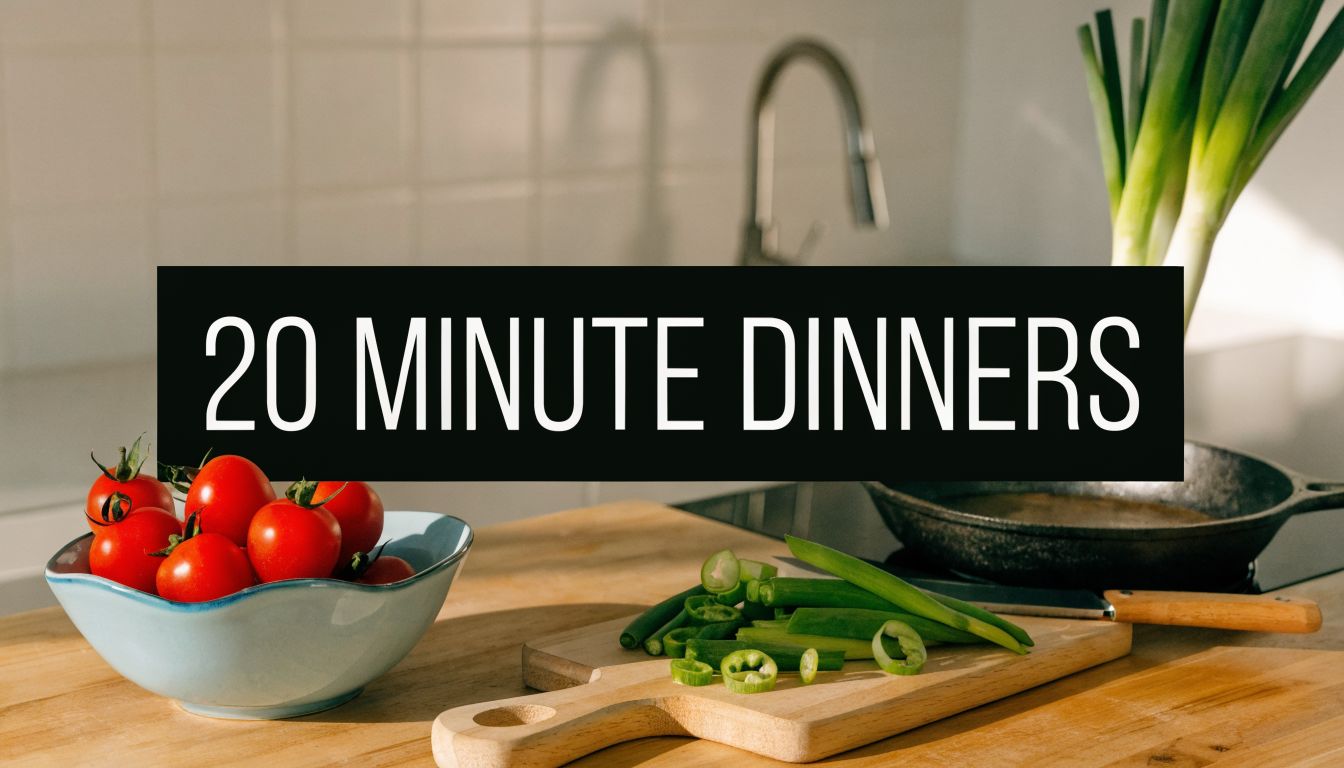
The best 20 minute dinners use fast-cooking proteins, prepped vegetables, and simple formats like sheet pans, stir-fries, bowls, tacos, and egg dishes. A practical target is one protein, one vegetable, and one smart carb or fiber source, built from ingredients that cook quickly or are already prepared.
It’s 5 p.m., you’re hungry, and your standards are fighting your schedule. You want something that tastes like dinner, not a random snack plate, but you also don’t want to spend your whole evening chopping, simmering, and cleaning pans.
That tension is exactly why 20 minute dinners matter. Circana’s Future of Dinner report found that half of all dinners in the United States are prepared in 15 minutes or less, and 81% of evening meals come from home, which tells you the weeknight problem isn’t whether people care about home cooking. It’s whether dinner can fit real life according to Circana’s Future of Dinner report.
A common mistake is treating quick dinners like a recipe search problem. It’s usually a systems problem. If your kitchen has a few reliable proteins, a couple of shortcut vegetables, a starch that cooks fast, and one or two sauces you like, dinner stops feeling fragile.
This list focuses on what holds up on rushed weeknights. You’ll get meals that are fast enough to repeat, flexible enough to adapt, and structured enough to support goals like weight loss, maintenance, muscle gain, or plant-forward eating. If you like building from ready-made components, these BodyBuddy meal ideas show the same principle in a high-protein format.
1. Sheet pan salmon with roasted vegetables
Salmon is one of the fastest ways to make dinner feel intentional. Put fillets on a hot tray with vegetables that roast at roughly the same pace, and you’ve got protein, color, and enough substance to count as a real meal without juggling multiple burners.
A reliable combination is salmon with broccoli and bell peppers. If you want something heartier, use Brussels sprouts and sweet potato cut small. If you want brighter flavor, go with bok choy and snap peas plus a soy-ginger glaze added near the end.
How to keep it under 20 minutes
The oven has to do the heavy lifting. Preheat the sheet pan so vegetables start browning right away, and cut everything to a similar size so you don’t end up with half-charred peppers and undercooked roots.
- Pat the salmon dry: Moisture blocks browning and gives you softer texture.
- Use parchment paper: Cleanup stays easy, which matters on weeknights.
- Choose quick vegetables: Broccoli florets, peppers, zucchini, asparagus, and thin-cut Brussels sprouts all work better than large chunks of dense produce.
For macro planning, salmon gives you a strong protein anchor plus fat that adds staying power. Pair it with a starchy vegetable if you need more training fuel, or keep it lighter with green vegetables and a lemon-herb finish if your goal is a leaner plate.
Fish cooks fast, but overcooks fast too. Pull salmon when it flakes easily and still looks moist in the center.
What doesn’t work is mixing in vegetables with very different cook times unless you know how to stagger them. Large sweet potato cubes and tender snap peas shouldn’t go into the oven together at the same minute.
2. Stir-fry with pre-cut vegetables and protein
Stir-fry is what I recommend when someone wants speed without giving up variety. It’s one of the few 20 minute dinners that can feel different every time, even when the structure stays the same.

Chicken and broccoli works. So do shrimp with asparagus, tofu with mixed vegetables, or thin-sliced beef with peppers. The fastest version uses pre-cut vegetables and a protein that’s already portioned when it hits the pan.
What makes stir-fry actually fast
The pan should be hot before the food goes in. If you’re still slicing onions after the oil is heating, the dinner starts dragging.
- Prep first: Get every ingredient and sauce component ready before cooking.
- Keep protein dry: Wet chicken or tofu steams instead of sears.
- Don’t overcrowd the skillet: If the pan is packed, the vegetables soften instead of getting that crisp edge.
For a practical example, a honey-garlic profile is easy to repeat because it works with chicken, shrimp, and tofu. This honey garlic chicken stir-fry recipe fits that weeknight pattern well.
A stir-fry also handles dietary swaps cleanly. Use rice for a classic version, cauliflower rice if you want lower carbs, or noodles if you need something more filling. The weakness is sauce control. A heavy bottled sauce can turn a balanced dinner into a salt-heavy pan of vegetables and sugar. Keep the sauce light, and let the protein and aromatics do more of the work.
If you want a quick visual on timing and pan setup, this short demo helps:
3. Pasta with quick marinara and lean protein
Pasta earns a place on this list because it’s familiar, forgiving, and easy to rebalance. The trick is not treating it like a bowl of noodles with sauce. Build it like a full dinner.

Whole-wheat penne with ground turkey and mushrooms works well. Lentil or chickpea pasta makes sense when you want more protein and fiber. Turkey meatballs with zucchini noodles can also work if you’re going lighter, though using pre-cooked meatballs keeps the timing realistic.
How to stop pasta from becoming a carb-only dinner
Use the pasta as one part of the plate, not the whole plate. Brown the protein separately, warm a good marinara, and fold in greens during the last part of cooking.
- Cook to al dente: Better texture and easier portion control.
- Reserve a little pasta water: It helps the sauce coat instead of clump.
- Add vegetables late: Spinach, kale, peas, or zucchini don’t need much time.
This is one of the best formats for macro adjustment. Need more fuel after training? Increase the pasta portion. Need a lighter dinner? Keep the protein and vegetables generous, and use a smaller serving of noodles. What doesn’t work is relying on jarred sauce alone for flavor and structure. Without enough protein or vegetables, pasta feels filling for a short window and then flat.
4. Grain bowls with rotisserie chicken
Rotisserie chicken is one of the most useful weeknight ingredients because it removes the slowest part of dinner. Once the protein is handled, the rest is assembly.
A good bowl starts with a grain you cooked earlier or can reheat quickly. Brown rice, quinoa, farro, and microwaveable grain packs all fit. Add shredded chicken, vegetables, something creamy or crunchy, and a dressing with acid.
Why bowls hold up over a full week
You can change the flavor without changing the workflow. One night can be lemon-herb with kale and cucumber. Another can be tahini with sweet potato and greens. Another can lean soy-ginger with edamame and shredded carrots.
For a ready-made version of that structure, this lemon herb chicken bowl shows how clean the format can be.
Practical rule: Shred the rotisserie chicken as soon as you get home. Cold whole birds are much more annoying to use later.
This approach also fits how many households eat now. The same Circana report noted that more than one-third of dinners are driven by a need for connectedness, which is one reason bowl meals work so well. Everyone can build from shared components while still adjusting the final plate to their own preferences, all within a short cooking window.
The biggest mistake is overcomplicating toppings. Three or four strong add-ins beat eight mediocre ones every time.
5. Egg-based dinners like frittatas, scrambles, and omelets
Eggs solve dinner fast because they cook in minutes and work with almost any vegetable you already have. They’re especially useful on nights when the fridge looks scattered rather than fully stocked.
A scramble with turkey sausage and peppers is substantial enough for a weeknight. A frittata with mushrooms, asparagus, and herbs feels more polished. Shakshuka works when you have tomato sauce or crushed tomatoes and want something warm and spoonable.
When eggs are the right call
Egg-based dinners work best when speed matters more than leftovers. A scramble or omelet is excellent fresh and less impressive later. A frittata gives you a bit more runway if you want a next-day lunch.
- Use medium heat: High heat turns eggs rubbery fast.
- Cook vegetables first: Wet vegetables release water and dilute texture if they go in too late.
- Don’t overfill the pan: Too many mix-ins make omelets tear and scrambles dense.
For macro strategy, eggs pair well with extra egg whites when you want more protein without making the meal too heavy. Add potatoes or toast if you need more energy. Skip them and lean into vegetables and avocado if you want a lower-carb dinner. What doesn’t work is trying to make eggs do everything by themselves. They usually need one strong supporting component to feel like dinner, not breakfast.
6. Tacos with seasoned ground meat or beans
Tacos are one of the easiest ways to feed people with different appetites and preferences. You can keep the base simple, then let everyone scale up or down with toppings.
Ground turkey with black beans and avocado is a strong default. Beef with onion and salsa verde is richer and more classic. Lentils or seasoned beans make sense for a plant-forward version that still feels filling.

How tacos stay healthy instead of chaotic
The filling matters more than the shell. If the protein is well seasoned and you include beans, cabbage, pico, or avocado, the meal has enough substance to satisfy without becoming a pile of cheese and sour cream.
- Prep toppings first: Taco meat cooks quickly, so the bottleneck is usually assembly.
- Make your own seasoning blend: Chili powder, cumin, garlic, and paprika give you more control.
- Use multiple formats: Tortillas for some, lettuce wraps or taco bowls for others.
This style of dinner also works well for families. Shared-format meals matter because family dinner has become harder to sustain. The Scramble notes that family dinner frequency has declined over the past two decades and that only half of dinners are eaten together, even though most parents still value them highly, which makes a flexible, fast format like tacos especially useful on busy nights in The Scramble’s family dinner overview.
What doesn’t work is treating tacos like a free-for-all. Keep one protein, one bean or vegetable, one creamy element, and one fresh topping. That’s enough.
7. Curry in a hurry
Quick curries are ideal when you want depth without a long ingredient list. A good curry paste, coconut milk, and a fast protein can produce a dinner that tastes far more involved than it is.
Shrimp with red curry and peppers comes together quickly. Chickpeas with cauliflower and spinach work well for a meatless version. Chicken with green curry, eggplant, and basil is another dependable option if the chicken is cut small.
Where people lose time with curry
They build everything from scratch on a Tuesday. Weeknight curry works because the paste carries most of the flavor base.
Sauté the paste briefly before adding liquid so it blooms in the fat. Add vegetables in order of cook time, and finish with lime or herbs for brightness. If you want a lighter feel, use less coconut milk and stretch it with broth.
This category is also a good answer to the rise in convenience eating. Mordor Intelligence projects the North America ready meals market at USD 33.57B in 2026, growing to USD 40.6B by 2031, which reflects how strongly busy schedules keep pushing people toward convenience formats in its North America ready meals market outlook.
A fast homemade curry works when you borrow the convenience logic without giving up control. What doesn’t work is overcrowding the pan with too many vegetables and expecting them all to cook evenly in coconut milk.
8. Roasted chicken breast with quick-cook vegetables
Chicken breast is often criticized for being boring, but technique holds the key. Roast it hard and fast, pair it with vegetables that caramelize quickly, and it becomes one of the most reliable high-protein weeknight dinners you can make.
Lemon-garlic chicken with asparagus and cherry tomatoes is especially efficient. Paprika-spiced chicken with green beans or mushrooms also works well. If you want sweet potato on the same pan, cut it small enough to finish on time.
The details that keep chicken breast juicy
Thickness matters more than marinade. If one side of the breast is much thicker than the other, you’ll get dry edges and an underdone center unless you pound it more evenly.
- Use high heat: You want quick browning, not slow dehydration.
- Season assertively: Chicken breast needs enough salt, acid, herbs, or spices to stay interesting.
- Rest before slicing: Even a short rest helps keep moisture in the meat.
This is one of the easier dinners to align with body-composition goals because the protein is straightforward and the sides are easy to portion. What doesn’t work is pretending plain chicken and plain broccoli are enough to make the meal satisfying long term. Add a sauce, citrus finish, or spice blend people want to eat again.
9. Quick soup or broth-based meals
Soup is underrated in the 20 minute dinner category because many people assume it has to simmer for ages. It doesn’t, if the broth is good and the add-ins cook quickly.
Chicken broth with spinach, carrots, herbs, and noodles is simple and effective. Miso with tofu and green onions is even faster. A tomato-zucchini base with white beans gives you a lighter but still substantial option.
How to make quick soup feel complete
A broth-based dinner needs contrast. If everything is soft and pale, the bowl feels thin even when it’s nourishing.
Use one protein, one or two vegetables, and one element that gives body, such as noodles, beans, or potatoes. Finish with herbs, citrus, chili crisp, grated cheese, or olive oil depending on the style.
If you want a simple model, this healthy zucchini tomato soup shows how a fast soup can still read as a full dinner.
A quick soup succeeds when the broth tastes seasoned before the extras go in. If the base is bland, no garnish will rescue it.
What doesn’t work is trying to make raw chicken cook fully in a lightly simmering broth while dense vegetables soften at the same time. Use pre-cooked protein or cut it very small.
10. Sandwiches and wraps with quality proteins
Some nights, the best dinner is the one you don’t cook. Sandwiches and wraps absolutely count if the ingredients are good and the structure is balanced.
Think roasted turkey, avocado, sprouts, and mustard on whole-grain bread. Or rotisserie chicken with hummus, cucumber, and greens in a wrap. Smoked salmon with cream cheese, dill, and capers can also work when you want something fast that still feels adult.
How to build a sandwich that actually holds you
The bread can’t be the entire meal. Start with protein, then add produce, then a spread that adds moisture and flavor.
- Toast the bread: Better texture, less sogginess.
- Use crisp vegetables: Lettuce, cucumber, red onion, pickles, or sprouts give contrast.
- Pair with a side if needed: Soup, cut vegetables, or fruit can round it out quickly.
This is one of the best 20 minute dinners for people who routinely skip dinner prep and end up ordering out. It’s also highly portable, which helps if dinner is happening between activities instead of around a table. What doesn’t work is relying on low-quality deli meat and calling it healthy by default. Ingredient quality shows up immediately in meals this simple.
11. Steak with garlic butter and roasted vegetables
Steak can fit a quick dinner if you choose the right cut and keep the sides simple. Sirloin, flank, and thinner cuts make more sense for weeknights than anything especially thick.
A cast-iron sear with garlic-herb butter and roasted green beans is fast and satisfying. Mushrooms and asparagus are good partners because they cook quickly and match the richer flavor profile.
Where steak helps and where it can overshoot
This is one of the most satiating meals on the list, especially for people focused on higher protein intake. It can also get heavy fast if you stack it with too much butter, dense starch, and large portions.
Sear the steak hard, flip once, and let it rest. Meanwhile, keep the vegetables simple and bright. A squeeze of lemon on the greens or mushrooms helps balance the richness.
For muscle-gain or maintenance phases, steak dinners can be useful because they’re easy to build around. For lighter goals, portioning matters more. What doesn’t work is trying to cook a very thick steak in a hurry and expecting an even result.
12. Buddha bowls with legumes and raw components
Buddha bowls are assembly meals with enough flexibility to stay interesting all week. They’re especially effective if you want more plant-forward dinners without settling for a light salad that leaves you hungry.
A chickpea bowl with kale, roasted sweet potato, avocado, and tahini works well. So does edamame with rice, cucumber, seaweed, and ginger dressing. Black lentils with quinoa and raw vegetables are another solid base.
Why this format works for vegetarian eating
Legumes bring protein and fiber. Seeds, nuts, tofu, or grains can round out the bowl depending on your preferences. The result is a meal that feels substantial without requiring much actual cooking on the night itself.
If you want a more guided setup for this style, the vegetarian meal planning options from AI Meal Planner are directly relevant.
This category also highlights a common gap in quick-dinner content. Many recipe lists focus on speed but don’t help readers adjust meals for macro targets, portion needs, or specific goals. That’s where bowl meals stand out. They’re easy to scale up for higher energy needs or scale down while keeping protein and fiber in place.
Build bowls in layers. Grain or greens first, protein second, then vegetables, crunch, and dressing. That keeps texture cleaner and portions easier to control.
What doesn’t work is adding too many raw, watery ingredients without a stronger anchor like legumes, tofu, or grains.
13. Sheet pan chicken fajitas
Chicken fajitas are one of the highest-return sheet pan dinners because the ingredient list is short, the cleanup is minimal, and the final meal can be served several ways.
Slice chicken breast into strips, add peppers and onions, season aggressively, and roast at high heat. Once everything comes out, you can serve it in tortillas, on rice, over lettuce, or with beans.
The trick is heat and spacing
Fajitas need enough oven heat to char at the edges. If the pan is crowded, the vegetables release water and soften instead of caramelizing.
- Cut strips evenly: Similar width means similar cook time.
- Use a very hot oven: Browning creates most of the flavor.
- Add finishing acidity: Lime and cilantro sharpen everything at the end.
This is one of the easiest meals to repeat because leftovers stay useful. The chicken and peppers can become bowls, wraps, or salads the next day. What doesn’t work is slicing vegetables too thick and expecting the same quick result.
14. Quick-seared fish with lemon and herbs
White fish is one of the fastest proteins you can cook. Cod, tilapia, and halibut all respond well to a quick sear, a little fat, and a bright finish.
Cod with lemon-caper butter and broccoli is a good standard. Tilapia with garlic and parsley plus sautéed zucchini is another easy option. If you want a richer fish, salmon can also be pan-seared instead of roasted.
How to avoid the most common fish mistake
The pan needs to be ready first, and the fish needs to be dry. If you put damp fillets into lukewarm oil, they stick, steam, and break apart.
Cook fish mostly untouched until the crust develops. Then finish with lemon, herbs, or a small amount of butter. Because fish is delicate, sides should stay simple.
This dinner is ideal for nights when you want something light but not unsatisfying. What doesn’t work is pairing a mild fish with bland vegetables and no acid. Fish needs contrast to feel complete.
15. Slow cooker or Instant Pot prep-ahead for quick dinner completion
This is the best loophole in the whole category. The cooking may happen earlier, but the dinner is still weeknight-fast when the final assembly takes only a few minutes.
Pulled chicken for tacos is a classic example. Chili with toppings, carnitas with slaw, or beef stew with a quick side all fit. The key is that the heavy work happens before dinner pressure kicks in.
Why prep-ahead beats decision fatigue
When dinner is already mostly made, you stop negotiating with yourself. You’re not deciding whether to cook. You’re deciding how to finish and serve.
For households stretched on time, that matters. Quick dinners support real eating habits at home, and that’s increasingly important when home cooking competes with takeout and restaurant spending. A prep-ahead system keeps home meals realistic without requiring nightly effort.
The trade-off is planning. This method only works if you load the cooker in the morning or prep the night before. What doesn’t work is buying a slow cooker and expecting it to fix dinner on its own without any routine around it.
20-Minute Dinners: 15-Item Comparison
| Dish | 🔄 Complexity | ⚡ Resources & Time | ⭐ Expected Outcomes | 📊 Ideal Use Cases | 💡 Key Advantage / Tip |
|---|---|---|---|---|---|
| Sheet Pan Salmon with Roasted Vegetables | Moderate, simple assembly, oven timing | Medium, oven, quality salmon, 20–30 min; higher cost | Balanced macros, high omega‑3, high satiety | Health‑conscious professionals, muscle gain, weeknights | One‑pan cleanup; pat salmon dry for crisp skin |
| Stir‑Fry with Pre‑Cut Vegetables and Protein | High, high‑heat technique, timing skill | Fast, wok/skillet, pre‑cut veg or prep, 15–18 min; pre‑cut cost premium | Nutrient retention, high protein, customizable | Meal preppers, quick family dinners, varied diets | Mise en place essential; use high heat for wok hei |
| Pasta with Quick Marinara and Lean Protein | Low, boil and combine, minimal technique | Medium, stovetop, store sauce, ~20 min; budget‑friendly | Comfort meal, moderate protein, higher carbs | Families, budget meals, weeknights needing familiarity | Reserve pasta water; cook al dente for better satiety |
| Grain Bowls with Rotisserie Chicken | Low, mostly assembly; grains if not prepped | Low–Medium, rotisserie chicken, grains, 15–20 min or pre‑cooked | Modular macros, high protein (if chicken), reusable comps | Meal prep, ingredient reuse, busy professionals | Cook grains in bulk; shred chicken for fast assembly |
| Egg‑Based Dinners (Frittatas, Scrambles, Omelets) | Low–Medium, heat control matters | Very Fast, one pan, 10–15 min; very low cost | Complete protein, highly satiating, nutrient dense | Keto/paleo followers, quick muscle maintenance | Medium heat and minimal stirring for best texture |
| Tacos with Seasoned Ground Meat or Beans | Low, simple seasoning and cook | Very Fast, stovetop, 8–10 min; tortillas & toppings | Quick balanced meal, highly modular macros | Family meals, customizable diets, quick dinners | Make seasoning at home to control sodium |
| Curry in a Hurry | Low–Medium, uses paste, moderate technique | Fast, curry paste, coconut milk, 15–18 min; calorie‑dense | Complex flavor, anti‑inflammatory components | Weeknights needing bold flavors, adaptable diets | Sauté paste first; finish with lime for brightness |
| Roasted Chicken Breast with Quick‑Cook Vegetables | Medium, temperature precision required | Medium, oven, thermometer, ~20 min; batch‑friendly | Lean protein, high satiety, caramelized veg flavors | Fitness‑focused meal prep, sustainable weight loss | Brine and use thermometer for consistent juiciness |
| Quick Soup or Broth‑Based Meals | Low, simple pot technique, seasoning focus | Fast, pot, quality broth, 12–15 min | Hydrating, collagen benefits, light but filling | Illness, hydration goals, easy meal prep | Use bone broth for nutrients; season in layers |
| Sandwiches and Wraps with Quality Proteins | Very Low, assembly only | Very Fast, no cook, 5–7 min; ingredient cost can be high | Portable, macros visible, may be less warm/satisfying | Grab‑and‑go, busy professionals, lunches | Toast bread; layer spreads and proteins to avoid sogginess |
| Steak with Garlic Butter and Roasted Vegetables | Medium–High, searing skill & temp control | Medium, cast iron, quality cut, 12–14 min; expensive | Highest protein quality, high satiety, rich flavor | Muscle‑gain focus, special dinners | Preheat cast iron; rest steak 5 minutes for juiciness |
| Buddha Bowls with Legumes and Raw Components | Low, assembly if legumes prepped | Low, assembly, needs pre‑cooked legumes; portable | High fiber, micronutrient‑dense, plant protein (lower g) | Plant‑based diets, weight‑loss, colorful meal prep | Cook legumes in bulk; keep dressing separate |
| Sheet Pan Chicken Fajitas | Low–Medium, uniform cutting, one‑pan roast | Fast, oven, 12–15 min active; minimal cleanup | High protein, veggie‑forward, batchable | Family meals, meal prep, customizable spice levels | Cut uniformly; high heat for quick caramelization |
| Quick‑Seared Fish with Lemon and Herbs | Medium, careful short cooking | Very Fast, pan, 8–10 min; fish quality matters | Lean, heart‑healthy protein, elegant presentation | Cardio health focus, fast refined dinners | Pat fish dry and avoid moving for crust formation |
| Slow Cooker / Instant Pot Prep‑Ahead | Low–Medium, planning required, little evening work | Low evening effort, device, morning prep; final 5–10 min | Tender proteins, ready‑to‑finish meals, batch‑friendly | Very busy professionals, planned weekly meals | Prep night before; use liners and sear proteins first |
How can you make 20-minute dinners a sustainable habit
The key isn't more recipes; it's fewer points of friction. The easiest way to make 20 minute dinners stick is to reduce how many decisions happen between getting hungry and eating. That means keeping a small rotation of dependable meals, buying ingredients that pull double duty, and accepting that weeknight cooking should be efficient before it’s creative.
Start with repeatable meal formats rather than isolated recipes. Sheet pan meals, stir-fries, tacos, bowls, soups, egg dishes, wraps, and quick pasta all solve the same problem in different ways. Once you know the structure, you can swap ingredients based on what’s in the fridge, what fits your goals, or what your household will eat.
Keep your kitchen stocked for speed. Rotisserie chicken, eggs, frozen shrimp, canned beans, broth, microwaveable grains, pre-washed greens, pre-cut vegetables, tortillas, and a few sauces cover a surprising amount of ground. These aren’t shortcuts in a negative sense. They’re tools that make home cooking realistic on the nights when time and energy are limited.
The family and schedule context matters too. The Scramble highlights that many families want more shared dinners but run into scheduling pressure, short mealtimes, and the logistics of feeding different preferences. Fast dinners help because they reduce the burden of cooking without removing the home meal itself. They give you a better chance of sitting down, even if dinner only lasts a short window.
The most effective system also accounts for your nutrition goal. If you’re trying to lose weight, quick dinners need protein and volume so you don’t end the night snacking. If you’re aiming for muscle gain, keep a reliable carb source in the rotation and don’t underportion the protein. If you’re managing a vegetarian pattern, legumes, tofu, grains, seeds, and smart sauces make fast meals much easier to sustain.
One of the biggest gaps in typical 20 minute dinner content is macro structure. Plenty of recipe lists tell you what’s fast. Far fewer tell you how to make that fast meal align with weight loss, maintenance, or performance nutrition. That’s why modular meals tend to outperform rigid recipes in real life. A bowl, taco plate, pasta skillet, or sheet pan dinner is easy to adapt without starting over.
Connectedness matters too. Circana noted that more than one-third of dinners are shaped by a need for connection, which helps explain why shared, customizable dinners work so well. Tacos, grain bowls, fajitas, and soups are efficient, but they also make it easier for people to gather around the same meal without needing everyone to eat the exact same thing.
A simple weekly system looks like this:
- Choose three dinner formats: For example, one bowl, one sheet pan meal, and one skillet meal.
- Reuse ingredients on purpose: Peppers can go into fajitas, stir-fry, and omelets. Rotisserie chicken can become bowls, wraps, and soup.
- Keep one backup meal ready: Eggs, frozen vegetables, and bread or tortillas can rescue a busy night.
- Set a macro anchor: Decide the main protein first, then add vegetables and carbs around it.
If you want to remove even more guesswork, a planning tool can help translate these ideas into an actual weekly system. AI Meal Planner is one option that generates personalized meal plans, calculates macros and calories, and builds grocery lists around your preferences. If you want that setup done for you, you can start with the AI Meal Planner onboarding flow.
For a useful nutrition complement to these meals, this guide to understanding complete proteins for fitness can help you build stronger plant-based or mixed-protein dinners.
If you want fast dinners that also fit your calories, macros, dietary preferences, and grocery routine, AI Meal Planner can build a personalized weekly plan around exactly that. It’s a practical way to turn 20 minute dinners from a good intention into a repeatable system.
AI-powered nutrition
Get Your Personalized Meal Plan
AI creates the perfect meals for your goals, lifestyle, and taste.
Start Your Journej