What does a healthy 1800 calorie meal plan look like?
An 1800 calorie meal plan consists of three main meals and one or two snacks. A typical distribution is a 400-500 calorie breakfast, a 500-600 calorie lunch, a 500-600 calorie dinner, and one or two snacks totaling 100-300 calories. The key is balancing protein, complex carbohydrates, and healthy fats to ensure you feel full and energized throughout the day.
This guide provides a practical, real-world approach to building a meal plan from the ground up. You’ll see exactly how an 1800-calorie target can be a powerful tool for achieving moderate weight loss or maintaining a healthy weight—without feeling like you're on a "diet." We'll explore how to make this framework your own, make smart food choices, and use simple prep strategies to make healthy eating feel like the easiest option.
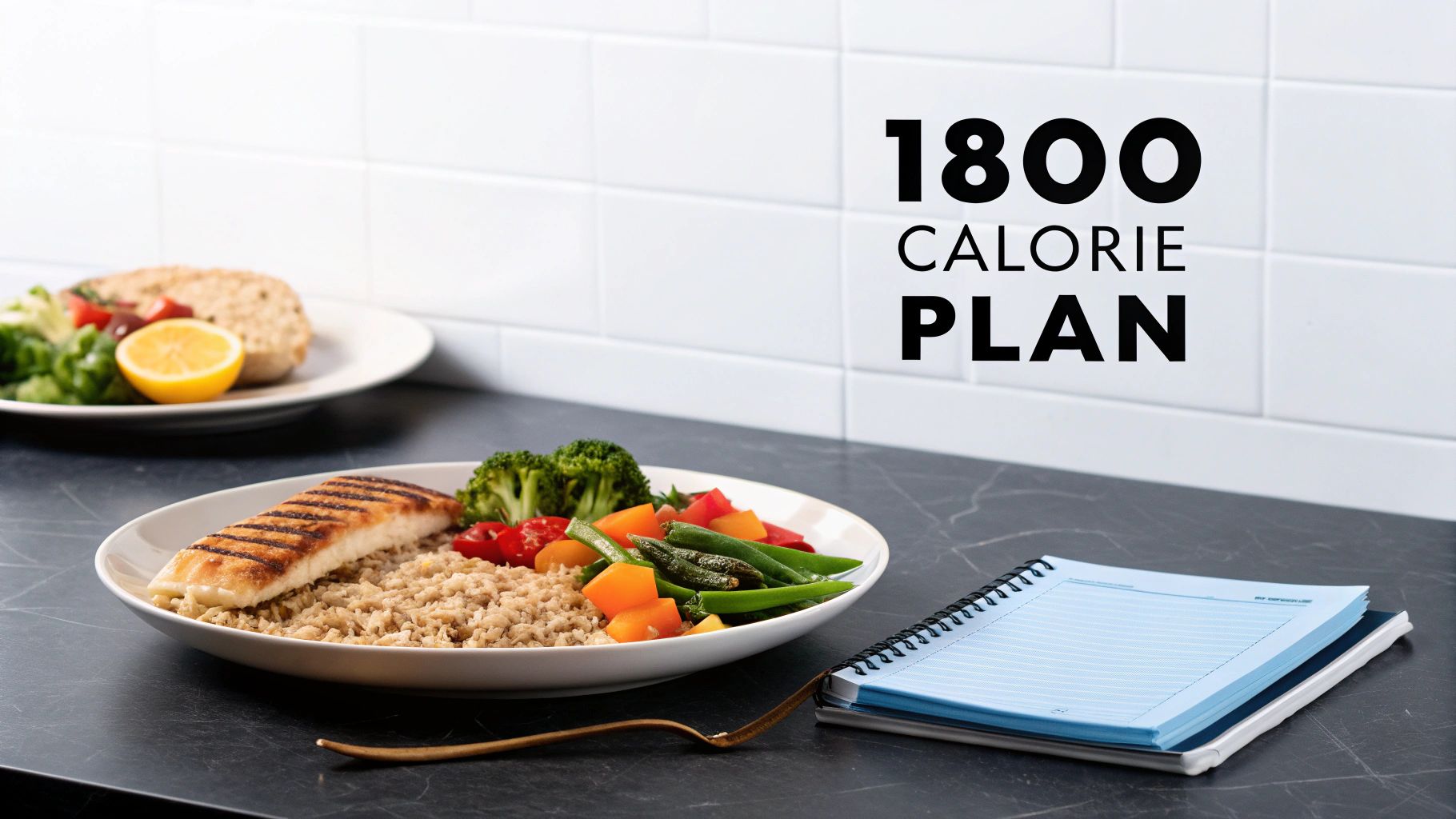
Why is an 1800 calorie plan effective?
An 1800 calorie meal plan is effective because it strikes a balance between providing sufficient energy and creating a gentle calorie deficit for weight management. This approach supports sustainable progress without the extreme hunger or deprivation associated with very low-calorie diets.
Here’s why this approach works so well for many people:
- Sustainable Weight Management: For many individuals, an 1800-calorie plan creates a mild calorie deficit that promotes steady, consistent weight loss without triggering extreme hunger or metabolic slowdown.
- Balanced Nutrition: This calorie level provides ample room to fit in all the essential macronutrients and micronutrients your body needs to thrive, supporting overall health.
- Flexibility and Adaptability: It's not a rigid number. This calorie target can be easily adjusted to accommodate different dietary needs, activity levels, and personal food preferences.
The goal is to build a plan that works even on your busiest days, making healthy choices the path of least resistance.
Who is an 1800 calorie diet right for?
An 1800-calorie meal plan is often a suitable target for moderately active adult women aiming for steady weight loss, or for less active men looking to maintain their current weight. It’s a versatile starting point, but its effectiveness depends on your individual goals, body composition, and daily activity level.
For many women, this calorie target creates a gentle energy deficit perfect for losing about 0.5 to 1 pound per week. This pace is manageable and helps prevent the extreme hunger that can derail long-term success. For some men with smaller frames or sedentary lifestyles, it can be the ideal level for weight maintenance.
How do I know if this calorie level fits my lifestyle?
The key is to align your energy intake (calories eaten) with your energy expenditure (calories burned). An 1800-calorie diet is most effective when it lines up with what your body actually needs.
Consider these examples:
- For Weight Loss: A woman who is 5'5", weighs 160 pounds, works a desk job but exercises 3-4 times a week would likely find 1800 calories creates the ideal deficit for gradual fat loss.
- For Weight Maintenance: A man who is 5'8", weighs 155 pounds, and is lightly active might discover that 1800 calories is precisely what his body needs to maintain his current physique.
- For Building Healthy Habits: Someone transitioning from a diet high in processed foods can use the structure of an 1800-calorie plan to learn portion control and how to build balanced, satisfying meals.
Key Takeaway: An 1800-calorie plan is a great tool when it's set just below your total daily energy needs for weight loss, or right at that number for maintenance. Think of it as a solid starting point, not an unbreakable rule.
When is 1800 calories not enough?
This calorie target won't work for everyone. Highly active people, such as competitive athletes or individuals with physically demanding jobs, will need significantly more fuel to power their performance and recovery.
Similarly, taller men or anyone focused on significant muscle gain will need more energy. For instance, a diet designed for muscle building often requires a much higher caloric intake, as seen in some high-protein meal plans.
According to the official U.S. Dietary Guidelines, the recommended range for adult women is typically 1,800–2,400 calories, while for men, it's 2,000–3,200, depending on age and activity. This places an 1800-calorie diet at the lower end for women and below average for most men, explaining its common use in female weight loss programs.
How should I structure my meals and macronutrients?
Structuring your 1800 calories effectively is crucial for staying energized and avoiding hunger. A successful plan involves strategic meal timing and a macronutrient split tailored to your goals. Many people find success by eating three main meals (400-600 calories each) and one or two snacks (100-200 calories each).
A well-structured plan is the difference between feeling satisfied and feeling deprived. How you time your meals can influence everything from workout performance to late-night cravings.
Does meal timing matter?
Yes, meal timing can help regulate appetite and prevent late-night snacking that often derails progress. By fueling your body when you're most active, you provide a steady stream of energy when it's needed most. Nutrition experts often suggest consuming about 40–45% of your daily calories in your morning and early afternoon meals. On an 1800-calorie plan, that’s about 720–810 calories before mid-afternoon.
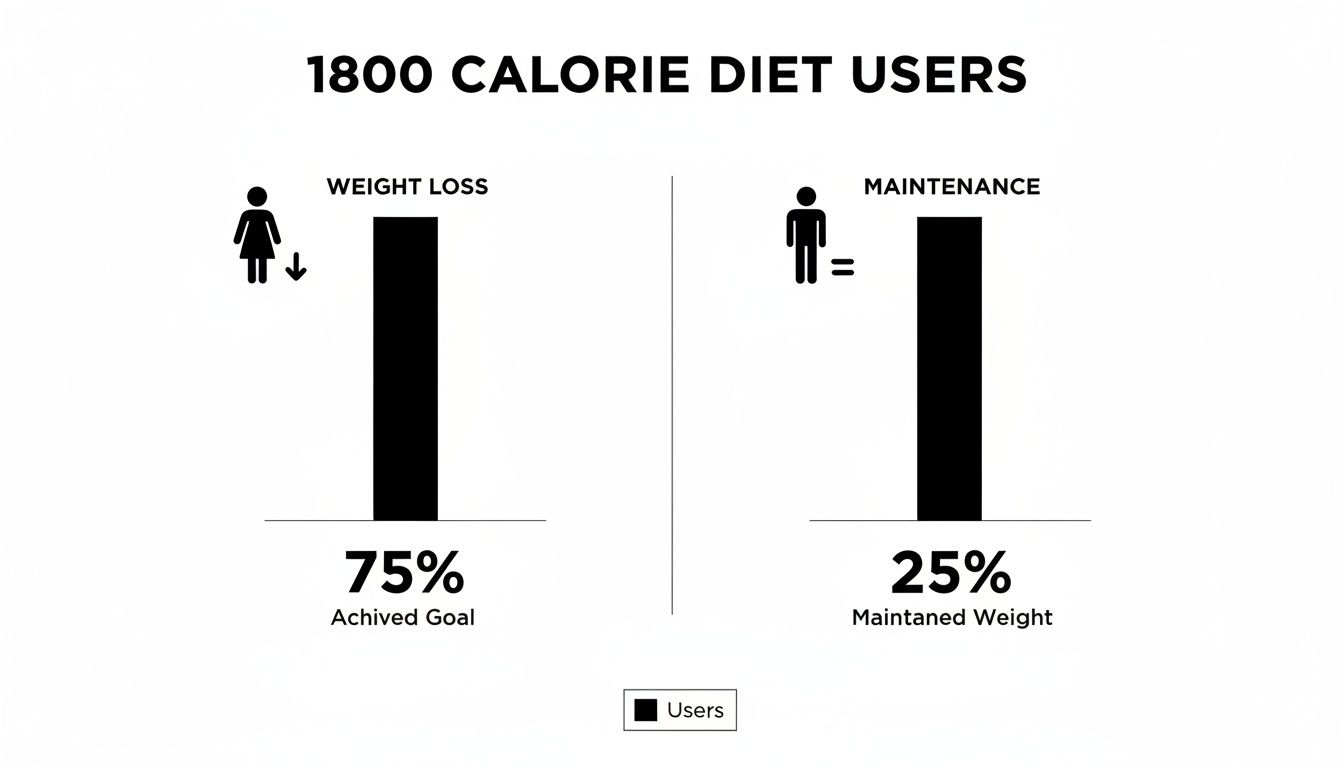
As this infographic shows, an 1800-calorie plan is a versatile target that can be adapted for different goals, whether it's weight loss for moderately active women or weight maintenance for less active men.
How do I tailor my macronutrients?
After establishing meal timing, the next step is to adjust your macronutrients—the ratio of protein, carbohydrates, and fats. Your ideal split depends on your goals, activity level, and food preferences.
The Balanced Diet Approach
This is the go-to method for general health and sustainable weight management. It provides a healthy mix of all three macronutrients.
- Protein (20-25%): Aim for 90-113 grams per day to maintain muscle and feel full.
- Carbohydrates (45-50%): This is about 203-225 grams daily from sources like whole grains, fruits, and veggies for lasting energy.
- Fats (30-35%): Get 60-70 grams per day from sources like avocados, nuts, and olive oil for hormone health.
This split is versatile and easy to maintain. You can explore examples in our balanced meal plans.
The Higher-Protein Approach
If your goal is fat loss while preserving muscle, or if you struggle with hunger, increasing your protein can be beneficial.
- Protein (30-35%): This increases your target to 135-158 grams per day, which boosts satiety and metabolism.
- Carbohydrates (35-40%): Carbs drop slightly to 158-180 grams daily, still providing ample fuel.
- Fats (30%): Healthy fats remain around 60 grams to support bodily functions.
The table below shows how these approaches compare.
Sample Calorie and Macro Distribution for an 1800-Calorie Day
| Meal | Balanced Diet (Calories / Protein / Carbs / Fat) | High-Protein Diet (Calories / Protein / Carbs / Fat) |
|---|---|---|
| Breakfast | 450 calories / 25g P / 55g C / 15g F | 450 calories / 40g P / 40g C / 15g F |
| Lunch | 500 calories / 30g P / 60g C / 18g F | 500 calories / 45g P / 40g C / 18g F |
| Dinner | 550 calories / 30g P / 65g C / 20g F | 550 calories / 40g P / 45g C / 20g F |
| Snack | 300 calories / 15g P / 35g C / 12g F | 300 calories / 20g P / 25g C / 12g F |
| Total | 1800 Cal / 100g P / 215g C / 65g F | 1800 Cal / 145g P / 150g C / 65g F |
As you can see, the total calories are the same, but shifting the macros can significantly change the focus of your meals to better align with your specific goals.
Expert Tip: Don't strive for perfection. The best plan is one you can follow consistently. Listen to your body and adjust your macros if you're constantly hungry or low on energy.
What is a sample 7-day 1800 calorie meal plan?
This sample 7-day plan shows what a balanced 1800 calorie meal plan looks like in practice. It’s built around simple, delicious, and easy-to-prepare meals.
Think of this as a flexible template, not a strict rulebook. The goal is to learn the principles of building balanced meals so you can create your own variations.
Your Week at a Glance
This table lays out the meals for each day, with easy swap ideas to keep things interesting and accommodate different dietary preferences.
Sample 7-Day 1800 Calorie Meal Plan Menu
| Day | Breakfast (approx. 400 cal) | Lunch (approx. 550 cal) | Dinner (approx. 600 cal) | Snack (approx. 250 cal) |
|---|---|---|---|---|
| Day 1 | Oatmeal Power Bowl | Grilled Chicken Salad | Baked Salmon with Sweet Potato & Brussels Sprouts | Greek Yogurt & Banana |
| Day 2 | Veggie & Avocado Omelet | Hearty Lentil Soup & Salad | Lean Turkey Stir-fry with Brown Rice | Almonds & Apple |
| Day 3 | Green Protein Smoothie | Quinoa & Chickpea Bowl | Turkey Meatballs with Zucchini Noodles | Cottage Cheese & Pineapple |
| Day 4 | Avocado Toast with Eggs | Leftover Turkey Meatballs | Sheet Pan Shrimp Fajitas | Hummus with Veggie Sticks |
| Day 5 | Greek Yogurt Parfait | Tuna Salad Pita | Sirloin Steak with Asparagus & Quinoa | Protein Shake |
| Day 6 | Protein Pancakes with Berries | Chicken & Black Bean Burrito Bowl | Homemade Tortilla Pizza | Dark Chocolate & Strawberries |
| Day 7 | Chia Seed Pudding with Mango | Sardine Salad or Chili | Roasted Chicken with Root Vegetables | Orange & Walnuts |
This menu is just a starting point. Feel free to experiment with different vegetables, proteins, and flavors.
Day 1: Kicking Off the Week
Start the week strong with whole foods that provide steady energy.
- Breakfast (410 calories): Oatmeal Power Bowl. Combine 1/2 cup rolled oats, 1 scoop protein powder, 1/2 cup mixed berries, and 1/4 cup chopped walnuts.
- Lunch (515 calories): Grilled Chicken Salad. Use 3 cups mixed greens, 4 oz grilled chicken breast, 1/2 an avocado, and 2 tbsp light vinaigrette.
- Dinner (610 calories): Bake 4 oz salmon. Serve with 1 cup roasted Brussels sprouts (tossed in 1 tbsp olive oil) and 1 medium roasted sweet potato.
- Snack (220 calories): A cup of nonfat Greek yogurt with a small banana.
Day 2: Keeping Up the Momentum
Mix up the flavors to keep things interesting while focusing on nutrient-dense meals.
- Breakfast (420 calories): Veggie Omelet. Scramble 3 large eggs with spinach and mushrooms, served with 1/4 of an avocado and one slice of whole-wheat toast.
- Lunch (540 calories): Hearty Lentil Soup. A large 2-cup serving paired with a side salad.
- Dinner (580 calories): Lean Ground Turkey Stir-fry. Sauté 4 oz lean ground turkey with 2 cups mixed veggies (broccoli, bell peppers) and serve over 3/4 cup cooked brown rice.
- Snack (260 calories): 1/4 cup of almonds and a medium apple.
Day 3: Plant-Powered Wednesday
Lean into more plant-based options, which are naturally high in fiber and micronutrients.
- Breakfast (400 calories): Blend a smoothie with 1 scoop protein powder, 1 cup unsweetened almond milk, 1 cup spinach, 1/2 a banana, and 1 tbsp flax seeds.
- Lunch (560 calories): Quinoa and Chickpea Bowl. Combine 1 cup cooked quinoa, 1/2 cup chickpeas, and 1 cup chopped veggies with a lemon-tahini dressing.
- Dinner (590 calories): Turkey Meatballs with Zucchini Noodles. Serve 4 oz turkey meatballs with 2 cups of zoodles and 1/2 cup marinara sauce.
- Snack (250 calories): One cup of low-fat cottage cheese with 1/2 cup pineapple chunks.
This meal plan is a blueprint. Notice how each meal has a protein, a complex carb, and a healthy fat? That’s the core structure for building satisfying meals on your own.
Day 4: Mid-Week Refuel
Today’s meals are designed to be quick and easy, perfect for a busy schedule.
- Breakfast (390 calories): Two slices of whole-grain toast topped with 1/2 a mashed avocado and two sliced hard-boiled eggs.
- Lunch (550 calories): Leftover Turkey Meatballs and Zucchini Noodles.
- Dinner (600 calories): Sheet Pan Shrimp Fajitas. Toss 4 oz shrimp with 1.5 cups sliced bell peppers and onions. Roast and serve with two corn tortillas and 1/4 cup guacamole.
- Snack (260 calories): 1/4 cup hummus with 1 cup mixed veggie sticks.
Day 5: Finishing the Week Strong
Meals that feel a bit more special help you stick to your plan through the weekend.
- Breakfast (430 calories): Greek Yogurt Parfait. Layer 1 cup Greek yogurt with 1/2 cup mixed berries and 1/4 cup low-sugar granola.
- Lunch (520 calories): Tuna Salad Pita. Mix 3 oz canned tuna (in water) with 1 tbsp Greek yogurt or light mayo. Stuff into a whole-wheat pita with greens.
- Dinner (610 calories): Grill a 4 oz sirloin steak. Serve with 1 cup steamed asparagus and 3/4 cup cooked quinoa.
- Snack (240 calories): A simple protein shake.
Day 6: Flexible Weekend Eating
This day is designed for flexibility to accommodate social plans.
- Breakfast (450 calories): Two Protein Pancakes made with an oat-flour recipe, topped with 1/2 cup fresh blueberries.
- Lunch (530 calories): Chicken and Black Bean Burrito Bowl. Combine 4 oz grilled chicken, 1/2 cup black beans, 1/2 cup corn salsa, and 1 cup cauliflower rice.
- Dinner (580 calories): Homemade Tortilla Pizza. Top a whole-wheat tortilla with sauce, 1/4 cup mozzarella, and veggies, then bake.
- Snack (240 calories): 1 oz dark chocolate (70% or higher) with a handful of strawberries.
Day 7: Rest and Prep for Success
Enjoy comforting meals while you get ready for the week ahead.
- Breakfast (410 calories): Chia Seed Pudding. Prepare the night before by mixing 3 tbsp chia seeds with 1 cup coconut milk. Top with 1/2 cup mango chunks.
- Lunch (540 calories): A large serving of leftover chili or a simple salad topped with 4 oz canned sardines.
- Dinner (620 calories): Roast a 4 oz chicken breast with 1.5 cups root vegetables (carrots, parsnips, potatoes).
- Snack (230 calories): One medium orange and a small handful of walnuts (about 10). This combination is similar to what you might find in Mediterranean meal plans.
How can I meal prep this plan efficiently?
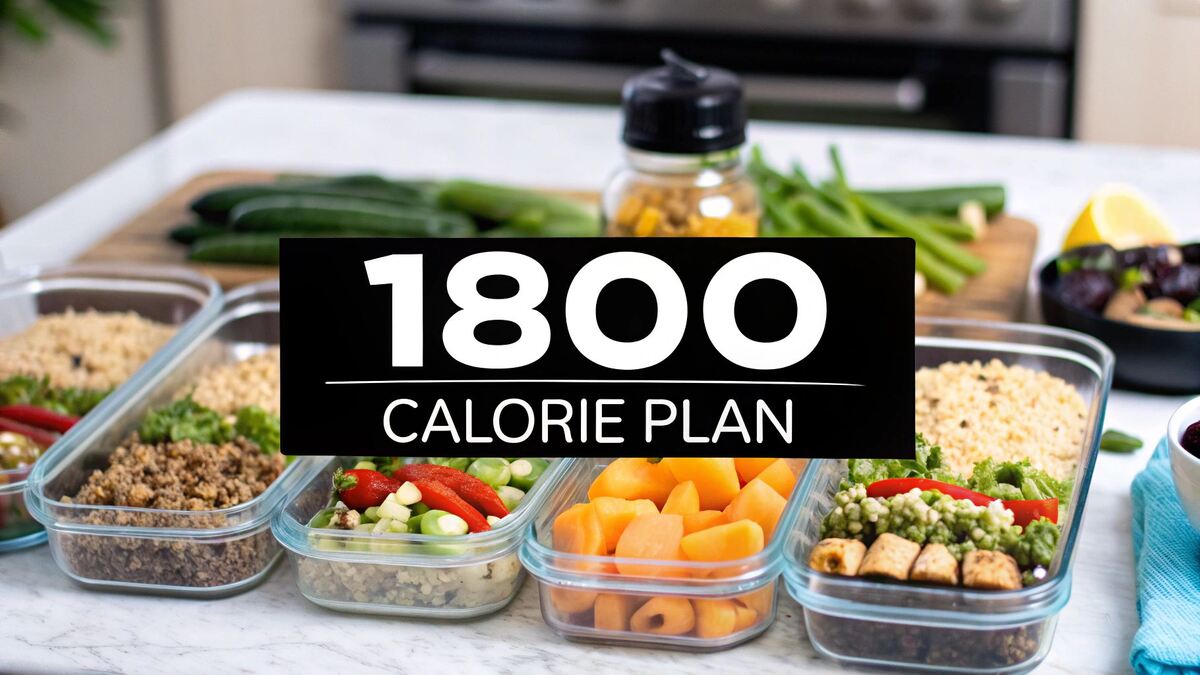
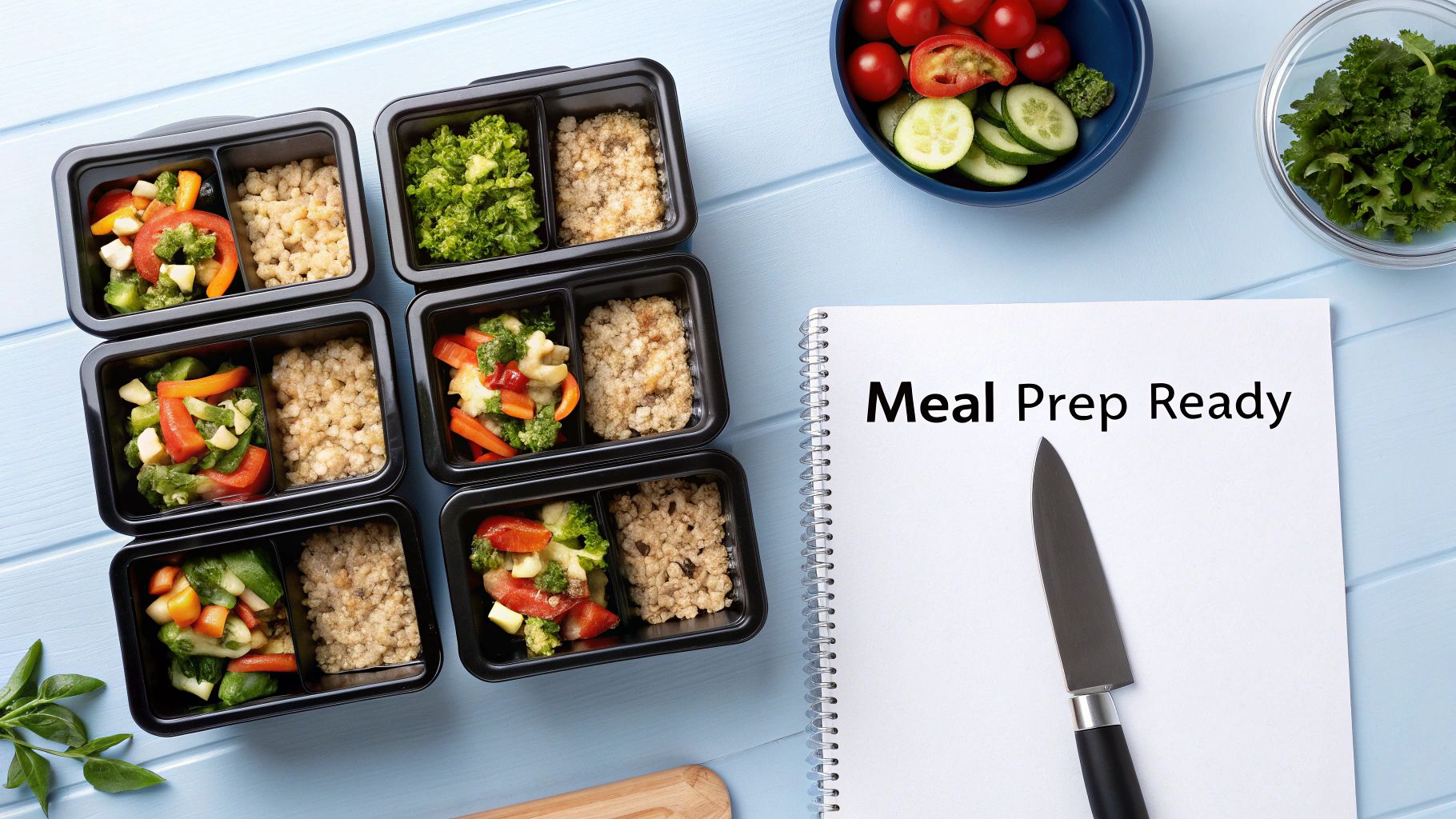
Efficient meal prep is the key to sticking to your plan. Instead of cooking seven identical meals, focus on component prep: preparing versatile building blocks like cooked grains, proteins, and chopped vegetables. This approach keeps food fresh and allows you to assemble a balanced meal from your 1800-calorie meal plan in about 10-15 minutes.
What should my grocery list include?
A well-organized grocery list saves time and money. Group items by supermarket aisle for a quick shopping trip.
Here’s a consolidated list based on the 7-day plan:
- Produce: Mixed greens, spinach, kale, bell peppers, onions, broccoli, Brussels sprouts, carrots, celery, sweet potatoes, root vegetables, asparagus, avocado, banana, mixed berries, apple, orange, mango, lemon.
- Protein & Dairy: Chicken breast, lean ground turkey, salmon, shrimp, sirloin steak, eggs, nonfat Greek yogurt, low-fat cottage cheese, mozzarella, unsweetened almond milk.
- Pantry & Grains: Rolled oats, quinoa, brown rice, whole-wheat toast/pita/tortillas, canned chickpeas, black beans, lentils, tuna/sardines, protein powder, marinara sauce, hummus, almonds, walnuts, chia seeds, flax seeds.
- Oils & Condiments: Olive oil, light vinaigrette, tahini, fajita seasoning, herbs, dark chocolate.
What's the best way to prep on the weekend?
Set aside about two hours on a Sunday to prepare key components for the week. This single block of time will make healthy meals effortless later.
Your weekend prep list should include:
- Batch Cook Grains: Cook large batches of quinoa and brown rice. Once cooled, store them in airtight containers in the fridge.
- Prepare Proteins: Grill or bake all your chicken breasts. Cook the ground turkey for stir-fries and meatballs. Hard-boil a half-dozen eggs for quick breakfasts or snacks.
- Wash and Chop Vegetables: Wash and chop hardy veggies like bell peppers, onions, carrots, and broccoli. Store them in separate containers to make weeknight cooking faster.
Pro Tip: Wait to chop delicate greens like lettuce and spinach until the day you use them to keep them crisp. Slice avocados right before eating to prevent browning.
How do I assemble meals quickly?
With your components ready, weekday meals become a simple mix-and-match game. A workday lunch can be assembled in under five minutes: grab a handful of mixed greens, add a scoop of pre-cooked quinoa, top with sliced grilled chicken, and finish with a drizzle of vinaigrette. This method also allows for dietary flexibility—swap chicken for chickpeas if you prefer a plant-based meal. You can get more ideas from other meal structures, like those in our guides to vegetarian meal plans.
How do I handle common challenges on this plan?
Even the best 1800 calorie meal plan will face challenges like hunger, weight loss plateaus, and social events. The key is to have strategies to handle these hurdles without getting derailed. This builds resilience and turns obstacles into learning opportunities.
What should I do if I feel hungry?
Constant hunger usually means you need to eat smarter, not necessarily more. Focus on foods high in volume and satiety for fewer calories.
- Load Up on Non-Starchy Veggies: Leafy greens, broccoli, cucumbers, and bell peppers are packed with fiber and water, filling you up with very few calories.
- Prioritize Protein: Include a solid protein source in every meal. Protein is the most satiating macronutrient.
- Stay Hydrated: The brain often mistakes thirst for hunger. Drink a large glass of water and wait 15 minutes before reaching for a snack.
A common mistake is filling 1800 calories with processed foods. 300 calories of Greek yogurt with berries will keep you fuller much longer than a 300-calorie protein bar.
How can I break through a weight loss plateau?
A weight loss plateau is a common part of the journey. Before making drastic changes, try these small tweaks to get things moving again.
- Check Your Portion Sizes: It's easy for portions to creep up over time. Use a food scale for a week to ensure your tracking is accurate.
- Increase Your Activity: Add a brisk 20-minute walk to your day or incorporate a couple of short strength training sessions to boost your metabolism.
- Vary Your Food Choices: If you eat the same meals repeatedly, your body can become efficient at processing them. Introduce more variety to provide a broader range of nutrients.
Frequently Asked Questions
Can I drink coffee on this meal plan?
Yes, black coffee has almost no calories. Be mindful of additions like sugar and cream, as those calories can add up quickly.
Is it okay to move meals around?
Absolutely. The sample plan is a flexible template. Adjust the meal timing to fit your schedule and hunger cues.
What if I go over 1800 calories one day?
Don't worry about it. One day over your target won't derail your progress. Just get back on track with your next meal and focus on consistency over perfection.
How long should I follow this plan?
Use this plan as a framework to reach your goals. Once you achieve your target weight, you can adjust your calories for maintenance by applying the principles of portion control and balanced macros.
Can I have alcohol on this plan?
Yes, you can include alcohol in moderation. Just remember to account for its calories in your daily 1800-calorie budget.
Ready to stop guessing and start seeing results? AI Meal Planner takes the hard work out of healthy eating by creating weekly plans perfectly matched to your body and goals, complete with smart grocery lists. Get your own custom plan at the AI Meal Planner website.
AI-powered nutrition
Get Your Personalized Meal Plan
AI creates the perfect meals for your goals, lifestyle, and taste.
Start Your Journej