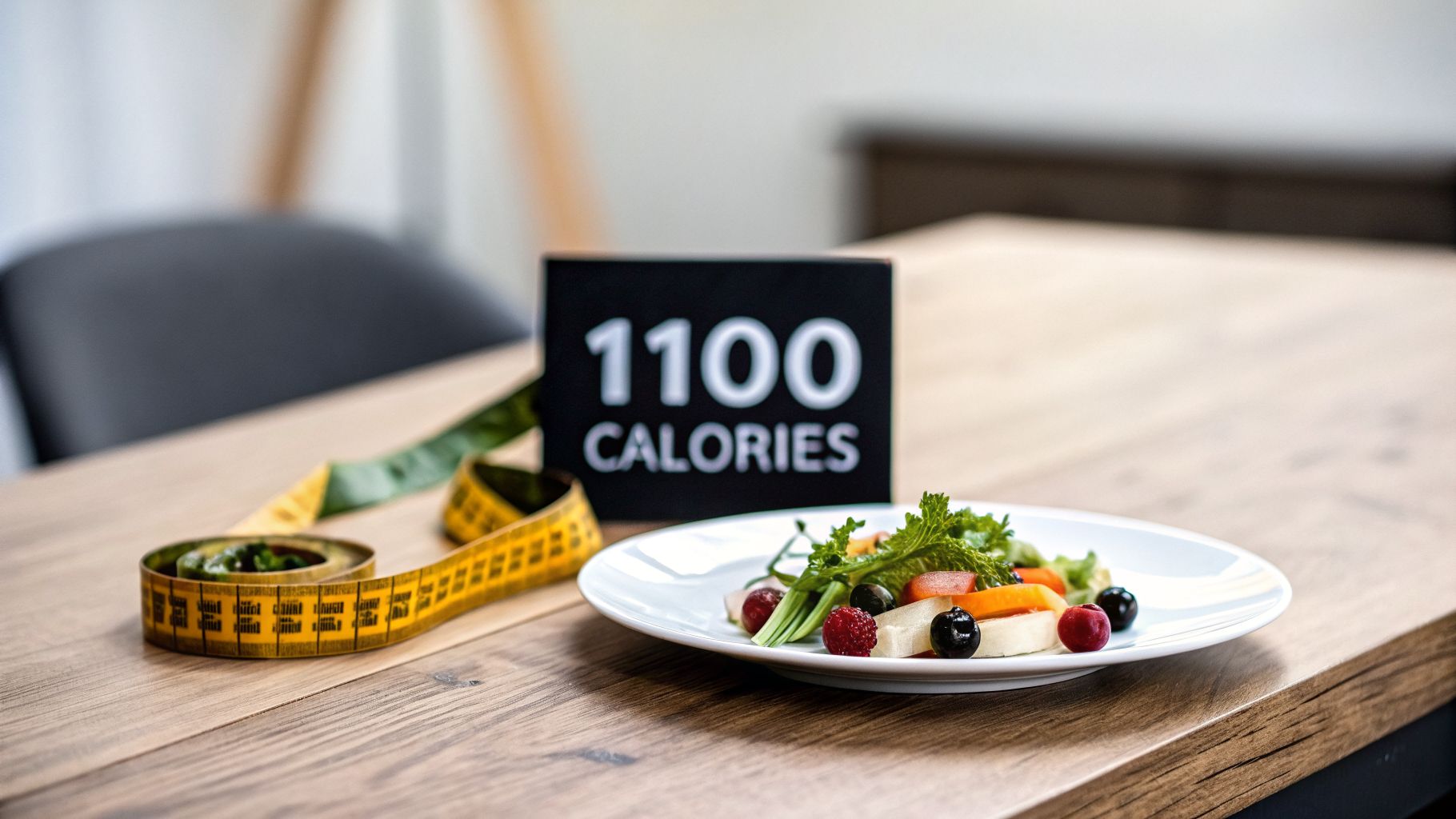
Eating 1100 calories a day can lead to weight loss for a petite, sedentary woman by creating a calorie deficit. However, this intake is below the minimum needs for most adults, especially men and active individuals, and is not a safe long-term strategy. It should only be considered for short periods to avoid nutritional deficiencies and muscle loss.
Consuming only 1100 calories a day is a significant level of calorie restriction. For most people, this number is well below what their body needs to function optimally. It's a short-term strategy, typically suitable for smaller, sedentary women, and must be approached with careful planning to prevent nutritional gaps. Before starting, it's crucial to understand the risks and determine if this approach aligns with your personal health profile.
Why is an 1100-calorie diet so restrictive?

The idea behind an 1100-calorie diet is to create a large calorie deficit to trigger weight loss. However, before starting, it's important to understand why dieting alone fails and why a holistic approach is key for lasting results. The safety of this diet depends entirely on your body composition, activity level, and overall health.
How does this compare to your body's energy needs?
Your body has a Basal Metabolic Rate (BMR)—the calories it burns for essential functions like breathing, circulation, and organ function, even at rest. Your Total Daily Energy Expenditure (TDEE) includes your BMR plus the energy used for all daily activities. For most adults, 1100 calories is below their TDEE, which is why it causes weight loss.
For many people, eating only 1100 calories means they aren't even consuming enough energy to cover their body's basic "idle" functions (their BMR). This is a massive red flag and a critical reason why these diets demand extreme caution and are never meant for the long haul.
Why is 1100 calories a critical threshold?
The 1100-calorie mark is often considered a minimum safety line in clinical settings to prevent severe nutritional deficiencies. Dropping below this level makes it incredibly difficult to get the essential vitamins, minerals, protein, and fats your body needs to stay healthy. A 2014 study on weight loss in obese women established this threshold to avoid the nutrient shortfalls common in more extreme diets.
Who should not follow this diet?
This diet is particularly unsuitable for certain groups:
- Most Men: Men generally have more muscle mass and larger bodies, meaning their BMR is naturally higher. An 1100-calorie diet is almost always too low for an adult man.
- Active Individuals: Regular exercise significantly increases your TDEE. An intake of 1100 calories won't provide enough fuel for performance or recovery, leading to fatigue and muscle loss.
- Teenagers or Growing Individuals: Growing bodies have elevated energy and nutrient needs that this low-calorie plan cannot meet.
To find a safer and more personalized starting point, you can determine your personal calorie deficit.
Who might this diet be appropriate for?
An 1100 calorie a day diet is a highly restrictive plan that is not a safe or effective choice for most people. It's a specialized tool designed for a very narrow type of individual and should only be followed for a short time, ideally with professional guidance.
What is the primary candidate profile?
The only person who might safely consider this very low-calorie intake generally fits a specific description: a petite, sedentary woman.
Here’s why these two factors are critical:
- Smaller Body Frame: A shorter, smaller-framed individual naturally has a lower Basal Metabolic Rate (BMR). Their body burns fewer calories to maintain essential functions compared to a larger person.
- Sedentary Lifestyle: Someone who is not physically active—working a desk job and not exercising—burns far fewer calories throughout the day. Their Total Daily Energy Expenditure (TDEE) is much closer to their BMR.
For this specific group, 1100 calories a day could create a moderate and effective calorie deficit for weight loss. However, it remains a short-term strategy, as metabolic needs change with weight loss.
Who must absolutely avoid an 1100-calorie diet?
An 1100 calorie diet is not a one-size-fits-all weight loss solution. For men, active individuals, and those with certain health conditions, it can lead to significant muscle loss, extreme fatigue, nutrient deficiencies, and hormonal disruption.
The following groups have much higher energy needs and should avoid this diet:
- Most Adult Men: Men naturally have more muscle mass and a higher BMR, making 1100 calories severely inadequate.
- Active Individuals: Anyone who exercises regularly needs more fuel for performance, recovery, and muscle repair.
- Teenagers: Growing bodies have increased energy and nutrient demands that will not be met on this plan.
- Pregnant or Breastfeeding Women: This group has significantly higher nutritional requirements.
- Individuals with a History of Eating Disorders: A highly restrictive diet can be a dangerous trigger.
Before starting any weight loss journey, understand your body's unique energy needs. Use a TDEE calculator to see if a plan like this is even in the right ballpark for you.
How should you structure your macros on 1100 calories?
With a tight budget of just 1100 calories, the quality of those calories is paramount. Every food choice must be strategic, pulling its weight to keep you feeling full, energized, and healthy. Structuring your macronutrients—protein, carbohydrates, and fats—is about setting smart priorities to fuel your body, protect muscle mass, and manage hunger.
Why is protein your top priority?
On an 1100-calorie plan, protein is your most valuable player. It promotes satiety (the feeling of fullness) and helps prevent muscle loss during weight loss. When in a calorie deficit, your body can burn both fat and muscle for energy; prioritizing protein helps preserve muscle tissue. Aim for protein to make up 40-50% of your total calories, which is about 110 to 138 grams per day.
By making lean protein the star of every meal and snack, you’re actively fighting hunger and supporting your metabolism. This focus helps ensure that the weight you lose comes primarily from fat, not muscle.
How do you balance carbohydrates and fats?
With protein taking a large portion of your calorie budget, carbohydrates and fats fill the remaining space. Their role is to provide steady energy, support hormone function, and deliver essential micronutrients.
- Carbohydrates for Energy and Fiber: Choose high-fiber, complex carbohydrates from sources like vegetables, legumes, and small portions of whole grains. Fiber slows digestion and boosts fullness.
- Fats for Hormonal Health: Healthy fats from avocado, nuts, seeds, and olive oil are essential for vitamin absorption and hormone production. Use them in small, measured amounts.
A balanced approach might allocate roughly 30% of calories to carbs and 20-30% to fats. Once you find a split that works for you, understanding how to track macros is key to staying consistent.
What are some sample macro splits for 1100 calories?
The ideal macro distribution can vary. Here are three common ways to structure your macros on an 1100 calories a day plan.
| Diet Style | Protein (grams) | Carbohydrates (grams) | Fats (grams) |
|---|---|---|---|
| Balanced (40/30/30) | ~110g | ~83g | ~37g |
| Lower Carb (50/20/30) | ~138g | ~55g | ~37g |
| Plant-Based (30/40/30) | ~83g | ~110g | ~37g |
These splits offer different paths to the same calorie goal. Regardless of the split, limit free sugars to less than 10% of your total energy intake, which is under 27 grams per day on this diet.
What does a satisfying 1100-calorie day look like?
The number 1100 can sound restrictive, but a satisfying day is possible with a strategic approach. The secret is high-volume eating—choosing foods that are physically large and filling but low in calories, like lean proteins, fibrous vegetables, and hydrating fruits. This approach helps you feel full without exceeding your calorie limit.
How can you build your plate for fullness?
To feel full on an 1100-calorie plan, build every meal around protein and fiber. Protein digests slowly, promoting lasting satiety, while fiber adds bulk to your meals with minimal calories. A large salad with grilled chicken and vegetables will feel more substantial and keep you satisfied longer than a small, calorie-dense sandwich with the same calorie count.
This macronutrient breakdown is a great starting point, prioritizing high protein to manage hunger and preserve muscle.

Dedicating a significant portion of your calories to protein is your best defense against the hunger and fatigue that can accompany a low-calorie plan.
What are some sample 1100-calorie meal plans?
Here are three full-day examples—balanced, lower-carb, and vegan—all around the 1100-calorie mark.
1. Balanced Meal Plan
- Breakfast (≈250 calories): 1/2 cup 0% fat Greek yogurt with 1/2 cup mixed berries and 1 tbsp chia seeds.
- Lunch (≈350 calories): Large salad with 4 oz grilled chicken breast, mixed greens, cucumber, bell peppers, tomatoes, and 2 tbsp light vinaigrette.
- Dinner (≈400 calories): 4 oz baked salmon with 1 cup steamed broccoli and asparagus.
- Snack (≈100 calories): One medium apple.
2. Lower-Carb Meal Plan
- Breakfast (≈300 calories): Two-egg omelet with spinach and 1 oz feta cheese, cooked in 1 tsp olive oil.
- Lunch (≈350 calories): 4 oz tuna salad (made with Greek yogurt) in lettuce cups with celery sticks.
- Dinner (≈450 calories): 4 oz ground turkey sautéed with zucchini noodles and low-sugar tomato sauce.
3. Vegan Meal Plan
- Breakfast (≈300 calories): Smoothie with 1 scoop plant-based protein powder, 1/2 cup unsweetened almond milk, spinach, and 1/2 cup frozen strawberries.
- Lunch (≈350 calories): Large bowl of lentil soup with a side salad and lemon-tahini dressing.
- Dinner (≈450 calories): Tofu stir-fry with 4 oz firm tofu, broccoli, snap peas, and bell peppers in low-sodium soy sauce.
If you create your own recipes, a recipe nutrition calculator can help you track calories accurately.
What are the risks and how can you manage them?
An 1100-calorie diet is a powerful tool that requires safe handling. Sticking to such a low intake for an extended period carries real risks. It is a short-term strategy, and proactive management is essential to protect your health while working toward your goals.

How do you prevent muscle loss?
When calories are cut sharply, your body can burn muscle for energy. This slows your metabolism, making it harder to maintain weight loss.
- Prioritize Protein: Ensure a large portion of your 1100 calories comes from high-quality protein to protect muscle reserves.
- Add Light Resistance Training: Simple bodyweight exercises, yoga, or light resistance bands signal your body to preserve muscle.
How do you avoid nutrient deficiencies?
Eating only 1100 calories makes it difficult to get all the essential vitamins and minerals, increasing the risk of deficiencies in iron, calcium, and B vitamins.
Think of your daily food intake as a small, exclusive guest list. On an 1100-calorie plan, every food item must be a VIP—packed with vitamins and minerals—to earn its spot. There's simply no room for "empty calories" from sugary drinks or processed snacks.
- Eat the Rainbow: Consume a wide variety of colorful fruits and vegetables.
- Focus on Nutrient Density: Build meals around foods with high nutritional value, like leafy greens, lean proteins, and legumes.
- Consider a Multivitamin: Talk to your doctor about a multivitamin to fill potential nutritional gaps.
How can you manage fatigue and low energy?
A drop in energy is common on a low-calorie diet. Manage it by making smart food choices that provide slow-releasing energy by combining protein, healthy fats, and high-fiber carbs. Staying hydrated is also crucial for stable energy levels.
If you're ready to build a plan that sidesteps these risks, you can create a personalized meal plan with our AI Meal Planner.
How do you transition off an 1100-calorie diet?
Reaching your goal weight on an 1100-calorie plan is a major achievement, but the work isn't over. The transition off the diet is a critical phase to avoid rebound weight gain. This process is called reverse dieting.
Why is reverse dieting your best exit strategy?
Reverse dieting is the slow, methodical process of increasing your daily calories. After a period of restriction, your metabolism adapts by slowing down. Jumping straight to a higher "maintenance" calorie level can shock your system and trigger rapid fat storage. By adding calories back gradually, you give your metabolism time to adapt and speed back up, helping you find your new sustainable maintenance level.
What is a step-by-step guide for transitioning?
The transition must be slow and controlled to avoid fat gain.
- Start with a Small Increase: In the first week, increase your daily intake by just 50 to 100 calories. This could be a small handful of almonds or a piece of fruit.
- Monitor Your Weight: Weigh yourself a few times during the week under consistent conditions. Small fluctuations of 1-2 pounds are normal and usually due to water and glycogen.
- Hold Steady or Increase Again: If your weight remains stable after the first week, add another 50 to 100 calories for the next week.
- Find Your Maintenance Level: Continue this gradual process until your weight stabilizes. This new, higher number is your maintenance calorie intake.
The most crucial part of this process is patience. Your body has been in a deficit for a while, and it needs time to trust that more energy is reliably coming in. Rushing this transition is the fastest way to experience rebound weight gain.
As you increase your calories, you'll have more energy for exercise. Incorporating more physical activity can help your metabolism adjust and may allow for a higher final maintenance intake. This methodical approach turns short-term success into a lasting, healthy reality.
For a guided transition, a tool like the AI Meal Planner can help adjust your targets and recipes.
Frequently Asked Questions
How much weight can I realistically lose on 1100 calories a day?
You can realistically expect to lose 1 to 2 pounds per week. The initial weight loss may be faster due to water loss, but it will stabilize over time.
Is it safe to exercise while eating only 1100 calories?
Yes, but stick to light or moderate activities like brisk walking, yoga, or light strength training. Avoid high-intensity workouts, as your calorie intake is too low for proper fueling and recovery.
How long can I safely stay on an 1100-calorie diet?
This diet should only be followed for a short term, from a few weeks to a couple of months at most. It's best to consult a doctor or dietitian before starting and for long-term planning.
Will I constantly feel hungry on this diet?
Prioritizing high-protein and high-fiber foods will help you feel fuller for longer. Staying well-hydrated and timing your meals strategically can also help manage hunger pangs.
Is 1100 calories considered a Very Low Calorie Diet (VLCD)?
No, 1100 calories is classified as a low-calorie diet (LCD). A VLCD is a medically supervised plan that is typically below 800 calories per day.
What if I eat 1100 calories but don't lose weight?
First, ensure you are tracking your intake accurately, as small miscalculations can add up. If a plateau persists, your metabolism may have adapted, signaling it's time to adjust your strategy, perhaps by adding a "refeed day" or consulting a professional.
Can I build a personalized meal plan for this diet?
Yes, you can use a meal planning tool to create a custom plan. The AI Meal Planner can help you build balanced meals that fit your 1100-calorie target and dietary preferences. Add Link https://ai-mealplan.com/onboarding
Ready to build a meal plan that makes healthy eating effortless and enjoyable? AI Meal Planner creates personalized plans based on your goals and preferences, complete with smart grocery lists and quick recipes. Take the guesswork out of nutrition and start your journey with AI Meal Planner today.
AI-powered nutrition
Get Your Personalized Meal Plan
AI creates the perfect meals for your goals, lifestyle, and taste.
Start Your Journej