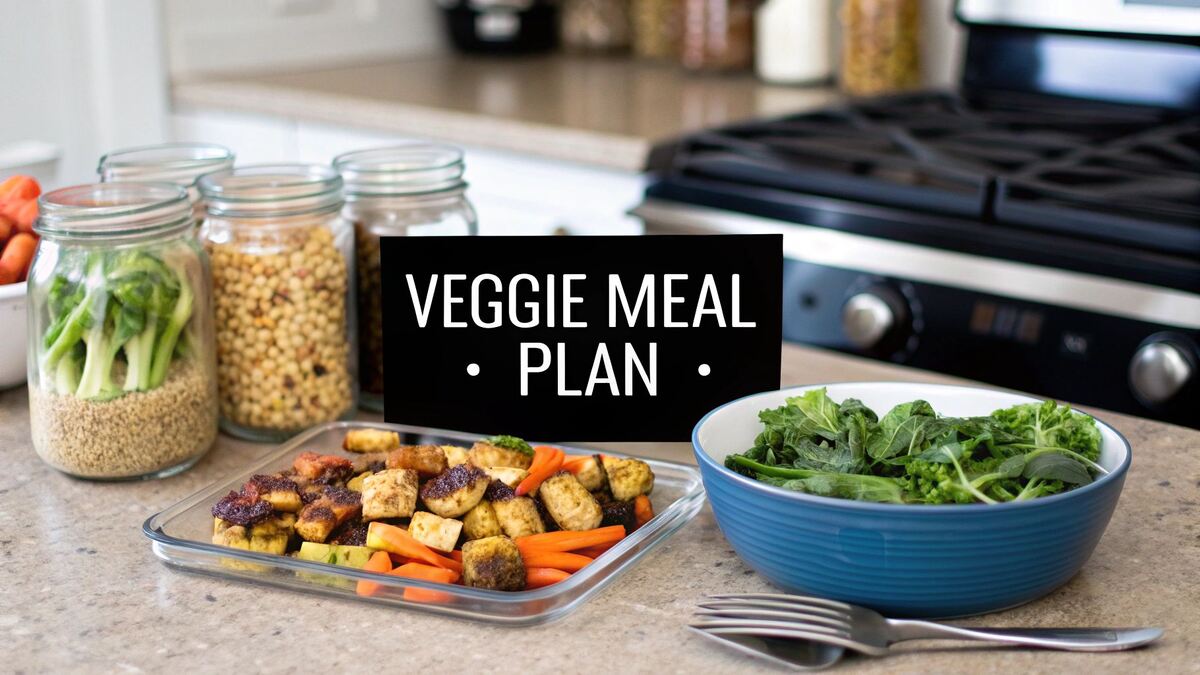
A Vegetarian Weekly Meal Plan That Actually Works
A great vegetarian meal plan doesn't start with a complex recipe—it starts in your kitchen. Before you even think about what you're going to cook, getting your space set up for success can make all the difference. It’s not about a total overhaul; it’s about making a few smart tweaks so that cooking becomes the easy, enjoyable choice.
Setting Up Your Kitchen for Vegetarian Success
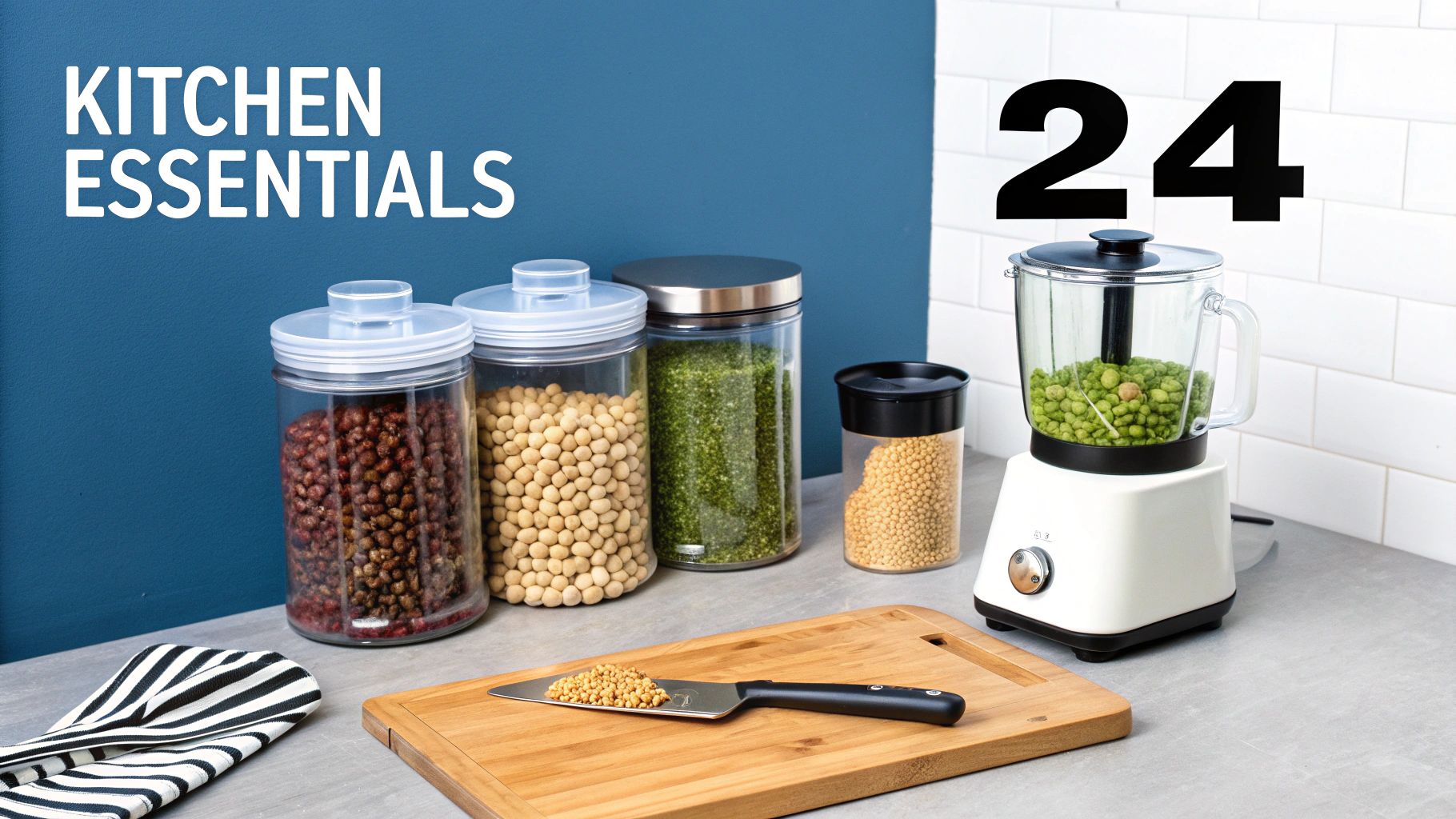 Think of your kitchen as the foundation. When it’s organized and stocked with the right things, you remove the little hurdles that can derail your good intentions. This isn't about buying a bunch of expensive gadgets. It's about creating a smooth, functional system that works for you.
The whole point is to make cooking feel like the path of least resistance. When you have versatile ingredients ready to go and the right tools within arm's reach, you're much less likely to give up on your plan after a long day.
Stocking Your Vegetarian Pantry
A well-stocked pantry is your secret weapon. When you have a solid collection of non-perishables, you can whip up a satisfying meal without a last-minute trip to the store. These staples are the building blocks for countless dishes, from hearty stews to quick grain bowls.
Here are the essentials I always keep on hand:
- Legumes: Canned or dried lentils, chickpeas, and black beans are non-negotiable. They're packed with protein and fiber and incredibly versatile.
- Whole Grains: Quinoa, brown rice, oats, and whole-wheat pasta provide the complex carbs you need for sustained energy.
- Nuts and Seeds: Almonds, walnuts, chia seeds, and flaxseeds are perfect for adding healthy fats, a bit of crunch, and important nutrients.
- Canned Goods: Diced tomatoes, coconut milk, and vegetable broth are lifesavers for creating quick sauces, curries, and soups.
This kind of strategic stocking is catching on. With the global veggie meals market valued at around $15 billion in 2025 and expected to grow, it’s clear more people are embracing convenient, plant-based eating.
Essential Tools and Mindset Shifts
You don't need a kitchen worthy of a cooking show, but a few key tools will make your life so much easier. A quality high-speed blender is fantastic for making creamy soups, sauces, and smoothies. I also swear by a good set of glass storage containers for prepping ingredients and storing leftovers.
The most crucial shift isn't about what you buy, but how you think. Try moving from a recipe-first mindset to a component-based one. Instead of getting locked into a rigid recipe, see your meals as building blocks: a protein (lentils), a carb (quinoa), a vegetable (roasted broccoli), and a flavor (tahini dressing). This approach gives you endless flexibility.
As you get your kitchen ready, think about minimizing waste, too. Understanding what specific kitchen scraps can be composted is a small habit that perfectly complements a plant-forward lifestyle. Getting this prep work done upfront is truly the key to a successful week of vegetarian eating.
Your 7-Day Plant-Based Meal Plan and Recipes
This is where all that planning and prep work really starts to shine. Having a solid vegetarian weekly meal plan in your back pocket can turn a potentially chaotic weeknight into a calm, delicious experience.
What follows is a sample 7-day roadmap built for real life. It’s not a rigid set of rules, but more of a flexible template that balances good nutrition, saves you time, and cleverly uses leftovers to make the next day a breeze.
A Sample Week Of Vegetarian Meals
So, what does a practical and flavorful week actually look like? This plan is designed to be satisfying and diverse, keeping things interesting from Monday morning right through to Sunday evening. You’ll notice how one night’s effort effortlessly flows into the next day’s lunch—that’s the secret to making this work without spending your entire life in the kitchen.
Let's dive into a sample week.
Here's a quick overview of how the meals connect and build on each other, creating a streamlined cooking schedule.
Sample 7-Day Vegetarian Meal Plan Overview
| Day | Breakfast Idea | Lunch Idea | Dinner Idea |
|---|---|---|---|
| Monday | Greek Yogurt with Berries | Leftover Veggie Lasagna Slice | Hearty Black Bean Burgers on Whole-Wheat Buns with a side of Roasted Sweet Potato Wedges |
| Tuesday | Oatmeal with Nuts & Seeds | Leftover Roasted Sweet Potatoes & Black Beans in a Vibrant Taco Salad | Quick Sesame Ginger Tempeh Stir Fry with Broccoli & Peppers over Rice |
| Wednesday | Avocado Toast with Everything Bagel Seasoning | Leftover Tempeh Stir Fry | Creamy Coconut Curry with Roasted Veggies & Chickpeas (make extra quinoa) |
| Thursday | Smoothie with Spinach & Fruit | Mediterranean Quinoa Salad (using leftover quinoa) | Rich Lentil Bolognese over your favorite Pasta |
| Friday | Scrambled Tofu | Leftover Lentil Bolognese | Homemade Veggie Quesadillas filled with Spinach & Cheese |
| Saturday | Weekend Pancakes | Big Green Salad with a Lemon Vinaigrette | Flavorful Peanut Miso Ramen (a great way to use up leftover veggies) |
| Sunday | Your Favorite Cereal or Granola | Leftover Ramen | Classic Shakshuka, poaching eggs in a savory Tomato & Pepper Sauce with Crusty Bread |
This is just one example of a cohesive plan. For even more inspiration and options you can tweak yourself, check out a dedicated vegetarian meal planner that can build weekly menus around your specific tastes and goals.
Making Smart Meal Connections
The real magic here isn't just the individual recipes; it's how they connect. It's about cooking smarter, not harder. Planning this way creates a domino effect of convenience all week long.
A great meal plan doesn't just list recipes; it builds a bridge from one meal to the next. The leftover roasted vegetables from Wednesday's curry can be blended into a creamy soup for a quick lunch later in the week, eliminating the need to start from scratch.
This approach completely changes the dynamic of weeknight cooking. Instead of facing a major culinary project every single evening, you're often just assembling pre-prepped components or turning delicious leftovers into something new. It’s a system that actively works to give you back your time.
Tweak It To Make It Your Own
Remember, this is just a guide, not a prescription. Don't like black beans? Swap them for lentils or chickpeas. If you're slammed one evening, don't feel guilty about leaning on some quality pre-made items. You can easily supplement your cooking with convenient vegetarian meal options that fit right into your plan.
Here’s how you can adapt the plan to fit your life:
- Swap Your Proteins: Tofu, tempeh, lentils, and beans are pretty interchangeable in most recipes like curries, tacos, and salads.
- Use Seasonal Veggies: Substitute the vegetables in the plan with whatever is fresh and in season. It tastes better and is usually cheaper, too.
- Adjust for Breakfast: Breakfast is deeply personal. Stick with your favorite oatmeal, smoothie, or yogurt. No need to change what's already working!
The ultimate goal is to create a sustainable routine that you actually enjoy. The best vegetarian meal plan is the one you can stick with, and that always starts with being flexible.
How to Meal Prep for a Vegetarian Week
Let's be real: having a great plan is one thing, but actually following through on a busy Tuesday night is another story entirely. This is where meal prep becomes your best friend, turning that well-thought-out vegetarian weekly meal plan into delicious, easy-to-grab meals.
But don't panic. This doesn't mean you have to lose your entire Sunday to an army of Tupperware containers. I'm a huge fan of a more flexible method I call component prepping. Instead of making five identical (and by Wednesday, boring) lunches, you just prep versatile ingredients you can mix and match. It’s the secret to keeping things fresh and avoiding meal fatigue.
Think about opening your fridge and seeing:
- A container of perfectly roasted sweet potatoes, just waiting to be tossed into a grain bowl.
- A big batch of cooked lentils or quinoa, ready to become the base for a salad, veggie burger, or soup.
- A jar of homemade tahini dressing that makes anything taste amazing.
This approach gives you the speed of a ready-made meal but with all the goodness and satisfaction of cooking it yourself. You're just assembling, not starting from scratch every single time.
The Art of Prepping Smart Components
The whole point of component prep is to get the most time-consuming tasks out of the way. It takes 45 minutes to cook a pot of brown rice from scratch, but only a minute to reheat it. That’s a huge win.
So, what should you focus on? I usually break it down into three key areas:
- Grains and Legumes: Get a big batch of a sturdy grain like quinoa or farro cooked and ready to go. While you're at it, simmer a pot of lentils or chickpeas that you can pull from all week.
- Vegetables: Wash and chop your heartier veggies—things like bell peppers, onions, carrots, and broccoli. I almost always roast a big sheet pan of root vegetables and cauliflower, too. They’re great hot or cold.
- Sauces and Dressings: This is a game-changer. Whisk together a simple vinaigrette or blend a creamy cashew sauce. Having a killer sauce on hand can turn a boring bowl of steamed veggies and rice into something you actually crave.
This infographic breaks down how this simple flow makes your daily meals come together so much faster.
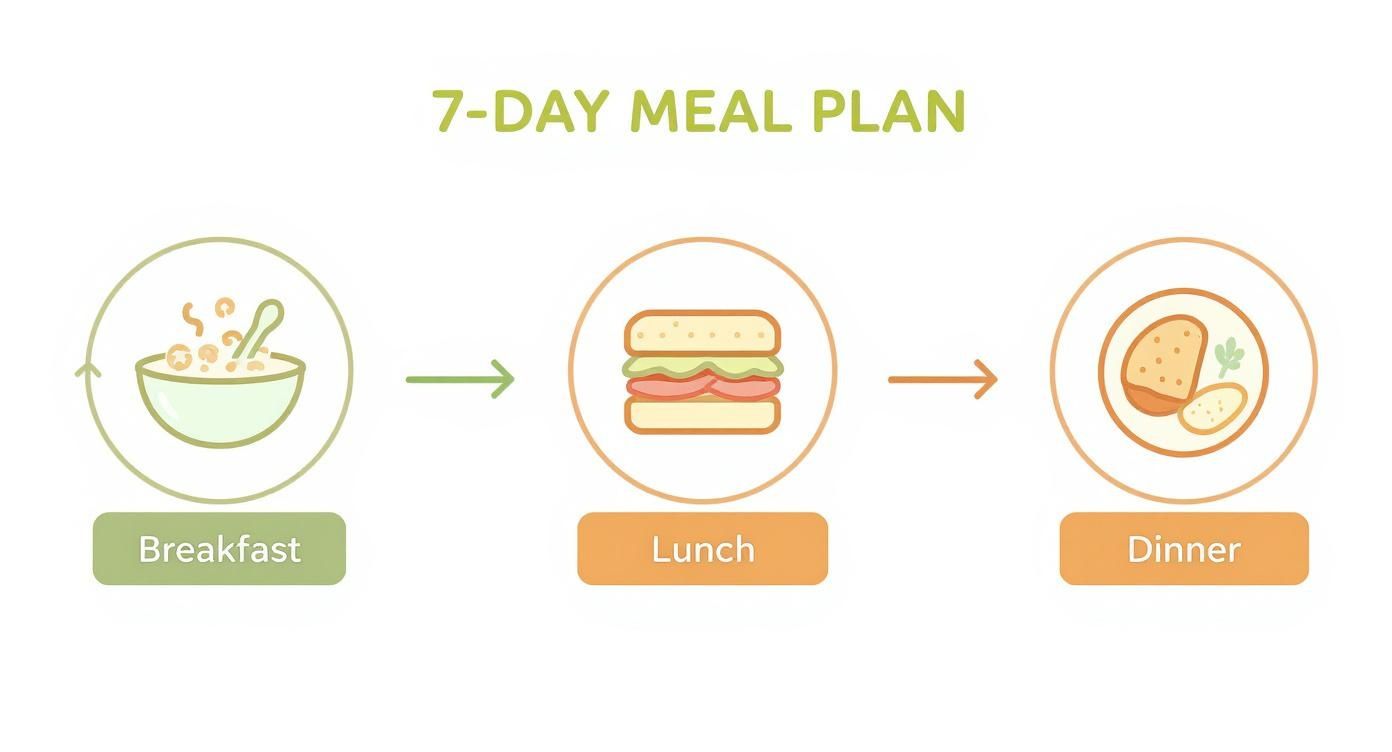
You can see how a little prep work streamlines everything from breakfast to dinner.
This push for convenience isn't just a kitchen hack; it's a massive trend. The ready-to-eat part of the veggie meals market is expected to balloon from $4.7 billion in 2025 to $9.7 billion by 2035. People want quick, healthy options, and component prepping is how you can achieve that at home.
Storage and Freshness Tips
To make sure your hard work pays off, you've got to store everything correctly. I highly recommend investing in a good set of airtight glass containers. They don't stain or hold onto smells like plastic can.
My number one rule for storage: Keep wet and dry ingredients separate until you're ready to eat. If you toss your salad with dressing in the morning, you’ll have a soggy, sad mess by noon. Always pack dressings and sauces in a small, separate container.
Here’s another little trick: for delicate greens like spinach or mixed lettuces, tuck a dry paper towel into the container. It absorbs any extra moisture and can keep them crisp for days longer. It seems small, but it works.
And don't be afraid to borrow ideas from other healthy eating styles to keep things interesting. You could prep a batch of hummus or a Greek-style salad dressing. Our guide to a Mediterranean diet meal plan has some fantastic recipes you can pull from. Mixing and matching like this is what keeps your vegetarian week delicious and full of variety.
Building Your Vegetarian Shopping List
A great week of meals starts long before you ever turn on the stove. It begins with a smart, focused trip to the grocery store. Let's be honest, wandering into a store without a plan is a recipe for disaster—you overspend, forget key ingredients, and end up with a cart full of things you don't actually need.
A well-organized shopping list, built directly from your vegetarian weekly meal plan, turns that chaotic chore into a quick, efficient mission. The real trick is to stop thinking of it as just a list of items and start seeing it as a strategic map. When you organize it by store section (produce, pantry, dairy, etc.), you can fly through the aisles without backtracking. This saves a ton of time and helps you dodge those tempting impulse buys lurking at the end caps.
Start With Produce and Pantry Staples
The heart of any good vegetarian diet is found in the produce aisle. This is where you should load up on color and variety. I always try to "eat the rainbow" by grabbing leafy greens like spinach, vibrant bell peppers, broccoli, sweet potatoes, and versatile onions.
A pro tip? Focus on seasonal produce. Not only does it taste a thousand times better, but it's almost always cheaper. A quick search for what’s in season in your region can be a huge help here.
Next, it’s time to stock your pantry. These are the workhorses of your meal plan, the reliable staples that form the base for countless dishes. A well-stocked pantry means you can always pull together a healthy meal, even on the busiest of nights.
Here's a look at the non-negotiables I always keep on hand.
Essential Vegetarian Pantry Staples
| Category | Essential Items | Example Uses |
|---|---|---|
| Legumes | Canned or dried chickpeas, black beans, lentils, kidney beans | Chilis, curries, hummus, veggie burgers, salads |
| Whole Grains | Quinoa, brown rice, oats, whole-wheat pasta, barley | Grain bowls, side dishes, oatmeal, pasta salads |
| Canned Goods | Diced tomatoes, coconut milk, vegetable broth, tomato paste | Soups, stews, sauces, curries |
| Healthy Fats | Olive oil, avocado oil, nuts (almonds, walnuts), seeds (chia, flax, pumpkin) | Dressings, roasting, snacking, smoothie boosters |
| Spices & Flavor | Garlic, onions, soy sauce, nutritional yeast, dried herbs | Seasoning literally everything! |
Having these items ready to go is a complete game-changer. It’s your safety net for those days when a full grocery run just isn't happening.
Think of your pantry as your culinary toolkit. With these core ingredients, you're always just a few steps away from a satisfying, home-cooked meal.
Fill in the Gaps and Check Labels
With your cart full of fresh produce and pantry basics, you can swing by the refrigerated and frozen sections to fill in the gaps. This is where you’ll find items like tofu, tempeh, plant-based yogurts, eggs, and cheese.
This is also where a little label-reading goes a long way. You’d be surprised how many products, from sauces to breads, can have hidden animal-derived ingredients like gelatin, whey, or casein. A quick scan of the ingredient list is all it takes to make sure your choices fit your vegetarian lifestyle.
Finally, don’t sleep on the frozen aisle! It’s your best friend for convenience. Frozen berries and mango are perfect for smoothies, while frozen corn, peas, and spinach are just as nutritious as fresh and provide an amazing backup for busy nights. This strategic approach ensures your kitchen is perfectly stocked and ready to bring your meal plan to life.
Getting the Right Nutrients on a Plant-Based Diet
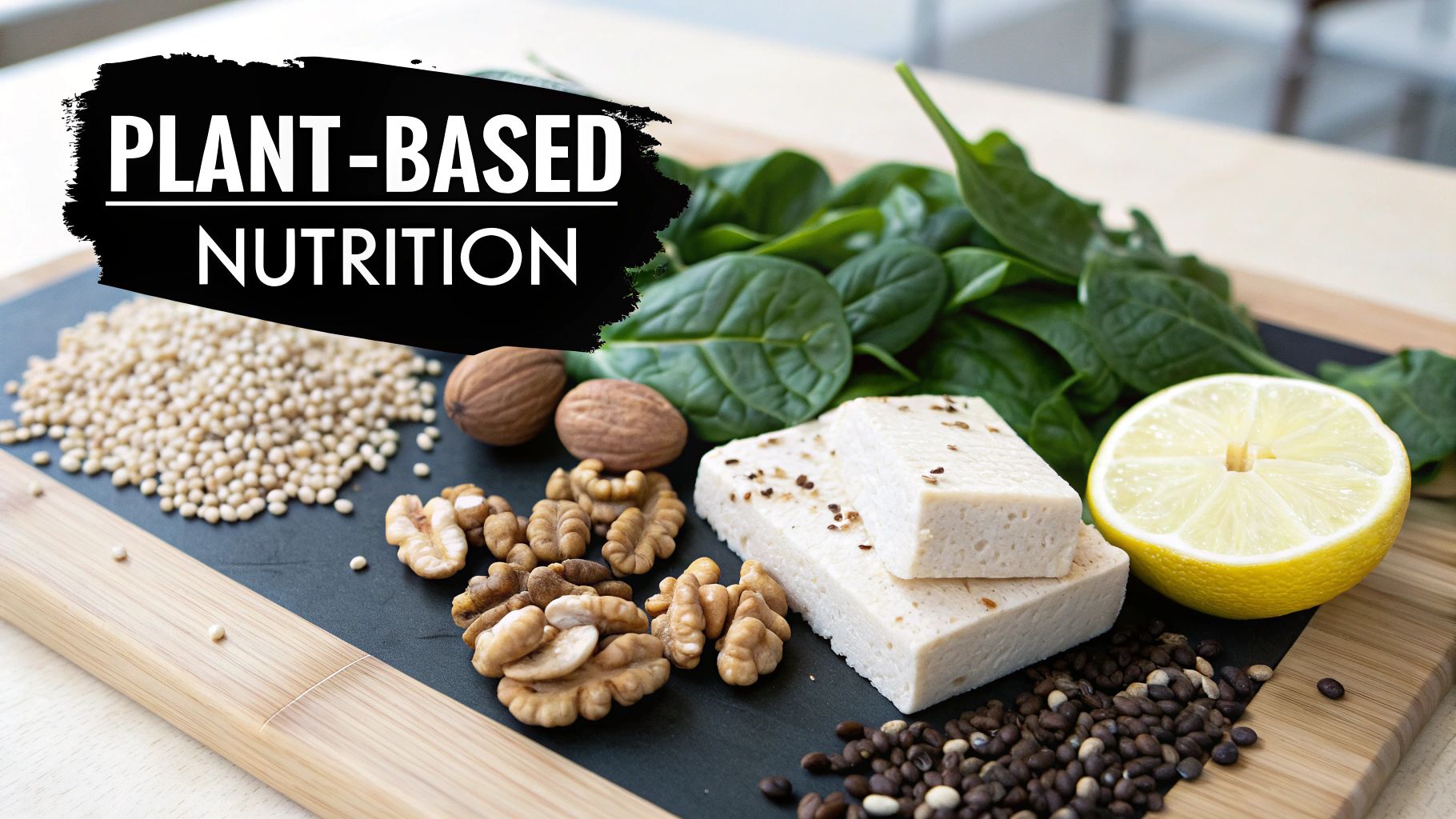
One of the biggest hurdles I see people face when going vegetarian is the fear of missing out on key nutrients. It’s a valid concern, but let me put your mind at ease. A well-designed vegetarian weekly meal plan isn't about restriction; it's about abundance and being intentional with the incredible variety of foods you add to your plate.
Building a balanced meal is actually pretty intuitive once you get the hang of it. By making sure you're eating a rainbow of foods from different groups, you can hit all your nutritional targets without obsessively tracking every last vitamin.
The Power Players of Plant-Based Nutrition
While a varied diet is your best friend, a few specific nutrients do require a little more forethought. The good news is that the plant kingdom is packed with delicious sources for almost all of them.
Here are the main ones to keep on your radar:
- Protein: This is for more than just building muscle; it's key for feeling full and satisfied. You'll find it everywhere—lentils, chickpeas, tofu, tempeh, edamame, and all kinds of nuts and seeds are fantastic sources.
- Iron: Absolutely essential for keeping your energy levels up. Load up on dark leafy greens like spinach, plus lentils, beans, and iron-fortified cereals.
- Omega-3 Fatty Acids: Think of these as brain food. Flaxseeds, chia seeds, walnuts, and hemp seeds are your go-to options for these healthy fats.
- Vitamin B12: Okay, this is the one exception. B12 isn't reliably found in plant foods, so you'll need to get it from fortified sources like plant milks and nutritional yeast, or just take a simple supplement.
If you’re specifically focused on building muscle or just want to ensure you’re getting plenty of protein, checking out a dedicated high-protein meal plan can give you some great recipes and ideas.
Smart Food Pairings to Boost Absorption
Here's a pro tip that makes a huge difference: it’s not just what you eat, but how you eat it. Certain food combinations can dramatically increase how well your body absorbs nutrients. It's a simple way to work smarter, not harder, with your nutrition.
A simple squeeze of lemon over a spinach salad does more than add flavor. The vitamin C from the lemon can increase the absorption of iron from the spinach by up to six times—a powerful example of food synergy.
This trick works for other nutrients, too. For instance, your body needs fat to absorb vitamins like A, D, E, and K. That’s why adding a drizzle of olive oil to roasted broccoli or tossing some avocado into your salad isn't just for taste; it helps you unlock the full nutritional power of your vegetables. Keeping these little pairings in mind can elevate your whole meal plan.
Got Questions About Vegetarian Meal Planning? We've Got Answers
Jumping into a new way of eating always brings up a few questions. Even with a solid plan, it's natural to wonder if you're hitting all the right notes. Let's tackle some of the most common hurdles people face when building a vegetarian meal plan so you can move forward with confidence.
One of the biggest worries? Social situations. The thought of being "that person" at a restaurant can be stressful, but a little prep work makes all the difference. I always check the menu online before I go. These days, most places have great vegetarian options or can easily tweak a dish. A quick look beforehand means you can walk in, relax, and just enjoy the company.
This is getting easier all the time, thanks to a huge global shift. There are over 1.5 billion vegetarians worldwide, and the community is growing fast. By 2025, experts predict around 79 million people will be fully vegan. This isn't just a trend; it's a major movement, and you can see more of the data in this insightful report on plant-based diets. For us, that means more amazing products, more cookbooks, and better restaurant menus than ever before.
How Do I Keep My Meals From Getting Boring?
Let's be honest, meal fatigue is real. No one wants to eat the same sad salad every day. The trick I've learned is to master a handful of "base" recipes and then get creative with variations. A simple black bean burger, for instance, can feel like a totally new meal with a switch-up in spices or a different sauce.
Here are a few easy ways to keep things interesting:
- Rotate Your Grains: Always reaching for quinoa? Try subbing in farro for a chewy bite, barley in a hearty soup, or couscous for a quick side.
- Explore Global Spices: A basic lentil dish can travel the world. One night it’s an Indian dal with turmeric and cumin; the next, it’s an Italian-style soup with oregano and rosemary.
- Switch Up Your Sauces: A killer sauce changes everything. Master a few go-tos like a creamy peanut sauce, a zesty tahini dressing, or a fresh pico de gallo to bring life to any bowl.
Think of your weekly plan as a flexible template, not a rigid set of rules. The goal is to build a sustainable habit, and that means allowing room for creativity and enjoyment.
What About Protein and Feeling Full?
This is probably the number one question people ask. The fear of being hungry all the time or not getting enough protein is a huge concern, but it's totally manageable. Plant-based proteins are everywhere, and they work. The key is making sure you have a solid protein source with every single meal. This helps keep you satisfied and your energy levels stable.
Make a point to build your plates around foods like:
- Legumes: Lentils, chickpeas, and all kinds of beans are true protein powerhouses.
- Soy Products: Tofu, tempeh, and edamame are fantastic because they're complete proteins.
- Nuts and Seeds: Almonds, walnuts, chia seeds, and hemp hearts add a great boost of protein and healthy fats.
When you consciously add these to your meals, you'll quickly realize that vegetarian food is incredibly satisfying. A well-crafted vegetarian weekly meal plan isn't about restriction; it's about loading your plate with delicious, nutrient-dense foods that make you feel great.
Ready to stop guessing and start creating delicious, personalized vegetarian meals? The AI Meal Planner builds a perfect plan based on your unique goals and tastes, complete with recipes and shopping lists. Start your journey with us today!
AI-powered nutrition
Get Your Personalized Meal Plan
AI creates the perfect meals for your goals, lifestyle, and taste.
Start Your Journej