vegetarian meal plan weekly: Simple 7-Day Menu Ideas
Are you tired of the nightly 'what's for dinner?' dilemma, resorting to the same uninspired meals or expensive takeout? A well-structured vegetarian meal plan weekly is the secret to reclaiming your time, saving money, and enjoying delicious, nutrient-packed food without the daily stress. It’s the bridge that turns good intentions into consistent, healthy habits, eliminating decision fatigue and ensuring your body gets the fuel it needs.
This comprehensive guide moves beyond generic advice to provide a practical blueprint for mastering vegetarian meal planning for good. We will break down eight distinct, actionable strategies for building a vegetarian weekly meal plan that aligns perfectly with your specific lifestyle, goals, and tastes. You'll get more than just ideas; you'll receive a complete toolkit for success.
Inside this article, you will discover:
- Complete 7-Day Plans: Detailed daily menus for eight different vegetarian lifestyles.
- Step-by-Step Recipes: Easy-to-follow recipes for every meal, including breakfast, lunch, dinner, and snacks.
- Actionable Prep Schedules: A guide on how to prep ingredients efficiently to save hours during the week.
- Full Shopping Lists: Organized lists to make your grocery trips fast and focused.
- Nutritional Breakdowns: Macronutrient and calorie information for every recipe to help you meet your health targets.
Whether you're a busy professional needing quick 30-minute meals, a fitness enthusiast seeking a high-protein regimen, or a family on a budget, this is your roadmap. We’ll show you exactly how to implement these plans, from batch-cooking strategies to color-coded plating methods, and even how to use AI tools to customize your perfect week. Forget the guesswork and start eating well, effortlessly.
1. Color-Based Plate Method Vegetarian Meal Plan
The Color-Based Plate Method is a visual and intuitive approach to crafting a balanced vegetarian meal plan weekly. Instead of meticulously counting calories or macros, this strategy focuses on ensuring each meal includes a diverse array of colorful plant foods. This method, often called "eating the rainbow," is an effective way to maximize your intake of different vitamins, minerals, and phytonutrients, as the color of a fruit or vegetable often indicates its unique nutritional profile.
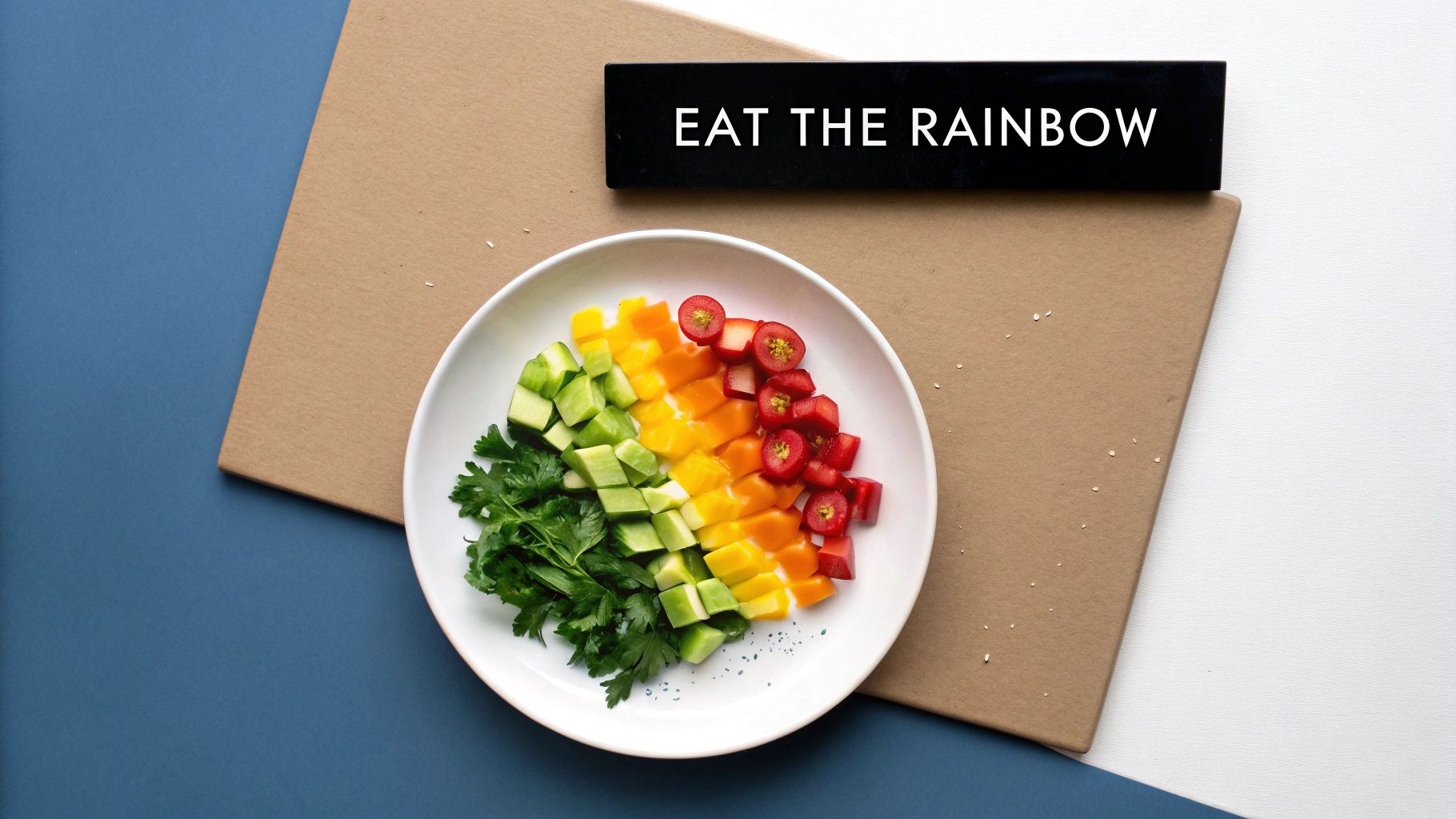
The core principle is simple: fill your plate with a variety of colors throughout the day and week. By doing so, you naturally create meals that are rich in antioxidants, fiber, and essential nutrients, supporting everything from immune function to gut health.
How to Implement This Method
To put this method into practice, you can assign specific color groups to different days or aim to include multiple colors in every single meal. The goal is to consciously incorporate the full spectrum of produce into your diet.
- Monday (Red Focus): Build meals around red bell peppers, tomatoes, and beets. A quinoa bowl with roasted red peppers, cherry tomatoes, kidney beans, and a sprinkle of paprika is a perfect example.
- Wednesday (Green Focus): Emphasize dark leafy greens and other green vegetables. Think spinach and kale salads, broccoli-infused pasta, or zucchini noodles with a pesto sauce.
- Friday (Purple/Blue Focus): Incorporate foods like eggplant, purple cabbage, and blueberries. A stir-fry featuring strips of eggplant and shredded purple cabbage over brown rice fits perfectly.
Actionable Tips for Success
To make this approach a sustainable part of your weekly routine, consider these practical tips:
- Prep by Color: During your Sunday meal prep, wash and chop vegetables by their color group and store them in separate containers. This makes assembling colorful meals during the week quick and easy.
- Use a Color Chart: Create a simple chart for your fridge that lists foods in each color category (red, orange, yellow, green, blue/purple, white/tan). This serves as a quick reference for inspiration.
- Embrace Frozen Produce: Don't overlook the freezer aisle. Frozen fruits and vegetables are just as nutritious as fresh and can help you maintain color variety, especially when certain items are out of season.
2. Budget-Friendly Vegetarian Weekly Meal Plan
A Budget-Friendly Vegetarian Weekly Meal Plan is a cost-conscious strategy designed to deliver maximum nutritional value while minimizing grocery expenses. This approach prioritizes affordable, long-lasting staples such as dried beans, lentils, whole grains, and seasonal produce. The core idea is to build a vegetarian meal plan weekly around ingredients that are inexpensive, versatile, and can be purchased in bulk to further reduce costs.
This method, popularized by resources like the blog Budget Bytes and Leanne Brown's "Good and Cheap" cookbook, demonstrates that eating a healthy vegetarian diet doesn't have to be expensive. By strategically repeating core ingredients in different culinary forms, you can significantly reduce food waste and take full advantage of bulk purchasing power.
How to Implement This Method
The key to a budget-friendly plan is building your week around a few core, low-cost ingredients and transforming them into distinct meals. This prevents flavor fatigue while keeping your shopping list short and affordable.
- Monday & Thursday (Lentil Focus): Start the week with a large batch of simple lentil soup. Later in the week, use the remaining cooked lentils to create a hearty lentil curry by adding coconut milk, spices, and seasonal vegetables like squash.
- Tuesday & Friday (Chickpea Focus): Use canned or home-cooked chickpeas for a simple chickpea salad sandwich on Tuesday. On Friday, roast the remaining chickpeas with spices for a crispy salad topper or a savory snack.
- Wednesday & Saturday (Seasonal Veggie Focus): Roast a large tray of seasonal vegetables like carrots, onions, and potatoes. Use them on Wednesday as a side dish, and then incorporate the leftovers into a frittata or a savory pie on Saturday.
Actionable Tips for Success
To make this approach effective and sustainable, focus on smart shopping and preparation habits. A little planning goes a long way in stretching your food budget.
- Shop Seasonally and Locally: Purchase produce that is currently in season from local markets or grocery stores. Seasonal items are more abundant and can be 30-50% cheaper than out-of-season options.
- Buy Staples in Bulk: Invest in large bags of dried beans, lentils, rice, and oats from grocery stores or ethnic markets, where prices are often significantly lower. Cooking dried beans is far more economical than buying canned.
- Plan Around Sales Flyers: Before creating your weekly menu, check your local grocery store's weekly ad. Build meals around the vegetables, grains, and proteins that are on sale. For more advanced planning, you can learn more about how an AI meal plan generator can help you build a budget-friendly vegetarian weekly meal plan.
3. High-Protein Vegetarian Meal Plan
The High-Protein Vegetarian Meal Plan is a specialized template designed for vegetarians with elevated protein needs, such as athletes, fitness enthusiasts, or anyone focused on building muscle. This approach strategically structures a vegetarian meal plan weekly to ensure adequate protein intake at each meal, supporting muscle repair, satiety, and overall metabolic function without relying on animal products.
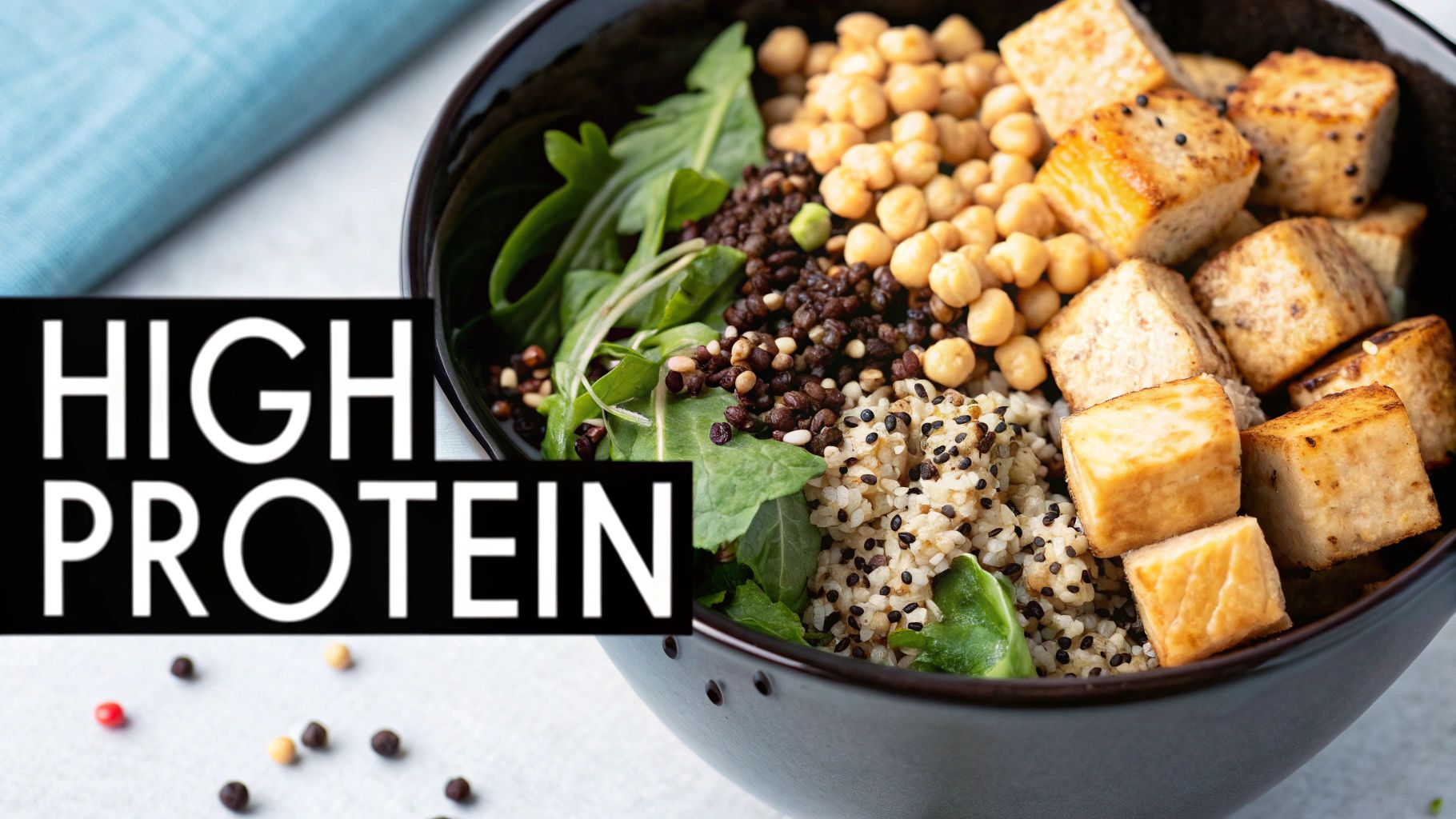
The core principle is to deliberately incorporate diverse, high-quality plant-based protein sources throughout the day. By focusing on protein density, this plan helps individuals meet their specific fitness and body composition goals while maintaining a balanced, nutrient-rich vegetarian diet.
How to Implement This Method
Implementing this plan involves prioritizing protein in every meal and snack. The key is to combine different plant foods to create complete amino acid profiles and ensure you hit your daily protein target consistently.
- Breakfast (25g Protein): Start the day strong with a bowl of Greek yogurt topped with a tablespoon of hemp seeds, a quarter-cup of granola, and a handful of fresh berries.
- Lunch (28g Protein): A robust quinoa salad is an excellent choice. Combine cooked quinoa with a cup of chickpeas, a sprinkle of pumpkin seeds, and plenty of chopped vegetables, dressed with a lemon-tahini vinaigrette.
- Dinner (32g Protein): A tofu stir-fry provides a powerful protein punch. Sauté firm tofu with lentils, broccoli, and bell peppers, then serve it over brown rice and top with a few cashews.
Actionable Tips for Success
To successfully integrate a high-protein approach into your weekly routine, consider these practical strategies:
- Combine Grains and Legumes: Pair foods like rice and beans, lentils and whole-wheat bread, or quinoa and chickpeas to create a "complete protein" with all nine essential amino acids.
- Seed and Nut Integration: Make it a habit to add hemp seeds, chia seeds, pumpkin seeds, or nuts to your meals. They are easy, calorie-dense sources of protein and healthy fats.
- Time Your Protein Intake: For those who are active, consume a protein-rich snack or meal within an hour or two after a workout to optimize muscle recovery and growth.
- Use Supplements Wisely: A plant-based protein powder can be a convenient supplement to help you meet your goals, but it should not be your primary source. Focus on whole foods first. For those seeking structured guidance, you can learn more about a dedicated High-Protein Vegetarian Meal Plan to get started.
4. Mediterranean Vegetarian Weekly Meal Plan
The Mediterranean Vegetarian Weekly Meal Plan adapts one of the world's healthiest eating patterns for a plant-based lifestyle. This approach centers on whole foods abundant in the Mediterranean region, such as olive oil, legumes, whole grains, nuts, and a vast array of fresh vegetables and fruits. Renowned for its heart-health benefits, this diet emphasizes healthy fats and fiber, making it an excellent framework for a sustainable vegetarian meal plan weekly.
The core principle involves building flavorful, satisfying meals from simple, nutrient-dense ingredients rather than relying on processed foods. It's less about restriction and more about embracing a rich culinary tradition celebrated for its taste and proven health outcomes. For those particularly focused on cardiovascular well-being, integrating cholesterol-lowering foods recommended by NHS experts can further enhance your Mediterranean vegetarian meal plan.
How to Implement This Method
Adopting this plan means shifting your plate's focus to plant-derived staples and using high-quality fats as your primary flavor enhancer. The goal is to create a weekly menu that is both delicious and supportive of long-term health.
- Monday: Start with a classic Greek salad featuring crisp lettuce, cucumbers, tomatoes, Kalamata olives, and a block of feta cheese, all drizzled with extra virgin olive oil.
- Wednesday: Prepare a hearty lentil and vegetable soup seasoned with oregano and thyme, served with a side of crusty whole-grain bread for dipping.
- Friday: Enjoy whole wheat pasta tossed with a simple, slow-simmered tomato and basil sauce, loaded with roasted zucchini, bell peppers, and eggplant.
Actionable Tips for Success
To seamlessly integrate the Mediterranean vegetarian diet into your routine, focus on building meals around its core components.
- Make Vegetables the Star: Aim to fill at least 50% of your plate with vegetables at every meal. This could be a large salad, a side of roasted broccoli, or vegetables mixed into a grain bowl.
- Use Olive Oil Generously: Use high-quality extra virgin olive oil as your main source of fat. Drizzle it on salads, use it for light sautéing, and finish dishes with it for a boost of flavor.
- Incorporate Legumes Regularly: Plan to include beans, lentils, or chickpeas in your meals at least three to four times a week. They are excellent sources of protein and fiber.
5. Prep-Ahead/Batch Cooking Vegetarian Meal Plan
The Prep-Ahead/Batch Cooking method is an efficiency-focused approach to creating a vegetarian meal plan weekly. This strategy centers on dedicating a few hours on one day, typically Sunday, to prepare large batches of core meal components. These cooked ingredients are then stored and used to quickly assemble a variety of meals throughout the week, significantly reducing daily cooking time.
This system is ideal for busy professionals or anyone looking to streamline their food preparation without sacrificing variety or nutritional quality. By having grains, proteins, and vegetables ready to go, you can mix and match components to create different flavor profiles, preventing meal fatigue while staying on track with your health goals.
How to Implement This Method
The key to successful batch cooking is planning your components strategically. Instead of making full meals, you prepare versatile ingredients that can be combined in numerous ways.
- Sunday Prep Session: Cook 2-3 types of grains (e.g., quinoa, brown rice, farro), prepare 2-3 plant-based proteins (e.g., a big batch of lentils, baked tofu, and a can of rinsed chickpeas), and roast 2-3 trays of different vegetables (e.g., broccoli with garlic, sweet potato chunks, and bell peppers with onions).
- Daily Assembly: Throughout the week, you build your meals by combining these prepped items. A Monday lunch could be a bowl with quinoa, chickpeas, and roasted broccoli, while Tuesday's dinner might be baked tofu with farro and roasted bell peppers.
- Sauce & Dressing Prep: Prepare 2-3 versatile dressings or sauces, like a lemon-tahini dressing or a peanut sauce, to add flavor and variety to your assembled meals.
Actionable Tips for Success
To make this method a seamless part of your weekly routine, organization and proper storage are crucial. A well-executed system ensures your food stays fresh and appealing.
- Store Components Separately: To maintain the best texture and freshness, store grains, proteins, vegetables, and sauces in separate airtight containers. This prevents ingredients from becoming soggy.
- Label Everything: Use masking tape or labels to mark each container with its contents and the date it was prepared. This helps you use up older items first and quickly identify what you have.
- Use Glass Containers: Opt for clear glass containers. They allow you to easily see what’s inside, don’t stain or retain odors, and are safe for reheating in the microwave or oven. Explore how an advanced weekly meal planner can help organize your batch cooking schedule and shopping lists.
6. Seasonal Vegetarian Weekly Meal Plan
The Seasonal Vegetarian Weekly Meal Plan is a dynamic approach that aligns your meals with the natural growing cycles of produce. This strategy centers on using fruits and vegetables that are at their peak freshness, flavor, and nutritional value during a specific time of year. By building your vegetarian meal plan weekly around seasonal availability, you benefit from lower costs, better-tasting food, and a more sustainable way of eating.
This method, championed by food advocates like Mark Bittman and the farm-to-table movement, encourages a connection with local food systems. Instead of relying on produce shipped from thousands of miles away, you focus on what's currently being harvested in your region, which supports local farmers and reduces your carbon footprint.
How to Implement This Method
To adopt a seasonal approach, you’ll plan your meals based on what is abundant and fresh at the farmers market or in the produce aisle. This requires flexibility and a willingness to adapt your recipes as the seasons change.
- Spring Plan: Focus on light, fresh flavors. Create meals around asparagus, peas, radishes, and spring greens. A perfect spring dinner could be a creamy risotto with fresh peas and asparagus, topped with lemon zest.
- Summer Plan: Embrace the bounty of summer produce. Center your meals on tomatoes, zucchini, corn, and berries. Think grilled vegetable skewers with a corn and black bean salad or pasta with a fresh tomato and basil sauce.
- Fall Plan: Shift to heartier, warmer dishes. Use butternut squash, Brussels sprouts, sweet potatoes, and apples. A roasted root vegetable medley with a maple-glaze or a curried lentil soup with squash are excellent choices.
- Winter Plan: Utilize hardy greens and stored root vegetables. Plan meals with kale, cabbage, carrots, and citrus. A hearty kale and white bean stew or roasted cabbage wedges with a citrus vinaigrette works well.
Actionable Tips for Success
Making seasonal eating a seamless part of your lifestyle is easier with a few practical strategies in place:
- Visit a Farmers Market Weekly: Make a weekly trip to your local farmers market your primary source of inspiration. See what's available and plan your meals around those ingredients.
- Join a CSA Program: Subscribing to a Community Supported Agriculture (CSA) box provides you with a weekly share of a local farm's harvest, automatically aligning your kitchen with the current season.
- Build a Seasonal Recipe Binder: Organize your favorite recipes into four sections: spring, summer, fall, and winter. This makes it easy to find appropriate meal ideas year-round.
- Learn Basic Preservation: When a particular fruit or vegetable is abundant, learn to freeze, can, or pickle it. This allows you to enjoy the taste of the season long after it has passed.
7. Quick-and-Easy Weeknight Vegetarian Meal Plan
The Quick-and-Easy Weeknight plan is a practical approach to building a vegetarian meal plan weekly for busy individuals and families with limited time. This strategy prioritizes recipes that can be prepared in 30 minutes or less, utilizing minimal ingredients, simple cooking techniques, and time-saving shortcuts to make healthy eating achievable on even the most hectic days.
The core principle is efficiency without sacrificing nutrition. By focusing on smart ingredient choices and streamlined recipes, you can consistently put a well-rounded vegetarian meal on the table, avoiding the stress of complex cooking and the temptation of takeout after a long day. This method is perfect for anyone who feels overwhelmed by meal prep but still wants to maintain a healthy diet.
How to Implement This Method
To implement this method, you build your weekly plan around a few core, quick-cooking meal templates. The goal is to minimize active cooking time and decision-making during the week by having go-to formulas that are both fast and flexible.
- Monday (15-Minute Pasta): Boil a quick-cooking pasta like spaghetti or penne. While it cooks, sauté garlic, cherry tomatoes, and a handful of spinach in olive oil. Combine everything for a complete meal in under 15 minutes.
- Wednesday (Sheet Pan Dinner): Toss chickpeas, chopped bell peppers, and broccoli florets with olive oil and spices on a single baking sheet. Roast at 400°F (200°C) for 20-25 minutes for a hands-off dinner with minimal cleanup.
- Friday (Quick Quesadillas): Fill tortillas with canned black beans, shredded cheese, and leftover roasted vegetables. Pan-fry for 3-4 minutes per side until golden and crispy for a satisfying 10-minute meal.
Actionable Tips for Success
To make this quick-and-easy approach a seamless part of your routine, integrate these practical strategies:
- Stock a "Speed" Pantry: Keep your kitchen stocked with quick-cooking staples like canned beans, lentils, pasta, couscous, and jarred sauces. These ingredients form the backbone of many fast meals.
- Embrace Pre-Prepped Produce: Save valuable time by purchasing pre-washed salad greens, pre-cut vegetables like onions and peppers, and frozen produce. Frozen vegetables are just as nutritious as fresh and require no chopping.
- Plan Around Core Ingredients: Design your weekly meals to share 3-4 core ingredients. For example, a bag of spinach can be used in Monday's pasta, Wednesday's smoothie, and Friday's quesadillas, streamlining your shopping and reducing waste.
8. Nutrient-Dense Superfoods Vegetarian Meal Plan
The Nutrient-Dense Superfoods approach is a scientifically-informed method for creating a vegetarian meal plan weekly that prioritizes foods with exceptional nutritional profiles. This strategy focuses on incorporating plant-based "superfoods" which are foods packed with high concentrations of vitamins, minerals, antioxidants, and phytonutrients relative to their calorie count. Popularized by wellness experts like Dr. Mark Hyman and supported by nutritional research, this plan aims to maximize health benefits in every bite.
The core principle is to build meals around a foundation of the most powerful plant-based ingredients available. By concentrating on these foods, you can more effectively support immune function, reduce inflammation, and boost overall energy levels, making it a powerful strategy for health-conscious individuals and fitness enthusiasts.
How to Implement This Method
To implement this plan, you consciously select and combine superfoods throughout your day to create synergistic, nutrient-rich meals. The goal is to make every component of your plate work harder for your health, from the main ingredient down to the spices.
- Breakfast: Start the day with a chia seed pudding made with almond milk, topped with antioxidant-rich berries, a sprinkle of hemp seeds for protein, and a dash of spirulina for its micronutrient content.
- Lunch: Assemble a vibrant kale salad with cooked quinoa, pomegranate seeds, and pumpkin seeds. Dress it with a simple tahini-lemon vinaigrette to add healthy fats that aid in nutrient absorption.
- Dinner: Prepare a hearty lentil and vegetable curry using turmeric and ginger, known for their anti-inflammatory properties. Serve it over brown rice or with a side of steamed broccoli.
Actionable Tips for Success
To sustainably incorporate this superfood-focused plan into your lifestyle, consider these practical tips:
- Focus on Nutrient Synergies: Learn how to combine foods to enhance nutrient absorption. For example, pair iron-rich foods like lentils and spinach with a source of vitamin C, such as bell peppers or lemon juice. Similarly, consume fat-soluble vitamins from sources like kale with a healthy fat like avocado.
- Balance High-Cost and Affordable Superfoods: While some superfoods like goji berries can be expensive, many are affordable. Prioritize budget-friendly powerhouses like lentils, sweet potatoes, oats, kale, and sunflower seeds to keep costs manageable.
- Don't Chase Trends: Stick to proven, nutrient-dense whole foods rather than expensive, over-hyped powders and supplements. The foundation of this plan is a diet rich in a variety of vegetables, fruits, legumes, nuts, and seeds.
8-Option Weekly Vegetarian Meal Plan Comparison
| Plan | 🔄 Implementation Complexity | ⚡ Resources / Cost | 📊 Expected Outcomes (Impact) | 💡 Ideal Use Cases | ⭐ Key Advantages |
|---|---|---|---|---|---|
| Color-Based Plate Method Vegetarian Meal Plan | Low–Medium: visual system; some nutrition knowledge required | Low: mostly fresh produce; seasonal variation | 📊 Improved micronutrient diversity; antioxidant boost • ⭐⭐⭐ | Beginners, families, anyone wanting simple nutrition guidance | Ensures color/nutrient variety; intuitive; reduces monotony |
| Budget-Friendly Vegetarian Weekly Meal Plan | Medium: needs planning, bulk shopping, simple cooking | Very Low–Moderate: staples, bulk legumes; est. $35–55/wk | 📊 High cost savings and adequate nutrition • ⭐⭐⭐ | Students, low-budget households, frugal cooks | Cost-effective; minimizes waste; builds basic cooking skills |
| High-Protein Vegetarian Meal Plan | High: macro tracking, timed meals, recipe design | Moderate–High: protein foods, occasional supplements | 📊 Supports muscle, recovery, satiety • ⭐⭐⭐ | Athletes, strength trainers, active adults | Meets elevated protein needs; improves performance and satiety |
| Mediterranean Vegetarian Weekly Meal Plan | Medium: moderate cooking and ingredient sourcing | Moderate: olive oil, nuts, quality produce may raise cost | 📊 Strong cardiometabolic and longevity benefits • ⭐⭐⭐ | Heart-health focus, anti-inflammatory diets, general wellness | Evidence-based health benefits; flavorful and adaptable |
| Prep-Ahead/Batch Cooking Vegetarian Meal Plan | Medium–High: large upfront prep day; organization needed | Moderate: storage containers, fridge/freezer space | 📊 Major time savings and better adherence • ⭐⭐⭐ (efficiency ⚡) | Busy professionals, families, planners who want convenience | Saves daily cooking time; reduces waste; flexible meal combos |
| Seasonal Vegetarian Weekly Meal Plan | Medium: requires seasonal planning and flexibility | Variable: can lower cost using in-season, supports local | 📊 Better flavor, nutrition, and sustainability • ⭐⭐⭐ | Locavores, sustainability-minded cooks, seasonal eaters | Peak-flavor/nutrition; cost and environmental benefits; variety |
| Quick-and-Easy Weeknight Vegetarian Meal Plan | Low: simple techniques, short recipes (20–30 min) | Low–Moderate: pantry staples, some convenience items | 📊 Higher adherence and faster meal prep • ⭐⭐⭐ (speed ⚡) | Busy weeknights, beginners, families with limited time | Fast, low-effort, minimal cleanup; increases home-cooked meals |
| Nutrient-Dense Superfoods Vegetarian Meal Plan | High: targeted ingredient choices, some nutrition expertise | High: specialty superfoods can be costly | 📊 Maximizes nutrient-per-calorie; targeted health gains • ⭐⭐–⭐⭐⭐ | Preventive health, targeted nutrient goals, wellness-focused users | Concentrates high-nutrient foods; supports disease prevention goals |
Build Your Perfect Week & Take Action Today
Embarking on a new eating plan can feel like standing at the base of a mountain, but this guide has equipped you with eight distinct trail maps. You've explored diverse strategies, from the visual simplicity of the Color-Based Plate Method to the strategic efficiency of the Prep-Ahead plan. Each path offers a unique way to approach and master a vegetarian meal plan weekly, ensuring there is a perfect fit for your lifestyle, budget, and health objectives.
The true power of this knowledge lies not in admiration but in application. The most common pitfall is "analysis paralysis," where the sheer number of options leads to inaction. Remember, the goal isn't to perfectly execute an entire plan overnight. It's about taking one manageable step forward.
Your First Step: From Information to Implementation
Let's distill the core lessons from this article into actionable takeaways. The journey to consistent, enjoyable vegetarian eating is built on a foundation of personalization and preparation.
- Goal Alignment is Key: The best plan is the one that directly addresses your primary need. Are you a busy professional? The 'Quick-and-Easy' plan is your starting point. Aiming to build muscle? The 'High-Protein' plan provides the necessary blueprint. Choose the framework that solves your biggest challenge first.
- Preparation is Non-Negotiable: Every successful plan, from 'Budget-Friendly' to 'Nutrient-Dense', relies on a degree of foresight. Your single most impactful action this week is to schedule 90 minutes for meal prep. Use that time to wash and chop vegetables, cook a batch of quinoa, and mix a jar of salad dressing. This small investment pays huge dividends in time and willpower during a busy week.
- Flexibility Breeds Consistency: Do not view these meal plans as rigid, unbreakable rules. They are templates. Did you find a great deal on bell peppers? Swap them into the Mediterranean plan. Did a friend invite you out for dinner? Enjoy it, and simply shift your planned meal to the next day. A sustainable vegetarian meal plan weekly allows for real life to happen.
Making It Your Own: A Practical Action Plan
The transition from planning to eating well begins now. Don't wait for the "perfect" Monday. Here’s how to start today:
- Choose Your Anchor Plan: Review the eight strategies. Which one excites you the most or solves your most pressing problem? Select that one plan to be your primary guide for the upcoming week.
- Pick Three Recipes: Don't commit to cooking 21 new meals. Choose just three recipes from your selected plan to try this week: one breakfast, one lunch, and one dinner. Master those, and build from there.
- Create a Mini Shopping List: Based on your three chosen recipes, create a focused shopping list. This makes your grocery trip faster and less overwhelming, preventing impulse buys and food waste.
- Schedule Your Prep Session: Look at your calendar right now and block out a specific time for meal prep. Treat it like any other important appointment.
By following this small-steps approach, you transform the concept of a vegetarian meal plan weekly from a daunting project into a series of achievable tasks. You are not just following a diet; you are building a sustainable system for a healthier, more organized life. The confidence you gain from successfully planning and executing one week will become the momentum that carries you into the next. Your journey toward vibrant, delicious, and effortless vegetarian eating starts with that first, single step.
Ready to skip the manual planning and create a personalized vegetarian weekly meal plan in seconds? The AI Meal Planner uses advanced technology to instantly generate custom meal plans based on your dietary needs, favorite foods, and fitness goals. Get your perfect week mapped out for you by visiting the AI Meal Planner today.
AI-powered nutrition
Get Your Personalized Meal Plan
AI creates the perfect meals for your goals, lifestyle, and taste.
Start Your Journej