Vegetarian Meal Plan for Muscle Gain
It’s a common myth that you can’t pack on serious muscle without meat. That idea is completely outdated. A well-designed vegetarian meal plan is built on a few core pillars: getting enough calories, hitting a high protein target with diverse plant sources, and timing your meals strategically.
With smart planning, you can absolutely achieve significant growth and strength.
The Foundation for Building Muscle Without Meat
Many people still believe a vegetarian diet and muscle-building just don’t mix. This usually comes from the mistaken idea that plant-based foods can't deliver the protein or calories needed to fuel real growth.x
The truth? A properly structured vegetarian meal plan for muscle gain isn't just effective—it's often packed with fiber, micronutrients, and anti-inflammatory compounds that can actually help your recovery.
It’s not a question of if you can build muscle, but how you organize your diet to get it done. Success really comes down to a few key principles:
- Caloric Surplus: To build new muscle tissue, you have to eat more calories than your body burns. A small, consistent surplus of around 300-500 calories over your daily maintenance level gives your body the extra energy it needs to repair and grow.
- High-Quality Protein: You need to aim for 1.6 to 2.2 grams of protein per kilogram of your body weight. This is the sweet spot that research consistently shows maximizes muscle protein synthesis—the actual process of building new muscle.
- Smart Nutrient Timing: Spreading your protein intake across 4-5 meals throughout the day is a game-changer. It helps with absorption and keeps your muscles in a consistent anabolic (building) state.
Debunking the Meat Myth with Science
The biggest hang-up for most skeptics is the quality of plant protein. But the science is clear: as long as you eat enough protein, plant-based diets support muscle growth just as well as diets that include meat.
A 2021 clinical trial, for instance, found no real difference in muscle protein synthesis between men on vegan diets and those on omnivorous diets. The key factor was that both groups consumed an adequate amount of total protein.
This tells us the focus should be on quantity and variety. By combining different plant protein sources—think lentils with quinoa, or tofu with beans—you’re getting the complete amino acid profile your muscles crave. If you want to see how this works in practice, you can explore some pre-built options in our comprehensive vegetarian meal plans.
The real challenge isn't a lack of protein options; it's a lack of planning. A successful vegetarian approach requires a deliberate strategy to ensure you're consistently hitting your nutritional targets day in and day out.
To make this easier, let’s break down the core components that form the backbone of any effective muscle-gain diet. This table gives you a quick overview of what you need and where to find it.
Core Components of a Vegetarian Muscle-Gain Diet
| Macronutrient | Role in Muscle Gain | Key Vegetarian Sources |
|---|---|---|
| Protein | Repairs and builds muscle tissue after exercise. | Lentils, chickpeas, tofu, tempeh, Greek yogurt, eggs |
| Carbohydrates | Provide the primary energy for intense workouts. | Quinoa, oats, brown rice, sweet potatoes, whole grains |
| Fats | Support hormone production and overall calorie intake. | Avocado, nuts, seeds (chia, flax), olive oil, nut butters |
Getting a handle on these three macronutrients and their roles is the first step. Once you know what your body needs, you can start building delicious, effective meals that fuel your goals.
Calculating Your Personal Fuel for Growth
Cookie-cutter meal plans just don't cut it. If you're serious about gaining muscle on a vegetarian diet, you have to get specific and figure out exactly what your body needs. That means dialing in your personal energy and macronutrient targets.
Think of your body like a construction site. To build anything new (in this case, muscle), you need more raw materials (calories) than you use just for daily upkeep. This is what we call a caloric surplus.
A smart place to start is a modest surplus of 300-500 calories over your Total Daily Energy Expenditure (TDEE)—the total calories you burn each day. This gives your body the extra fuel it needs to grow without packing on unnecessary body fat.
Pinpointing Your Protein Target
Protein is the absolute cornerstone of building muscle. It's non-negotiable. It supplies the amino acids needed to repair the micro-tears in your muscle fibers from training, which is the very process that makes them grow back bigger and stronger.
The research is pretty clear here. For maximum muscle growth, you'll want to aim for 1.6 to 2.2 grams of protein per kilogram of body weight. That’s about 0.7 to 1.0 gram per pound.
- Here's a quick example: If you weigh 175 lbs (around 79.5 kg), your daily protein goal should fall between 127g and 175g.
- 79.5 kg x 1.6 g = 127g (the effective minimum)
- 79.5 kg x 2.2 g = 175g (the optimal upper end)
Shooting for the middle of that range is a fantastic starting point. Honestly, hitting this number consistently is probably the single most important thing you can do for your progress.
Balancing Carbs and Fats for Fuel and Health
Once you've locked in your protein goal, the rest of your calories will come from carbs and healthy fats. Both are critical—carbs fuel your tough workouts, and fats support the hormonal environment that makes muscle growth possible.
Carbohydrates are your body's go-to energy source, especially for intense lifting. They restock your muscle glycogen, giving you the power to grind out those last few reps. A solid target is to get 45-55% of your total daily calories from carbs.
Fats play a huge role in absorbing nutrients and producing key hormones like testosterone. Aim to have healthy fats make up 20-30% of your total daily calories. Think avocados, nuts, seeds, and good olive oil—these should be staples.
Think of these numbers as your personalized blueprint, not a rigid set of rules. Track your intake for a week, see how you feel in the gym and what the scale says, and don't hesitate to tweak things based on your body's feedback.
This infographic really helps visualize how each macronutrient plays its part.
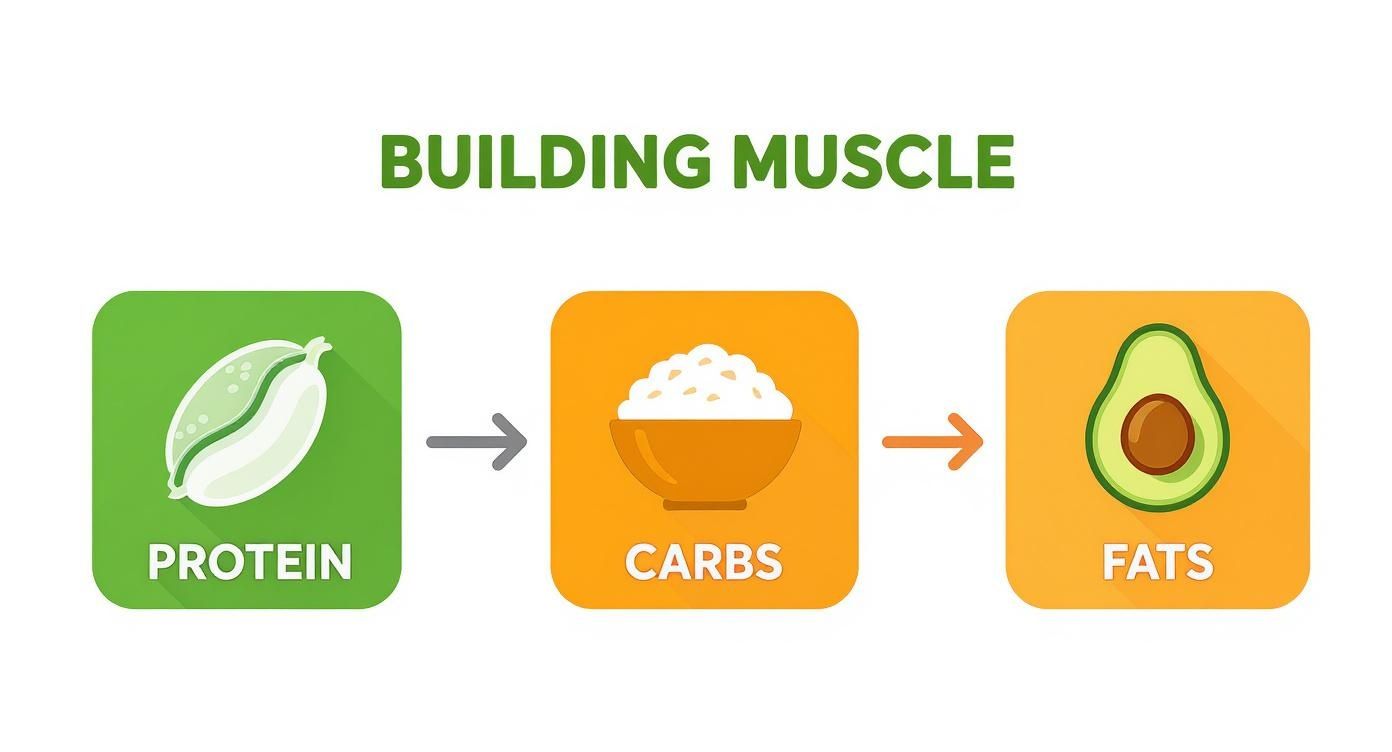
As you can see, protein provides the building blocks, carbs deliver the energy for construction, and fats keep all the underlying systems running smoothly.
I can't stress enough how important hitting these targets is, especially your protein. For instance, recent research on natural bodybuilders found that even high-level vegan athletes managed to hit an average of 1.6 grams of protein per kilogram during bulking phases—right on the money. But that number often dropped when they started a cutting phase, showing just how vital consistent planning is to protect hard-earned muscle. If you're curious, you can read the full research about these findings to dig deeper. Your dedication to planning is what will truly make the difference, ensuring your body always has what it needs to grow.
Your High-Protein Vegetarian Pantry
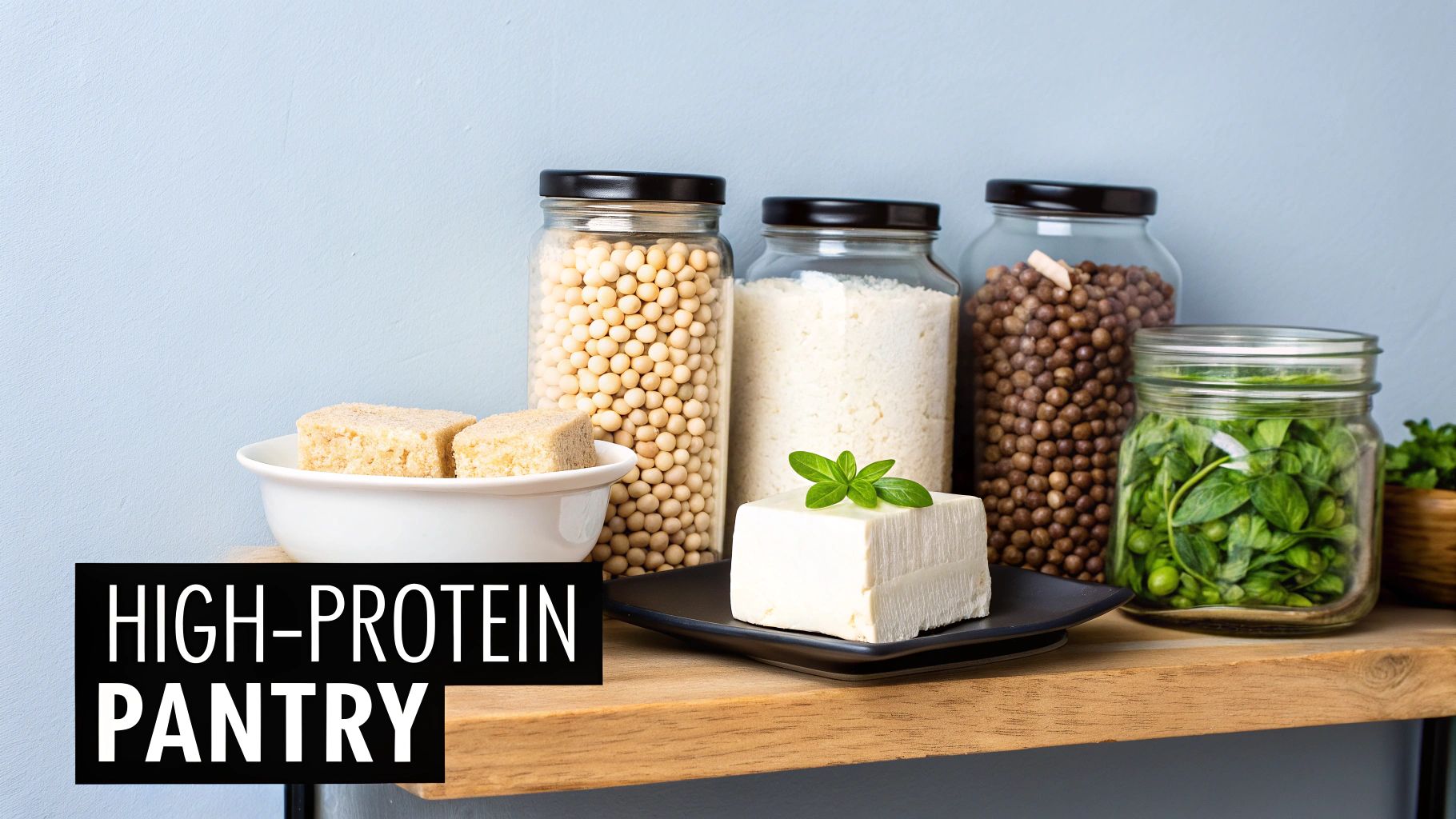
Now that you've got your targets dialed in, it’s time to stock your kitchen for success. A well-stocked pantry is the secret weapon behind any effective vegetarian meal plan for muscle gain, turning those numbers on a page into delicious, powerful meals. This isn't about wandering aimlessly through the grocery store; this is about building your strategic arsenal.
Your mission is to fill your shelves with versatile, protein-dense ingredients that make hitting your macros feel like second nature. Think of these foods as your go-to team, always ready to help you build, repair, and grow.
Powerhouse Legumes and Beans
Legumes are the undisputed champions of the plant-based protein world. They're cheap, incredibly versatile, and loaded with both protein and fiber—a combo that keeps you full and your digestive system happy. Stop thinking of them as a side dish. Here, they're the main event.
Take lentils, for example. They're a true powerhouse. A single cooked cup gives you about 18 grams of protein and a solid dose of iron, which is critical for keeping your energy levels up. Chickpeas are right there with them, offering around 15 grams of protein per cup and a great texture for everything from salads to curries. You can even roast them for a crunchy, high-protein snack.
Here are the staples I always keep on hand:
- Lentils (Brown, Green, and Red): Brown and green lentils hold their shape, making them perfect for hearty salads or stews. Red lentils cook down fast and get creamy, which is ideal for soups and dals.
- Chickpeas (Garbanzo Beans): An absolute must-have for hummus, grain bowls, or just roasting with spices for a satisfying crunch.
- Black Beans and Kidney Beans: The backbone of countless burritos, chilis, and veggie burgers. They provide that perfect mix of protein and complex carbs for sustained energy.
Soy-Based Complete Proteins
When it comes to protein quality, soy is in a league of its own in the plant kingdom. It's one of the very few plant sources that deliver a complete protein, meaning it contains all nine essential amino acids your body can't make on its own. These are the building blocks you absolutely need for muscle repair and growth.
This is where foods like tofu, tempeh, and edamame become your best friends. Tofu, made from condensed soy milk, is a blank canvas. Press a block of firm or extra-firm tofu, and it's ready to be baked, grilled, or scrambled, soaking up any flavor you throw at it. Tempeh, a fermented soybean cake, has a much firmer, chewier texture and a nutty flavor that’s fantastic in stir-fries or as a sandwich filling.
People love to debate plant vs. animal protein, but the science is clear: high-quality plant sources get the job done. A landmark 2022 meta-analysis confirmed that while some plant proteins weren't quite as effective as animal proteins for muscle synthesis, soy protein performed just as well as milk protein. That's huge. It's scientific proof that a diet rich in soy can absolutely support serious muscle-building goals.
Don't sleep on soy. Its complete amino acid profile and proven effectiveness make it an indispensable tool for any vegetarian athlete serious about gaining mass.
High-Protein Dairy and Eggs
If you include dairy and eggs in your diet, you've got access to some of the most bioavailable and convenient protein sources out there. They're all complete proteins and require next to no prep, making them perfect for quick meals and on-the-go snacks.
Greek yogurt is a real standout. A strained variety can pack up to 20 grams of protein in a single cup. It’s also loaded with casein, a slow-digesting protein that feeds your muscles a steady stream of amino acids—making it a perfect pre-bedtime snack to prevent muscle breakdown overnight. Cottage cheese is another fantastic choice, offering a similar protein punch.
And then there are eggs, often called nature's multivitamin. Each one gives you around 6 grams of high-quality protein along with key nutrients like choline and vitamin D. Keeping a dozen on hand means a fast, muscle-building meal is never more than a few minutes away. If you need some inspiration for fitting these into your routine, our plans focused on high-protein meals are full of practical ideas.
Nuts, Seeds, and Whole Grains
While they aren't your primary protein sources, nuts, seeds, and whole grains play a crucial supporting role. They chip in with valuable protein, healthy fats, and fiber, helping you hit both your protein and overall calorie targets for growth.
Quinoa is a particularly great grain because it's also a complete protein, offering about 8 grams per cooked cup. Oats are another staple, providing steady, slow-release energy and around 6 grams of protein per serving.
Nuts like almonds and walnuts, and seeds like chia, flax, and hemp, are perfect for topping yogurt, blending into smoothies, or just grabbing by the handful. A quarter-cup of almonds alone adds another 7 grams of protein to your daily total.
To put it all into perspective, here's a quick comparison of some of the best vegetarian protein sources you can stock in your kitchen.
Top Vegetarian Protein Sources Compared
| Food Source (100g serving) | Protein (grams) | Complete Protein? | Best For |
|---|---|---|---|
| Tempeh | ~20g | Yes | Stir-fries, sandwiches, crumbled as a ground meat sub |
| Lentils (Cooked) | ~9g | No | Soups, stews, salads, veggie burgers |
| Firm Tofu | ~17g | Yes | Scrambles, baking, grilling, stir-fries |
| Greek Yogurt (0%) | ~10g | Yes | Snacks, smoothies, sauces, breakfast bowls |
| Quinoa (Cooked) | ~4.5g | Yes | Grain bowls, salads, side dishes |
| Eggs (Large) | ~12.5g | Yes | Quick meals, breakfast, hard-boiled snacks |
| Chickpeas (Cooked) | ~8.5g | No | Salads, curries, hummus, roasted snacks |
| Hemp Seeds | ~31g | Yes | Topping on salads, yogurt, smoothies |
This table isn't exhaustive, but it shows how you can easily mix and match different foods to build powerful, protein-packed meals. Combining incomplete proteins like lentils with a whole grain like quinoa throughout the day ensures you're getting all the amino acids you need to fuel muscle growth effectively.
Designing Your Weekly Meal Plan
https://www.youtube.com/embed/AVO0ifle-OU
Stocking your pantry with high-protein vegetarian foods is one thing, but turning those ingredients into an effective weekly schedule is where the magic really happens. A solid meal plan isn't about eating bland, repetitive meals. It’s about building a flexible framework that consistently fuels your body for muscle growth and recovery.
The whole idea is to think about your day in terms of fuel and repair. This means being smart about when you eat, especially around your workouts, to get the most out of your training. Get this right, and you'll feel stronger in the gym and see better results, period.
Structuring Your Meals for Maximum Growth
Spreading your protein intake across four to five meals a day is one of the most effective strategies you can use. This usually looks like three main meals and one or two high-protein snacks. This approach keeps a steady stream of amino acids flowing to your muscles, encouraging a muscle-building (anabolic) state.
Think of it this way: trying to cram all your protein into one or two giant meals is like watering a plant with a firehose. A lot of it just runs off without being absorbed. Smaller, more frequent protein hits allow your body to actually process and use those crucial nutrients far more efficiently.
Here’s a simple daily structure that just works:
- Breakfast: Break your overnight fast with a protein-packed meal to kickstart your metabolism.
- Lunch: A balanced plate of protein, complex carbs, and healthy fats to power you through the afternoon.
- Pre-Workout Snack: A small, easy-to-digest snack with carbs and a bit of protein, about 60-90 minutes before you train.
- Post-Workout Meal: This one's critical. Aim for a meal rich in protein and fast-digesting carbs to replenish energy and kickstart muscle repair.
- Dinner: Your final protein-focused meal of the day to support recovery while you sleep.
Timing Your Nutrition Around Workouts
Nutrient timing can sound complicated, but the basics are straightforward and incredibly powerful. Your pre- and post-workout meals are the two biggest opportunities you have to directly influence your performance and recovery.
Before you hit the gym, the goal is to top off your energy stores. A meal that combines complex carbs (like oats or whole-grain toast) with some protein (like Greek yogurt) will give you the sustained energy you need to push through tough sets.
After your workout, your muscles are like sponges, ready to soak up nutrients. This is the perfect window for a meal with 20-40 grams of high-quality protein and some faster-acting carbs. This powerful combo helps refill your muscle glycogen (energy stores) and delivers the amino acids needed to start repairing damaged muscle fibers. A quick protein shake right after your session, followed by a real-food meal like lentil shepherd's pie an hour later, is a fantastic one-two punch.
Your meal plan is your roadmap. It takes the guesswork out of eating for your goals and ensures you’re consistently giving your body what it needs to build muscle, day in and day out.
A Sample 3-Day Meal Framework
Don't treat this as a rigid set of rules, but more like a flexible template to show you how these principles look in the real world. The idea is for you to take this structure and plug in your favorite high-protein foods. For more personalized options, a tool like our weekly meal planner can generate schedules based on your exact calorie and macro needs.
Day 1 (Workout Day)
- Breakfast: Tofu scramble with a handful of spinach and a side of whole-grain toast.
- Lunch: A big quinoa bowl loaded with black beans, corn, avocado, and a lime-tahini dressing.
- Post-Workout: A quick smoothie made with soy milk, a scoop of your favorite plant-based protein powder, and a banana.
- Dinner: Hearty lentil and vegetable stew with a side of brown rice.
Day 2 (Rest Day)
- Breakfast: Greek yogurt parfait layered with fresh berries, chia seeds, and a few almonds.
- Lunch: Leftover lentil stew from last night (meal prep for the win!).
- Snack: A bowl of cottage cheese with sliced peaches.
- Dinner: Baked tempeh served with roasted sweet potatoes and steamed broccoli.
Day 3 (Workout Day)
- Breakfast: Protein oatmeal ("proats") made by mixing protein powder into your rolled oats, topped with a spoonful of peanut butter.
- Lunch: Chickpea salad sandwich on whole-wheat bread with a side of carrot sticks.
- Post-Workout: Two hard-boiled eggs and an apple. Simple and effective.
- Dinner: Black bean burgers on whole-wheat buns with a large side salad.
When building your own plan, it's always smart to pull from the core ideas found in an ultimate nutrition plan for athletes. These plans consistently emphasize the same fundamentals—managing your macros, timing your meals, and staying hydrated—to support peak performance. Following this framework ensures you're not just eating enough, you're eating smart.
Meal Prep Strategies for Real Life
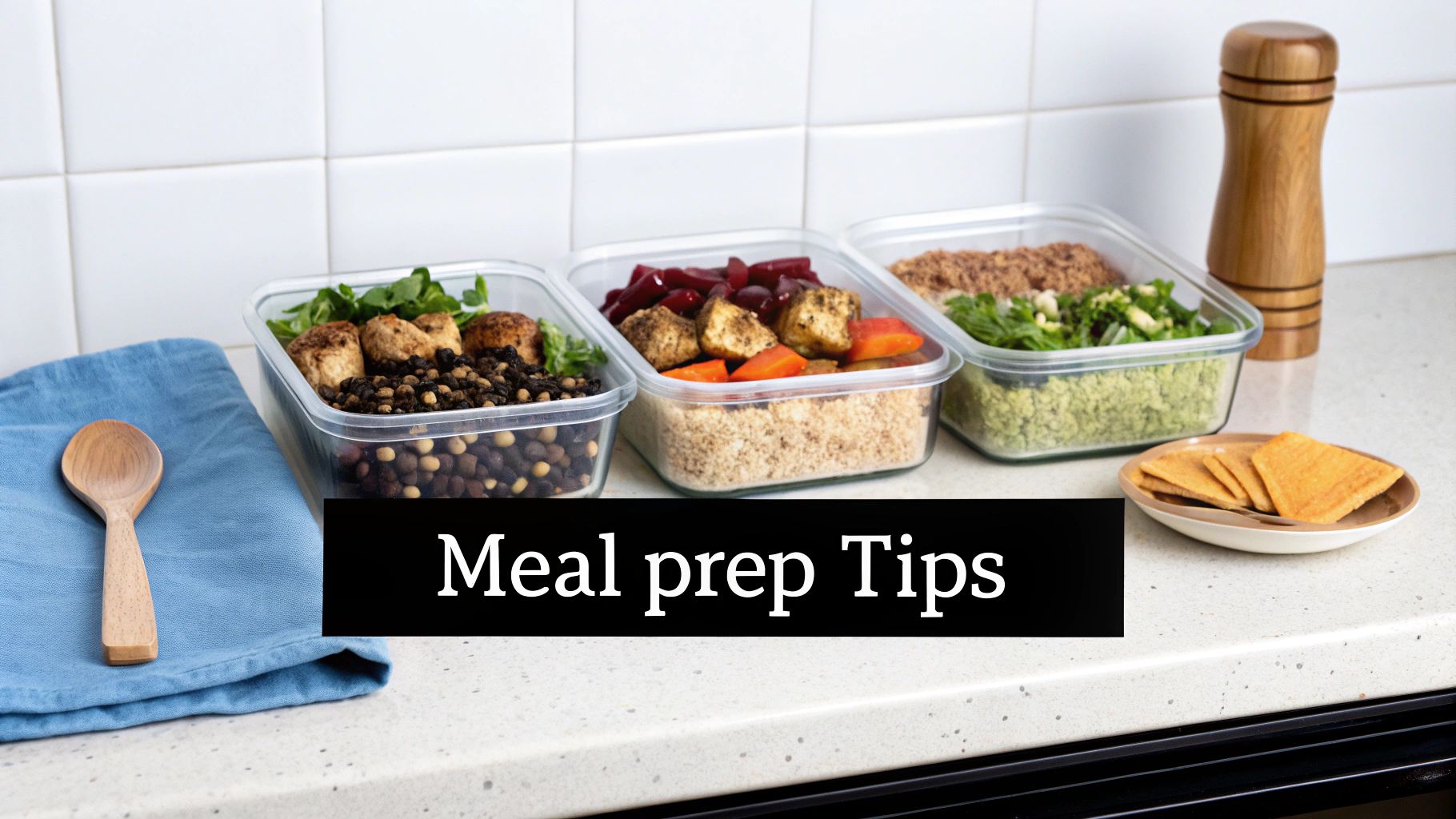
Let's be honest: the best meal plan in the world is completely useless if you don't actually stick to it. Consistency is the real secret sauce that separates people who hit their muscle-building goals from those who just dream about them. This is where getting smart about meal prep becomes your biggest advantage, turning a plan on paper into your daily reality.
And no, meal prepping doesn't mean you have to sacrifice your entire Sunday to the kitchen gods. It’s all about working smarter. By setting aside just a couple of hours one day a week, you build a system that kills decision fatigue and guarantees you have a high-protein vegetarian meal ready when you need it.
Master the Art of Batch Cooking
Batch cooking is the cornerstone of any good meal prep routine. The idea is simple: instead of cooking one meal at a time, you prepare large quantities of versatile base ingredients that you can then mix and match all week long. Trust me, this approach is a game-changer for saving time.
A typical Sunday prep session in my kitchen looks something like this:
- Grains: A big pot of quinoa or brown rice gets cooked and stored. This becomes my instant carb base for lunches and dinners.
- Legumes: I'll either cook a huge batch of lentils in veggie broth or just rinse a few cans of chickpeas and black beans. They’re ready to be tossed into salads, bowls, or curries at a moment's notice.
- Vegetables: A big sheet pan of roasted broccoli, bell peppers, and sweet potatoes is a must. They add flavor, fiber, and nutrients to any dish.
With these components ready, throwing together a high-protein bowl on a busy Tuesday night takes about five minutes instead of forty-five. For more inspiration on putting this into practice, check out these diverse high-protein meal prep ideas that can simplify your week and keep you on track.
Strategic Snacking for Protein Goals
Hitting your daily protein number, especially without meat, often comes down to what you eat between meals. Your snacks shouldn't just be empty calories; they're golden opportunities to nudge you closer to your goal. Just relying on willpower when you're starving is a surefire way to grab whatever's closest, and it's usually not a protein-packed option.
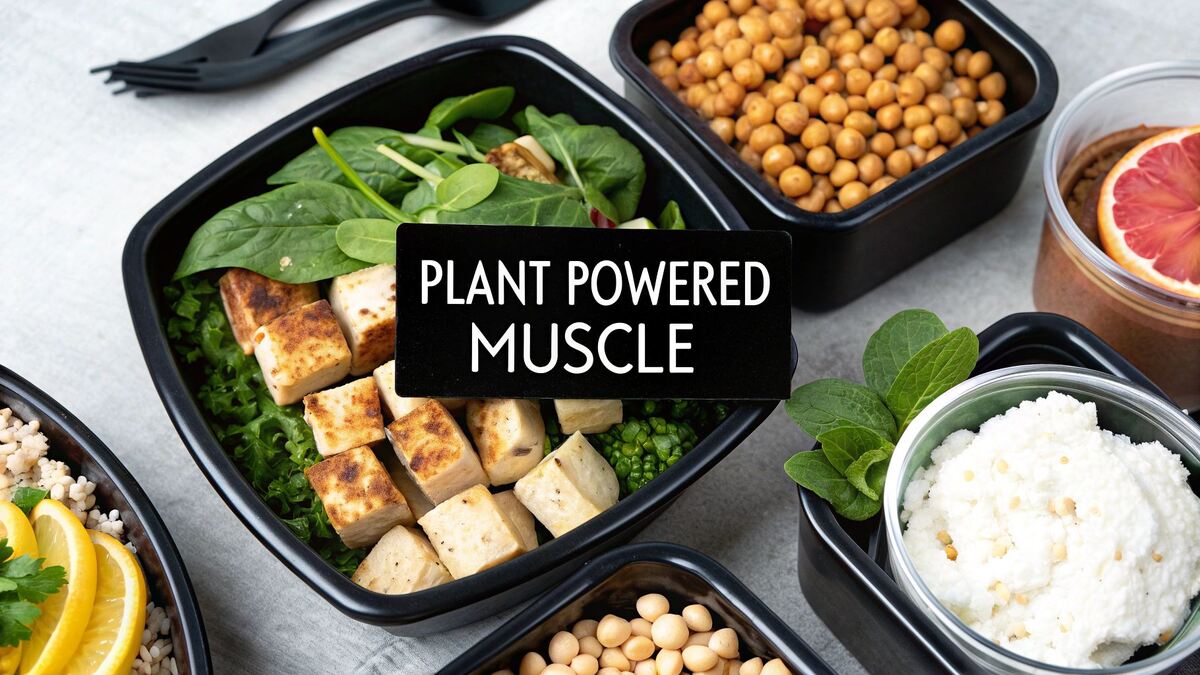
The fix? Prepare "grab-and-go" protein packs ahead of time. I like to portion out containers of Greek yogurt with a sprinkle of hemp seeds or make little baggies of roasted chickpeas and almonds. Having these on hand means you have a smart choice ready before the hunger pangs even start.
A rookie mistake is to focus only on your main meals. Your snacks are just as critical for a successful vegetarian muscle-gain plan. They bridge the nutritional gap between meals and help keep your body fueled for growth.
Navigating Social Situations and Eating Out
Life is going to happen, and you won’t always be eating out of your prepped containers. Going out to eat or to social events can feel like a huge obstacle, but it doesn't have to throw you off course. A little bit of planning goes a long way.
Before heading to a restaurant, take two minutes to look up the menu online. Zero in on the vegetarian options and find dishes that are built around protein sources like tofu, beans, tempeh, or eggs. And don't be shy about asking for simple tweaks, like getting a double portion of beans or adding a side of tofu to a salad.
Here are a few ground rules I follow when eating out:
- Protein First: I always scan the menu for the main protein source first and build the rest of my meal around that.
- Smart Swaps: Asking for steamed veggies instead of fries or extra lentils in a salad is an easy win. Most restaurants are happy to help.
- Portion Control: Restaurant servings can be massive. I'll often ask for a to-go box as soon as my food arrives and pack up half of it for another meal.
When you combine smart batch cooking, strategic snacking, and a solid plan for social events, you create a system that's actually sustainable. It’s that consistency that builds momentum and ultimately gets you the muscle gain results you're working so hard for.
Got Questions About Building Muscle on a Vegetarian Diet?
Switching to a vegetarian diet to build muscle can feel like navigating a new world. It's totally normal to have questions pop up, from whether you need protein powder to how to handle things like creatine. Let's tackle some of the biggest concerns head-on so you can move forward with confidence.
I want to give you straight-up, practical answers that cut through the fluff and help you solve the real challenges you're probably thinking about.
Do I Actually Need Protein Powder?
Honestly, no, you don't need it. But it sure does make things easier.
Hitting a high protein goal—we're talking 1.6 to 2.2 grams per kilogram of body weight—with just whole foods is tough. It takes a lot of planning and, frankly, a lot of eating. On a busy day, it can feel almost impossible.
A protein shake is a super convenient way to slam back 20-30 grams of high-quality protein right after a workout, exactly when your body is screaming for it. Think of it as a powerful tool in your nutritional toolkit, not a replacement for real food.
What Are the Best "Complete" Vegetarian Proteins?
A "complete protein" is just a food that has all nine essential amino acids your body can't make on its own. While a lot of plant foods are missing one or two, plenty of vegetarian options have the whole set.
These are the heavy hitters you should be adding to your grocery list:
- Soy-Based Foods: Tofu, tempeh, and edamame are absolute champs.
- Quinoa: This ancient grain isn't just a carb source; it's a complete protein.
- Dairy & Eggs: If you include these, Greek yogurt, cottage cheese, milk, and eggs are gold-standard protein sources.
- Buckwheat & Chia Seeds: Don't sleep on these! They're great additions to any meal.
And don't stress about getting a complete protein at every single meal. Your body is smart. It can pull amino acids from different foods you eat throughout the day. The classic rice and beans combo is a perfect example of two incomplete proteins coming together to create a complete profile.
How Can I Get Enough Creatine?
This is a really important question because creatine is mostly found in animal muscle. As a result, vegetarians and vegans tend to have lower levels stored in their muscles. Your body makes a little on its own, but not enough to really get the performance-boosting benefits.
For any vegetarian serious about maximizing strength and power, supplementing with 3-5 grams of creatine monohydrate each day is a no-brainer. It's safe, one of the most studied supplements on the planet, and it delivers a real performance kick that's otherwise impossible to get from plants.
Will I Lose Muscle If I Go Vegetarian?
Absolutely not—as long as you're smart about it. The only way you’ll lose muscle is if you accidentally tank your calorie and protein intake by simply removing meat without replacing it properly.
Here’s a pro tip: Before you cut out meat completely, track what you normally eat for a few days. Get a clear picture of your current protein numbers. Then, when you make the switch, be deliberate about filling that gap with high-protein vegetarian foods like lentils, tofu, beans, and Greek yogurt. If you keep your protein and calories consistent, your muscles won't even notice the change.
Ready to stop guessing and start building? The AI Meal Planner creates personalized meal plans based on your exact calorie and macro targets. Get your custom vegetarian muscle-gain plan at https://ai-mealplan.com and fuel your growth the right way.
AI-powered nutrition
Get Your Personalized Meal Plan
AI creates the perfect meals for your goals, lifestyle, and taste.
Start Your Journej