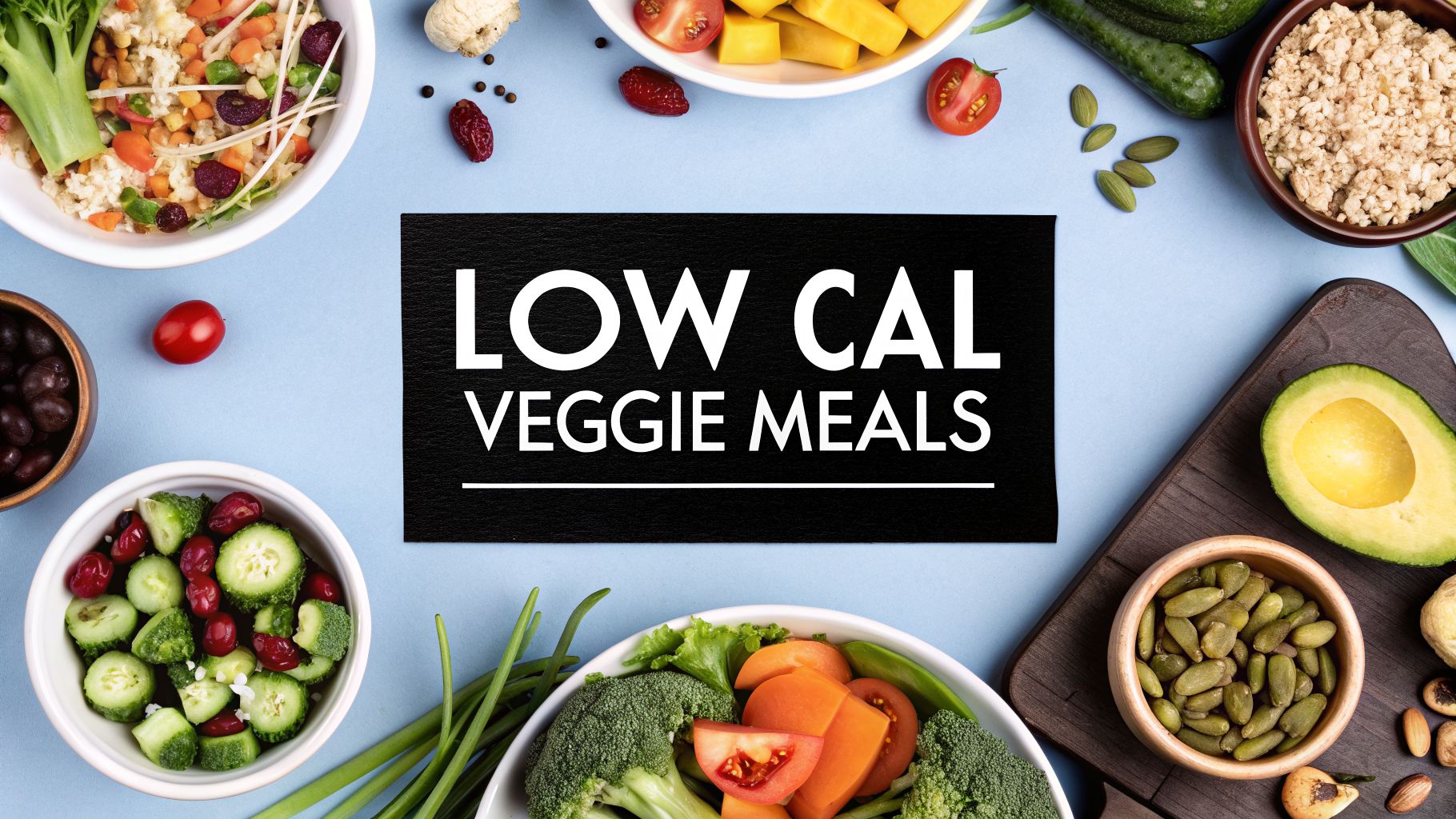
The best low calorie veggie meals are those that are high in volume, protein, and fiber to keep you full. Excellent options include Zucchini Noodle Stir-Fry (around 200 calories), Cauliflower Rice Buddha Bowls (around 230 calories), and Lentil Vegetable Curry (around 240 calories). These dishes use vegetables as a base to replace high-calorie ingredients while delivering flavor and satisfaction.
Eating healthy doesn't have to mean sacrificing flavor or feeling hungry. This guide offers a collection of delicious and satisfying low calorie veggie meals designed to help you achieve your health goals, whether that's sustainable weight management, better macro tracking, or simply incorporating more plant-based foods into your diet. Forget bland salads and repetitive dishes; these recipes are packed with vibrant ingredients, robust flavors, and are designed for real, busy lives.
This listicle provides more than just a simple list of meal ideas. For each recipe, you will find:
- Quick, actionable recipes that are easy to follow.
- Detailed nutritional information, including calories and macronutrients per serving.
- Practical prep times to help you plan your cooking schedule efficiently.
- Meal-prep and make-ahead tips to save you time during the week.
- Ingredient swaps and variations to suit your taste and pantry.
The goal is to give you a complete toolkit for success. We've structured this resource to be a practical, go-to guide for anyone looking to make healthy eating simple and enjoyable. Before diving into these delicious recipes, it's helpful to consider what cookware you'll need to start cooking confidently in your kitchen. Having the right tools on hand makes the entire process smoother and more fun.
1. Zucchini Noodle Stir-Fry with Tofu and Ginger
This light, protein-packed stir-fry is one of the most effective low calorie veggie meals for replacing carb-heavy pasta dishes. By swapping traditional noodles for spiralized zucchini, you dramatically cut calories and carbohydrates while adding extra vitamins and fiber. The dish centers around combining these "zoodles" with protein-rich tofu and a flavorful ginger-soy sauce, creating a satisfying meal perfect for a quick dinner or lunch.
It delivers a complete nutritional profile with minimal caloric impact. A typical serving contains only 180-220 calories while providing a substantial 12-15 grams of protein, which helps with satiety and muscle maintenance during weight management.
How do you make zucchini noodle stir-fry?
Success with this dish comes down to a few key preparation steps. For the best texture, press firm or extra-firm tofu for at least 30 minutes before cooking. This removes excess water, allowing it to brown nicely and better absorb the sauce. To avoid mushy zucchini noodles, spiralize them right before you plan to cook them and add them to the stir-fry last, cooking for only 1-2 minutes until they are just tender.
Pro Tip: Batch-prepare the ginger-soy sauce at the start of the week. Combine soy sauce (or tamari), grated ginger, minced garlic, and a touch of sesame oil in a jar. This saves precious time on busy weeknights.
Why is this stir-fry good for weight loss?
This stir-fry is a popular choice in fitness communities and 30-day wellness challenges because it is both filling and aligns with macro goals. The high protein from tofu and high fiber from zucchini and other vegetables create a sense of fullness that prevents overeating later. Its versatility also makes it a sustainable option; you can easily swap vegetables based on what's in season or add cashews for healthy fats and a satisfying crunch. For a precise breakdown of your custom version, you can calculate the nutritional information using an online tool.
2. Cauliflower Rice Buddha Bowl with Roasted Chickpeas
This nutrient-dense, grain-free bowl is one of the most effective low calorie veggie meals for anyone seeking a filling, fiber-rich lunch or dinner. By using cauliflower rice as the base, it drastically reduces calories and carbohydrates compared to traditional grain bowls. The meal is built around this low-carb foundation, topped with protein-packed roasted chickpeas, colorful vegetables, and a creamy tahini dressing for a complete and satisfying experience.

It offers exceptional nutritional value with minimal caloric load. A generous serving typically falls between 210-250 calories and provides about 11 grams of protein and 8 grams of fiber, supporting both satiety and digestive health.
How can you implement this meal?
The success of this Buddha bowl lies in smart preparation and flavor layering. To achieve a rich, nutty flavor, roast your cauliflower rice at 400°F (200°C) for about 20 minutes until it's lightly caramelized. For the chickpeas, toss them with spices like paprika, cumin, and garlic powder before roasting until crispy. This adds a savory crunch that elevates the entire dish.
Pro Tip: Keep your calories in check by pre-portioning the tahini dressing. Mix tahini, lemon juice, and water, then store it in 2-tablespoon containers. This prevents unintentionally adding hundreds of extra calories.
Why does this Buddha bowl work for weight loss?
This bowl is a staple in corporate wellness programs and among meal prep influencers because it's incredibly satisfying without being calorie-heavy. The combination of high fiber from the cauliflower and vegetables plus protein from the chickpeas keeps you full for hours, preventing mindless snacking. Its customizable nature makes it sustainable for long-term goals; you can add fresh cucumbers for crunch or use an AI calorie and macro calculator to precisely adjust toppings based on your daily targets.
3. Greek Salad with Marinated White Beans and Feta
This Mediterranean-inspired salad is a vibrant and flavorful choice among low calorie veggie meals, proving that calorie-conscious eating doesn't have to be bland. It combines crisp vegetables like cucumber and tomatoes with protein-rich marinated white beans, salty feta cheese, and briny kalamata olives. Dressed in a simple lemon-olive oil vinaigrette, it creates a satisfying and nutrient-dense meal perfect for a refreshing lunch.
It delivers a balanced nutritional profile with minimal caloric impact. A generous serving contains just 195-220 calories, while offering a solid 10 grams of protein and 7 grams of fiber, which are key for promoting fullness and supporting digestive health.
How do you prepare this Greek salad?
Success with this salad hinges on allowing the flavors to combine. For the best taste, prepare the salad and let it marinate for at least 30 minutes, or ideally 2-4 hours, in the refrigerator before serving. This allows the beans and vegetables to absorb the bright notes of the lemon vinaigrette. To keep vegetables crisp for meal prep, store the dressing separately and combine just before eating.
Pro Tip: To save valuable prep time, look for pre-marinated white beans or cannellini beans at specialty grocery stores. If making your own, marinate a large batch of canned beans in olive oil, lemon juice, garlic, and oregano to use throughout the week.
Why is this salad good for weight loss?
This salad is a staple for those following a Mediterranean diet because it is both satisfying and incredibly healthy. The combination of high fiber from the beans and vegetables with protein and healthy fats from the feta and olive oil creates lasting satiety, which helps prevent snacking between meals. Its versatility also makes it a sustainable option; you can add seasonal vegetables like bell peppers or artichoke hearts. To ensure your meal aligns with your goals, you can precisely track its nutritional value with a calorie deficit calculator.
4. Thai-Inspired Coconut Broth Vegetable Soup with Rice Noodles
This warming, aromatic soup is a perfect example of low calorie veggie meals that deliver comfort without compromising weight loss goals. It uses a light coconut milk and vegetable broth base, filled with rice noodles and an abundance of fresh vegetables like bok choy and mushrooms. The result is a high-volume, flavorful meal that provides a feeling of fullness and satisfaction for a very low caloric cost.
A generous serving of this Thai-inspired soup contains just 160-200 calories. Despite its light nature, the broth and fiber from the vegetables make it exceptionally satiating, helping to hydrate you and keep hunger at bay.
How do you make a flavorful, low-calorie soup?
The key to a rich, flavorful broth lies in the initial steps. Start by toasting your aromatics, such as lemongrass, ginger, and Thai chilies, in the pot for about 30 seconds before adding any liquid. This simple action awakens their essential oils and deepens the soup's flavor profile. Use a low-sodium vegetable broth and light coconut milk (around 5% fat) to keep the sodium and calorie counts in check. Add the rice noodles and delicate vegetables like bok choy near the end of the cooking process to prevent them from becoming overcooked and mushy.
Pro Tip: For maximum efficiency, dedicate some time on Sunday to wash and chop all your vegetables for the week. Store them in airtight containers so you can assemble this soup in under 15 minutes on any given night.
Why does this soup work for weight loss?
This soup is a favorite among nutrition coaches because it effectively manages hunger through high volume. The warm, nutrient-dense broth fills the stomach, signaling satiety to the brain with minimal calories. It's a great strategy for cold weather when cravings for heavier comfort foods are high. Furthermore, its components are easily adjustable; you can add baked tofu for protein or swap in different vegetables based on availability. To make smart choices like this even easier, you can find a guide on effective food swaps for weight loss that can help you adapt any recipe. A squeeze of fresh lime juice just before serving adds a bright, zesty finish without adding any calories.
5. Lentil and Vegetable Curry with Greek Yogurt
This protein-packed, Indian-inspired curry is one of the most satisfying low calorie veggie meals for anyone craving a warm, comforting dish. It combines fiber-rich lentils with diced vegetables and aromatic spices, with Greek yogurt added for creaminess instead of high-fat coconut milk. This simple swap keeps the dish light and nutrient-dense, making it a perfect dinner for a cool evening.
This meal offers a stellar nutritional profile with a low caloric footprint. A generous serving contains just 220-250 calories but delivers an impressive 15 grams of protein and 9 grams of fiber. This combination supports muscle maintenance during weight loss and promotes long-lasting satiety.
What are the best ways to prepare a low-calorie curry?
The key to a flavorful curry is in the spices. For maximum depth, briefly toast whole spices like cumin and mustard seeds in a dry pan until fragrant before grinding them. If you're short on time, using canned lentils can reduce the total cooking time to around 20 minutes. Add the Greek yogurt only after the curry has been removed from the heat and is ready to serve; this prevents the yogurt from curdling and maintains its creamy texture.
Pro Tip: Create a bulk spice blend on Sunday to streamline your weeknight cooking. Combine garam masala, turmeric, ground cumin, and a pinch of cayenne in a jar. This pre-made mix will be ready to go whenever you need it.
Why is lentil curry good for weight loss?
This curry is frequently recommended by nutrition coaches for vegetarian athletes and is popular in meal-prep communities for its budget-friendly nature. The high protein and fiber content work together to keep you feeling full for hours, effectively preventing mindless snacking. Its balanced macronutrient profile makes it an excellent post-workout meal. For a customized approach, you can use an AI Meal Planner to calculate the ideal protein-to-carb ratio for your specific fitness goals and meal timing.
6. Caprese Salad Skewers with Balsamic Reduction and Basil
This classic Italian-inspired favorite is one of the simplest and most refreshing low calorie veggie meals you can prepare. It transforms the traditional Caprese salad into a convenient, portion-controlled skewer, featuring cherry tomatoes, fresh mozzarella, and basil. A drizzle of homemade balsamic reduction adds a sweet, tangy finish, making it an elegant appetizer or a light, satisfying meal.

Perfectly balancing fresh flavors with minimal processing, each serving contains just 140-170 calories. The combination of juicy tomatoes, creamy mozzarella, and aromatic basil offers a satisfying variety of textures and tastes without relying on heavy dressings or fats, making it ideal for health-conscious gatherings or a quick, no-cook lunch.
How can you prepare this meal quickly?
Success lies in the quality of the ingredients and the timing of assembly. Opt for high-quality, fresh mozzarella balls (ciliegine) found in specialty markets, as their flavor and texture are superior to pre-shredded varieties. The balsamic reduction can be prepared well in advance by simmering balsamic vinegar until it thickens, saving you time during assembly. For the best presentation and flavor, add the fresh basil leaves right before serving to prevent them from browning or wilting.
Pro Tip: To create a more substantial meal, pair these skewers with a protein-rich side. Grilled tofu, a small bowl of chickpeas, or a scoop of quinoa complement the fresh flavors well and turn this light snack into a balanced dish. For personalized pairings, an AI Meal Planner can generate complete meal ideas based on your dietary goals.
Why do these skewers work for weight loss?
These skewers are a fantastic tool for weight management because they are visually appealing and satisfying, which helps curb cravings for less healthy options. The high water content in the tomatoes and the protein in the mozzarella contribute to a feeling of fullness. This meal is popular among fitness competitors as a pre-photo-shoot option and is a staple in Mediterranean diet plans, celebrated for its focus on whole foods and heart-healthy ingredients. Its simplicity and elegance make it a sustainable choice for anyone seeking delicious, low calorie veggie meals.
7. Roasted Vegetable and Black Bean Stuffed Bell Peppers
This visually appealing and nutrient-dense dish is one of the most satisfying low calorie veggie meals you can make. The meal features hollowed-out bell peppers filled with a seasoned mixture of black beans, roasted vegetables, and quinoa, all baked until perfectly tender. It’s a complete, well-rounded meal conveniently packaged in an edible, vitamin-rich container.

It offers a fantastic nutritional profile with minimal caloric cost. A single stuffed pepper typically contains just 210-240 calories but delivers around 10 grams of protein and an impressive 8 grams of fiber, promoting fullness and aiding digestive health.
How should you prepare stuffed bell peppers?
Success with this meal is all about building layers of flavor before the final bake. For a deeper taste, pre-roast your chopped vegetables (like zucchini, onions, and mushrooms) for about 15 minutes before mixing them with the other filling ingredients. Choosing bell peppers that are similar in size will also ensure they all cook evenly.
To prevent the tops from browning too quickly, cover the peppers with foil for the first 20 minutes of baking, then remove it for the last 10-15 minutes to allow them to finish cooking.
Pro Tip: Marinate your black beans for at least 24 hours before assembly. Combine them with cumin, chili powder, and a squeeze of lime juice in a sealed container in the refrigerator. This simple step infuses the beans with flavor that permeates the entire filling.
Why are stuffed peppers effective for weight loss?
Stuffed peppers are a cornerstone of many successful meal prep routines and structured nutrition programs because they offer excellent portion control and a satisfying volume. The combination of high fiber from the beans, vegetables, and quinoa creates a feeling of fullness that lasts for hours, preventing mindless snacking.
Its customizable nature makes it a sustainable choice for long-term health goals. You can easily adjust the grain component (swapping quinoa for brown rice or millet) to meet specific macro targets using an AI Meal Planner. This adaptability ensures the meal remains interesting and aligned with your dietary needs.
8. Spinach and Ricotta Stuffed Portobello Mushrooms with Tomato Sauce
This rich, savory dish is one of the most satisfying low calorie veggie meals for anyone craving classic Italian flavors without the carbs. By using large Portobello mushroom caps as an edible bowl, you replace pasta or bread, significantly cutting calories. The caps are filled with a creamy, protein-dense mixture of spinach and ricotta cheese and then baked in a simple tomato sauce, creating a hearty and elegant meal.
This dish excels at delivering a gourmet experience with a fantastic nutritional profile. A generous serving contains just 175-200 calories and an impressive 12 grams of protein, making it ideal for maintaining muscle mass while in a calorie deficit. Its low carbohydrate content also makes it a perfect fit for keto and low-carb diets.
How do you prepare stuffed portobello mushrooms?
Proper preparation of the mushrooms is crucial for achieving the best taste and texture. Start by selecting large, uniform Portobello caps, about four inches in diameter. Gently remove the dark gills from the underside with a spoon to create more space for the filling and remove any bitter taste. For the filling, be sure to squeeze all excess moisture from the spinach before mixing it with the ricotta; this prevents the final dish from becoming watery.
Pro Tip: Use a quality store-bought marinara sauce with no added sugar to save significant time. Simply spoon a layer into your baking dish before adding the mushrooms and top them with a little extra sauce and cheese before baking.
Why is this meal good for weight loss?
This meal is frequently recommended by keto diet experts and low-carb nutrition coaches because it is both filling and nutritionally dense. The combination of protein from the ricotta and fiber from the spinach and mushrooms promotes a lasting feeling of fullness, which helps prevent snacking between meals. Its inherent versatility allows for easy modifications, like adding chopped walnuts for healthy fats or using different herbs in the filling. To get precise nutritional values for your version, a tool like an AI Meal Planner can calculate macros based on your exact ingredients and portion sizes.
9. Chickpea Salad Wraps with Tahini Dressing and Fresh Herbs
This satisfying, no-cook meal is a fantastic alternative to traditional tuna or chicken salad, making it one of the most convenient low calorie veggie meals for lunch. It features a hearty filling of mashed and whole chickpeas seasoned with fresh herbs like parsley and dill, mixed with shredded carrots and celery for crunch. A creamy tahini dressing binds it all together, creating a rich flavor profile that's perfect for whole wheat or lettuce wraps.
This portable option delivers impressive nutrition with minimal calories. A standard serving contains just 200-220 calories but provides a solid 11 grams of protein and 8 grams of fiber, keeping you full and energized throughout the afternoon. This balance makes it ideal for busy professionals looking for a healthy and efficient meal solution.
How do you prepare these no-cook wraps?
Proper preparation is key to a great chickpea salad wrap. To get a varied and appealing texture, mash about half of the chickpeas with a fork and leave the other half whole. This creates a base that holds together well while still offering a pleasant bite. When it's time to eat, spoon the salad into your wrap of choice; collard greens or large lettuce leaves work well as low-carb alternatives to tortillas.
For maximum efficiency, prepare the chickpea salad mixture at the start of the week. It can be stored in an airtight container in the refrigerator for up to three days.
Pro Tip: To prevent a soggy wrap, pack the tahini dressing separately in a small container. Add the dressing and assemble the wrap just before you plan to eat it. This simple step preserves the crispness of the vegetables and the integrity of the wrap.
Why do chickpea salad wraps work for weight loss?
Popularized by plant-based nutrition coaches and vegan meal prep influencers, this recipe is celebrated for its high satiety factor. The combination of protein from chickpeas and fiber from both the chickpeas and vegetables helps curb hunger and prevent afternoon snacking. Its portability also makes it a reliable choice for avoiding unhealthy takeout options during a busy workday.
The recipe is easily adaptable to whatever fresh herbs you have on hand. For a modern, personalized approach, you can generate endless variations using an AI Meal Planner to match your weekly grocery list and taste preferences, making it a sustainable part of any weight management plan.
10. Broccoli and Tofu Scramble with Nutritional Yeast and Whole Grain Toast
This hearty, savory scramble reimagines a breakfast classic as a powerful, low calorie veggie meal suitable for any time of day. By using crumbled tofu seasoned with turmeric and nutritional yeast, it mimics the texture and flavor of scrambled eggs while delivering high-quality plant-based protein. Paired with roasted broccoli and whole grain toast, it becomes a well-rounded dish that supports sustained energy without a high caloric cost.
It offers an impressive nutritional profile for its calorie count. A single serving typically contains just 230-260 calories, yet provides a substantial 15 grams of protein and 8 grams of fiber, making it an excellent choice for keeping you full and energized for hours.
What's the best way to make a tofu scramble?
The key to a delicious scramble lies in the preparation of the tofu and vegetables. Start by pressing a block of firm tofu for at least 30 minutes to remove excess moisture; this step is crucial for achieving a firm, crumbly texture. For maximum flavor, roast the broccoli florets separately with a light coating of oil and garlic until they are tender with slightly crispy edges. This creates a pleasing textural contrast to the soft scramble.
Pro Tip: To deepen the flavor of your scramble, toast your spices (like turmeric, cumin, and black pepper) in a bit of oil for about 30 seconds before adding the crumbled tofu. This "blooms" the spices, releasing their aromatic compounds for a richer taste.
Why is tofu scramble good for weight management?
Featured in many plant-based athletic meal plans, this scramble is highly effective for weight management because it masters satiety. The combination of high protein from tofu and high fiber from broccoli and whole grains slows digestion, stabilizes blood sugar, and prevents the energy crashes that often lead to unhealthy snacking. Its versatility also makes it a sustainable dietary staple. You can use an AI Meal Planner like ai-mealplan.com to find complementary whole grain bread options that fit your specific macro targets and dietary needs.
Which low calorie veggie meal should I choose?
| Recipe | Implementation Complexity 🔄 | Speed/Efficiency ⚡ | Resource Requirements | Expected Outcomes ⭐📊 | Ideal Use Cases 💡 | Key Advantages ⭐ |
|---|---|---|---|---|---|---|
| Zucchini Noodle Stir-Fry with Tofu and Ginger | Medium 🔄🔄 | Quick (≈30 min) ⚡⚡ | Spiralizer (or peeler), tofu (pressing), fresh veg, ginger-soy sauce | 180–220 kcal; ~15g protein; high protein-to-calorie 📊 | Weight-loss lunches, meal-prep for busy schedules | Low-calorie yet filling; customizable; reduces waste |
| Cauliflower Rice Buddha Bowl with Roasted Chickpeas | Medium-High 🔄🔄🔄 | Moderate (30–40 min) ⚡⚡ | Oven, baking sheet, cauliflower ricer or food processor, tahini, chickpeas | 210–250 kcal; ~11g protein; 8g fiber 📊 | Office lunches, meal-prep, digestive-health focus | High fiber for satiety; stores 3–4 days; versatile toppings |
| Greek Salad with Marinated White Beans and Feta | Low 🔄 | Very quick (no-cook) ⚡⚡⚡ | Fresh produce, canned/pre-cooked beans, feta, olives, bowl/knife | 195–220 kcal; ~10g protein; 7g fiber 📊 | Heart-healthy lunches, portable office meals | No-cook; heart-healthy profile; simple prep |
| Thai-Inspired Coconut Broth Vegetable Soup with Rice Noodles | Low-Medium 🔄🔄 | Very quick (≈15 min) ⚡⚡⚡ | Stove, light coconut milk, low-sodium broth, rice noodles, fresh aromatics | 160–200 kcal; ~8g protein; high-volume broth 📊 | Comfort food, winter meals, batch/freezer cooking | Low-calorie comforting bowl; hydrating; freezer-friendly |
| Lentil and Vegetable Curry with Greek Yogurt | Medium-High 🔄🔄🔄 | Moderate (25–30 min) ⚡⚡ | Pot, spice pantry, lentils (or canned), yogurt, vegetables | 220–250 kcal; ~15g protein; 9g fiber 📊 | Muscle-maintenance, vegetarian athletes, bulk cooking | High protein+fiber; economical; freezes well |
| Caprese Salad Skewers with Balsamic Reduction and Basil | Low 🔄 | Extremely quick (<5 min) ⚡⚡⚡⚡ | Cherry tomatoes, fresh mozzarella, basil, balsamic (reduction optional) | 140–170 kcal; ~7g protein; light and fresh 📊 | Snacks, appetizers, summer/picnic meals | Instant assembly; visually portion-controlled; portable |
| Roasted Vegetable and Black Bean Stuffed Bell Peppers | Medium 🔄🔄 | Longer cook (35–40 min) ⚡ | Oven, bell peppers, quinoa/grain, black beans, roasting pans | 210–240 kcal; ~10g protein; 8g fiber 📊 | Family dinners, Sunday meal-prep, structured plans | Visually satisfying portions; nutrient-dense; freezer-friendly |
| Spinach and Ricotta Stuffed Portobello Mushrooms with Tomato Sauce | Low-Medium 🔄🔄 | Moderate (20–30 min, mostly bake) ⚡⚡ | Oven, large portobellos, ricotta, spinach, marinara | 175–200 kcal; ~12g protein; low-carb 📊 | Low-carb/keto meals, fitness-focused dinners | High protein-to-calorie; meaty texture; single-pan prep |
| Chickpea Salad Wraps with Tahini Dressing and Fresh Herbs | Low 🔄 | Quick (10–15 min) ⚡⚡⚡ | Wraps or lettuce, canned chickpeas, tahini, fresh herbs | 200–220 kcal; ~11g protein; 8g fiber 📊 | Portable lunches, travel, office meals | Highly portable; customizable; stores 3–4 days |
| Broccoli and Tofu Scramble with Nutritional Yeast and Whole Grain Toast | Low-Medium 🔄🔄 | Quick (≈15 min) ⚡⚡⚡ | Tofu (pressing), nutritional yeast, broccoli, skillet, whole-grain bread | 230–260 kcal; ~15g protein; 8g fiber 📊 | Breakfast/dinner swaps, vegan athletes, quick protein meals | Complete plant protein; affordable; versatile meal timing |
What are the key takeaways?
You’ve just explored a diverse collection of vibrant, flavorful, and satisfying low calorie veggie meals, each designed to prove that eating healthy doesn’t mean sacrificing taste or spending hours in the kitchen. From the zesty crunch of a Zucchini Noodle Stir-Fry to the comforting warmth of a Lentil and Vegetable Curry, the core takeaway is clear: delicious, nutrient-dense vegetarian cooking is accessible to everyone, regardless of their schedule or culinary skill level.
The journey to sustainable, healthy eating isn't about restriction; it's about empowerment. It's about understanding how to build a plate that fills you up, fuels your body, and excites your palate, all while staying within your caloric goals. Each recipe in this guide was built on this principle, showcasing the power of whole foods, smart cooking techniques, and strategic flavor combinations.
How can you succeed with low-calorie cooking?
As you move forward, keep these foundational concepts in mind. They are the building blocks for creating your own low calorie veggie meals and maintaining a healthy lifestyle long-term.
- Volume is Your Friend: Vegetables like zucchini, cauliflower, leafy greens, and bell peppers are naturally low in calories but high in water and fiber. By making them the star of your dish (think cauliflower rice instead of white rice, or zucchini noodles instead of pasta), you create a large, satisfying meal for a fraction of the calories.
- Protein and Fiber are Essential for Satiety: Notice how many recipes featured beans, lentils, tofu, or chickpeas? These ingredients are crucial. They provide the protein and fiber that signal fullness to your brain, preventing post-meal hunger and mindless snacking that can derail your progress.
- Flavor Comes from Herbs, Spices, and Healthy Fats: A common misconception is that low-calorie food is bland. We've shown this is far from the truth. Generous use of fresh herbs (basil, cilantro), potent spices (ginger, curry powder, cumin), and acidic elements (lemon juice, balsamic vinegar) adds immense flavor without adding significant calories. A small amount of healthy fat, like that from tahini or a drizzle of olive oil, provides richness and helps your body absorb fat-soluble vitamins.
How can you put this into practice?
Knowledge is only powerful when applied. To truly integrate these ideas into your routine, focus on these immediate actions:
- Choose One Recipe to Master This Week: Don’t try to overhaul your entire diet overnight. Pick the one recipe from our list that sounded most appealing and commit to making it. This small win will build confidence and momentum.
- Embrace Meal Prep: As highlighted in many of the tips, prepping components ahead of time is a game-changer. Spend 30 minutes on a Sunday chopping vegetables, cooking a batch of lentils, or mixing a dressing. This simple act removes the biggest barrier to healthy weeknight eating: a lack of time and energy.
- Stock Your "Flavor Pantry": Ensure your kitchen is equipped with the tools for success. This doesn’t mean expensive gadgets. It means having a good stock of dried spices, quality vinegars, low-sodium soy sauce, and nutritional yeast. These items have a long shelf life and can instantly elevate any simple vegetable dish.
Adopting a diet rich in low calorie veggie meals is more than just a strategy for weight management. It's a proactive step toward better heart health, improved digestion, and increased energy levels. It’s about creating a positive relationship with food, where you feel nourished and in control. The vibrant colors on your plate reflect the diverse nutrients you're giving your body, setting you up for long-term vitality.
Frequently Asked Questions
1. What is the lowest calorie vegetable? Watercress is one of the lowest-calorie vegetables, containing only about 4 calories per cup. Other very low-calorie options include celery, cucumbers, and leafy greens like spinach and lettuce.
2. How can I make my veggie meals more filling? Increase the protein and fiber content by adding beans, lentils, tofu, or chickpeas. Also, focus on high-volume, water-rich vegetables like zucchini and cauliflower to fill your stomach without adding significant calories.
3. Are low calorie vegetarian meals healthy? Yes, well-planned low-calorie vegetarian meals are very healthy as they are typically high in fiber, vitamins, and minerals. Ensure you include a good source of plant-based protein in each meal for balanced nutrition.
4. Can you lose weight on a vegetarian diet? Yes, you can effectively lose weight on a vegetarian diet, especially when focusing on whole foods and low-calorie, nutrient-dense meals. The high fiber content in plant-based diets naturally promotes satiety, which helps with calorie control.
5. What is a good low calorie vegetarian lunch for work? Chickpea salad wraps, Greek salad with white beans, or a pre-made cauliflower rice Buddha bowl are all excellent portable, low-calorie vegetarian lunches. They require no reheating and stay fresh until midday.
6. Do vegetarian meals have enough protein? Absolutely. You can get plenty of protein from plant sources like lentils (about 18g per cup), chickpeas (about 15g per cup), tofu (about 20g per block), and quinoa.
7. How do I start meal prepping low-calorie veggie meals? Start by choosing 2-3 recipes for the week, such as a large batch of lentil curry and the filling for stuffed peppers. Pre-chop all vegetables, cook grains, and mix dressings on a Sunday to make weekday assembly fast.
Tired of manually planning your meals and tracking calories? Let technology do the heavy lifting. The AI Meal Planner creates personalized meal plans based on your exact dietary needs, calorie targets, and taste preferences, making it effortless to discover and prepare delicious low calorie veggie meals every day. Get your custom plan and automated grocery list at AI Meal Planner.
AI-powered nutrition
Get Your Personalized Meal Plan
AI creates the perfect meals for your goals, lifestyle, and taste.
Start Your Journej