Intermittent Fasting Weight Loss Guide
Intermittent fasting isn't another diet that dictates what you can and can't eat. Instead, it's a completely different way of thinking about meal timing that focuses on when you eat. By cycling between periods of eating and fasting, you give your body a break from digestion and a chance to tap into its stored energy.
This simple shift can lead to impressive intermittent fasting weight loss because it helps you naturally eat fewer calories and gets your metabolism working in your favor.
How Intermittent Fasting Unlocks Weight Loss
Think of intermittent fasting (IF) less like a rigid diet and more like an eating schedule. You're essentially giving your digestive system a predictable, scheduled break every single day. That consistent downtime is what triggers some powerful biological changes that really support weight loss.
When you're not eating, your body isn't busy processing a constant supply of food. This causes your insulin levels to drop quite a bit. Insulin is the hormone that tells your body to store energy, so when it's low, it’s like a green light for your body to start burning its own reserves—your stored body fat.
The Metabolic Switch
This critical process is often called the metabolic switch. It's a fantastic concept. Imagine your body is a hybrid car that can run on two different fuels. The first fuel is glucose, which comes from the food you eat. It's the easy, quick-burning option.
But when you're fasting and that glucose isn't available, your body doesn't panic. It just switches over to its reserve tank: your body fat. This transition turns you into a much more efficient fat-burning machine.
This natural rhythm brings a few key advantages for weight loss:
- Effortless Calorie Control: When you limit your eating to a specific window of time, you almost always end up eating fewer calories without even trying. There's just less time to snack!
- Better Hormonal Balance: Lower insulin makes your fat stores easier to access. At the same time, other hormones like human growth hormone (HGH) can increase, which helps you hold onto precious muscle while you lose fat.
- Enhanced Insulin Sensitivity: Fasting regularly can make your cells more responsive to insulin. This is a huge deal for maintaining a healthy weight and avoiding metabolic problems down the road.
The big idea is simple but incredibly effective: Intermittent fasting creates the perfect conditions for your body to burn its own fat for fuel, shifting you out of a constant energy-storage mode.
Ultimately, this structured approach helps you work with your body's natural hormonal cycles instead of fighting against them. It creates a sustainable path to weight loss that doesn't force you to count every calorie or obsess over complicated meal rules. When you get the when right, managing the what becomes a whole lot easier.
Finding Your Ideal Fasting Schedule
One of the best things about intermittent fasting (IF) is how flexible it is. This isn't a one-size-fits-all diet with rigid rules. Instead, you can find a rhythm that fits seamlessly into your life, whether you have a demanding job, a busy family, or an active social calendar.
The real secret to success is picking a schedule that feels natural, not restrictive. Let's walk through the most popular options so you can find the perfect fit.
Comparing Popular Intermittent Fasting Methods
Choosing the right IF schedule can feel overwhelming at first, but it really boils down to your lifestyle and what you can stick with consistently. This table breaks down the most common methods to give you a clear, side-by-side comparison.
| Method | Fasting Schedule | Best For | Difficulty Level |
|---|---|---|---|
| 16:8 Method | Fast 16 hours, eat in an 8-hour window daily. | Beginners, those who dislike breakfast, people wanting a simple daily routine. | Easy |
| 14:10 Method | Fast 14 hours, eat in a 10-hour window daily. | Absolute beginners, those who find 16 hours too long to start. | Very Easy |
| 5:2 Diet | Eat normally 5 days a week, restrict to 500-600 calories 2 days a week. | People who prefer not to fast daily and can handle two disciplined days. | Medium |
| Eat-Stop-Eat | One or two full 24-hour fasts per week. | Experienced fasters looking for a more intense method. | Hard |
| Alternate-Day Fasting | Fast every other day (or eat a very low-calorie meal). | Those with significant fasting experience seeking aggressive results. | Very Hard |
Think of this table as a starting point. Most people begin with something like 14:10 or 16:8 and then adjust as they get more comfortable with the process.
The Daily Time-Restricted Methods
These schedules are all about consistency. You follow the same pattern every single day, which helps build a strong, predictable habit.
The 16:8 Method (The Leangains Protocol) This is the go-to for a reason. It's simple, effective, and surprisingly easy to adopt. All you do is fast for 16 hours and eat your meals within an 8-hour window. For most people, this just means skipping breakfast, having their first meal around noon, and finishing dinner by 8 p.m.
- Who it's for: Perfect for people who aren't big breakfast eaters anyway, have hectic mornings, or just want a straightforward daily structure.
The 14:10 Method If 16 hours feels like too much of a jump, the 14:10 method is a fantastic entry point. You fast for 14 hours and have a 10-hour eating window. It’s a gentler way to ease your body into a time-restricted schedule.
- Who it's for: Ideal for beginners who feel intimidated by a longer fast or anyone who needs a bit more flexibility in their day.
This simple infographic gives you a great visual of how IF works. It's all about switching your body between a "fed" state and a "fasted" state to control insulin and unlock your fat-burning potential.
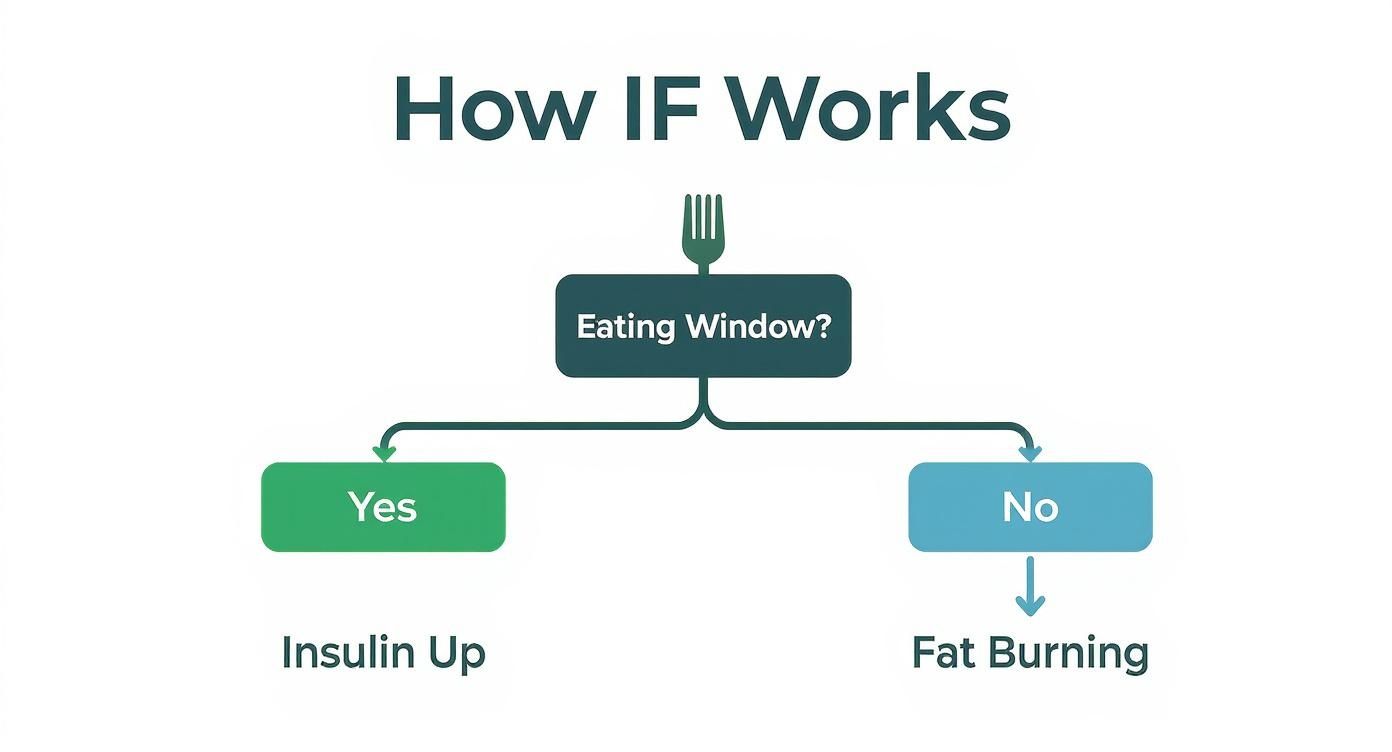
When you're in that fasted state, your insulin levels drop. This is the critical signal that tells your body, "Okay, time to stop storing fat and start burning it for fuel."
And this isn't just theory—it works in the real world. One major study showed that individuals with a BMI over 40 lost an average of 13.9% of their body weight over a year. The research found a clear link between effective fasting hours and weight loss, with the 16:8 schedule delivering impressive results.
Weekly and Advanced Fasting Schedules
If a daily schedule feels too confining, don't worry. Weekly fasting methods offer a different kind of freedom, focusing on one or two more intense fasting days per week.
The 5:2 Diet On this plan, you eat completely normally five days a week. On the other two days (make sure they aren’t back-to-back), you cut your calories way down to about 500-600. This creates a big calorie deficit over the week without you having to think about fasting every day.
- Who it's for: A great choice for people with unpredictable social schedules or those who prefer a couple of highly disciplined days over daily restrictions.
Eat-Stop-Eat Ready for a challenge? This method involves a full 24-hour fast once or twice a week. You might finish dinner at 7 p.m. on Monday and not eat again until dinner at 7 p.m. on Tuesday. It definitely requires some mental grit.
- Who it's for: Best suited for experienced fasters who are already comfortable going longer periods without food.
Alternate-Day Fasting (ADF) ADF is one of the most intense approaches out there. You fast every other day. On fasting days, you can either eat nothing at all or keep it under 500 calories. On your "eating" days, you just eat normally.
- Who it's for: This is advanced stuff. It's really for people who have tried other methods and are looking for more significant weight loss results.
You can supercharge your results by pairing IF with a smart eating strategy. Combining a 16:8 schedule with a well-planned diet, for example, can be incredibly powerful. If you're curious about this, check out how to build a personalized keto meal plan.
Key Takeaway: The best intermittent fasting schedule is the one you can actually stick to. Listen to your body and be honest about your lifestyle. Start with something manageable like 14:10 or 16:8, see how you feel, and don't be afraid to adjust.
The Science of Fasting and Your Metabolism
Intermittent fasting isn't just a clever way to eat fewer calories. It’s about flipping a series of powerful hormonal and cellular switches inside your body. Once you understand what’s happening on a biological level, it’s easy to see why it’s so effective for losing weight and improving your health.
The whole process starts with insulin, your body's main fat-storage hormone. When you eat—especially carbs—your insulin levels shoot up to shuttle sugar from your bloodstream into your cells for fuel. Any extra energy gets packed away as fat.
But when you fast, the complete opposite happens. With no food coming in, insulin levels drop. This is the critical signal that tells your body to slam the brakes on fat storage and start burning what it already has.
Hormonal Shifts That Drive Fat Loss
Lowering insulin is just the first step. Fasting also fires up other fat-burning machinery, creating an internal environment where weight loss becomes the default setting.
One of the biggest players here is human growth hormone (HGH). During a fast, HGH levels can increase significantly. This is huge, because HGH helps protect your valuable muscle mass while telling your body to burn more fat for energy. It's the perfect combo for improving your body composition—less fat, more lean tissue to keep your metabolism humming.
Then there's norepinephrine, a hormone your nervous system pumps out when you fast. Think of it as a shot of adrenaline for your metabolism. It signals fat cells to break down and release their stored energy, making it much easier for your body to actually use that fuel.
Becoming Metabolically Flexible
Maybe the most powerful long-term benefit of intermittent fasting is developing what’s known as metabolic flexibility. Think of your body as a hybrid car that can run on two different fuels: sugar (glucose) from food or its own stored fat. Most people, with their constant access to food, train their bodies to run almost exclusively on sugar. It's the easy, readily available option.
When you fast, you force your body to get good at switching over to its other fuel tank: your body fat. This skill—the ability to seamlessly toggle between fuel sources—is metabolic flexibility.
A metabolically flexible body doesn't hit the panic button when it runs out of sugar from a recent meal. It just calmly taps into its fat reserves for steady, clean energy, which is a game-changer for avoiding cravings and afternoon slumps.
This improved efficiency is the key to sustainable intermittent fasting weight loss. Your body learns to use its own fat for fuel, which is exactly the goal. If you want to really lean into this fat-burning state, you can find out more by exploring our guide on building a low-carb meal plan.
Cellular Cleanup and Autophagy
Beyond just hormones and fat burning, fasting kicks off a fascinating deep-cleaning process in your body called autophagy (pronounced aw-toff-uh-jee). It literally means “self-eating,” and while that sounds a bit intense, it’s incredibly good for you.
Think of autophagy as your body's internal recycling program. During a fast, your cells go into spring-cleaning mode, identifying and getting rid of old, damaged, or junk components. This cellular tidying-up helps reduce inflammation and keeps everything running smoothly. A healthier cellular system is a more efficient system, which absolutely supports your weight loss goals.
The science behind all this is solid and growing. Clinical trials have found that intermittent fasting can lead to significant body weight reductions, typically between 4% to 10%, in overweight people over 4 to 24 weeks. These results show how fasting fundamentally changes the metabolic pathways linked to obesity. For more on how certain foods can aid this process, check out these science-backed green tea weight loss benefits, which offer more insight into boosting your metabolism.
What to Eat to Maximize Your Results
While intermittent fasting is all about when you eat, what you put on your plate during your eating window is what truly drives sustainable results. Think of your eating window less as a free-for-all and more as a prime opportunity to fuel your body with high-quality, nutrient-dense foods.
Fasting flips the switch for fat burning, but the right foods are the high-octane fuel that keeps the engine running smoothly. Making smart choices will keep you feeling full, energized, and on the fast track to hitting your weight loss goals.
Building Your Nutrient-Dense Plate
To get the most out of intermittent fasting, I always tell people to build their meals around four key pillars. This simple framework is the secret to feeling satisfied, holding onto muscle, and keeping your energy rock-steady.
- Prioritize Lean Protein: Protein is your best friend here. It's the most satiating macronutrient, meaning it keeps you feeling fuller for longer—a massive advantage when you have a fasting period ahead of you. Make sure a quality protein source is the star of every meal.
- Embrace Healthy Fats: Don't be afraid of fats! The right kinds—from avocados, nuts, seeds, and olive oil—provide long-lasting energy and are crucial for hormone health. They also play a huge role in keeping you satisfied between meals.
- Fill Up on Fiber: Vegetables and legumes are your secret weapon for volume. They’re low in calories but packed with fiber and nutrients, filling up your stomach and helping to stabilize blood sugar. No more energy crashes.
- Include Complex Carbohydrates: While not a must for everyone, slow-digesting carbs like sweet potatoes, quinoa, and other whole grains can be a great source of sustained energy, especially if you're active. They burn slowly, preventing the insulin spikes that come from processed carbs.
Following this balanced approach ensures your body gets everything it needs to function at its best, even when you’re in a calorie deficit.
The Power of Protein for Satiety
Protein really deserves a special mention because it’s your number one defense against hunger and muscle loss. When you’re losing weight, the goal is to shed fat, not the metabolically active muscle that keeps your body burning calories. A high-protein diet is the clearest signal you can send your body to preserve that lean mass.
It’s worth learning how to increase your protein intake the smart way without feeling like you're just eating chicken breast all day. Simple tweaks, like adding Greek yogurt to your breakfast or a scoop of protein to a smoothie, can make a world of difference.
When fat loss is the goal, protein is simply non-negotiable. Research consistently shows that a higher protein intake can dramatically reduce appetite and overall calorie consumption, making those fasting hours so much easier.
If you want to get serious about this strategy, a dedicated high-protein meal plan can take all the guesswork out of hitting your daily protein targets.
Hydration and What to Drink While Fasting
Staying hydrated is absolutely critical, both during your fasts and your eating periods. Water is key for managing hunger pangs, keeping your metabolism humming, and fighting off fatigue. But what else can you drink without breaking your fast?
The golden rule is pretty simple: stick to zero-calorie beverages that don't provoke an insulin response.
- Water: This is your go-to. Drink it still, sparkling, or with a little squeeze of lemon to mix things up.
- Black Coffee: With virtually no calories, coffee is a great tool. It can help blunt your appetite and even give your metabolism a slight boost. Just be sure to skip the sugar, milk, and cream.
- Unsweetened Tea: Green, black, or herbal teas are all fantastic choices. You get hydration and a dose of antioxidants without breaking your fast.
Keeping up with these approved drinks makes the fasting window feel much more manageable and helps you avoid common issues like headaches or brain fog.
Sample 16:8 Meal Plan
So, what does this look like in the real world? Here’s a snapshot of a typical day on a 16:8 schedule with an eating window from 12:00 PM to 8:00 PM.
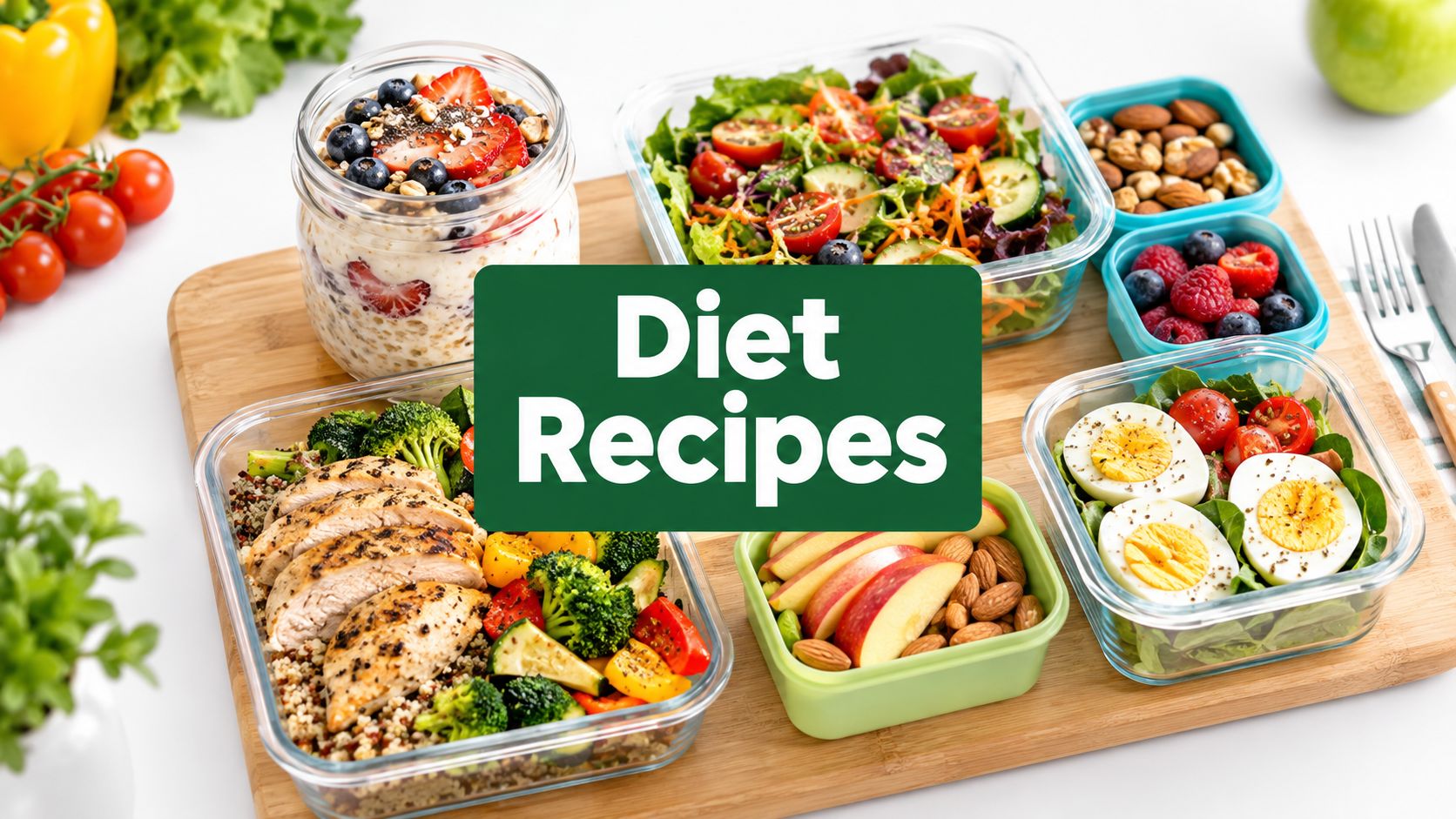
- 12:00 PM (First Meal): A big, satisfying salad with grilled chicken, mixed greens, cucumber, tomatoes, and avocado, all tossed in a light vinaigrette. This meal hits all the marks: lean protein, healthy fats, and a ton of fiber.
- 3:30 PM (Snack): A handful of almonds and a crisp apple. The combination of protein and fat from the nuts with the fiber from the apple is the perfect way to bridge the gap until dinner without a crash.
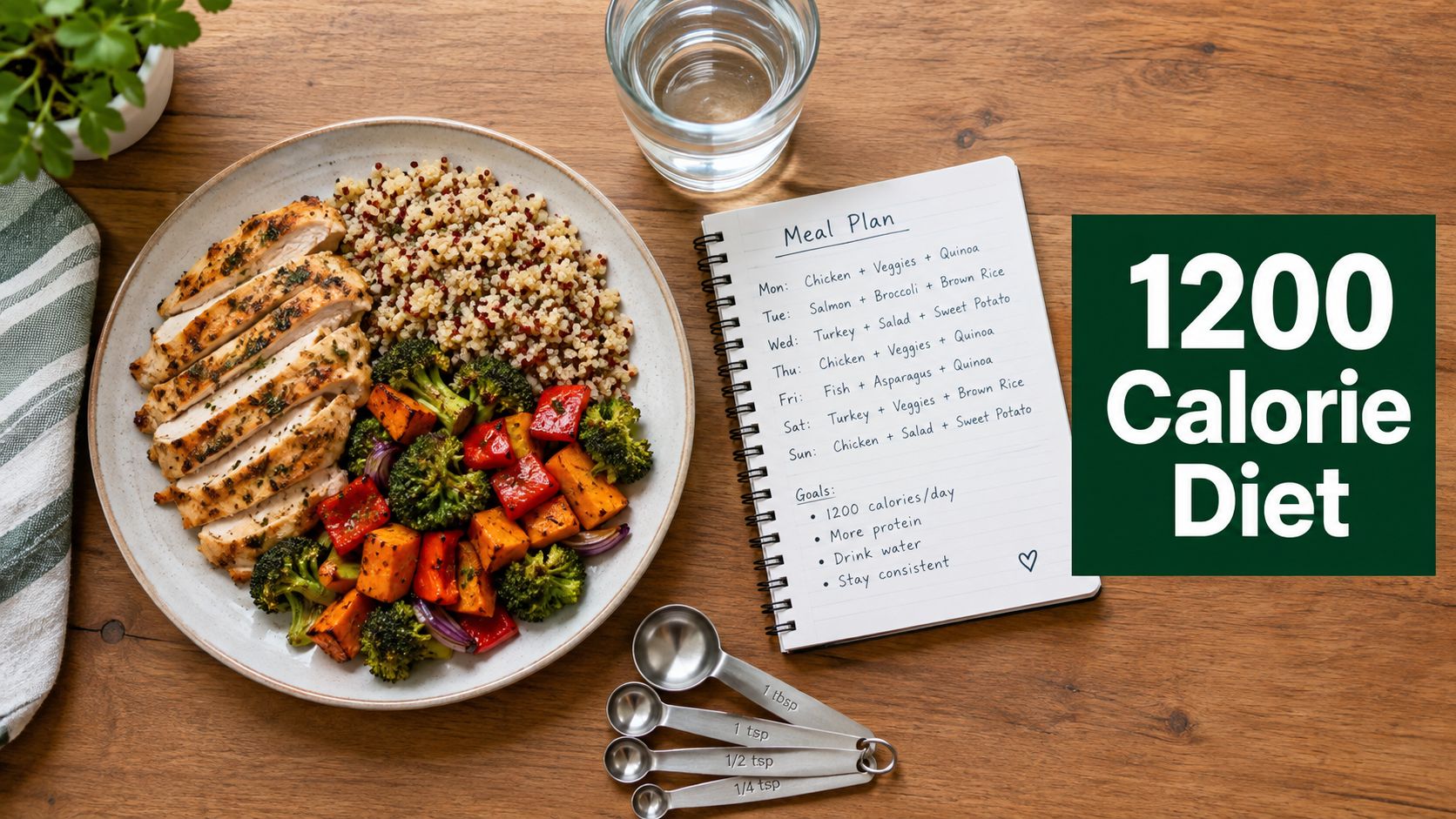
- 7:00 PM (Last Meal): Baked salmon served with a side of roasted broccoli and a small sweet potato. This final meal is loaded with healthy omega-3s, more fiber, and a slow-digesting carb to keep you feeling full and satisfied until your next eating window.
Navigating Common Fasting Challenges

Let's be real—starting any new habit has its bumps, and intermittent fasting is no exception. Those first few days can feel a bit weird as your body figures out what's going on. Knowing what to expect and having a game plan is the secret to making this a lasting, successful part of your life.
These early hurdles are totally normal and, thankfully, temporary. The goal here is to give you the tools to push through them, making your journey toward intermittent fasting weight loss feel manageable and positive right from the start.
Managing Hunger Pangs and Cravings
The number one question I get from beginners is, "What about the hunger?" It’s a valid concern, especially as you approach the end of a fast. Your body is just following its old clock, so it needs time to learn the new schedule. The good news? Hunger usually comes in waves, and if you can ride it out, it will pass.
One of the best tricks is simply to stay busy. A walk, a work project, or even tidying up can make you forget you were even hungry. And don't underestimate the power of hydration. Sometimes that "empty" feeling is just thirst in disguise. A big glass of water or a cup of black coffee can often be just what you need to get you to your eating window.
Dealing with Low Energy and Headaches
Feeling a bit foggy or getting a headache when you first start fasting is pretty common. More often than not, this isn't about a lack of food—it’s about dehydration and an electrolyte imbalance. When your insulin levels drop during a fast, your body flushes out water and salt more quickly.
To get ahead of this, try these simple fixes:
- Hydrate All Day: Don't just chug water during your fasting window. Sip consistently throughout the day.
- Add a Pinch of Salt: Stirring a small pinch of sea salt into a glass of water is a fantastic way to replenish those lost electrolytes.
- Ease Into It: Please don't jump straight into a 20-hour fast. Start with a more manageable 12 or 14 hours and slowly work your way up as your body adapts.
These little side effects usually fade within a week or so as your body gets better at burning fat for fuel.
The initial challenges of fasting are not a sign of failure but a normal part of your body's adaptation process. Pushing through this short adjustment period unlocks the long-term benefits.
Navigating Social Situations and Special Events
Life happens. Dinners out, birthday parties, and work lunches are going to pop up. The beauty of intermittent fasting is its flexibility—you don't have to become a hermit or derail your progress.
A simple strategy is to shift your eating window for the day. If you have a dinner planned for 8 PM, you can just start your eating window later. Remember, it's about consistency, not perfection. One off-schedule day won't undo all your progress.
This adaptability is a huge reason why fasting works for so many people. In fact, over 40 global studies have shown that intermittent fasting leads to significant weight loss, and its dropout rates are no higher than other diets. Interestingly, about 10 of those trials found that people didn't feel any hungrier, even after losing weight. If you're curious about the data, you can dig into these intermittent fasting statistics and trends to see just how effective it can be.
Got Questions About Intermittent Fasting? We've Got Answers
Stepping into the world of intermittent fasting naturally brings up a lot of questions. As you start to change your eating schedule, you'll probably wonder how it fits with exercise, what it means for your muscle health, and when you can expect to see real changes.
Think of this as your practical FAQ. We'll cut through the noise and give you clear, straightforward answers to help you fast with confidence.
Can I Still Work Out While I'm Fasting?
Yes, you absolutely can, and many people find it’s a game-changer for their results. The trick is to listen to your body and match your workout intensity to how you're feeling, especially when you're just getting started.
For lighter activities like a brisk walk, a gentle jog, or a yoga session, exercising in your fasted state can feel great. Some studies even suggest that this can nudge your body to burn more fat for fuel, since its immediate sugar stores are low.
But for the heavy hitters—think serious weightlifting or high-intensity interval training (HIIT)—timing is everything. You'll likely have more power and stamina if you schedule these workouts right before you break your fast or sometime during your eating window. That way, you’ve got the fuel you need to perform your best and the nutrients on hand for a solid recovery.
The golden rule here is simple: listen to your body. If you start feeling dizzy, weak, or just plain off, that’s your cue to stop. And don’t forget to hydrate—water is non-negotiable, especially when you’re combining fasting and fitness.
Will Fasting Make Me Lose Muscle?
This is probably one of the biggest (and most valid) concerns out there. It makes sense to worry that if you're not eating, your body will start using your hard-earned muscle for energy. But here's the good news: when done correctly, intermittent fasting doesn't cause any more muscle loss than a standard calorie-cutting diet.
In fact, fasting has a clever way of protecting your muscle. It can give your human growth hormone (HGH) levels a serious boost. HGH is a key player in preserving lean muscle while telling your body to burn fat instead.
To really nail this and keep your muscle while you lose weight, you just need to focus on two things:
- Get Enough Protein: During your eating window, make sure you're packing in high-quality protein. For most active people, aiming for 1.2 to 1.7 grams of protein per kilogram of body weight is a great target.
- Keep Up with Strength Training: Hitting the weights or doing bodyweight exercises a few times a week sends a powerful message to your body: "Hey, we need this muscle, don't get rid of it!"
This one-two punch encourages your body to burn fat for fuel while holding onto the muscle that keeps your metabolism fired up.
How Long Until I Actually See Results?
There's no single answer here—everyone's body is different. Your starting point, the fasting style you choose, what you eat, and how active you are all play a role. But we can give you a general idea of what to expect.
Most people notice small changes within the first week or two. You might feel less bloated or just a bit lighter on your feet. A lot of this initial success is often water weight, which your body sheds as insulin levels drop.
The more steady, noticeable fat loss usually kicks in after about four weeks of consistent effort. The real magic happens with consistency. If you stick with your plan and fill your eating window with nutritious foods, you'll set yourself up for significant, lasting results.
Is Intermittent Fasting Okay for Everyone?
While intermittent fasting is a fantastic tool for many adults looking to get healthier, it’s definitely not a one-size-fits-all approach. Some people should avoid it altogether, while others should only try it under a doctor's supervision.
Your health and safety always come first, so it's vital to know if this eating style is right for you.
Generally, intermittent fasting is not recommended for:
- Women who are pregnant, trying to become pregnant, or breastfeeding.
- Anyone with a history of eating disorders, as the structure of fasting can be a trigger.
- People who are underweight (a Body Mass Index below 18.5).
- Children and teenagers, who need consistent nutrients for growth.
- Individuals with specific medical conditions, like type 1 diabetes, or those on medications that need to be taken with food.
Before you jump in, it’s always a smart move to chat with your doctor or a registered dietitian. They can look at your personal health history and help you decide if intermittent fasting is a safe and effective path for you.
Ready to stop guessing what to eat? The AI Meal Planner builds a custom meal plan that fits perfectly with your fasting schedule and weight loss goals. Get delicious, simple recipes made just for you.
AI-powered nutrition
Get Your Personalized Meal Plan
AI creates the perfect meals for your goals, lifestyle, and taste.
Start Your Journej