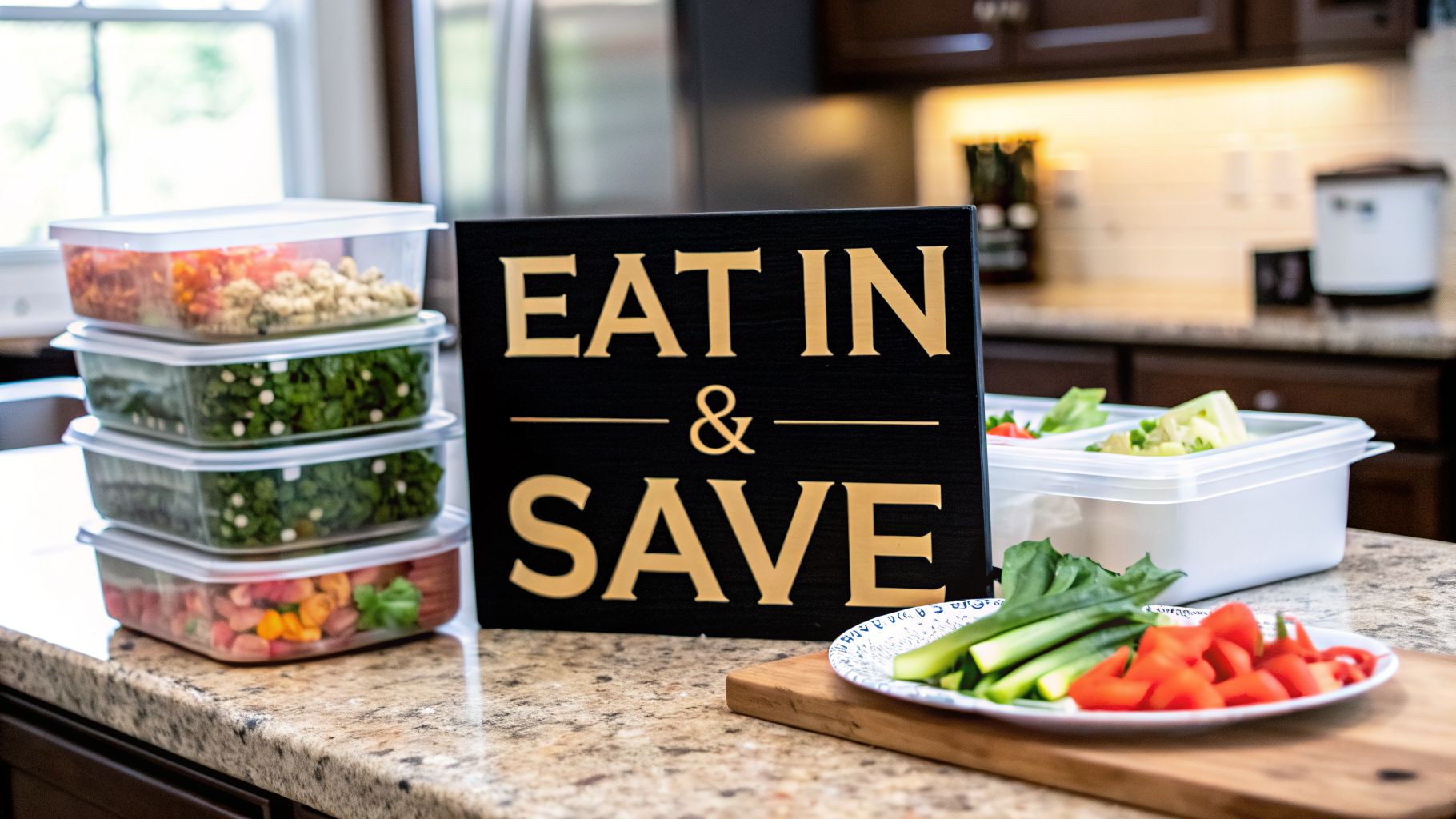
To stop eating out, first, track your spending for one week to identify your triggers and costs. Next, create a flexible weekly meal plan with simple recipes for busy nights and build a "capsule pantry" with essential non-perishables. Finally, dedicate one to two hours per week to "component prepping"—cooking grains, proteins, and chopping veggies in advance for quick assembly.
If you’ve ever scrolled through your bank statements and felt a jolt of surprise at the sheer number of restaurant and takeout charges, you're not alone. The real challenge in cutting back isn't a lack of desire; it's a battle against the powerful, everyday forces that make eating out feel like the default choice.
The modern lifestyle is practically designed to push us toward convenience. Long workdays, draining commutes, and packed social calendars leave little time or mental energy for cooking. When 5 PM hits and you're exhausted, the idea of chopping vegetables and washing pans feels monumental compared to the ease of tapping an app for delivery.
Why do I keep eating out instead of cooking?
Understanding your personal "why" is the first step toward making a meaningful change. It’s rarely just about the food. More often, eating out is simply a solution to an underlying problem.
Are any of these your go-to triggers?
- Decision Fatigue: After a full day of making choices at work, the question "what's for dinner?" can feel like the final straw. Ordering out is just easier.
- Lack of Confidence: If you feel intimidated in the kitchen or don't have a few go-to easy recipes, takeout feels like a safer, more reliable bet.
- Social Pressure: Grabbing lunch with coworkers or meeting friends for dinner is a deeply ingrained social ritual. It's how we connect.
- Unpreparedness: An empty fridge and pantry after a long day is a direct path to the delivery app. It's the path of least resistance.
To get to the bottom of your own habits, you need a clear picture of what’s really happening. Take one week and track every meal you eat out. Be brutally honest with yourself—the goal isn't judgment, it's discovery.
How do I audit my eating out habits?
Use this template to track your dining habits for a week. The goal is to uncover patterns and the real reasons behind your choices.
| Day of the Week | Meal Eaten Out | The Real Reason (e.g., Social obligation, Too tired to cook, Craving) | Amount Spent |
|---|---|---|---|
| Monday | |||
| Tuesday | |||
| Wednesday | |||
| Thursday | |||
| Friday | |||
| Saturday | |||
| Sunday |
After seven days, you'll have real data. You'll see which days are your weak spots, what emotions are driving your decisions, and exactly how much it’s costing you. That's the intel you need to start making a change.
What is the true cost of eating out?
The ease of restaurant meals comes with significant hidden costs that impact both your wallet and your well-being. Eating out frequently can lead to consuming up to 200 extra calories per meal compared to what you'd cook at home. For households eating out more than three times a week, this habit can inflate the monthly food budget by a staggering 30-50%.
Swapping even a few of those restaurant meals for home-cooked ones isn't just a healthier choice; it’s a direct and powerful financial strategy. Those savings can be redirected toward other goals, from paying down debt to building up your savings.
Using a tool like the AI Meal Planner to define your goals from the beginning can make all the difference. By inputting your specific needs, you're not just getting a generic plan; you're creating a personalized roadmap that makes cooking at home align with what you actually want to eat. It's the first step to making your kitchen a place you want to be.
How do I create a meal plan I will actually use?
Let's be honest: most meal plans fail. They fail because they’re designed for a perfect, fantasy life, not the chaotic reality of a busy week. A good plan isn't a rigid spreadsheet that falls apart the second you have to work late. It’s a flexible framework that makes cooking at home feel just as easy as ordering takeout.
The secret is to stop thinking of a meal plan as a set of rules you're forced to follow. Instead, see it as your personal cheat sheet—a collection of ideas and prepped ingredients designed to answer the dreaded "what's for dinner?" question without any stress.
How can I make my meal plan more flexible?
A minute-by-minute, super-detailed plan is brittle. It shatters the moment life gets in the way. A much more resilient approach is to build your week around themes or prepped components. This gives you just enough structure to feel in control, but all the freedom you need for spontaneous changes.
One of the most effective ways to do this is with theme nights. This doesn't mean you're locked into tacos every single Tuesday, but it gives your brain a much-needed starting point.
- Meatless Monday: Your cue to make something plant-based, like a hearty lentil soup, black bean burgers, or a quick vegetable curry.
- Pasta Night: Keep a couple of pasta shapes and your favorite jarred (or pre-made) sauce on hand. Dinner is practically done.
- Stir-fry Friday: The perfect way to use up any lingering veggies from the week. All you need is a simple sauce and your choice of protein.
This simple structure is a game-changer for eliminating decision fatigue, which is the number one reason most of us give up and grab our phones to order food.
How do I make a plan that fits my schedule?
A meal plan that calls for an hour-long recipe on a night you only have 20 minutes is worse than useless—it’s discouraging. Before you even think about food, pull up your calendar. Get real about the week ahead. Pinpoint the crazy days with late meetings, your kid's soccer practice, or after-work events.
On those high-stress nights, you need to schedule your "emergency" meals. These are the dinners that take less than 20 minutes from fridge to table. Save the more involved or experimental cooking for the quieter days, like a Saturday or Sunday when you actually have time to enjoy it.
Key Insight: Your meal plan must serve your schedule, not the other way around. Match the complexity of the meal to the time you actually have, and you'll sidestep the overwhelm that leads straight to a delivery app.
Here’s what this looks like in practice:
- Monday (Crazy busy): Pre-cooked chicken, a bag of mixed greens, and a simple vinaigrette. Done.
- Wednesday (Normal weeknight): A 30-minute sheet-pan recipe with sausage and veggies.
- Saturday (Relaxed): Time to tackle that homemade lasagna recipe you’ve been wanting to try.
How does component cooking save time?
If there's one habit that will completely change your weeknight cooking, it's component cooking. Instead of prepping entire, finished meals (which can get boring fast), you prepare versatile, individual ingredients that can be mixed and matched all week long.
This single strategy is the fastest way to slash your nightly cooking time. The infographic below shows the simple process of auditing your habits and then building a sustainable plan, which is exactly what component cooking enables.

As you can see, creating a plan is the critical bridge between knowing you need a change and actually making it happen.
Spend an hour on Sunday prepping a few of these core components:
- Grains: Cook a big batch of quinoa or brown rice.
- Proteins: Grill a family pack of chicken breasts, brown some ground turkey, or hard-boil a dozen eggs.
- Vegetables: Chop onions, bell peppers, and broccoli so they're ready to be thrown into any pan.
- Sauces: Whisk together a homemade salad dressing or a versatile peanut sauce.
With these building blocks in your fridge, putting together a healthy dinner becomes a 10-minute assembly job. You can throw together grain bowls, salads, wraps, or stir-fries faster than you can wait for a delivery driver to show up.
For anyone who wants to put this entire process on autopilot, an AI Meal Planner can be a powerful tool. It can create a completely personalized weekly plan based on your tastes, schedule, and goals. The system automatically picks quick recipes for your busy nights and even generates an optimized grocery list, making it almost effortless to stay consistent.
What should I buy to make cooking at home easier?
 A well-stocked kitchen is your single best defense against the siren call of takeout. To really stop eating out so much, your goal isn't just to fill the fridge. It's to build a strategic arsenal of ingredients that makes cooking at home the path of least resistance.
This means a big mindset shift—from frantic, last-minute grocery runs to proactive, planned shopping.
Your first mission is to build what I call a "capsule pantry." Think of it as your in-house convenience store, always open and ready to save you from an impulse delivery order. It's a core collection of versatile, non-perishable ingredients that can form the backbone of dozens of quick meals.
How do I build a capsule pantry?
A capsule pantry is your secret weapon against the "there's nothing to eat" dilemma. It ensures you always have the building blocks for a simple, satisfying meal, even when fresh ingredients are running low.
Start by stocking up on these essentials:
- Grains and Starches: Rice, quinoa, pasta, and oats are the workhorses of a home kitchen. They’re versatile and can anchor almost any meal.
- Canned Goods: Keep a supply of canned tomatoes, beans (black beans and chickpeas are my go-tos), and tuna or salmon for instant protein and flavor.
- Oils and Vinegars: A quality olive oil for finishing, a neutral oil for cooking, and a basic vinegar like apple cider or balsamic are non-negotiable.
- Spices and Aromatics: At a minimum, you need salt, pepper, garlic powder, and onion powder. A few of your favorite dried herbs can transform any bland ingredient into something special.
- Broths and Stocks: A carton of chicken or vegetable broth is the perfect starter for soups, sauces, and cooking more flavorful grains.
Of course, having the right tools makes a huge difference, too. Equipping your space with some must-have kitchen essentials removes a major barrier to getting started. A good knife changes everything.
How can I create a smart grocery list?
Once your capsule pantry is in place, your weekly grocery trips get a lot faster and more focused. The single most effective way to shop is to create your list directly from your meal plan. This simple habit keeps you from wandering the aisles and falling for impulse buys that don't fit your plan.
So, if your plan includes chicken stir-fry and black bean burgers, your list will have specific fresh items like chicken breasts, bell peppers, onions, and buns. This targeted approach not only saves money but also dramatically cuts down on food waste since you're buying exactly what you need for the week.
A grocery list without a meal plan is just a suggestion. A grocery list from a meal plan is a strategy.
Research shows that home cooking can slash grocery bills by 25-35% for those with allergies or chronic conditions through smart bulk buys. It can also reduce food waste by up to 40% as leftovers get repurposed into new meals. As you explore building a healthy routine, you might be interested in creating a perfectly balanced meal plan to guide your shopping.
What is the easiest way to make a shopping list?
Manually creating a perfect list every week can be a drag. This is where modern tools can give you a serious edge. The AI Meal Planner automates this entire process. Based on your personalized meal plan, it generates an optimized shopping list, ensuring you never forget an ingredient or buy something you don't need.
The system even sorts the list by store aisle to get you in and out of the grocery store faster. This kind of efficiency is a game-changer for anyone trying to stop eating out so much, as it makes the whole process feel less like a chore and more like a streamlined, manageable part of your week.
How can I cook faster meals at home?
 The idea that cooking a real meal at home is an exhausting, hour-long affair is one of the biggest myths keeping restaurants and delivery apps thriving. The secret is to stop thinking of cooking as a nightly chore and start treating it like a quick assembly job.
Making this mental shift hinges on a powerful strategy called component prepping. Forget cooking five identical, finished meals on a Sunday—that’s a recipe for boredom. Instead, you'll spend just a couple of hours prepping versatile core ingredients. This is your weeknight secret weapon to finally stop eating out so much.
What does a 2-hour prep plan look like?
Picture this: you carve out just two hours on a Sunday afternoon. In that short window, you can set yourself up for a full week of ridiculously fast dinners. The goal is to tackle the time-sucking tasks upfront so your nightly "cooking" is more about combining and heating than dicing an onion from scratch when you're already tired and hungry.
This approach turns your refrigerator into a personal, ready-to-go meal bar. With your main components prepped and waiting, you can whip up an incredible variety of dishes in just a few minutes.
Key Takeaway: Component prepping isn't about eating the same bland meal all week. It's about building a flexible toolkit of ingredients that gives you both speed and creativity.
Here’s a practical schedule you can adapt to get your core components ready. This simple routine makes weeknight cooking significantly faster.
| Time Slot | Action 1 (e.g., Cook Grains) | Action 2 (e.g., Prep Proteins) | Action 3 (e.g., Chop Veggies) |
|---|---|---|---|
| 0:00 - 0:30 | Start a large batch of quinoa or rice on the stove. | Season a sheet pan of chicken breasts or thighs and place them in the preheated oven. | Wash and peel carrots and cucumbers. Chop them into sticks for easy snacks or salads. |
| 0:30 - 1:00 | Transfer cooked grains to a container and let cool before refrigerating. | Flip the chicken. Hard-boil a dozen eggs on the stovetop. | Dice onions and bell peppers. Store in an airtight container for stir-fries or omelets. |
| 1:00 - 1:30 | While grains cool, cook a box of your favorite pasta. | Remove chicken from the oven to cool. Peel the hard-boiled eggs. | Wash and chop leafy greens like kale or romaine for quick salads. |
| 1:30 - 2:00 | Toss cooked pasta with a little olive oil and store. | Shred or dice the cooled chicken. | Make a simple vinaigrette in a jar. Clean up your workspace. |
By the end of these two hours, you have a fridge full of possibilities, not just a stack of identical containers. That's the real game-changer.
What are some 30-minute recipe ideas?
With your components ready to go, you now have the building blocks for an endless number of quick meals. The key to making home cooking stick is building confidence. These five simple recipes are nearly impossible to mess up and will prove just how fast a delicious dinner can be.
- Speedy Grain Bowl: Start with your pre-cooked quinoa. Top with a handful of chopped greens, diced chicken, some canned chickpeas, and a drizzle of your homemade vinaigrette.
- 15-Minute Chicken Quesadillas: Lay a tortilla in a pan. Sprinkle with cheese, pre-cooked chicken, and diced peppers. Fold and cook for 2-3 minutes per side until golden.
- Effortless Pasta Salad: Toss your pre-cooked pasta with chopped veggies, hard-boiled eggs, and a spoonful of pesto or your homemade dressing.
- Quickest Veggie Scramble: Sauté your pre-diced onions and peppers for a minute. Add two whisked eggs and cook to your liking.
- Loaded Sweet Potato: Microwave a sweet potato for 5-7 minutes until soft. Split it open and top with black beans, shredded chicken, and a dollop of Greek yogurt.
Adopting these strategies does far more than just save you time. The data shows that people who cook at home regularly consume 18% fewer calories daily and hit their protein goals 40% more accurately. Modern tools like the AI Meal Planner are built on this principle, generating weekly menus filled with under-30-minute recipes and optimized grocery lists that can help slash food waste by up to 30%. You can read more about the restaurant industry's future and find related insights.
What if I still want to eat out sometimes?
Let’s be clear: a plan to eat at home more isn’t a life sentence of kitchen duty. A rigid, "no-eating-out-ever" rule is unrealistic and practically designed for failure. This is about being intentional, not deprived.
The goal is to transform eating out from a last-minute, budget-busting impulse into a planned, enjoyable event. This small shift in thinking is what puts you back in the driver’s seat of both your food choices and your finances.
How can I eat out without derailing my progress?
When you do decide to grab a meal out, a little bit of planning makes all the difference. By turning it into a conscious choice, you can savor the experience completely guilt-free, without feeling like you’ve undone all your hard work.
Here are a few simple strategies I use to make dining out more mindful:
- Scout the Menu Online: Just about every restaurant posts its menu online. Take five minutes before you leave the house to find a meal that fits your goals. This one trick stops you from making a rushed, over-hungry decision at the table.
- Ask for Modifications: Never feel awkward about customizing your order. Simple things like asking for dressing on the side give you total control over calories and fat.
- Eat a Small Snack Beforehand: Walking into a restaurant starving is a classic recipe for ordering way too much. A small, protein-rich snack—think a handful of almonds or a Greek yogurt—about an hour before you go will help you order with your head, not your stomach.
Key Insight: Planning for a restaurant meal doesn't suck the fun out of it. It actually makes it better by getting rid of the post-meal guilt and keeping you aligned with your bigger financial and wellness goals.
What are some social alternatives to dining out?
So much of our social life feels like it has to revolve around a pricey restaurant meal, but it really doesn't. You can keep your social life buzzing while dialing back on restaurant spending by suggesting activities that don't come with a menu.
For instance, instead of an expensive brunch, why not suggest meeting for a coffee and then taking a walk through a park? You can also get creative and bring people to you.
- Host a Potluck: This is a classic for a reason. Everyone brings a single dish to share, which is a fantastic, low-pressure way to get friends together.
- Organize a Game Night: Pull out the board games or a deck of cards. You can put out some simple snacks and drinks, keeping the cost way down.
- Start a Cooking Club: Team up with a few friends once a month to try out a new, ambitious recipe together. You all split the cost of the ingredients and share the work.
What should I do on nights I am too tired to cook?
Life happens. There will absolutely be nights when you’re bone-tired, and the thought of following your meal plan feels impossible. The solution isn't to cave and tap open a delivery app. It’s to have an even better, faster option locked and loaded. This is where your emergency meals come in.
These are dead-simple, 15-minute dinners you can throw together from your capsule pantry that are still cheaper, quicker, and healthier than waiting for takeout to arrive.
Your '15-Minute Emergency Meal' Arsenal:
- Pantry Pasta: Canned tomatoes, garlic powder, and dried herbs tossed with pasta.
- Loaded Quesadilla: Canned black beans and shredded cheese folded in a tortilla and pan-fried.
- Tuna Melts: Canned tuna on toast with a slice of cheese, popped under the broiler for two minutes.
- Savory Oats: Oatmeal cooked with broth instead of water, then topped with a quick fried egg.
Keeping these super-simple meal ideas in your back pocket creates a powerful safety net. For those looking to see how these quick meals can fit into a specific nutritional target, exploring a structured 1500-calorie meal plan can offer some great, low-effort ideas.
How do I make home cooking a lasting habit?
That initial wave of motivation to cook more is fantastic. The problem is, it fades. The real challenge isn't starting; it's making home cooking an automatic, lasting habit long after the novelty is gone.
This isn't about sheer willpower or complicated spreadsheets. It’s about understanding a bit of brain science. To build a new habit, your brain needs to connect the action—cooking at home—with a satisfying reward. The biggest reward, saving money, takes time to see, so you need to train yourself to notice the immediate wins.
How can I stay motivated to cook?
While saving money is a huge driver, it’s a slow-burn reward. To keep your motivation firing on all cylinders, you have to tune into the smaller, daily benefits of your new routine.
Did you feel more energetic after that home-cooked lunch instead of grabbing greasy takeout? What about that quiet sense of pride after nailing a new recipe? These are the real rewards that build momentum.
- Keep a Simple Win Journal: At the end of the day, jot down one positive outcome from cooking at home. It could be as simple as "felt healthier," "loved the leftovers," or "was proud to pack my lunch."
- Track Your Energy Levels: Use a simple 1-to-5 scale to rate your energy each afternoon. You might be shocked to see a clear link between your home-cooked meals and higher, more stable energy.
These small acts of recognition make the benefits impossible to ignore. They reinforce the idea that your efforts are paying off right now, not just in your bank account a month from now.
How do I track my progress visually?
Abstract goals are incredibly easy to abandon. If your progress feels invisible, it's natural to get discouraged. This is why one of the most powerful ways to solidify a habit is to make it tangible.
Grab a basic wall calendar and a marker. For every single day you cook dinner at home instead of eating out, draw a big, satisfying "X" on that date. Your goal is simple: don't break the chain.
Key Insight: Seeing a growing chain of successes on a calendar provides a powerful psychological boost. It shifts your focus from a single day's decision to maintaining a consistent pattern, making you more reluctant to break your streak.
This low-tech method is shockingly effective because it gives you an immediate, visual reward for your consistency.
How should I celebrate small wins?
Waiting until you hit some massive, far-off goal to celebrate is a recipe for burnout. The journey of habit formation is long, and you need to reward the small victories along the way. This is what cements the positive connection between the new behavior and a tangible reward.
At the end of each week, do a quick tally of how much you likely saved. Then, take a small slice of those savings—say, $20—and put it toward a specific, personal goal. This could be cash for a new pair of running shoes or a fund for a weekend trip. Learning how to save money on coffee by brewing it at home can become another fantastic motivator.
How can technology reinforce my habit?
Manual tracking is great, but modern tools can make building this feedback loop even easier. An AI-powered system can do the heavy lifting for you, giving you clear data on your progress without any extra effort.
For instance, the AI Meal Planner doesn't just help you create your weekly plans; it also visualizes your cooking habits over time. It can show you exactly how many meals you’ve cooked at home, track your nutritional improvements, and even estimate your cost savings automatically. This data-driven feedback confirms that your efforts are working, closing the habit loop and making the behavior stick.
Frequently Asked Questions
How much money can you save by not eating out for a month? You can realistically save $200 to $500 or more per person in a month by cooking at home, as the average restaurant meal costs three to five times more than a homemade one.
Is it okay to eat out on a diet? Yes, it's okay to eat out occasionally. To stay on track, review the menu online beforehand to choose a healthier option and ask for modifications like sauce on the side.
How can I avoid food waste when cooking more? Plan your meals for the week before grocery shopping to buy only what you need. Also, prep versatile "components" like cooked grains and chopped vegetables that can be used in multiple different dishes.
Is meal prepping actually healthy? Yes, meal prepping is very healthy because it gives you complete control over your ingredients, portion sizes, and cooking methods, helping you avoid the excess salt, sugar, and fat in restaurant food.
What if I hate cooking? If you hate cooking, focus on simple "assembly" meals like salads, wraps, and grain bowls that require minimal cooking. Focus on the positive outcomes, like saving money and feeling better, to stay motivated.
How do you resist eating out with friends? Suggest social activities that don't revolve around a meal, like meeting for coffee and a walk, hosting a game night, or starting a potluck club with your friends.
What is the 3-3-3 rule for eating out? The 3-3-3 rule is a budget guideline: plan for 3 home-cooked breakfasts, 3 packed lunches, and 3 home-cooked dinners each week to create a balanced, sustainable routine.
Ready to make home cooking effortless and finally stop eating out so much? The AI Meal Planner creates personalized weekly plans with simple, fast recipes and automated grocery lists tailored to your goals. Start building your perfect meal plan today.
AI-powered nutrition
Get Your Personalized Meal Plan
AI creates the perfect meals for your goals, lifestyle, and taste.
Start Your Journej