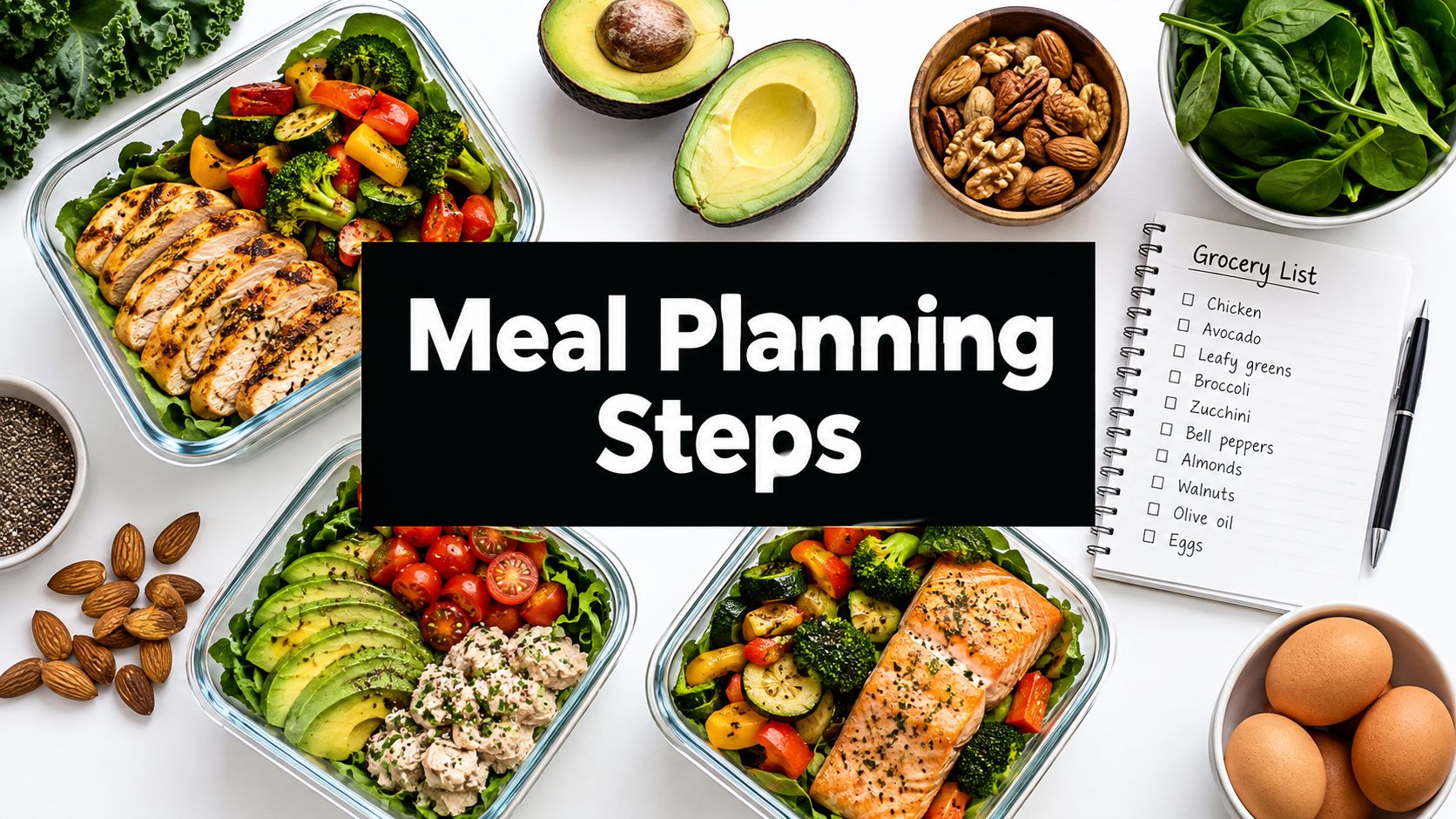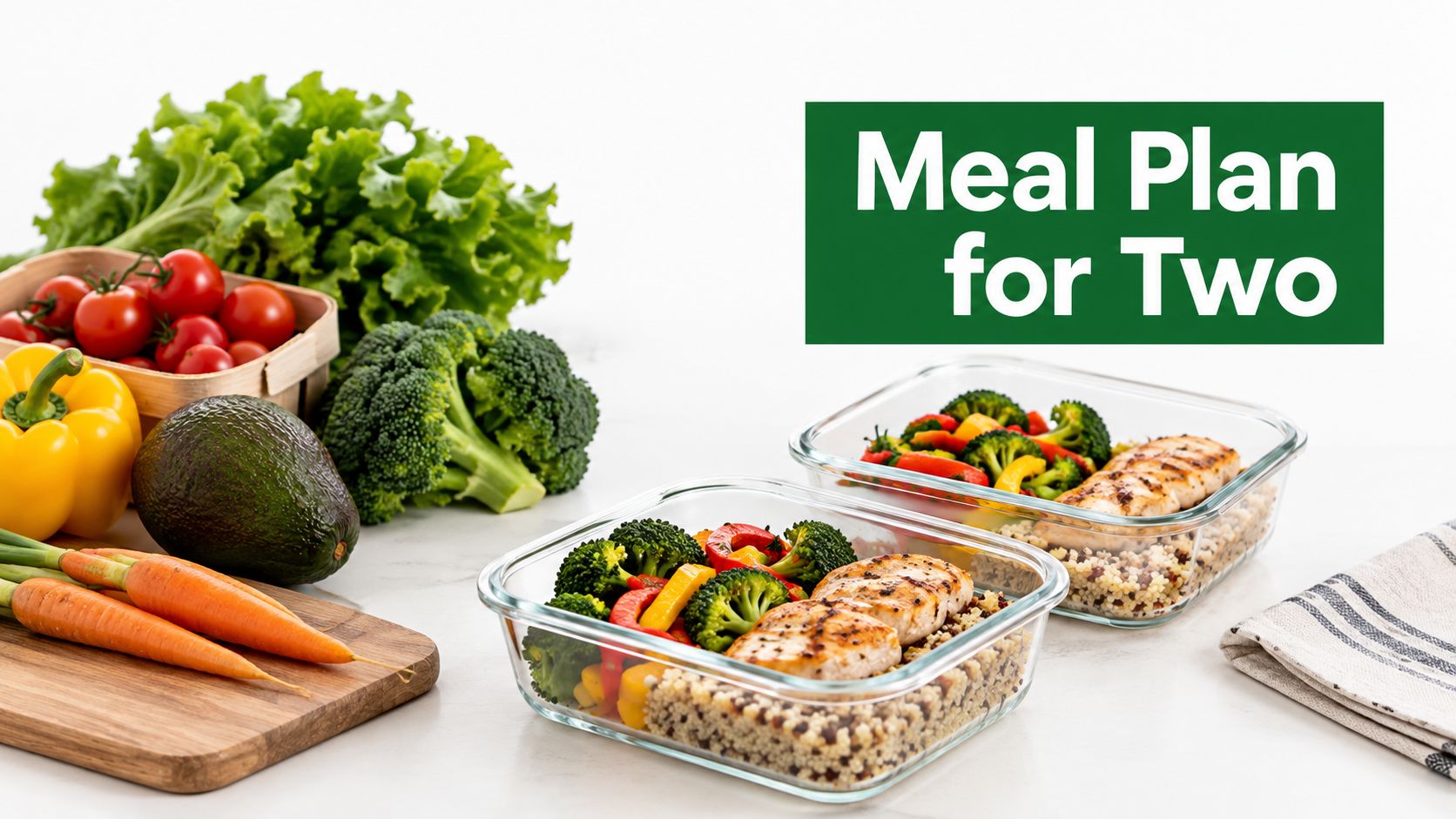
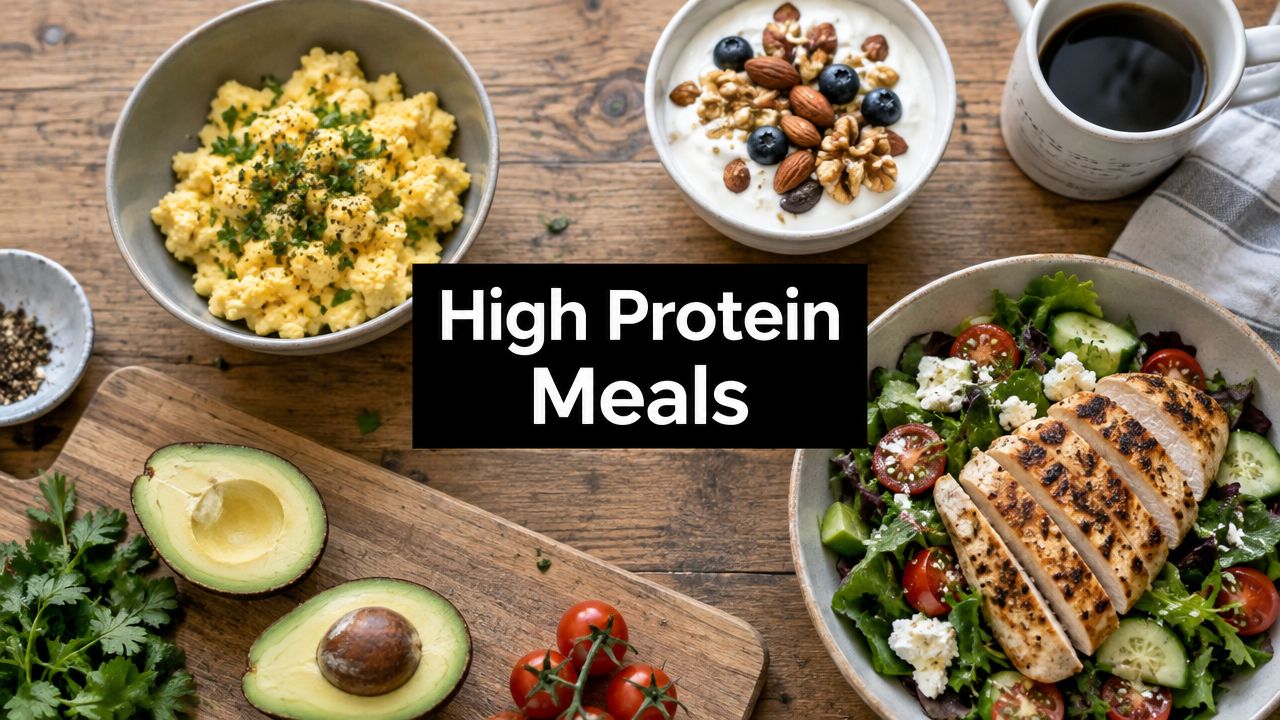
Easy high-protein meals can be ready in under 30 minutes or prepared in batches, with this collection ranging from about 20 grams to 50 grams of protein per serving depending on the recipe and additions. A practical target is 25 to 40 grams per meal, while some smoothie bowls and larger servings reach the upper end of that range.
The surprising part is how long this demand has been mainstream. William Banting's 1864 Letter on Corpulence sold about 58,000 copies, followed by Herman Taller's Calories Don't Count at 2 million copies, Irwin Stillman's The Quick Weight-Loss Diet at 20 million copies, and Atkins' The Diet Revolution in 1972, a pattern that shows recurring mass-market interest in simple, protein-forward eating (historical overview of high-protein diets).
Use no-cook meals when lunch has to happen between meetings, skillet or oven meals for same-day dinners, and batch recipes when you want fewer cooking sessions. A personalized plan can also remove much of the daily decision-making. AI Meal Planner onboarding can generate weekly meals, macro calculations, grocery lists, and ingredient swaps around your preferences.
For more practical ways to increase daily intake, see Gym Snack's protein guide. The ten ideas below focus on preparation time, protein yield, storage, and substitutions that work in an ordinary kitchen.
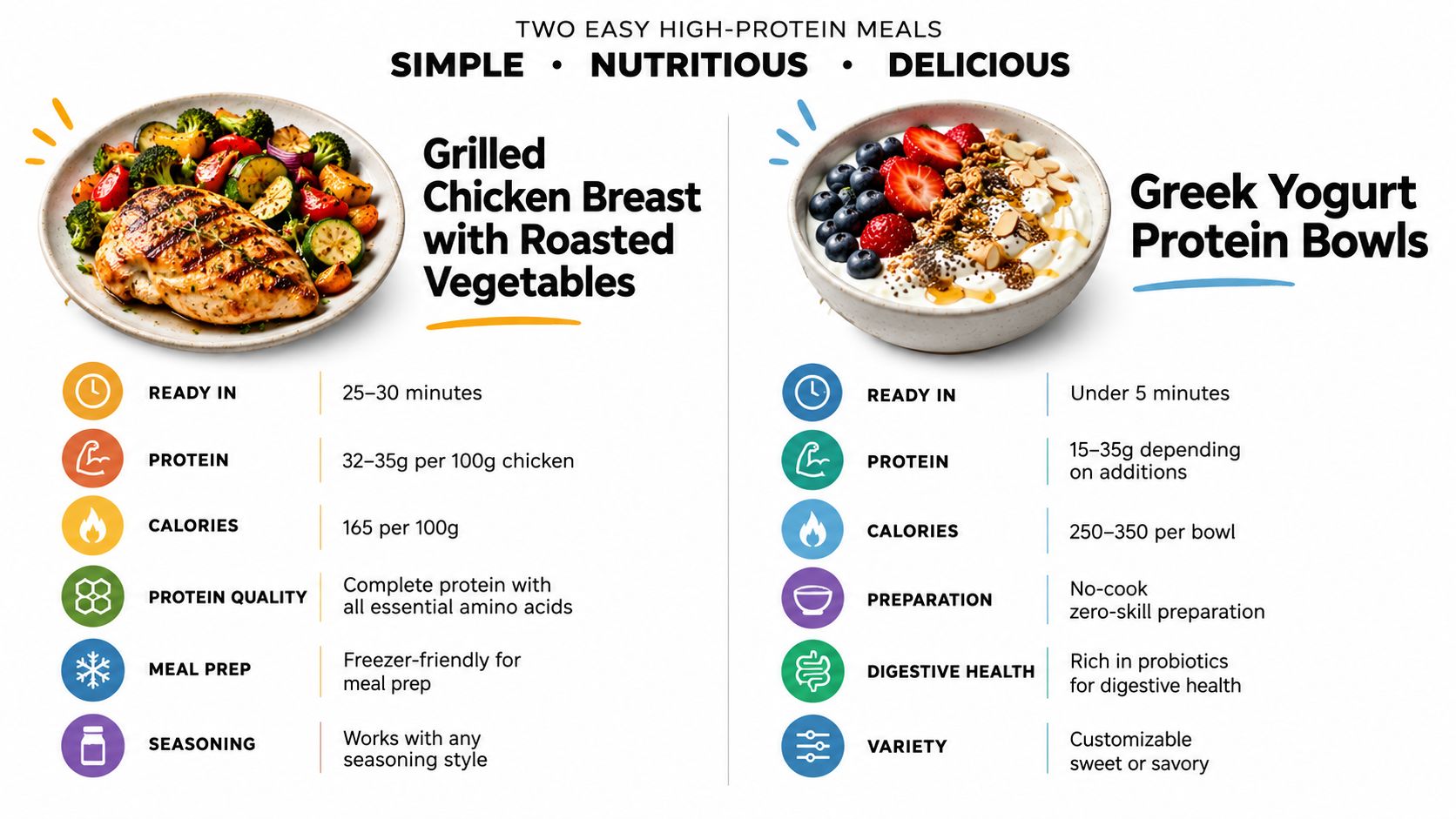
1. Grilled Chicken Breast with Roasted Vegetables
Chicken breast and roasted vegetables remain one of the most reliable high-protein meals easy enough for a weeknight. Pound the chicken to an even thickness, season it, and pan-sear or grill for roughly 6 to 8 minutes per side. Roast broccoli, bell peppers, and zucchini at 425°F for 15 to 20 minutes, starting the vegetables first if they need longer to soften.
A meat thermometer should read 165°F internally before serving. A short marinade improves moisture, but it doesn't need to become a project. Lemon, Greek seasoning, and roasted tomatoes create a Mediterranean plate, while ginger, soy sauce, sesame oil, broccoli, and snap peas take it in an Asian-inspired direction. Paprika, cayenne, garlic, bell peppers, and okra give the same method a Cajun profile.
Practical rule: Store the chicken, vegetables, and sauce separately. The vegetables reheat better, and the chicken won't absorb enough sauce to become soggy.
For a balanced portion, use chicken as the protein anchor and let vegetables provide volume and fiber. A serving of 3 to 4 ounces of chicken provides roughly 21 to 28 grams of protein, according to UCLA Health's protein guidance. Add quinoa, beans, or a yogurt sauce if you need a larger meal.
The simplest swaps are tempeh or tofu for vegetarian eating, seitan for a wheat-based option, and chickpeas for a plant-based bowl. Use tamari instead of conventional soy sauce for gluten-free cooking, skip the sauce for lower carbohydrate intake, and choose dairy-free marinades when needed. Find more variations in these chicken recipes.
2. Greek Yogurt Protein Bowls
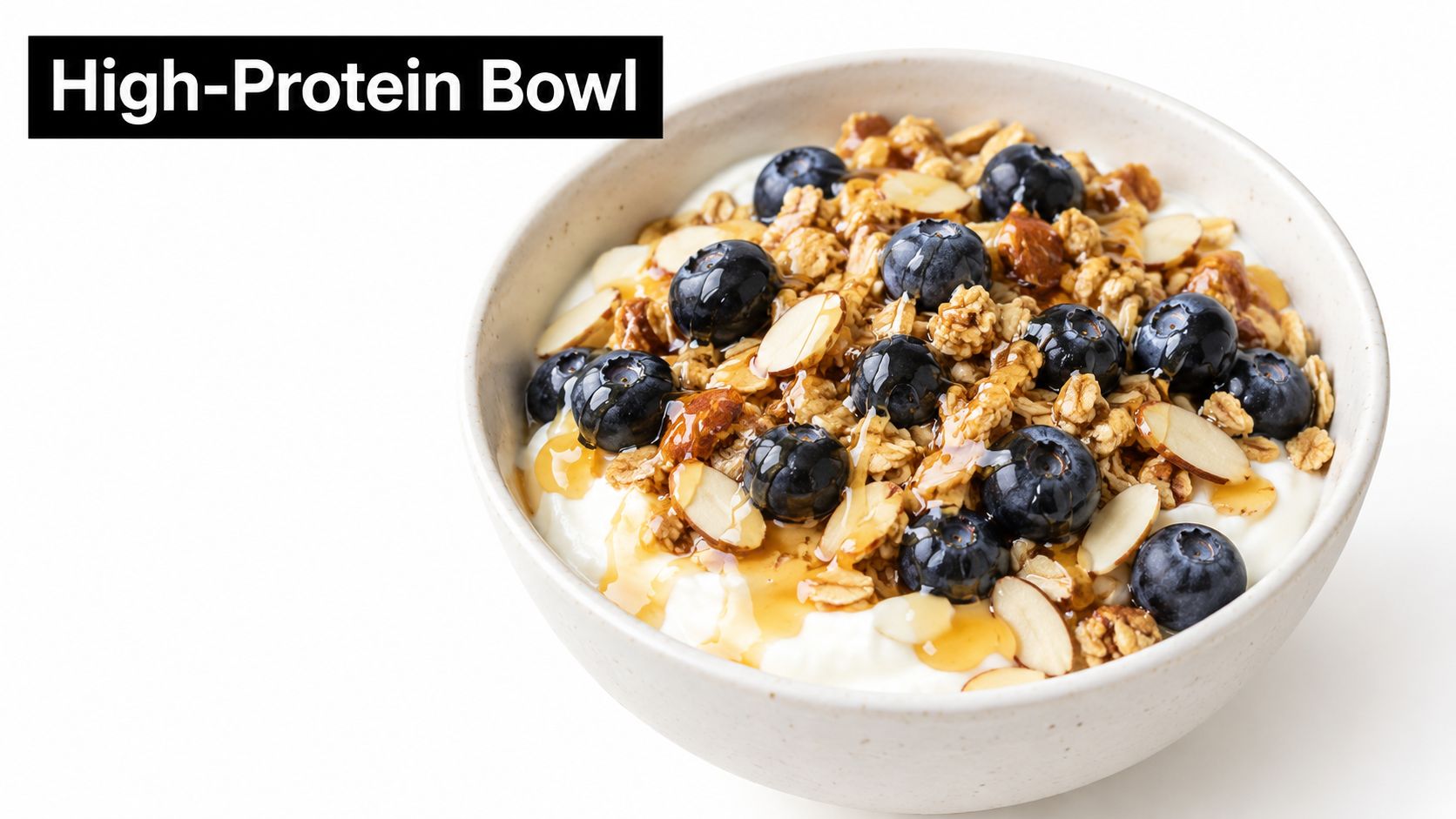
Greek yogurt bowls are the fastest breakfast in this list because they need no cooking and can be assembled in under 5 minutes. Use Greek yogurt as the base, then choose a sweet or savory direction. Granola, berries, almonds, and honey make a familiar breakfast, while cucumber, cherry tomatoes, feta, dill, and whole-grain crackers turn it into a cold lunch.
Greek yogurt contains 15 to 20 grams of protein per 100 grams in the supplied recipe guidance. A sweet bowl with granola, blueberries, almonds, and honey provides about 25 grams, while adding protein powder, strawberries, walnuts, and chia seeds can bring it to about 35 grams.
Make the texture work
Add granola just before eating. If you assemble it too early, the topping loses its crunch and the berries can make the base watery. Frozen berries work well because they chill the bowl while thawing, but fresh fruit is better when you're eating immediately.
Prepare several yogurt bases in containers, then keep toppings separate. Full-fat yogurt gives a creamier texture, while a lower-fat version can work if you prefer a lighter base. For a savory bowl, use herbs, lemon, cucumber, and a small amount of feta rather than sweet toppings.
Dairy-free yogurt made from soy is the most useful substitution when protein matters. Coconut yogurt can work for flavor, but it usually needs another protein source, such as a plant protein powder, hemp seeds, or roasted edamame. Use certified gluten-free granola or seeds instead of crackers when gluten is a concern. More combinations are available in these protein bowl recipes.
3. Ground Turkey Tacos
Ground turkey tacos solve the family dinner problem with one skillet and a topping bar. Brown the turkey, add taco seasoning with a small amount of water, and simmer until the mixture becomes saucy. The cooking takes about 10 to 12 minutes, so you can chop lettuce, cilantro, avocado, and lime while the meat cooks.
A classic serving with seasoned turkey, corn tortillas, salsa, cilantro, and lime provides about 28 grams of protein. Add black beans, cheese, avocado, Greek yogurt, and whole-wheat tortillas for a larger version at about 32 grams. Breakfast tacos with eggs, turkey, cheese, and whole-grain tortillas provide about 26 grams.
Use 93% lean ground turkey when you want a balance between flavor and leanness. Very lean meat can dry out, so a tablespoon of olive oil helps, especially when the skillet is hot. Warm tortillas directly in the skillet or over a flame, and keep toppings separate if you're packing leftovers.
- For gluten-free meals: Choose corn tortillas and verify the seasoning blend.
- For lower-carbohydrate meals: Serve the turkey over lettuce, cabbage, or a bowl of sautéed vegetables.
- For vegetarian meals: Use crumbled tempeh, lentils, or a plant-based ground alternative.
- For dairy-free meals: Replace cheese and Greek yogurt with avocado, salsa, or a dairy-free lime crema.
The trade-off is sodium. A packet seasoning is convenient, but a homemade blend of cumin, paprika, chili powder, garlic, and oregano gives you more control. Explore additional combinations through these turkey recipes.
4. Salmon with Quinoa
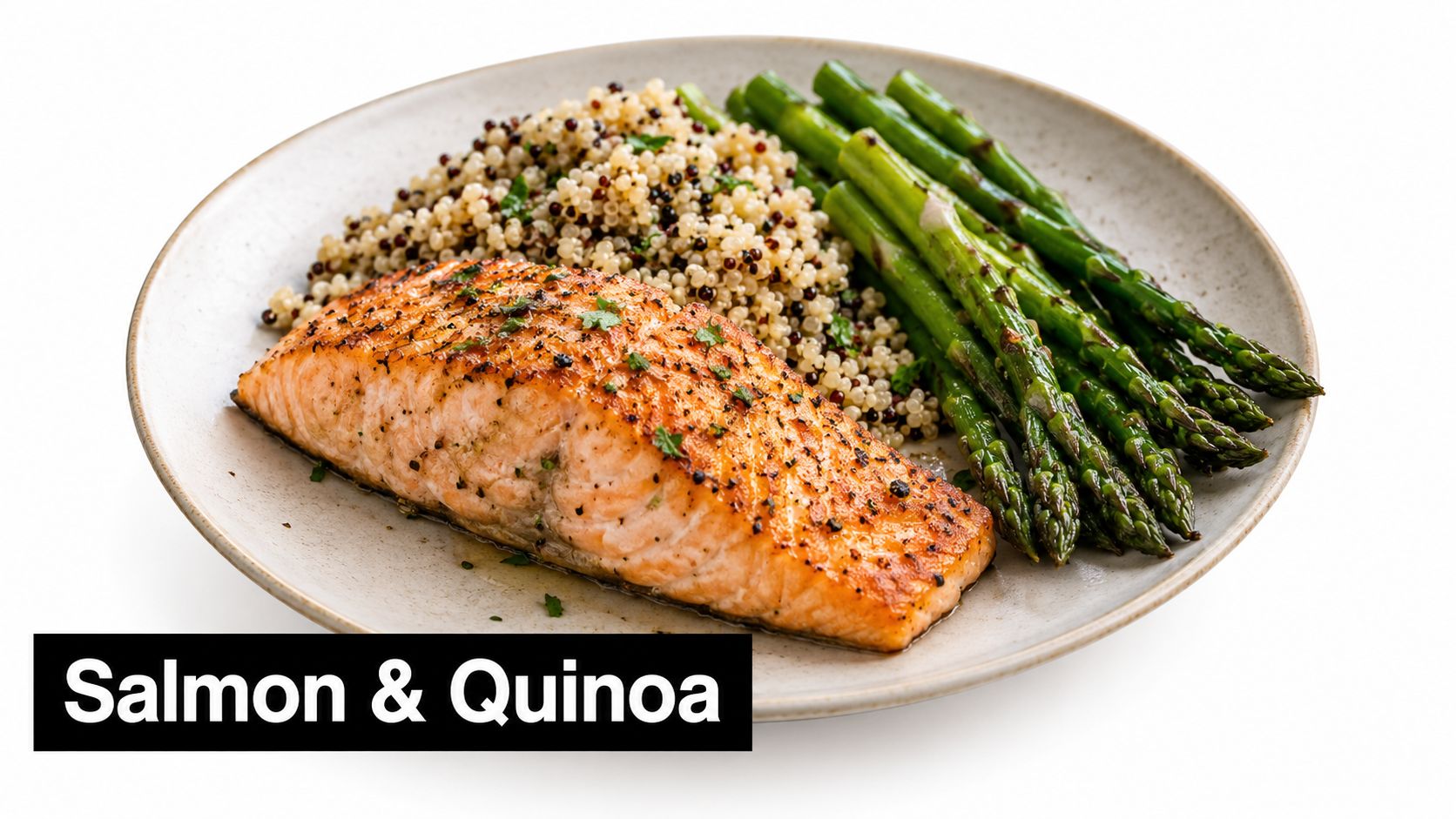
Salmon with quinoa delivers a complete meal in about 25 minutes if the grain starts first. Quinoa takes roughly 15 minutes, while salmon needs about 10 to 12 minutes in an oven or skillet. Cook quinoa in broth for more flavor, then pair the bowl with cucumber, asparagus, edamame, or greens.
A Mediterranean plate with salmon, quinoa, cucumber, feta, and lemon vinaigrette provides about 33 grams of protein, a recipe estimate from the supplied data. An Asian-style bowl with soy-ginger glaze, quinoa, edamame, and green onions supplies about 31 grams, also estimated from the supplied data. Salmon with plain quinoa, asparagus, and herb sauce provides about 28 grams, based on the same recipe data.
Keep salmon moist
Let the fillet sit out for about 10 minutes before cooking. Skin-on salmon is easier to manage in a skillet. Start it skin-side down to develop a crisp exterior, then check the thickest part by flaking it. The fish should be opaque throughout.
Cook the quinoa while the salmon rests, and portion both with any vegetables you plan to store. Quinoa and salmon refrigerate well, but keep cucumber, herbs, and sauces separate so they retain their texture. Reheat gently, or serve leftovers cold over greens. High heat dries the fish before the quinoa is fully warm.
For a vegetarian bowl, replace salmon with tofu and add edamame for more protein. Use tamari for gluten-free cooking, omit feta for dairy-free meals, and substitute cauliflower rice for a lower-carbohydrate plate. More preparation ideas appear in these salmon recipes.
5. Egg Muffin Cups
Egg muffin cups are a batch-cooking option for breakfast, snacks, or a quick addition to lunch. Whisk eggs with finely chopped vegetables, cheese, and seasoning, pour the mixture into a greased muffin tin, and bake at 375°F for 20 to 25 minutes. Each muffin provides about 10 to 13 grams of protein, so two muffins make a useful small meal.
A cheese-and-herb version supplies about 12 grams per muffin. Spinach, bell peppers, mushrooms, and feta provide about 11 grams, while bacon and cheddar raise the portion to about 13 grams.
Prevent watery muffins
Pat vegetables dry before mixing them into the eggs. Excess moisture makes the cups collapse and creates a wet texture after refrigeration. Fill each cavity about two-thirds full, and cool the muffins completely before freezing so condensation doesn't form inside the container.
Silicone liners make removal easier, but a well-greased metal tin also works. Add two to three tablespoons of milk or cream per two eggs for a softer texture. Reheat refrigerated portions gently, and add fresh salsa, herbs, or avocado after warming.
Eggs are naturally vegetarian, but they aren't vegan. For a vegan version, use a chickpea-flour batter with tofu and vegetables, understanding that the texture will be different. Dairy-free eaters can skip cheese or use a dairy-free alternative. Add turkey, chicken, or smoked salmon when you want more protein density without making the cups much larger.
6. Cottage Cheese Pasta
Cottage cheese pasta delivers a creamy sauce without relying on heavy cream. Blend cottage cheese with garlic, herbs, parmesan, and enough reserved pasta water to create a smooth consistency. Toss it with hot pasta off the heat, because direct high heat can make the sauce separate.
A serving using whole-wheat or chickpea pasta generally provides about 35 to 40 grams of protein in the supplied recipe guidance. Whole-wheat pasta gives a familiar texture, while chickpea pasta raises the protein contribution and works well with spinach, roasted vegetables, or sun-dried tomatoes.
The useful technique is gradual thinning. Add pasta water a little at a time, then stop as soon as the sauce coats the noodles.
Italian herb pasta with basil, garlic, spinach, and parmesan provides about 38 grams. A Mediterranean version with chickpea pasta, olives, sun-dried tomatoes, feta, and cottage cheese reaches about 40 grams, while roasted garlic, lemon, parmesan, and fresh pasta provide about 36 grams.
Dairy-free cooking requires a different sauce rather than a direct cottage cheese swap. Blend silken tofu with nutritional yeast, lemon, garlic, and pasta water. For vegan eating, use legume pasta and a white-bean or tofu sauce. Gluten-free pasta works well, and zucchini noodles reduce carbohydrate intake but won't deliver the same protein without tofu, chicken, or another addition.
The pasta keeps well for lunch, but the sauce thickens in the refrigerator. Loosen it with water or broth during reheating. For a specialty gloss product unrelated to the recipe, see this display-box gloss set.
7. Beef Stir-Fry
Beef stir-fry rewards preparation more than complicated cooking. Slice sirloin or flank steak against the grain, chop every vegetable before heating the pan, and mix the sauce in a small bowl. The meal cooks in about 15 to 18 minutes, but only if the ingredients are ready before the beef hits the skillet.
Teriyaki beef with broccoli, bell peppers, and sesame provides about 32 grams of protein. Orange beef with snap peas, carrots, ginger, and citrus sauce provides about 30 grams, while a Thai-inspired combination of beef, mushrooms, peppers, basil, and spicy sauce provides about 28 grams.
Partially freeze the steak for about 30 minutes so it slices cleanly. Cook the beef in batches over high heat. Crowding the pan causes steaming, which prevents browning and leaves the meat less appealing. Return the cooked beef after the vegetables soften, then add the sauce.
Serve it with rice or noodles for a higher-energy meal, or use extra vegetables for a lower-carbohydrate version. Tempeh, tofu, seitan, or mushrooms can replace the beef, although seitan isn't gluten-free. Tamari creates a gluten-free sauce, and coconut aminos offer another option with a different flavor profile.
This meal is best fresh. Store rice, beef, vegetables, and sauce together only if you plan to reheat once. For better texture, keep the sauce separate and add it after warming.
8. Tuna Salad Wraps
Tuna salad wraps deliver a fast, no-cook lunch with a useful protein yield. Drain canned tuna thoroughly, then mix it with mayonnaise or Greek yogurt, celery, red onion, cucumber, or tomato. Preparation takes about 10 minutes. The tuna itself contributes roughly 20 to 30 grams of protein per can, based on the supplied data.
A classic whole-grain wrap provides about 28 grams of protein, a recipe estimate from the supplied data, using tuna, mayonnaise, celery, and onion. A Mediterranean wrap with tuna, Greek yogurt, cucumber, tomato, and feta provides about 30 grams, also a recipe estimate from the supplied data. Tuna with avocado, cucumber, ginger, and sriracha mayonnaise in lettuce leaves provides about 26 grams, based on the same supplied recipe data.
Keep the wrap from collapsing
Pat the tuna and vegetables dry before mixing. Spread the sauce over the wrap, place the tuna in the center, add vegetables in a narrow layer, and roll tightly. For make-ahead lunches, keep watery vegetables separate until serving. That preserves texture better than adding more sauce.
Replace half the mayonnaise with Greek yogurt for a tangier, lighter filling. Choose lettuce leaves for a lower-carbohydrate meal, corn tortillas for a gluten-free option, or mashed chickpeas for a vegetarian version. Vegan mixtures made with chickpeas, white beans, or jackfruit need an added protein source to approach tuna's yield.
Pack the filling and tortilla separately for commuting. Refrigerate the filling and assemble shortly before eating, since an early wrap can turn soft. Store leftovers chilled and use them promptly, especially when mayonnaise or yogurt is included.
9. Slow Cooker Chili
Slow cooker chili is the strongest batch-cooking choice here because the hands-on work takes about 10 to 15 minutes before the cooker does the rest. Combine browned ground beef or turkey with beans, tomatoes, vegetables, and spices, then cook on low for 6 hours or high for 4 hours.
Classic beef chili with kidney beans provides about 35 grams of protein per serving. Turkey white chili with white beans, green chiles, and cream provides about 32 grams, while a vegetarian version with kidney beans, black beans, vegetables, and tomato base provides about 18 grams.
Brown the meat first for better flavor and a less greasy finished chili. Don't fill the slow cooker beyond roughly two-thirds to three-quarters of its capacity. Break up the meat during cooking if large pieces form, then add sour cream, cheese, green onions, or herbs only when serving.
Batch-cooking choice: Freeze chili in individual portions after it has cooled completely. Label each container with the date and reheating instructions.
For vegetarian or vegan chili, combine multiple beans with textured vegetable protein, lentils, or crumbled tofu. Skip dairy toppings for a dairy-free bowl, use certified gluten-free broth and seasonings when needed, and serve it over cauliflower rice for a lower-carbohydrate approach. The vegetarian version has a lower supplied protein estimate, so add tofu, tempeh, or a side of Greek yogurt if that fits your diet.
10. Protein Smoothie Bowls
Protein smoothie bowls are useful when breakfast needs to be substantial but cooking feels unrealistic. Blend protein powder, Greek yogurt, milk, and frozen fruit into a mixture thicker than a drink, then add granola, banana, berries, nuts, or seeds. Assembly takes about 5 minutes, and the supplied examples range from about 42 to 48 grams of protein.
A post-workout bowl with protein powder, Greek yogurt, banana, milk, granola, and berries provides about 48 grams. Chocolate protein powder, Greek yogurt, peanut powder, granola, and banana provide about 45 grams, while a tropical bowl with vanilla protein powder, coconut yogurt, mango, pineapple, and coconut flakes provides about 42 grams.
Build a bowl that stays thick
Use frozen fruit instead of ice so the base doesn't become watery. Add toppings from firm to delicate, and chill the bowl briefly if you need more time before eating. You can prepare the ingredients the night before, but blend just before serving for the best texture.
Greek yogurt can be replaced with soy yogurt for a dairy-free bowl. Choose a complete plant protein powder if you're vegan, and use gluten-free granola when required. For a lower-carbohydrate version, reduce banana and granola, then add nut butter, seeds, or extra protein powder. Those swaps also change calories and fat, so don't treat the original macro estimate as universal.
For another beverage-style idea, see this coffee protein powder recipe.
10 Easy High-Protein Meals Comparison
| Dish | Implementation 🔄 | Resources ⚡ | Expected outcomes ⭐📊 | Ideal use cases 💡 | Key advantages ⭐ |
|---|---|---|---|---|---|
| Grilled Chicken Breast with Roasted Vegetables | Moderate 🔄, basic grill/pan + oven; active monitoring; 25–30 min | Moderate ⚡, common ingredients; inexpensive equipment | High ⭐📊, complete protein (32–35g/100g), balanced macros, high satiety | Dinners, meal prep, weight loss or muscle maintenance | Versatile seasonings, scalable, freezer-friendly |
| Greek Yogurt Protein Bowls | Very low 🔄, no-cook assembly; <5 min | Low ⚡, fridge, bowls, toppings; accessible ingredients | Moderate–High ⭐📊, 15–35g protein; probiotics; 250–350 kcal | Quick breakfasts, snacks, on‑the‑go, digestive health | Fast, zero-skill, highly customizable |
| Ground Turkey Tacos | Low–Moderate 🔄, single-skillet cook ~10–12 min; simple seasoning | Low ⚡, skillet, tortillas, basic toppings; budget protein | Moderate ⭐📊, lean protein (~26–28g/100g); lower calories vs beef | Family dinners, quick weeknight meals, batch cooking | Lean, quick, affordable, crowd-pleasing |
| Salmon with Quinoa | Moderate 🔄, pan-sear or bake + quinoa; ~25 min; careful timing | Moderate–High ⚡, quality salmon costs more; oven/skillet | Very high ⭐📊, omega‑3s + complete protein (~33g total); nutrient-dense | Health-focused meals, entertaining, meal prep | Superior nutrition (EPA/DHA), elegant presentation |
| Egg Muffin Cups | Low 🔄, bake in muffin tin 20–25 min; batch-cook | Low ⚡, oven + muffin tin; inexpensive ingredients | Moderate ⭐📊, ~10–13g protein per muffin; portable, portioned | Grab-and-go breakfasts, snacks, bulk meal prep | Extremely efficient, portion control, freezer-friendly |
| Cottage Cheese Pasta | Moderate 🔄, blend sauce + pasta; gentle heating ~20 min | Low–Moderate ⚡, blender, pasta, cottage cheese quality matters | High ⭐📊, 35–40g protein/serving; lower fat than cream sauces | High-protein weeknights, lighter pasta alternative | Ultra-high protein, budget-friendly, single-pot cleanup |
| Beef Stir-Fry | Moderate–High 🔄, high-heat technique + knife skills; 15–18 min | Moderate ⚡, wok/skillet, high-smoke oil, fresh veg | High ⭐📊, complete protein (~26–32g/100g), iron/B vitamins | Fast dinners, takeout replacement, customizable meals | Very fast cook time, versatile flavors, nutrient-preserving |
| Tuna Salad Wraps | Very low 🔄, no-cook assembly ~10 min | Low ⚡, bowl, canned tuna, wraps; shelf-stable option | High ⭐📊, ~26–30g protein/serving; omega‑3s; portable | On-the-go lunches, travel, quick prep meals | Fast, affordable, shelf-stable protein, portable |
| Slow Cooker Chili | Low 🔄, minimal active prep (10–15 min); 4–6 hr cook (hands-off) | Low ⚡, slow cooker, pantry staples; bulk ingredients | High ⭐📊, high protein per serving (~32–35g), yields many portions | Batch cooking, families, make-ahead/freezer meals | Set-and-forget, high yield, flavor improves over time |
| Protein Smoothie Bowls | Very low 🔄, blend + top ~5 min; little cook skill | Moderate ⚡, blender, quality protein powder, perishables | Very high ⭐📊, 42–50g protein; high satiety; fast recovery | Post‑workout, high-protein breakfasts, quick meals | Highest protein density, fast, highly customizable |
Build Your Own Faster Protein Rotation
The most useful way to apply these ideas is to sort them by the kind of time you have. Greek yogurt bowls, smoothie bowls, and egg muffin cups cover fast breakfasts and snacks. The yogurt bowl and smoothie bowl need almost no active cooking, while egg muffins reward a batch session and make rushed mornings easier.
For lunches, tuna wraps are the clearest 10-minute no-cook option. They're portable, easy to customize, and simple to keep separate until you eat. Chicken with roasted vegetables, turkey tacos, salmon with quinoa, beef stir-fry, and cottage cheese pasta fit the 20 to 30-minute fresh-meal group, although each has a different workload. Tacos and stir-fry are fastest when all ingredients are chopped first. Salmon needs a little more coordination because quinoa starts before the fish.
Chili and egg muffin cups belong in the batch category. Chili freezes well in portions, while egg muffins can move from the freezer to a quick breakfast. Chicken, quinoa, and pasta can also support meal prep, but sauces, crunchy toppings, and fresh vegetables should stay separate when texture matters.
A meal qualifies as a practical high-protein choice when it contributes meaningfully to the day, not because it contains one protein ingredient. Recipe roundups commonly use at least 20 grams per serving as a high-protein benchmark (Women's Health high-protein meals). UCLA Health gives most adults a broad daily range of 0.8 to 1.6 grams per kilogram of body weight, or about 55 to 110 grams for a 150-pound person, while sports nutrition guidance commonly uses 1.6 to 2.2 grams per kilogram for muscle gain (UCLA Health protein guidance).
That range explains why a meal with 25 to 40 grams can be useful without making every dish extreme. A sample high-protein diet menu can provide about 100 grams per day, but your target may differ based on body size, activity, health needs, and total energy intake (high-protein diet planning). People managing kidney disease, diabetes, heart disease, pregnancy, or other conditions should use individualized medical guidance rather than copying a generic target.
Try this weekly system:
- Choose one fast breakfast, such as a yogurt bowl or smoothie bowl.
- Prepare two quick lunches, such as tuna wraps and leftover turkey tacos.
- Cook two fresh dinners, choosing one skillet meal and one oven meal.
- Make one batch recipe, usually chili or egg muffin cups.
- Use the listed swaps to fit vegetarian, vegan, gluten-free, dairy-free, halal, or lower-carbohydrate eating.
Compare protein, calories, carbohydrates, and fat with your own needs. The numbers in this list are approximate recipe estimates, and additions such as cheese, oil, tortillas, granola, sauce, or protein powder can change the final meal substantially. If planning still takes too much time, AI Meal Planner onboarding can organize personalized meals, grocery lists, macro calculations, and swaps around your goals and restrictions.
AI Meal Planner creates personalized weekly plans, grocery lists, macro calculations, and meal swaps for high-protein breakfasts, lunches, dinners, and snacks. Visit AI Meal Planner to build a practical rotation around your schedule, dietary preferences, allergies, and cooking time.
AI-powered nutrition
Get Your Personalized Meal Plan
AI creates the perfect meals for your goals, lifestyle, and taste.
Start Your Journej