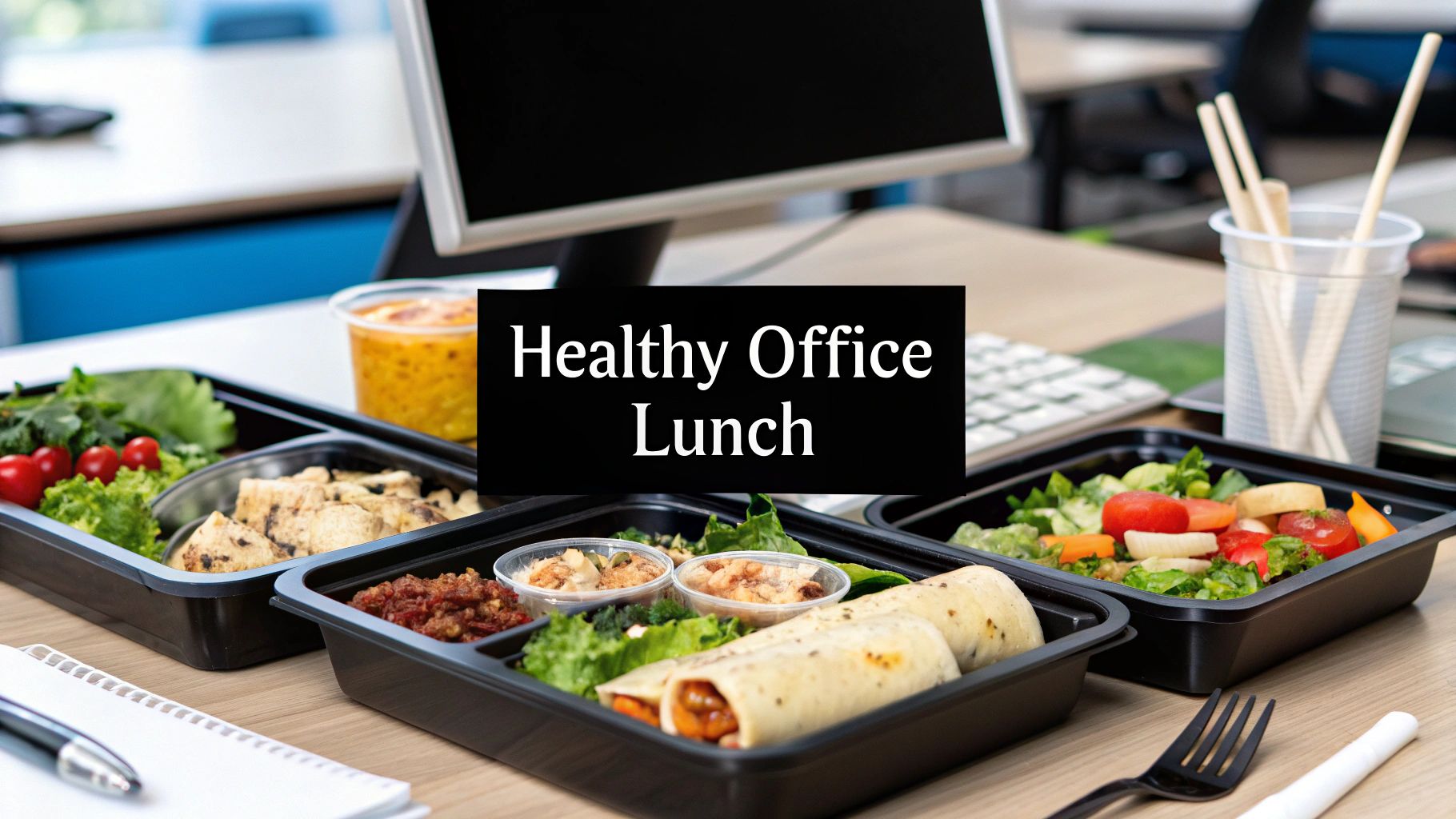
The best healthy lunch ideas for the office include 10 options that are easy to prepare, portable, and support sustained energy. These range from Macro-Balanced Grain Bowls and High-Protein Salads to no-cook options like Overnight Oats and convenient choices like Rotisserie Chicken with roasted vegetables. Each meal can be prepped in advance to save time during the work week.
The midday meal presents a significant challenge for busy professionals aiming to maintain a healthy lifestyle. The convenience of takeout or quick, processed snacks often outweighs the effort required for meal planning, leading to a cycle of poor nutrition, afternoon energy slumps, and derailed health goals. Finding a balance between convenience, taste, and nutritional value can feel like an impossible task, especially when office amenities like microwaves or refrigerators are limited.
This guide provides a comprehensive collection of ten distinct and actionable healthy lunch ideas for office workers, designed to eliminate guesswork and simplify your routine. Each idea is more than just a recipe; it's a complete blueprint that includes:
- Detailed Meal Prep Instructions: Step-by-step guidance on how to prepare your lunches ahead of time, saving you critical minutes during busy mornings.
- Nutritional Information: Essential macro and calorie estimates to help you track your intake and align your meals with specific fitness or health objectives.
- Dietary Customization: Practical swaps and modifications for vegan, gluten-free, and keto diets, ensuring there's a delicious option for everyone.
- Storage and Reheating Tips: Best practices for keeping your meals fresh and safe, whether you have access to a full kitchen or just a desk drawer.
From a Macro-Balanced Grain Bowl that fuels your afternoon to a no-heat Plant-Based Protein Lunch perfect for on-the-go days, this list offers a variety of solutions. You will learn how to build satisfying meals that support sustained energy, prevent unhealthy cravings, and contribute to long-term wellness, all without requiring hours of complex preparation. For a fully personalized approach to your dietary needs, consider exploring a customized plan at https://ai-mealplan.com/onboarding.
1. Why is a Macro-Balanced Grain Bowl a good office lunch?
A macro-balanced grain bowl is a powerful and strategic choice for a healthy office lunch, designed to deliver sustained energy and prevent the dreaded afternoon slump. This approach involves constructing your meal with specific ratios of macronutrients: protein, carbohydrates, and fats. A common target is a 40% carbohydrate, 30% protein, and 30% fat split, which helps stabilize blood sugar levels, keeping you focused and productive long after your lunch break.
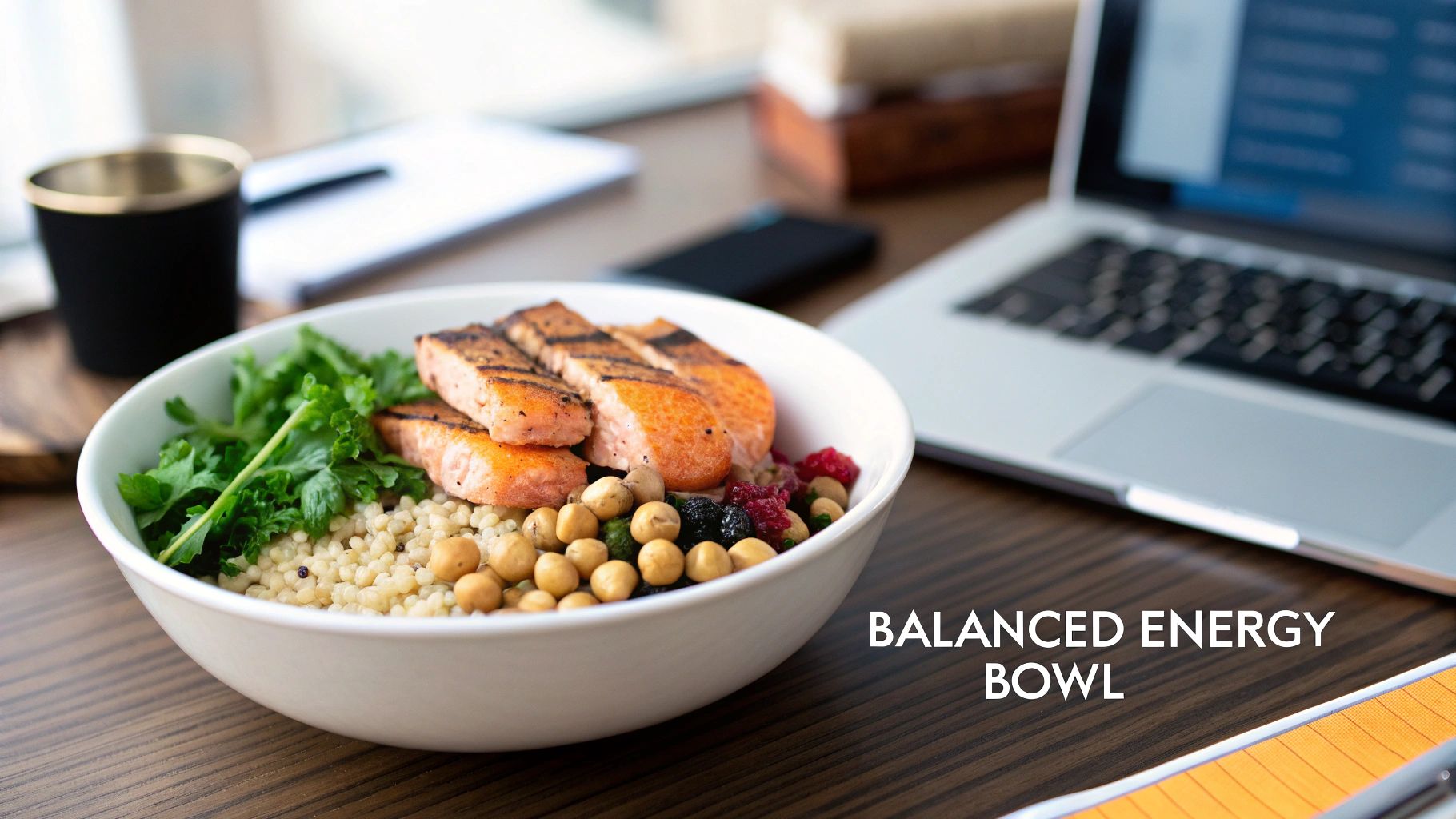
The primary benefit is sustained energy release. Unlike carb-heavy meals that can cause an initial energy spike followed by a crash, this balanced combination provides a steady fuel source. The complex carbs from whole grains offer long-lasting energy, protein aids in satiety and muscle maintenance, and healthy fats support brain function. This makes it an ideal healthy lunch idea for office workers who need to maintain high cognitive performance.
How do you build a macro-balanced bowl?
Building a macro-balanced bowl is a simple, customizable process. Start with a foundation and add components from each macro group.
- Complex Carbs (40%): Quinoa, brown rice, farro, sweet potatoes, or roasted chickpeas.
- Lean Protein (30%): Grilled chicken breast, salmon, tofu, lentils, or hard-boiled eggs.
- Healthy Fats (30%): Avocado, nuts, seeds, feta cheese, or an olive oil-based dressing.
Actionable Tip: To hit your precise targets, you can use a tool to calculate your specific needs. You can learn more about finding your ideal macro ratio with an online calculator to tailor your bowls perfectly to your fitness and energy goals.
What are the best meal prep and storage hacks?
- Prep Ahead: Cook a large batch of your chosen grain (e.g., quinoa) and protein (e.g., grilled chicken) on Sunday.
- Separate Components: Store the dressing in a small, separate container to prevent the other ingredients from becoming soggy.
- Container Choice: Use airtight glass containers to keep ingredients fresh and crisp throughout the week.
2. Is a Mediterranean wrap a healthy portable lunch?
A Mediterranean wrap or sandwich is a portable, flavor-packed option that embodies one of the world's healthiest eating patterns. This approach centers on whole foods rich in heart-healthy fats, complex carbohydrates, and lean proteins, inspired by the traditional cuisines of countries bordering the Mediterranean Sea. It’s a simple yet effective way to craft a delicious and nutrient-dense office lunch that supports both physical and cognitive health.
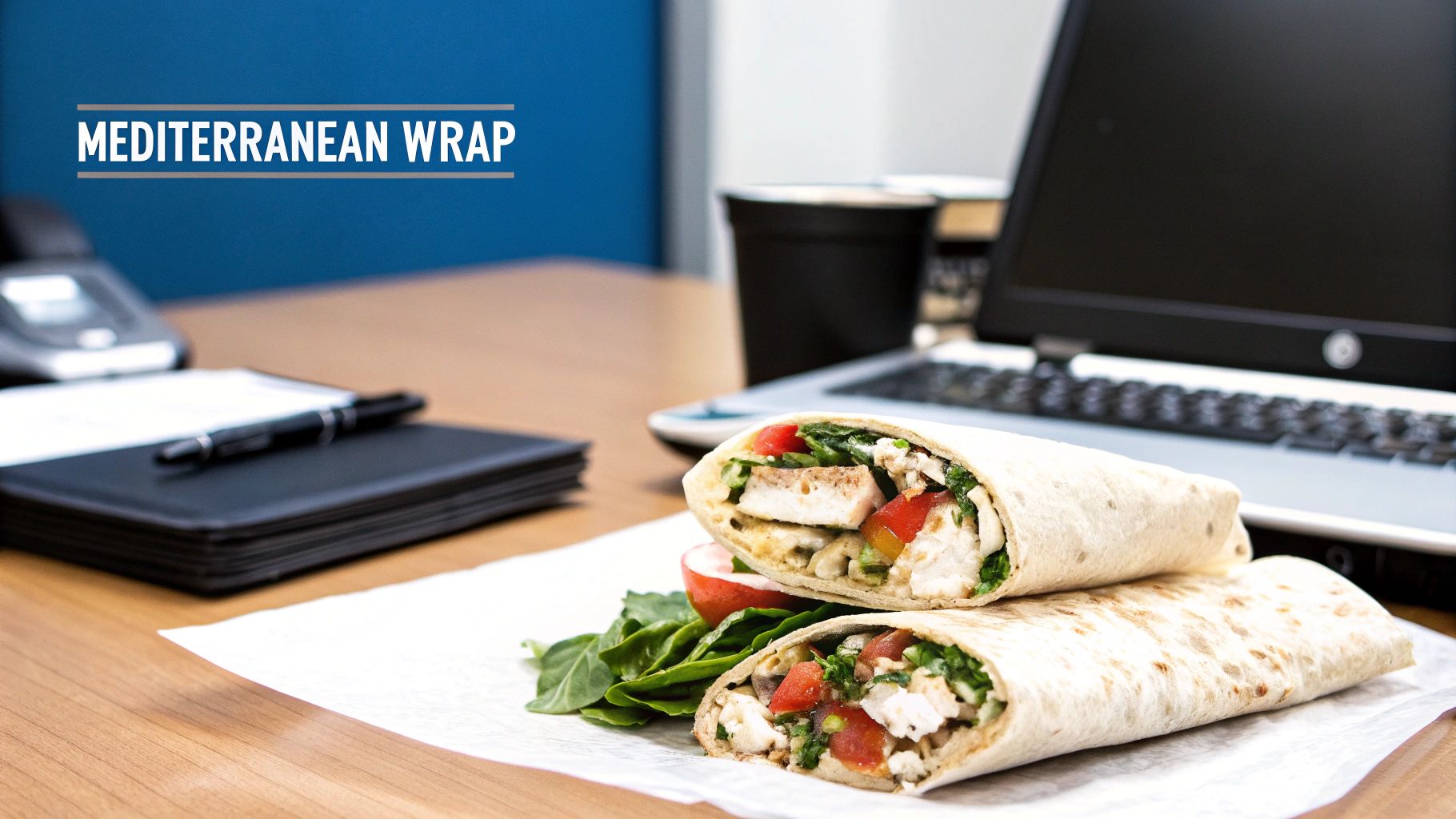
The key benefit is its focus on anti-inflammatory, nutrient-dense ingredients. Foods like olive oil, leafy greens, and colorful vegetables are rich in antioxidants and healthy fats that support brain function and combat midday fatigue. This style provides steady energy from whole grains and satisfying protein from sources like hummus or grilled chicken, keeping you full and focused without feeling heavy or sluggish.
How do you build a perfect Mediterranean wrap?
Building a Mediterranean-style lunch is easy and allows for endless variety. Use a whole-grain tortilla, pita, or bread as your base and layer on these vibrant ingredients.
- Healthy Spreads: Hummus, olive tapenade, or tzatziki (Greek yogurt sauce).
- Lean Protein: Grilled chicken, canned tuna (in olive oil), falafel, or chickpeas.
- Vibrant Veggies: Roasted red peppers, spinach, cucumbers, tomatoes, and Kalamata olives.
- Flavorful Fats: Feta cheese, a drizzle of extra virgin olive oil, or a sprinkle of toasted seeds.
Actionable Tip: To prevent a soggy wrap, lay down a barrier of large lettuce or spinach leaves first before adding wetter ingredients like tomatoes or hummus. This keeps the tortilla or bread perfectly intact until you're ready to eat.
What are the best meal prep and storage hacks?
- Prep Components: Chop all your vegetables and cook your protein over the weekend. Store them in separate airtight containers in the fridge.
- Morning Assembly: Assemble your wrap or sandwich in the morning for maximum freshness. It only takes a few minutes if the components are ready.
- Wrap it Right: Use parchment paper to wrap your creation tightly. This not only contains moisture but also makes it easier to eat at your desk without making a mess.
3. How does a high-protein salad keep you full?
A high-protein salad elevates the classic green dish from a simple side to a complete, satisfying meal engineered for peak office performance. This approach focuses on combining lean protein sources with a wide variety of colorful vegetables and leafy greens. This type of salad is designed to maximize satiety and deliver a broad spectrum of micronutrients, supporting both muscle maintenance and sustained cognitive function without the post-lunch energy dip.
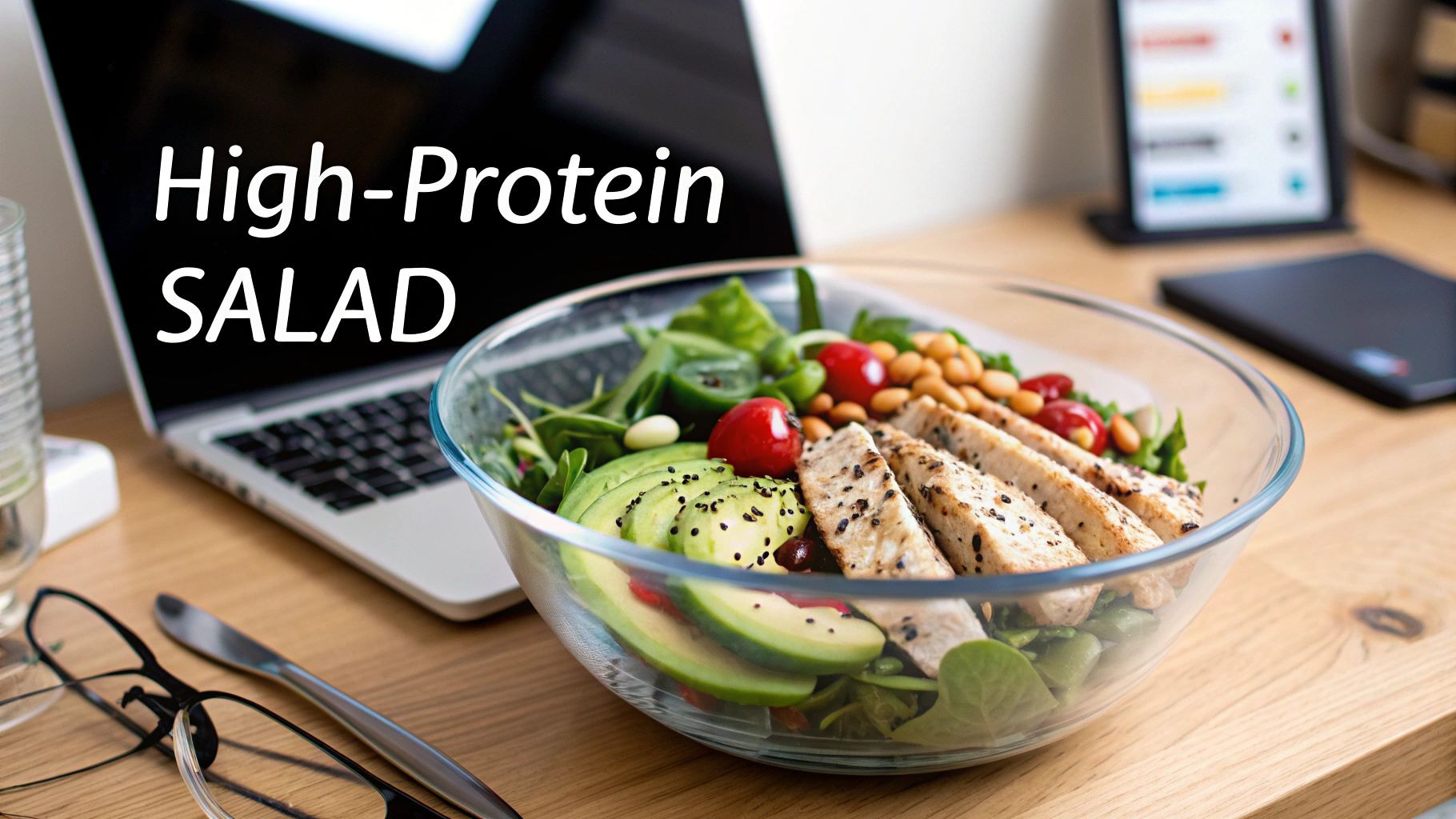
The key benefit is long-lasting fullness and nutrient density. Protein is the most satiating macronutrient, meaning it keeps you feeling full for longer and helps curb afternoon cravings for office snacks. Combining it with fiber-rich vegetables ensures you get a powerful dose of vitamins, minerals, and antioxidants that support brain health and immunity.
How do you build a filling, high-protein salad?
Building a satisfying, protein-packed salad involves more than just lettuce. Layer your ingredients strategically for a balanced and flavorful meal.
- Protein Powerhouse: Grilled chicken, salmon, chickpeas, hard-boiled eggs, or lentils.
- Vegetable Variety: Aim for at least 3-4 different colors. Think bell peppers, beets, cucumbers, edamame, and roasted sweet potatoes.
- Flavor and Crunch: Add healthy fats and texture with avocado, walnuts, goat cheese, or sunflower seeds.
- Smart Dressing: Opt for a light vinaigrette made with olive oil and vinegar instead of creamy, high-calorie dressings.
Actionable Tip: To understand the exact nutritional breakdown of your custom creation, you can use a tool to analyze your ingredients. You can learn more about finding the nutritional value of your meal with an online recipe nutrition calculator to ensure it meets your health goals.
What are the best meal prep and storage hacks?
- Prep Ahead: Chop all your vegetables and cook your protein source over the weekend.
- Separate Components: Always pack your dressing in a small, separate container to pour on just before eating, preventing a soggy salad.
- Container Choice: Use a compartmentalized container to keep wet ingredients like tomatoes separate from dry ones like nuts and seeds until you're ready to mix.
4. Why are pre-portioned meal prep containers effective?
The classic meal prep container, thoughtfully packed with a lean protein, complex carbohydrate, and nutrient-dense vegetables, is a cornerstone of efficient and healthy office lunches. This systematic approach focuses on pre-portioning complete meals to eliminate guesswork and decision fatigue. By preparing and dividing meals ahead of time, you create a grab-and-go system that ensures nutritional consistency and supports specific health goals.
The primary advantage is unmatched convenience and control. On a busy workday, the last thing you want is to spend time deciding what to eat or resorting to unhealthy takeout. Having a perfectly portioned, healthy meal ready to go saves time, money, and mental energy. This strategy guarantees you have a balanced, satisfying meal that aligns with your dietary targets, preventing impulse food choices.
How do you build a perfect meal prep container?
Building these containers is a straightforward formula that you can easily adapt for variety. Aim for a balanced combination that will keep you full and energized.
- Lean Protein: Grilled chicken breast, ground turkey, baked salmon, or lentil patties.
- Complex Carbs: Brown rice, quinoa, roasted sweet potatoes, or wild rice.
- Nutrient-Dense Vegetables: Steamed broccoli, roasted Brussels sprouts, grilled asparagus, or a mix of bell peppers and onions.
Actionable Tip: Streamline your grocery shopping and meal planning by using a digital tool. You can simplify the entire process with an AI-powered grocery list generator that builds your shopping list based on your chosen recipes for the week.
What are the best meal prep and storage hacks?
- Batch Cook: Dedicate a few hours on Sunday to cook your proteins, carbs, and vegetables in bulk. Use sheet pans for roasting veggies and a rice cooker for grains to maximize efficiency.
- Invest in Quality Containers: Use divided, airtight glass containers. They are microwave-safe, prevent flavors from mixing, and don't retain stains or odors like plastic.
- Maintain Variety: Prepare 2-3 different meal combinations for the week to avoid palate fatigue and ensure a wider range of nutrients.
5. Can a plant-based lunch with legumes be satisfying?
A plant-based protein lunch centered on legumes is a cost-effective and highly nutritious strategy for a satisfying midday meal. This approach uses powerhouse ingredients like beans, lentils, and chickpeas as the primary protein source, combined with whole grains and vegetables. This method delivers high-quality protein, fiber, and essential nutrients that support cardiovascular health and sustained energy levels without relying on animal products.
The key benefit is the combination of high protein and high fiber. This duo promotes exceptional satiety, keeping you full and focused throughout the afternoon, which is crucial for preventing mindless snacking at your desk. Legumes are also complex carbohydrates, providing a slow and steady release of energy that helps stabilize blood sugar and prevent the typical post-lunch energy crash.
How do you build a balanced plant-based lunch?
Creating a balanced and flavorful legume-based lunch is simple. The goal is to combine components that create a complete amino acid profile and a rich taste.
- Legume Base (40%): Lentils (brown, green, or red), chickpeas, black beans, or kidney beans.
- Whole Grains (30%): Quinoa, brown rice, whole wheat pasta, or whole-grain cornbread.
- Vegetables (30%): Roasted sweet potatoes, steamed kale, bell peppers, or a side salad.
- Flavor Boosters: A tahini dressing, a scoop of hummus, nutritional yeast for a cheesy flavor, or a sprinkle of toasted seeds.
Actionable Tip: Combining legumes with a whole grain like rice or quinoa in the same meal creates a "complete protein," providing all nine essential amino acids your body needs.
What are the best meal prep and storage hacks?
- Cook in Batches: Make a large batch of lentil curry or three-bean chili on Sunday. These dishes often taste even better the next day.
- Freeze Portions: Legume-based stews and curries freeze exceptionally well. Portion them into individual airtight containers for quick grab-and-go lunches.
- Soak for Speed: If using dried beans, soak them overnight. This significantly reduces cooking time and can make them easier to digest.
6. Are lettuce wraps a good low-carb lunch alternative?
A lettuce wrap or other low-carb alternative is a fresh, light, and grain-free solution for a healthy office lunch. This approach replaces bread, tortillas, and grain wraps with crisp vegetable-based alternatives. This simple swap significantly reduces carbohydrate intake while increasing nutrient density, making it an excellent choice for maintaining steady energy levels and avoiding post-lunch drowsiness.
The key benefit is stable blood sugar and enhanced focus. By eliminating refined carbohydrates found in traditional wraps, you avoid the insulin spike and subsequent energy crash. This keeps you feeling light, energized, and mentally sharp throughout the afternoon. Lettuce wraps are also hydrating and packed with vitamins, offering a nutrient-dense yet low-calorie meal.
How do you build a perfect low-carb wrap?
Building these wraps is versatile and creative. Start with a sturdy base and fill it with your favorite protein, healthy fats, and crunchy vegetables.
- Wrap Base: Sturdy lettuce leaves (butter, iceberg, romaine), large collard green leaves, or cauliflower-based tortillas.
- Lean Protein: Asian-style ground chicken, turkey taco meat, grilled fish, or seasoned tofu.
- Healthy Fats & Toppings: Sliced avocado, chopped nuts, sesame seeds, shredded carrots, or a dollop of hummus.
Actionable Tip: For a perfectly tailored meal plan that incorporates delicious low-carb options like these, consider using a personalized tool. You can find pre-calculated recipes and grocery lists at AI Meal Plan to streamline your healthy eating journey.
What are the best meal prep and storage hacks?
- Prep Ahead: Cook your protein filling in advance and store it separately from the lettuce leaves.
- Keep It Crisp: Wash and thoroughly dry your lettuce leaves, then store them in a container with a paper towel to absorb excess moisture.
- Pack Separately: Always pack sauces or dressings in a small, leak-proof container to add just before eating, preventing a soggy wrap.
7. What makes overnight oats a convenient office lunch?
Overnight oats and similar cold-soaked grains are a no-cook, grab-and-go lunch solution perfect for busy professionals. This method involves soaking oats or other grains in a liquid like milk or yogurt overnight, allowing them to soften into a creamy, pudding-like consistency. This approach provides a nutrient-dense meal that is both incredibly convenient and easy to customize for your specific health goals.
The primary advantage is its time-saving efficiency. It completely eliminates the need for morning prep or access to a microwave at the office. The complex carbohydrates from whole grains provide slow-releasing energy, preventing the afternoon slump, while the combination of fiber and protein promotes lasting fullness. This makes it an excellent healthy lunch idea for office environments where time and kitchen facilities are limited.
How do you build your perfect overnight oats jar?
Creating delicious and balanced overnight oats is a simple layering process that you can do days in advance.
- Grain Base: Rolled oats are classic, but you can also use quinoa, chia seeds, or buckwheat groats.
- Protein Boost: Mix in Greek yogurt, protein powder, or nut butter for enhanced satiety and muscle support.
- Liquid: Use dairy milk, almond milk, coconut milk, or even a savory vegetable broth for a different take. A 1:1 ratio of grains to liquid is a great starting point.
- Flavor and Toppings: Add vanilla extract, cinnamon, cocoa powder, or maple syrup to the base. Top with fresh berries, sliced banana, nuts, or seeds just before eating.
Actionable Tip: You can easily create customized meal plans that incorporate recipes like overnight oats. Using a tool like an AI meal planner can help you generate grocery lists and schedules based on your preferences, simplifying your weekly prep even further.
What are the best meal prep and storage hacks?
- Batch Preparation: Prepare 4-5 jars on a Sunday to have your lunches ready for the entire work week.
- Texture Preservation: Add crunchy toppings like granola, nuts, or seeds right before serving to keep them from getting soft.
- Container Choice: Use mason jars or airtight containers with secure lids to prevent spills during your commute and keep the contents fresh.
8. Is a tuna or fish-based lunch good for work?
A tuna or fish-based lunch paired with whole grains is a brain-boosting and heart-healthy option for busy professionals. This meal leverages the powerful cognitive benefits of omega-3 fatty acids found in fish like tuna and salmon, combined with the slow-releasing energy from complex carbohydrates. This combination supports sustained focus, cardiovascular health, and lean muscle maintenance.
The primary advantage is the potent combination of high-quality protein and omega-3s. Omega-3 fatty acids are critical for brain function, helping to enhance memory and cognitive performance. The lean protein ensures you stay full and satisfied, curbing cravings for sugary snacks. Paired with whole grains, which provide steady energy, this meal prevents the blood sugar spikes and crashes common with refined carbs.
How do you build a perfect fish-based lunch?
Building this meal is simple and relies on accessible, often shelf-stable ingredients. The key is to balance the fish with fiber-rich grains and fresh vegetables.
- Protein-Rich Fish: Canned chunk light tuna, wild-caught salmon (canned or leftover fillet), sardines, or mackerel.
- Whole Grains: Quinoa, wild rice, whole-wheat pasta, or whole-grain crackers/bread.
- Vegetables & Flavor: Chopped celery, red onion, bell peppers, spinach, or a light dressing made with Greek yogurt or olive oil.
Actionable Tip: To minimize mercury exposure while maximizing omega-3s, opt for chunk light tuna over albacore (white) tuna. For a different nutrient profile, try incorporating sardines, which are an excellent source of calcium and vitamin D.
What are the best meal prep and storage hacks?
- Prep Smart: Cook a batch of quinoa or wild rice at the beginning of the week.
- Keep it Fresh: Mix the tuna or fish salad just before leaving for work or store it separately from greens and grains to prevent sogginess.
- Convenient Portions: Use single-serving canned fish or pouches for ultimate convenience and portion control, eliminating the need for refrigeration until opened.
9. How can rotisserie chicken simplify office lunch prep?
A store-bought rotisserie chicken paired with roasted vegetables and a complex carbohydrate is a game-changing healthy lunch idea for office workers who are short on time. This "assemble-don't-cook" approach leverages a convenient, ready-made protein source. It delivers a perfectly balanced meal of lean protein, fiber-rich vegetables, and slow-releasing carbs to power you through the workday without extensive cooking.
The core benefit is its combination of high-quality nutrition and maximum convenience. Rotisserie chicken provides a significant protein boost essential for muscle maintenance and satiety, preventing hunger pangs later in the day. Paired with roasted vegetables for vitamins and a starchy carb like a potato for sustained energy, this meal prevents the blood sugar spikes and crashes associated with processed lunches.
How do you build a meal with rotisserie chicken?
This meal is incredibly easy to assemble once your components are ready. The key is roasting your vegetables and potatoes in a large batch ahead of time.
- Lean Protein: 3-4 oz of rotisserie chicken (skin removed to reduce fat).
- Complex Carbs: One medium roasted sweet potato, baked white potato, or a cup of roasted root vegetables like carrots and parsnips.
- Fibrous Vegetables: A generous portion of roasted Brussels sprouts, broccoli, or asparagus.
Actionable Tip: To keep your meals interesting, shred leftover rotisserie chicken and use it in different ways. You can easily get inspired to whip up a new meal by seeing what ingredients you already have in your fridge and using a tool that provides recipes from ingredients you have at home.
What are the best meal prep and storage hacks?
- Batch Roast: On Sunday, chop and roast a large pan of your favorite vegetables and potatoes with herbs like rosemary and thyme.
- Portion Immediately: Once the chicken is cool, shred or slice it and portion it directly into your weekly meal prep containers with the roasted veggies.
- Smart Sourcing: Look for rotisserie chickens with minimal sodium and additives. Many grocery stores now offer simple, herb-roasted options.
10. Why are eggs a great base for a healthy office lunch?
An egg-based lunch is a highly efficient and nutrient-dense option, celebrated for its versatility and powerful nutritional profile. Centering your meal on eggs, whether in a frittata, as a salad, or baked into muffins, provides a complete source of protein with all essential amino acids. This makes it an excellent choice for maintaining muscle mass, supporting brain function, and ensuring you stay full and focused.
The primary advantage of an egg-based meal is its exceptional satiety-to-calorie ratio. Eggs are packed with high-quality protein and healthy fats, which digest slowly and help regulate blood sugar, preventing energy crashes. They are also rich in choline for cognitive health and lutein for eye health, making them a smart choice for professionals who spend long hours in front of a screen.
What are some easy ways to prepare an egg lunch?
Eggs offer endless, customizable possibilities. You can easily adapt them to fit your taste and dietary needs for the week ahead.
- Vegetable Frittata: Combine whisked eggs with spinach, mushrooms, and feta cheese, then bake until set. A single slice provides a balanced meal.
- Hard-Boiled Egg Salad: Mix chopped hard-boiled eggs with Greek yogurt, mustard, and celery. Serve with whole-grain crackers or cucumber slices.
- Protein-Packed Egg Muffins: Bake eggs in a muffin tin with diced sausage, bell peppers, and onions for a portable, grab-and-go option.
Actionable Tip: To streamline your meal prep and align it with your specific nutritional goals, consider using a planner. You can design a complete meal plan with a tool like AI Meal Planner to perfectly integrate egg-based lunches into your weekly routine.
What are the best meal prep and storage hacks?
- Batch Cook: Prepare a large frittata or a dozen egg muffins on Sunday to last you through the week.
- Individual Portions: Cut the frittata into slices or store egg muffins in individual containers for easy access.
- Keep Salad Separate: If making egg salad, store the wet mixture separately from your crackers or vegetables to maintain freshness and crunch.
Which healthy lunch idea is right for you?
| Item | Implementation Complexity 🔄 | Resource Requirements ⚡ | Expected Outcomes 📊 | Ideal Use Cases 💡 | Key Advantages ⭐ |
|---|---|---|---|---|---|
| Macro-Balanced Grain Bowl | Moderate — portioning and macro tracking required | Moderate — grains, proteins, fridge, containers | Stable energy; balanced macros; good satiety | Fitness-focused meal prep; macro tracking | Precise macro control; versatile proteins; meal-prep friendly |
| Mediterranean Wrap or Sandwich | Low — simple assembly, minimal cooking | Low — whole-grain bread/wrap, fresh veg, spreads | Heart-healthy fats; moderate satiety; anti-inflammatory benefits | Portable lunches; no-heat offices; heart-health focus | Portable; flavorful; supports cardiovascular health |
| High-Protein Salad with Diverse Vegetables | Moderate — chopping and separate dressing prep | Moderate — fresh greens, quality protein, fridge | Very high satiety; nutrient-dense; supports muscle & weight goals | Desk lunches, calorie-conscious, varied diets | Extremely nutrient-dense; high fiber & protein |
| Meal Prep Containers with Proteins & Vegetables | Moderate–High — batch cooking and portioning (2–3 hrs weekly) | High — quality containers, fridge/freezer, bulk cooking tools | Consistent calories/macros; reduced decision fatigue | Strict tracking, weight loss programs, busy weeks | Reliable consistency; time-saving week-long planning |
| Plant-Based Protein Lunch with Legumes | Moderate — planning combos for complete proteins & longer cooks | Low–Moderate — legumes, grains, spices, soaking time | High fiber & satiety; sustainable protein; cardiovascular benefits | Vegans/vegetarians, budget-conscious, eco-focused | Cost-effective; high fiber; environmentally friendly |
| Lettuce Wrap / Low-Carb Alternative Lunch | Low — careful assembly to avoid tearing | Low — sturdy lettuce/cabbage, protein fillings, minimal cook | Very low carbs/calories; supports ketosis and blood sugar control | Keto/paleo diets; blood sugar management; light lunches | Very low-carb & gluten-free; nutrient-dense per calorie |
| Overnight Oats or Cold Grain-Based Lunch | Very low — no cooking, prepare night before | Low — oats, milk/yogurt/protein, jars | Sustained energy; high soluble fiber; portable | Busy mornings; grab-and-go; breakfast-for-lunch | No-cook convenience; high fiber; highly customizable |
| Tuna or Fish-Based Lunch with Whole Grains | Low — simple assembly; canned option requires minimal prep | Low–Moderate — canned/fresh fish, whole grains, fridge | High protein; omega-3 benefits for brain & heart | Cognitive-performance focus; quick protein-rich lunches | Omega-3 rich; quick and protein-dense; shelf-stable options |
| Rotisserie Chicken with Roasted Vegetables & Potato | Low — minimal cooking if using store chicken | Low — store-bought chicken, roasted veg, oven or ready veg | Balanced, satiating meal; good for recovery and maintenance | Budget-friendly, quick office lunches, busy households | Very convenient; affordable complete meal |
| Egg-Based Lunch (Frittata, Egg Muffins, etc.) | Low–Moderate — boiling or baking; batch-friendly | Low — eggs, vegetables, pans/molds | Complete protein; supports cognition (choline) and satiety | Make-ahead protein, keto or muscle-building plans | Inexpensive complete protein; versatile & portable |
How can you make healthy office lunches an effortless habit?
Transforming your midday meal from a source of stress into a moment of nourishment is about building a sustainable system. The goal is to make healthy eating the path of least resistance. The key is that consistency trumps complexity. You don't need to become a gourmet chef overnight. Instead, focus on mastering two or three of the meal types we've discussed, such as High-Protein Salads or Mediterranean Wraps, and rotate them weekly. This approach prevents decision fatigue while ensuring nutritional diversity.
To truly embed these practices into your routine, concentrate on three foundational pillars: planning, preparation, and personalization.
- Strategic Planning: Dedicate 30 minutes on a Saturday or Sunday to map out your lunches. A simple plan eliminates daily guesswork.
- Efficient Preparation: Meal prep doesn't have to consume your entire Sunday. Start small. Even washing and chopping vegetables can save you critical minutes.
- Intentional Personalization: The "healthiest" lunch is the one you will consistently eat and enjoy. Use dietary swap suggestions to tailor each idea to your specific needs.
By breaking down the process, you transform the daunting task of "eating healthy" into a series of manageable, achievable steps. These healthy lunch ideas for office are not just recipes; they are templates for a healthier, more energized, and more productive work life.
Tired of manually planning meals and creating grocery lists? The AI Meal Planner can automate this entire process for you. It intelligently designs personalized meal plans based on your dietary needs, taste preferences, and fitness goals, turning the challenge of creating healthy office lunches into an effortless, two-minute task. Get your personalized plan with AI Meal Planner today!
Frequently Asked Questions
What can I eat for lunch at work that is not boring? To avoid boring lunches, rotate between different meal types like vibrant Mediterranean wraps, customizable grain bowls with various toppings, and flavorful lettuce wraps with Asian or Mexican-style fillings.
How can I eat a healthy lunch at my desk? For a healthy desk lunch, choose options that are easy to eat with minimal mess, such as pre-portioned meal prep containers, overnight oats in a jar, or a tightly wrapped sandwich.
What is a good lunch that doesn't need a microwave? Excellent no-heat lunch options include high-protein salads with dressing packed separately, Mediterranean wraps with hummus and veggies, overnight oats, or a tuna salad with whole-grain crackers.
How do you pack a lunch for the office? Use compartmentalized, airtight containers to keep ingredients separate and fresh, pack dressings and sauces in small, leak-proof containers, and assemble components like wraps right before leaving home.
Is it cheaper to pack your lunch for work? Yes, packing your own lunch is significantly cheaper than buying it, as you can purchase ingredients in bulk, reduce food waste by planning meals, and avoid the high markup of restaurant or takeout food.
How can I get motivated to pack my lunch? To get motivated, focus on the benefits like saving money and feeling more energized, make the process easy by prepping ingredients on the weekend, and find a few simple, delicious recipes you genuinely enjoy.
AI-powered nutrition
Get Your Personalized Meal Plan
AI creates the perfect meals for your goals, lifestyle, and taste.
Start Your Journej