What should be on my ultimate gluten free grocery shopping list?
A complete gluten-free grocery shopping list should be built around 8 core categories. These include naturally gluten-free items like fresh produce and unprocessed proteins, certified gluten-free grains like quinoa and rice, and specialized products such as gluten-free bread, pasta, sauces, and snacks. Prioritizing certified items is crucial for avoiding hidden gluten.
Navigating the grocery store on a gluten-free diet can feel overwhelming, whether you're newly diagnosed with celiac disease, have a non-celiac gluten sensitivity, or are simply exploring this lifestyle. The key to success isn't just knowing what to avoid; it's about building a robust, versatile pantry filled with safe, delicious, and nutrient-dense options. A well-structured shopping plan eliminates guesswork, prevents accidental gluten exposure from hidden sources in sauces or seasonings, and transforms your shopping trips from stressful to strategic.
This guide provides more than just a simple checklist. We will break down your entire grocery run, aisle by aisle, to create the ultimate gluten-free grocery shopping list. You will discover a wide array of pantry staples, fresh proteins, certified gluten-free grains, baking essentials, and convenient snacks. We'll also cover crucial skills like how to read labels for hidden gluten and tips for avoiding cross-contamination at the store and in your kitchen.
By organizing your shopping around whole, naturally gluten-free foods and supplementing with certified products, you can easily build balanced meals that support your health goals. This approach not only simplifies your weekly routine but also empowers you to cook with confidence and variety, ensuring your gluten-free diet is both sustainable and enjoyable. Let’s build a shopping list that works for you.
Which gluten-free grains should I buy?
The foundation of a well-rounded gluten-free diet rests on a diverse selection of naturally gluten-free grains and grain alternatives. These ingredients are essential pantry staples that replace wheat, barley, and rye, providing the necessary carbohydrates for energy, fiber for digestive health, and a host of crucial micronutrients. Incorporating them into your meal plan is fundamental for creating satisfying, balanced meals, from breakfast bowls to dinner side dishes.

Why are these grains a priority?
Gluten-free grains are more than just substitutes; they are nutritional powerhouses. Quinoa, for example, is a complete protein containing all nine essential amino acids, making it an excellent choice for plant-based diets. Brown rice offers sustained energy release, while millet provides a light, fluffy texture ideal for pilafs or porridge. By diversifying your grain intake, you ensure a broader range of vitamins and minerals.
Key Insight: Don't just replace gluten; upgrade your nutrition. Many gluten-free grains offer superior nutritional profiles compared to refined wheat products, providing more fiber, protein, and essential minerals like magnesium and iron.
How do I shop for safe gluten-free grains?
When adding these items to your gluten free grocery shopping list, look for brands that specialize in gluten-free products to minimize cross-contamination risk. Brands like Bob's Red Mill have dedicated gluten-free facilities, and mainstream options like Barilla now offer certified gluten-free pasta made from corn and rice.
- Top Picks: Lundberg Family Farms brown rice, Ancient Harvest quinoa, and corn-based polenta.
- Cost-Saving Tip: Purchase staple grains like rice and oats (ensure they are certified gluten-free) from bulk bins. Store them in airtight containers at home to preserve freshness.
- Meal Prep Strategy: Cook a large batch of a versatile grain like quinoa or millet at the beginning of the week. You can then easily add it to salads, soups, or serve it as a quick side dish for several meals. For help integrating these grains into a structured eating schedule, you can explore detailed gluten-free meal plans available at AI-MealPlan.com.
What are the best packaged gluten-free foods to buy?
Navigating the world of packaged foods is often the most challenging part of maintaining a strict gluten-free diet. This category includes essential convenience items like bread, pasta, cereals, and baking mixes that have been specifically manufactured and tested to be safe for those with celiac disease or gluten sensitivity. Relying on products with official gluten-free certification is the surest way to avoid accidental gluten exposure from cross-contamination and hidden ingredients.

Why are certified products a priority?
For busy professionals and families, certified gluten-free products offer peace of mind and save significant time. Instead of scrutinizing every ingredient, you can trust that a third-party organization, such as the Celiac Support Association, has verified the product contains less than 20 parts per million (ppm) of gluten. Brands like Udi's and Barilla have perfected their recipes to closely mimic the taste and texture of their wheat-based counterparts, making the dietary transition smoother and more enjoyable.
Key Insight: Look for the "Certified Gluten-Free" seal, not just a "gluten-free" claim on the front of the package. Certification ensures rigorous testing standards have been met, providing a higher level of safety against cross-contamination during manufacturing.
How can I shop smarter for packaged gluten-free foods?
When building your gluten free grocery shopping list, focus on versatile staples first. Compare nutrition labels, as some gluten-free products can be lower in fiber and higher in sugar than their gluten-containing equivalents; brands like Simple Mills focus on nutrient-dense, clean ingredients. Freezing bread products immediately after purchase is a great way to extend their shelf life and prevent waste, ensuring you always have a key staple on hand for quick meals.
- Top Picks: Udi's Gluten-Free bread (for its soft texture), Barilla gluten-free pasta (for its authentic taste), Simple Mills baking mixes (for clean ingredients), and Mary's Gone Crackers (for a whole-grain snack).
- Cost-Saving Tip: Buy versatile items like gluten-free pasta and baking mixes in larger quantities or when on sale. Stocking up on these non-perishable staples monthly can reduce frequent shopping trips.
- Meal Prep Strategy: Use gluten-free pasta for a large batch of pasta salad or baked ziti that can be portioned for lunches throughout the week. Similarly, bake a loaf of gluten-free bread over the weekend to use for sandwiches, toast, or homemade croutons.
Which proteins are naturally gluten-free?
Securing a variety of high-quality, naturally gluten-free protein is essential for building balanced and satiating meals. This category includes everything from lean meats and fish to powerhouse plant-based options like tofu and legumes. These foods provide the crucial amino acids necessary for muscle repair, immune function, and overall metabolic health, making them a non-negotiable part of any well-structured gluten free grocery shopping list.
Why are these proteins a priority?
Fresh proteins form the centerpiece of most main courses, providing substance and long-lasting energy that helps prevent snacking on less nutritious options. Wild-caught salmon is packed with anti-inflammatory omega-3 fatty acids, while affordable options like eggs and lentils offer a complete protein profile. For those focused on fitness goals, consistent protein intake is key for muscle synthesis and recovery.
Key Insight: Prioritize unprocessed proteins. Plain chicken, beef, fish, tofu, and legumes are naturally gluten-free. Be cautious with processed items like sausages, breaded meats, or marinated products, which often contain hidden gluten in fillers, binders, or sauces.
How do I shop for gluten-free proteins?
When shopping for proteins, read labels on any pre-packaged or prepared items. For fresh meat and fish from the butcher counter, confirm that no gluten-containing marinades or seasonings were used on the cutting surfaces. For plant-based options, look for simple ingredients; for example, tofu should ideally just contain soybeans, water, and a coagulant.
- Top Picks: Organic chicken breasts, wild-caught salmon, organic eggs, firm tofu, and dried lentils.
- Cost-Saving Tip: Purchase larger, family-sized packs of chicken or ground beef and portion them out at home before freezing. Dried beans and lentils are significantly cheaper than their canned counterparts and have a long shelf life.
- Meal Prep Strategy: Batch-cook a versatile protein like shredded chicken or ground turkey at the start of the week. You can use it in salads, tacos, and stir-fries for quick weeknight meals. For those exploring plant-based protein meal prep, you can find a variety of ideas within our vegetarian meal plans.
How much fresh produce should be on my list?
The vibrant core of any healthy eating plan, fresh produce and vegetables are naturally gluten-free and form the foundation of nutrient-dense meals. This entire category is your safest and most beneficial section of the grocery store. Fruits and vegetables provide essential fiber for digestive wellness, a wide spectrum of vitamins and minerals, and satisfying volume that helps with satiety, all without complicating your gluten-free journey.
Why is fresh produce a priority?
Loading your cart with a variety of produce is a direct investment in your health. Leafy greens like spinach and kale are packed with iron and vitamins, while cruciferous vegetables like broccoli and cauliflower offer powerful antioxidants and versatility in cooking. By making produce the star of your meals, you naturally crowd out processed, gluten-containing foods and significantly boost your nutrient intake.
Key Insight: Focus on "eating the rainbow." A variety of colorful fruits and vegetables ensures you are consuming a wide range of phytonutrients and antioxidants, which are crucial for cellular health and reducing inflammation. This approach makes your gluten free grocery shopping list both a health and a flavor strategy.
How do I shop smartly for produce?
When navigating the produce aisle, prioritize whole, unprocessed items. While pre-cut options are convenient, they come at a higher cost and have a shorter shelf life. Frozen fruits and vegetables are excellent, often more nutrient-dense than out-of-season fresh options because they are flash-frozen at peak ripeness.
- Top Picks: Spinach and kale for quick sautés, broccoli and cauliflower for roasting, frozen berry mixes for smoothies, and sweet potatoes for batch-cooking.
- Cost-Saving Tip: Buy seasonal produce to get the best prices and peak flavor. Frozen vegetables are a fantastic budget-friendly option for minimizing food waste, as you can use only what you need.
- Meal Prep Strategy: Dedicate one day to batch-chop vegetables like bell peppers, onions, and carrots. Store them in airtight containers for quick additions to stir-fries, omelets, and salads throughout the week. This approach aligns well with a produce-rich eating style, such as the one detailed in the Mediterranean diet plan on AI-MealPlan.com.
What baking staples do I need for a gluten-free kitchen?
Stocking your pantry with the right gluten-free flours and baking staples is the key to unlocking delicious and reliable homemade baked goods, from bread and muffins to cookies and pancakes. These specialized ingredients are designed to replicate the structure, texture, and taste that gluten typically provides, allowing you to create satisfying treats and essentials from scratch. Having them on hand empowers you to control ingredients, avoid processed additives, and enjoy your favorite recipes without compromise.
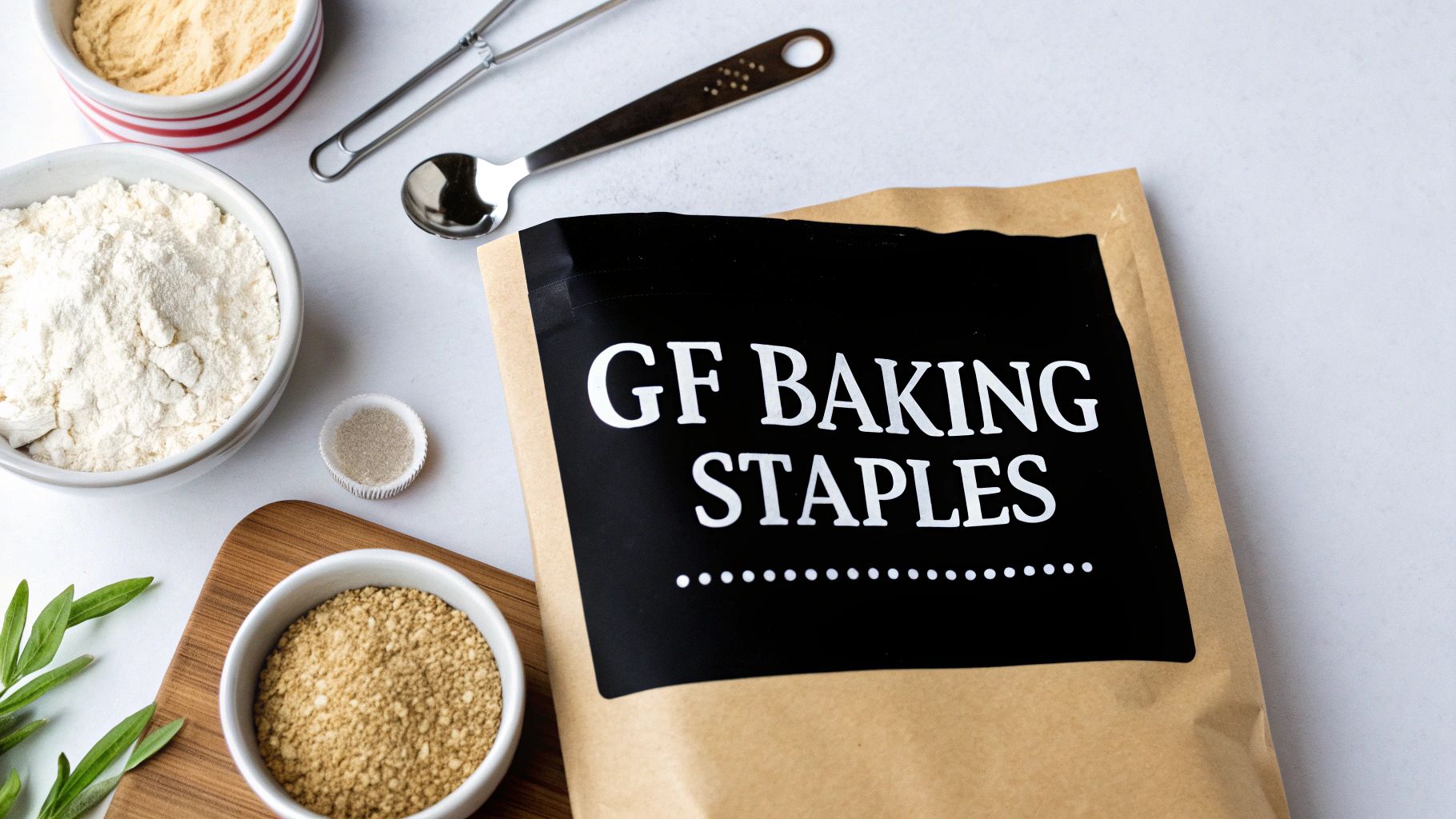
Why are these baking staples a priority?
Without gluten, baked goods can become dense, crumbly, and dry. Specialized gluten-free flours and binders like xanthan gum are essential for providing the elasticity and moisture retention needed for successful baking. An all-purpose blend simplifies conversions, while individual flours like almond or coconut flour offer unique nutritional benefits and cater to other dietary needs, such as paleo or low-carb lifestyles.
Key Insight: Start with a high-quality "1-to-1" or "measure-for-measure" gluten-free flour blend. These expertly formulated mixes contain the necessary starches and gums, removing the guesswork and making it easy to adapt your favorite conventional recipes.
How do I shop for gluten-free baking items?
When building your gluten free grocery shopping list, focus first on a reliable all-purpose blend from a trusted brand. As you gain confidence, you can explore individual flours to customize textures and nutritional content. Always check for a "certified gluten-free" label to avoid cross-contamination from shared processing facilities.
- Top Picks: Bob's Red Mill Gluten Free 1-to-1 Baking Flour, King Arthur Baking Company Measure for Measure Flour, and Navitas Organics Coconut Flour.
- Cost-Saving Tip: Purchase alternative flours like almond or oat flour from stores with bulk bins. For binders, remember that a small package of xanthan gum or psyllium husk will last a long time, as most recipes only require a teaspoon or less.
- Meal Prep Strategy: Batch-bake items like muffins, quick breads, or cookie dough at the beginning of the week. Freeze individual portions for quick grab-and-go breakfasts and snacks that are both safe and delicious.
Is all dairy gluten-free?
The dairy and refrigerated aisles are full of naturally gluten-free options crucial for a balanced diet. Products like milk, yogurt, cheese, and their plant-based alternatives provide essential calcium for bone health, high-quality protein for muscle maintenance, and versatility in the kitchen. From a creamy base for your morning smoothie to a savory topping for your favorite casserole, this category is a cornerstone of any well-stocked gluten free grocery shopping list.
Why are dairy and dairy alternatives a priority?
Dairy and its alternatives are nutritional powerhouses that serve multiple functions in a meal plan. Greek yogurt, for instance, typically contains double the protein of regular yogurt, making it an excellent choice for a satiating breakfast or post-workout snack. Aged cheeses like cheddar or Parmesan are naturally gluten-free and add a rich, umami flavor to dishes. Meanwhile, plant-based milks cater to various dietary needs and preferences, offering lower-calorie or creamier-texture options.
Key Insight: Prioritize function when choosing your dairy or non-dairy products. Need high, slow-digesting protein? Choose cottage cheese or Greek yogurt. Looking for the creamiest texture for your coffee? Oat milk is an excellent choice. Seeking the lowest calorie option? Unsweetened almond milk is a reliable go-to.
How do I shop for gluten-free dairy?
When selecting these items, always check the ingredient list, especially for flavored yogurts, processed cheese products, and sweetened plant-based milks, which can contain hidden gluten or unwanted additives. Opt for plain, unsweetened versions whenever possible to control sugar intake and ensure the product is clean. Brands like Fage have set the standard for high-protein Greek yogurt, while Oatly has become a market leader in creamy, plant-based alternatives.
- Top Picks: Fage Total 2% Plain Greek Yogurt, Good Culture Cottage Cheese, Califia Farms Unsweetened Almond Milk, and aged Parmesan cheese.
- Cost-Saving Tip: Buy larger tubs of plain yogurt or cottage cheese, which are often more economical per serving than individual cups. Shelf-stable plant-based milks can also be purchased in bulk when on sale.
- Meal Prep Strategy: Use plain Greek yogurt as a versatile base for both sweet and savory preparations. Mix it with berries and gluten-free granola for breakfast, or use it in place of sour cream for dips and sauces. For those managing carbohydrate intake with high-fat dairy, you can explore the keto-friendly food lists on AI-MealPlan.com.
Which condiments and sauces are safe to buy?
The secret to creating flavorful and exciting meals often lies in the condiments, sauces, and seasonings you use. This category is one of the most common sources of hidden gluten, as wheat is frequently used as a thickener, stabilizer, or filler in marinades, dressings, and spice blends. Paying close attention to these items on your gluten free grocery shopping list is critical for preventing accidental gluten exposure and unlocking a world of delicious, safe, and diverse culinary possibilities.
Why are these condiments a priority?
Condiments and sauces are the backbone of flavor, capable of transforming simple proteins and vegetables into a satisfying meal. However, many conventional products like soy sauce, certain salad dressings, and gravy mixes contain wheat. Prioritizing certified gluten-free versions ensures your meals are not only safe but also consistently delicious, preventing the blandness that can sometimes accompany restrictive diets.
Key Insight: Never assume a condiment is gluten-free, even if its main ingredients seem safe. Wheat derivatives can be hidden under terms like "natural flavors" or "modified food starch," making the "Certified Gluten-Free" label your most reliable guide.
How do I shop for gluten-free condiments?
Start by replacing essentials like soy sauce with tamari or coconut aminos. Brands like San-J and Primal Kitchen are leaders in the clean-label condiment space, offering a wide range of certified gluten-free options. Always read the ingredient list, even for products you buy regularly, as formulations can change. Building a "safe list" of go-to brands can dramatically speed up your shopping trips.
- Top Picks: San-J Tamari (gluten-free soy sauce), Coconut Secret Coconut Aminos, Frank's RedHot sauce, and most balsamic and apple cider vinegars.
- Cost-Saving Tip: Create your own simple spice blends at home using individual, certified gluten-free spices. You can also make a basic vinaigrette from olive oil, vinegar, and seasonings for a fraction of the cost of bottled dressings.
- Meal Prep Strategy: Make a large batch of a versatile, homemade gluten-free sauce, such as a tomato-based marinara or a simple peanut sauce (using tamari), at the start of the week. Store it in a jar in the refrigerator to quickly add flavor to pasta, stir-fries, or grain bowls.
What are the best gluten-free snack options?
Maintaining energy levels and managing hunger between meals is crucial, especially for busy professionals. Convenient, portable, and certified gluten-free snacks are essential for avoiding energy slumps and making poor food choices when hunger strikes. Stocking your pantry, gym bag, and office desk with smart, macro-balanced options ensures you can stay on track with your health goals without sacrificing convenience.
Why are these snacks a priority?
Smart snacking is a strategic tool for managing your appetite, stabilizing blood sugar, and meeting daily nutritional targets. For those on a gluten-free diet, having reliable, safe snacks readily available prevents the accidental consumption of gluten from vending machines or convenience store finds. High-protein options like beef jerky or specific protein bars aid in muscle repair and satiety, while whole-food snacks like fruit and nuts provide fiber and essential micronutrients.
Key Insight: Treat snacks as mini-meals designed to bridge the gap between main meals. A well-chosen snack should provide a balance of protein, healthy fats, and fiber to deliver sustained energy, not just a quick sugar rush that leads to a later crash.
How do I shop for gluten-free snacks?
When building this part of your gluten free grocery shopping list, always check labels for "Certified Gluten-Free" logos, especially on processed items like bars and jerky. For whole foods like nuts and seeds, look for brands that process them in dedicated facilities to avoid cross-contamination.
- Top Picks: RXBARs (for their clean ingredients), Epic Provisions beef jerky (for high-quality protein), raw almonds, and fresh fruits like apples or berries.
- Cost-Saving Tip: Buy nuts, seeds, and dried fruit in bulk and create your own custom trail mix. Pre-portion them into small containers or bags at the start of the week for easy grab-and-go access.
- Meal Prep Strategy: Dedicate 15 minutes during your weekly meal prep to portion out snacks. Pair an apple with a pre-portioned bag of almonds or a cheese stick for a balanced snack. Keep non-perishable backups like seaweed snacks or protein bars in your car or desk drawer for emergencies.
8-Item Gluten-Free Grocery Comparison
| Item | Implementation complexity 🔄 | Resources & cost ⚡ | Expected outcomes ⭐📊 | Ideal use cases 💡 | Key advantages |
|---|---|---|---|---|---|
| Gluten-Free Grains and Grain Alternatives | 🔄 Low–Medium (simple cooking; texture variability) | ⚡⚡ Moderate cost; pantry-stable; 15–30 min cook | ⭐⭐⭐ Balanced carbs & fiber; 📊 Strong macro foundation | Meal prep, macro-tracking, everyday staples | Versatile; naturally gluten-free; quick-cook options; nutritional variety |
| Certified Gluten-Free Packaged Foods and Bread Products | 🔄 Low (ready-to-eat/heat; minimal prep) | ⚡ Moderate–High cost; shorter shelf life | ⭐⭐ Predictable nutrition; 📊 High safety (certified <20ppm) | Busy professionals, quick meals, standardized macros | Certified safety; time-saving; consistent nutrition labels |
| Fresh Proteins and Meat Alternatives | 🔄 Medium–High (prep, cooking skill, food safety) | ⚡⚡ Variable cost; perishable; batch-cookable | ⭐⭐⭐⭐ High protein density; 📊 Effective for muscle gain & satiety | Main meals, muscle-gain plans, batch cooking | High macro yield; versatile cooking methods; strong satiety |
| Fresh Produce and Vegetables | 🔄 Low–Medium (prep time; perishability management) | ⚡⚡ Low cost when seasonal; storage/short shelf life | ⭐⭐⭐ Micronutrient-rich; 📊 Supports weight loss & health | Micronutrient diversity, volume for satiety, weight management | High nutrient density; frozen options to reduce waste; fiber-rich |
| Gluten-Free Flour and Baking Staples | 🔄 High (steep learning curve; recipe adjustments) | ⚡⚡ Moderate cost; specialized ingredients; storage needs | ⭐⭐ Enables home baking; 📊 Good for customization & batch prep | Home bakers, clean-label control, cost-conscious bakers | Ingredient control; cost-effective for frequent baking; customizable macros |
| Dairy and Non-Dairy Milk Alternatives | 🔄 Low (ready use; some brand variance) | ⚡–⚡⚡ Low–Moderate cost; shelf-stable options; variable fortification | ⭐⭐⭐ Protein/calcium support; 📊 Versatile in recipes & breakfasts | Breakfasts, smoothies, added protein in meals | High-protein dairy options; fortified plant milks; recipe versatility |
| Naturally Gluten-Free Condiments, Seasonings, and Sauces | 🔄 Low–Medium (label vigilance required) | ⚡ Low cost per use; some premium items pricier | ⭐⭐ Enhances flavor; 📊 Reduces meal fatigue; prevents hidden gluten | Quick-cook meals, flavor variety, celiac-safe meal plans | Long shelf life; macro-neutral flavor boosters; hidden-gluten prevention |
| Gluten-Free Snack Foods and On-the-Go Options | 🔄 Low (grab-and-go; portion control needed) | ⚡⚡ Moderate–High per unit; shelf-stable & portable | ⭐⭐⭐ Supports hunger management; 📊 Reliable between-meal macros | Busy professionals, travel, pre/post-workout snacking | Portable; portion-controlled; macro-predictable; prevents reactive eating |
How can I simplify my gluten-free shopping?
Transitioning to a gluten-free lifestyle can feel like learning a new language, especially in the sprawling aisles of a grocery store. This guide was designed to be your translator and your map, breaking down the overwhelming task of gluten-free shopping into a simple, structured, and repeatable system. By mastering the core principles we've covered, you are no longer just reacting to dietary needs; you are proactively building a foundation for a healthier, more enjoyable relationship with food.
The true power of this comprehensive gluten free grocery shopping list lies in its structure. Organizing your list by store section, from fresh produce and proteins to pantry staples and certified snacks, transforms a chaotic chore into an efficient, strategic mission. You save time, reduce stress, and eliminate the last-minute guesswork that often leads to impulse buys or accidental gluten exposure.
What are the key takeaways for my next shopping trip?
Let's distill the most crucial lessons from this guide into actionable habits that will solidify your success. These are the practices that will make the biggest difference in your long-term gluten-free journey.
- Prioritize Naturally Gluten-Free Foods: The safest, most nutritious, and often most affordable gluten-free foods don't come with a special label. Building your meals around fresh fruits, vegetables, lean proteins, and naturally gluten-free grains like rice and quinoa is the cornerstone of a sustainable diet.
- Become a Label Detective: Never assume a product is safe. Always look for the "Certified Gluten-Free" seal for the highest level of assurance. When a seal isn't present, diligently scan the ingredients list and "Contains" statement for wheat, barley, rye, malt, and brewer's yeast. This habit is your non-negotiable line of defense.
- Plan Ahead to Avoid Pitfalls: The single best way to stay on track is to plan your meals before you shop. Use the sample weekly lists for weight loss, muscle gain, or family meals as a template. A clear plan prevents decision fatigue in the store and ensures your kitchen is stocked with everything you need for the week ahead, reducing the temptation for unsafe convenience foods.
- Understand Cross-Contamination Hotspots: Be mindful of bulk bins, shared slicers at the deli counter, and packaged goods made on shared equipment. While you can't control the entire supply chain, you can make informed choices to minimize your risk.
Pro Tip: Take a picture of your pantry and fridge before you leave for the store. This simple step serves as a quick visual inventory, preventing you from buying duplicates of items like spices, condiments, or gluten-free flours you already have.
How can I turn my list into a lifestyle?
Mastering your gluten free grocery shopping list is more than just a dietary task; it's an act of empowerment. It gives you control over your health, your budget, and your time. You'll find that with each successful shopping trip, your confidence grows. The aisles that once seemed intimidating become familiar territory. You'll start to recognize trusted brands, instinctively spot hidden gluten, and build a repertoire of delicious, safe meals that you and your family love.
This process isn't about restriction; it's about discovery. You'll explore new grains, experiment with different flours, and find creative ways to cook with fresh, whole foods. The initial learning curve gives way to a rewarding routine that supports your well-being from the inside out. Embrace this journey, and let your grocery list be the tool that guides you toward a vibrant, healthy, and effortlessly gluten-free life.
Frequently Asked Questions
What should I look for on a gluten-free label? Look for a "Certified Gluten-Free" seal from a third-party organization, as this offers the highest level of safety. Otherwise, check the ingredients list for wheat, barley, rye, malt, or brewer's yeast.
Are oats gluten-free? While oats are naturally gluten-free, they are often cross-contaminated with wheat during processing. Always buy oats that are specifically labeled or certified as gluten-free.
What are the most common hidden sources of gluten? Hidden gluten is often found in soy sauce, salad dressings, soups, sauces, marinades, and spice blends. Always read the labels on these products carefully.
Is it more expensive to shop gluten-free? Specialty gluten-free products like bread and pasta can be more expensive. However, focusing your diet on naturally gluten-free whole foods like produce, proteins, and rice can help manage costs.
Can I trust bulk bins for gluten-free items? Bulk bins pose a high risk of cross-contamination from shared scoops and airborne flour. It is safer to purchase pre-packaged, certified gluten-free grains and nuts.
Are potatoes and rice gluten-free? Yes, all varieties of potatoes and rice are naturally gluten-free. They are excellent carbohydrate sources for a gluten-free diet.
How do I make a gluten-free shopping list for a beginner? Start with a list of naturally gluten-free foods: all fruits and vegetables, unprocessed meats and fish, eggs, nuts, and legumes. Then, add a few certified gluten-free staples like rice, quinoa, and one brand of gluten-free bread or pasta.
Ready to take the guesswork out of meal planning and grocery shopping for good? The AI Meal Planner creates personalized gluten-free meal plans tailored to your specific goals and dietary needs, then automatically generates a perfectly organized shopping list. Stop spending hours planning and start enjoying delicious, safe meals by visiting the AI Meal Planner today.
AI-powered nutrition
Get Your Personalized Meal Plan
AI creates the perfect meals for your goals, lifestyle, and taste.
Start Your Journej