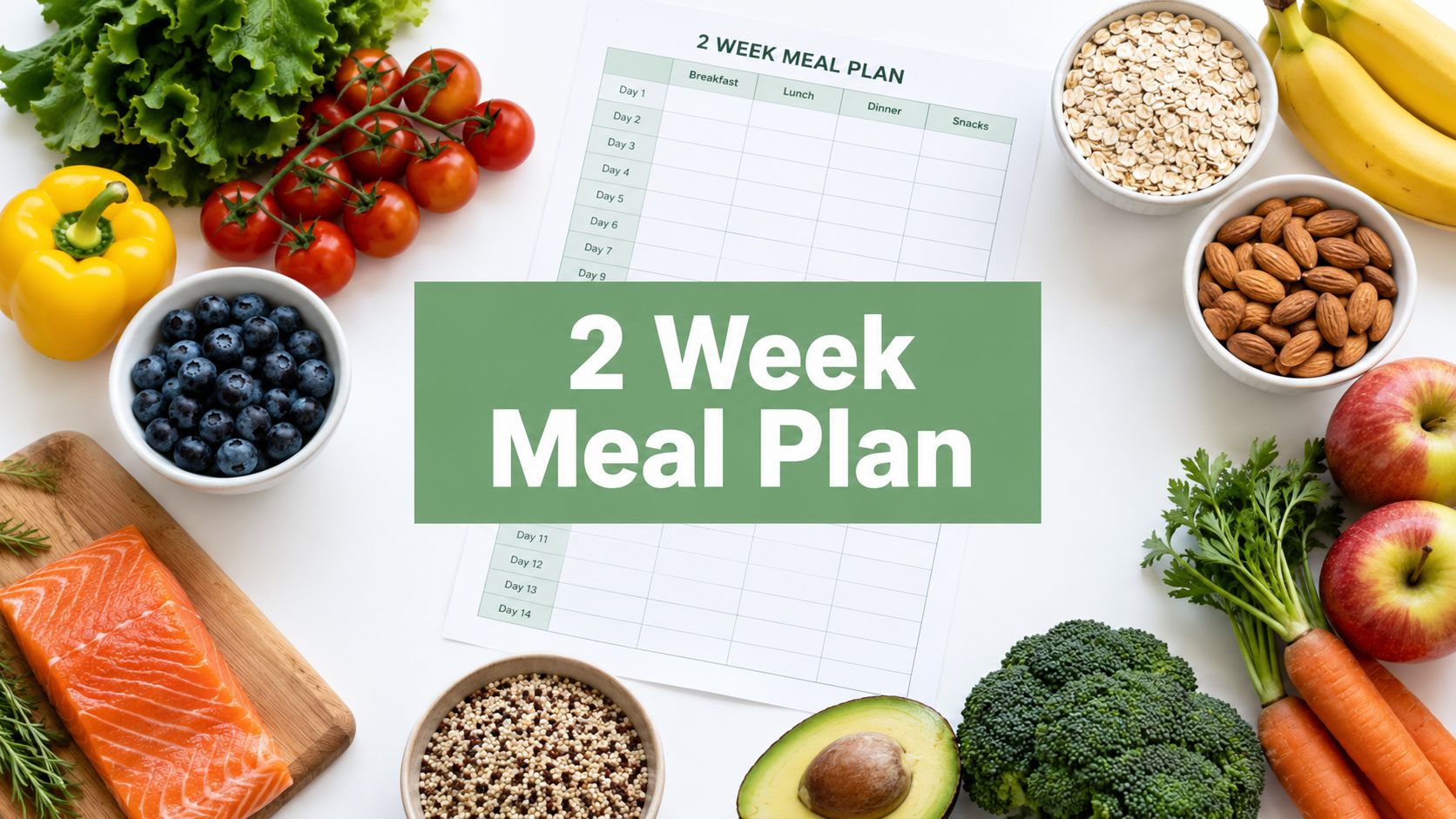
If your fridge is full of good intentions and random half-used ingredients, a 2 week meal planner fixes the part that usually breaks: sequencing. The workable version is a 14-day plan split into two 7-day blocks, with one meal assigned to each day, a separate shopping list for each week, and prep at the start of each week, as shown in published 14-day planning examples (POPSUGAR). The best results come from using fresh, high-perishability foods early, freezer and pantry meals later, and leftovers on purpose instead of by accident.
You don't need a prettier calendar. You need a system that survives Thursday fatigue, a late meeting, produce that turns faster than expected, and the nights when nobody wants the meal you optimistically wrote down ten days ago.
Most failed meal plans don't fail because the recipes were bad. They fail because the plan ignored shelf life, energy, and repetition. A real 2 week meal planner accounts for what gets eaten first, what gets repurposed, and what should never be scheduled on your lowest-bandwidth day. If you want a starting point that builds around your preferences and schedule, AI Meal Planner onboarding is one practical way to set the basics before you map the full cycle.
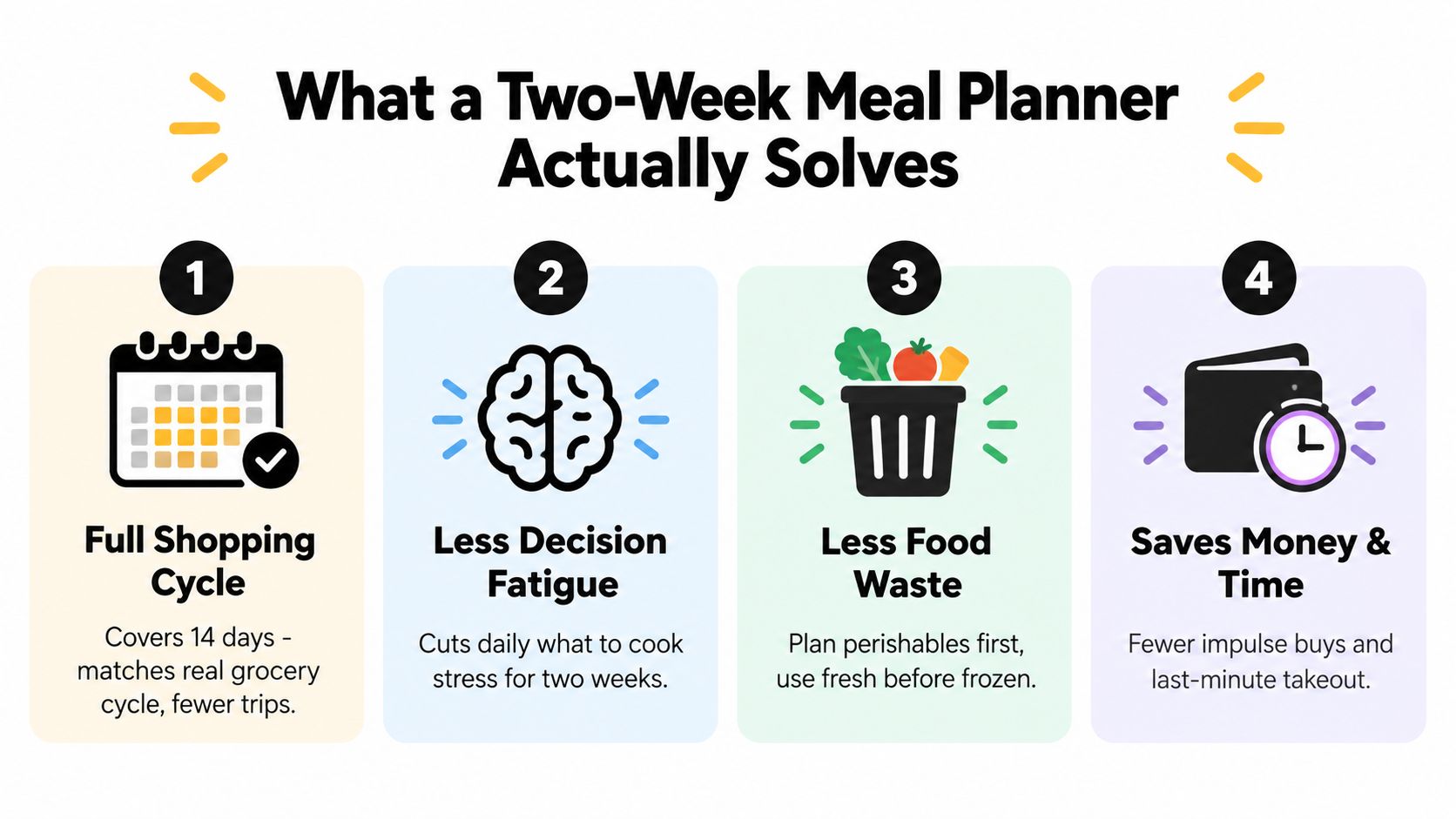
What a Two-Week Meal Planner Actually Solves
Sunday looks organized. By Thursday, the spinach is limp, the cilantro is gone, and the expensive protein you meant to cook first is still sitting in the back of the fridge. That is the problem a two-week planner solves. It gives structure to the order food gets used, so the plan survives life instead of collapsing into takeout and waste.
A 14-day plan works well for households that shop once a week but want a longer view, or shop once for a bigger stretch and need the food to last. The value is not variety for its own sake. The value is knowing which meals belong in days 1 to 4, which ingredients can carry into the second week, and where leftovers will land before they become a guilt container.
Why 14 days feels different from 7
A one-week plan can get away with being a simple menu. A two-week plan has to manage shelf life.
That means three decisions need to happen up front:
- Use the fragile food early: salad greens, berries, herbs, mushrooms, seafood, ripe avocados, and opened dairy belong in the first part of the cycle.
- Save the durable food for later: frozen proteins, cabbage, carrots, potatoes, onions, eggs, dry pasta, rice, canned beans, and jarred sauces hold up better into week two.
- Repeat ingredients on purpose: one pack of tortillas can cover tacos, wraps, and quesadillas. Cooked chicken can become bowls, soup, sandwiches, or pasta. A big batch of roasted vegetables can fill lunches, sides, and egg dishes.
This is the gap many static meal plans miss. They give 14 meals, but not a 14-day use order.
That order matters because households discard a large share of food. The UN Environment Programme reported major household food waste in its Food Waste Index Report 2024. In practice, I see the smaller version of that problem every week. Clients do not usually waste food because they bought the wrong recipes. They waste food because the cucumber, greens, cooked grains, and herbs had no scheduled first use, second use, or backup use.
What success actually looks like
A good two-week planner is flexible, but not vague. Meals can shift by a day or two without creating a spoilage problem.
Use this standard:
| What works | What fails |
|---|---|
| Fresh proteins and delicate produce placed early | Tender produce pushed into the second week |
| Ingredients reused across several meals | Fourteen unrelated recipes with one-use purchases |
| Leftovers assigned to a specific next meal | Leftovers stored with no plan to eat them |
| Pantry, freezer, or slow-cooker meals on low-energy nights | High-effort meals scheduled on your busiest evenings |
Published 14-day examples often use assigned daily meals and a clear shopping rhythm, as shown in this 14-day clean eating plan. That part is useful. In practice, the stronger version also builds in perishability. Day 2 might use the fresh fish and herbs. Day 5 might repurpose cooked chicken. Day 11 should probably rely on freezer staples, sturdy vegetables, or pantry meals, not optimistic fresh produce that needed to be eaten six days earlier.
A practical two-week planner reduces three common friction points at once: wasted ingredients, repeated last-minute decisions, and meals that looked good on paper but were scheduled on the wrong day. That is what makes it hold up.
Choosing Diet Goals and Macro Targets Before Planning
Most two-week plans fall apart before the grocery trip. The problem isn't motivation. It's that the nutrition target and the cooking reality don't match.
If someone says they want high protein, high fiber, low cost, minimal prep, no repeats, family-friendly dinners, and a different breakfast every day, the plan is already unstable. Pick one primary goal first. Then build flexibility around it.
Start with one primary nutrition target
Common priorities usually look like this:
- Weight loss: meals need enough structure to prevent grazing and enough volume to keep hunger manageable.
- Muscle gain: protein distribution matters, but so does having enough total food available on training days.
- Blood sugar management: consistency and meal timing often matter as much as the recipe itself.
- Maintenance: variety and repeatability matter more than rigid precision.
If you need a clean baseline, a calorie and macro calculator can help translate your goal into a daily target before you choose recipes.
Meal planning isn't a fringe habit. In a peer-reviewed study, meal planners commonly planned at least weekly, with 46.39% planning several times per week and 46.39% planning once per week, meaning 92.78% planned weekly or more often. The same research also linked meal planning with better food variety and diet quality in this meal-planning behavior study.
Don't stack too many constraints at once
The first two weeks matter because adherence drops when plans are vague, overcomplicated, or unrealistic. In one randomized trial, adherence to meal timing was perfect on 87% of participant-days and adherence to food consumption on 94% of participant-days, with lower adherence on weekends and during the first two weeks in one arm of the intervention. Another diabetes diet study found only 45.8% of patients who believed they had a diet plan reported being fully adherent, summarized in this meal timing and adherence research.
That has a simple planning implication:
Early success matters more than ideal macros on paper.
For many clients, I set a primary goal and one secondary rule. For example, "hit protein consistently" plus "include produce twice a day" works better than six nutrition rules competing with each other.
Use useful data, not fantasy targets
If you want tighter energy planning, body-composition testing can help distinguish between a goal that sounds disciplined and one your physiology and schedule can support. A service like Telomyx DEXA, VO2 max and RMR testing can give more grounded inputs for calorie planning than guessing from online formulas alone.
A two-week planner needs targets that fit your groceries, budget, and attention span. If your plan requires perfect execution to work, it won't survive day five.
Sample Menus for Keto, Vegan, Balanced, and Paleo
Different eating styles can all work over 14 days. What changes is how you manage overlap, shelf life, and variety without buying a completely different kitchen for each plan.
For all four patterns below, the same sequencing rule applies. Use the most fragile ingredients in the first block. Save freezer, pantry, and sturdy produce meals for the second block. If you want a ready-made low-carb starting point, a keto meal planning template can speed up the structure side.
Side-by-side planning differences
| Pattern | What anchors the plan | What usually goes wrong | Best fix |
|---|---|---|---|
| Keto | Eggs, fish, chicken thighs, ground meat, cheese, low-carb vegetables, fats | Too little variety, not enough vegetables, snack-heavy days | Rotate sauces and cooking methods, not just proteins |
| Vegan | Beans, lentils, tofu, tempeh, grains, nuts, seeds, vegetables | Repetition, weak protein structure, produce overload | Pair legumes and grains, repeat components in different formats |
| Balanced | Lean proteins, grains, dairy or alternatives, fruit, vegetables | Too many unrelated recipes | Choose a few core proteins and carbs, then remix |
| Paleo | Meat, fish, eggs, roots, fruit, vegetables, nuts | Labor-heavy prep and not enough convenience meals | Batch-cook proteins and roots, keep frozen backups |
Four sample 14-day dinner patterns
Keto
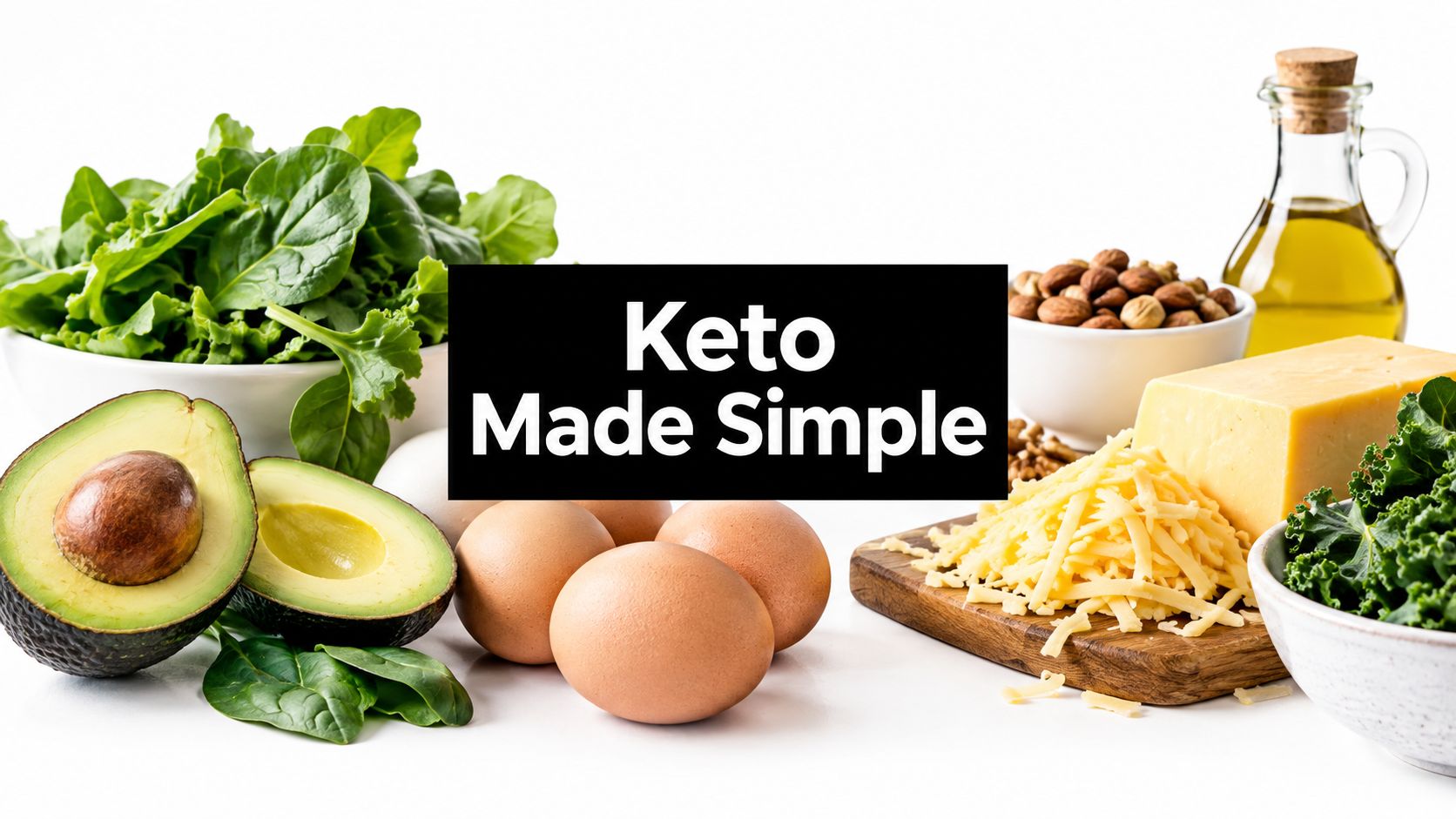
Start with salmon, spinach, zucchini, mushrooms, and salad greens in the first few days. Move toward meatballs, cauliflower mash, egg-based dinners, frozen shrimp, and burger bowls later. Lunches can reuse cooked proteins over greens, and breakfasts often hold well with egg muffins, yogurt if included, or chia-style options if they fit the approach.
Vegan
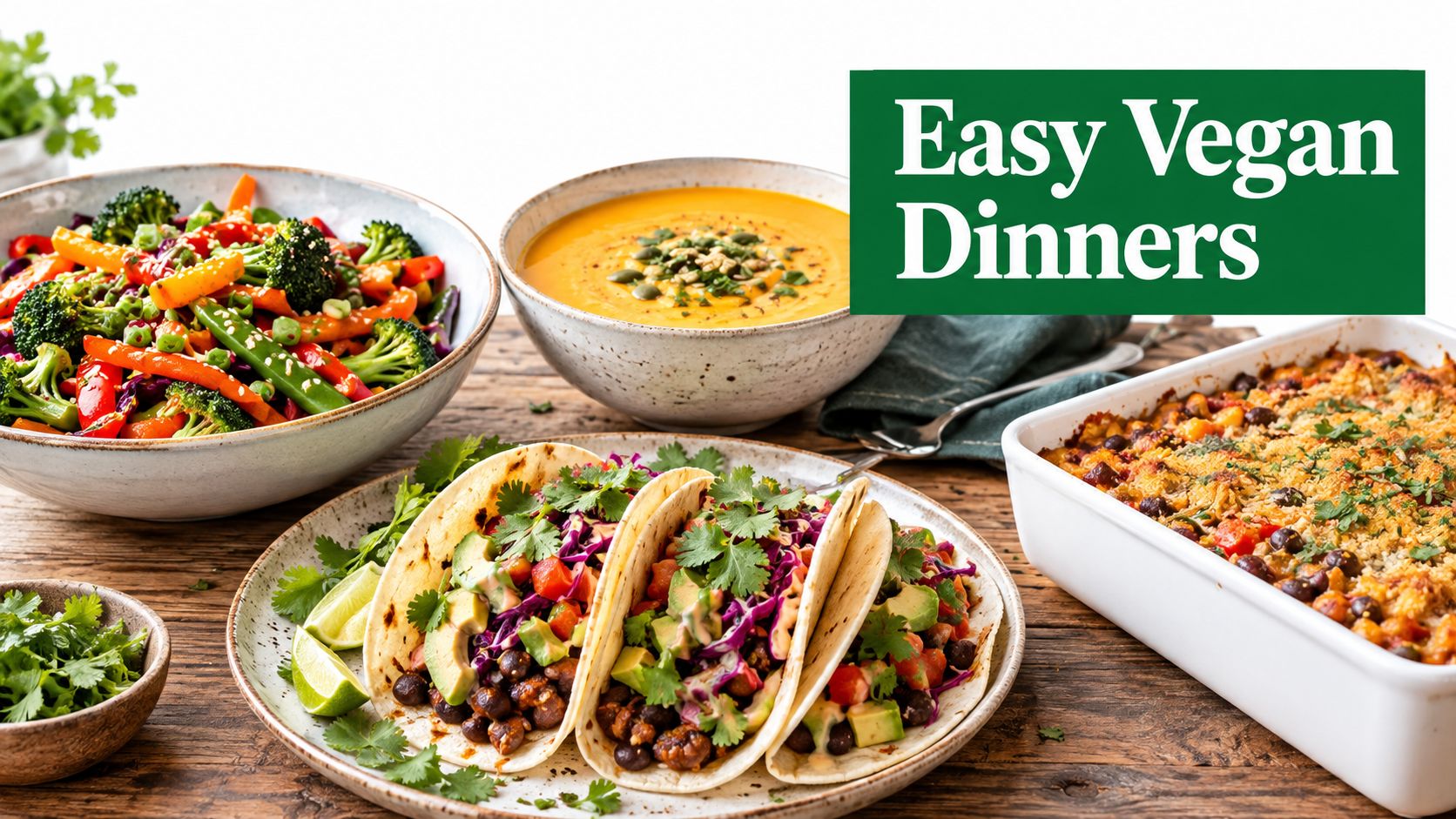
Open with tofu stir-fry, lentil pasta, grain bowls, and fresh herb sauces while produce is strongest. Week two can lean on chili, freezer curry, bean soup, baked sweet potatoes with black beans, and peanut-sesame noodles using sturdier vegetables. This style needs deliberate protein pairing and enough texture change so every bowl doesn't taste like a slight variation of the last one.
Balanced
This is often the easiest for adherence. Rotisserie-style chicken, turkey meatballs, rice, potatoes, pasta, chopped vegetables, yogurt, fruit, and eggs create a lot of flexible combinations. One roast chicken can turn into tacos, grain bowls, soup, and sandwiches without tasting repetitive if the sauces change.
Change the flavor system before you change the entire menu. Lemon-herb, curry, salsa, pesto, peanut sauce, and tomato-based sauces can make the same base ingredients feel different.
Paleo
Use fresh seafood or poultry early, then shift to slow-cooked beef, frozen burgers, sheet-pan sausage with vegetables, soups, and root vegetable hashes later. Paleo tends to work best when you prep starches and proteins ahead of time, otherwise every dinner turns into a longer cooking project than people planned for.
For water quality, taste, and cooking basics, especially if you're adjusting soups, grains, or blanched vegetables, this Melbourne tap water cooking guide is a useful practical reference.
Breakfast, lunch, and snack logic that keeps dinner realistic
The dinner menu usually gets all the attention, but breakfast and lunch either support the plan or wreck it. A practical structure is:
- Breakfasts that repeat well: overnight oats, egg bites, yogurt bowls, tofu scramble, or a cooked grain with fruit and seeds.
- Lunches built from leftovers: bowls, wraps, salads, soups, or pasta using proteins already prepared.
- Snacks that patch gaps: fruit, cut vegetables, nuts, hummus, yogurt, boiled eggs, or edamame, depending on the eating pattern.
The point isn't perfect novelty. It's controlled repetition with enough variation to stay edible.
Building Grocery Lists by Aisle and Perishability
Day 9 is where a two-week plan usually breaks. The fish is long gone, the spinach has collapsed, and the expensive herbs you bought for one recipe are turning to sludge in the crisper. A workable grocery list prevents that by telling you two things at once: where to find the food in the store, and when that food needs a job.
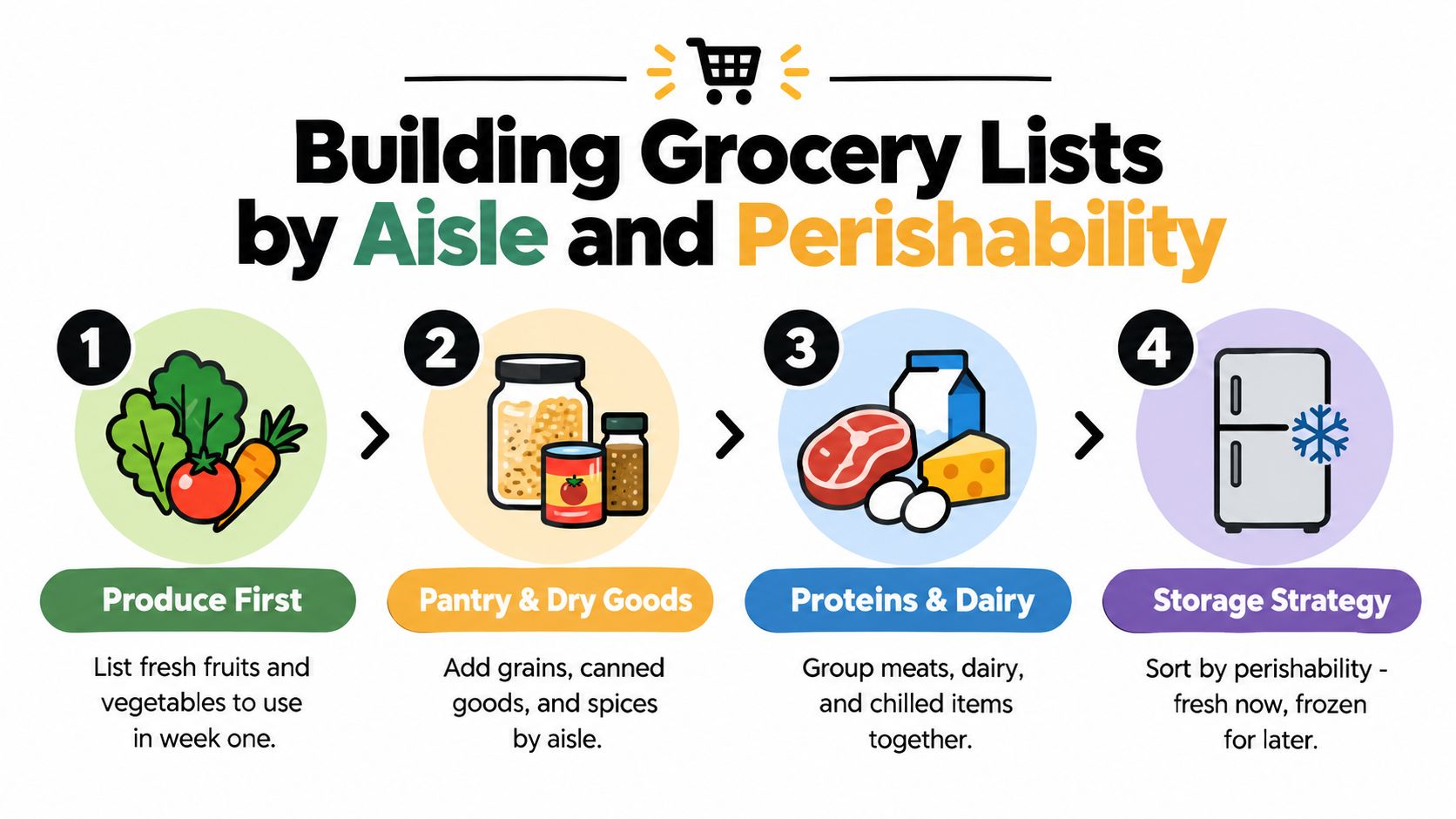
Build the list in two layers
Start with store order so shopping stays fast. Produce, proteins, dairy, frozen, pantry, household.
Then label each item by how long it realistically holds in your kitchen. That second layer is what makes a 14-day plan hold up.
- Use first: berries, leafy greens, herbs, mushrooms, fresh fish, ripe avocado
- Use mid-plan: broccoli, cauliflower, yogurt, tortillas, cooked grains, opened sauces
- Use later: carrots, cabbage, onions, potatoes, frozen vegetables, canned beans, dry pasta, rice
That sequence matters more than people expect. Early meals should absorb the fragile ingredients. Later meals should rely on sturdy vegetables, freezer proteins, and pantry starches. If you use a digital tool, a grocery list generator sorted by aisle can speed up the store side, but the perishability pass still needs a human decision.
Build around repeat-use ingredients
Two-week planning gets expensive when every recipe introduces one special item that appears once, then dies in the fridge.
I coach clients to scan for ingredients that can carry at least two or three meals. Parsley should show up in a grain bowl, a sauce, and a soup finish. Half a cabbage should already have a slaw night, a stir-fry night, and a backup role in tacos or salad. A tub of yogurt should work for breakfast, sauces, and marinades.
This is the difference between a menu that looks good on paper and a list that survives real life.
| Waste trigger | Better move |
|---|---|
| One bunch of herbs for one recipe | Pair it with two more meals that use the same herb |
| Half a cabbage with no follow-up meal | Assign it to slaw, stir-fry, and soup |
| A jarred sauce for one dinner | Reuse it in a bowl, marinade, or lunch wrap |
| Protein thawed too late | Put thawing days on the calendar and keep freezer backups |
Shop for components with multiple exits. Dinner plans change. Ingredients that can flex still get used.
Rebuild the second week from what actually remains
A static 14-day menu ignores what happens in the fridge. A practical one checks inventory before week two and adjusts.
If the delicate produce is gone, stop forcing salads and pivot to cooked vegetables. If cabbage, carrots, eggs, cooked rice, and frozen shrimp are still around, that points toward fried rice, soup, or a skillet dinner. If the chicken got used faster than expected, pull from beans, tofu, ground meat, or freezer staples instead of making a second emergency grocery run.
Earlier in the article, I noted that many published 14-day plans split shopping and prep into weekly rounds. That approach works because perishability rarely lines up neatly across a full two-week window. Week two should be built from what held up well, what your household ate, and what still needs to be used before it turns.
A rigid grocery list creates waste. A good one acts like a timeline for ingredients, with the fragile foods scheduled early and the durable foods carrying the back half of the plan.
Leftover Optimization and Smart Substitutions
Leftovers need a job before you cook them. If they don't have a destination, they become guilt.
The easiest way to make leftovers useful is to stop treating them as full repeat meals. Treat them as components. Cooked chicken isn't "Tuesday again." It's protein for tacos, grain bowls, soup, salad, quesadillas, or a fast pasta.
Build a base-plus-finish system
Use one base protein, one starch, and one vegetable batch across multiple meals, then change the finish.
Examples that work in real kitchens:
- Roasted chicken becomes lemon rice bowls, barbecue wraps, chicken soup, or pasta with greens.
- Ground turkey or beef becomes taco filling, stuffed peppers, lettuce cups, or tomato sauce for pasta.
- Lentils or beans become grain bowls, soup, burritos, or a quick skillet with eggs or tofu.
- Roasted vegetables can move into frittatas, salads, bowls, sandwiches, or blended soups.
Many households save the plan. You don't need new groceries. You need a different ending.
Make substitutions by function, not by recipe title
When an ingredient sells out or preferences change, substitute based on what the food does in the meal:
- Protein role: chicken, tofu, beans, eggs, fish, or beef can often trade places if the seasoning profile still works.
- Crunch role: cabbage, romaine, cucumber, carrots, or toasted seeds can replace each other in bowls and salads.
- Creamy role: yogurt, tahini, hummus, avocado, or blended beans can carry sauces and dressings.
- Carb role: rice, potatoes, pasta, tortillas, quinoa, or bread can shift based on budget and preference.
If the plan stalls, don't rebuild all 14 days. Replace the failing component.
Keep the leftovers rotation short and visible
Use clear containers, put the most time-sensitive items at eye level, and assign them to a specific lunch or dinner. Weekend meals usually need the least friction, so that's where a leftover bowl bar, quesadilla night, soup night, or freezer meal earns its place.
One published batch-prep workflow suggests cooking two proteins, making one pot of grains or roasted potatoes, chopping several vegetables, and prepping two breakfast options plus two easy snacks, then repeating the process at the start of Week Two in this 14-day batch-prep workflow. That framework works because it creates flexible pieces rather than locking you into fully assembled meals.
Weekly Prep Schedules That Fit Real Weekends
Weekend prep shouldn't feel like a second job. The plan that survives is the one with two shorter setup points, not one heroic session that leaves you tired of your own food.
The most reliable rhythm is a split cycle. Prep enough for days 1 through 4, refresh in the middle, then reset for days 8 through 14 with another focused session.
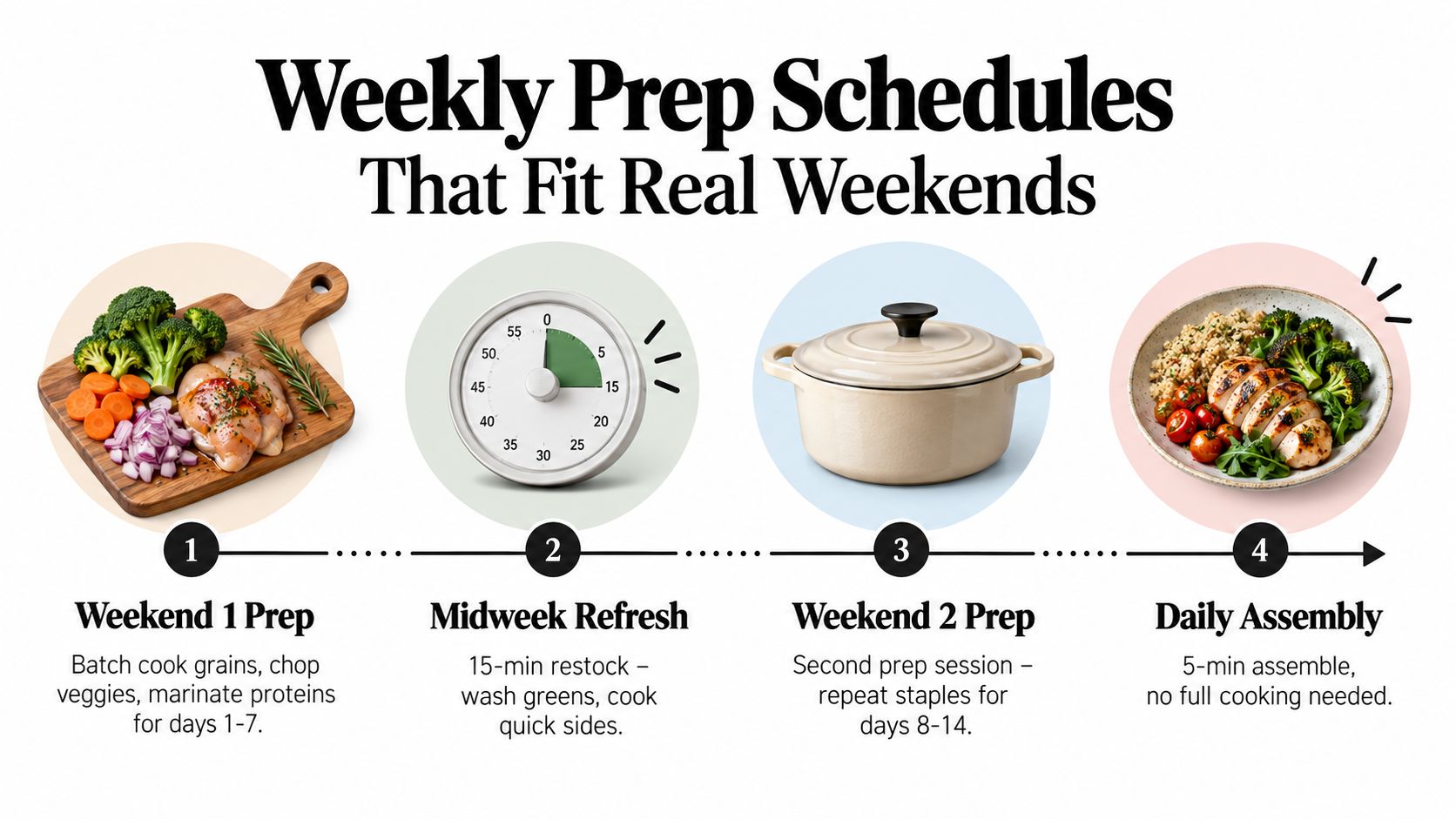
A prep schedule that respects low-energy days
Try this shape rather than an hour-by-hour fantasy:
Weekend 1
Cook a few anchor items. A protein, a starch, chopped vegetables, one sauce, and one easy breakfast. Marinate or freeze the proteins intended for later in the week instead of cooking everything at once.
Midweek refresh
Wash more greens, cook one quick side, thaw the next protein, and repurpose leftovers before they drift past their useful window.
Weekend 2
Repeat the process with the second shopping list or with remaining ingredients that still need a plan.
For recipe ideas built for batch cooking and quick assembly, meal prep recipe collections are useful because they help you think in components rather than dinner events.
A short visual walkthrough can help if your current prep routine feels scattered:
Match meals to the day, not just the ingredients
Weekend and early-plan friction matter more than people expect. In controlled feeding research, adherence was strong overall, but weekends and the first two weeks showed lower consistency in parts of the intervention, as noted earlier in the adherence research. That's why the first stretch of a 2 week meal planner should be almost boring in how easy it is.
Use this assignment logic:
- Monday to Wednesday: fastest wins. Bowls, sheet-pan dinners, tacos, soups, rotisserie-style leftovers.
- Higher-energy evenings: anything requiring chopping, simmering, or multiple pans.
- Weekend nights: socially flexible meals, freezer backups, or leftovers bars because schedules change.
- Late-plan dinners: pantry and freezer anchors that don't punish you for moving them.
Some meal-planning tools can support this without overcomplicating it. For example, AI Meal Planner can generate weekly recipes, macros, and aisle-sorted grocery lists, which can be useful when you want a structured first draft and then adjust sequencing manually.
What prep is worth doing ahead
Not all prep pays off. The best return usually comes from:
- Washing and chopping produce you'll use in the first few days
- Cooking a base grain or potato tray
- Prepping proteins halfway through marinating, seasoning, or portioning
- Making one sauce that can work across several meals
Over-prepping soft vegetables, delicate salads, or fully assembled dishes for too many days often backfires. Freshness drops, and so does your interest in eating them.
Troubleshooting Common Two-Week Planner Failures
Day 5 is where many two-week plans start to wobble. Someone worked late, one dinner got replaced with takeout, and the ingredients you meant to use on Tuesday are still sitting in the fridge on Thursday. At that point, the goal is recovery, not perfection.

The planners that hold up for 14 days are the ones with clear reset rules. I tell clients to stop asking, "How do I get back on schedule?" and ask, "What can I still use well this week?" That shift prevents the common spiral where one missed meal turns into wasted groceries and a full plan collapse.
Recovery actions that actually save the plan
Use a simple triage approach:
- One missed prep block: cancel any recipe that needs heavy chopping or multiple steps. Build three low-effort dinners from ingredients already in the house.
- One missed dinner: reassign that protein or cooked component to lunch, wraps, grain bowls, pasta, or eggs the next day.
- Two disrupted nights in a row: stop following the original menu order. Consolidate ingredients into one mixed meal such as soup, fried rice, tacos, or a sheet-pan dinner.
- Zero appetite for what you planned: keep the nutrition target, change the format. Chicken and vegetables can become soup instead of a plated dinner. Beans and rice can become quesadillas instead of bowls.
Ingredient reuse matters more than recipe loyalty. A rigid planner asks you to cook the exact dinner you wrote down. A workable planner keeps proteins, starches, sauces, and vegetables useful even after the week changes shape.
Three common failures and the fix
1. "I skipped one meal and now the whole plan feels off."
Do not try to catch up by cooking extra the next night. Fold the skipped ingredients into the next two meals and cross one recipe off the list. The fastest save is usually combining overlapping parts instead of forcing every original dinner to happen.
2. "I bought for two weeks, but by the second weekend I don't want what I planned."
This usually means the menu was built around recipes, not eating behavior. Keep the later part of the cycle flexible enough to pivot into easier formats. Cooked meat can become sandwiches, tacos, or pasta. Roasted vegetables can go into frittatas, grain bowls, or soup. The food stays usable even if the exact meal changes.
3. "My household stopped cooperating with the plan."
That is a systems problem, not a motivation problem. Shared bases fix it. Cook one central component, then let dinner split at the end. One person uses rice, another uses salad greens. One adds beans, another adds chicken. This keeps you from rebuilding the plan every time preferences drift.
Quick FAQ
How do I start a 2 week meal planner without getting overwhelmed
Plan dinners first. Then repeat a small set of breakfasts and use leftovers or simple assembled lunches. Fewer daily decisions means better follow-through.
What is the fastest way to recover after an off-plan weeknight
Use one decision rule. Cook from what is already opened, cooked, or closest to being wasted, and turn it into the simplest meal format possible.
How do I avoid boredom without creating extra work
Repeat components and change the final dish. The same batch of seasoned protein can cover bowls, wraps, salads, and pasta, which keeps the plan interesting without adding more prep.
If you want a structured first draft without building the whole system by hand, AI Meal Planner can generate meals, macros, and grocery lists. It works best when you still make the final call on swaps and recovery once real life interrupts the schedule.
AI-powered nutrition
Get Your Personalized Meal Plan
AI creates the perfect meals for your goals, lifestyle, and taste.
Start Your Journej