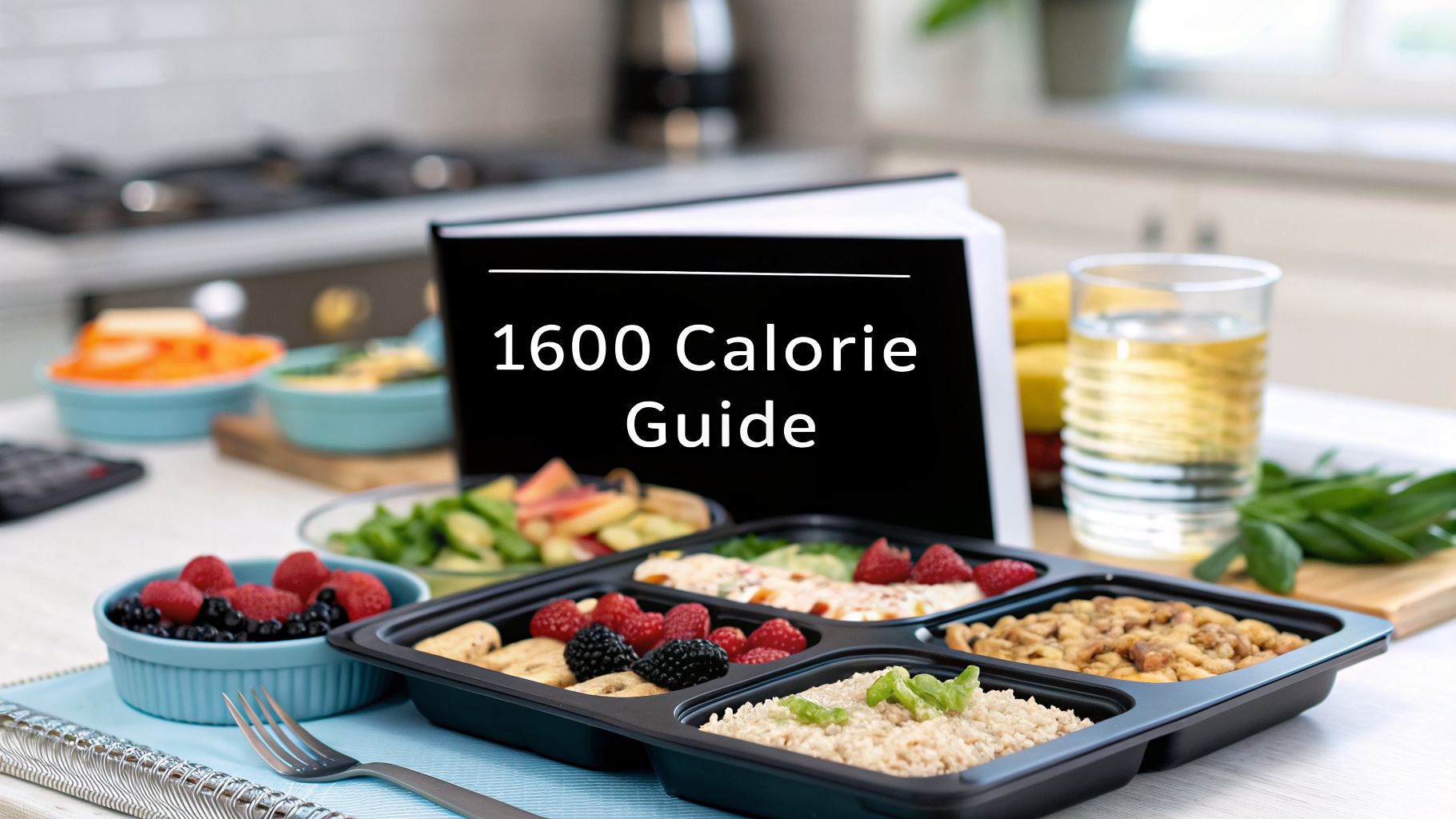
Eating 1600 calories a day is effective for weight loss for many sedentary or lightly active adult women. This intake typically creates a moderate calorie deficit, leading to a safe and sustainable weight loss of 0.5 to 1 pound per week. For most men and highly active individuals, 1600 calories is generally too low.
A 1600-calorie diet is often recommended because it sits in a strategic "sweet spot." It's low enough to trigger fat loss but high enough to provide essential energy, prevent extreme hunger, and supply the nutrients your body needs to function well. This balance makes it a manageable and sustainable approach, unlike crash diets that are often too restrictive to maintain.
Who is a 1600-calorie diet plan best for?
A 1600-calorie-a-day plan is a popular weight loss target, but it's not a one-size-fits-all solution. Your ideal daily calorie intake depends on your age, sex, body size, and, most importantly, your activity level. For some, 1600 calories is the perfect amount to achieve steady weight loss, while for others it may be too restrictive or not low enough to produce results.
This decision tree gives a quick overview of who this calorie level is typically most suitable for.

As shown, a 1600-calorie plan is often a great fit for women aiming to lose weight but is usually insufficient for men due to their higher baseline energy needs.
Which groups benefit most from 1600 calories a day?
This table breaks down who is most likely to succeed with this calorie target.
| Is a 1600 Calorie Diet Right for You? | | :--- | :--- | :--- | :--- | | Demographic Group | Primary Goal | Is 1600 Calories a Good Fit? | Reasoning | | Sedentary to Moderately Active Women | Sustainable Weight Loss | Yes, often ideal. | Creates a moderate calorie deficit (around 500 calories/day) that promotes about one pound per week of weight loss without causing extreme hunger or muscle loss. | | Older, Inactive Adults | Weight Maintenance or Gradual Loss | Yes, a strong fit. | As metabolism naturally slows with age, baseline calorie needs decrease. For many inactive women over 50, 1600 calories is close to their maintenance level, making it perfect for managing weight. | | Most Adult Men | Weight Loss | No, generally too low. | Men typically have higher muscle mass and larger bodies, resulting in a basal metabolic rate (BMR) that often exceeds 1600 calories. This level would likely lead to fatigue and muscle loss. | | Highly Active Individuals (Athletes, etc.) | Fueling Performance | No, absolutely not. | The energy demands of intense physical activity require a much higher calorie intake. Restricting to 1600 calories would seriously impair performance, recovery, and overall health. |
For a personalized assessment, using a calorie deficit calculator can help you determine if 1600 calories aligns with your specific body and goals.
Why is it effective for women seeking sustainable weight loss?
For many women, especially those with desk jobs or light activity levels, a 1600-calorie plan creates a gentle deficit of about 500 calories per day. This is the standard recommendation for losing a sustainable one pound per week.
This moderate approach has several advantages for long-term success:
- It's not a crash diet: It provides enough energy to avoid constant hunger and irritability.
- It helps preserve muscle: When paired with adequate protein, it's less likely to burn muscle, which is vital for a healthy metabolism.
- It allows for real food: 1600 calories offers enough room for nutrient-dense foods like fruits, vegetables, lean proteins, and healthy fats.
When is 1600 calories a day not a good fit?
It's just as important to recognize when this calorie target is too low. A 1600-calorie diet is generally not recommended for:
- Most Men: Their higher muscle mass and larger frames mean their base energy needs (basal metabolic rate) are typically well above 1600 calories.
- Highly Active People: Athletes or individuals with physically demanding jobs require significantly more fuel.
- Teenagers: Growing bodies need more energy, and calorie restriction can negatively impact development.
Understanding your personal health metrics is a crucial first step. A BMI calculator can provide a good baseline for setting a calorie goal that is both realistic and healthy.
How do you build a balanced 1600-calorie meal plan?
Succeeding on 1600 calories a day is about making smart food choices, not just cutting back. The goal is to build a plan that fuels your body and keeps you satisfied by focusing on your macronutrients: protein, carbohydrates, and fats. Each plays a vital role in satiety, energy, and overall health.

Crafting a balanced plan is key to feeling empowered, not deprived. To get the most from your calories, it's helpful to spend time understanding macros for weight loss.
What should your macros look like on 1600 calories?
A balanced 40/30/30 split is an excellent starting point for a 1600-calorie diet aimed at weight loss and stable energy.
Here's how that breaks down:
- Carbohydrates (40%): 160 grams per day. Focus on complex carbs like quinoa, oats, and sweet potatoes for sustained energy.
- Protein (30%): 120 grams per day. Prioritize lean sources like chicken, fish, and lentils to support muscle and reduce hunger.
- Fats (30%): 53 grams per day. Include healthy fats from avocado, nuts, and olive oil for hormone health.
This is a flexible template. For a personalized target, a calorie and macro calculator can provide more precise numbers for your body.
What does a sample 1600-calorie day look like?
Here is a practical example of a delicious and satisfying day of eating while staying on track.
| Meal | Example Dish | Estimated Calories | Key Nutrients |
|---|---|---|---|
| Breakfast | Greek Yogurt Parfait: 1 cup Greek yogurt, 1/2 cup berries, 1 tbsp chia seeds, 1 tbsp chopped almonds. | ~380 | Protein, Fiber, Healthy Fats |
| Lunch | Grilled Chicken Salad: 4 oz grilled chicken breast, 2 cups mixed greens, cherry tomatoes, cucumber, 1/4 avocado, and 2 tbsp vinaigrette. | ~420 | Lean Protein, Vitamins, Healthy Fats |
| Dinner | Salmon with Quinoa & Asparagus: 5 oz baked salmon, 1 cup cooked quinoa, and 1 cup roasted asparagus with olive oil. | ~550 | Omega-3s, Protein, Complex Carbs |
| Snack | Apple with Peanut Butter: 1 medium apple with 2 tbsp natural peanut butter. | ~250 | Fiber, Healthy Fats, Protein |
This sample day hits the 1600-calorie mark while delivering an excellent mix of macronutrients and micronutrients, proving that goal-oriented eating can be enjoyable.
How can you overcome common diet hurdles?
Starting a new eating plan like the 1600-calorie-a-day approach can present challenges, such as hunger, social events, or weight loss plateaus. Knowing what to expect and having a game plan makes these obstacles manageable.

How do you manage hunger and cravings?
The key to staying full on 1600 calories is focusing on nutrient density and food volume. Foods high in fiber and water, like vegetables, fruits, and lean proteins, take up more space in your stomach and keep you satisfied longer.
- Prioritize Protein: Include a lean protein source in every meal to boost satiety.
- Fill Half Your Plate with Veggies: Non-starchy vegetables are low in calories but high in fiber and volume.
- Stay Hydrated: Thirst is often mistaken for hunger. Drink water throughout the day.
- Include Healthy Fats: A small amount of fat from sources like avocado or nuts significantly increases satiety.
What should you do at restaurants and social events?
Dining out doesn't have to derail your progress. A little planning goes a long way.
- Check the Menu Online: Look for dishes that are grilled, steamed, or baked.
- Ask for Sauces on the Side: This gives you control over hidden calories.
- Manage Portions: Ask for a to-go box when your meal arrives and pack up half for later.
- Avoid Liquid Calories: Stick to water or unsweetened iced tea instead of sugary drinks.
The most powerful tool for staying on track is preparation. Mastering strategies like meal prep for beginners can significantly streamline your weekly eating plan and reduce the stress of last-minute decisions.
How can you break through a weight loss plateau?
A weight loss plateau is a normal part of the process where the scale stops moving. As you lose weight, your metabolism adapts and your calorie needs may decrease.
Try these strategies to get things moving again:
- Increase Activity: Add an extra walk or increase workout intensity to burn more calories.
- Review Portion Sizes: Ensure portions haven't slowly increased over time.
- Adjust Your Macros: Slightly increasing protein while trimming carbs can sometimes help.
- Take a Diet Break: Eating at your new maintenance calorie level for a week can help reset hormones and provide a mental break.
How can you automate your 1600-calorie diet?
Manually planning meals, counting calories, and creating grocery lists is tedious and a common reason why diets fail. The constant administrative work can lead to burnout. Fortunately, technology can automate this entire process, turning your diet into a seamless part of your lifestyle.

Why does manual diet planning often fail?
The traditional approach to dieting is prone to failure for several reasons:
- It's Exhausting: The daily grind of planning and tracking drains motivation.
- It’s Prone to Error: Manual calorie counting is often inaccurate, which can sabotage progress.
- It Leads to Boredom: Without easy access to varied recipes, people eat the same few meals repeatedly.
How does an AI meal planner simplify your diet?
An AI-powered meal planner acts as a personal nutritionist, handling all the complex logistics. You simply input your goals and preferences, and the system generates a perfectly balanced 1600-calorie plan. Tools like the AI Meal Planner eliminate guesswork and decision fatigue.
The system automatically calculates calories and macros for every meal, ensuring your plan is perfectly balanced without any manual effort. It also generates an optimized grocery list generator that plans recipes to share ingredients, reducing food waste and saving money.
By automating meal planning, you remove the biggest points of friction. The benefits include:
- Effortless Consistency: A pre-made plan makes it easy to stay on track.
- Guaranteed Variety: The AI introduces new recipes to prevent food boredom.
- Zero Food Waste: Smart grocery lists mean you buy only what you need.
- Total Personalization: The system adapts to your food preferences over time.
Automating your 1600-calorie diet allows you to focus on what matters: enjoying healthy food and living a better life.
Is it safe to follow a 1600-calorie diet long-term?
Once you reach your weight loss goal, the focus shifts to maintenance. For many sedentary to moderately active women, 1600 calories can be a safe and sustainable intake for long-term weight management. However, sustainability is about listening to your body and being ready to adapt. A successful maintenance plan should leave you feeling energized, not deprived.
What are the warning signs that 1600 calories is too low?
Listen to your body. Ignoring warning signs of under-eating can lead to metabolic slowdown, nutrient deficiencies, and burnout.
Be alert for these signals:
- Persistent Fatigue: Feeling constantly sluggish or unable to power through workouts.
- Constant Hunger or Food Obsession: Thinking about food 24/7 is a sign of a significant energy gap.
- Hair Loss or Brittle Nails: These are classic signs of nutrient deficiencies.
- Disrupted Menstrual Cycles: For women, changes in their cycle are a serious signal that calorie intake is too low to support hormonal health.
If you experience these symptoms, it's a clear sign to reassess your calorie target.
How do you adjust your intake for long-term success?
A successful maintenance plan is dynamic. If 1600 calories feels too low, don't be afraid to adjust.
- Gradual Calorie Increase: Slowly add 100-150 calories per day for a week or two and monitor your weight and energy levels. Continue until you find the point where your weight stabilizes.
- Incorporate "Refeed" Days: Strategically planning higher-calorie days can help replenish energy stores, boost metabolism, and provide a psychological break.
Turning a diet into a healthy lifestyle is about focusing on nutrient-dense foods and overall well-being. Using an AI Meal Planner can make this transition smoother by helping you explore new calorie levels and recipes without manual calculations.
Frequently Asked Questions
Is a 1600-calorie diet good for a man? No, for most men, 1600 calories is too low to meet their basic energy needs and can lead to muscle loss and fatigue.
Can I build muscle on 1600 calories a day? It is challenging but possible if you prioritize high protein intake (at least 30% of your calories) and combine it with consistent resistance training.
How much weight can I lose in a month on 1600 calories? You can realistically expect to lose between 2 and 4 pounds per month, as a 1600-calorie diet typically promotes a safe loss of 0.5 to 1 pound per week.
What if I am still hungry on 1600 calories? Focus on eating high-volume, low-calorie foods like non-starchy vegetables and lean protein, and ensure you are drinking enough water throughout the day.
Is it safe to eat 1600 calories every day? For many sedentary women, yes, but it is not suitable for everyone. Listen to your body for signs of fatigue or extreme hunger and adjust if needed.
Tired of the endless cycle of meal planning, calorie counting, and wasted groceries? The AI Meal Planner takes all the guesswork out of your diet. Get personalized weekly meal plans, smart grocery lists, and delicious recipes tailored to your 1600-calorie goal. Start your effortless health journey today.
AI-powered nutrition
Get Your Personalized Meal Plan
AI creates the perfect meals for your goals, lifestyle, and taste.
Start Your Journej