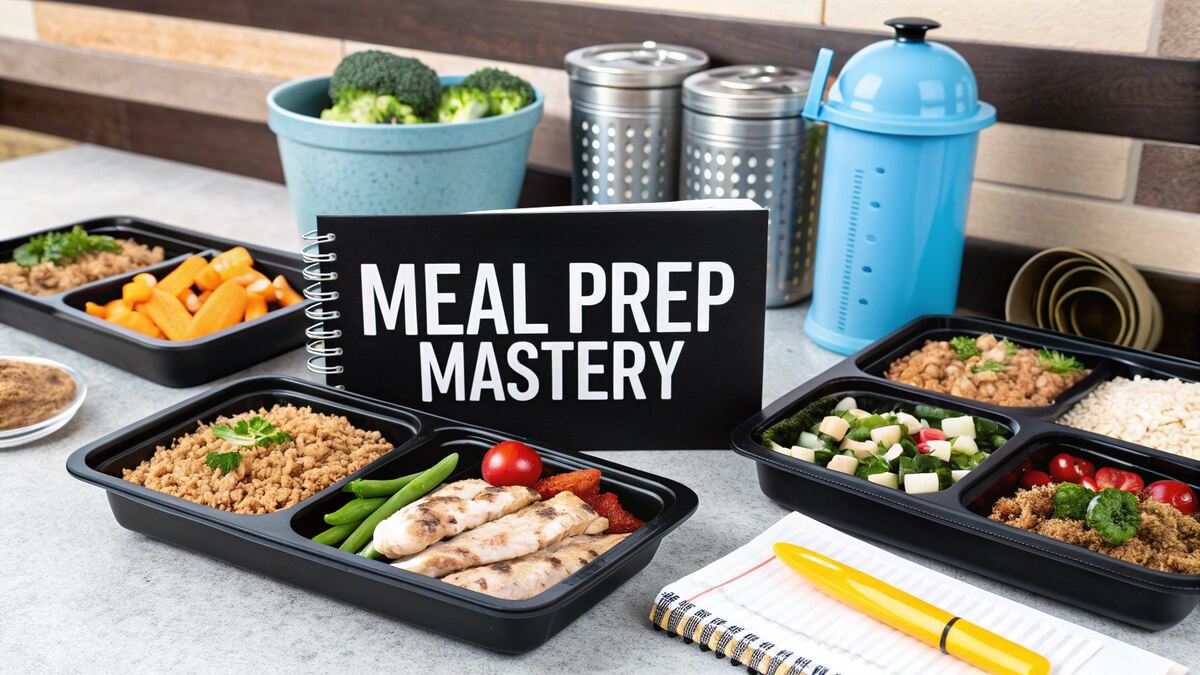
How do I start meal prepping for weight loss?
To start meal prepping for weight loss, plan 3-4 simple meals for the week, create a grocery list, and dedicate 2-3 hours to cook in batches. Focus on lean proteins, complex carbs, and plenty of vegetables to control calories and portions effectively. This process saves time and makes healthy eating your default choice.
Why is meal prep important for weight loss?

Let's be real—meal prepping is more than just cooking. It’s a system. Think of it as your best defense against that 6 PM moment when you're exhausted, hungry, and the takeout menu starts calling your name.
When you have delicious, healthy meals waiting for you in the fridge, you sidestep that decision fatigue and stay on track. This guide is built for busy people who think they don’t have time to cook. We're here to show you how to make it feel less like a chore and more like the practical, sustainable solution it is.
What makes meal prepping so effective?
Meal prepping hits the biggest weight loss roadblocks head-on: zero time, out-of-control portions, and impulse snacking. When healthy food is the easiest thing to grab, you’re naturally going to stick with your plan. It’s not about a restrictive diet; it’s about setting up your environment for success.
This approach gives you total control over what you're eating. The key wins are:
- Precise Portion Control: You get to decide exactly how much protein, carbs, and fat go into every single meal. This is absolutely critical for managing your calorie intake without having to guess.
- Rock-Solid Consistency: Eating well-planned meals on a regular schedule helps keep your metabolism and energy stable. No more blood sugar rollercoasters that trigger intense cravings.
- Big Time and Money Savings: One dedicated prep session saves you hours during the week. Plus, shopping with a plan means less food waste and fewer expensive impulse buys at the grocery store.
A weight loss program with meal planning for beginners makes everything simpler, more structured, and more achievable. Meal planning helps eliminate guesswork.
It's no surprise that so many people are turning to structured eating. A recent survey found that 52% of Americans followed a specific eating pattern in the past year, and 43% said weight loss was their main motivation. Read the full research on food and health trends.
The first step is figuring out your personal targets. A simple calorie deficit calculator can give you a clear, personalized starting point for your weight loss journey.
And if you want to make things even easier, modern tools can handle everything from planning your meals to creating your shopping list. For instance, the AI Meal Planner can automate the entire process for you.
How do I create my first meal plan?
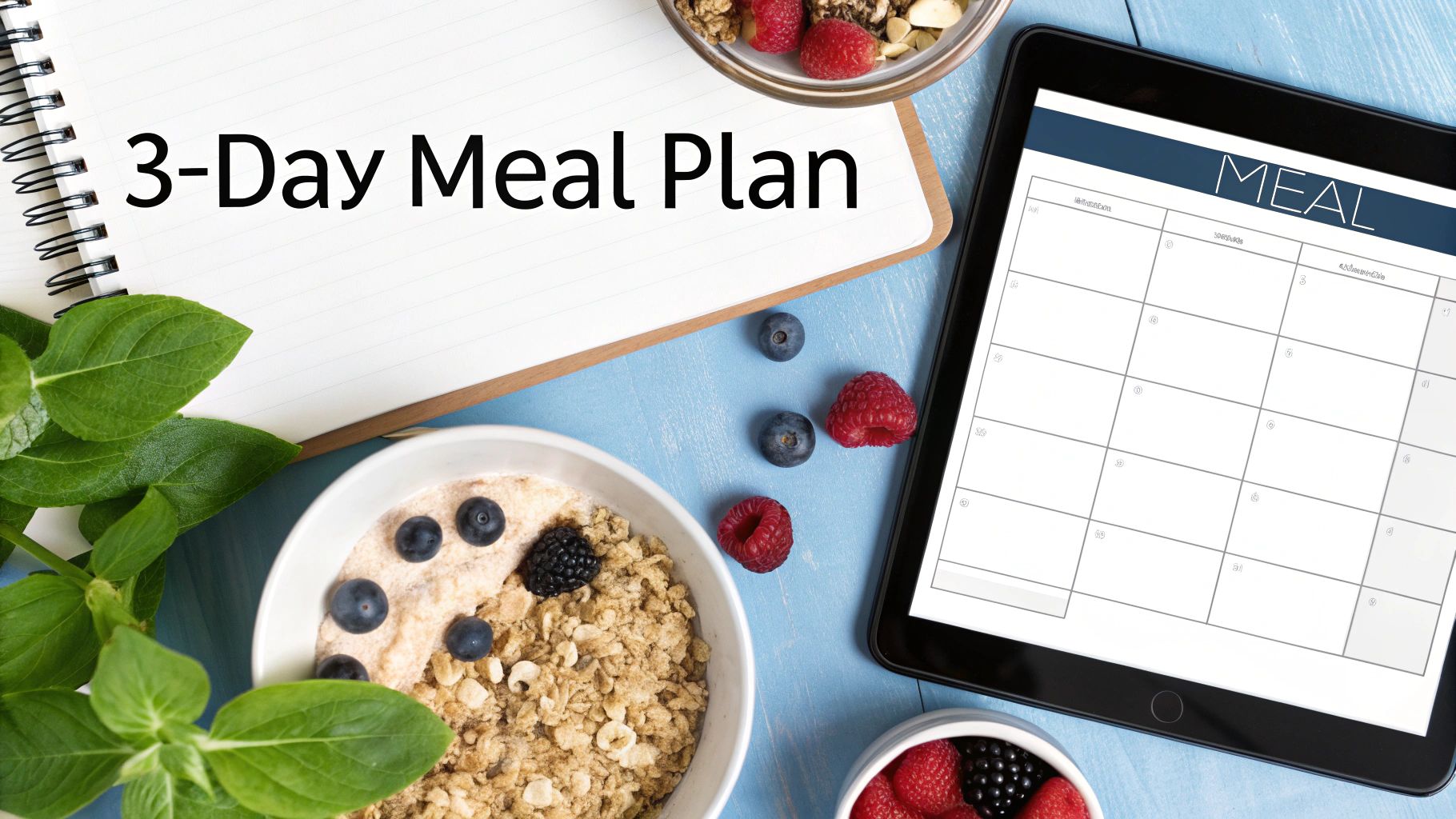
This is where most people get stuck. The thought of mapping out every single meal for an entire week feels like a monumental task, and that feeling of overwhelm is a guaranteed progress-killer.
The secret? Forget perfection. Forget complicated recipes. Your first meal plan should be all about creating a simple, repeatable structure that you can actually stick to.
It all starts with understanding your body's baseline needs. Before you even think about what food to cook, you need to know how much food your body requires to lose weight sustainably.
How do I calculate my calorie and macro targets?
Okay, first things first: you need a target. For weight loss to happen, you have to be in a calorie deficit, which just means you’re consuming fewer calories than your body is burning. This isn't about extreme restriction; it’s about having a clear, achievable number to work with.
Once you have your calorie goal, the next layer is looking at your macronutrients—protein, carbs, and fats. Getting the balance right is the key to staying full, keeping your energy levels stable, and making sure you lose fat, not muscle.
Here’s a quick breakdown:
- Protein: This is your best friend for staying full and repairing muscle. Think chicken breast, fish, tofu, and legumes.
- Carbohydrates: Your body's main fuel source. Go for complex carbs like quinoa, sweet potatoes, and whole grains for energy that lasts.
- Fats: Absolutely essential for hormone function and absorbing nutrients. Focus on healthy sources like avocados, nuts, and olive oil.
To get a personalized starting point without all the guesswork, using a simple tool is the way to go. You can get your specific targets in just a few minutes with an effective calorie and macro calculator.
How should I structure my meals?
Don't even think about creating a seven-day gourmet menu right out of the gate. That's a recipe for burnout. Instead, start with a simple daily framework.
For beginners, the 3+1 model is fantastic: three main meals and one snack.
This structure does two critical things: it keeps hunger in check and prevents the kind of ravenous overeating that happens when you wait too long between meals. Think of it as a reliable template you can just plug different foods into. Your day might look like a solid breakfast, a protein-heavy lunch, a satisfying dinner, and a smart afternoon snack.
The point isn't to be rigid; it's to create a reliable pattern. A simple structure eliminates the daily "what should I eat?" headache, which is often the biggest obstacle to sticking with any plan.
What does a simple 3-day plan look like?
Let's see what this looks like in the real world. Below is a simple 3-day plan designed specifically for beginners. The meals are intentionally easy, using minimal ingredients and cooking time. The goal here is to build your confidence and prove to yourself that this is totally manageable.
Sample 3-Day Beginner Meal Prep Plan (Approx. 1600 Calories)
| Day | Breakfast | Lunch | Dinner | Snack |
|---|---|---|---|---|
| Day 1 | Overnight Oats with Berries & Chia Seeds | Leftover Lemon Herb Chicken & Veggies | Sheet Pan Lemon Herb Chicken & Veggies | Greek Yogurt with a Handful of Almonds |
| Day 2 | Scrambled Eggs with Spinach & Whole-Wheat Toast | Quinoa Salad with Chickpeas & Feta | Turkey Meatballs with Zucchini Noodles | Apple Slices with Peanut Butter |
| Day 3 | Overnight Oats with Berries & Chia Seeds | Leftover Turkey Meatballs | Lentil Soup (Batch Cooked) | A Small Protein Bar |
See the pattern? This plan makes smart use of leftovers and repeatable meals to slash your time in the kitchen. You’re only cooking a few core things and then repurposing them. This is the essence of efficient meal prep.
What gear and groceries do I actually need?
You really don't need a kitchen that looks like a high-end restaurant to get started with meal prep. Forget the fancy gadgets and specialty tools. Honestly, a handful of simple, quality items are all it takes to make your week run smoothly.
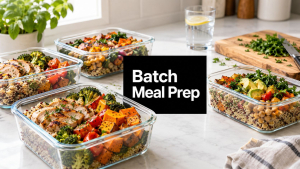
Let’s talk essentials first. The one thing you absolutely can’t skip is a good set of food storage containers. I’m a big fan of glass containers—they’re tough, they don’t get stained by tomato sauce, and you can pop them straight from the fridge into the microwave. It makes reheating so much less of a hassle.
What tools make a real difference?
Beyond containers, a couple of other workhorses will make your life way easier. A large baking sheet is probably the MVP of my kitchen. It’s perfect for roasting a big batch of veggies and your protein all at once, which is a huge time and cleanup saver. This kind of one-pan cooking is the secret sauce for simple, effective meal prep.
The most overlooked tool, though? A food scale. It might seem a little extra, but guessing your portion sizes is one of the quickest ways to stall your weight loss progress. A food scale takes all the guesswork out of the equation. It ensures that the 4 ounces of chicken you planned for is actually 4 ounces, keeping your calories and macros right on target.
A food scale isn't about being restrictive; it's about being accurate. It’s the single best tool for turning your well-laid plans into real-world results.
How do I build a smart grocery list?
Wandering into a grocery store without a plan is a guaranteed way to end up with a cart full of impulse buys and still forget the one thing you actually needed. The trick is to shop with a purpose. I organize my list to follow the layout of my local store—produce first, then the aisles, then the refrigerated section. It saves me from backtracking and keeps me focused.
A solid list is your roadmap to an efficient shopping trip. And to make things even more streamlined, you can use tools to figure out what to cook based on what's already in your kitchen. Learning how to create a meal from your fridge's contents can be a real game-changer on busy weeks.
Here’s a basic template to build your list around:
- Lean Proteins: These are the foundation of meals that actually keep you full. Think chicken breast, turkey mince, fish like salmon or cod, eggs, and Greek yogurt. For plant-based options, stock up on tofu, lentils, or chickpeas.
- Complex Carbohydrates: For steady, long-lasting energy, you’ll want things like quinoa, brown rice, sweet potatoes, and oats. These are usually cheaper when you buy them in larger bags.
- A Rainbow of Vegetables: Don't be shy here. Load up on versatile veggies that hold up well after being cooked—broccoli, bell peppers, spinach, zucchini, and carrots are all fantastic choices.
- Healthy Fats: These are crucial for flavor and hormone health. Grab some avocados, nuts like almonds or walnuts, seeds (chia and flax are great), and a good bottle of extra virgin olive oil for cooking and dressings.
What is an efficient cooking session plan?
Alright, you’ve got your plan and your groceries. Now for the fun part: turning all those raw ingredients into delicious, ready-to-eat meals for the week. This is where the magic of meal prep really happens, and it's the core of making weight loss feel effortless.
The goal isn't to chain yourself to the kitchen all Sunday. Not at all. We're aiming for a smart, streamlined workflow that gets you in and out in about two hours.
The secret? Multitasking with purpose. Forget tackling one complex recipe from start to finish. Instead, think of your kitchen appliances as different workstations—your oven, stovetop, and counter space can all be working for you at the same time. This simple shift in mindset turns a chore into an incredibly satisfying and productive session.
How can I structure a two-hour prep session?
First things first, identify what takes the longest to cook. This is usually your grains, like brown rice or quinoa, and any proteins you're baking, like chicken breasts. Get those going before you do anything else.
While the oven is preheating and the grains are simmering away, you can use that "downtime" to fly through the quicker tasks. This is the perfect window to chop all your veggies for the week, mix up a simple vinaigrette, or portion out snacks like nuts and Greek yogurt into individual containers.
A simple, efficient flow looks something like this:
- Fire Up the Oven: Get your chicken and heartier veggies (think broccoli, bell peppers, sweet potatoes) seasoned and roasting on a large sheet pan. This is your main event.
- Get Grains Going: While the oven does its thing, get your quinoa or brown rice cooking on the stovetop. Set a timer and forget it.
- Chop and Prep: With the big stuff cooking, use the rest of your time to wash and chop fresh ingredients for salads, portion out snacks, and assemble any no-cook items.
- Cool and Pack: Once everything is cooked, let it cool down completely before you start assembling your containers. This is a critical step for food safety and preventing your meals from getting soggy.
The right gear makes this whole process feel seamless.
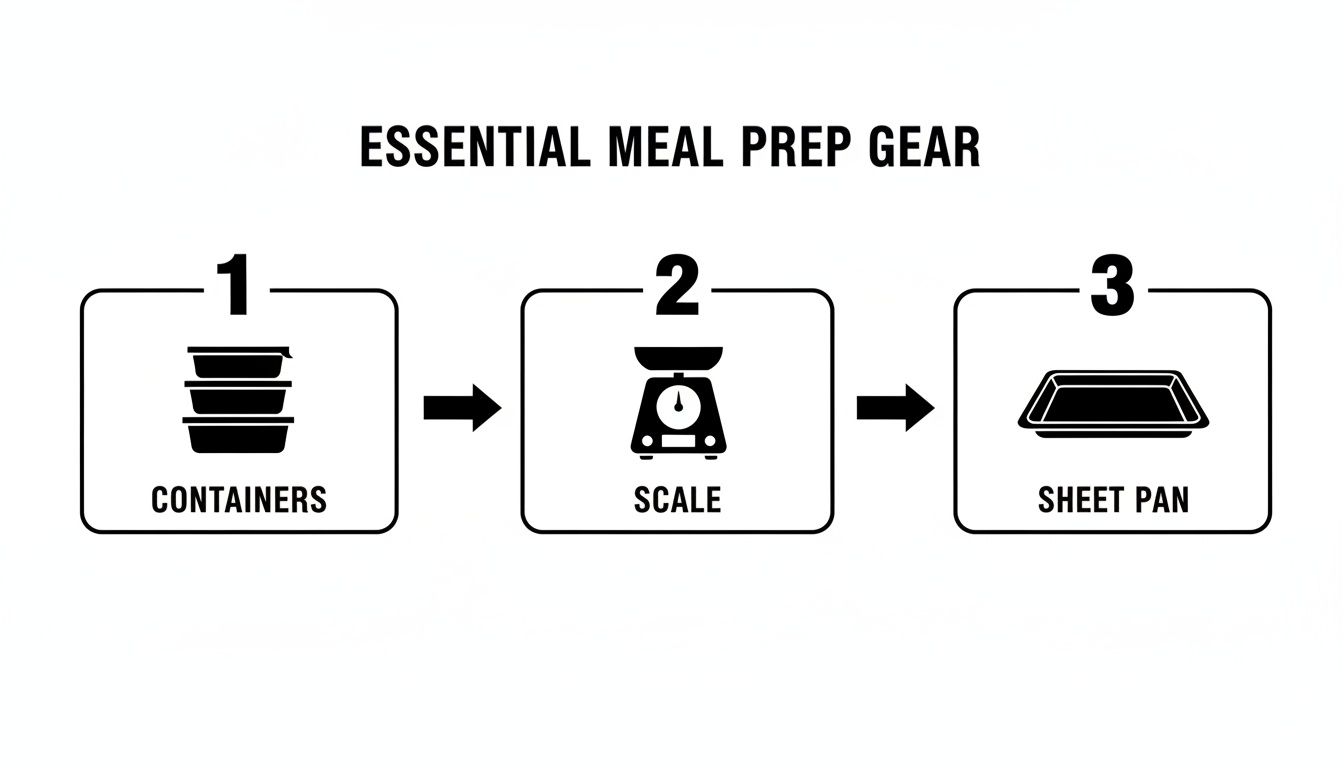
Honestly, having sturdy containers, an accurate kitchen scale, and a couple of reliable sheet pans is the foundation of an organized and effective cooking session.
What are the rules for food safety and storage?
Getting your storage right isn't just about keeping your food tasting fresh; it's about keeping it safe. Bacteria loves room temperature, so it’s vital to get your cooked meals cooled and into the fridge as quickly as possible.
A good rule of thumb is the two-hour rule: never leave cooked food sitting out on the counter for more than two hours.
Pro Tip: Keep dressings, sauces, and anything "wet" in separate small containers. Adding them right before you eat prevents salads from wilting and stops other meals from turning into a soggy mess. It’s a tiny step that makes a world of difference in how good your meal tastes on day three.
Knowing how long your prepped food will last is key to avoiding waste and ensuring everything stays fresh. Here's a quick guide to help you plan your week.
Meal Prep Storage Guide
| Food Item | Refrigerator Storage (Days) | Freezer Storage (Months) | Reheating Tip |
|---|---|---|---|
| Cooked Chicken/Beef | 3-4 | 2-3 | Reheat in microwave with a damp paper towel or on the stovetop. |
| Cooked Fish | 2-3 | 1-2 | Best reheated gently in the oven or air fryer to avoid rubbery texture. |
| Roasted Vegetables | 4-5 | 3-4 | Reheat in the oven or air fryer to restore crispiness. |
| Cooked Grains (Rice, Quinoa) | 4-6 | 2-3 | Sprinkle with a little water before microwaving to add moisture. |
| Soups and Stews | 3-4 | 3-4 | Reheat on the stovetop for best consistency. |
| Hard-Boiled Eggs | 5-7 (in shell) | Not recommended | Best eaten cold; do not microwave in shell. |
As you can see, most cooked proteins like chicken will last 3-4 days in the fridge. If you've prepped for the full seven days, plan to freeze the meals you'll be eating from Thursday onward. This locks in freshness and guarantees they'll be safe to eat.
For even more recipe ideas and to streamline your weekly planning, you can explore tools like an AI-powered meal planner that can take a lot of the guesswork out of the equation.
Can technology actually make meal prep easier?
Let's be honest, the toughest parts of meal prepping for weight loss are the endless planning, the meticulous calorie counting, and the black hole of recipe searching. It can feel like a full-time job before you even touch a pan.
This is where technology can be a game-changer. Imagine if all that mental heavy lifting was just... handled.
Digital tools are designed to smash through the biggest barriers that make people quit. They automate the tedious work, saving you hours and making sure your effort actually leads to results. Suddenly, eating healthy becomes a consistent habit, not just a frantic Sunday-night scramble.
How can I get a personalized meal plan?
The real power of modern meal prep tools is their ability to build a plan that's genuinely yours. An AI-driven platform can generate an entire weekly menu based on your specific calorie and macro targets for weight loss. This isn’t some generic PDF you download; it’s a dynamic roadmap built around your life.
These platforms dig into what you really need:
- Your Diet: Whether you’re vegan, keto, or gluten-free, the system adjusts every recipe to fit your lifestyle. No more manual substitutions.
- Your Tastes: Got an allergy or just really hate cilantro? You can exclude ingredients you can't have or simply don't like. This ensures you'll actually look forward to every meal.
- Your Schedule: Many tools, like the AI Meal Planner, are smart enough to prioritize quick and easy recipes because they know you’re busy.
This is a level of personalization a static meal plan could never offer, making it a powerful ally on your weight loss journey.
How can apps help with grocery shopping?
One of the most brilliant features is the way these tools create grocery lists. Instead of just dumping all the ingredients for seven different dinners into one long, confusing list, the AI gets clever. It optimizes your shopping to reuse ingredients across multiple meals.
For example, those bell peppers you bought for Monday's stir-fry? The plan will have you using the rest of them in Thursday's sheet pan fajitas. It’s a simple concept, but it drastically cuts down on food waste and shrinks your grocery bill.
This shift toward tech-assisted health is huge. The global market for diet and nutrition apps was valued at a massive USD 9.46 billion in 2023 and is expected to rocket to USD 40.07 billion by 2032. People are clearly seeing the value in letting technology handle the grunt work. Discover more insights about diet app industry growth.
By automating the planning and shopping, you’re free to focus on the parts you actually enjoy: cooking and eating delicious, healthy food. It's like having a personal nutritionist and planner working for you 24/7.
This approach also slots in perfectly with other health strategies you might be trying. If you're experimenting with different eating windows, for example, technology can help structure your meals to fit that schedule. You can learn more about how that works by checking out our guide on how an intermittent fasting calculator works and how it complements a solid meal plan.
FAQs about Weight Loss Meal Prep
How do I keep my meals from getting boring?
The best way to avoid boredom is to prep ingredients, not just full meals. Cook batches of protein, carbs, and veggies, then mix and match them differently each day. Using different sauces and spices is another easy way to change the flavor profile without much extra work.
What about snacks and cravings?
Prepping snacks is just as important as prepping meals. Portion out healthy options like almonds, Greek yogurt, or hard-boiled eggs into grab-and-go containers. This prevents mindless grazing and ensures you have a smart choice ready when hunger strikes.
How do I handle eating out or social events?
A meal plan should be flexible enough for real life. Check the restaurant's menu online beforehand to pick a healthy option, and don't be afraid to ask for simple swaps like a side salad instead of fries. One meal out won't derail your progress; just get back on track with your next planned meal.
Ready to take all the guesswork out of planning? AI Meal Planner creates personalized meal plans and smart grocery lists based on your exact goals and preferences. Start building your perfect week today!
AI-powered nutrition
Get Your Personalized Meal Plan
AI creates the perfect meals for your goals, lifestyle, and taste.
Start Your Journej