How do I start weekly meal prep for weight loss?
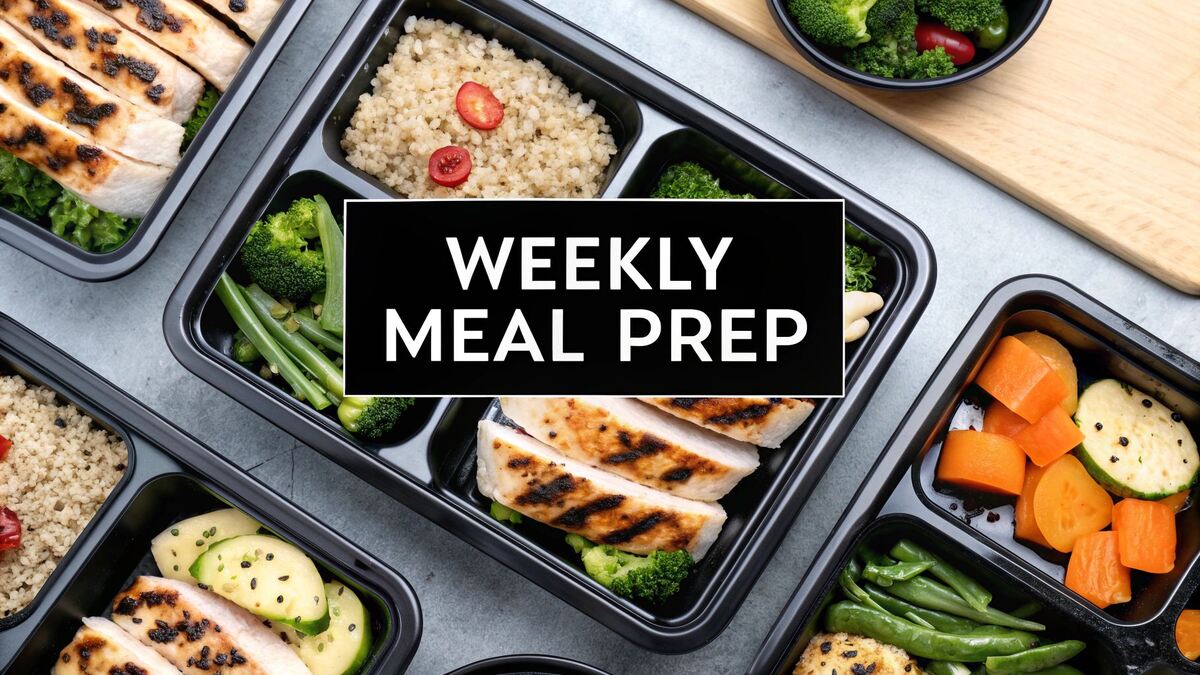
To start weekly meal prep for weight loss, first determine your daily calorie target for a 300–500 calorie deficit. Next, plan 4-5 days of high-protein, high-fiber meals that fit within that target. Finally, dedicate 2–3 hours to batch-cook core ingredients like chicken, quinoa, and roasted vegetables.
Meal prepping for weight loss is about setting yourself up to consistently stay in a calorie deficit, winning the game before the week even starts. It begins with your calorie targets, followed by picking recipes loaded with protein and fiber. This system of portion-controlled, grab-and-go meals short-circuits those moments of weakness when takeout feels like the only option.
Why does meal prep simplify weight loss?
Starting a weight loss journey can feel like a mountain to climb. The daily grind of figuring out "What's for dinner?" leads to decision fatigue. Before you know it, you're ordering a pizza because it's easy.
Weekly meal prep flips that script entirely. It turns your approach from reactive to proactive.
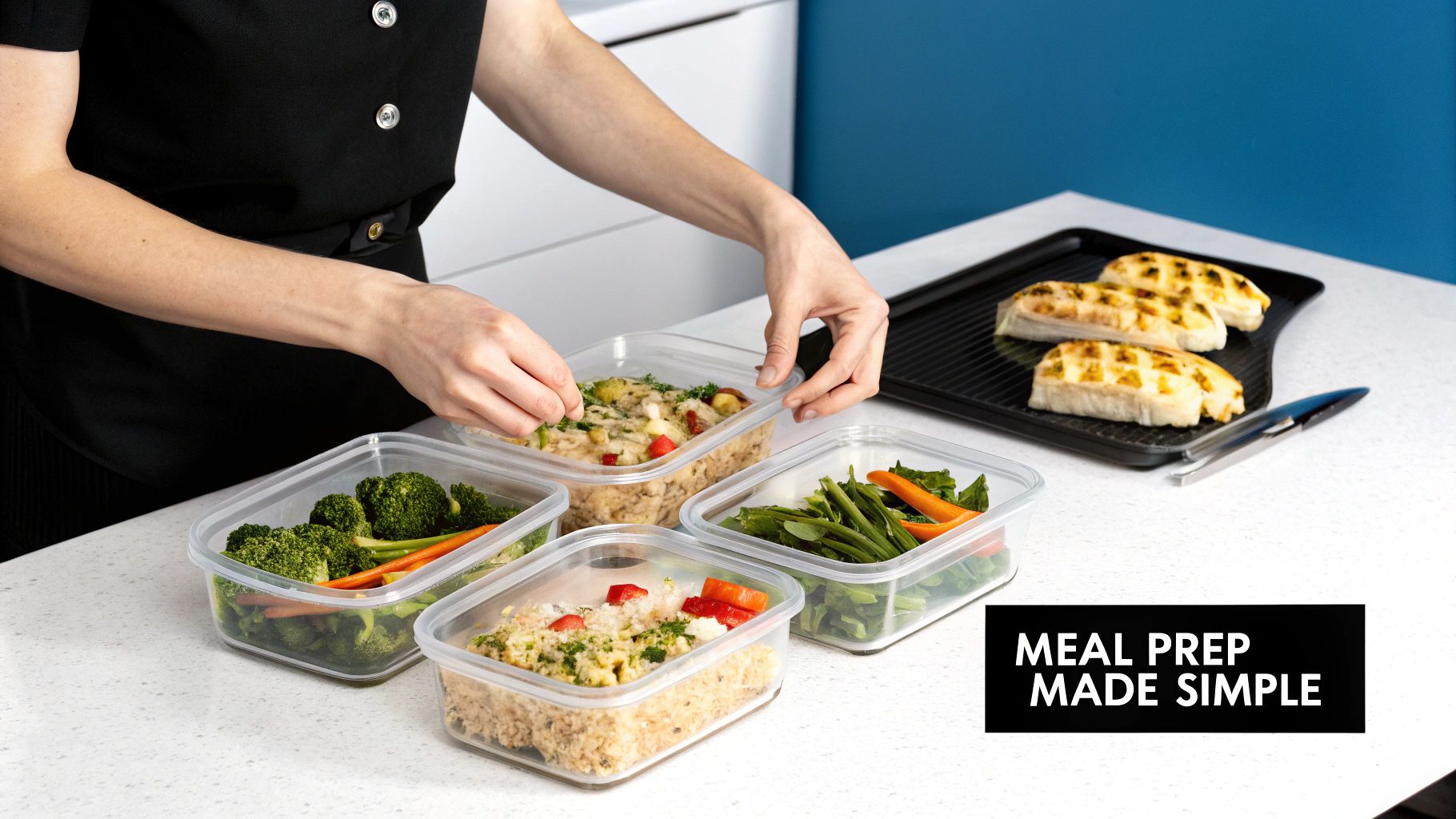
By carving out one chunk of time to plan and cook, you build a structure that serves you all week long. This isn't about eating boring, restrictive food. It's about creating a sustainable routine that puts you back in the driver's seat of your own nutrition.
What are the real-world advantages of a prep routine?
This structured approach brings powerful, real-world benefits that directly fuel your weight loss goals:
- Kills the Guesswork: Every meal is planned and portioned. You know exactly what you're eating and how it fits into your daily numbers. If you're unsure, a calorie deficit calculator is the perfect place to start.
- Shuts Down Unhealthy Cravings: When a healthy meal is waiting in the fridge, the temptation to order takeout loses its power.
- Buys Back Your Time: Imagine your weekdays free from the stress of cooking and cleaning up every single night. That's what prep does.
Meal prep is the ultimate form of self-care. It's a promise you make on Sunday to make sure the future you is nourished, energized, and on track, no matter how chaotic the week gets.
Tools like the AI Meal Planner can make the process even more hands-off by handling the planning and grocery list creation for you.
How do I create a meal prep blueprint?
Moving from a general idea of "eating better" to a concrete plan is where the real results begin. Your meal prep journey starts with numbers, specifically your daily calorie and macronutrient targets. Think of these figures as the guardrails that keep your efforts perfectly aligned with your weight loss goals.
Without knowing your targets, you’re just guessing. Establishing a clear daily calorie goal and a balanced split of protein, carbs, and fats gives you a solid framework for every food choice. This data-driven approach takes the emotion and impulse out of eating, replacing them with strategy and confidence.
How can I set calorie and macro targets?
First, determine your daily calorie needs for weight loss. A solid rule of thumb is to create a deficit of around 500 calories per day, which typically leads to losing about one pound per week. For a more precise estimate, use a specialized tool to determine your calorie and macro needs.
Once you have your daily calorie number, break it down into macronutrients:
- Protein: Crucial for fullness and preserving muscle. Aim for 30-40% of your daily calories.
- Carbohydrates: Your body's primary energy source. Set your target at 30-40% of your calories.
- Fats: Essential for hormone function. The remaining 20-30% of your calories should come from healthy sources.
Remember, these numbers are your starting point, not a rigid set of rules. The goal is to create a structure that guides your choices, giving you the power to build meals that are both satisfying and effective for weight loss.
How do I use a flexible menu template?
Forget restrictive, day-by-day meal plans that lead to burnout. A better approach is to create a flexible "menu template" built around nutritional building blocks. Think of it as a plug-and-play system for your week.
This method gives you structure without sacrificing the variety that keeps things interesting. Instead of planning specific recipes for every meal, you plan the types of food you'll eat. This simplifies grocery shopping and gives you the freedom to cook what you're in the mood for.
| Meal | Monday-Wednesday (Focus on Batch Cooked Items) | Thursday-Friday (Focus on Quick Assembly/Leftovers) | Weekend (Flexible/Freshly Cooked) |
|---|---|---|---|
| Breakfast | High-Protein (e.g., egg cups, overnight oats) | High-Protein (e.g., Greek yogurt with berries) | Freshly Made (e.g., scrambled eggs, protein pancakes) |
| Lunch | Batch Cooked Meal (e.g., grilled chicken, quinoa, roasted broccoli) | Leftovers from batch cook or a large salad with added protein | Flexible (e.g., dining out, leftovers, or a fresh meal) |
| Dinner | Batch Cooked Meal (e.g., turkey chili, baked salmon, asparagus) | Quick Assembly (e.g., pre-cooked shrimp with stir-fry veggies) | Freshly Cooked Meal or Social Dining |
| Snacks | Pre-portioned (e.g., hard-boiled eggs, nuts, protein bars) | Pre-portioned (e.g., cottage cheese, apple with peanut butter) | Flexible/As Needed |
This blueprint ensures every meal is balanced and supports your goals, but it leaves plenty of room for your personal tastes. Research from a 40-week behavioral program found that participants who planned their meals more often achieved significantly greater weight loss, cementing meal prep as a key habit for success.
How can I create a varied menu without getting bored?
The number one reason meal prep fails is boredom. Eating the same container of chicken, broccoli, and rice for five days straight is a surefire way to kill your motivation. The key to making weekly meal prep work for weight loss is building a smarter system that keeps meals interesting.
This is where the 'Core & Flex' system comes in. It’s a simple but effective strategy that builds variety right into your prep.
What is the Core and Flex system?
The concept is straightforward: focus your main cooking time on preparing a few versatile 'core' components in large batches. Then, stock up on easy-to-use 'flex' ingredients—fresh, flavorful items that require little to no cooking and can transform your core components into different dishes daily.
Here’s how to structure your prep:
Choose Your Core Items (3-4 total):
- Lean Protein: Grill a big batch of chicken breasts or bake a side of salmon.
- Complex Carb: Cook a large pot of quinoa or roast a tray of sweet potatoes.
- Versatile Base: Make a big-batch lentil soup or a container of black beans.
Stock Your Flex Ingredients:
- Fresh Greens: Spinach, arugula, or mixed salad greens.
- Quick Veggies: Cherry tomatoes, cucumbers, bell peppers, avocados.
- Flavor Boosters: Low-calorie dressings, salsa, hummus, fresh herbs, and spices.
- Wraps & Breads: Low-carb tortillas or whole-wheat pita bread.
How does this system work in practice?
Imagine on Sunday you batch-cooked grilled chicken, roasted sweet potatoes, and black beans. Those are your core items. Now, see how easily your flex ingredients create unique lunches all week:
- Monday Lunch: A hearty salad bowl with mixed greens, chopped chicken, a scoop of black beans, and salsa as dressing.
- Tuesday Lunch: A satisfying wrap with a tortilla, sliced chicken, spinach, and a smear of hummus.
- Wednesday Lunch: A "deconstructed burrito bowl" with a base of black beans and sweet potatoes, topped with chicken and fresh cilantro.
This approach is about working smarter, not harder. By prepping just a few key ingredients, you unlock the ability to create a dozen different meal combinations, effectively killing meal fatigue before it can start.
This method keeps your taste buds engaged and makes sticking to your plan feel almost effortless. For those who want to take planning a step further, an automated AI Meal Planner can suggest core recipes and generate an optimized shopping list of flex ingredients.
How do I streamline shopping and cooking?
With a solid meal plan, it's time to bring it to life. A smart workflow for shopping and cooking separates a stressful Sunday from a smooth one, locking in time and money savings for the week ahead.
First, create a strategic grocery list organized by store section: produce, proteins, and pantry staples. This simple act stops you from wandering the aisles, slashes impulse buys, and gets you out of the store faster.
How can I optimize my grocery trip?
An "aisle-optimized" list is a game-changer. Before you go, spend a few minutes grouping your planned ingredients.
For example:
- Produce: Spinach, bell peppers, sweet potatoes, avocados, onions, cilantro.
- Proteins: Chicken breasts, ground turkey, eggs, Greek yogurt.
- Pantry: Quinoa, black beans, salsa, olive oil, whole-wheat tortillas.
This level of organization is a core feature in many digital tools, including our grocery list generator, which completely automates this for you. A 2021 analysis found that 22.4% of people using a digital meal planning platform achieved significant, long-term weight loss, highlighting the power of organized planning.
How can I master my cooking with time-blocking?
Once you have your groceries, the secret to an efficient prep session is time-blocking. Sequence your tasks based on how long they take to cook, turning a chaotic afternoon into a focused workflow.
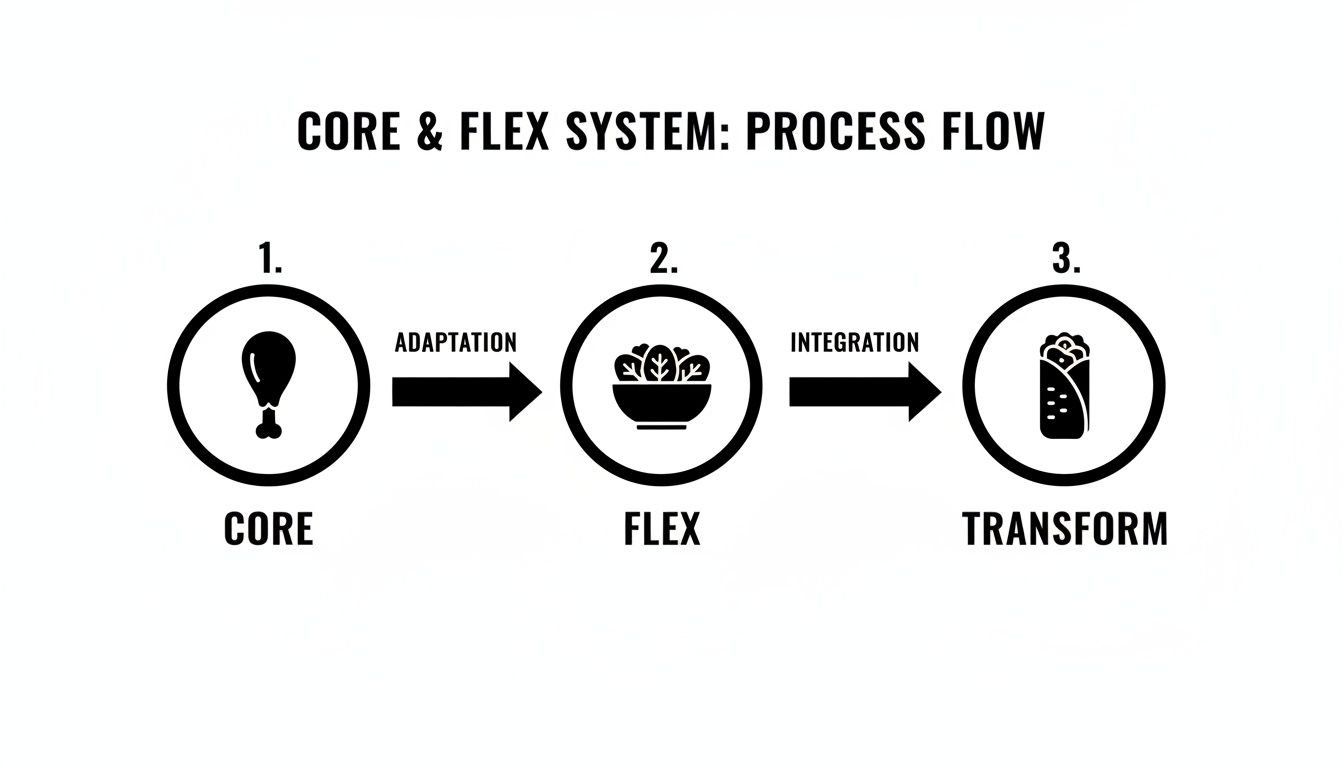
The idea is to cook a few foundational items that give you endless flexibility to create different meals with fresh, "flex" ingredients.
Here’s what a two-hour time-blocking session looks like:
- Start the longest tasks first: Preheat your oven to 400°F. Get sweet potatoes and broccoli roasting (30-40 minutes).
- Move to the stovetop: While veggies roast, get quinoa simmering on one burner and brown ground turkey on another.
- Finish with quick prep: While everything else cooks, wash salad greens, slice peppers for snacks, or mix dressings.
By the time the oven timer dings, your stovetop items are done and fresh ingredients are prepped. This structured approach lets you multitask like a pro, getting your entire weekly meal prep for weight loss finished in one efficient session.
How do I master portion control and freshness?
You can cook the healthiest meals, but if your portions are off or the food goes bad by Wednesday, your weight loss efforts will stall. Getting storage and portioning right connects the work in your kitchen to the results on the scale.
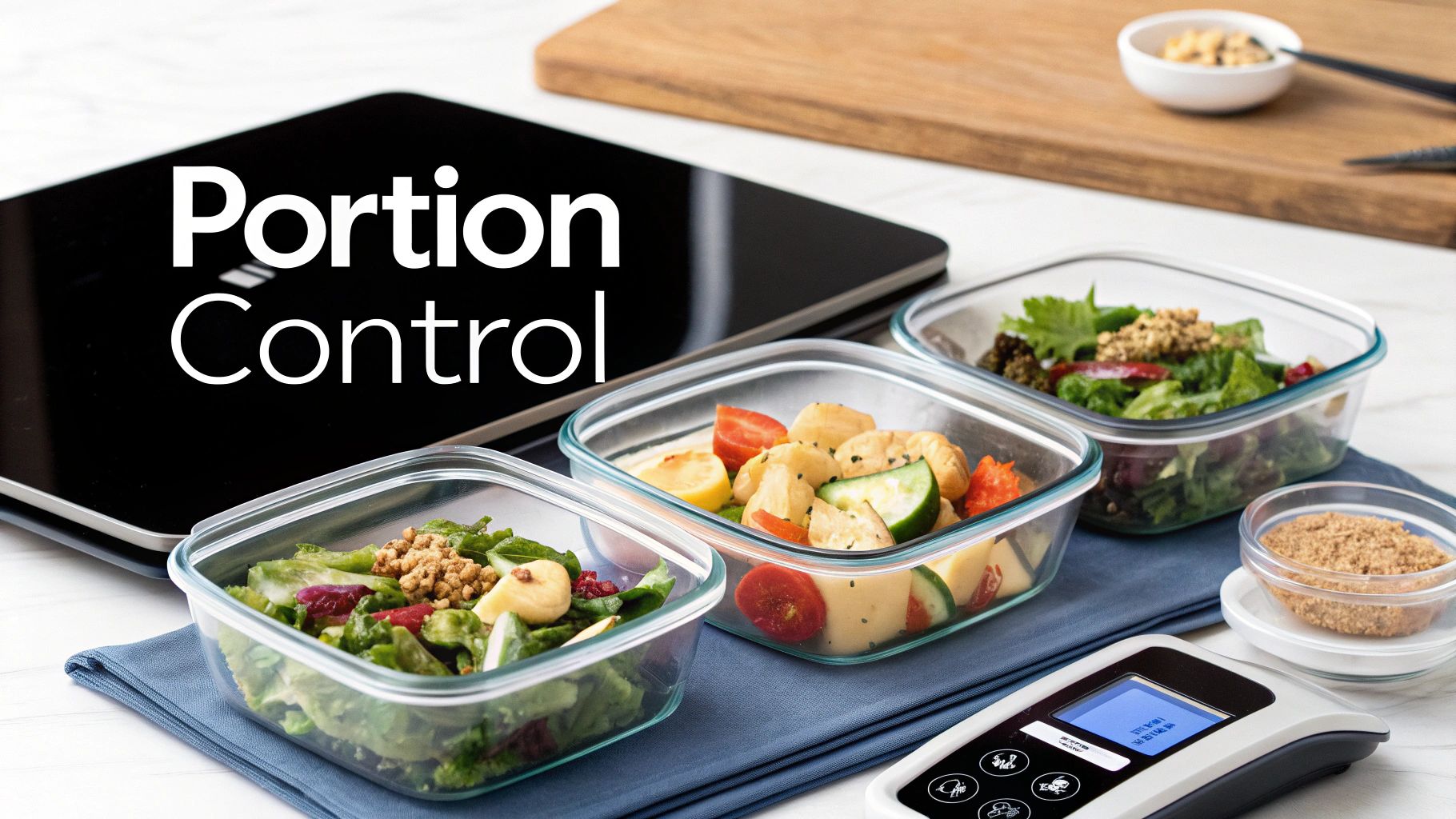
The right containers are your first line of defense. Glass containers are a solid investment because they don't stain or hold odors. For salads, always keep dressings and wet ingredients separate until you’re ready to eat to avoid a soggy lunch.
Why is a food scale my secret weapon?
The single most critical tool for your success is a food scale. It's incredibly easy to eyeball your food and accidentally erase your calorie deficit. A digital food scale removes every bit of guesswork.
Weighing your core ingredients—like chicken, rice, or quinoa—is the difference between a meal you think is 400 calories and one that is actually 400 calories. If you want to analyze your own recipes, a good recipe nutrition calculator can be a huge help.
Research consistently shows that using predetermined portions boosts weight loss. In one 12-week study, participants using pre-portioned meals lost 8% of their body weight, while those choosing their own portions only lost 6%. That's the power of precision.
Can I portion without a scale?
If you don't have a scale, you can use visual cues to get started. It's not as precise, but it’s a good way to build awareness of proper serving sizes.
- Protein (Chicken, Fish): A serving is the size of the palm of your hand (3-4 ounces).
- Carbohydrates (Quinoa, Rice): A serving is what fits in your cupped hand (about 1/2 cup).
- Fats (Nuts, Seeds): A serving is about the size of your thumb (1-2 tablespoons).
- Vegetables (Broccoli, Spinach): Aim for one to two fist-sized portions with main meals.
While these visual guides are helpful in a pinch, investing in a food scale is the most reliable way to guarantee your portions align with your calorie targets. It’s a small step that ensures every prepped meal moves you closer to your goal.
How do I stay on track when life gets messy?
Even the most perfect meal prep plan can get thrown for a loop. A last-minute project, a surprise dinner invitation, or just a day where you don't feel like eating that prepped chicken—it happens. The secret to long-term success is building a system that can bend without breaking.
A rigid plan is a fragile plan. One "off" meal can feel like a total failure, making it easy to throw in the towel. The focus should shift from perfection to consistency.
How can I build in wiggle room?
Create a simple "swap list" of interchangeable ingredients. This gives you the freedom to adapt on the fly based on cravings, store sales, or what you already have. You can easily substitute items from the same nutritional category without redoing all your macro calculations.
| Food Category | Example Ingredient | Easy Swaps |
|---|---|---|
| Lean Protein | Grilled Chicken Breast | Ground Turkey, Salmon Fillet, Tofu, Lentils |
| Complex Carb | Quinoa | Brown Rice, Sweet Potato, Whole Wheat Pasta |
| Fibrous Veggie | Roasted Broccoli | Steamed Green Beans, Sautéed Spinach, Bell Peppers |
| Healthy Fat | Avocado Slices | A handful of almonds, olive oil-based dressing |
Having this list handy means you’re never stuck. If you're out of quinoa, you know brown rice works just as well.
Is it okay to not be perfect?
For meal prep to become a lasting habit, it has to fit into your real life. This is where the 80/20 rule shines. Aim to stick to your prepped, goal-focused meals 80% of the time. The other 20% is your built-in buffer for social events, cravings, or that Friday pizza night.
This simple rule completely removes the guilt that comes with unplanned meals. An "off" meal isn't a failure—it's just part of the process.
By intentionally building in this flexibility, you sidestep the burnout that comes from feeling overly restricted. You learn to enjoy life and see your weight loss journey as a marathon, not a sprint. And if you need help finding meals that fit this style, an AI Meal Planner can suggest recipes and swaps automatically.
Frequently Asked Questions
How many days should I meal prep for at once? Prepping for 4–5 days at a time is ideal. This covers the busy workweek while leaving weekends open for more flexibility.
Will weekly meal prep be expensive? It can save you money. Focus on buying seasonal produce and versatile proteins like chicken or beans in bulk to keep costs down.
How do I stop prepped food from getting soggy? Store wet and dry ingredients separately until you are ready to eat. Always pack dressings or sauces in a separate, small container.
Should I prep full meals or just ingredients? This depends on your preference. Prepping full meals offers maximum convenience, while prepping individual components (like cooked quinoa or chopped vegetables) provides more flexibility.
Can I freeze my prepped meals for weight loss? Yes, freezing is a great strategy. Soups, chilis, stews, and grain-based meals freeze well and create a backup of healthy options.
What are the best containers for meal prep? Airtight glass containers are best because they don't stain, absorb odors, and are safe for reheating in the microwave or oven.
How long does prepped food last in the fridge? Most cooked meals will stay fresh in an airtight container in the refrigerator for 3–5 days, which is perfect for a standard workweek.
Ready to stop guessing and start seeing results? Let AI Meal Planner build a personalized meal plan for you in seconds.
AI-powered nutrition
Get Your Personalized Meal Plan
AI creates the perfect meals for your goals, lifestyle, and taste.
Start Your Journej