How Do I Start an Easy and Healthy Meal Plan?
To start an easy and healthy meal plan, focus on three steps. First, define one primary goal, like saving time or money. Second, choose 3-4 simple, go-to recipes for each meal type (breakfast, lunch, dinner). Third, use a basic weekly template to schedule your meals and create a grocery list.
Feeling overwhelmed by the idea of meal planning? You’re not alone. Many of us picture complicated spreadsheets and endless hours trapped in the kitchen. But real-world, effective planning is about creating a simple system that makes healthy eating your default setting—it’s about working smarter, not harder.
This guide gives you a practical framework to finally move from stressful, last-minute guesswork to effortless, healthy meals. We've broken down the core process into three simple stages: setting your goal, selecting your core recipes, and building your plan.
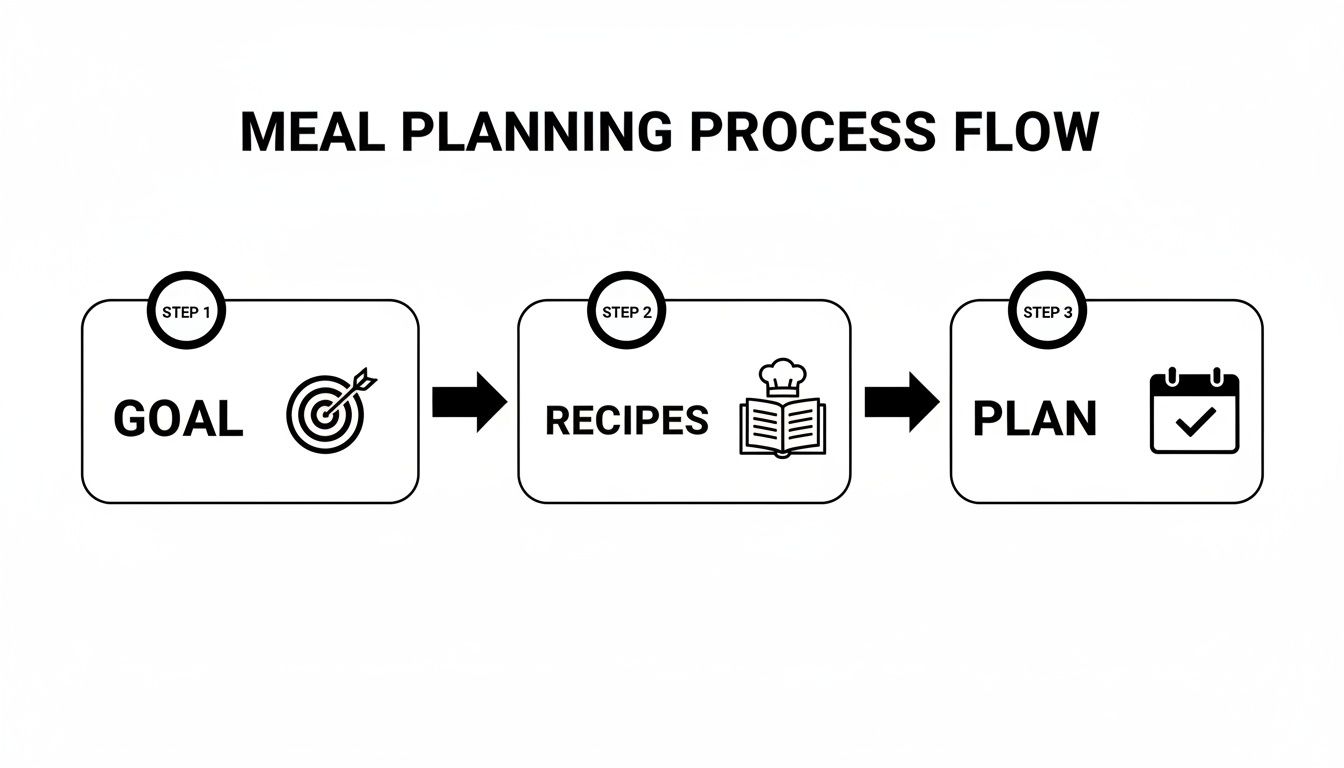
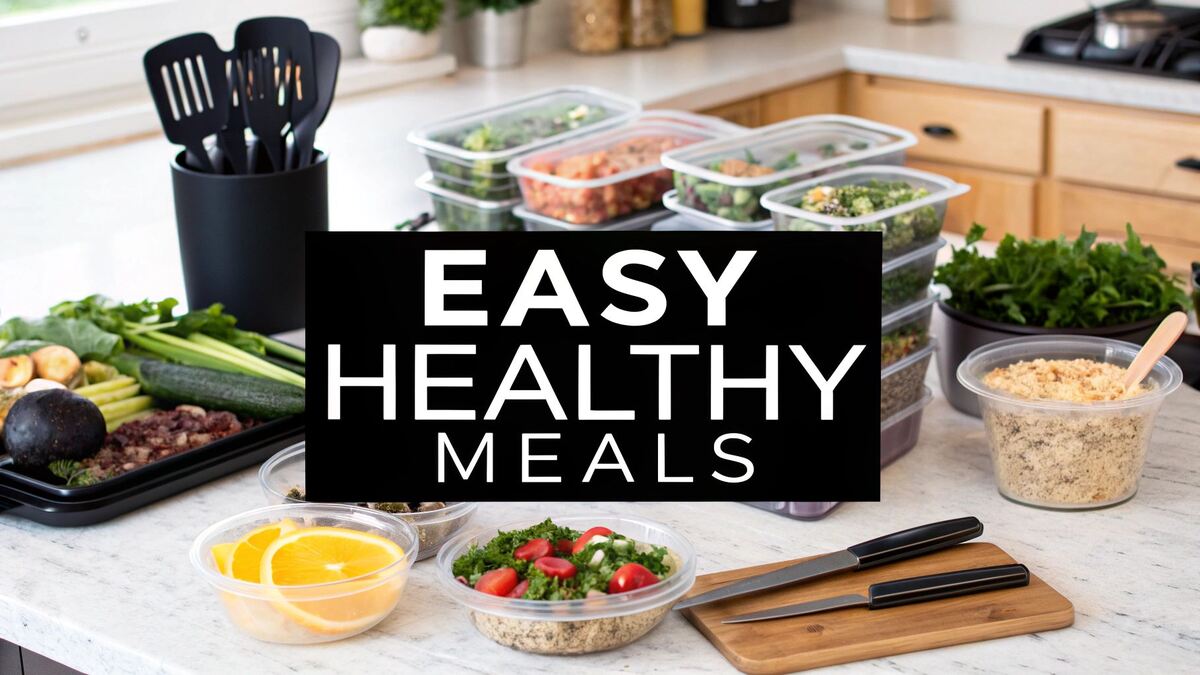
This visual really drives home the point: success starts with getting clear on your 'why' before you even think about what you're going to cook.
What Are Your Core Health Goals and Dietary Needs?
Before you even think about picking out recipes, you need to get crystal clear on your "why." The whole point of meal planning is to build a system that actually fits your life, not the one you see on Instagram. Jumping into a plan without this clarity is like starting a road trip without a destination—you’ll get somewhere, but probably not where you intended.
Think of your primary goal as a powerful filter. It instantly cuts through the overwhelming universe of recipes, narrowing it down to a manageable list that makes sense for you. Getting this foundation right from the start is what makes a plan stick.
Pinpoint Your Primary Objective
What’s the single most important thing you want to achieve with meal planning? Be honest with yourself here. "Eating healthier" is a nice thought, but it’s too vague to be actionable. You need real direction.
For example, are you a busy professional whose main goal is just to avoid expensive takeout during the week? If so, your plan should be all about quick, 30-minute meals and recipes that make great leftovers for lunch. The focus is on convenience and budget, not necessarily on militant calorie counting.
Or maybe your goal is muscle gain. That’s a completely different playbook. Your plan would need to center on high-protein meals and snacks timed strategically around your workouts. Every recipe choice gets filtered through the question, "Does this support my fitness goals?" A great first step is to calculate your ideal calorie and macro targets to get a precise starting point.
Identify Your Non-Negotiable Constraints
Once you know your goal, it's time to list your dietary needs and restrictions. These are the hard boundaries, the guardrails that keep your meal plan safe and effective for your body.
A classic mistake is grabbing a generic meal plan that ignores your personal dietary needs. A plan that works wonders for a friend might be totally wrong for you if you have a gluten intolerance or follow a plant-based diet.
To make this practical, just create a simple list. We're not talking about minor preferences yet—this is about the absolute must-haves and must-avoids.
- Allergies and Intolerances: List anything that causes an adverse reaction, like dairy, gluten, nuts, or shellfish.
- Dietary Lifestyle: Are you vegan, vegetarian, pescatarian, or following a specific protocol like Paleo or Keto?
- Health-Related Restrictions: Do you need to follow a low-sodium diet for blood pressure or a low-glycemic plan for blood sugar management?
This isn't an uncommon step; it's becoming the norm. A recent survey revealed that 54% of American adults followed a specific eating pattern in the past year, with high-protein and mindful eating leading the pack. You can learn more about these trends on clf.jhsph.edu.
With your goals and constraints locked in, you now have a powerful framework. You're ready to build a plan that's truly yours.
How Can You Build a Flexible Weekly Meal Template?
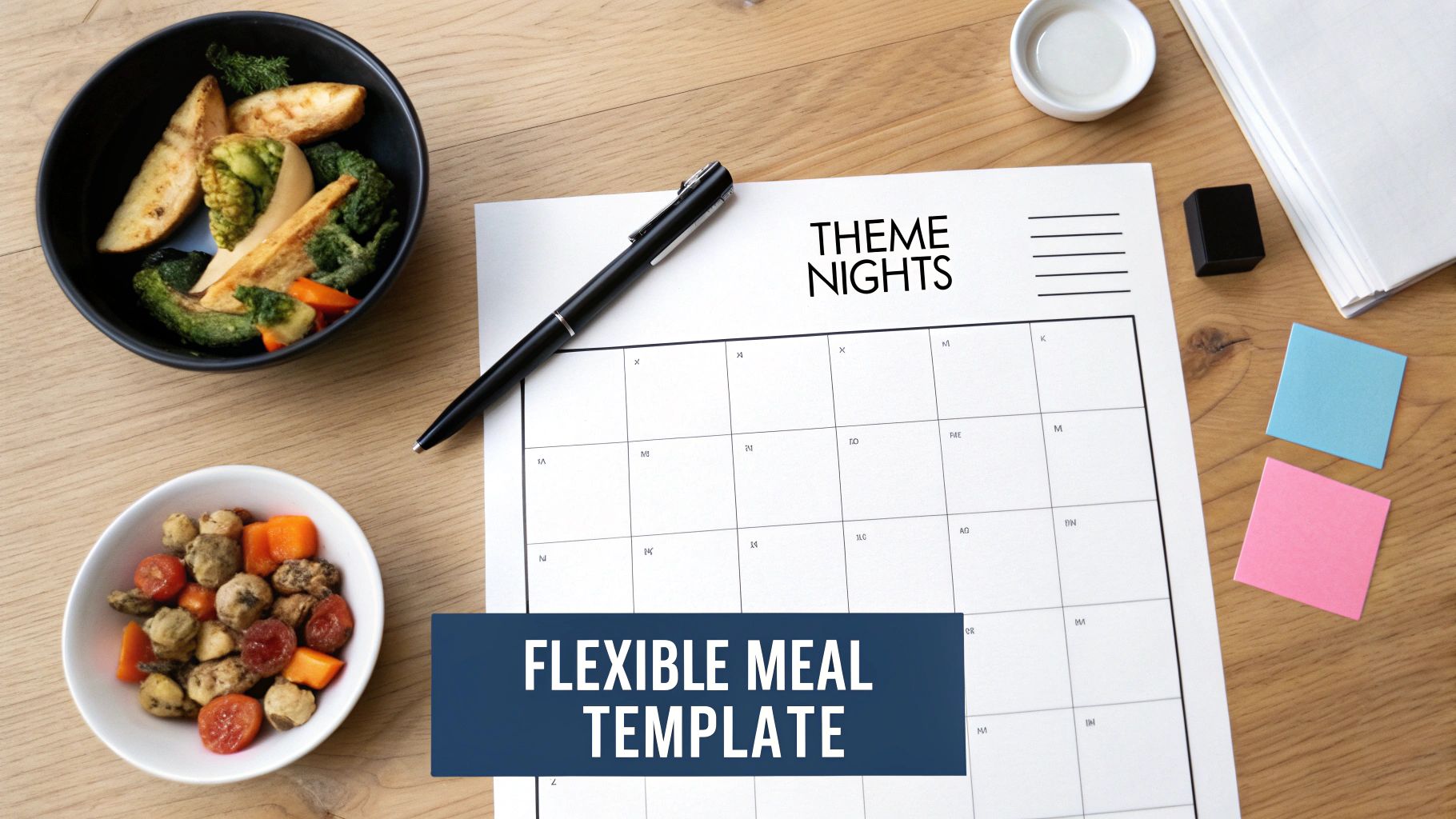
The secret to meal planning that actually sticks isn’t some rigid, color-coded spreadsheet that dictates every single bite. Let's be real—life is way too unpredictable for that. Success comes from creating a flexible template that gives you structure without boxing you in. Think of it as a reliable framework that can bend when your week inevitably goes sideways.
Forget trying to reinvent the wheel every single week. A flexible template works by creating a predictable rhythm for your meals, which is a game-changer for cutting down on decision fatigue. When you already know Tuesday is taco night, half the battle is already won.
Create Simple Theme Nights
One of the most effective tricks in the book is to assign a simple theme to each dinner night. This strategy gives you just enough direction to make deciding what to cook a breeze, but leaves plenty of room for variety and creativity. It completely transforms the dreaded "what's for dinner?" question into a simple, low-stress choice.
Your themes should, of course, be built around foods you and your family genuinely enjoy. A typical week could look something like this:
- Meatless Monday: A great way to work more plant-based meals into your routine. Think black bean burgers, a hearty lentil soup, or a veggie-packed stir-fry.
- Taco Tuesday: This one’s a classic for a reason—it’s a family favorite that's super easy to customize. You can switch it up with ground turkey, fish, or seasoned chickpeas as your protein.
- Pasta Wednesday: Quick, comforting, and incredibly versatile. One week you could do whole-wheat pasta with pesto and roasted veggies, and the next you could go for a rich bolognese.
- Soup & Salad Thursday: Perfect for using up any leftover produce before the weekend rolls around.
- Pizza Friday: A fun, laid-back way to wrap up the week. Make your own on naan bread or whole-wheat crusts.
This kind of structure gives you a repeatable pattern you can fall back on, especially during those incredibly hectic weeks. The themes are your guideposts, not strict rules.
Master the Cook Once, Eat Twice Method
Another cornerstone of a truly flexible template is making your cooking efforts pull double duty. The "cook once, eat twice" philosophy is all about preparing larger quantities of a core ingredient that can be completely repurposed into a different meal later on. This saves a massive amount of time and is brilliant for cutting down on food waste.
The classic example is a Sunday roast chicken. You enjoy it for dinner on Sunday, then use the leftover shredded chicken for chicken salad sandwiches on Monday, toss it into a soup on Tuesday, or throw it into a quesadilla on Wednesday. One cooking session, multiple meals.
This approach is just plain efficient. A big batch of quinoa can be a simple side dish one night and then become the base for a loaded grain bowl for lunch the next day. A pot of chili can be served over rice, then used to top baked potatoes later in the week.
By planning for leftovers, you're building future convenience right into your schedule. This mindset transforms leftovers from an afterthought into a strategic part of your meal plan. And if you ever find yourself with a random assortment of ingredients, you can always create a meal from what's in your fridge to keep the momentum going.
How Do You Create a Grocery List That Saves Time and Money?
Your meal plan is perfect, but the whole system can fall apart the second you walk into the grocery store. A chaotic, disorganized list is a recipe for disaster—it leads to forgotten items, impulse buys, and that frustrating back-and-forth dance between aisles.
The bridge between your plan and your plate is a smart grocery list. It’s not just a checklist; it's a strategic tool that turns a dreaded chore into a quick, efficient mission. The goal is simple: get in, grab exactly what you need, and get out, all while protecting your budget and your health goals.
First, Take a Quick Inventory of Your Kitchen
Before you write down a single item, take two minutes. Just two. Open your fridge, freezer, and pantry and see what you already have. This tiny habit is the #1 way to stop buying duplicates. We’ve all done it—brought home a new jar of mustard only to find three others hiding behind the pickles.
A quick scan ensures you use what you have first, which is the easiest way to slash your grocery bill and cut down on food waste. It also gives you a chance to be flexible, spotting opportunities to swap ingredients in your recipes based on what's already on hand.
Organize Your List by Store Aisle, Not by Recipe
Stop writing your list in whatever random order things pop into your head. This is a game-changer. Group everything by how your favorite grocery store is laid out. No more running back to the produce section from the dairy aisle because you forgot a lemon.
An aisle-based list keeps you moving in one logical direction. It looks something like this:
- Produce: Onions, garlic, bell peppers, cilantro, avocado, mixed greens
- Meat & Poultry: Chicken breasts, ground turkey
- Dairy & Eggs: Greek yogurt, cheddar cheese, eggs
- Pantry/Canned Goods: Black beans, quinoa, canned tomatoes, olive oil
- Spices: Cumin, chili powder
This simple shift in organization keeps you focused, minimizes those tempting distractions in the snack aisle, and can honestly cut your shopping time in half.
The most effective grocery lists are built on strategy, not just memory. By categorizing items and planning for ingredient overlap, you're actively designing a more efficient and budget-friendly shopping experience.
Be Smart About Overlapping Ingredients
Here’s another pro-level tip: choose recipes for the week that share common ingredients. If your Taco Tuesday needs cilantro and avocado, plan a chicken and black bean salad for later in the week that uses them up, too.
This is especially brilliant for fresh herbs and produce that tend to go bad quickly. Planning for this overlap means every single item you buy gets used, maximizing your budget and minimizing waste.
To really put this into practice, let's walk through a quick example. Here’s how a simple 3-day meal plan translates into a smart, waste-reducing shopping list.
From Meal Plan to Smart Grocery List
| Meal | Key Ingredients | Grocery List Category | Waste-Reduction Tip |
|---|---|---|---|
| Day 1: Chicken Fajitas | Chicken breast, Bell peppers, Onion, Avocado, Cilantro | Meat, Produce | Use the leftover half of the onion and cilantro for Day 2's salad. |
| Day 2: Black Bean Salad | Canned black beans, Onion, Cilantro, Avocado | Pantry, Produce | This meal is designed to use up the fresh produce from Day 1. |
| Day 3: Turkey Chili | Ground turkey, Canned tomatoes, Onion, Canned black beans | Meat, Pantry | The second can of black beans gets used here, ensuring nothing sits half-used. |
As you can see, a little forethought transforms your grocery list from a simple checklist into a powerful tool for efficiency and savings. For those who want to take it a step further, an automated grocery list generator can spot these ingredient overlaps for you, making the whole process even smoother.
What Are the Best Time-Saving Meal Prep Strategies?
Smart meal prep is the secret weapon for making a healthy meal plan actually stick, especially when a busy weeknight hits. But let's be clear: this isn't about chaining yourself to the stove all day Sunday.
The real goal is to make a strategic upfront investment of your time to reclaim hours during the week. It’s about ensuring a nutritious, home-cooked meal is always the path of least resistance. The key is to ditch the rigid idea that you have to cook five completely separate, finished meals. A more flexible approach is almost always more sustainable.
Choose Your Prep Style
Not all meal prep is created equal, and the best strategy for you really comes down to your schedule and how you like to cook. Most busy people I know find their groove by mixing two main styles.
Batch Cooking: This is the classic approach. You cook entire meals in large quantities—think a big pot of turkey chili, a hearty lentil soup, or a pan of lasagna that can be portioned out for several dinners or lunches. It's incredibly efficient for your main courses.
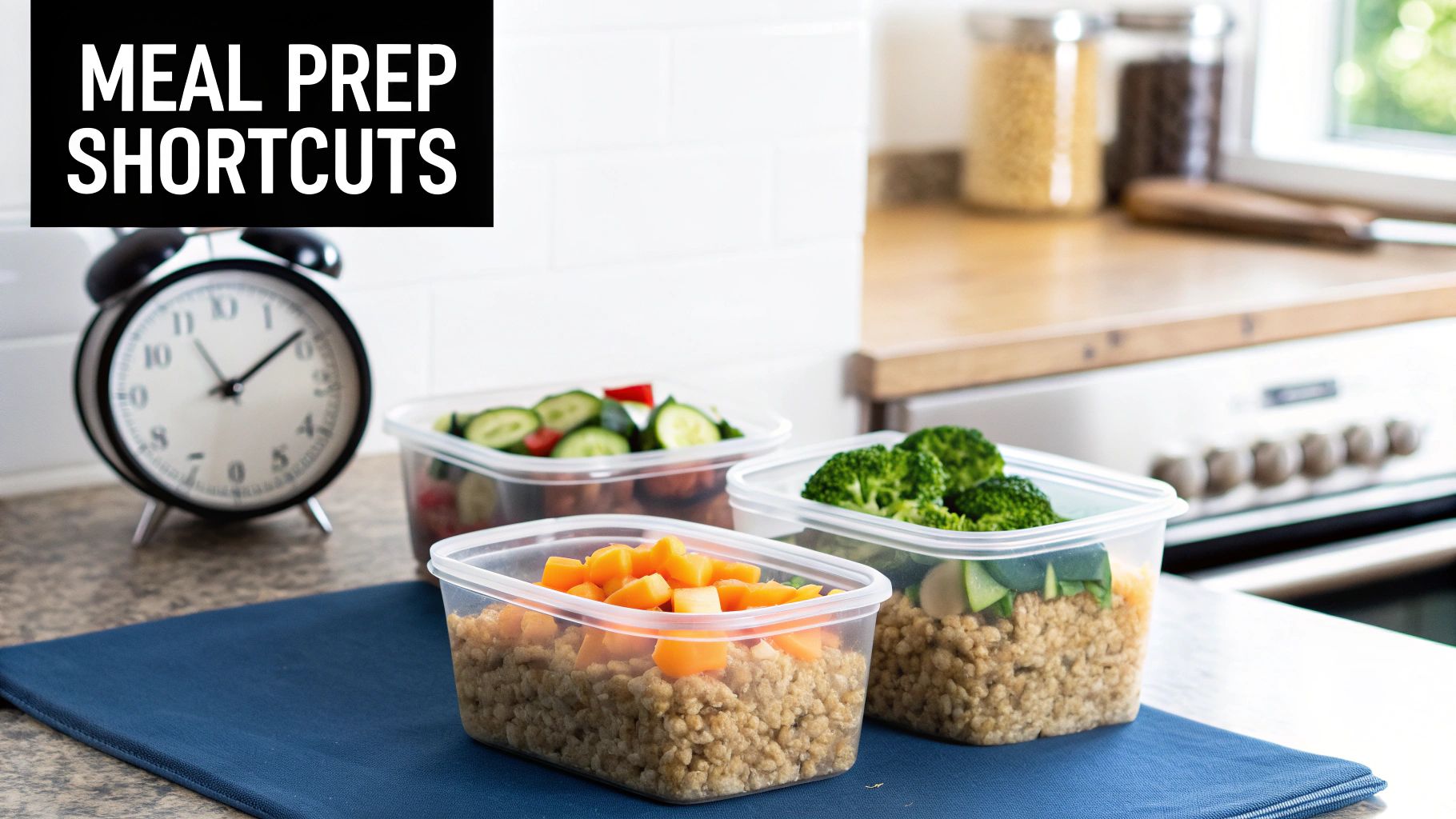
Component Prep: This is where the real flexibility comes in. Instead of full meals, you prepare individual ingredients that can be mixed and matched later. This could mean chopping all your vegetables, cooking a big batch of quinoa, or grilling a few chicken breasts. This gives you the freedom to assemble different meals in minutes all week long.
The sweet spot for many is a hybrid approach. For example, you might batch-cook a chili for two nights and then component-prep chopped veggies and a grain for quick-and-easy salads and grain bowls on the other days.
Focus on High-Impact Tasks
If you only have 90 minutes, you have to be ruthless. You need to prioritize the tasks that give you the most bang for your buck and make daily cooking feel almost effortless.
A common mistake is trying to do everything at once. Instead, focus on the prep work you dread the most during the week. If you hate chopping onions, get that done on Sunday. This simple shift makes cooking so much more approachable.
Here’s what a power-packed 90-minute session could look like:
- Wash and chop produce: Get all your onions, bell peppers, broccoli, and salad greens ready to go. Store them in airtight containers.
- Cook a versatile grain: Make a large batch of quinoa or brown rice.
- Prepare one protein: Grill or bake several chicken breasts, or hard-boil a dozen eggs.
- Make one sauce or dressing: A simple homemade vinaigrette can elevate basic salads and grain bowls all week.
These few steps create a toolkit of ready-to-go components, turning what would have been a 30-minute cooking ordeal into a 10-minute assembly job. To make sure your prepped ingredients are perfectly aligned with your health goals, you can run them through a recipe nutrition calculator before you even start chopping.
How Can You Automate Your Meal Plan?
While planning your meals manually is a huge step forward, technology is where you can get truly efficient. Think of it as outsourcing all the heavy lifting. Modern tools can take your specific goals, dietary needs, and food preferences and instantly whip up a balanced weekly plan.
This is all about handing off the tedious parts—the searching, the calculating, the planning—so you can just focus on the good stuff: cooking and enjoying delicious, healthy food.
This shift isn't just a trend; it's a response to a real demand for smarter, more personalized nutrition. The meal planning app market is set to grow at a 12.5% CAGR, hitting USD 3.6 billion by 2032. It’s all driven by a massive consumer focus on wellness and the digital tools that make it easier. You can read more about these trends on globalwellnessinstitute.org.
What Does an AI Meal Planner Actually Do?
Imagine having a personal nutritionist and a chef’s assistant rolled into one. That’s an AI meal planner. Instead of you spending hours sifting through recipes trying to match your macros, an AI does it in seconds.
It handles all the complex calculations and logistical headaches that make so many people throw in the towel.
Here’s how it completely changes the game:
- Instant Personalization: It builds plans around you—factoring in everything from your weight loss goals to a tricky gluten allergy.
- Automated Macro & Calorie Tracking: Every single meal and snack suggestion comes with precise nutritional info. No more guesswork.
- Smart Ingredient Use: The system is smart enough to plan recipes that share ingredients, which drastically cuts down on food waste.
This is the modern fix for anyone who’s ever found traditional easy healthy meal planning too difficult to stick with long-term.
The real power of using AI is consistency. It wipes out decision fatigue and kills the temptation to order takeout because you always have a simple, delicious, and healthy plan ready to go.
Moving Beyond Manual Spreadsheets
For a lot of people, making the jump from a spreadsheet to an AI-powered system is a total game-changer. It's especially life-saving for busy professionals or anyone managing a specific health condition who needs precision without all the extra work.
An AI tool can find you 30-minute recipes that not only fit your diet but also use up what's already in your fridge. It learns your tastes over time, swapping out meals you didn't love and suggesting new ones you're likely to enjoy. This adaptive approach keeps your plan exciting and, more importantly, keeps it aligned with your real life.
If you're ready to make healthy eating truly effortless, you can try an AI meal planner right here.
Frequently Asked Questions About Meal Planning
How Many Meals Should I Plan For My First Week?
To avoid burnout, start by planning just 3-4 dinners for your first week. This solves the biggest daily challenge without being overwhelming and leaves room for leftovers or spontaneous meals.
What If I Get Bored Of Eating The Same Things?
Use theme nights (like "Taco Tuesday" or "Pasta Thursday") to create structure with built-in variety. The theme stays the same, but you can easily swap proteins and ingredients each week to keep it fresh.
How Do I Meal Plan For a Family With Picky Eaters?
Serve meals "deconstructed" by putting individual components in separate bowls. This allows everyone to build their own plate, giving them control and ensuring they find something they enjoy.
Can I Still Meal Plan If I Don't Have Time To Cook Every Day?
Yes, use the "cook once, eat twice" method by making larger batches of a core dish. A big pot of chili or a roast chicken can provide ingredients for multiple different meals throughout the week.
What is the simplest way to meal plan for weight loss?
Focus on planning protein- and fiber-rich meals to promote satiety, and use portion control. Prep simple components like grilled chicken, roasted vegetables, and quinoa to easily assemble balanced meals.
How do I stick to my meal plan on a tight budget?
Plan your meals around seasonal produce and sales flyers. Emphasize budget-friendly staples like beans, lentils, and whole grains, and use a detailed grocery list to prevent impulse buys.
What is the fastest way to get a meal plan?
The fastest way is to use an AI meal planning tool like the one at https://ai-mealplan.com/onboarding. It generates a personalized plan, recipes, and a grocery list in seconds based on your specific goals and preferences.
Ready to skip the questions and get a perfect plan handed to you? The AI Meal Planner creates personalized weekly menus and smart grocery lists in seconds, adapting to your goals and tastes. Make healthy eating effortless starting today.
AI-powered nutrition
Get Your Personalized Meal Plan
AI creates the perfect meals for your goals, lifestyle, and taste.
Start Your Journej