
How Do I Start Meal Planning for Weight Loss?
To start meal planning for weight loss, first calculate your daily calorie target by creating a 300–500 calorie deficit from your Total Daily Energy Expenditure (TDEE). Next, plan a week of meals focusing on whole foods, lean protein, and fiber. Finally, create a grocery list from your plan and shop only for those specific items.
Starting a weight loss journey can feel like you're drowning in conflicting advice. Meal planning is your lifeline. It cuts right through all that noise and gives you a clear, structured path forward. This isn't about eating boring, restrictive food; it's about taking back control of your nutrition.
This guide is all about action. We're moving past the theory to give you a practical game plan for building a meal plan that actually works for you. We’ll walk through how to calculate your body's real needs, put together satisfying meals, and shop smarter—all without chaining yourself to the kitchen every weekend.
What's the First Step in Creating a Meal Plan?
At its core, successful meal planning follows a simple, powerful flow: Calculate, Plan, and Shop. Everything else builds on this foundation.
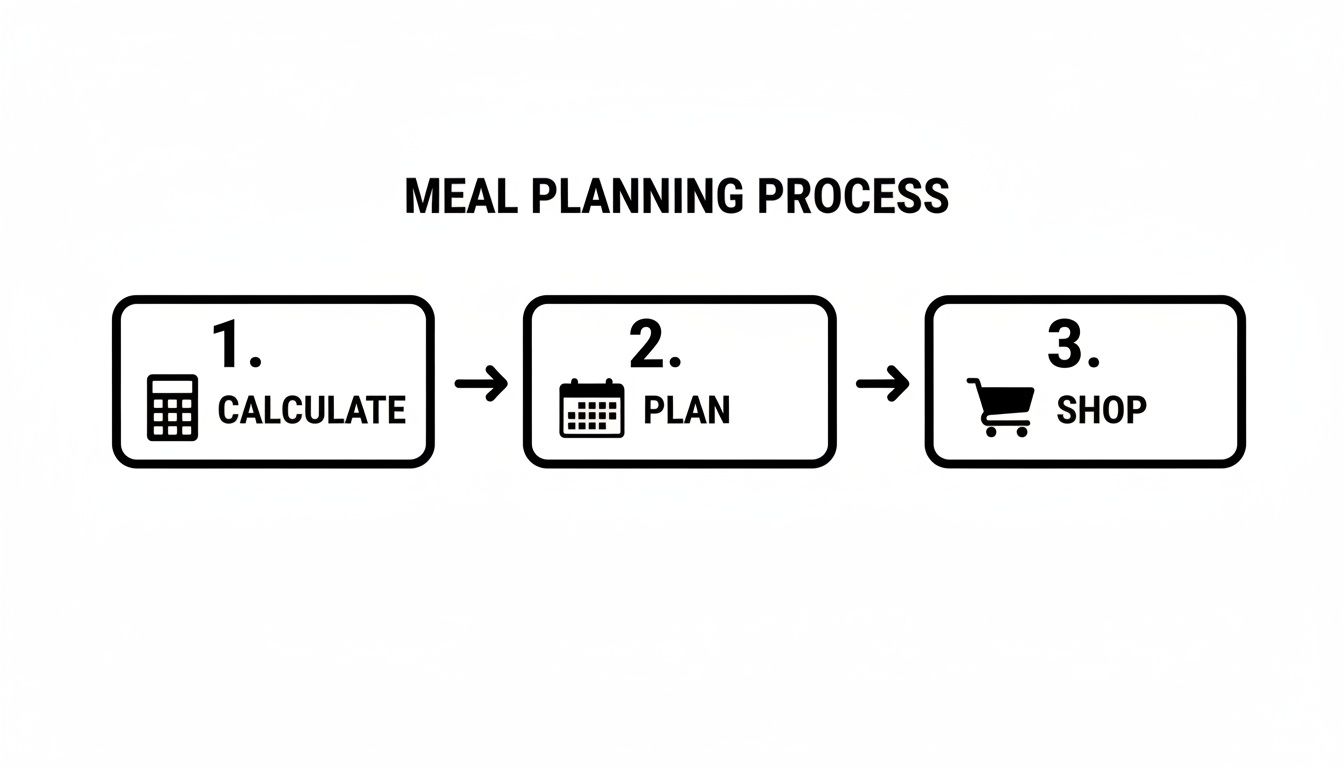
This process starts with knowing your numbers. You can't create an effective plan without first understanding your body's unique energy requirements. This is where a reliable Total Daily Energy Expenditure (TDEE) calculator comes in. It’s the critical first step.
Once you have your TDEE, you can set a realistic calorie target—usually a 300-500 calorie deficit per day is a sustainable starting point for weight loss. This number becomes the bedrock of your plan, ensuring everything you map out is tailored specifically to you. From there, thoughtful planning and disciplined grocery shopping naturally follow, paving the way for results you can actually stick with.
How Do I Figure Out My Calorie and Macro Needs?
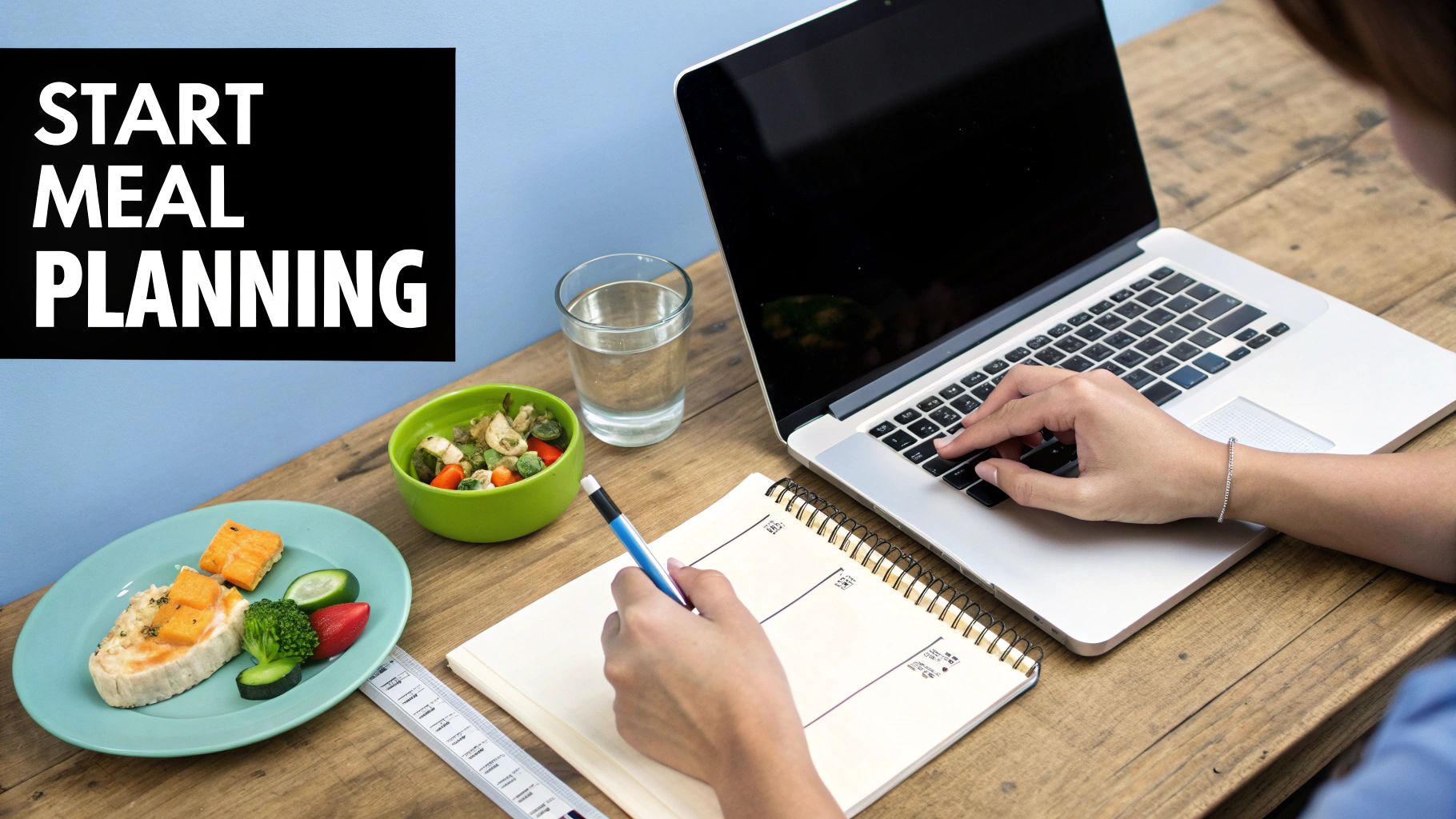
Before you even think about recipes or grocery lists, you need to nail down your personal nutritional blueprint. Think of it like a budget for your body—you can't manage your resources effectively if you don't know the numbers you're working with.
At the heart of any effective weight loss plan is a sustainable calorie deficit. This just means eating slightly fewer calories than your body burns each day. The key word here is slightly. I've seen too many people slash their calories aggressively, only to end up with a stalled metabolism and lost muscle.
A modest deficit of 300-500 calories a day is the sweet spot. It's enough to trigger steady fat loss without sending your body into panic mode.
Start with Your TDEE
Your journey into the numbers starts with your Total Daily Energy Expenditure (TDEE). This is a fancy term for the total calories your body burns in 24 hours—from sleeping and breathing to hitting a spin class. It’s your maintenance level, the amount of energy you need to stay exactly where you are.
Luckily, you don't need a math degree to figure this out. A good calorie and macro calculator will do the heavy lifting for you, giving you a personalized TDEE based on your age, gender, height, weight, and activity level.
Once you have that TDEE number, just subtract your target deficit (300-500 calories) to find your daily weight loss calorie goal. Simple as that.
Why Do Macronutrients Matter?
While calories determine if the number on the scale goes up or down, macronutrients—protein, carbs, and fats—determine how you feel during the process. Getting the right balance is the difference between feeling energized and satisfied versus feeling hungry, tired, and irritable.
Each macro plays a critical role:
- Protein: This is your muscle's best friend. It helps preserve lean mass while you're in a deficit, which is crucial for keeping your metabolism fired up. It’s also incredibly satiating, so you'll feel fuller for longer.
- Carbohydrates: Your body’s main fuel source. The right kind of carbs, like oats and quinoa, provide sustained energy that prevents those dreaded afternoon crashes.
- Fats: Absolutely essential for hormone production and absorbing certain vitamins. Healthy fats from sources like avocado, nuts, and olive oil also play a big role in keeping you full.
A common mistake is focusing solely on the calorie count while ignoring the composition of those calories. A 1,600-calorie diet high in refined carbs will feel vastly different and be far less effective than a 1,600-calorie diet balanced with adequate protein and healthy fats.
It's this balance that makes structured eating plans so effective. A recent survey showed that 43% of people who adopted a new diet did so for weight loss, and the plans that reported 2-3 times better adherence were the ones that were well-structured and easy to follow.
How Do I Find the Right Macro Split?
There’s no magic macro ratio that works for everyone. The ideal split depends entirely on your goals, lifestyle, and how your body responds. An athlete might need more carbs for fuel, while someone else might feel their best on a higher-protein plan to keep hunger at bay.
To give you an idea of how this works in practice, here’s how different goals can change your macro targets, even when the total calories stay the same.
Sample Daily Macro Splits for a 1600-Calorie Diet
This table illustrates how macronutrient grams change based on different dietary goals within the same calorie budget, helping you visualize your targets.
| Dietary Goal | Protein (4 cal/g) | Carbohydrates (4 cal/g) | Fats (9 cal/g) |
|---|---|---|---|
| Balanced Weight Loss | 120g (30%) | 160g (40%) | 53g (30%) |
| Muscle Maintenance | 160g (40%) | 120g (30%) | 53g (30%) |
| Endurance / Energy | 100g (25%) | 200g (50%) | 44g (25%) |
As you can see, a small shift in percentages can significantly alter the amount of each macronutrient you'll eat, tailoring the plan to better support your specific objective.
Modern tools have thankfully made this whole process much easier. Instead of crunching numbers with a calculator and a spreadsheet, you can use an automated system to set your targets perfectly. Platforms like our AI Meal Planner can calculate your needs and generate a plan with the ideal macro balance, removing all the guesswork so you can just focus on eating well.
What Does a Healthy Weekly Meal Plan Actually Look Like?
A successful weekly meal plan for weight loss isn’t about militant restriction or bland, boring food. Think of it less like a diet and more like a blueprint for balance, variety, and genuine satisfaction. It’s about moving beyond just counting calories to focusing on the quality of the food you’re eating, ensuring every meal fuels your body and gets you closer to your goals.
This is the structure that keeps you engaged and helps you sidestep the burnout that almost always comes with overly strict, joyless diets.
The most effective plans are always built around whole foods—the stuff that’s naturally packed with nutrients. This means loading up on lean proteins, high-fiber carbs, and healthy fats while dialing way back on processed junk, sugary drinks, and other empty calories. It’s a simple but powerful shift in mindset: from focusing on what you can't eat to all the delicious, nourishing foods you can.
How Should I Structure My Plate for Weight Loss?
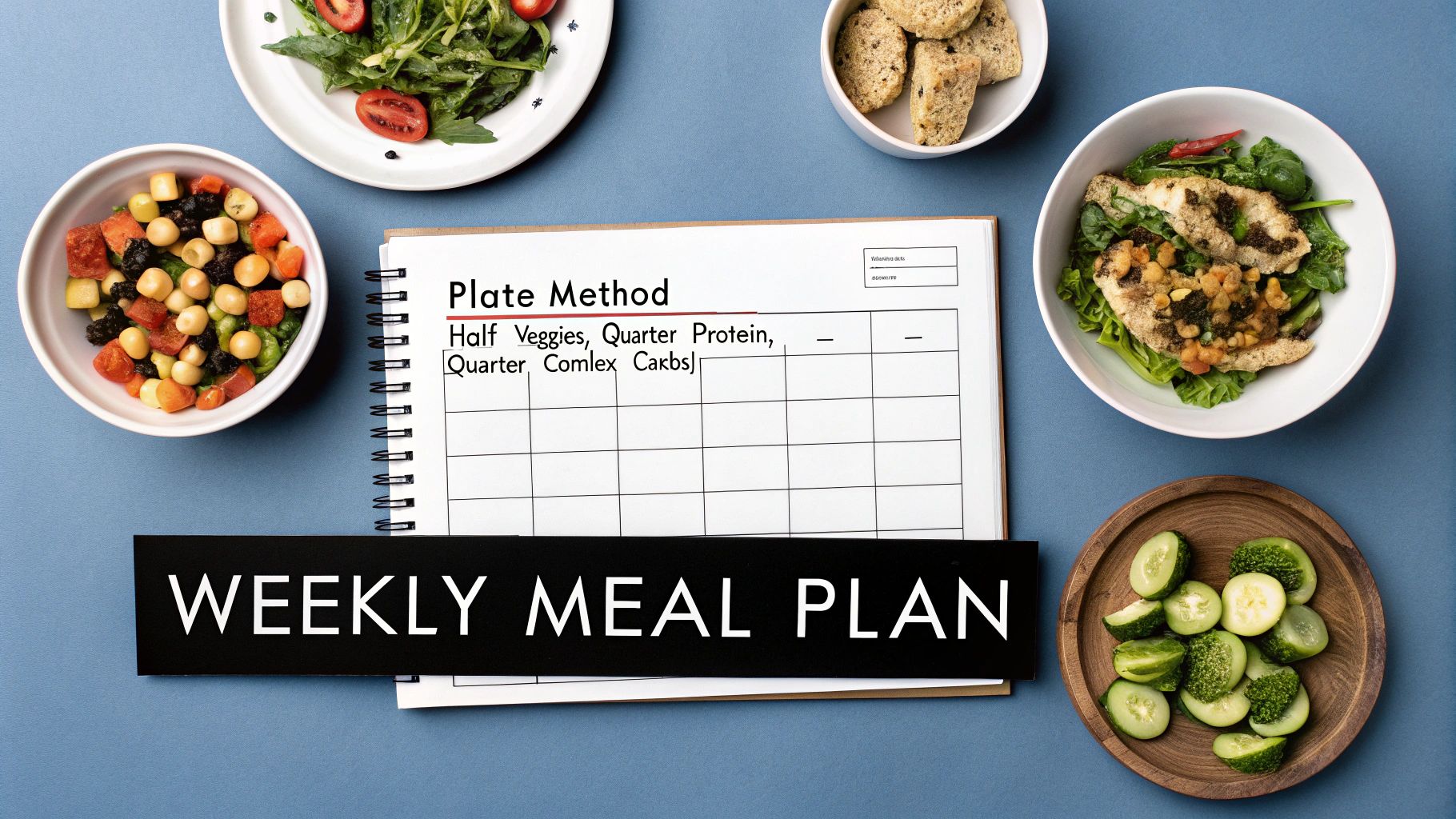
One of the simplest yet most powerful tools I’ve come across is the Plate Method. It’s a visual shortcut that strips the complexity out of portion control and guarantees you’re getting a solid mix of macronutrients at every single meal—no food scale required.
The concept is incredibly straightforward:
- Fill half your plate with non-starchy vegetables. We’re talking broccoli, spinach, bell peppers, asparagus, and cauliflower. These foods are low in calories but absolutely loaded with fiber, vitamins, and minerals that help you feel full and satisfied.
- Fill one quarter of your plate with lean protein. This is your grilled chicken breast, fish, tofu, beans, or lentils. Protein is absolutely critical for preserving muscle mass while you lose weight, and it's a powerhouse for taming hunger.
- Fill the last quarter with complex carbohydrates. Go for high-fiber options like quinoa, brown rice, sweet potatoes, or whole-wheat pasta. These provide steady, sustained energy and prevent the blood sugar roller coaster that refined carbs are famous for.
This little trick automatically steers you toward nutrient-dense, lower-calorie meals. By encouraging a high volume of food from vegetables, you create that feeling of fullness while keeping your overall calorie intake naturally in check.
What Is an Example of a Healthy Meal Plan for One Day?
To show you how this all comes together in the real world, let's walk through what a full day of eating could look like. This sample plan is proof that you don’t have to sacrifice flavor or feel hungry to hit your weight loss goals. Healthy eating can, and should, be enjoyable.
Sample One-Day Meal Plan for Weight Loss (Approx. 1500 Calories)
Here's an example of a balanced and satisfying day of eating, demonstrating how different food groups come together to meet nutritional goals.
| Meal | Example Dish | Key Components |
|---|---|---|
| Breakfast | Greek Yogurt Parfait | Greek yogurt (protein), mixed berries (fiber/carbs), small sprinkle of almonds (fat). |
| Lunch | Grilled Chicken Salad | Grilled chicken breast (protein), mixed greens, cucumber, tomatoes (veggies), light vinaigrette (fat). |
| Dinner | Sheet Pan Salmon & Veggies | Baked salmon fillet (protein/fat), roasted broccoli and bell peppers (veggies), side of quinoa (carbs). |
| Snack | Apple with Peanut Butter | Apple (fiber/carbs), tablespoon of natural peanut butter (fat/protein). |
This example isn't just about the specific foods, but how they work together. That combination of protein, fiber, and healthy fats at each meal is the secret to stable energy levels and keeping cravings from derailing your progress—which is essential for sticking with it long-term.
What Else Is Important Besides Food?
While what’s on your plate is obviously crucial, a couple of other elements are just as important for a successful plan. First up is hydration. Water plays a huge role in metabolism and can be a secret weapon for managing hunger. So often, we mistake thirst for hunger pangs. Aiming for around eight glasses of water a day is a great baseline.
Second is variety. Eating the same chicken and broccoli every single day might seem efficient, but it's a one-way ticket to "diet fatigue." This is the point where your plan starts to feel like a chore, making you far more likely to give up.
Rotating your meals is essential for both nutritional diversity and mental stamina. If you have chicken and broccoli one night, try a lentil soup or a turkey stir-fry the next. This prevents boredom and ensures your body gets a wider range of nutrients.
A truly healthy weekly meal plan feels less like a restrictive diet and more like a structured, satisfying way of living. By using visual guides like the Plate Method, embracing a variety of delicious foods, and staying hydrated, you’re building a sustainable routine that delivers results without the deprivation.
Ready to get a plan that does the hard work for you? You can explore personalized options with the AI Meal Planner.
How Can I Make My Grocery Trips Faster and Cheaper?
Let’s be honest, even the most perfect meal plan is useless if you don't have the food in your kitchen. Turning your weekly grocery run into a quick, budget-friendly mission is the real secret to staying consistent. It’s all about walking into the store with a clear strategy that saves you time, money, and a whole lot of stress.
The goal here is simple: stop the aimless wandering. We want to eliminate those impulse buys that always seem to derail both our budgets and our weight loss goals. A well-crafted grocery list is your roadmap, guiding you straight to what you need and steering you clear of tempting, off-plan items. This small shift turns shopping from a chore into a proactive part of your success.
How Should I Organize My Grocery List?
The single most effective change you can make to your shopping routine is to organize your grocery list by supermarket aisle. Seriously. Ditch the random jumble of items and start grouping them into categories that match your store's layout. This simple trick puts an end to that frantic backtracking that wastes time and exposes you to more temptations.
Think about the flow of your local grocery store. It's usually something like this:
- Produce: All your fresh fruits and vegetables.
- Protein/Deli: Chicken breast, fish, tofu, lean ground turkey, eggs.
- Dairy: Greek yogurt, cottage cheese, milk.
- Dry Goods/Pantry: Quinoa, brown rice, oats, canned beans, nuts, spices.
- Frozen Foods: Frozen berries, vegetables, shrimp.
By arranging your list this way, you create a seamless path through the store. You’ll move from one section to the next, checking things off as you go. You'll be at the checkout faster and with a lot less stress. It's a game-changer.
How Can I Save Money and Reduce Food Waste?
One of the smartest ways to save money and slash food waste is through ingredient overlapping. This strategy is all about planning meals for the week that share common components, making sure you actually use up everything you buy.
For instance, if you roast a whole chicken on Sunday, the leftovers can be the star of completely different meals throughout the week. A little bit of planning multiplies the value of a single ingredient.
Planning meals that use the same components in different ways is the secret to a budget-friendly and waste-free kitchen. A bag of spinach can go into your morning omelet, a lunchtime salad, and a smoothie, ensuring nothing ever goes to waste.
This approach has never been more relevant. With rising food costs—something 72% of people now call a major concern—smarter planning is essential. Data shows younger generations are already on board, with 66% of Gen Z and 63% of Millennials following diets for long-term health. Reusing leftovers and planning with overlapping ingredients is a mindful, cost-effective approach to nutrition. You can find more consumer trend insights from GM Insights.
Can You Show Me an Example of Ingredient Overlapping?
Here’s a real-world example of how to use ingredient overlapping to build a shopping list that’s both efficient and economical:
Shared Core Ingredient: Rotisserie Chicken
- Meal 1 (Dinner): Rotisserie chicken with roasted sweet potatoes and broccoli.
- Meal 2 (Lunch): Shredded chicken salad with mixed greens, cucumber, and a light vinaigrette.
- Meal 3 (Dinner): Quick chicken and black bean tacos on whole-wheat tortillas.
See how that works? One core purchase supports three entirely different meals, maximizing your investment and minimizing waste. When you combine an aisle-sorted list with the principle of ingredient overlapping, your grocery trips become laser-focused missions that perfectly support your weight loss plan.
What Are Some Quick and Healthy Meal Ideas?
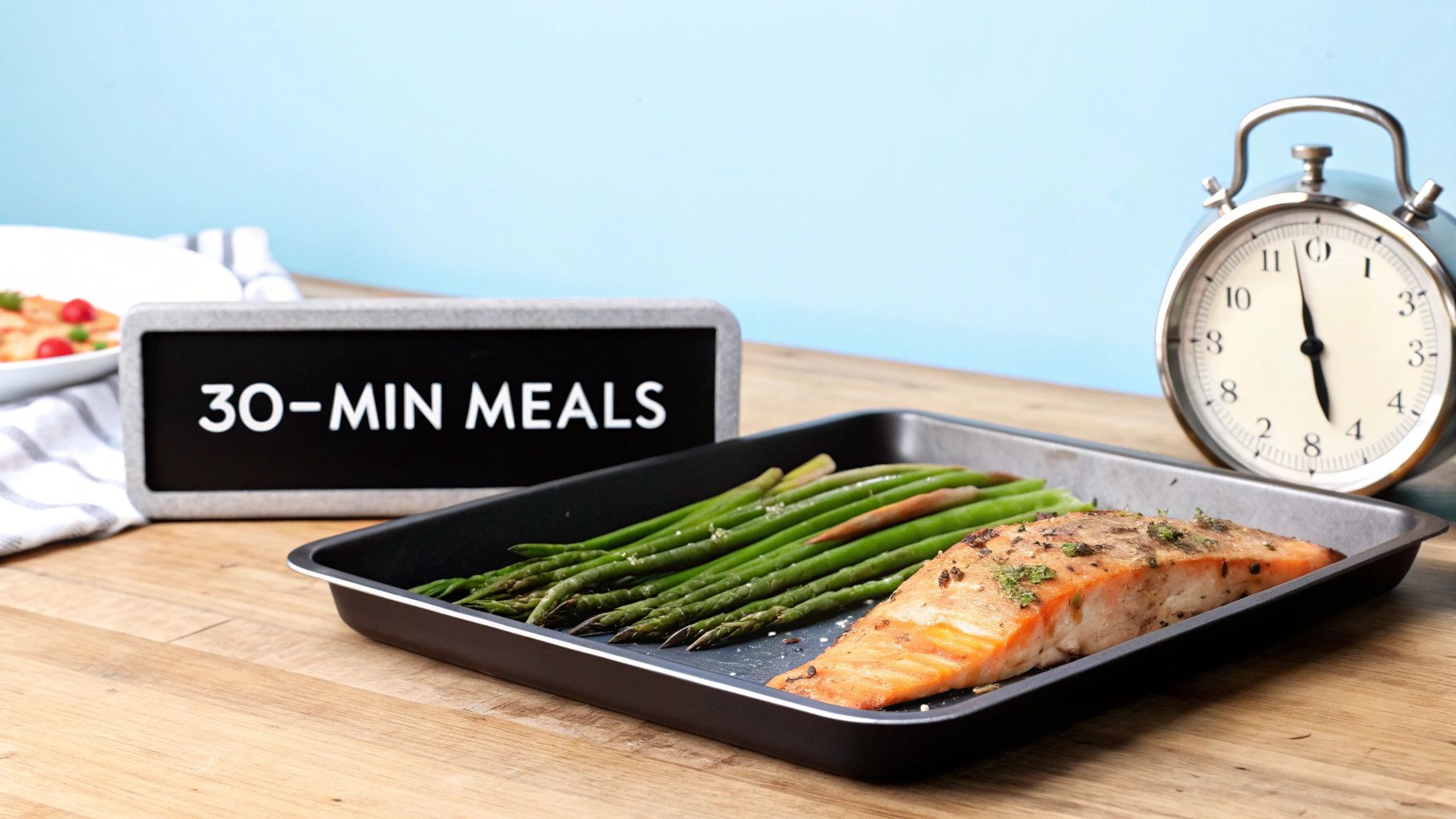
Let's be real: the biggest roadblock to any meal plan is a busy schedule. After a long day, the siren song of takeout is hard to resist, even with the best intentions. But a smart weight loss plan doesn't chain you to the stove for hours. It’s built on quick, delicious recipes that actually fit into your life.
The secret isn’t complicated techniques or a dozen ingredients. It’s about being smart. These recipes are designed to get a healthy, goal-friendly meal on your table in 30 minutes or less. They prove that a time crunch has nothing on a good plan.
Sheet Pan Lemon Herb Salmon with Asparagus
One-pan meals are an absolute lifesaver on a busy weeknight. They slash cleanup time and let all the flavors cook together perfectly. This salmon dish is loaded with omega-3 fatty acids and lean protein, making it a true powerhouse for weight loss.
Here’s the lightning-fast process:
- Prep (5 mins): Crank your oven to 400°F (200°C). Lay a salmon fillet on a parchment-lined baking sheet and toss a bundle of asparagus spears around it.
- Flavor (2 mins): Drizzle everything with a little olive oil. Hit it with salt, pepper, some dried herbs like dill or oregano, and finish with a few slices of fresh lemon.
- Cook (15-20 mins): Bake for about 15-20 minutes. You'll know it's done when the salmon flakes easily with a fork and the asparagus is tender but still has a slight bite. Done. A complete meal.
Black Bean and Corn Salsa Chicken
This recipe is the definition of versatile and takes almost zero active cooking time. You can shred the chicken and serve it over quinoa, throw it on a salad, or pair it with some steamed veggies. It’s high in both protein and fiber—the one-two punch for keeping you full and satisfied for hours.
- Prep (5 mins): Just place two chicken breasts in a baking dish. Seriously, that's it.
- Topping (3 mins): In a small bowl, mix a can of drained black beans, a can of drained corn, and about a cup of your favorite salsa. Spoon this glorious mixture right over the chicken.
- Cooking (20-25 mins): Bake it at 375°F (190°C) for 20-25 minutes, or until the chicken is cooked through to an internal temperature of 165°F (74°C).
Ever stare into your fridge at random leftovers like a single chicken breast or half a can of beans? Instead of letting them go to waste, plug them into a tool that gives you ideas. You can find meal ideas from your fridge ingredients to stay on track and cut down on waste.
15-Minute Chickpea Curry
For those nights when you need something packed with flavor right now, this plant-based curry is your answer. It's warm, incredibly satisfying, and made almost entirely from pantry staples. Perfect for when you haven't had a second to hit the grocery store.
Here's how to whip it up:
- Sauté a diced onion and some garlic in a bit of coconut oil for about 3 minutes, just until it smells amazing.
- Toss in a tablespoon of curry powder and cook for another minute to wake up the spices.
- Add one can of drained chickpeas and one can of light coconut milk. Let it simmer for 10 minutes.
- Stir in a big handful of fresh spinach right at the end until it wilts. Season with salt and a squeeze of lime juice to make the flavors pop.
Quick Turkey Bolognese with Zucchini Noodles
This is my favorite low-carb swap for a classic pasta night. You get all the rich, savory flavor without the heavy carbs. Ground turkey keeps it lean, and swapping in zucchini noodles sneaks in an extra serving of vegetables.
- In a skillet, brown one pound of lean ground turkey with a chopped onion and garlic.
- Once it’s cooked, drain any extra fat and pour in a jar of your favorite marinara sauce.
- Let it all simmer for 10-15 minutes so the flavors can really get to know each other.
- While that's happening, spiralize two zucchinis into "zoodles." You can either serve them raw and let the hot sauce warm them, or give them a quick one-minute sauté in a separate pan.
Pro-Tip on Batch Cooking: The single best thing you can do for your week is spend one hour on Sunday prepping a few key items. Grill up a bunch of chicken breasts, cook a big batch of quinoa, and chop raw veggies like bell peppers and cucumbers. This small investment of time will save you hours during the week and make these 30-minute meals come together even faster.
How Do I Adjust My Meal Plan to Keep Seeing Results?
So, you've built your initial meal plan. That's a huge first step, but it's just the starting point. Think of it less like a rigid set of rules and more like a living document that needs to evolve as your body changes. Knowing how to adjust your plan is the secret to breaking through those inevitable weight loss plateaus and keeping your momentum going for the long haul.
This whole process really starts with listening to your body and paying close attention to your progress. Smart meal planning isn't just about the food—it's about observing the results and making intelligent tweaks along the way.
How Do I Know When to Change My Plan?
Your body is constantly sending you signals. Learning to interpret them is the key to knowing when your plan needs a refresh. Sticking with something that's no longer working is a fast track to frustration and stalled progress.
Keep an eye out for these classic indicators:
- The Scale Hasn't Budged: If you've been consistent for 2-3 weeks and the scale is stuck, it's a clear sign your body has adapted. As you lose weight, your metabolism naturally slows a bit. What was once your calorie deficit might now be your new maintenance level.
- You're Constantly Tired: Feeling drained or sluggish all the time could mean your calorie intake is too low. It might also signal that you're not getting the right mix of macronutrients to fuel your workouts and your day.
- Hunger and Cravings Are Through the Roof: If you're suddenly battling constant hunger pangs, your plan might be too low in protein or fiber. Both are absolutely critical for keeping you feeling full and satisfied.
How Should I Make Adjustments?
Once you've spotted the signs, the goal is to make small, strategic changes. Drastic cuts or overhauls can backfire and shock your system. You want to gently nudge your body back into fat-loss mode, not force it.
A great first move is to simply recalculate your daily energy needs. Your body requires fewer calories to function as you get lighter. You can use a good calorie deficit calculator to get an updated, more accurate target based on your current weight.
From there, try a small reduction of just 100-200 calories from your daily goal. This is often all it takes to get things moving again. Another effective tactic is to slightly increase your protein intake while dialing back a bit on carbs or fats to boost satiety and protect your muscle mass.
This whole process of tracking and adjusting is where modern tools really shine, taking the manual math and guesswork out of the equation.
How Else Can I Track My Progress?
It's way too easy to get fixated on that number on the scale, but it only tells part of the story. Celebrating non-scale victories (NSVs) is absolutely vital for staying motivated, especially when you hit a plateau. These are the real-world wins that prove your hard work is paying off in ways that truly matter.
Remember that progress isn't just a number dropping. It's building sustainable habits, feeling stronger, and improving your quality of life. These are the victories that stick.
Make a point to acknowledge wins like:
- Your favorite pair of jeans fitting more comfortably.
- Having more energy to chase your kids around the park.
- Noticing a little more muscle definition in the mirror.
- Feeling more in control and confident in your own skin.
This holistic view of progress is what keeps your mindset positive, which is the single most important factor for long-term success. The global weight loss market is on track to hit $590.13 billion by 2033, a shift driven by people moving toward smarter, data-driven eating habits. This proves that personalized, adjustable plans are the key to finally overcoming the high failure rate of old-school, static diets.
Frequently Asked Questions About Meal Planning
How many meals should I eat per day for weight loss?
Most people succeed with three balanced meals and one to two small snacks. This approach helps manage hunger, stabilize energy levels, and prevent overeating.
Is it OK to eat the same thing every day?
While simple, eating the exact same meals daily can lead to nutrient deficiencies and boredom. Aim to rotate through at least 3-4 different meal options each week.
What if I go off my meal plan for one day?
One off-plan day will not ruin your progress. The key is to avoid an "all-or-nothing" mindset and get right back on track with your next meal.
Should I plan my meals for a whole week?
Yes, planning for a full week is highly effective. It allows for one efficient grocery trip and reduces daily decision fatigue, helping you stay consistent.
Can I still have snacks on a meal plan?
Absolutely. Healthy snacks like Greek yogurt, fruit, or nuts can prevent extreme hunger and help you avoid overeating during your main meals.
What is the easiest meal to prep for weight loss?
Sheet pan meals, like salmon with roasted vegetables, are often the easiest. They require minimal prep, cook in one pan, and provide a balanced mix of protein and fiber.
How much protein do I need for weight loss?
Aim for 0.7-1.0 grams of protein per pound of your target body weight. This amount helps preserve muscle and increases feelings of fullness while in a calorie deficit.
Ready to stop guessing and start seeing results? The AI Meal Planner creates personalized meal plans and smart grocery lists tailored to your exact goals. Start building your perfect plan today.
AI-powered nutrition
Get Your Personalized Meal Plan
AI creates the perfect meals for your goals, lifestyle, and taste.
Start Your Journej