How do I plan weekly meals?
To plan weekly meals, follow a simple three-step process: define your main goal (like saving money or time), take an inventory of your pantry and fridge, and create a grocery list for only the missing ingredients. This focused approach saves time, reduces food waste, and cuts down on impulse purchases.
If you've ever stared into a fridge full of food and still thought, "There's nothing to eat," you already know the pain of decision fatigue. The secret to a stress-free week isn't about having more options; it's about having a plan. This simple framework cuts through the chaos. Of course, if you'd rather skip the manual work entirely, an AI Meal Planner can instantly generate a personalized weekly plan tailored to your exact needs.
This visual captures the core loop of effective meal planning.
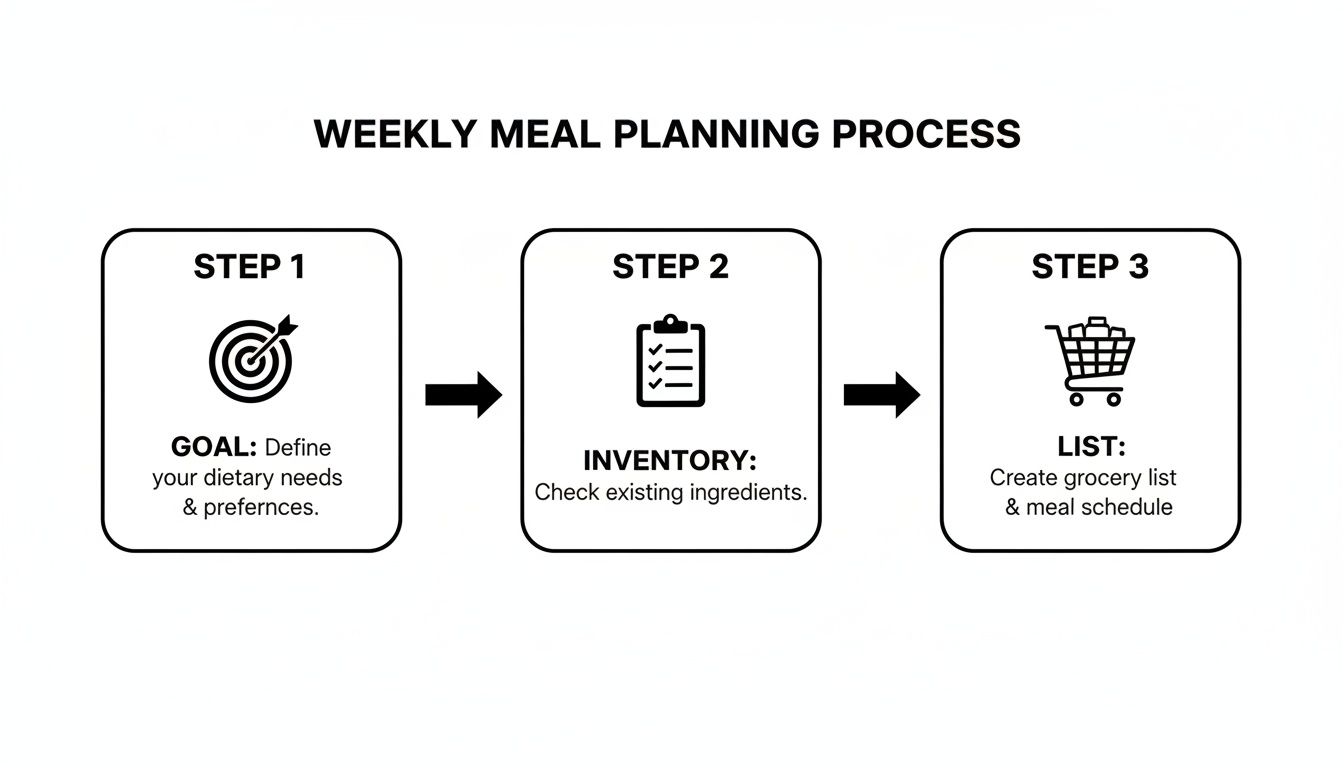
Starting with a single, clear goal—like "waste less food" or "hit my protein target"—keeps your choices focused. From there, a quick scan of your pantry is the most underrated money-saving trick in the book. You'll be surprised what you can build a meal around.
Why is defining my goal the first step?
Before you pull up a recipe or make a grocery list, you must know why you are meal planning. Your answer to that question is the foundation of a meal plan you’ll actually stick with. Without a clear purpose, any plan is just a list of chores that will get abandoned by Wednesday.
Your motivation is the filter for every decision you’ll make. Are you trying to slash your grocery bill, dodge the nightly takeout temptation, or figure out a new dietary need without all the stress? Nailing down this single goal turns meal planning from a generic task into a powerful tool built for your real life.
Why do vague goals fail?
Goals like "eat healthier" or "save money" are a great start, but they’re too fuzzy to be useful. They’re hard to measure and even harder to stick with because they don’t give you direction when you’re standing in the grocery aisle trying to decide what to buy.
Think about it: "eating healthier" means something different to everyone. Does it mean lower sodium? More plants? Hitting specific macros for the gym? The more specific you get, the easier it is to find recipes and ingredients that actually get you there.
Key Takeaway: Your primary motivation is your compass. It dictates the recipes you choose, the ingredients you buy, and how much time you're willing to spend in the kitchen. A clear "why" wipes out decision fatigue and keeps you on track.
How can I turn my goal into an action plan?
Once you’ve locked in your primary goal, you can build a simple framework to guide your weekly planning. This just means setting clear rules that every meal has to follow.
Let’s see how different motivations translate into practical, real-world criteria.
- Saving Money: If your main goal is to cut spending, your rules might be to use up ingredients you already own, focus on seasonal produce, and pick recipes built around low-cost proteins like beans and lentils. Planned leftovers for lunches become non-negotiable.
- Saving Time: For busy professionals, the goal is often to spend less time cooking and cleaning. Your rules would be choosing recipes that take under 30 minutes, leaning heavily on one-pan or slow-cooker meals, and scheduling a quick prep session on Sunday to chop veggies for the week.
- Hitting Fitness Goals: Someone focused on fitness might be chasing specific macros or calories. Their criteria would involve picking recipes with lean proteins and complex carbs, calculating portion sizes, and making sure meals support their workout schedule.
- Managing a Diet: If you're dealing with an allergy or a condition like celiac disease, your hard-and-fast rule is avoiding certain ingredients. Your plan would be all about finding trusted, compliant recipes and double-checking every label.
How does a specific goal work in practice?
Let’s say your goal is to cut your family's grocery spending by $50 a week. That’s a specific, measurable target that immediately clarifies your next steps.
You’d start by doing a full inventory of your pantry, freezer, and fridge. No more guessing what you have.
Next, you'd hunt for recipes that use up that half-empty bag of quinoa and those frozen chicken breasts you already paid for. When making your shopping list, you’ll grab the store-brand canned tomatoes and opt for a big bag of potatoes you can use in three different dishes.
That one, clear goal makes every other decision simpler and way more effective.
How do I find recipes I'll actually want to cook?
A perfectly organized meal plan is useless if you have no desire to cook or eat the food on it. A plan that works is built on recipes that fit your real life, not an aspirational one. Stop saving complex recipes you'll never touch and start building a reliable collection of meals you can turn to week after week.
This starts with being brutally honest about your available time and energy. A great approach is to balance quick, low-effort meals for chaotic weeknights with more involved recipes you can actually enjoy making on the weekend.
What are themed nights and how do they help?
Assigning a theme to each night of the week is an easy way to kill decision fatigue. This simple trick provides structure and instantly shrinks the universe of choices, which is a huge relief when you're feeling drained. Instead of an open-ended question, you get a simple prompt.
For instance, your week could be framed like this:
- Monday: Meatless Monday (think Black Bean Burgers or a hearty Lentil Soup)
- Tuesday: Taco Tuesday (Sheet Pan Chicken Fajitas or Fish Tacos)
- Wednesday: Pasta Night (Spinach Tomato Tortellini or a quick Lasagna Soup)
- Thursday: "Fakeout" Takeout (Homemade Pizza or Cashew Chicken)
- Friday: Flexible Friday (Leftovers, Breakfast for Dinner, or whatever you feel like)
This framework gives you a clear starting point. Planning for "Pasta Night" is infinitely easier than staring into the void of your fridge. It narrows your focus and makes finding a great recipe quick and painless.
What is ingredient stacking?
Ingredient stacking is a total game-changer for saving money and cutting down on food waste. The concept is simple: choose recipes for the week that share a few common ingredients. This smart overlap means you actually use up everything you buy, leading to shorter grocery lists and more efficient shopping trips.
Say you buy a big bunch of fresh cilantro. You could plan to use it across several meals:
- Tuesday: As a fresh garnish for your chicken tacos.
- Wednesday: Mixed into a black bean and corn salad for lunch.
- Friday: Blended into a zesty cilantro-lime dressing for a salmon dish.
This strategy works beautifully for fresh herbs, produce, and even proteins. Roasting a whole chicken one night can lead to chicken salad sandwiches for lunch the next day, and then a homemade stock for soup later in the week.
This kind of smart planning is getting easier, too. The global meal planning app market ballooned to USD 1.2 billion in 2023, largely because people are desperate to reduce this exact kind of mental load. Many of the 2,200+ apps available are designed to help with ingredient stacking, a feature you can learn more about by exploring the latest market trends.
How do I plan for my real-life schedule?
Your calendar is your best friend when it comes to picking recipes. Before you even think about food, take a hard look at the week ahead. Does your kid have soccer practice until 8 PM on Tuesday? That's the perfect night for a 20-minute meal or a slow-cooker dinner you prepped that morning.
Match the recipe's complexity to the time you actually have.
| Day's Schedule | Recipe Type | Example |
|---|---|---|
| Busy Weeknight | Quick & Easy (Under 30 mins) | Sheet Pan Sausage & Veggies |
| Moderate Evening | Standard Recipe (30-45 mins) | Baked Caesar Chicken |
| Relaxed Weekend | More Involved | Homemade Lasagna |
| Unexpectedly Late Night | Emergency Meal | Frozen Pizza or Pasta & Jarred Sauce |
This proactive thinking prevents the classic mistake of planning an ambitious meal on a night you'll barely have time to boil water. A little foresight turns your meal plan from a source of stress into a genuinely helpful tool.
If you're following a specific dietary approach, like the heart-healthy Mediterranean diet, finding quick and simple recipes is still key. You can find practical meal ideas by using our [Meal from Fridge tool] (https://ai-mealplan.com/meal-from-fridge), which lets you generate meals based on the ingredients you already have in your fridge, helping you stick to your diet without extra shopping or wasted food.
How do I build a grocery list that saves time and money?

Think of your grocery list as the bridge connecting your meal plan to the food on your plate. A good list isn't just a random collection of items; it’s a shopping strategy. It saves you from aimless wandering, impulse buys, and a surprising amount of wasted food and money.
The goal here is to turn that list into an efficient roadmap for your shopping trip. It’s not just about what you need to buy, but how you’re going to buy it.
What is the pantry-first method?
Before you write down a single item, your first stop should always be your own kitchen. I call this the pantry-first method, and it’s a simple but incredibly powerful habit: shop your pantry, fridge, and freezer before you even think about leaving the house.
This quick inventory check stops you from buying a third jar of paprika or another bag of rice when you already have one tucked away. More importantly, it forces you to use what you’ve already paid for, which dramatically cuts down on food waste.
Key Insight: The most expensive ingredient is the one you buy twice. A five-minute scan of your existing inventory can easily save you 10-15% on your grocery bill just by preventing duplicate purchases.
After your inventory check, your list should only contain the items you are truly missing for the week's recipes. This focused approach is the foundation of smarter, more cost-effective shopping.
How should I organize my grocery list?
A chaotic, unorganized list is a recipe for a long and frustrating shopping trip. You’ll find yourself backtracking from the dairy aisle to produce and then back again, wasting valuable time and energy.
The fix is simple: organize your list by store aisle or category. Grouping items together makes your path through the store logical and efficient.
- Produce: Onions, lettuce, apples, bananas
- Dairy & Refrigerated: Milk, eggs, yogurt, cheese
- Meat & Seafood: Chicken breasts, ground beef, salmon
- Pantry/Dry Goods: Pasta, rice, canned tomatoes, spices
- Frozen: Frozen vegetables, proteins, pre-made items
This simple organization turns your shopping trip into a systematic process, getting you in and out of the store faster and with less stress. You move from one section to the next with purpose, grabbing everything you need without crisscrossing the store a dozen times.
What are strategic leftovers?
One of the most effective ways to save both time and money is to cook with intention. Strategic leftovers aren't just about eating last night's dinner again; it's about intentionally cooking extra core ingredients to repurpose into entirely new meals.
For example, if you grill chicken breasts for Monday dinner, cook extra on purpose. Those leftovers easily turn into: Tuesday: quick chicken salad sandwiches for lunch Wednesday: a protein boost for a large dinner salad Thursday: the main protein in a fast chicken stir-fry You’re not cooking more — you’re planning better. One cooking session gives you components for multiple meals, saving time, energy, and decision fatigue. This is how sustainable meal planning actually works in real life. To make this approach effective, you need to know how much protein and calories you’re reusing across meals. That’s where a [Calorie & Macro Calculator] (https://ai-mealplan.com/calorie-macro-calculator) helps you stay on track without guessing:
Should I use an app or a paper list?
The explosion of meal planning apps shows a massive shift in how people are managing their kitchens. It's no surprise that cloud-based meal planning apps dominated 84.47% of the market in 2023. They sync across devices, which is perfect for planning on a laptop and shopping with your phone.
Tools with automated grocery lists are in high demand because they streamline this entire process, but the choice between a digital tool and a manual list really comes down to your personal priorities.
Here's a quick comparison to see how the two methods stack up.
How do different grocery list methods compare?
| Feature | Manual List (Pen & Paper/Notes App) | AI Meal Planner Tool |
|---|---|---|
| Speed | Can be slow and tedious to compile from multiple recipes. | Instantly generates a complete list from your entire plan. |
| Organization | Requires you to manually sort every item by store aisle. | Automatically categorizes all ingredients by store section. |
| Waste Reduction | Relies on you to manually spot ingredient overlap. | Optimizes plans to use ingredients across multiple meals. |
| Convenience | Easy to forget or lose a physical list. | Syncs across all devices, so it's always on your phone. |
Ultimately, whether you choose a high-tech solution or a simple notepad, the principles of planning remain the same. The best system is the one that you’ll actually stick with week after week.
What does a realistic weekly meal plan look like?
It’s one thing to talk about meal planning in theory, but seeing a real, functional plan in action is where it all clicks. A realistic plan isn’t about cooking gourmet meals every single night. Not even close. It’s a practical tool designed to fit your life, complete with shortcuts, planned leftovers, and plenty of wiggle room.
The secret is matching the meal's complexity to the time and energy you actually have.
To show you what I mean, I’ve put together three adaptable templates for common situations. Think of these as starting points, not rigid rules. They’re here to show you how all the pieces—your goals, recipe choices, and shopping strategy—come together to create a plan that genuinely works for you.
Template 1: The Busy Professional
This plan is all about speed and efficiency. The main goal? Minimize active cooking time during the week. That means relying on super-quick breakfasts, packable lunches, and dinners that you can get on the table in under 30 minutes.
The real hero here is the strategic use of leftovers. Cook once, eat twice. It completely eliminates the need to prep a separate lunch.
Let's take a look at a 3-day snapshot designed for a busy professional.
Sample Meal Plan for a Busy Professional
This table shows how planned leftovers and quick-prep meals can make weekdays feel effortless.
| Day | Breakfast | Lunch | Dinner |
|---|---|---|---|
| Monday | Protein shake & banana | Leftover Sheet Pan Sausage & Veggies | 20-Minute Spinach Tomato Tortellini |
| Tuesday | Greek yogurt with berries | Leftover Spinach Tomato Tortellini | Sheet Pan Chicken Fajitas |
| Wednesday | Overnight oats | Leftover Chicken Fajitas in a salad | Baked Caesar Chicken & side salad |
See the flow? A simple, efficient dinner on Tuesday becomes a delicious and healthy salad for Wednesday's lunch. The grocery list for this would be short and sweet, focusing only on the fresh items you need after a quick pantry check. Efficiency is the name of the game.
Template 2: The Family of Four
Planning for a family brings a few new challenges to the table, namely kid-friendly options and making much larger quantities. This template leans heavily on batch-cooking and universally loved meal themes to keep everyone happy and reduce that nightly "what's for dinner" stress. The focus is on hearty, simple meals that make great leftovers for the next day's lunchboxes.
A sample week might look something like this:
- Meatless Monday: A big pot of Lasagna Soup with crusty bread for dipping. It's pure comfort food, easy to make a ton of, and tastes even better the next day.
- Taco Tuesday: Sheet Pan Crunchwraps. This is a game-changer because everyone can customize their own fillings and toppings.
- Wacky Wednesday: Breakfast for dinner! Think pancakes and sausage. It’s a low-effort crowd-pleaser that breaks up the routine and gives the cook a break.
Using themed nights creates a predictable structure that kids often really appreciate. It also makes your recipe search so much easier—instead of looking for any meal, you're just looking for a new "Taco Tuesday" idea.
Template 3: The Fitness Enthusiast
When your goals are tied to fitness, meal planning becomes your secret weapon for performance and recovery. This kind of template is built around hitting specific macro targets—protein, carbs, and fats—and thinking about meal timing. Recipes are chosen for their pure nutritional value and their ability to fuel an active lifestyle.
For someone focused on building muscle, a day's plan is more than just a menu; it's a nutritional strategy. This often means prepping components like grilled chicken, roasted sweet potatoes, and quinoa in bulk on Sunday. Then, throughout the week, you can quickly assemble balanced bowls. You can find fantastic examples of meals that fit this profile in our complete high-protein meal plan, which takes all the guesswork out of hitting your targets.
A typical day might be structured like this:
- Pre-Workout (6 AM): Banana and a scoop of whey protein.
- Post-Workout Breakfast (8 AM): Scrambled eggs with spinach and a side of oatmeal.
- Lunch (12 PM): Pre-prepped bowl with grilled chicken, quinoa, roasted broccoli, and avocado.
- Dinner (6 PM): Baked salmon with asparagus and a sweet potato.
Each of these templates proves that a successful meal plan is just a reflection of your priorities. Whether you need speed, family-friendly meals, or precise nutrition, the core principles are the same. Start with your main goal, pick recipes that get you there, and build a grocery list to make it all happen.
How do I make my meal plan flexible?
Even the best-laid meal plan is going to collide with reality. It happens. A meeting runs late, a sudden craving hits, or you get a resounding "I don't like that!" from the kids. Your perfectly organized week can feel like it's coming apart at the seams.
The secret to making meal planning stick isn't about creating a flawless, rigid schedule. It's about building a flexible one that knows how to roll with the punches. Instead of seeing these hiccups as failures, think of them as moments to adapt. Having a few simple strategies ready for when life gets messy is what turns potential stress into a minor course correction, keeping your week—and your sanity—intact.
What should I do when I run out of time to cook?
This is the number one meal plan killer. You walk in the door late, you're totally wiped, and that 30-minute recipe you had planned now feels like climbing a mountain. The solution is simple: always have a "Plan B" you can deploy in minutes.
Your backup meal needs to be a true, no-thinking-required, 15-minute emergency option. This isn’t the time for chopping a pile of fresh veggies. It’s about having shelf-stable or frozen ingredients on hand that you can throw together with almost zero effort.
A few of my go-to backup meals include:
- Pasta Aglio e Olio: Just pasta, garlic, and oil. It’s incredibly fast, surprisingly satisfying, and uses ingredients you probably already have.
- Quesadillas: Keep tortillas and some shredded cheese in the fridge. You can have a hot meal on the table in under 10 minutes.
- Breakfast for Dinner: You can't go wrong with scrambled eggs and toast. It’s nutritious, filling, and lightning-fast.
Having one or two of these no-brainer meals in your back pocket is your insurance policy against the chaos of a busy schedule. It completely removes the temptation to just give up and order expensive takeout.
How can I handle picky eaters?
Trying to find a single meal that makes everyone in the family happy can feel like an impossible task. So, stop trying to force it. Instead, embrace the magic of deconstructed meals and "build-your-own" nights. This strategy is brilliant because it gives picky eaters a sense of control over what ends up on their plate.
The concept is simple: you serve the components of a meal separately, and everyone assembles their own. It works beautifully for so many family-friendly dishes.
A "Taco Tuesday" bar is the classic example for a reason. You can lay out seasoned ground beef, shredded chicken, black beans, and all the toppings—lettuce, tomatoes, cheese, salsa, avocado. Everyone gets to build something they will actually eat, and you don't have to play short-order cook.
This approach does more than just end mealtime battles; it also encourages kids to try new combinations on their own terms, without any pressure. Other great "build-your-own" ideas include personal pizzas, pasta bars with a couple of different sauces, and customizable grain bowls.
What if I get bored with my meal plan?
Meal planning fatigue is absolutely real. Eating the same rotation of your five to ten "safe" meals week after week is a fast track to boredom, which makes you far more likely to abandon your plan entirely. The trick is to find new recipe inspiration without getting sucked into an overwhelming, endless scroll on social media.
Set aside just 15-20 minutes each week to find one new recipe to try. That's it. Don't fall down a Pinterest rabbit hole. Pick a single, trusted source—a favorite food blog, a specific cookbook you love, or one category on a recipe site. Trying just one new thing a week is a totally manageable way to introduce variety and discover new favorites over time.
This is also a problem where technology can be a massive help. The market for diet and nutrition apps is projected to hit USD 4.56 billion by 2030, and a big reason is that they're designed to solve issues like food boredom and sticking to a plan. They can offer personalized suggestions that fit your tastes and dietary needs, making it easy to find exciting new meals without all the tedious searching. You can check out more insights on how these apps are changing dietary habits on grandviewresearch.com.
Frequently Asked Questions About Meal Planning
How many meals should I plan per week?
Start by planning just three to four main dinners for the week. This provides structure while leaving room for leftovers, spontaneous plans, or nights when you prefer a simple meal.
How can I plan meals on a tight budget?
Focus on low-cost proteins like beans, lentils, and eggs, and build recipes around seasonal produce and items you already have in your pantry. A quick inventory before shopping prevents buying duplicates.
How do I plan for snacks?
Keep two or three simple, grab-and-go snack options on hand for the entire week. Options like fresh fruit, yogurt, nuts, or cheese sticks require no prep and make healthy choices easy.
How much time should weekly meal planning take?
Once you have a system, planning your weekly meals should take no more than 20-30 minutes. This includes choosing recipes, checking your inventory, and writing your grocery list.
What if my schedule changes unexpectedly?
Always keep ingredients for one or two "emergency meals" that take less than 15 minutes to prepare. Shelf-stable pasta, jarred sauce, or eggs for breakfast-for-dinner are perfect backup options.
Ready to stop guessing and start planning? The AI Meal Planner creates personalized weekly meal plans and smart grocery lists in seconds. Take our quick onboarding quiz to get a plan that fits your goals, tastes, and busy schedule. Get your personalized meal plan now.
AI-powered nutrition
Get Your Personalized Meal Plan
AI creates the perfect meals for your goals, lifestyle, and taste.
Start Your Journej