healthy work lunch ideas: Easy, tasty midday meals
The dreaded 2 PM energy crash. We've all been there, staring at a screen while productivity plummets. It often starts with a lackluster, uninspired lunch: something quick, easy, but ultimately unsatisfying. But what if your midday meal could be the highlight of your day, a source of sustained energy and focus? This guide moves beyond boring salads and soggy sandwiches to offer a curated list of genuinely healthy work lunch ideas designed for busy professionals. We'll explore ten innovative, delicious, and practical approaches that make nutritious eating achievable, even on the most hectic days.
Inside, you'll find everything from vibrant grain bowls and protein-packed wraps to creative bento boxes and clever leftover transformations. These aren't just recipes; they are systems for building better meals that save time, reduce decision fatigue, and fuel your afternoon performance. For employers looking to support employee wellness and productivity, exploring workplace solutions is key. Discover the benefits of providing access to nutritious meals through an ultimate guide to healthy food vending machines. Get ready to reclaim your lunch hour and transform your workday from the inside out.
1. Grain Bowls with Lean Proteins
Grain bowls are one of the most versatile and nutritionally complete healthy work lunch ideas, popularized by fast-casual chains like Sweetgreen and Cava. They provide a perfect balance of complex carbohydrates for sustained energy, lean protein for muscle maintenance and satiety, and healthy fats and fiber to keep you full and focused through the afternoon slump.
The core principle is simple: start with a whole grain base, add a lean protein, pile on the vegetables, and finish with a flavorful dressing. This formula is endlessly customizable, preventing lunch fatigue while ensuring you get a powerhouse of nutrients. They are ideal for anyone needing a quick, satisfying meal that supports energy levels without causing a post-lunch crash.
How to Build a Better Grain Bowl
- Start with a Whole Grain Base: Cook a large batch of quinoa, farro, or brown rice over the weekend. Portion it out into your lunch containers as a ready-to-go foundation.
- Add Lean Protein: Top your grains with pre-cooked grilled chicken, baked salmon, canned chickpeas, or seasoned black beans for a powerful protein punch.
- Load Up on Veggies: Incorporate a mix of raw and cooked vegetables for texture and nutrients. Think roasted broccoli, fresh cherry tomatoes, shredded carrots, or crisp cucumbers.
- Finish with Healthy Fats & Dressing: A sprinkle of seeds, a few slices of avocado, or a light vinaigrette ties it all together. Keep your dressing in a separate small container to add just before eating, preventing a soggy lunch.
Pro Tip: To keep your ingredients fresh and crisp, layer them strategically. Place the dressing on the very bottom of your container, followed by hard vegetables, grains, protein, and finally, leafy greens on top.
2. Mason Jar Salads
Mason jar salads are a game-changing meal prep solution and one of the most brilliant healthy work lunch ideas for busy professionals. The genius lies in strategic layering: dressing goes on the bottom, followed by heartier ingredients, with delicate greens placed safely on top. This simple method prevents wilting and sogginess, keeping your salad crisp and fresh for days.
This grab-and-go concept, popularized by food bloggers and the Pinterest community, makes eating a vibrant, nutrient-dense lunch effortless. It's perfect for anyone who wants to ensure they get their daily dose of vegetables without the morning rush. By preparing a few jars on Sunday, you have a week's worth of delicious, healthy lunches ready to go. Many creative vegetarian combinations can be explored; find inspiration for your next meal with vegetarian-friendly meal plans.
How to Build a Better Mason Jar Salad
- Layer 1 - Dressing: Pour your favorite vinaigrette or dressing into the bottom of a 32-ounce wide-mouth mason jar. This keeps it away from all other ingredients.
- Layer 2 - Hardy Veggies: Add crunchy vegetables that won't get soggy, like chopped carrots, bell peppers, cucumbers, or cherry tomatoes.
- Layer 3 - Grains & Proteins: Next, add cooked grains like quinoa or protein sources such as chickpeas, grilled chicken, or hard-boiled eggs.
- Layer 4 - Delicate Greens: Finally, pack the jar to the top with leafy greens like spinach, arugula, or romaine lettuce. Seal it tightly and store it in the fridge.
Pro Tip: When you're ready to eat, just shake the jar vigorously to distribute the dressing, then pour it into a bowl. This simple trick ensures every bite is perfectly coated and your salad tastes like it was just made.
3. Protein-Packed Wraps and Sandwiches
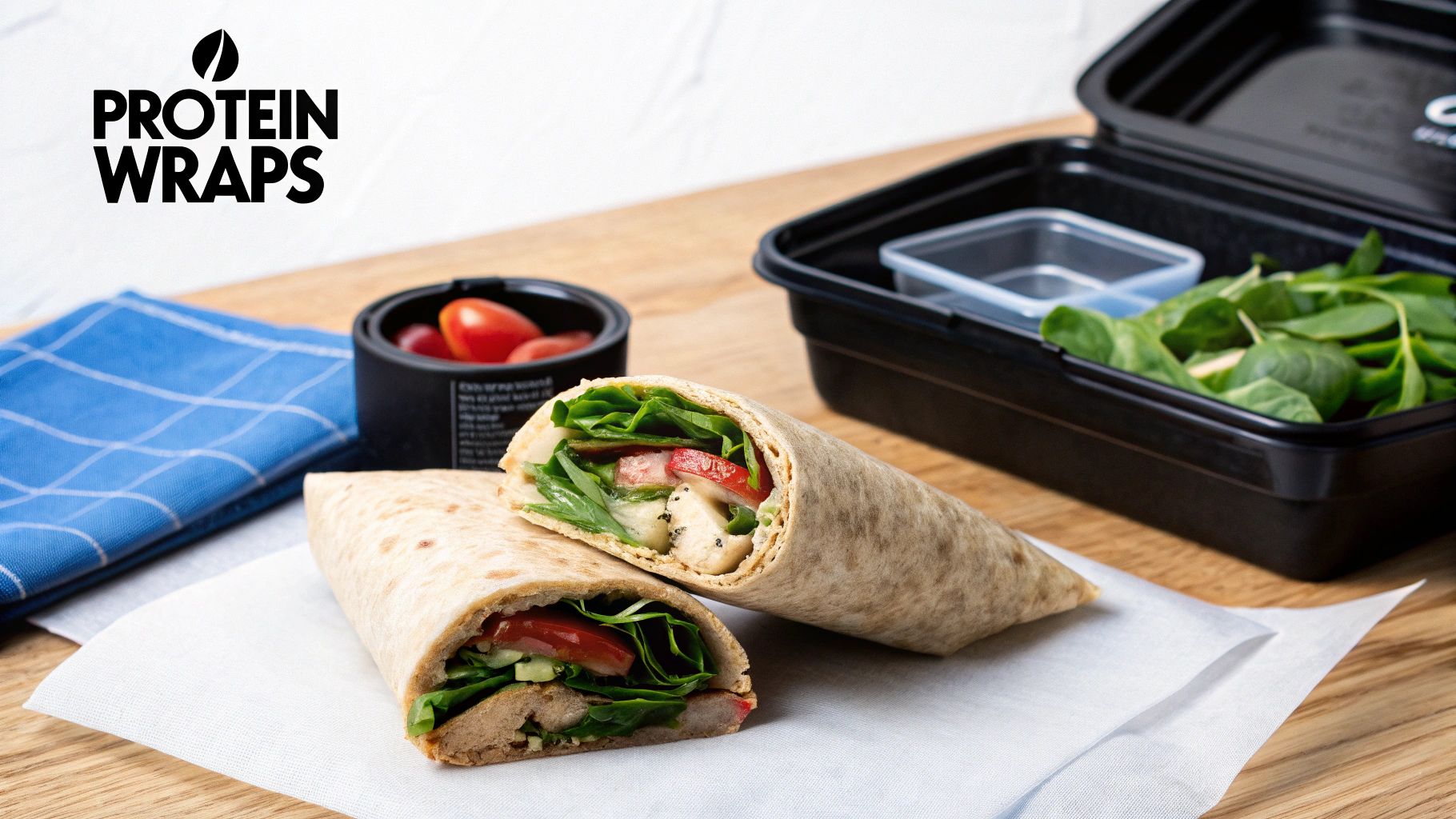
Wraps and sandwiches are timeless lunch staples, but elevating them with the right ingredients transforms them into one of the most convenient and healthy work lunch ideas available. By focusing on whole grains, lean proteins, and plenty of vegetables, you can create a portable, balanced meal that provides sustained energy and keeps you full until the end of the workday. This approach moves beyond the basic deli sandwich, offering a satisfying and nutrient-dense alternative to less healthy options.
The key is building a sandwich or wrap that delivers a powerful combination of fiber, protein, and healthy fats. This balanced macronutrient profile helps regulate blood sugar, preventing the dreaded afternoon energy crash and promoting mental clarity. They are perfect for those who need a quick meal they can eat at their desk without sacrificing nutrition. Learn more about high-protein meal planning to support your fitness and energy goals.
How to Build a Better Wrap or Sandwich
- Start with a Whole-Grain Base: Choose 100% whole-wheat or sprouted grain bread, or a high-fiber whole-wheat tortilla. These provide complex carbohydrates for lasting energy.
- Add Lean Protein: Layer on sliced turkey breast, grilled chicken, tuna salad made with Greek yogurt, or plant-based options like hummus and chickpeas.
- Load Up on Veggies: Add crunch, flavor, and nutrients with spinach, sliced bell peppers, cucumbers, tomatoes, and shredded carrots.
- Finish with Healthy Fats & Spreads: Use avocado, hummus, or a light pesto-based spread instead of heavy mayonnaise. These add flavor and keep you satisfied.
Pro Tip: To prevent a soggy wrap or sandwich, create a moisture barrier. Place large, dry lettuce or spinach leaves directly against the bread or tortilla before adding wetter ingredients like tomatoes or spreads.
4. Bento Box with Mixed Components
Inspired by Japanese culinary tradition, the bento box is a fantastic healthy work lunch idea that emphasizes variety, balance, and portion control. It involves packing small, diverse portions of different food groups into a compartmentalized container. This method not only creates a visually appealing meal but also prevents flavors from mixing and encourages a more mindful eating experience.
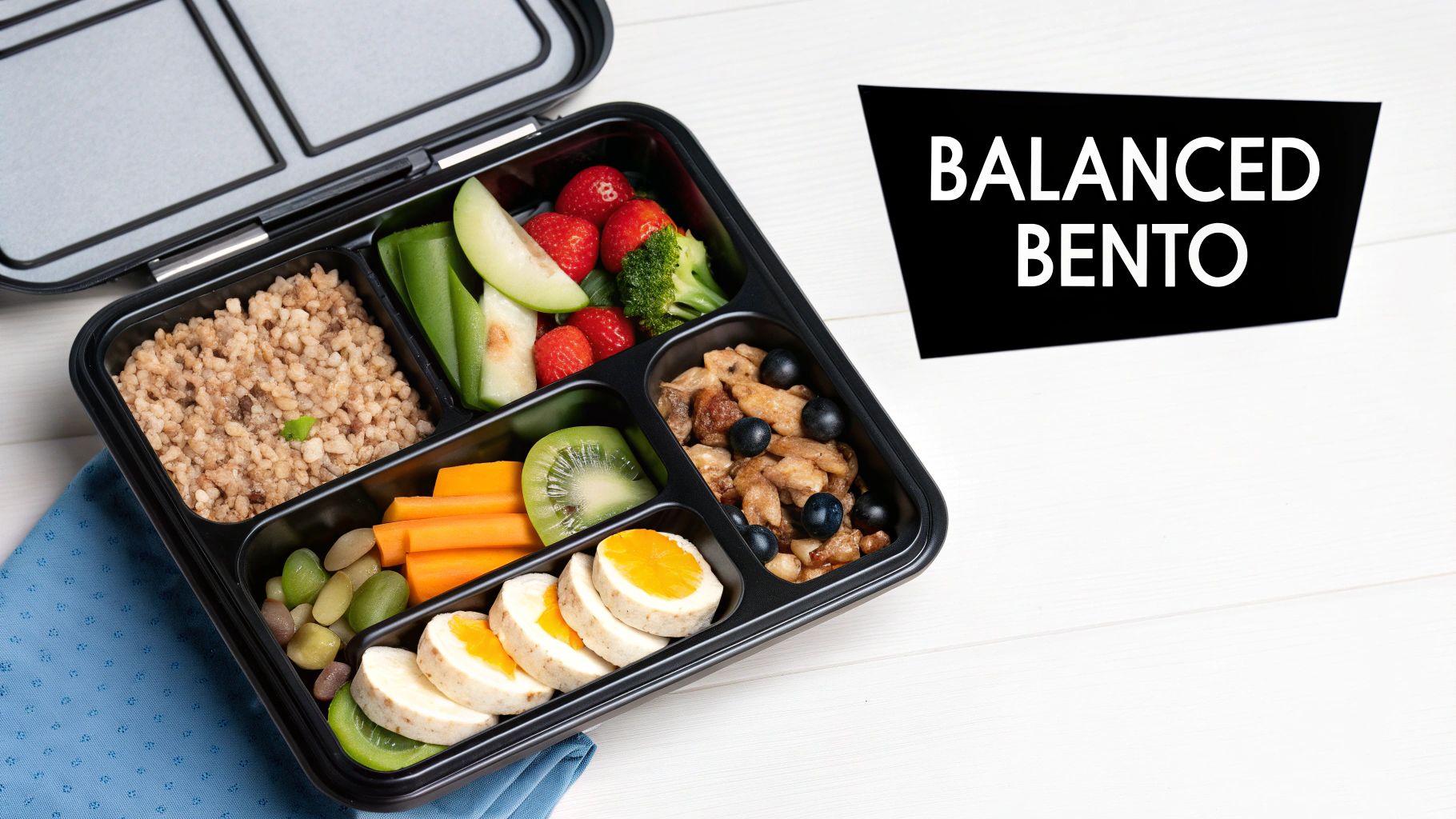
The bento approach is perfect for people who enjoy grazing or prefer multiple small tastes over one large dish. It ensures you get a wide range of nutrients from proteins, grains, vegetables, and fruits, making it a well-rounded and satisfying midday meal that keeps you energized without feeling overly full.
How to Build a Better Bento Box
- Choose a Protein: Pack small portions of sliced turkey, hard-boiled eggs, grilled chicken pieces, edamame, or cubes of cheese.
- Add a Complex Carb: Include whole-grain crackers, a small scoop of quinoa or brown rice, or a mini whole-wheat pita.
- Fill with Fruits & Veggies: Add color and nutrients with cherry tomatoes, cucumber slices, baby carrots, snap peas, or a handful of fresh berries.
- Include a Healthy Fat or Snack: A small handful of almonds, a dollop of hummus, or a piece of dark chocolate provides a satisfying finishing touch.
Pro Tip: Use silicone cupcake liners to create extra dividers within your bento box compartments. This is an excellent way to separate wet items like dips from dry items like crackers, ensuring everything stays fresh and crisp until you're ready to eat.
5. Soup and Bread Pairings
Soup and bread pairings are a classic, comforting option among healthy work lunch ideas, especially during colder months. A well-made soup provides a powerhouse of nutrients through vegetables, legumes, and lean proteins, offering a warming and deeply satisfying meal. Paired with whole grain bread for dipping, it becomes a complete meal that provides hydration, fiber, and sustained energy.
This combination is a favorite for home cooks and meal preppers because it’s incredibly efficient to batch-cook. A large pot of lentil, minestrone, or butternut squash soup made over the weekend can provide several grab-and-go lunches. This approach is perfect for busy professionals who want a nourishing, home-cooked meal without the daily prep work, ensuring a hearty lunch that feels both wholesome and indulgent.
How to Build a Better Soup and Bread Lunch
- Batch Cook and Freeze: Prepare a large batch of your favorite soup on Sunday. Freeze individual portions in microwave-safe containers for a quick meal you can grab any day of the week.
- Choose Nutrient-Dense Soups: Opt for broth-based soups loaded with vegetables, beans, and lean proteins like chicken or lentils. Good examples include chicken minestrone, tomato-based bean chili, or a butternut squash and chickpea soup.
- Pair with Whole Grains: Serve your soup with a slice of whole wheat, pumpernickel, or hearty cornbread. This adds complex carbs and fiber, making the meal more filling.
- Pack Smartly: Use a high-quality, insulated thermos to keep your soup hot until lunchtime. Always pack bread or crackers in a separate bag or container to prevent them from becoming soggy.
Pro Tip: To ensure your soup reheats well, use heartier vegetables like carrots, celery, and potatoes that maintain their texture. Delicate greens like spinach should be stirred in just before eating for optimal freshness.
6. Vegetable-Based Noodle Dishes
Vegetable-based noodle dishes are a creative and nutrient-dense alternative to traditional pasta, popularized by low-carb and paleo communities. This approach swaps grain-based pasta for spiralized vegetables like zucchini or sweet potato, drastically increasing your vegetable intake while providing a satisfying, pasta-like experience. These dishes are lighter, avoiding the heavy feeling that can come from high-carb meals.
This method is perfect for anyone seeking healthy work lunch ideas that are both filling and low in calories. By combining vegetable "noodles" with lean proteins and flavorful sauces, you get a balanced meal that supports sustained energy without the post-lunch slump. They are highly customizable and can be enjoyed hot or cold, making them incredibly versatile for office lunches.
How to Build a Better Noodle Bowl
- Choose Your Noodle Base: Spiralize zucchini, sweet potatoes, carrots, or cucumbers for a fresh, low-carb foundation. Alternatively, use pre-made veggie noodles or options like brown rice or whole wheat pasta for more complex carbs.
- Pick a Lean Protein: Add pre-cooked shrimp, grilled chicken strips, or ground turkey to make the meal satisfying and protein-rich. Plant-based options like edamame or baked tofu also work well.
- Select a Flavorful Sauce: Pair your noodles with a light marinara, a Thai peanut sauce, or a simple pesto. Storing the sauce separately is key to preventing soggy noodles.
- Incorporate Extra Veggies: Boost the nutritional value by adding ingredients like bell peppers, steamed broccoli, or cherry tomatoes for extra flavor, color, and texture.
Pro Tip: To save time, spiralize your vegetables a day or two in advance. Store them in an airtight container with a paper towel at the bottom to absorb excess moisture, ensuring they stay fresh and crisp until lunchtime.
7. Overnight Oats and Chia Puddings
Often associated with breakfast, overnight oats and chia puddings are fantastic no-cook options that serve as some of the most convenient and healthy work lunch ideas. Popularized by health influencers and minimalist meal preppers, these meals are prepared the night before by soaking oats or chia seeds in a liquid, creating a pudding-like consistency that's ready to eat. They provide a powerful combination of complex carbohydrates for slow-release energy, fiber for digestive health, and protein to keep you full and satisfied.
This make-ahead approach is perfect for busy professionals who need a grab-and-go meal that doesn't require any morning prep or office reheating. The base recipe is simple and endlessly customizable, allowing you to tailor it to your specific tastes and nutritional needs while preventing a midday energy crash.
How to Build a Better No-Cook Lunch
- Start with a Nutrient-Dense Base: In a mason jar or container, combine old-fashioned rolled oats or chia seeds with your liquid of choice, like almond milk, cow's milk, or Greek yogurt.
- Boost the Protein and Flavor: Mix in protein powder, nut butter, or more Greek yogurt to increase satiety. Add natural sweeteners like a touch of maple syrup or flavorings such as vanilla extract and cinnamon.
- Incorporate Fruits and Toppings: Add fresh or frozen berries, mashed banana, or chopped mango for natural sweetness and vitamins. Wait to add crunchy toppings like nuts, seeds, or granola until just before eating.
- Let it Set Overnight: Secure the lid and refrigerate for at least four hours, or preferably overnight, to allow the base to thicken and the flavors to meld together perfectly.
Pro Tip: Prepare a full work week's worth of jars on Sunday. To keep toppings like nuts and granola from getting soggy, pack them in a small, separate container or in a small reusable bag that you can tuck inside the top of the jar.
8. Vegetable and Protein Skewers
Vegetable and protein skewers transform a simple meal into an engaging and convenient desk-side experience, making them one of the most enjoyable healthy work lunch ideas. They offer a perfect mix of grilled or fresh vegetables and lean proteins, providing essential nutrients, fiber, and flavor in a portion-controlled, easy-to-eat format. This method is ideal for those who prefer finger foods or want a mess-free way to eat a balanced meal at their desk.
The core concept involves threading bite-sized pieces of protein and colorful vegetables onto a stick, which can be grilled, baked, or even served fresh. This approach, popularized by the Mediterranean diet and Paleo communities, encourages mindful eating and makes it easy to manage portion sizes. Skewers are an excellent choice for a visually appealing lunch that breaks the monotony of standard salads or sandwiches.
How to Build Better Skewers
- Choose Your Protein & Veggies: Thread cubes of grilled chicken, shrimp, beef tenderloin, or firm tofu onto skewers, alternating with colorful vegetables like bell peppers, zucchini, cherry tomatoes, and red onion.
- Prepare Ahead: Assemble your skewers the night before and store them upright in a tall container or laid flat in a sealed one. This makes morning prep as simple as grabbing the container.
- Pack a Smart Dip: Include a healthy dipping sauce like hummus, chimichurri, Greek yogurt-based tzatziki, or tahini dip. Always pack it in a separate, leak-proof container.
- Use Sturdy Skewers: Opt for reusable metal skewers or sturdy bamboo ones to ensure they hold up during transport and don't break while you're eating.
Pro Tip: For maximum flavor, marinate your protein and vegetables for at least 30 minutes before cooking. A simple mix of olive oil, lemon juice, garlic, and herbs works wonders for chicken, fish, and tofu.
9. Leftover-Based Remix Meals
Transforming last night's dinner into a fresh and exciting lunch is one of the most efficient healthy work lunch ideas, championed by sustainability-focused cooks and budget meal preppers. This strategy is about more than just reheating leftovers; it involves creatively remixing core components into an entirely new meal. This approach maximizes nutrition, significantly reduces food waste, and saves precious meal prep time during a busy week.
The core principle is to intentionally cook extra of a main component, like a protein or roasted vegetable, and then use it as a high-quality base for the next day's lunch. A leftover-based remix meal is ideal for anyone who wants a delicious, home-cooked lunch without dedicating separate time to meal prep. It ensures your meals are varied, preventing the monotony that can derail healthy eating habits.
How to Build a Better Remix Meal
- Cook Extra Intentionally: When making dinner, double the portion of your lean protein or roasted vegetables. Think of it as cooking for two meals at once.
- Store Components Separately: To maintain freshness and flexibility, store your leftover protein, grains, and veggies in separate containers. This prevents items from becoming soggy and allows for more creative combinations.
- Turn Protein into a New Star: Shred leftover roasted chicken and mix it with Greek yogurt and herbs for a quick chicken salad wrap. Flake grilled salmon and toss it with quinoa, edamame, and a sesame ginger dressing for a vibrant bowl.
- Repurpose Grains and Veggies: Transform a side of brown rice into a quick fried rice by adding an egg, frozen peas, and a splash of soy sauce. Use leftover roasted vegetables as a flavorful filling for a frittata, quesadilla, or a hearty wrap.
Pro Tip: Keep a "remix toolkit" on hand. Stocking your pantry with versatile items like whole-wheat tortillas, various dressings, canned beans, and fresh greens makes it easy to transform any leftover into a balanced and satisfying lunch.
10. Balanced Protein Snack Boxes
Balanced protein snack boxes are a fantastic healthy work lunch idea for professionals who prefer grazing over a single large meal. Inspired by bento boxes and popularized by corporate wellness programs, they offer curated collections of protein-rich and nutrient-dense foods. This approach helps maintain steady blood sugar and energy levels, preventing the afternoon slump by providing a slow, consistent release of fuel.
The core principle is to combine various food groups into one convenient container, focusing on protein, healthy fats, and fiber. This method is perfect for busy individuals who need a grab-and-go option that keeps them satisfied and focused without the heaviness of a traditional lunch. The variety in a single box also prevents taste fatigue and ensures a broad range of micronutrients.
How to Build a Better Protein Snack Box
- Choose a Lean Protein: Start with a primary protein source like hard-boiled eggs, rolled-up turkey slices, cubes of cheese, or a portion of Greek yogurt.
- Add Healthy Fats & Fiber: Incorporate items like almonds, walnuts, hummus, or avocado to increase satiety. Whole-grain crackers or veggie sticks like carrots, cucumbers, and bell peppers add essential fiber and crunch.
- Include a Fruit or Vegetable: A handful of berries, an apple, or some cherry tomatoes provides natural sweetness, vitamins, and hydration.
- Prepare in Advance: Assemble several boxes on Sunday to last the entire week. Use sectioned containers to keep ingredients like crackers from becoming soggy. For more ideas on assembling these meals, you can explore balanced meal plans for a well-rounded diet.
Pro Tip: To maximize freshness and variety, create a "menu" for the week. For example, Monday could be turkey, cheese, and almonds, while Tuesday features a hard-boiled egg, hummus, and veggies.
10 Healthy Work Lunch Ideas Comparison
| Item | Implementation Complexity 🔄 | Resource Requirements ⚡ | Expected Outcomes ⭐📊 | Ideal Use Cases 💡 | Key Advantages ⭐ |
|---|---|---|---|---|---|
| Grain Bowls with Lean Proteins | Moderate — cook grains & proteins, assemble | Stove/oven, containers, varied ingredients | Balanced macros, sustained energy (400–600 kcal) | Weekly meal-prep for workdays | High satiety; highly customizable |
| Mason Jar Salads | Low–Moderate — layering technique required | Mason jars, fresh produce | Keeps ingredients crisp 4–5 days | Batch-prep portable salads | Prevents sogginess; eco-friendly |
| Protein-Packed Wraps and Sandwiches | Low — quick assembly | Bread/wraps, fillings, basic tools | Convenient satiety (300–500 kcal; 20–30g protein) | Fast desk lunches or on-the-go meals | Fast, inexpensive, easy to eat |
| Bento Box with Mixed Components | Moderate — plan components & portions | Bento boxes/dividers, multiple ingredients | Variety + portion control; balanced meal (400–600 kcal) | Balanced lunches, picky eaters, portion control | Encourages balance; reduces overeating |
| Soup and Bread Pairings | Low — batch-cook and portion | Large pots/slow cooker, thermos, freezer | High satiety; freezer-friendly for months | Cold days or reheating-available workplaces | Freezes well; hydrating and filling |
| Vegetable-Based Noodle Dishes | Moderate — spiralizing or alternative pasta | Spiralizer or whole-grain noodles, sauces | Veg-forward, lower calories (−50–70% vs pasta) | Low-carb or veggie-focused meals | Vegetable-dense; adaptable hot or cold |
| Overnight Oats and Chia Puddings | Very low — no-cook overnight prep | Jars, milk/yogurt, toppings | Convenient sustained energy (250–400 kcal) | Busy mornings or grab-and-go lunches | Extremely convenient; supports digestion |
| Vegetable and Protein Skewers | Moderate — assemble and grill or roast | Skewers (metal/bamboo), grill/oven, dip containers | Portable, portion-controlled protein servings | Finger-food preference; interactive desk meals | Fun to eat; highly customizable |
| Leftover-Based Remix Meals | Low–Moderate — planning and repurposing | Storage containers, pantry staples | Saves time/costs; reduces food waste (≈20–30%) | Budget-conscious, sustainability-focused | Cost-effective; minimizes waste |
| Balanced Protein Snack Boxes | Low — portioning multiple small items | Small containers, assorted snacks | Steady energy; grazing format (100–150 kcal/box) | Short breaks, limited lunch time, desk storage | Prevents energy crashes; portable |
Your Blueprint for a Healthier, More Productive Workday
You now have a comprehensive toolkit of ten distinct, practical, and healthy work lunch ideas designed to dismantle the barriers between you and a nutritious midday meal. From the balanced simplicity of a grain bowl to the grab-and-go convenience of a mason jar salad, the common thread is clear: intentionality is the key to transforming your lunch break. We've moved beyond generic advice and explored specific strategies that cater to different tastes, schedules, and dietary needs.
The true power of this collection lies not in trying to master all ten approaches at once, but in identifying the one or two that resonate most with your personal lifestyle. Are you someone who enjoys variety and visual appeal? The bento box method is your perfect starting point. Do you value efficiency and hate food waste? The leftover-based remix meals will become your go-to strategy. Each idea is a template, ready for you to customize with your favorite flavors and ingredients.
Key Takeaways for Sustainable Success
To ensure these ideas translate into lasting habits, remember these core principles:
- Preparation is Paramount: The most significant hurdle to a healthy lunch is a lack of planning. Dedicating even 30-60 minutes on a Sunday to wash and chop vegetables, cook a batch of grains, or grill some protein will fundamentally change your week. This proactive step eliminates the frantic morning scramble and the temptation of less healthy, convenient options.
- Balance is Non-Negotiable: A truly energizing lunch isn't just low in calories; it's rich in the right nutrients. Aim to include a source of lean protein, complex carbohydrates, healthy fats, and plenty of fiber from vegetables in every meal. This combination is scientifically proven to stabilize blood sugar, sustain energy, and enhance cognitive function throughout the afternoon.
- Embrace Your Environment: Your workplace can be a powerful ally in your health journey. Many forward-thinking companies are now investing in resources that support employee well-being. To see how these initiatives can complement your personal efforts, you can explore how workplace wellness programs focused on nutrition can further enhance your dietary habits and provide a supportive community.
Your Actionable Next Steps
The journey from inspiration to implementation starts with a single, manageable step. Don't overwhelm yourself. This week, choose just one of the healthy work lunch ideas from this article that seems most appealing and achievable for you.
If you chose the Protein-Packed Wraps, your task is simple: add whole-wheat tortillas, a lean protein like grilled chicken or chickpeas, and your favorite veggies to your grocery list. If the Soup and Bread Pairing caught your eye, find a simple lentil soup recipe and make a large batch over the weekend. By focusing on one small change, you build momentum and confidence, creating a positive feedback loop that makes future changes feel effortless. This small investment in your midday meal is a direct investment in your afternoon productivity, your long-term health, and your overall well-being.
Ready to eliminate the guesswork and receive a perfectly tailored weekly menu? Let AI Meal Planner become your personal nutritionist by generating delicious, easy-to-prepare meal plans that align with your health goals and dietary preferences. Get your personalized plan and start your journey to effortless healthy eating today at AI Meal Planner.
AI-powered nutrition
Get Your Personalized Meal Plan
AI creates the perfect meals for your goals, lifestyle, and taste.
Start Your Journej