What are some healthy meals I can make in under 30 minutes?
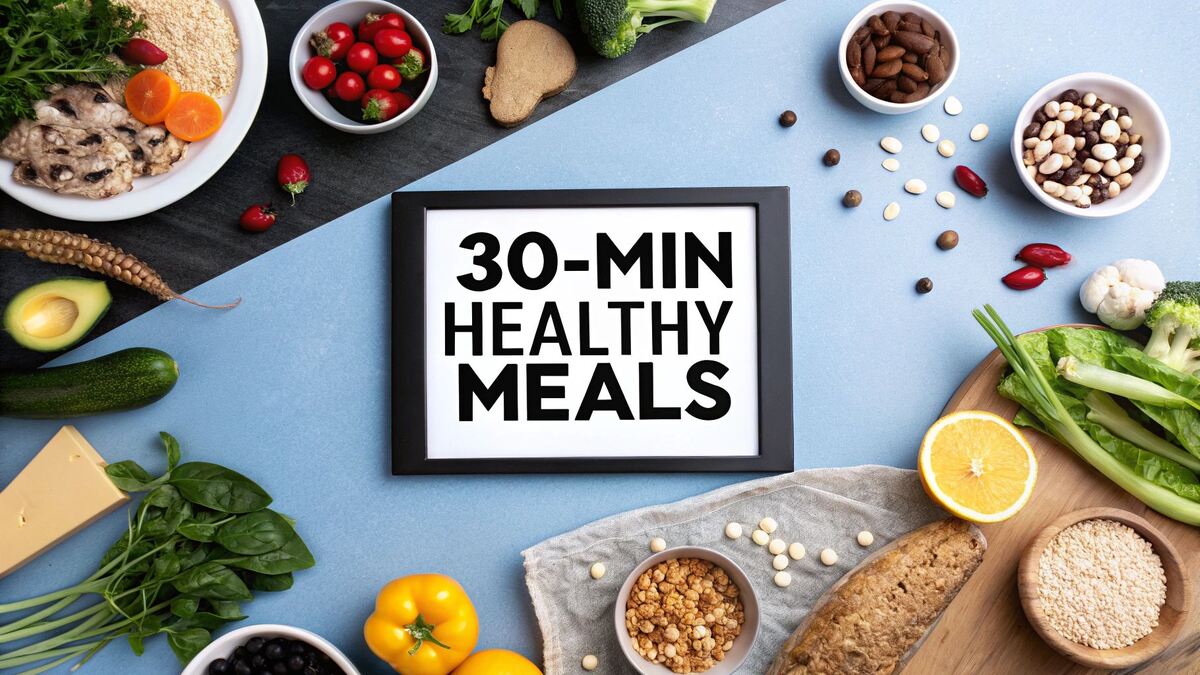
To make a healthy meal in under 30 minutes, focus on quick-cooking methods like stir-frying, sheet pan roasting, or assembling no-cook bowls. Prioritize fast-cooking proteins like shrimp, chicken breast, or canned legumes, and use pre-chopped vegetables or quick-cooking grains to reduce prep time. A balanced meal can be assembled in 15-25 minutes by combining a lean protein, a complex carbohydrate, and plenty of vegetables.
In a world where time is a premium commodity, the goal of consistently eating nutritious, home-cooked food can feel like an insurmountable challenge. The daily negotiation between a demanding schedule and the desire for a healthy lifestyle often leads to compromises, with convenience trumping nutritional value. This cycle of takeout, processed foods, and skipped meals can derail fitness goals, impact energy levels, and make managing dietary needs a constant source of stress.
This guide is designed to dismantle the myth that healthy eating requires hours of planning and complex cooking. We will provide a structured, actionable collection of genuinely healthy meals under 30 minutes, proving that you don't have to sacrifice your well-being for the sake of efficiency. This is more than just a list of recipes; it's a strategic toolkit for reclaiming your time and taking control of your nutrition. Each meal idea is crafted for speed and simplicity without compromising on flavor or health benefits.
1. How can I make a complete meal on a single pan?
The sheet pan meal is the ultimate solution for anyone seeking one of the fastest healthy meals under 30 minutes. This method involves arranging your protein and vegetables on a single baking sheet, seasoning them, and roasting everything together in the oven. It dramatically cuts down on active cooking time and, most importantly, minimizes cleanup to just one pan.
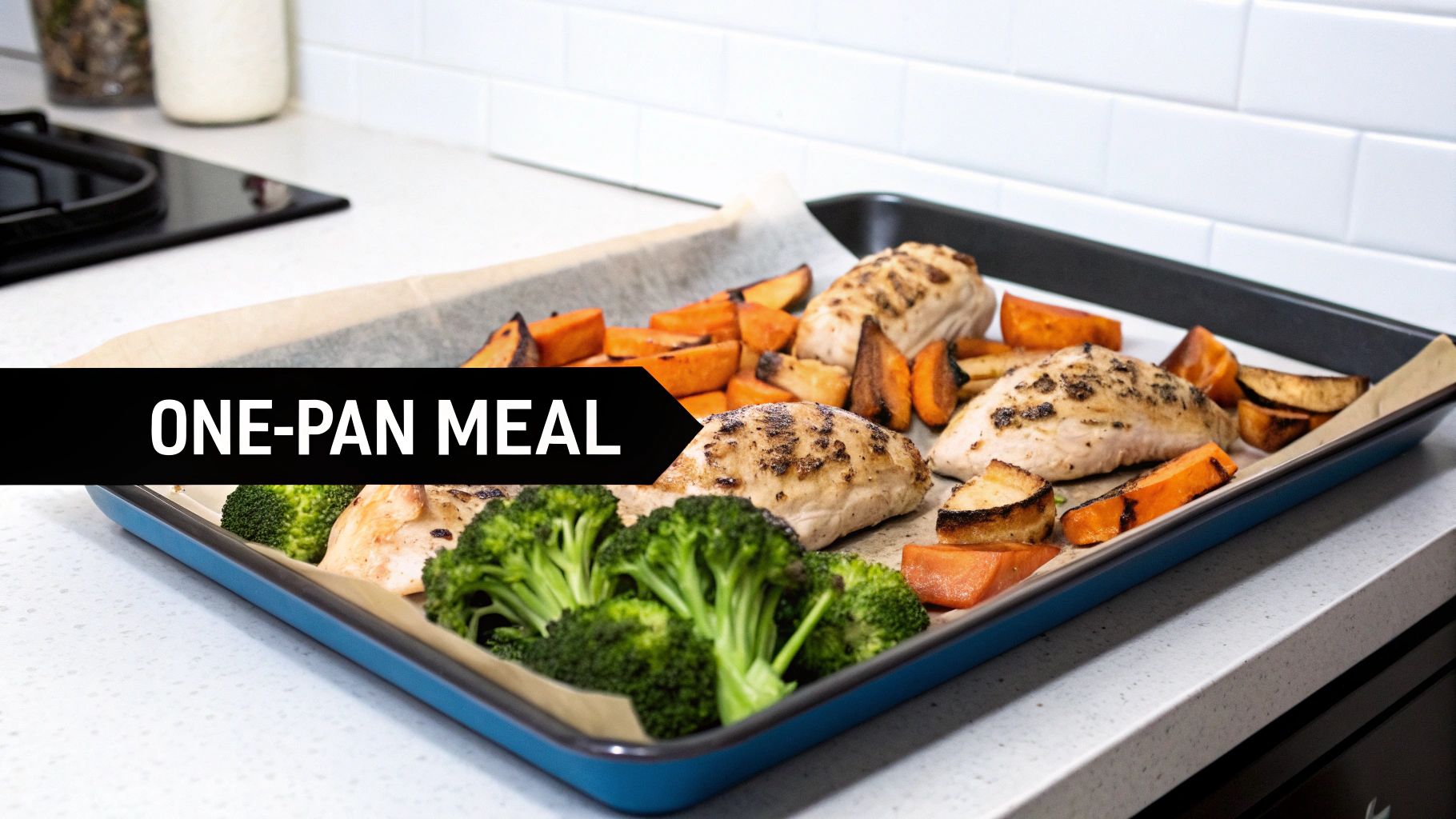
This approach is incredibly versatile, making it perfect for busy weeknights, effortless meal prep, and precise portion control. The high, dry heat of the oven ensures proteins get a delicious roasted flavor while vegetables become tender and slightly caramelized.
How do you build a perfect sheet pan meal?
Creating a balanced, flavorful meal is simple. Just follow this formula: a lean protein, a variety of non-starchy vegetables, and a healthy fat like olive or avocado oil.
- Lemon Herb Chicken: Toss chicken breast, broccoli florets, and cubed sweet potato with olive oil, lemon juice, dried oregano, and garlic powder.
- Salmon with Asparagus: Lay salmon fillets on the pan surrounded by asparagus spears and halved Brussels sprouts. Drizzle with oil and season with salt, pepper, and dill.
- Vegan Tofu & Peppers (V, GF): Use firm, pressed tofu with sliced bell peppers, zucchini, and red onion. A sprinkle of smoked paprika gives it a fantastic flavor.
What are the best tips for sheet pan cooking?
To master this technique, focus on a few key details for even cooking and maximum flavor.
Pro Tip: For true meal prep efficiency, chop your vegetables and portion your proteins as soon as you get home from the grocery store. Store them in airtight containers so you can simply toss them onto a sheet pan during the week.
- Uniform Cuts: Chop vegetables into similar-sized pieces to ensure they all cook at the same rate. Harder vegetables like potatoes should be cut smaller than softer ones like zucchini.
- Dry Your Protein: Pat chicken, fish, or tofu completely dry with a paper towel before seasoning. This step is crucial for achieving a crispy, browned exterior instead of a steamed one.
- Use Parchment Paper: Lining your pan with parchment paper not only makes cleanup instantaneous but also prevents food from sticking and promotes food safety.
- Positioning Matters: Place vegetables around the protein source so they can absorb the flavorful drippings as everything roasts.
2. What's a fast way to assemble a balanced bowl?
The Buddha Bowl is a powerhouse of balanced nutrition, making it one of the most customizable healthy meals under 30 minutes. This method involves layering a whole grain base, a lean protein, several colorful vegetables, and a flavorful sauce in a single bowl. It’s a visually appealing and satisfying way to hit all your macronutrient targets while simplifying mealtime.
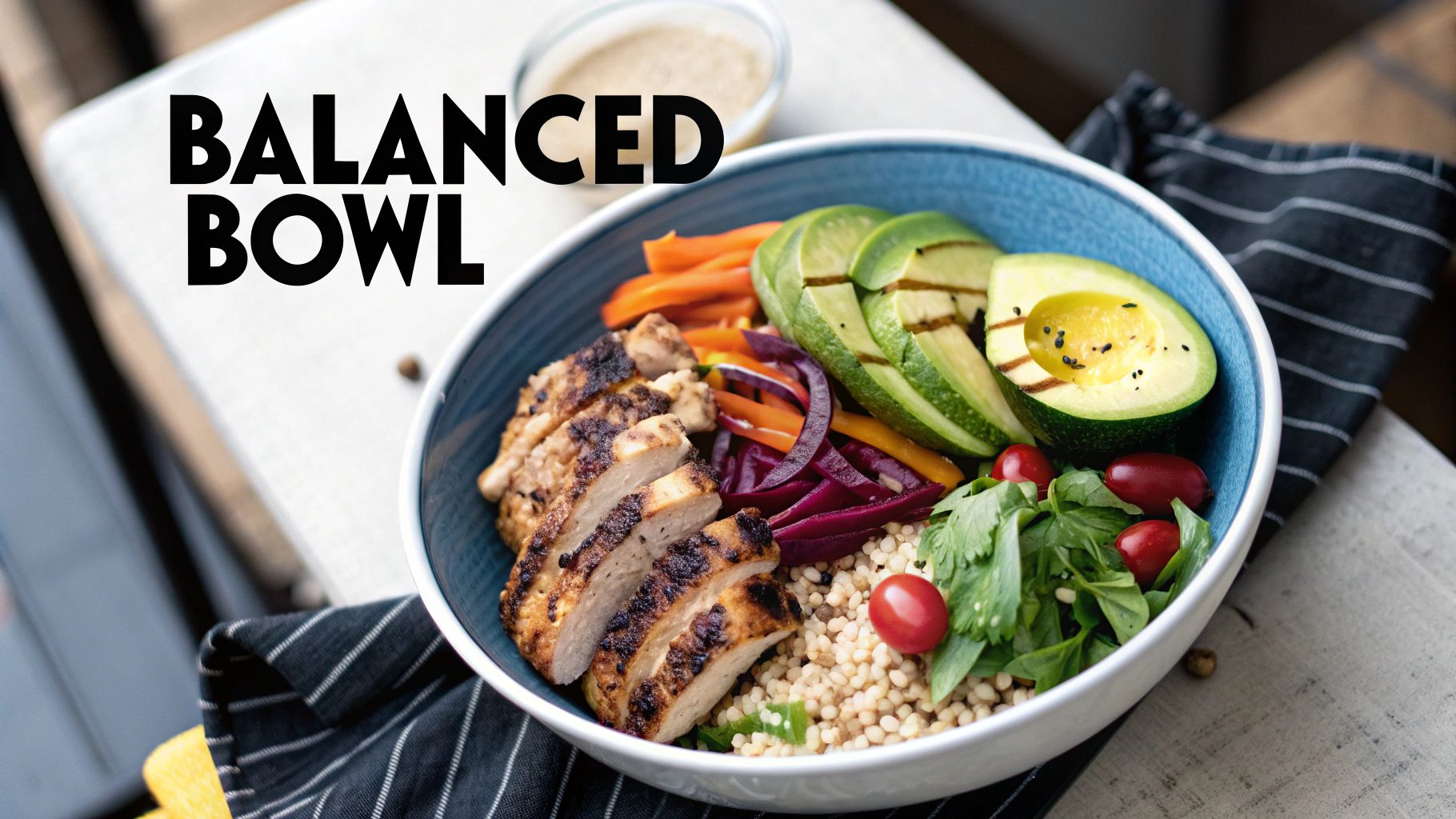
This approach is perfect for meal preppers and those tracking their intake, as each component can be prepared in advance and portioned out easily. The combination of textures and flavors from cooked grains, fresh vegetables, and creamy sauces makes every bite interesting and helps prevent meal fatigue.
How do you build a perfect Buddha bowl?
Constructing a nutrient-dense bowl is as simple as following a basic formula: 1 part grain, 1 part protein, 3 parts vegetables, and a drizzle of sauce. This framework ensures you get a complete meal that supports your health goals.
- Mediterranean Chicken Bowl: Start with a base of farro, top with grilled chicken, cucumber, cherry tomatoes, and feta cheese. Finish with a lemon-tahini dressing.
- Asian-Inspired Edamame Bowl (V, GF): Use brown rice topped with shelled edamame, shredded carrots, and snap peas. Drizzle with a sesame ginger sauce.
- Mexican Steak Bowl: Layer cilantro-lime quinoa with grilled steak, sautéed bell peppers, and black beans. Add a dollop of lime crema or guacamole.
What are the best tips for making Buddha bowls?
To make your Buddha Bowls consistently delicious and easy to assemble, focus on smart preparation and layering techniques.
Pro Tip: Bulk-prep your grains (like quinoa or brown rice) and one or two protein sources over the weekend. This cuts weekday assembly time down to under 10 minutes, making it a true grab-and-go option.
- Prep Components Separately: Store your cooked grains, proteins, chopped vegetables, and sauces in separate airtight containers. This prevents everything from getting soggy and maintains texture for 4-5 days.
- Layer Strategically: Place heavier ingredients like grains and protein at the bottom of the bowl. Arrange lighter vegetables and toppings around the edges and on top for stability and visual appeal.
- Mix Temperatures & Textures: Combine warm components like grains and protein with cool, crisp elements like fresh greens or cucumbers. This contrast creates a more dynamic and satisfying meal.
- Track Your Portions: Using a food scale for each component is the most accurate way to manage your intake. For a precise breakdown, you can learn more about calculating your calories and macros to build bowls that perfectly match your goals.
3. How can I make a stir-fry without it getting soggy?
The stir-fry is a champion of quick-cooking techniques, offering one of the most dynamic and delicious healthy meals under 30 minutes. This method uses high, direct heat and minimal oil to flash-cook proteins and vegetables in a wok or large pan. The brief cooking time not only preserves the nutrients and crisp texture of the ingredients but also delivers a vibrant, restaurant-quality meal in just 12-15 minutes of active cooking.
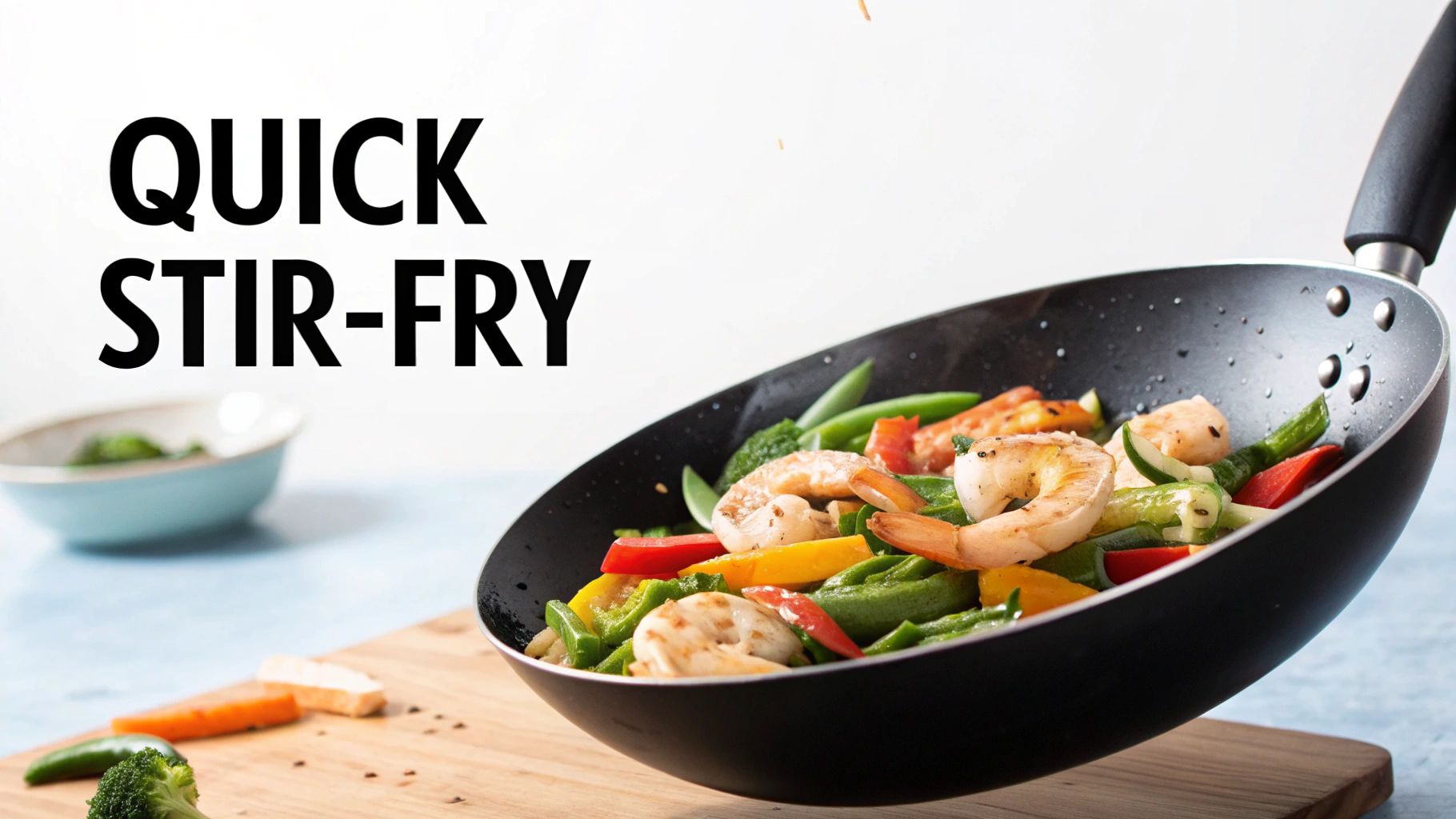
This approach is perfect for using up leftover vegetables and is incredibly customizable to fit various dietary needs. The speed of a stir-fry makes it an ideal solution for busy weeknights when time is short but you refuse to compromise on a nutritious, satisfying dinner.
How do you build a perfect stir-fry?
The secret to a great stir-fry is having all your components ready to go before you even turn on the stove. This concept, known as mise en place, is non-negotiable for success.
- Beef & Broccoli: Thinly slice beef sirloin and toss with broccoli florets in a simple sesame-soy sauce.
- Shrimp & Snap Pea (GF): Combine shrimp and crisp snap peas with a ginger-garlic sauce made from coconut aminos for a gluten-free option.
- Tofu & Mushroom (V, GF): Use firm, pressed tofu with shiitake mushrooms, baby corn, and water chestnuts. A sauce of tamari, rice vinegar, and a touch of maple syrup brings it all together.
What are the best tips for a successful stir-fry?
Mastering the stir-fry is all about speed and preparation. These tips ensure your ingredients cook evenly without becoming soggy.
Pro Tip: Use a bag of frozen stir-fry vegetable mix and pre-minced garlic and ginger to cut prep time down to virtually zero. This hack lets you go from freezer to table in under 15 minutes.
- Uniform Cuts: Chop all vegetables into similar bite-sized pieces to ensure they cook at the same rapid rate.
- High Heat is Key: Get your pan or wok screaming hot before adding oil. This creates an instant sear that locks in flavor and texture.
- Cook in Batches: Don't overcrowd the pan. Cook the protein first, remove it, then cook the vegetables. Combine everything at the end with your sauce to heat through.
- Sauce Last: Add your sauce during the final minute of cooking. This prevents the sugars in the sauce from burning and allows it to thicken and coat all the ingredients perfectly.
4. How can I create a high-protein vegetarian meal quickly?
Grain bowls featuring legumes are a plant-powered powerhouse, delivering a complete amino acid profile without meat. This approach centers on combining a whole grain with a high-protein legume, creating a balanced, fiber-rich meal that supports muscle maintenance, sustainable weight management, and stable blood sugar levels. They are a cornerstone of fast, healthy meals under 30 minutes, especially for those following a vegan or plant-forward diet.
The beauty of the grain bowl lies in its "mix-and-match" simplicity, making it ideal for clearing out the refrigerator or using up pantry staples. By pairing items like quinoa and chickpeas or rice and lentils, you ensure a complete protein source, which is crucial for satiety and overall health. They are incredibly quick to assemble, especially when grains are cooked ahead of time.
How do you build a perfect grain bowl?
To create a nutritionally complete and delicious bowl, follow this simple formula: one part grain, one part legume, plenty of vegetables, and a flavorful sauce. This combination ensures a meal rich in protein, fiber, and micronutrients.
- Mediterranean Chickpea Bowl: Combine quinoa, roasted chickpeas, cucumber, tomato, and red onion. Drizzle generously with a lemon-tahini dressing.
- Indian-Inspired Lentil Bowl: Use a base of brown rice topped with spiced brown or green lentils, roasted cauliflower, and fresh spinach. A dollop of plain yogurt adds creaminess.
- Mexican Black Bean Bowl (V, GF): Start with cilantro-lime rice, then add black beans, corn salsa, and sliced bell peppers. Top with fresh avocado or a scoop of guacamole.
What are the best tips for making grain bowls?
A few smart strategies can elevate your grain bowls from simple to spectacular, ensuring maximum flavor and nutritional benefit with minimal effort.
Pro Tip: Batch-cook grains and legumes on a Sunday. Store them in separate airtight containers in the fridge. This single step reduces assembly time for your healthy meals under 30 minutes to less than 10 minutes on busy weekdays.
- Use Canned Legumes: To save time, use canned beans and lentils. Rinse them thoroughly under cold water to remove excess sodium and compounds that can cause digestive discomfort.
- Boost Iron Absorption: Legumes are rich in iron. Squeeze fresh lemon or lime juice over your bowl or include vitamin C-rich vegetables like bell peppers to significantly enhance your body's ability to absorb this vital mineral.
- Toast for Flavor: For a deeper, nuttier taste, briefly toast your canned chickpeas or lentils in a dry pan or roast them in the oven with spices before adding them to your bowl.
- Sauce is Key: A great sauce ties everything together. Think beyond dressings and consider using hummus, salsa, or a simple mix of soy sauce, ginger, and sesame oil.
5. What can I make with eggs besides breakfast?
Egg-based dishes are the cornerstone of quick, protein-rich cooking, making them an excellent choice for healthy meals under 30 minutes. Whether scrambled, folded into an omelet, or baked as a frittata, eggs serve as a versatile canvas for vegetables, cheeses, and lean meats. This adaptability allows you to create a nutrient-dense meal for breakfast, lunch, or dinner in as little as five minutes.
Popularized by fitness coaches and low-carb diet communities, eggs provide complete protein and essential micronutrients like choline and vitamin D. Their rapid cooking time and high satiety factor make them ideal for busy professionals and anyone tracking macros who needs a filling meal without the lengthy prep.
How do you build a perfect egg-based meal?
The formula is simple: combine whisked eggs with your favorite fillings and cook using your preferred method. A non-stick pan is your best friend for scrambles and omelets, while a cast-iron or oven-safe skillet is perfect for frittatas.
- Vegetable-Loaded Omelet: Sauté spinach and mushrooms, then pour in whisked eggs. Cook until the edges set, sprinkle with feta cheese, and fold.
- Breakfast Scramble: Brown turkey sausage with diced peppers and onions. Add eggs and scramble until just cooked through for a high-protein start to your day.
- Sheet-Pan Frittata (GF): Combine eggs with steamed broccoli, cooked chicken, and shredded cheddar. Pour into a greased baking dish and bake for 15-18 minutes for a hands-off meal.
What are the best tips for cooking eggs?
Mastering egg dishes comes down to temperature control and ingredient preparation. A few key techniques will ensure a perfect result every time.
Pro Tip: For ultimate speed, pre-cook your fillings like sausage or bacon and pre-chop vegetables like peppers and onions at the start of the week. Store them in the fridge for instant meal assembly.
- Control Your Heat: Start with medium-high heat to quickly set the eggs, then reduce to low to prevent them from becoming dry and rubbery.
- Prevent Sticking: Use a quality non-stick pan or ensure your skillet is well-oiled or buttered before adding the egg mixture.
- Integrate Fillings Smartly: Add pre-cooked vegetables and proteins to the eggs while they are still slightly runny. This allows the ingredients to meld together perfectly as the eggs finish cooking.
- Don't Over-Whisk: Whisk eggs just until the yolks and whites are combined. Over-whisking can incorporate too much air, leading to a tougher texture.
6. How can I make meals with almost no active cooking time?
For those whose schedules require cooking to be completely decoupled from mealtime, the Instant Pot or slow-cooker method is a game-changer. This approach combines the convenience of pressure or slow cooking with the incredible efficiency of freezer "dump-and-go" prep, delivering tender, flavorful meals with just minutes of active work.
The concept is simple: you assemble all raw ingredients for a meal into a freezer bag. When you’re ready to cook, you simply "dump" the frozen contents into your appliance and turn it on. This makes it one of the most hands-off healthy meals under 30 minutes, with the active prep time being the only time you spend in the kitchen.
How do you build a perfect dump-and-go meal?
Building these meal kits is as easy as chopping and bagging. Combine a protein, vegetables, seasonings, and a small amount of liquid or sauce base. Remember to label each bag with the recipe name, date, and cooking instructions.
- 15-Minute Pulled Chicken: Combine chicken breasts, a sugar-free BBQ sauce, chopped onion, and a splash of apple cider vinegar in a freezer bag. Pressure cook from frozen for a versatile protein perfect for salads or wraps.
- Quick Beef Chili: Brown ground beef ahead of time and freeze it. Then, combine it in a bag with canned kidney beans, diced tomatoes, chili powder, and cumin for an 18-minute pressure cook meal.
- Chicken Fajita Prep (V, GF options): Bag sliced chicken or firm tofu with bell peppers, onions, and fajita seasoning. Cook on low in the slow cooker for 4-6 hours or pressure cook for 10 minutes.
What are the best tips for slow-cooker or Instant Pot meals?
To ensure your meals are delicious and perfectly cooked every time, a few prep and cooking strategies make all the difference.
Pro Tip: When batch-prepping, set up an assembly line. Chop all your vegetables first, then portion all proteins, and finally, measure out seasonings for each bag. This assembly-line method can produce a week's worth of meals in under an hour.
- Sauté Aromatics First: For deeper flavor in an Instant Pot, use the sauté function to quickly cook garlic and onions before adding the other ingredients and pressure cooking.
- Layer Ingredients Strategically: When loading the pot, place denser items like root vegetables and meats on the bottom and more delicate items on top.
- Master the Release: Use a quick pressure release for vegetables to keep them from getting mushy and a natural release for tough cuts of meat to ensure maximum tenderness.
- Manage Freezer Liquids: Freeze sauces or broths in ice cube trays or flat in a separate small bag. This prevents the main bag from becoming a giant, awkward ice block and helps prevent freezer burn.
7. What is a good low-carb base instead of rice?
The combination of lean protein and cauliflower rice is a powerhouse for anyone seeking low-carb, high-protein healthy meals under 30 minutes. This framework replaces traditional grains like rice with finely riced cauliflower, which cooks in just 8-10 minutes. The result is a lighter, nutrient-dense meal that supports weight loss and muscle maintenance without sacrificing volume or flavor.
Popularized by keto and low-carb communities, this meal structure is perfect for managing a calorie deficit while staying full and satisfied. A flavorful sauce ties the protein and vegetable base together, transforming simple ingredients into a delicious and complete dish.
How do you build a perfect cauliflower rice bowl?
The formula is straightforward: pair a pan-seared or grilled protein with seasoned cauliflower rice and finish with a complementary sauce.
- Garlic Butter Chicken: Sauté cubed chicken breast in garlic butter and serve over cilantro-lime cauliflower rice for a fresh, zesty meal.
- Asian-Style Salmon: Pan-sear a salmon fillet and serve it on a bed of cauliflower rice sautéed with sesame oil, soy sauce, and ginger.
- Beef Taco Bowl (Keto, GF): Brown ground beef with taco seasoning and pair it with cauliflower rice mixed with cumin and chili powder. Top with a spicy chipotle aioli.
What are the best tips for cooking with cauliflower rice?
Getting the texture and taste of cauliflower rice right is key. These tips ensure a delicious result every time.
Pro Tip: To prevent a mushy texture, pat your riced cauliflower thoroughly dry with paper towels before cooking. Sauté it over medium-high heat with a healthy fat like avocado oil to encourage browning and evaporation.
- Season Aggressively: Cauliflower has a mild, slightly bland flavor, so don't be shy with seasonings. Garlic powder, onion powder, herbs, and spices are essential.
- Add Healthy Fats: Incorporating fats like butter, olive oil, or a creamy sauce not only adds flavor but also increases satiety, making the meal more satisfying. This is crucial for managing hunger.
- Meal Prep the Base: Cook a large batch of plain or lightly seasoned cauliflower rice at the beginning of the week. Stored in an airtight container, it will last 4-5 days and can be quickly reheated for fast assembly.
- Monitor Calorie Intake: This meal structure is ideal for anyone tracking their intake. To ensure you're on track with your goals, consider using a tool like a calorie deficit calculator to align your meals with your specific needs.
8. Can pasta be a healthy 30-minute meal?
Pasta remains a go-to comfort food, and with modern whole grain and legume-based options, it’s also one of the best healthy meals under 30 minutes. This approach combines high-fiber pasta with lean proteins and simple vegetable sauces, creating a balanced, satisfying dish that supports stable blood sugar and keeps you feeling full longer than traditional white pasta.
The key is efficiency: while the pasta cooks, you prepare a quick-sautéed protein and a light sauce in a separate pan, bringing everything together in just 20-25 minutes. This method is perfect for busy professionals who crave a hearty meal without the long wait or heavy feeling afterward.
How do you build a perfect protein-pasta dish?
For a complete meal, combine a fiber-rich pasta base with a lean protein, plenty of vegetables, and a flavorful, simple sauce. Using pre-cooked or fast-cooking ingredients is essential for staying under the 30-minute mark.
- Lentil Pasta & Turkey Marinara: While lentil pasta boils, brown lean ground turkey with minced garlic. Stir in spinach and a jar of light marinara sauce.
- Shrimp & Chickpea Pasta Scampi: Sauté shrimp with garlic and red pepper flakes in olive oil. Toss with cooked chickpea pasta, a squeeze of lemon juice, and fresh parsley.
- Chicken & Whole Wheat Pesto Pasta (GF option): Use leftover grilled chicken or rotisserie chicken. Combine cooked whole wheat pasta with chicken, cherry tomatoes, and a scoop of store-bought pesto.
What are the best tips for quick pasta dishes?
Mastering quick pasta dishes is all about multitasking and using smart shortcuts to maximize flavor and minimize prep time.
Pro Tip: Always reserve about a half-cup of the starchy pasta water before draining. Adding a splash to your sauce helps it cling to the noodles, creating a creamier texture without needing heavy cream or excess oil.
- Start with Boiling Water: Get your pasta water on the stove first. While it comes to a boil, you can prep your other ingredients, which is the most effective way to multitask.
- Use Legume-Based Pastas: Brands like Banza (chickpea) or Barilla (lentil) offer significantly more protein and fiber, making your meal more satiating and nutritionally dense.
- One-Pot Sauce: Sauté your protein and vegetables in the same pot you’ll use for the sauce. This builds layers of flavor and means one less dish to wash.
- Embrace Shortcuts: Don't hesitate to use pre-minced garlic, jarred sauces, canned tomatoes, and pre-cooked proteins like rotisserie chicken to dramatically cut down on prep.
9. How do I make a satisfying no-cook meal?
Lettuce wraps and cold salads are the epitome of no-cook efficiency, making them one of the fastest healthy meals under 30 minutes. This method centers on combining fresh greens with precooked proteins, vibrant vegetables, and a simple dressing. It eliminates cooking time entirely, offering a crisp, refreshing meal that's ready in minutes.
This approach is perfect for hot days, office lunches, or any time you need a nutritious meal without turning on the stove. By leveraging ready-to-eat ingredients, you can assemble a satisfying, nutrient-dense meal that aligns with your health goals without any of the hassle.
How do you build a perfect no-cook meal?
Creating a delicious, balanced salad or lettuce wrap is all about smart assembly. Start with a base of greens, add a ready-to-go protein, and pile on your favorite toppings and a light dressing.
- Rotisserie Chicken Salad: Combine mixed greens with shredded rotisserie chicken, avocado, and a simple balsamic vinaigrette.
- Spicy Tuna Lettuce Wraps: Mix canned tuna with Greek yogurt or spicy mayo, then spoon into large butter lettuce leaves with diced cucumber and tomato.
- Steak & Goat Cheese Salad (GF): Top a bed of spinach with pre-cooked steak strips, crumbled goat cheese, beets, and a citrus-based dressing.
What are the best tips for no-cook meals?
To keep your no-cook meals fresh, flavorful, and fast, focus on a few key preparation strategies.
Pro Tip: Use pre-cooked, vacuum-sealed proteins like grilled chicken strips, hard-boiled eggs, or smoked salmon. They offer incredible convenience and a long shelf life, making them a meal prep staple for instant protein.
- Buy Pre-Washed Greens: While slightly more expensive, pre-washed and pre-chopped greens are a worthwhile investment that can save you significant prep time.
- Dress Separately: To prevent wilting, always store or pack your dressing separately. Add and toss it just before you plan to eat.
- Layer Intelligently: When packing a salad for later, layer heavier, wetter ingredients at the bottom and place delicate greens on top to maintain their crispness.
- Add Crunch Last: Introduce texture by adding nuts, seeds, or croutons right before serving so they don't become soggy. You can also explore which foods fit your specific wellness needs by checking out a guide to foods by symptom.
10. What's the best way to assemble a quick sandwich or wrap?
The humble sandwich, wrap, or lettuce cup is one of the most efficient healthy meals under 30 minutes, relying on simple assembly rather than cooking. This approach combines a vessel like whole-grain bread or a tortilla with lean proteins, fresh vegetables, and flavorful spreads. It requires almost no cooking time and is perfectly designed for on-the-go eating, making it a go-to for busy professionals and meal preppers.
These hand-held meals offer complete nutritional balance in a portable format. By choosing the right components, you can precisely control macros, load up on fiber and micronutrients, and have a satisfying meal ready in just 5 to 8 minutes.
How do you build a perfect hand-held meal?
The key to a great wrap or sandwich is layering complementary flavors and textures. Start with a high-fiber base, add a lean protein, pile on the veggies, and finish with a healthy fat-based spread.
- Classic Turkey Avocado: Layer slices of lean turkey breast, mashed avocado, spinach, and tomato on two slices of whole-wheat bread.
- Mediterranean Chicken Wrap: Spread hummus on a whole-grain tortilla and top with grilled chicken, chopped cucumber, bell peppers, and feta cheese.
- Thai Shrimp Lettuce Wraps (GF): Fill large butter lettuce leaves with cooked shrimp, shredded carrots, cucumber ribbons, and a drizzle of Thai peanut sauce.
What are the best tips for building wraps and sandwiches?
To prevent sogginess and maximize nutrition, a few strategic assembly tricks make all the difference.
Pro Tip: For ultimate speed, pre-chop vegetables, cook proteins, and mix sauces over the weekend. Store each component in separate airtight containers. When you're ready to eat, you can assemble your meal in under five minutes.
- Create a Moisture Barrier: Spread hummus, mashed avocado, or a thick Greek yogurt sauce directly onto the bread or wrap first. This layer prevents moisture from vegetables and proteins from making it soggy.
- Pack Smart: If you aren't eating immediately, pack wet ingredients like sliced tomatoes or sauces in a separate small container. Add them right before you eat to keep everything crisp.
- Choose Sturdy Breads: Opt for dense, whole-grain breads, sturdy sourdough, or high-fiber tortillas. They hold up better to fillings and provide more sustained energy than refined white bread.
- Load Up on Greens: Use leafy greens like spinach or arugula as the first layer after your moisture barrier. They add another protective layer between the bread and wetter ingredients.
Questions People Also Ask
What is the healthiest 30-minute meal? A sheet pan meal with salmon, broccoli, and sweet potatoes is one of the healthiest, offering omega-3s, fiber, and complex carbs with minimal oil and hands-on time.
How do I meal prep for 30-minute meals? Focus on batch-prepping components like cooking a large pot of quinoa, chopping all your vegetables for the week, and pre-cooking proteins like chicken breast.
What are some quick, healthy protein sources? Canned tuna or salmon, rotisserie chicken, pre-cooked shrimp, eggs, canned beans, and firm tofu are all excellent protein sources that require little to no cooking time.
Can a 30-minute meal be good for weight loss? Yes, meals like a large salad with grilled chicken or a cauliflower rice bowl with lean protein are low in calories but high in volume and nutrients, making them ideal for weight loss.
Are there healthy 30-minute meals for families? Sheet pan meals and "build-your-own" taco or bowl bars are perfect for families, as they are quick to prepare and allow each person to customize their plate.
What is the easiest healthy meal to make? A no-cook salad with rotisserie chicken or canned tuna, pre-washed greens, and a simple vinaigrette is likely the easiest, as it only requires assembly.
How do I add more vegetables to quick meals? Use pre-chopped or frozen vegetables in stir-fries and sheet pan meals, or add a handful of spinach to scrambles, pasta sauces, and smoothies for an effortless boost.
AI-powered nutrition
Get Your Personalized Meal Plan
AI creates the perfect meals for your goals, lifestyle, and taste.
Start Your Journej