
Aim for a 300–500 kcal daily surplus, target 0.25–0.5 kg of weight gain per week, and consume at least 1.6 g of protein per kilogram of bodyweight each day. That gives a hardgainer a measurable starting point without relying on a fixed 3,000-calorie menu.
You may recognize the situation: breakfast feels substantial, lunch gets squeezed between commitments, dinner is large, and the scale still looks unchanged. The problem usually isn't a mysterious “ectomorph metabolism.” More often, meals are inconsistent, portions are estimated loosely, and the calories needed to create a surplus never arrive often enough.
An ectomorph diet plan works best when the label stays in the background. Use it as shorthand for someone who struggles to gain weight, then build the plan around bodyweight, activity, training, appetite, and the weekly trend on the scale.
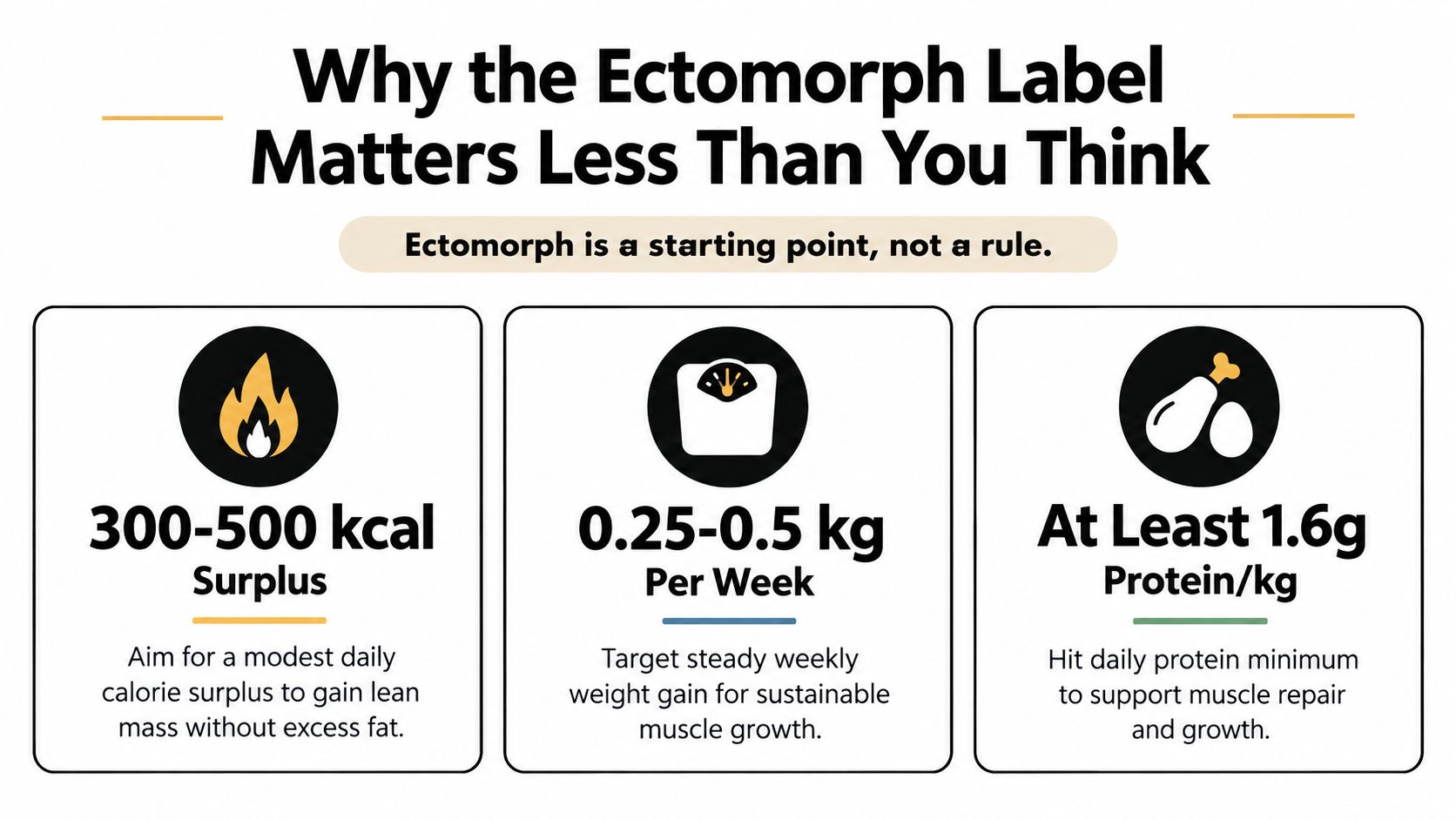
Why the Ectomorph Label Matters Less Than You Think
You can eat a large dinner, train consistently, and still see no change on the scale when breakfast is light, lunch is rushed, and snacks disappear. That pattern describes an intake problem more often than a special ectomorph metabolism.
The word ectomorph comes from W.H. Sheldon's 1940s somatotype system, which grouped physiques as endomorphic, mesomorphic, or ectomorphic. Its personality claims are regarded as pseudoscience, and the broader theory is not a medically validated diagnosis. Britannica's overview of ectomorphs provides the historical context.
The label can still serve as useful coaching shorthand for someone who struggles to gain weight. It may describe a lean, active client who underestimates portions, has high daily movement, or finds large meals difficult to repeat. It does not determine maintenance calories, muscle-gain potential, or the menu that person can sustain.
Practical rule: Treat “ectomorph” as a starting description, never as a rulebook.
Use measurable inputs instead:
- Energy: Begin with a 300–500 kcal daily surplus above maintenance. Hardgainer guidance supports this controlled starting range. If the weekly trend stays flat, raise intake rather than blaming the label.
- Rate of gain: Aim for 0.25–0.5 kg per week. This gives you a practical checkpoint for deciding whether the surplus is working. Bulking guidance connects a planned surplus with gradual weight gain.
- Protein: Reach at least 1.6 g per kilogram of bodyweight daily. A working range of 1.6–2.2 g/kg suits many muscle-building plans. Protein guidance for ectomorph bulking outlines the equivalent range in pounds.
A 68 kg client once told me he ate “a lot.” His food log showed a different issue: breakfast was often small, lunch changed from day to day, and missed snacks removed the surplus. We fixed the routine with repeatable meals instead of chasing a special metabolism. The scale moved once the planned intake became dependable.
Use a body recomposition calculator to organize bodyweight and composition estimates, then adjust from weekly scale averages, appetite, and training performance.
Setting Your Calorie Surplus and Weekly Weight Target
A 55 kg person, a 70 kg lifter, and a 90 kg worker with high daily activity will not share the same maintenance needs. The ectomorph label can suggest a starting point, but it cannot set your calories. Use bodyweight, activity, and weekly scale trends instead of copying a fixed 3,000 kcal menu.
Start with bodyweight and activity
Multiply bodyweight in kilograms by an activity factor:
- Sedentary: bodyweight × 33
- Moderate lifting three to four times weekly: bodyweight × 36–38
- Hard training plus a physical job: bodyweight × 40–42
These factors provide a coaching estimate, not a diagnosis. Add 400 kcal to the estimated maintenance figure for your starting surplus. Sports nutrition guidance also emphasizes individual energy needs, training load, and non-exercise activity over somatotype labels.
A 70 kg lifter training four times weekly, using 37, estimates maintenance near 2,590 kcal. Adding 400 kcal creates a target of about 3,000 kcal, with expected gain around 0.4–0.5 kg weekly. The calculation gives you a starting point. Your weight trend decides whether it stays appropriate.
| Bodyweight (kg) | Sed maintenance (×33) | Active maintenance (×38) | Daily surplus target (+400 kcal) | Expected weekly gain |
|---|---|---|---|---|
| 55 | 1,815 kcal | 2,090 kcal | 2,215–2,490 kcal | 0.25–0.5 kg |
| 70 | 2,310 kcal | 2,660 kcal | 2,710–3,060 kcal | 0.25–0.5 kg |
| 90 | 2,970 kcal | 3,420 kcal | 3,370–3,820 kcal | 0.25–0.5 kg |
Let weekly averages make the decision
Weigh yourself each morning after using the bathroom and before eating or drinking. Average the readings across the week, since one unusually heavy or light morning cannot show whether the surplus is working.
Aim for 0.25–0.5 kg per week. If the weekly trend misses your target by more than 0.2 kg, adjust intake by 200 kcal. Add calories when weight is rising too slowly. Reduce them when gain is too rapid and body-fat accumulation becomes a concern. This feedback loop matters more than getting the first maintenance estimate perfect.
A TDEE calculator can simplify the initial estimate, but your measured trend remains the deciding input. Recheck the target as bodyweight, activity, appetite, and training change. A surplus only works when you can repeat it at breakfast, between meals, and on busy training days.
How to Split Protein, Carbs and Fat by Bodyweight
Treat the ectomorph label as a starting point, not a macro prescription. Set protein from bodyweight, keep fat high enough to support normal meals, then assign the remaining calories to carbohydrates. Your calorie target and weekly weight trend decide whether the split needs changing.
For a muscle-building diet, use 1.8–2.2 g of protein per kilogram as a practical working range. The broader evidence-based range is 1.6–2.2 g/kg, and recent nutrition guidance pairs it with calorie surpluses adjusted to bodyweight rather than dictated by somatotype.
Set fat around 0.8–1.0 g/kg, or roughly 25–30% of total calories. Allocate the remaining energy to carbohydrates, often 5–7 g/kg in this setup. Other examples use 4–6 g/kg or 50–60% of calories for carbohydrates, which reflects the same practical priority. Carbs make it easier to fuel hard training without forcing protein or fat higher than your appetite can handle. Carbohydrate and macro examples outline comparable ranges.
Why carbohydrates carry the surplus
Protein supports muscle repair, yet taking it far beyond your target can displace easier calories. Fat provides concentrated energy, although a high-fat plate can feel heavy and may reduce appetite at the next meal.
Carbohydrates offer flexible, repeatable choices: oats at breakfast, rice at lunch, pasta at dinner, fruit around training, and cereal or granola in snacks. They can add 400–600 kcal per day without requiring another oversized plate, particularly when combined with liquid calories and modest portions of nut butter or olive oil. Calorie-dense staples and scheduled feedings also make a surplus easier to repeat when hunger is inconsistent.
For a 70 kg example, the working targets are 140 g protein, 65 g fat, and 420 g carbohydrates, totaling roughly 2,990 kcal.
| Bodyweight (kg) | Protein (1.8–2.2 g/kg) | Fat (0.8–1.0 g/kg) | Carbs (5–7 g/kg) | Approx. total kcal |
|---|---|---|---|---|
| 55 | 99–121 g | 44–55 g | 275–385 g | Approximately 1,900–2,600 |
| 70 | 126–154 g | 56–70 g | 350–490 g | Approximately 2,400–3,300 |
| 90 | 162–198 g | 72–90 g | 450–630 g | Approximately 3,100–4,100 |
These are planning ranges, not fixed prescriptions. Use a calorie and macro calculator to scale portions, then adjust intake when the weekly weigh-in trend shows that gain is too slow or too fast.
A Sample Weekly Menu for an Ectomorph Diet Plan
A 70 kg client who struggles to finish large meals does not need a fixed 3,000-calorie template. Start with the calorie target calculated from TDEE, then use a repeatable menu and adjust it from the weekly weight trend. The ectomorph label can explain why appetite or bodyweight gain feels difficult, but it does not set the portions.
The week below uses oats, rice, pasta, dairy, eggs, poultry, beef, nut butter, and shakes. Scale each serving to the targets from the previous section. Keep protein consistent, then place more carbohydrate around demanding training days. Fat remains useful for compact calories, but too much at one meal can make the next meal harder to finish.
| Day | Breakfast | Snack | Lunch | Dinner | Daily focus |
|---|---|---|---|---|---|
| Monday | Oats, whole milk, banana, peanut butter | Greek yogurt and granola | Chicken and rice bowl with olive oil | Pasta with ground beef | Regular target, high-carb |
| Tuesday | Oats, whole milk, banana, honey | Peanut butter wrap and milk | Chicken, rice, and fruit | Beef pasta with extra rice or bread | Higher-carb training day |
| Wednesday | Eggs, toast, oats, and fruit | Greek yogurt with granola | Chicken and rice bowl | Pasta with ground beef and vegetables | Regular target, high-carb |
| Thursday | Oats, whole milk, banana, peanut butter | Peanut butter wrap | Rice bowl with chicken and cheese | Pasta with beef sauce | Regular target, high-carb |
| Friday | Oats, milk, banana, and nut butter | Yogurt, granola, and dried fruit | Chicken and rice bowl | Pasta with ground beef and an extra carbohydrate serving | Higher-carb training day |
| Saturday | Eggs, toast, oats, and fruit | Peanut butter wrap and whole milk | Beef and rice bowl | Chicken pasta with olive oil | Regular target, high-carb |
| Sunday | Oats, whole milk, banana, peanut butter | Greek yogurt and granola | Batch-prepped chicken and rice | Ground beef pasta | Regular target, high-carb |
Make the week easier to execute
Cook chicken, rice, and ground beef in batches. Store the components separately, then change the seasoning, sauce, or vegetable so the same ingredients remain manageable across several meals. This lowers the number of cooking decisions without locking you into identical plates.
A bedtime shake made with whole milk, oats, banana, peanut butter, and a casein-based protein serving can cover calories when chewing another full meal feels difficult. It is a convenient tool, not a special muscle-building shortcut. If it reduces breakfast appetite, move it earlier or use a smaller serving.
Tuesday and Friday can carry more carbohydrate when they are demanding training days. Keep the weekly total aligned with your calculated intake rather than adding food just because the menu labels a day "high-carb." For practical post-training combinations, compare what to eat for faster recovery with the foods already available in your kitchen.
Use the bulking meal plan builder to turn this structure into recipes and a shopping list. Review bodyweight under consistent conditions each week. If the trend does not rise at the planned pace, increase portions modestly. If appetite, digestion, or weight gain moves too quickly, reduce the easiest calorie add-on first.
Smart Meal Swaps to Keep Calories Dense and Boring-Free
The ectomorph label can suggest useful starting points, but it should not dictate every meal. Thin clients usually struggle with consistency because a familiar dish becomes unappealing, an ingredient runs out, or appetite fades before the day starts. Planned swaps keep the calorie and protein targets intact while making the menu easier to sustain.
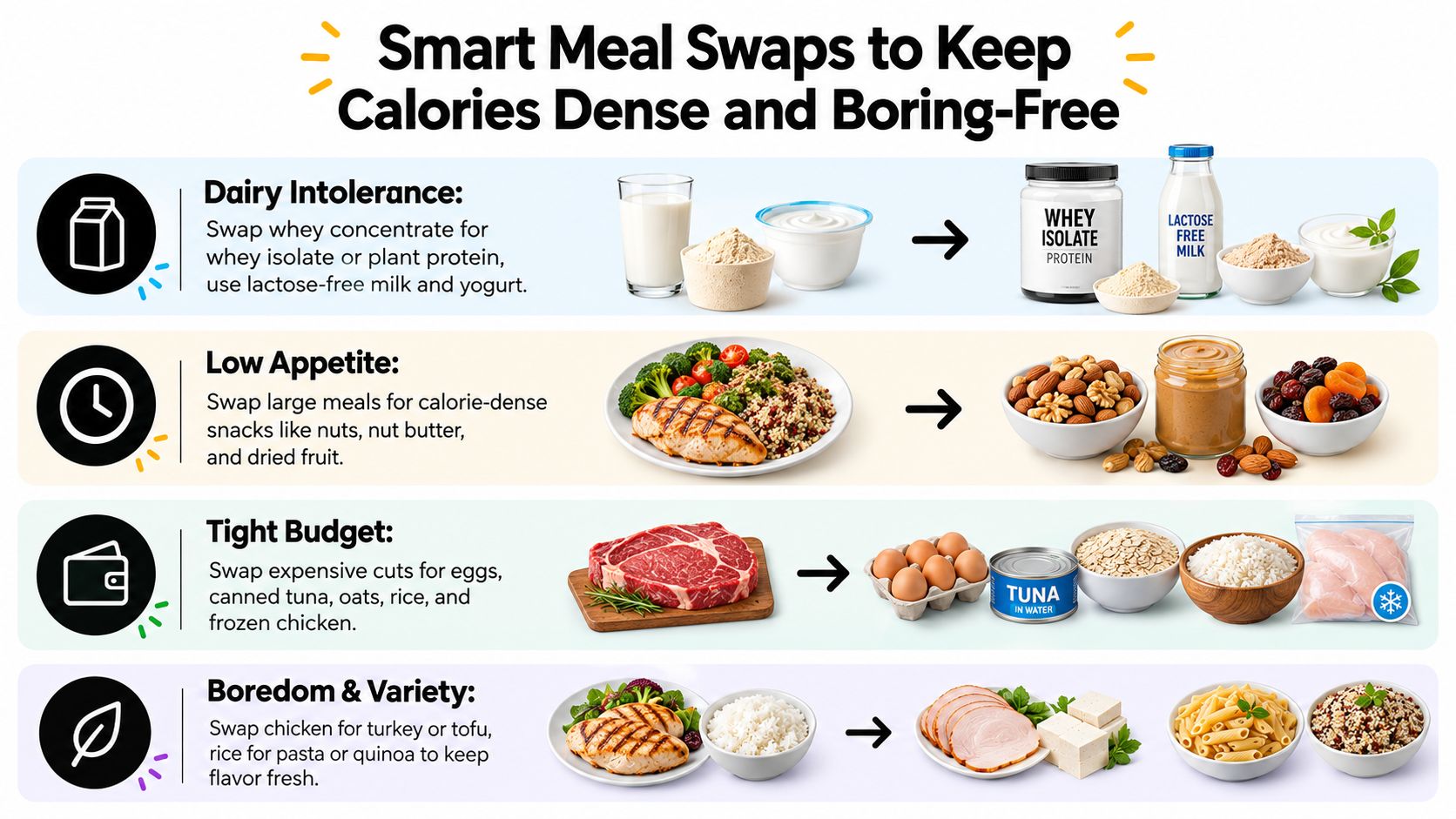
| Obstacle | Original choice | Practical one-for-one swap |
|---|---|---|
| Dairy intolerance | Greek yogurt | Whey isolate or plant protein with lactose-free milk and yogurt |
| Low morning appetite | Oats, milk, banana, and peanut butter as a bowl | Blend the same ingredients into a drinkable meal |
| Gluten sensitivity | Wheat pasta or wraps | Rice-based or oat-based wraps, or rice in place of pasta |
| Missing ingredients | Chicken | Canned tuna, eggs, tofu, or another protein already available |
| Missing produce | Fresh berries or fruit | Frozen berries or another convenient fruit |
| Limited cooking time | Batch-cooked rice | Instant rice with the same protein and sauce |
Keep the replacement reasonably close to the original meal's calories and macros. A dairy-free smoothie retains the breakfast structure, while instant rice keeps lunch practical. The format changes, but the planned intake remains measurable.
For extra calories without much added volume, mix olive oil into rice or pasta, blend cottage cheese into a smoothie, or choose whole milk instead of skim. Record the added portion in your food log. That small step prevents a calorie-dense swap from becoming untracked overeating, and it keeps adjustments tied to your calculated target and weekly weight trend.
Tracking Progress and Letting an AI Planner Do the Math

A meal plan earns its place at the breakfast table when it responds to evidence. Weigh yourself each morning after using the bathroom, record every reading, and calculate a seven-day average. Compare that average with your planned weekly gain. If the trend consistently falls outside 0.25–0.5 kg, adjust intake by 200 kcal. Hold the new target long enough to judge the trend, rather than reacting to one unusual weigh-in.
Log meals in an app for the first 14 days. This audit shows whether portions match the plan, including oils, milk, spreads, sauces, and snacks that are easy to miss. You do not need to weigh every ingredient forever. You do need an honest baseline before blaming a fast metabolism for stalled progress.
AI Meal Planner lets you enter your goal, calorie target, dietary preferences, and allergies, then generate meals with recipes, macros, and a grocery list. It handles repetitive portion calculations and suggests substitutions when appetite, schedule, or available ingredients change.
Use the process consistently:
- Measure: Record bodyweight and food intake.
- Compare: Check the weekly average against the planned gain.
- Adjust: Change calories by 200 kcal when the trend requires it.
- Automate: Generate the next menu with updated portions and preferences.
A planner does not replace judgment. It removes repetitive math, making consistent eating easier when work, training, and limited appetite compete for attention.
Putting the Plan Into Practice This Week
Weight gain is usually an execution problem, not a knowledge problem. Eat on a schedule every 3–4 hours, include enough protein to reach your daily floor, and record your weight on three mornings each week before changing calories by 200. This personalized nutrition plan guide offers useful context for adapting food choices around individual needs.
Before tomorrow's breakfast, weigh yourself, photograph your usual first meal, and pre-log it in a meal planner. That one action sets the calorie target early, exposes missing portions, and removes the first point of friction before the day begins.
AI Meal Planner can turn your target, preferences, allergies, and available foods into a weekly menu with recipes, calculated macros, and an organized grocery list. Visit AI Meal Planner and build your first measurable ectomorph diet plan before your next shopping trip.
AI-powered nutrition
Get Your Personalized Meal Plan
AI creates the perfect meals for your goals, lifestyle, and taste.
Start Your Journej