How do I start healthy meal planning for beginners?
To start healthy meal planning, first pick one clear health goal, such as weight loss or muscle gain. Second, calculate your daily calorie target using an online TDEE calculator. Finally, build your meals using the Plate Method: fill 50% of your plate with vegetables, 25% with lean protein, and 25% with complex carbs.
Jumping into healthy eating can feel like trying to drink from a firehose. There's so much noise out there—endless diet fads, complex recipes, and conflicting advice. It’s easy to get overwhelmed before you even chop a single vegetable.
The secret? Tune out the noise. Focus on a few foundational steps that you can actually repeat day after day. This isn’t about perfection right out of the gate; it's about building a system that works for you.
Think of it as structure, not restriction. A solid plan turns the vague idea of "eating better" into a concrete set of actions. And the best part is you don't need a nutrition degree or professional chef skills to make it happen.
How can I set up my first meal plan?
Jumping into healthy eating can feel overwhelming with endless diet fads and conflicting advice. The key is to ignore the noise and focus on a few repeatable steps. A good plan provides structure, turning the vague idea of "eating better" into concrete actions without needing a nutrition degree.
Why do I need to define my goals first?
Before you can map out your meals, you need to know where you're going. What’s the number one thing you want to achieve? Are you looking to lose a bit of weight, build muscle, or just maintain where you are with better food choices?
Nailing down a specific goal makes everything else fall into place. For example, if your goal is sustainable weight loss, you’ll want to aim for a moderate calorie deficit. To get a personalized starting point, you can use a straightforward tool like our BMI calculator.
This whole initial process really boils down to the simple three-step flow you see below.
As the graphic shows, a clear goal helps you define your calorie needs, which in turn tells you exactly how to build your plate. It's a simple, logical path from A to B.
How does this affect people globally?
If you find it tough to eat well, you're definitely not alone. It's a massive challenge for people everywhere.
A 2023 Gallup poll revealed that only 75% of people across the globe felt their diet was "mostly healthy," which is a pretty big drop from 82% just the year before. The trend was even worse in the U.S., where that number sank from 83% all the way down to 71%.
Clearly, people are finding it harder than ever to stick with healthy habits. This is exactly why a simple, straightforward meal plan isn’t just a nice idea—it’s a game-changer.
How do I figure out my personal dietary needs?
Before you think about a single recipe, you need a clear sense of direction. A meal plan that actually works isn't just a random collection of healthy dishes; it's a strategy built on specific, personal goals that give every meal a purpose. This is your "why."
Vague goals like "I want to eat healthier" are impossible to measure and almost always lead to giving up. We need to get specific. Maybe your goal is financial, like slashing your weekly grocery bill by 15%. Or perhaps it's about building a consistent habit, like cooking dinner at home four nights a week.
This first step is the foundation for everything that follows. It ensures the plan you build is for your life, not some generic template that’s doomed to fail.
What’s your primary health goal?
First things first, what are you actually trying to achieve? Are you looking to lose weight, build muscle, or just maintain your current health with better, more consistent nutrition? Each of these paths requires a different approach to your daily calories.
Someone aiming to build muscle, for instance, is going to need a lot more protein and calories than someone focused on weight management. Getting this right from the start is what separates a frustrating experience from one that gets you real results.
Being honest with yourself about your main objective is crucial. It will guide every decision you make about your calories and macronutrients, turning meal planning from a chore into a focused, effective strategy.
How do I calculate my daily calorie needs?
Once you know your goal, it's time to understand how much fuel your body actually needs. This is where your Total Daily Energy Expenditure (TDEE) comes in. It's the total number of calories your body burns in a 24-hour period, factoring in everything from breathing to your workouts. This number is your baseline.
You don't need a degree in nutrition to figure this out. Great online tools can do all the heavy lifting for you. A simple TDEE calculator uses your age, weight, height, gender, and activity level to give you a solid estimate without any guesswork.
Knowing your TDEE allows you to translate your goal into a concrete daily number.
How do I translate goals into daily calorie targets?
| Primary Goal | Recommended Calorie Adjustment | Example Daily Target (for a 2000 TDEE) |
|---|---|---|
| Weight Loss | Create a 250-500 calorie deficit per day | 1500-1750 calories |
| Muscle Gain | Create a 250-500 calorie surplus per day | 2250-2500 calories |
| Maintenance | Eat at or very close to your TDEE | 2000 calories |
This table provides a starting point. Your individual needs may vary, but these ranges are a reliable place to begin your meal planning journey.
Key Insight: Your TDEE isn't set in stone. It will change as your weight, muscle mass, or activity level changes. It’s a good habit to recalculate it every couple of months or after a major lifestyle shift to keep your plan on track.
How can I make a plan that fits my life?
Here's where so many people go wrong. They find a "perfect" meal plan online that looks great on paper but is completely unrealistic for their actual life. It might call for an hour of cooking on a night when you barely have 30 minutes to spare.
A plan that doesn’t fit your lifestyle is useless. Be brutally honest about your real-world constraints from the very beginning.
- How much time do you have? Seriously, how much time can you realistically dedicate to cooking each day? If weeknights are a chaotic scramble, your plan needs to lean on quick 20-minute meals or food you prepped over the weekend.
- What do you actually like to eat? Do you follow a specific diet like vegan, pescetarian, or keto? Your meal plan has to reflect that, otherwise you'll dread every meal. Don't force yourself to eat bland chicken and broccoli if you hate it.
- Any allergies or intolerances? This one is non-negotiable. Make a clear list of any foods you must avoid, whether it's gluten, dairy, nuts, or shellfish. A meal plan should make you feel better, not worse.
- What's your budget? How much can you comfortably spend on food each week? You can build an incredible meal plan around budget-friendly staples like beans, lentils, eggs, and seasonal produce.
Thinking about these factors upfront is the secret to creating a plan you can actually stick with. The goal is to design a system that makes healthy eating feel easy and natural, not like a constant battle. This is also where an AI meal planner shines, as it can automatically build a plan that fits every single one of these personal criteria right from the start.
How can I build a weekly meal plan?
Right, you've set your goals and figured out your numbers. Now for the fun part: turning all that theory into actual, delicious meals you'll want to eat.
Building a weekly plan that works isn't about finding complicated, gourmet recipes. It's about creating a simple, repeatable framework that fits your real life. The goal is to get a tangible plan on paper (or on your phone) that you can execute even on the busiest of weeknights.
The good news? You don't have to reinvent the wheel every single week. By leaning on a few core principles, like the Plate Method and smart ingredient reuse, you can build a sustainable routine that makes healthy eating feel almost effortless.
How do I apply the Plate Method to every meal?
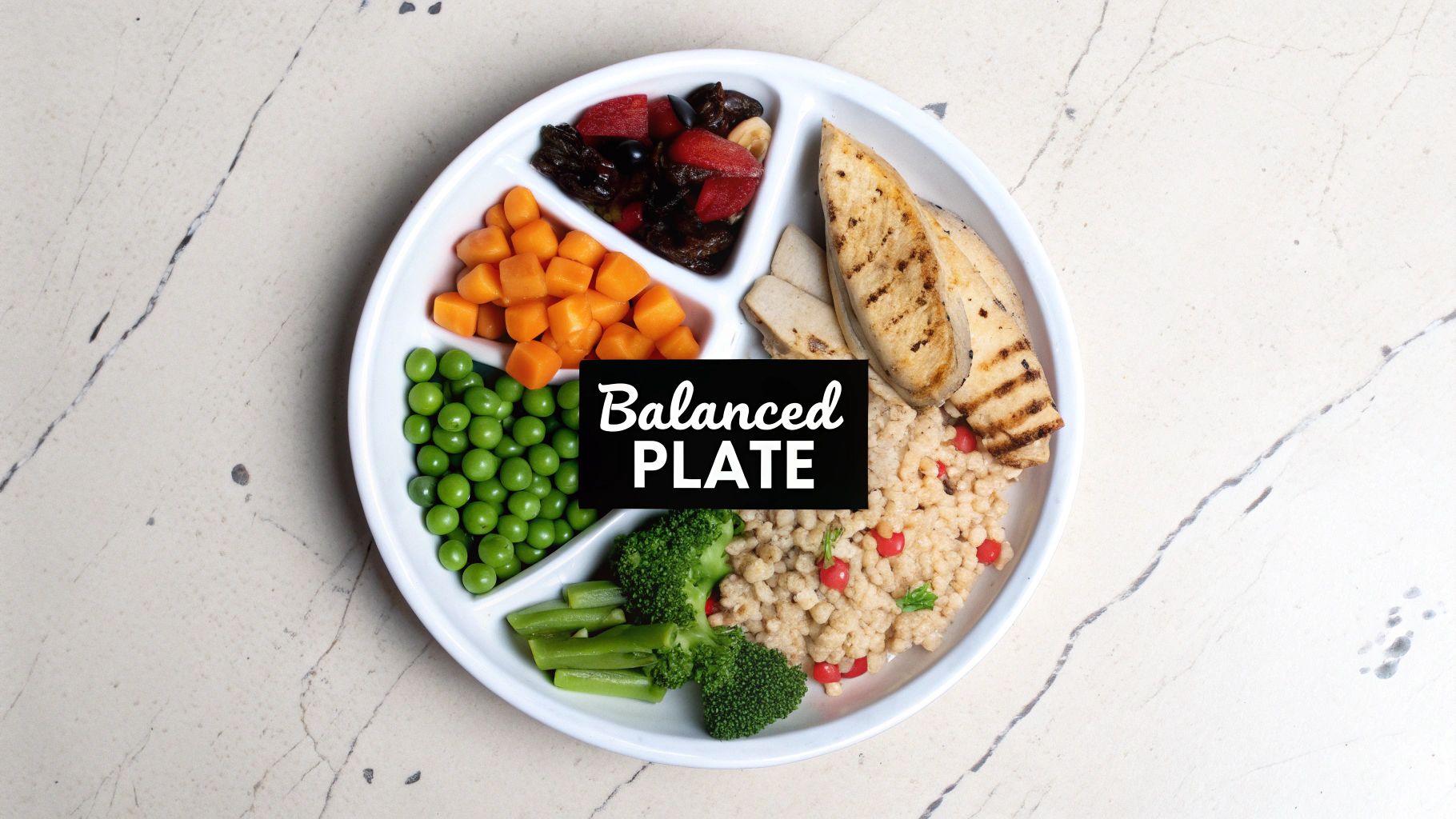
Think of the Plate Method as the visual anchor for your entire plan. It’s a beautifully simple rule: fill 50% of your plate with non-starchy vegetables, 25% with lean protein, and 25% with complex carbohydrates. This simple ratio naturally guides you toward balanced, nutrient-dense meals without needing to weigh and measure every single ingredient.
Here’s how this powerful idea translates to your daily meals:
- Breakfast: Ditch the sugary cereals. A perfect example is overnight oats. The oats are your complex carb, you can mix in protein powder or Greek yogurt for your protein, and top it with berries and even some blended-in spinach to get a head start on your daily vegetable count.
- Lunch: A big salad is a no-brainer here. The mixed greens and chopped veggies easily fill half the bowl. Toss in a serving of grilled chicken or chickpeas for protein, and add a scoop of quinoa or a side of whole-wheat crackers for your carbs. Done.
- Dinner: This is where the method really shines. A simple chicken and veggie stir-fry served with brown rice fits the model perfectly. The broccoli, bell peppers, and snap peas cover the veggie portion, the chicken is your protein, and the brown rice is your carb.
This method strips away the complexity. Instead of getting lost tracking dozens of nutrients, you just focus on getting the proportions right on your plate.
How can ingredient stacking save me time?
One of the biggest hurdles for beginners is feeling like you have to cook a brand-new, complex meal from scratch every single night. That's a fast track to burnout. This is where ingredient stacking comes in—a technique that will absolutely revolutionize your meal prep and slash your cooking time and food waste.
The concept is simple: cook a big batch of a versatile core ingredient at the start of the week, then use it in different ways across multiple meals. For instance, you could roast a whole chicken on Sunday.
Here’s how that one cooking session fuels your week:
- Sunday Dinner: Sliced roasted chicken with a side of roasted sweet potatoes and steamed green beans.
- Monday Lunch: Shredded chicken tossed into a large salad with your favorite vinaigrette.
- Tuesday Dinner: That same shredded chicken becomes the star of quick chicken tacos with black beans and salsa.
You cooked the chicken once but created the foundation for three completely different meals. This saves you so much time and mental energy during the week. This strategy works beautifully with other staples like quinoa, roasted vegetables, and lentils, too.
What does a sample 7-day meal plan look like?
To show you how this all comes together, here’s a simple, flexible one-week plan. Remember, this is a template, not a strict rulebook. Feel free to swap proteins (like chicken for tofu) or carbs (like quinoa for brown rice) based on what you like and what you have on hand. For more precise guidance, you can always run your swaps through a detailed calorie and macro calculator to make sure they still line up with your goals.
| Day | Breakfast | Lunch | Dinner |
|---|---|---|---|
| Monday | Greek yogurt with berries & nuts | Leftover Chicken & Veggie Stir-fry | Hearty Lentil Soup with whole-wheat bread |
| Tuesday | Scrambled eggs with spinach & toast | Quinoa salad with chickpeas & veggies | Salmon with roasted asparagus & quinoa |
| Wednesday | Overnight oats with chia seeds | Leftover Lentil Soup | Turkey meatballs with zucchini noodles |
| Thursday | Smoothie with protein powder & fruit | Leftover Salmon salad on greens | Black bean burgers on whole-wheat buns |
| Friday | Whole-wheat toast with avocado | Leftover turkey meatballs | DIY Pizza on whole-wheat pita with veggies |
| Saturday | Oatmeal with sliced banana | Large mixed green salad with tuna | Flexible meal / Eat out |
| Sunday | Veggie omelet | Leftovers from the week | Roasted chicken with mixed vegetables |
Key Takeaway: The best meal plan is a flexible one. Life happens. Having a plan gives you structure, but giving yourself the grace to swap a meal or eat out prevents you from feeling defeated and giving up entirely.
The demand for convenient nutrition is undeniable. The global healthy meal delivery service market jumped from $3,560.53 million in 2021 and is on track to hit $6,081.4 million by 2025. This just shows how much people want easier ways to eat well. By planning ahead, you can create your own version of this convenience right at home.
How can I create a grocery list that saves time and money?
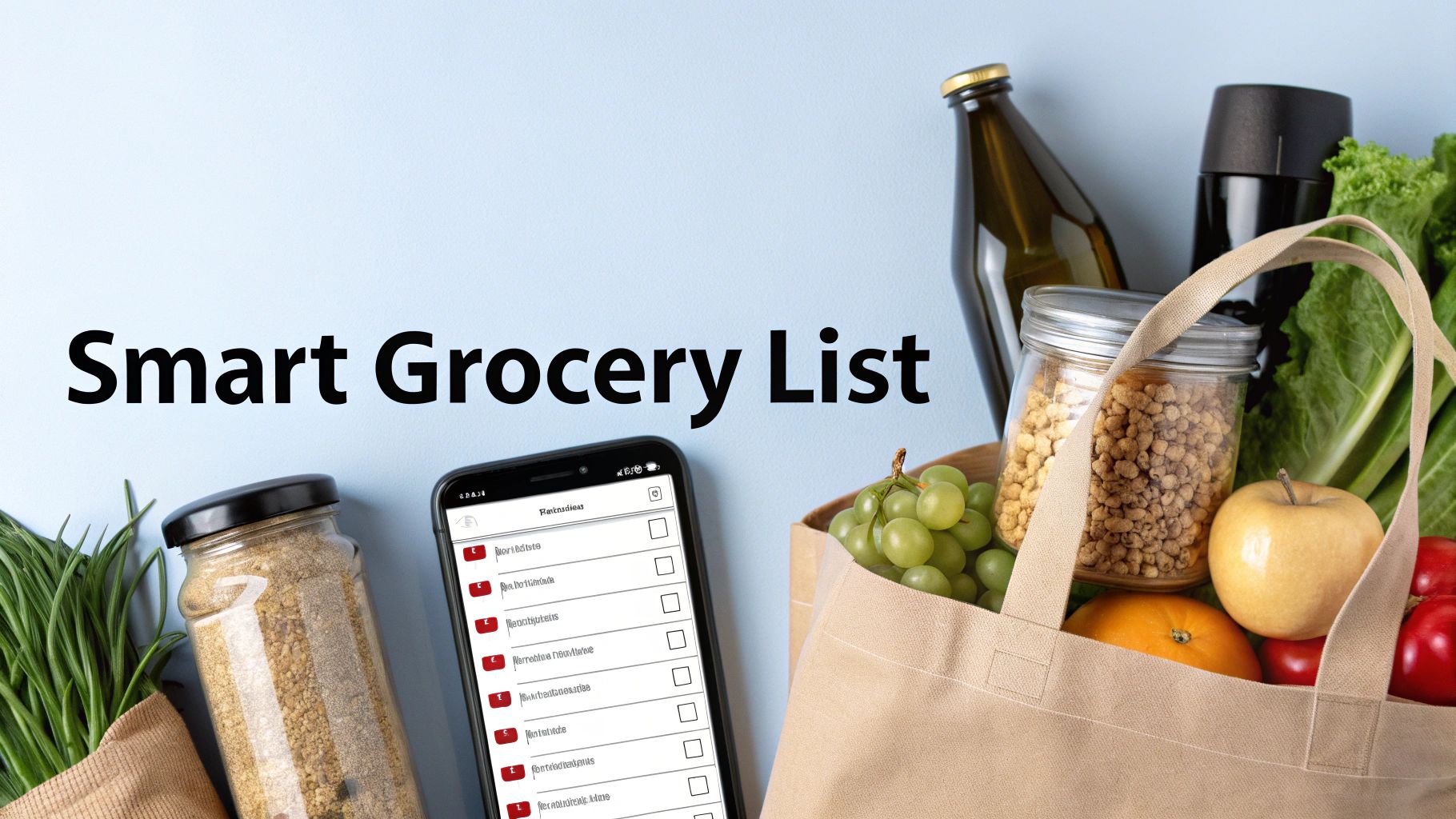
A perfectly crafted meal plan is only half the battle. The real test begins at the grocery store, where good intentions can easily get derailed by impulse buys, confusing layouts, and sheer decision fatigue.
This is why turning your meal plan into a strategic, aisle-optimized shopping list is non-negotiable. It's a simple shift that does more than just save you from aimlessly wandering the aisles. It puts you in control of your budget, minimizes food waste, and stocks your kitchen with exactly what you need to succeed.
Why should I organize my list by supermarket section?
The classic beginner mistake is scribbling down items as they pop into your head. This random list inevitably leads to backtracking across the store for a forgotten ingredient—a frustrating experience that opens the door to grabbing unhealthy snacks out of sheer exhaustion.
The fix is surprisingly simple: organize your list by the store's layout.
Group your items into the main supermarket categories before you even leave the house. This tactical approach keeps you focused and moving efficiently from one section to the next without getting sidetracked by those tempting end-cap displays.
- Produce: All your fresh fruits and vegetables.
- Proteins: Meat, poultry, fish, eggs, and plant-based options like tofu.
- Pantry: Grains, canned goods, spices, oils, and other shelf-stable items.
- Dairy & Alternatives: Milk, yogurt, cheese, and their non-dairy counterparts.
- Frozen: Frozen fruits, vegetables, and extra proteins.
This structure streamlines your trip, drastically cutting down your time in the store.
What does a good starter grocery list include?
| Produce | Protein (Meat/Plant-Based) | Pantry & Grains | Dairy & Alternatives |
|---|---|---|---|
| Spinach or Kale | Chicken Breast or Thighs | Brown Rice or Quinoa | Greek Yogurt (Plain) |
| Broccoli or Cauliflower | Ground Turkey or Lean Beef | Rolled Oats | Milk or Almond Milk |
| Onions & Garlic | Eggs | Canned Black Beans | Cottage Cheese |
| Sweet Potatoes | Canned Tuna or Salmon | Whole Wheat Pasta or Lentils | Cheese (Cheddar/Feta) |
| Bell Peppers (Mixed) | Tofu or Chickpeas | Olive Oil & Vinegar | |
| Avocados | Nuts & Seeds (Almonds/Chia) | ||
| Apples & Bananas | Spices (Cumin, Paprika) |
This list provides a solid foundation of versatile ingredients that can be mixed and matched for a wide variety of healthy meals.
How can I make my groceries go further?
Smart shopping isn’t just about what you buy; it’s about how you buy it. Focusing on versatility and longevity ensures you get the most value out of every item in your cart.
Start by identifying pantry staples you can buy in larger quantities to save money over time. Things like oats, brown rice, quinoa, and dried beans have a long shelf life and form the backbone of countless healthy meals. For produce, prioritize items that last longer, such as apples, onions, carrots, and sweet potatoes, to minimize spoilage.
When you have a well-stocked pantry and fridge, you're always prepared for a busy night. You can easily throw together a quick meal from what you have on hand. For inspiration, check out our guide on how to make a meal from what’s in your fridge.
A healthy diet costs $4.46 per person per day globally, which is unaffordable for 2.6 billion people. This affordability challenge highlights the critical need for budget-friendly strategies. Smart meal planning directly tackles this by reducing food waste and optimizing grocery spending, making healthy eating more accessible for everyone. Discover more insights about these global food affordability findings on worldbank.org.
How do I read nutrition labels for hidden pitfalls?
Nutrition labels can feel like a foreign language, but you only need to focus on a few key areas to make smarter choices. One of the biggest culprits to watch for is added sugars, which often hide in seemingly "healthy" products like yogurt, granola bars, and pasta sauces.
To spot them, look for the "Includes Added Sugars" line under the "Total Sugars" section on the nutrition facts panel.
You should also scan the ingredients list for words ending in "-ose" (like fructose or sucrose), as well as honey, maple syrup, and corn syrup. Keeping your added sugar intake low is a huge step toward a healthier diet.
What common meal planning mistakes should I avoid?
Embarking on a healthy meal planning journey is a huge step, but even the best intentions can get derailed by a few common slip-ups. Knowing what these pitfalls are ahead of time is your best defense against them.
Think of this as your troubleshooting guide. It’s not about perfection from day one; it's about building a resilient system that can handle a little real-world chaos without falling apart. Let's look at the most frequent stumbles beginners make and, more importantly, how to sidestep them.
Trying to be a gourmet chef overnight
One of the quickest ways to burn out is by getting way too ambitious, way too fast. It’s exciting to browse beautiful food blogs and Pinterest boards, but filling your very first week with complex, multi-step recipes is a recipe for disaster.
When you're just starting, your goal is consistency, not complexity. Juggling new ingredients and unfamiliar cooking techniques on a busy Tuesday night is just plain stressful. Instead, build your foundation on simplicity.
Start with a small, curated list of three or four "go-to" recipes you already know you can make quickly and actually enjoy. These are your anchors for the week. Once you feel confident, try introducing just one new recipe a week. You'll gradually expand your skills without overwhelming yourself.
Forgetting to plan for snacks
Focusing only on breakfast, lunch, and dinner leaves a massive hole in your plan: the 3 PM slump. When hunger strikes between meals and you have no healthy options ready, it's incredibly easy to reach for chips, cookies, or whatever the office vending machine is offering.
Ignoring snacks is essentially planning to fail. The right snacks are crucial for keeping your energy levels stable and preventing you from getting ravenous and overeating at your main meals.
Treat your snacks with the same importance as your big three meals. When you create your weekly plan, schedule one or two healthy snacks per day and get them on that grocery list. Simple options like Greek yogurt, a piece of fruit with a handful of almonds, or pre-chopped veggie sticks with hummus are perfect.
Pro Tip: Spend 20 minutes on Sunday batch-prepping your snacks for the week. Portion out nuts into small bags or wash and chop carrots and celery. This tiny time investment removes all the bad decision-making when you're hungry and tired.
Failing to schedule prep time
This is a classic rookie mistake: creating a beautiful, color-coded meal plan without actually blocking out the time needed to pull it off. A plan on paper is useless if you don't have the time to do the shopping and prepping.
Your meal plan isn't just a list of foods; it’s a commitment of your time. You have to treat your prep session like any other important appointment on your calendar.
Look at your week and schedule a specific 1-2 hour block for meal prep. For most people, Sunday afternoon is the sweet spot. This is your dedicated time to wash and chop vegetables, cook grains like quinoa or rice, and portion out proteins. This upfront work makes weeknight cooking incredibly fast and almost effortless.
Not planning for real life
A rigid meal plan is a fragile one. Life is unpredictable. You might have to work late, a friend might invite you out for a last-minute dinner, or you might simply not be in the mood for the chicken and broccoli you planned.
If your plan has zero flexibility, a single disruption can make you feel like you've failed, which often leads to abandoning the whole thing.
The solution is to build wiggle room directly into your plan. Designate one or two nights a week as "flexible" or "leftover nights." Also, always have a couple of five-minute "emergency meals" on hand—think scrambled eggs on whole-wheat toast or a can of lentil soup. This way, an unexpected change of plans doesn't derail your entire week. For a system that adapts on the fly, you can explore how an AI meal planner can automatically adjust your week for you.
Frequently Asked Questions
How much time should I spend on meal prep as a beginner? Aim for 1-2 hours on a single day, like Sunday. Focus on "component prepping"—cooking grains, roasting vegetables, and grilling proteins—to make weeknight meals fast and easy to assemble.
What if I don't want to eat what I planned? Build flexibility into your plan by having 2-3 simple "emergency meals" on hand. A good plan is a roadmap, not a prison, so it's okay to swap meals when you're not in the mood.
Is it really cheaper to eat healthy with a meal plan? Yes, a meal plan saves money by eliminating impulse buys, reducing food waste, and cutting down on expensive takeout orders. Sticking to a grocery list is your best tool for budget control.
How do I stick to my plan when I eat out? Look up the restaurant menu online beforehand to make a healthy choice without pressure. Ask for sauces on the side and choose grilled or steamed options over fried ones.
Can I still eat snacks when meal planning? Yes, you should plan for 1-2 healthy snacks per day. Smart snacking with options like fruit, nuts, or yogurt helps manage hunger and keeps your energy levels stable.
How do I plan meals for a family with picky eaters? Use a "build-your-own" meal approach for nights like tacos or pizzas. Set out individual healthy components so everyone can assemble a plate they enjoy, which reduces mealtime stress.
My schedule is unpredictable. How can I still plan? Instead of assigning specific meals to days, use flexible "theme nights" like Meatless Monday or Stir-fry Tuesday. This gives your week structure while allowing you to choose the exact recipe on the day.
Ready to stop guessing and start planning? The AI Meal Planner creates personalized meal plans and smart grocery lists that fit your goals, tastes, and busy schedule automatically. Get started today and discover how easy healthy eating can be. Visit us at https://ai-mealplan.com/onboarding.
AI-powered nutrition
Get Your Personalized Meal Plan
AI creates the perfect meals for your goals, lifestyle, and taste.
Start Your Journej