How do I create an easy meal plan for weight loss that actually works?
An effective and easy meal plan for weight loss creates a daily calorie deficit of 500-750 calories. This leads to a safe and sustainable weight loss of about 1-2 pounds per week. The plan should be simple, focus on whole foods, and require minimal prep time to ensure you can stick with it consistently.
Creating a meal plan does more than just tell you what to eat. It takes the guesswork out of portion control, ensures you're getting the right nutrients, and eliminates the daily decision fatigue that so often ends with a call for takeout. With a clear plan, you turn the vague goal of "eating better" into a set of simple, actionable steps.
What makes a meal plan actually work for weight loss?
At its core, any effective weight loss plan is about maintaining a consistent calorie deficit, but a good plan reshapes your habits for long-term success. When you already know what’s for breakfast, lunch, and dinner, you sidestep the mental battle that happens at the end of a long day. That moment of exhaustion is exactly when willpower fails and convenience wins; planning ahead is your best defense.
Why is consistency more important than perfection?
The magic isn't in a specific food, but in the consistency that a plan creates. When healthy eating becomes part of your routine, it stops feeling like a chore. Studies show that people following a structured plan are up to 50% more likely to stick with their diet, leading to a 5-10% drop in body weight within six months. This progress can slash the risk of developing diabetes by a staggering 58%, a trend highlighted in the World Obesity Federation's findings.
A good meal plan isn't about restriction; it's about empowerment. It gives you the structure to make consistently good choices, turning your long-term goals into a series of achievable daily actions.
How does a plan help me move from guesswork to progress?
Without a plan, you're just guessing. You might start the day with a healthy breakfast, but a high-calorie lunch you didn't account for can wipe out all your morning progress. A structured plan brings clarity and control.
Here’s what a structured plan provides:
- No More Decision Fatigue: It frees up your mental energy by getting rid of the constant "what should I eat?" dilemma.
- Built-in Portion Control: Pre-planned meals make it easy to manage portion sizes, which is fundamental to controlling your calorie intake. You can calculate your ideal calorie deficit for precise numbers.
- Less Food Waste: Shopping with a specific list means you buy only what you need, saving money and reducing waste.
- Nutritional Balance is Baked In: A well-crafted plan ensures you’re getting the right mix of protein, carbs, and healthy fats to keep you feeling energized and full.
To give you a concrete starting point, here’s a simple template for a 1500-calorie day.
Sample 1500 Calorie Daily Meal Structure
| Meal | Example Food Components | Approximate Calorie Target |
|---|---|---|
| Breakfast | Lean Protein (Eggs, Greek Yogurt) + Complex Carb (Oats, Whole-Grain Toast) | ~350 calories |
| Lunch | Lean Protein (Chicken, Tuna) + Vegetables (Large Salad) + Healthy Fat (Avocado) | ~450 calories |
| Dinner | Lean Protein (Fish, Lean Beef) + Complex Carb (Quinoa, Sweet Potato) + Veggies | ~500 calories |
| Snack(s) | Fruit, Nuts, or a Protein Shake | ~200 calories |
This structure ensures you're spreading your calories and nutrients throughout the day, which helps keep energy levels stable and hunger at bay.
How do you build a plan that actually fits your life?
A meal plan that ignores your personal reality is doomed from the start. Real, lasting success comes from a strategy built for your body, your schedule, and the foods you genuinely enjoy. Generic plans fall apart because they aren't designed for your life, which is why making it personal is the key.
The first move is to figure out your unique energy needs. Every person has a different daily calorie target for weight loss, based on age, weight, height, and activity level.
How do I calculate my personal calorie and macro targets?
To lose weight, you must burn more calories than you eat. A safe and effective goal is a deficit of about 500 calories per day, which usually leads to losing about one pound a week. While you can find general estimates, using a tool that calculates your Total Daily Energy Expenditure (TDEE) is more accurate. You can nail down your specific numbers with a precise TDEE calculator to get a reliable starting point.
But calories are only half the story. Macronutrients—protein, carbs, and fats—are what keep you feeling full, energized, and help you hold onto muscle while you lose fat.
A great starting point for most people is a balanced split like this:
- 40% Carbohydrates: Stick to whole-food sources like vegetables, fruits, and whole grains.
- 30% Protein: Critical for feeling satisfied and maintaining muscle. Think lean meats, fish, beans, or tofu.
- 30% Fat: Healthy fats from avocado, nuts, and olive oil are essential for hormone function.
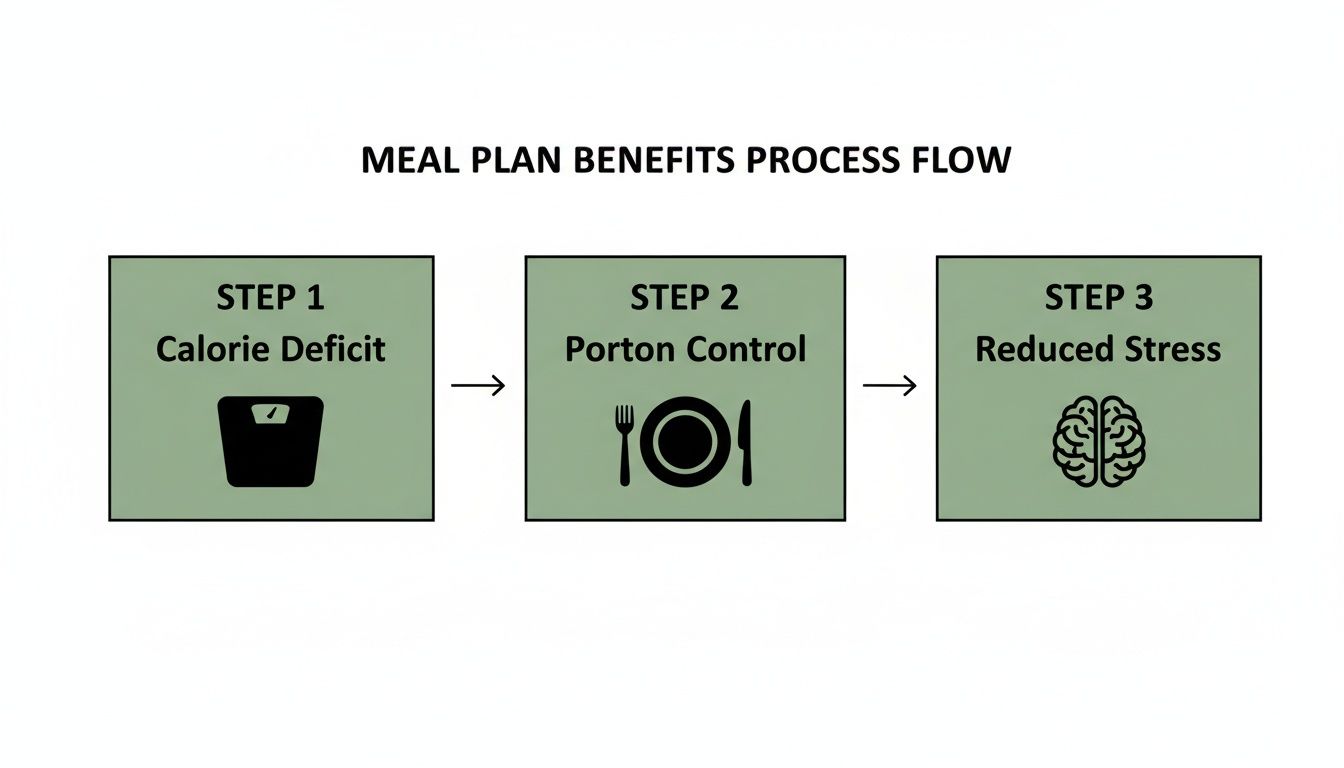
This visual breaks down how a good meal plan works. It’s all about creating that calorie deficit and controlling your portions, which in turn leads to less stress and easier decision-making.
How do I design a meal structure that works for me?
Forget rigid rules about when to eat. The best meal schedule is the one you can actually follow and that keeps you from getting ravenously hungry. Whether that means three larger meals or five smaller ones, consistency is what matters. The goal is to spread out your calories and macros in a way that prevents you from getting so hungry you end up overeating.
The most effective meal plan isn't the most restrictive one—it's the one you can stick to without feeling deprived. Flexibility is the key to long-term adherence and success.
How can I create a master food list?
One of the best tricks to avoid planning burnout is to create a "master list" of your favorite healthy foods. This becomes your personal, pre-approved inventory for building meals.
Break your list down by food group:
- Lean Proteins: Chicken breast, ground turkey, salmon, eggs, Greek yogurt, lentils, tofu.
- Healthy Carbs: Quinoa, brown rice, sweet potatoes, oats, whole-wheat bread, apples, berries.
- Healthy Fats: Avocado, almonds, walnuts, olive oil, chia seeds.
- Vegetables: Spinach, broccoli, bell peppers, zucchini, carrots (and any others you actually like!).
Having this list handy makes grocery shopping a breeze and meal creation almost automatic.
How do I use meal templates for flexibility?
Instead of locking yourself into specific recipes, think in templates. A meal template is a simple formula that gives you structure while allowing for endless variety. It's the secret sauce for creating easy meal plans for weight loss without feeling trapped.
For example, a dinner template could be as simple as: Protein + Healthy Carb + 2 Veggies.
- Monday: Grilled Salmon (Protein) + Quinoa (Healthy Carb) + Roasted Broccoli & Bell Peppers (Veggies).
- Tuesday: Baked Chicken (Protein) + Sweet Potato (Healthy Carb) + Steamed Green Beans & Carrots (Veggies).
This approach lets you use what you have, take advantage of grocery sales, and satisfy cravings without throwing your progress off track.
What does a simple 7-day meal plan look like?
An easy meal plan for weight loss isn’t about hunting down exotic ingredients or slaving over complex recipes. It's about simplicity, balance, and using foods you can grab from any grocery store.
This sample plan is built around a target of roughly 1,500-1,600 calories per day. It’s packed with whole foods, balances your macros, and features meals you can get on the table in under 30 minutes.
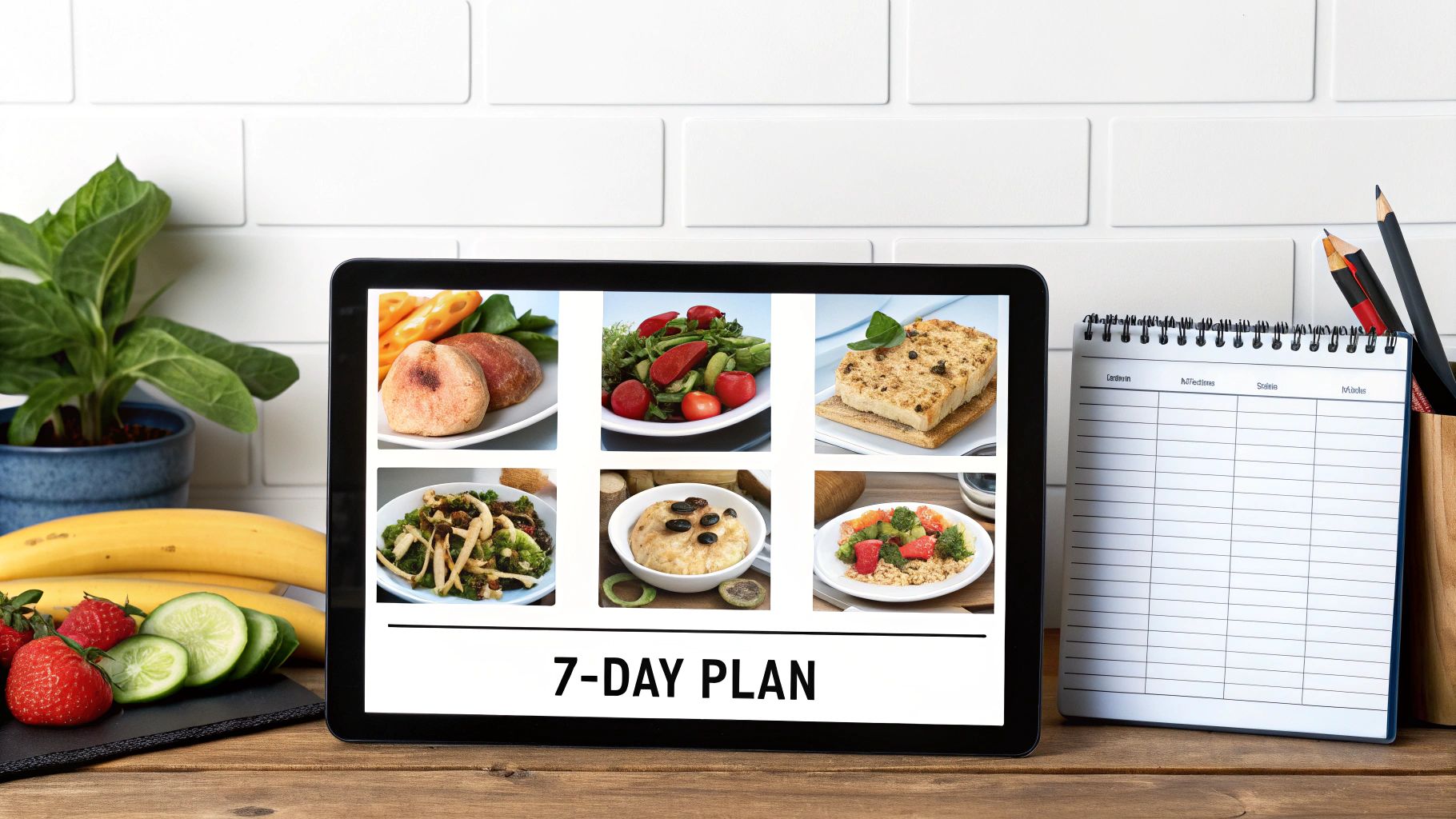
Example 7-Day Balanced Meal Plan Snapshot
Think of this as your starting blueprint. The recipes are straightforward, the ingredients are affordable, and the structure is designed to keep you feeling full and energized.
Here’s a look at the first three days:
| Day | Breakfast | Lunch | Dinner | Snack |
|---|---|---|---|---|
| Monday | Greek yogurt with berries & a sprinkle of chia seeds | Large salad with grilled chicken, mixed greens, cucumber, tomatoes, and a light vinaigrette | Baked salmon with roasted sweet potato wedges & steamed green beans | An apple with 1 tbsp peanut butter |
| Tuesday | Oatmeal made with milk, topped with sliced banana & cinnamon | Leftover baked salmon and green beans from Monday's dinner | Ground turkey stir-fry with bell peppers, onions, broccoli & a side of quinoa | Handful of almonds |
| Wednesday | Scrambled eggs with a handful of spinach & a slice of whole-grain toast | Tuna salad (made with Greek yogurt) in a whole-wheat wrap with lettuce | Lentil soup with a side of whole-grain bread | Greek yogurt |
As you can see, this structure ensures you're never starting from scratch and cleverly repurposes leftovers to save you time. Simple plans that use recipes under 30 minutes can create a sustainable 500-calorie daily deficit, typically resulting in losing 1-2 pounds per week. You can find more details about healthy weight recommendations from the World Health Organization. With a little inspiration, you can easily discover a meal from what's in your fridge and cut down on food waste.
How can I easily adapt this plan for myself?
No meal plan should be a rigid set of rules. Flexibility is what makes it stick.
- For a Vegetarian Swap: Replace animal proteins with plant-based alternatives like chickpeas, tofu, or lentils.
- For a Lower-Carb Approach: Replace carb-heavy items with non-starchy vegetables. Use zucchini noodles instead of pasta or serve stir-fry over sautéed cabbage instead of quinoa.
- When You're in a Hurry: Rely on quick-prep options like smoothies, pre-bagged salads, and pre-cooked chicken strips.
The goal of a sample plan is to provide a framework, not a strict script. Use it as inspiration, swap ingredients based on what you enjoy, and don't be afraid to repeat meals you love.
A Complete 7-Day Example
Monday
- Breakfast: 1 cup Greek yogurt with ½ cup mixed berries.
- Lunch: Salad with 4 oz grilled chicken, mixed greens, and light vinaigrette.
- Dinner: 4 oz baked salmon, 1 medium sweet potato (roasted), and 1 cup steamed green beans.
- Snack: 1 medium apple with 1 tbsp peanut butter.
Tuesday
- Breakfast: ½ cup rolled oats (cooked) with 1 sliced banana.
- Lunch: Leftover salmon and green beans from Monday.
- Dinner: 4 oz ground turkey stir-fried with 2 cups mixed veggies (broccoli, peppers) and ½ cup cooked quinoa.
- Snack: ¼ cup almonds.
Wednesday
- Breakfast: 2 scrambled eggs with 1 cup spinach and 1 slice whole-grain toast.
- Lunch: Tuna salad wrap (4 oz tuna with Greek yogurt) with lettuce.
- Dinner: 2 cups of homemade lentil soup.
- Snack: 1 cup Greek yogurt.
Thursday
- Breakfast: Smoothie with 1 scoop protein powder, 1 cup spinach, ½ banana, and 1 cup unsweetened almond milk.
- Lunch: Leftover turkey stir-fry from Tuesday.
- Dinner: Chicken fajitas (4 oz chicken, peppers, onions) in 2 small whole-wheat tortillas.
- Snack: 2 hard-boiled eggs.
Friday
- Breakfast: 1 cup Greek yogurt with ½ cup mixed berries.
- Lunch: Leftover chicken fajita mix over a bed of lettuce.
- Dinner: Baked tilapia (4 oz) with ½ cup cooked brown rice and 1 cup roasted asparagus.
- Snack: Handful of walnuts.
Saturday
- Breakfast: ½ cup rolled oats (cooked) with 1 sliced banana.
- Lunch: Large chickpea salad with cucumber, tomatoes, and a light vinaigrette.
- Dinner: Enjoy a flexible meal out, aiming for grilled protein and vegetables.
- Snack: An orange.
Sunday
- Breakfast: 2 scrambled eggs with 1 cup spinach and 1 slice whole-grain toast.
- Lunch: Leftover tilapia and rice from Friday.
- Dinner: Use this as a "clean out the fridge" night. Make a large omelet or frittata with any leftover veggies and protein.
- Snack: Carrot sticks with ¼ cup hummus.
How can I make meal prep effortless?
The secret to sticking with a meal plan is prepping smarter, not harder. Just an hour or two of focused work can set you up for a week of success, making the healthy choice the easy choice when you're tired and hungry.
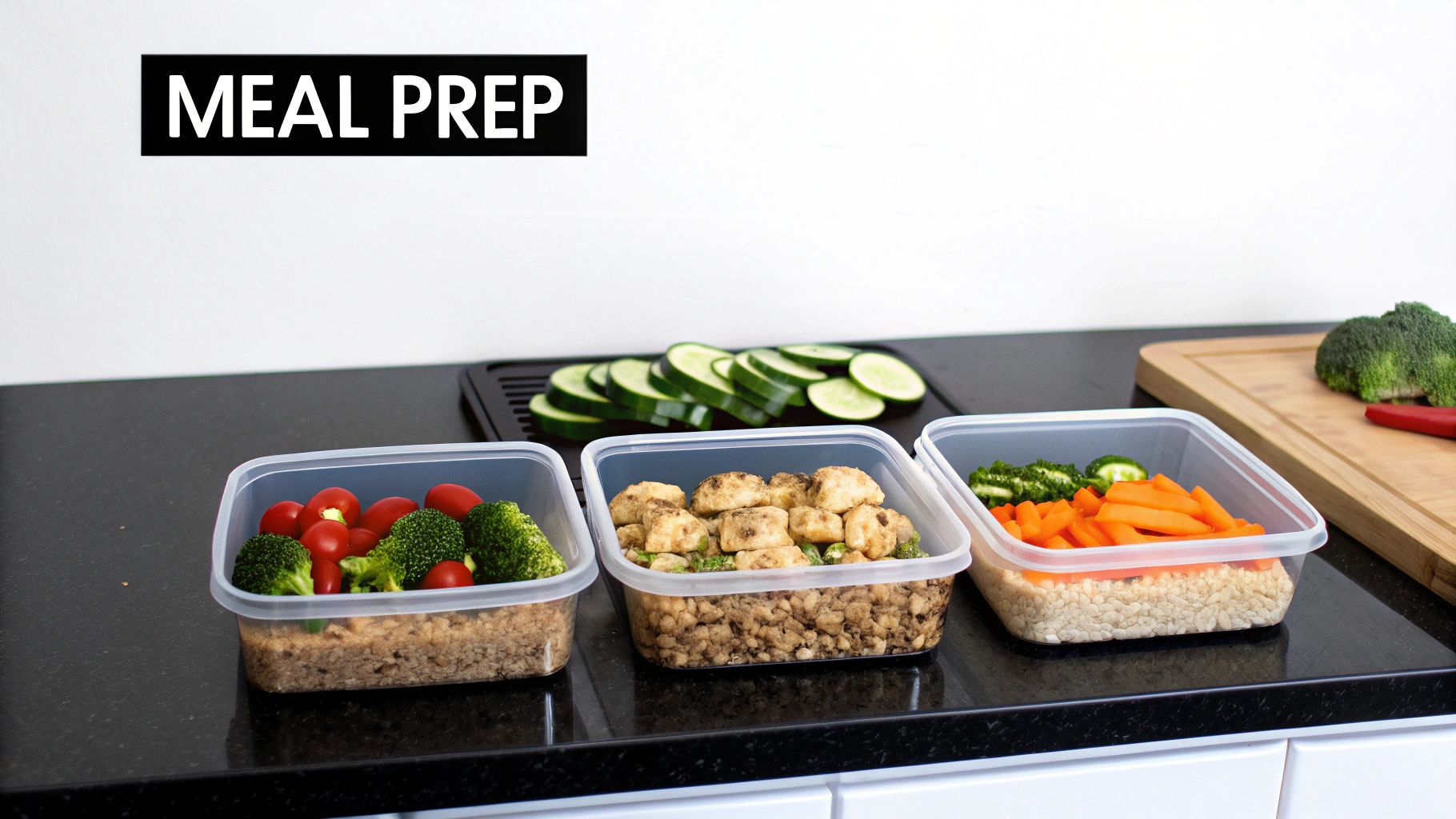
The point is to front-load the work. This simple shift is a game-changer for avoiding the decision fatigue that so often leads to grabbing takeout.
What is the best meal prep style?
The best meal prep strategy is the one that fits your life.
- Full Meal Prep: Cook and portion complete meals into grab-and-go containers. This is perfect if you want zero cooking during the week.
- Batch Cooking: Make a large pot of one or two main dishes, like a big batch of turkey chili or lentil soup, to eat for several meals.
- Component Prepping: This is the most flexible method. Prepare individual ingredients—grill chicken, cook rice, chop veggies—to assemble different meals in minutes.
A hybrid approach often works best. You could batch-cook a soup for lunches and component-prep proteins and veggies for dinners. Experiment to see what removes the most friction from your routine.
How can I streamline grocery shopping?
An easy prep session starts with a smart grocery trip. Organize your list based on the store's layout to move through efficiently.
Group your items into categories:
- Produce (Fruits & Veggies)
- Proteins (Meat, Fish, Tofu, etc.)
- Dairy & Eggs
- Pantry Staples (Grains, Canned Goods, Spices)
- Frozen Foods
This tactic cuts down on shopping time and helps you avoid tempting snack aisles.
Which kitchen tools make prep easier?
Your kitchen appliances are your best friends for faster, more hands-off meal prep.
- Slow Cooker: The ultimate set-it-and-forget-it tool for shredded chicken or chili.
- Air Fryer: Incredibly useful for quickly cooking proteins like chicken or salmon and roasting vegetables.
- Rice Cooker: Perfectly cooks grains like quinoa or rice while you focus on other tasks.
Using these tools at the same time is the key to efficient multitasking.
How do I use versatile ingredients to save time and money?
To save money and slash food waste, build your plan around core ingredients you can use in multiple dishes. For example, a big batch of shredded chicken can go into salads, wraps, tacos, or soups. It's also crucial to understand how these foods fit your nutritional targets. If you need help, our calorie and macro calculator can align your food choices with your weight loss goals.
How can I automate my meal plan?
While planning your meals by hand is a great skill, technology can take the guesswork and logistical pain off your plate. Modern tools are built to handle the heavy lifting, making consistent, healthy eating feel less like a chore.
Instead of wrestling with calorie calculators or endlessly scrolling for recipes, you can let an intelligent system do the work for you. This frees you up to focus on enjoying delicious food that moves you closer to your goals.
How does an AI create a personalized meal plan?
AI-powered platforms have changed the game for easy meal plans for weight loss. They work by taking your personal details—goals, activity level, dietary needs, even foods you love and hate—and then generate a complete weekly plan just for you.
Tools like AI Meal Planner solve the exact problems that make most people give up:
- No More Manual Tracking: Every meal and snack comes with its nutrition pre-calculated.
- Recipes Built for a Busy Life: The system finds simple, tasty recipes you can make in under 30 minutes.
- Smart Leftovers, Less Waste: The AI intentionally schedules leftovers for future meals, turning Monday’s dinner into a quick lunch for Tuesday.
How does an automated grocery list help?
Perhaps the biggest headache meal planning technology solves is the grocery list. Once your plan is set, the system instantly generates a shopping list with the exact amount of every ingredient you need.
These lists are often sorted by grocery store aisle. This transforms a chaotic shopping trip into a surgical strike, getting you in and out fast and saving you money by cutting down on impulse buys.
When you let technology handle the logistics, you get all the benefits of a perfectly structured meal plan without the hours of manual work. You can see how it works and create your own automated plan to feel the difference firsthand.
Is an AI planner right for me?
An automated meal planner might be the perfect solution if you:
- Get overwhelmed trying to count calories and macros.
- Don't have time to hunt for new recipes every week.
- Are tired of throwing away unused food and want to shop smarter.
- Need a plan that works with specific needs like gluten-free, vegan, or food allergies.
These tools manage the science and tedious planning so you can put your energy into cooking, eating, and hitting your weight loss goals.
Frequently Asked Questions
How many calories should I eat to lose 2 pounds a week? To lose 2 pounds per week, you need a daily calorie deficit of approximately 1,000 calories. However, a more sustainable goal for most people is a 500-calorie deficit to lose 1 pound per week.
What is the easiest diet to follow for weight loss? The easiest diet is one built around whole foods that you enjoy and can prepare simply. A balanced approach focusing on lean proteins, vegetables, and healthy fats is more sustainable than restrictive fad diets.
How can I create a free weekly meal plan? You can create a free plan using a simple template: list your meals for each day, focusing on a lean protein, a complex carb, and plenty of vegetables for each main meal. Use online calculators to estimate your calorie needs.
What should I eat for breakfast to lose weight? A high-protein breakfast like Greek yogurt with berries, or scrambled eggs with spinach, is ideal. Protein helps keep you full and satisfied, reducing cravings later in the day.
Is meal prepping good for weight loss? Yes, meal prepping is one of the most effective strategies for weight loss. It ensures you have healthy, portion-controlled meals ready, which prevents you from making impulsive, unhealthy food choices when you're busy or tired.
How do I handle cravings on a meal plan? Plan for healthy snacks like fruit or nuts to manage hunger between meals. If a craving strikes, drink a glass of water and wait 15 minutes; if it persists, allow yourself a small, mindful portion to avoid feeling deprived.
Can I still eat out on a meal plan? Yes, look at the restaurant menu online beforehand to choose a healthier option, such as grilled protein and vegetables. Planning ahead allows you to enjoy social events without derailing your progress.
Ready to stop guessing and start planning? AI Meal Planner creates a personalized meal plan based on your goals and preferences in seconds. Get your automated grocery list and delicious, easy recipes today.
AI-powered nutrition
Get Your Personalized Meal Plan
AI creates the perfect meals for your goals, lifestyle, and taste.
Start Your Journej